Custom Walk in Stockholm, Sweden by hello_anfer14_69244 created on 2025-03-29
Guide Location: Sweden » Stockholm
Guide Type: Custom Walk
# of Sights: 8
Tour Duration: 4 Hour(s)
Travel Distance: 9.2 Km or 5.7 Miles
Share Key: N22Q7
Guide Type: Custom Walk
# of Sights: 8
Tour Duration: 4 Hour(s)
Travel Distance: 9.2 Km or 5.7 Miles
Share Key: N22Q7
How It Works
Please retrieve this walk in the GPSmyCity app. Once done, the app will guide you from one tour stop to the next as if you had a personal tour guide. If you created the walk on this website or come to the page via a link, please follow the instructions below to retrieve the walk in the app.
Retrieve This Walk in App
Step 1. Download the app "GPSmyCity: Walks in 1K+ Cities" on Apple App Store or Google Play Store.



Step 2. In the GPSmyCity app, download(or launch) the guide "Stockholm Map and Walking Tours".
Step 3. Tap the menu button located at upper right corner of the "Walks" screen and select "Retrieve custom walk". Enter the share key: N22Q7
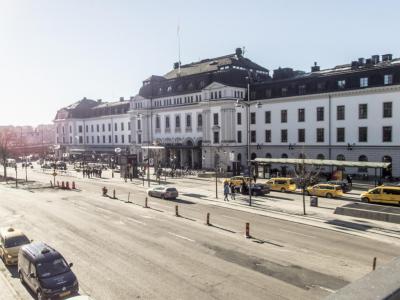
1) Stockholm Central Station
If you’ve ever felt overwhelmed at Stockholm Central Station, don’t worry-you’re in good company. Designed by Adolf W. Edelsvärd and opened in 1871, this grand old hub has seen more comings and goings than a soap opera love triangle. These days, over 200,000 people sweep through its halls daily-170,000 of them actually catching trains, while the rest are probably just wondering where the coffee is...
Originally, trains pulled straight into the station, but that changed in the roaring 1920s. Between 1925 and 1927, the tracks were shifted westward, and the cavernous old track hall was turned into a majestic waiting room-because why not lounge in style while missing your train? They even added a south pavilion, now used for conferences and royal pit stops. Yes, the Swedish Royal Family has its own VIP lounge here, because... why not?
The building got a bit of a facelift in 1951, losing some ornamentation to the gods of post-war minimalism. Then, in 1958, a tunnel was added to connect it to T-Centralen, Stockholm’s busy metro hub-perfect for those who enjoy long underground walks with confusing signage.
And right in the middle of it all is the so-called “Ring”-a round space fondly mocked by locals as “the spittoon.” Not exactly flattering, but hey, every icon has its nickname...
More recently, the station’s gone green. In 2011, the Swedish railway property management folks had a brainwave: use the body heat of the endless stream of commuters to warm a nearby office building. Eco-friendly and slightly creepy-but impressive nonetheless.
And just to keep things cheeky, during the 2012 renovation of the front façade, they popped a pair of earmuffs on the statue of railway legend Nils Ericson, a prominent Swedish mechanical engineer and railway builder, along with a speech bubble that read, “Oh my gosh, what a noise.” Proof that even Sweden’s most dignified landmarks aren’t above a little self-mockery.
Originally, trains pulled straight into the station, but that changed in the roaring 1920s. Between 1925 and 1927, the tracks were shifted westward, and the cavernous old track hall was turned into a majestic waiting room-because why not lounge in style while missing your train? They even added a south pavilion, now used for conferences and royal pit stops. Yes, the Swedish Royal Family has its own VIP lounge here, because... why not?
The building got a bit of a facelift in 1951, losing some ornamentation to the gods of post-war minimalism. Then, in 1958, a tunnel was added to connect it to T-Centralen, Stockholm’s busy metro hub-perfect for those who enjoy long underground walks with confusing signage.
And right in the middle of it all is the so-called “Ring”-a round space fondly mocked by locals as “the spittoon.” Not exactly flattering, but hey, every icon has its nickname...
More recently, the station’s gone green. In 2011, the Swedish railway property management folks had a brainwave: use the body heat of the endless stream of commuters to warm a nearby office building. Eco-friendly and slightly creepy-but impressive nonetheless.
And just to keep things cheeky, during the 2012 renovation of the front façade, they popped a pair of earmuffs on the statue of railway legend Nils Ericson, a prominent Swedish mechanical engineer and railway builder, along with a speech bubble that read, “Oh my gosh, what a noise.” Proof that even Sweden’s most dignified landmarks aren’t above a little self-mockery.
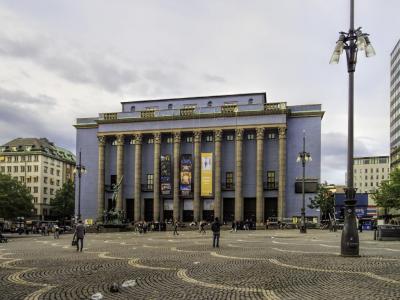
2) Stockholm Concert Hall
The Stockholm Concert Hall, located in the heart of Stockholm, is a prestigious venue renowned for its exquisite orchestral music performances and significant cultural events. Designed by the prominent architect Ivar Tengbom, the hall was constructed in the Neoclassical style, drawing inspiration from the ancient temples of Classical Greece. The building's striking bright blue façade and its elegant courtyard, surrounded by ornate porticos, make it an architectural landmark in the city.
The concert hall first opened its doors in 1926 and has since become the permanent home of the Royal Stockholm Philharmonic Orchestra, one of Sweden's most esteemed musical institutions. Founded in 1902, the orchestra has been captivating classical music lovers with its performances since 1914 and continues to receive support from the Swedish Royal Family. The orchestra plays a central role in the annual Nobel Prize ceremonies, which are held in the concert hall, adding to the venue's global significance.
In addition to hosting the Nobel Prize ceremony, the Stockholm Concert Hall is also the site of the Polar Music Prize, an international award established in 1989. This prestigious prize is awarded annually to one contemporary musician and one classical musician, celebrating their contributions to the world of music. Sir Paul McCartney, a founding member of the Beatles, was among the first to receive this distinguished award.
The Stockholm Concert Hall features two theaters that cater to different audience sizes. The larger theater can accommodate up to 1,600 attendees, while a more intimate adjoining theater seats up to 450 people, offering versatile settings for a variety of performances and events. Tickets for concerts typically go on sale two weeks before performances, allowing patrons to experience the world-class music and cultural experiences that the Stockholm Concert Hall has to offer.
The concert hall first opened its doors in 1926 and has since become the permanent home of the Royal Stockholm Philharmonic Orchestra, one of Sweden's most esteemed musical institutions. Founded in 1902, the orchestra has been captivating classical music lovers with its performances since 1914 and continues to receive support from the Swedish Royal Family. The orchestra plays a central role in the annual Nobel Prize ceremonies, which are held in the concert hall, adding to the venue's global significance.
In addition to hosting the Nobel Prize ceremony, the Stockholm Concert Hall is also the site of the Polar Music Prize, an international award established in 1989. This prestigious prize is awarded annually to one contemporary musician and one classical musician, celebrating their contributions to the world of music. Sir Paul McCartney, a founding member of the Beatles, was among the first to receive this distinguished award.
The Stockholm Concert Hall features two theaters that cater to different audience sizes. The larger theater can accommodate up to 1,600 attendees, while a more intimate adjoining theater seats up to 450 people, offering versatile settings for a variety of performances and events. Tickets for concerts typically go on sale two weeks before performances, allowing patrons to experience the world-class music and cultural experiences that the Stockholm Concert Hall has to offer.
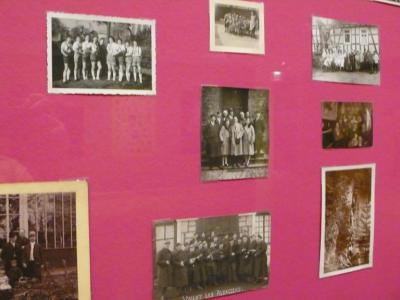
3) VOL Fotografagentur
VOL Fotografagentur, established in 1998 and based in Stockholm, is a prominent creative agency representing some of the country's most distinguished photographers, illustrators, and graphic designers. The agency primarily serves the advertising, design, and editorial industries, ensuring a seamless integration of creative vision with commercial objectives.
VOL's approach is both thorough and personable, emphasizing close collaboration between artists and clients to produce high-quality results. The agency not only manages full-scale productions-from initial castings to the final print-but also nurtures emerging talent, encouraging new artists alongside established professionals.
In addition to its representation services, VOL hosts five to six exhibitions annually, showcasing the work of well-known photographers, thus maintaining its position as a vital contributor to the creative scene in Sweden.
VOL's approach is both thorough and personable, emphasizing close collaboration between artists and clients to produce high-quality results. The agency not only manages full-scale productions-from initial castings to the final print-but also nurtures emerging talent, encouraging new artists alongside established professionals.
In addition to its representation services, VOL hosts five to six exhibitions annually, showcasing the work of well-known photographers, thus maintaining its position as a vital contributor to the creative scene in Sweden.
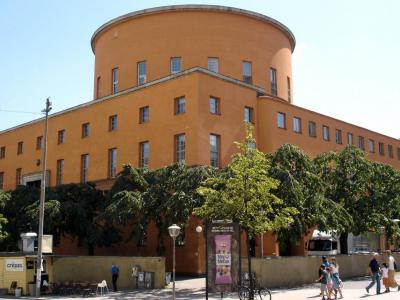
4) Stockholm Public Library
The Stockholm Public Library, located in Stockholm, is an iconic architectural landmark designed by the renowned Swedish architect Gunnar Asplund. It is celebrated not only as a central hub of knowledge and culture in the city but also as one of the most significant structures in Stockholm's architectural heritage. The term "Stockholm Public Library" refers both to this main building and the broader municipal library system of Stockholm.
The building's design was notably influenced by the Barrière Saint-Martin (Rotonde de la Villette) by Claude Nicolas Ledoux. Asplund initially envisioned a dome but eventually opted for a rotunda, creating a tall cylindrical form that imbues the exterior with a sense of monumentality. Throughout the planning stages, Asplund embraced a minimalist approach, stripping classical architectural elements down to their most abstract geometric forms and largely avoiding decorative details.
When it opened on March 31, 1928, in the presence of Prince Eugen, the Stockholm Public Library became the first public library in Sweden to implement the principle of open shelves, allowing visitors to access books freely without needing assistance from the library staff-a concept Asplund studied during his travels to the United States. Every piece of furniture within the library was meticulously designed for its specific location and function.
Today, the library holds over 2 million volumes and 2.4 million audio materials, including tapes, CDs, and audiobooks. The library's "international library" section, located in an annex near Odenplan, houses a vast collection of materials in over 100 languages, serving as a critical resource for both Stockholm and libraries throughout Sweden via interlibrary loans. Among the most borrowed languages in recent years are Russian, Thai, Spanish, Arabic, Persian, Chinese, Polish, and Japanese.
The building's design was notably influenced by the Barrière Saint-Martin (Rotonde de la Villette) by Claude Nicolas Ledoux. Asplund initially envisioned a dome but eventually opted for a rotunda, creating a tall cylindrical form that imbues the exterior with a sense of monumentality. Throughout the planning stages, Asplund embraced a minimalist approach, stripping classical architectural elements down to their most abstract geometric forms and largely avoiding decorative details.
When it opened on March 31, 1928, in the presence of Prince Eugen, the Stockholm Public Library became the first public library in Sweden to implement the principle of open shelves, allowing visitors to access books freely without needing assistance from the library staff-a concept Asplund studied during his travels to the United States. Every piece of furniture within the library was meticulously designed for its specific location and function.
Today, the library holds over 2 million volumes and 2.4 million audio materials, including tapes, CDs, and audiobooks. The library's "international library" section, located in an annex near Odenplan, houses a vast collection of materials in over 100 languages, serving as a critical resource for both Stockholm and libraries throughout Sweden via interlibrary loans. Among the most borrowed languages in recent years are Russian, Thai, Spanish, Arabic, Persian, Chinese, Polish, and Japanese.
5) Stureplan
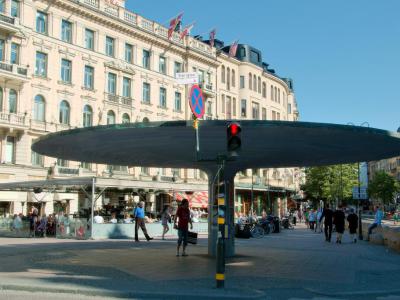
Stureplan is a prestigious public square located in the heart of Stockholm, nestled between the districts of Norrmalm and Östermalm. It serves as a major hub, connecting prominent streets such as Kungsgatan, Birger Jarlsgatan, and Sturegatan. The square is surrounded by buildings that house the offices of major banks, financial institutions, and corporate headquarters, reinforcing its status as a key economic center.
Stureplan is synonymous with luxury and exclusivity, a reputation it has cultivated since its significant renovations in the 1980s. The area is home to some of Sweden's most renowned and expensive restaurants and bars, including Sturehof, Spy Bar, Riche, Laroy, Hell's Kitchen, East, and Sturecompagniet. These venues contribute to Stureplan's identity as a playground for the elite, attracting upper-class youth, celebrities, young business executives, and even the newer, trendier members of the Swedish Royal Family.
The square is also a prime destination for high-end shopping, with exclusive fashion houses like Versace, Hugo Boss, Gucci, and Louis Vuitton having stores nearby. Additionally, Stureplan features the Sturegallerian Mall, which offers a variety of luxury goods and services, and the Scandic Anglais Hotel, a part of the well-known Scandic Hotels chain.
Beyond its commercial allure, Stureplan is also close to cultural landmarks such as Humlegården Park and the National Library of Sweden. The square is well-connected to the rest of the city via the Östermalmstorg metro station, making it easily accessible to locals and visitors. Overall, Stureplan represents the epitome of Stockholm's sophisticated urban life, blending business, luxury, and nightlife into a vibrant and iconic city landmark.
Stureplan is synonymous with luxury and exclusivity, a reputation it has cultivated since its significant renovations in the 1980s. The area is home to some of Sweden's most renowned and expensive restaurants and bars, including Sturehof, Spy Bar, Riche, Laroy, Hell's Kitchen, East, and Sturecompagniet. These venues contribute to Stureplan's identity as a playground for the elite, attracting upper-class youth, celebrities, young business executives, and even the newer, trendier members of the Swedish Royal Family.
The square is also a prime destination for high-end shopping, with exclusive fashion houses like Versace, Hugo Boss, Gucci, and Louis Vuitton having stores nearby. Additionally, Stureplan features the Sturegallerian Mall, which offers a variety of luxury goods and services, and the Scandic Anglais Hotel, a part of the well-known Scandic Hotels chain.
Beyond its commercial allure, Stureplan is also close to cultural landmarks such as Humlegården Park and the National Library of Sweden. The square is well-connected to the rest of the city via the Östermalmstorg metro station, making it easily accessible to locals and visitors. Overall, Stureplan represents the epitome of Stockholm's sophisticated urban life, blending business, luxury, and nightlife into a vibrant and iconic city landmark.
6) Royal Dramatic Theatre
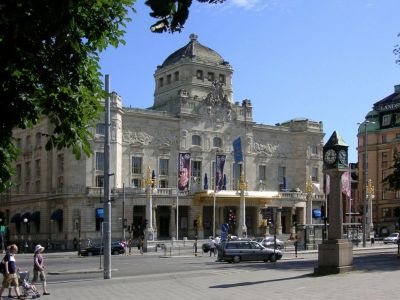
The Royal Dramatic Theatre (or “Dramaten,” if you want to blend in with the locals), is Sweden’s grand stage for drama and decorum. Founded way back in 1788-when powdered wigs were still in fashion and theater etiquette included not checking your phone-Dramaten has held court as Sweden’s national hub for spoken drama.
Today, it puts on about a thousand performances a year. Yes, a thousand! That’s seven stages, countless standing ovations, and probably a record number of dramatic monologues about love, war, and suspicious family dinners. From Swedish classics to international heavyweights and modern mind-benders, the repertoire is as rich and layered as a well-acted soliloquy.
Since 1908, the theater has occupied its iconic home at Nybroplan, a marble-and-gold Art Nouveau gem designed by Fredrik Lilljekvist. Think white marble, golden flourishes, and the sort of grand staircases that demand a cape and a dramatic pause halfway up. The interiors are dressed to impress, too-with artistic flair courtesy of Carl Milles, Carl Larsson, and even Prince Eugen. If you're visiting, don’t miss the Marble Foyer-perfect for people-watching, pondering art, or dramatically sipping coffee.
Beyond the velvet curtains and standing ovations, Dramaten has also played a starring role in shaping Swedish acting royalty. Its former training academy launched the careers of icons like Greta Garbo, Ingrid Bergman, Max von Sydow, and Bibi Andersson. The school may have spun off in 1967, but its theatrical DNA still runs through the building.
Owned by the state since 1975, Dramaten remains a central character in Sweden’s cultural story-loyal to Gustav III’s original vision, but still willing to try new scripts.
Thinking of visiting? Brush up on your Swedish, for every performance here is in the native tongue. And if you want a backstage pass to the drama behind the drama, guided tours are available year-round. English-language tours are on Saturdays at 5 pm-but book ahead. The theatre may be dramatic, but it doesn’t like surprises.
Today, it puts on about a thousand performances a year. Yes, a thousand! That’s seven stages, countless standing ovations, and probably a record number of dramatic monologues about love, war, and suspicious family dinners. From Swedish classics to international heavyweights and modern mind-benders, the repertoire is as rich and layered as a well-acted soliloquy.
Since 1908, the theater has occupied its iconic home at Nybroplan, a marble-and-gold Art Nouveau gem designed by Fredrik Lilljekvist. Think white marble, golden flourishes, and the sort of grand staircases that demand a cape and a dramatic pause halfway up. The interiors are dressed to impress, too-with artistic flair courtesy of Carl Milles, Carl Larsson, and even Prince Eugen. If you're visiting, don’t miss the Marble Foyer-perfect for people-watching, pondering art, or dramatically sipping coffee.
Beyond the velvet curtains and standing ovations, Dramaten has also played a starring role in shaping Swedish acting royalty. Its former training academy launched the careers of icons like Greta Garbo, Ingrid Bergman, Max von Sydow, and Bibi Andersson. The school may have spun off in 1967, but its theatrical DNA still runs through the building.
Owned by the state since 1975, Dramaten remains a central character in Sweden’s cultural story-loyal to Gustav III’s original vision, but still willing to try new scripts.
Thinking of visiting? Brush up on your Swedish, for every performance here is in the native tongue. And if you want a backstage pass to the drama behind the drama, guided tours are available year-round. English-language tours are on Saturdays at 5 pm-but book ahead. The theatre may be dramatic, but it doesn’t like surprises.
7) Fjällgatan Terrace
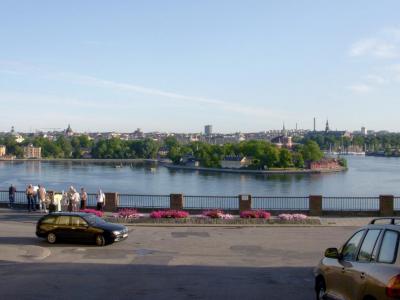
Fjällgatan Terrace in Stockholm is a beloved spot among locals, often referred to as the city's "balcony" due to its stunning panoramic views. This scenic street stretches along Stigberget Hill on Södermalm, from Renstiernas Street in the west to Erstagatan in the east. Positioned 27.8 meters above Saltsjön Bay, it offers an unobstructed vista of Stockholm's inlet, Gamla Stan, Skeppsholmen Island, and Djurgården Island, the latter being Stockholm's most visited tourist destination.
Historically significant, Fjällgatan was renamed in 1885 during a major street name revision, previously known as "Katarina Ostra Church Street" and before that, "Gallgebergets Street" due to its proximity to Södermalm's gallows on Stigberget, the execution site for much of the 16th and 17th centuries. In 1913, politician Anna Lindhagen campaigned to preserve the area south of Fjällgatan as a cultural reserve, a decision that was finally realized in 1956.
Fjällgatan is lined with well-preserved wooden houses dating back to the 1700s, marked as culturally and historically significant by the City Museum in Stockholm. Among these is Fjällgatan 37, the location of the summer cafe Fjällgatans Kafféstuga, which occupies a former dormitory built in 1872 by cereal wholesaler CH Matton. This dormitory was designed by architect Axel Kumlien, and a portion of Matton's cereal warehouse, demolished during the redevelopment of Stadsgården around the early 1900s, now forms part of the coffee house.
At Fjällgatan 34, visitors can find Stigbergets Borgarrum, a small living museum established by Anna Lindhagen. This museum showcases a mid-19th-century bourgeois household and includes two rooms that Lindhagen herself occupied in her later years. A memorial sculpture of Lindhagen has stood outside this house since 1987.
The northwestern end of the street features a cafe with a sunroom, allowing visitors to enjoy the view regardless of the weather. The combination of historical architecture, cultural significance, and breathtaking views makes Fjällgatan Terrace a cherished location for both Stockholmers and visitors alike.
Historically significant, Fjällgatan was renamed in 1885 during a major street name revision, previously known as "Katarina Ostra Church Street" and before that, "Gallgebergets Street" due to its proximity to Södermalm's gallows on Stigberget, the execution site for much of the 16th and 17th centuries. In 1913, politician Anna Lindhagen campaigned to preserve the area south of Fjällgatan as a cultural reserve, a decision that was finally realized in 1956.
Fjällgatan is lined with well-preserved wooden houses dating back to the 1700s, marked as culturally and historically significant by the City Museum in Stockholm. Among these is Fjällgatan 37, the location of the summer cafe Fjällgatans Kafféstuga, which occupies a former dormitory built in 1872 by cereal wholesaler CH Matton. This dormitory was designed by architect Axel Kumlien, and a portion of Matton's cereal warehouse, demolished during the redevelopment of Stadsgården around the early 1900s, now forms part of the coffee house.
At Fjällgatan 34, visitors can find Stigbergets Borgarrum, a small living museum established by Anna Lindhagen. This museum showcases a mid-19th-century bourgeois household and includes two rooms that Lindhagen herself occupied in her later years. A memorial sculpture of Lindhagen has stood outside this house since 1987.
The northwestern end of the street features a cafe with a sunroom, allowing visitors to enjoy the view regardless of the weather. The combination of historical architecture, cultural significance, and breathtaking views makes Fjällgatan Terrace a cherished location for both Stockholmers and visitors alike.
8) Södermalm
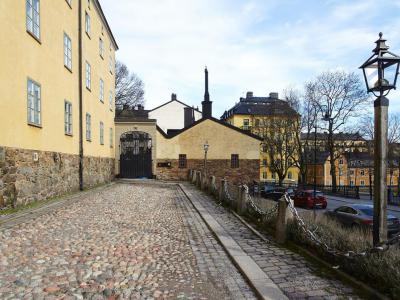
Södermalm, commonly referred to as Söder, is a vibrant and historically rich district located in the southern part of Stockholm's City Centre. It covers the island of the same name, formerly known as Åsön, which is nearly contiguous with the mainland due to its connection through a lock and man-made waterways.
This district is well-connected to the surrounding areas through several bridges. To the north, Slussen links Södermalm with Gamla stan, Stockholm's Old Town, while Västerbron connects it to Långholmen to the northwest. Other bridges, such as Liljeholmsbron, Årstabron, and Skansbron, provide access to various neighboring districts, including Liljeholmen, Årsta, and Johanneshov, respectively. Additionally, the Danvikstull Bridge connects Södermalm to Södra Hammarbyhamnen to the east.
Södermalm has a long history, first mentioned in historical records in 1288 as Suthaermalm. It remained predominantly rural until the early 17th century when urban development began. The district's initial urbanization included working-class housing, exemplified by the small red cottages that still stand in its northeastern part, and summer residences for wealthier families. In the 18th century, the humble cottages on Mariaberget's cliffs were replaced by larger buildings, many of which still exist today.
Historically viewed as a slum, Södermalm has undergone significant transformation. Today, it is recognized as a hub of bohemian culture, characterized by a lively atmosphere, creative industries, and an increasingly gentrified landscape. As a result, housing in Södermalm has become more expensive and exclusive, reflecting its status as one of Stockholm's most desirable neighborhoods.
This district is well-connected to the surrounding areas through several bridges. To the north, Slussen links Södermalm with Gamla stan, Stockholm's Old Town, while Västerbron connects it to Långholmen to the northwest. Other bridges, such as Liljeholmsbron, Årstabron, and Skansbron, provide access to various neighboring districts, including Liljeholmen, Årsta, and Johanneshov, respectively. Additionally, the Danvikstull Bridge connects Södermalm to Södra Hammarbyhamnen to the east.
Södermalm has a long history, first mentioned in historical records in 1288 as Suthaermalm. It remained predominantly rural until the early 17th century when urban development began. The district's initial urbanization included working-class housing, exemplified by the small red cottages that still stand in its northeastern part, and summer residences for wealthier families. In the 18th century, the humble cottages on Mariaberget's cliffs were replaced by larger buildings, many of which still exist today.
Historically viewed as a slum, Södermalm has undergone significant transformation. Today, it is recognized as a hub of bohemian culture, characterized by a lively atmosphere, creative industries, and an increasingly gentrified landscape. As a result, housing in Södermalm has become more expensive and exclusive, reflecting its status as one of Stockholm's most desirable neighborhoods.
