Custom Walk in Cologne, Germany by firehare87_a843b created on 2025-04-05
Guide Location: Germany » Cologne
Guide Type: Custom Walk
# of Sights: 12
Tour Duration: 5 Hour(s)
Travel Distance: 10.7 Km or 6.6 Miles
Share Key: NYM2Y
Guide Type: Custom Walk
# of Sights: 12
Tour Duration: 5 Hour(s)
Travel Distance: 10.7 Km or 6.6 Miles
Share Key: NYM2Y
How It Works
Please retrieve this walk in the GPSmyCity app. Once done, the app will guide you from one tour stop to the next as if you had a personal tour guide. If you created the walk on this website or come to the page via a link, please follow the instructions below to retrieve the walk in the app.
Retrieve This Walk in App
Step 1. Download the app "GPSmyCity: Walks in 1K+ Cities" on Apple App Store or Google Play Store.



Step 2. In the GPSmyCity app, download(or launch) the guide "Cologne Map and Walking Tours".
Step 3. Tap the menu button located at upper right corner of the "Walks" screen and select "Retrieve custom walk". Enter the share key: NYM2Y
1) KölnTriangle Panorama (Triangle Observation Deck) (must see)
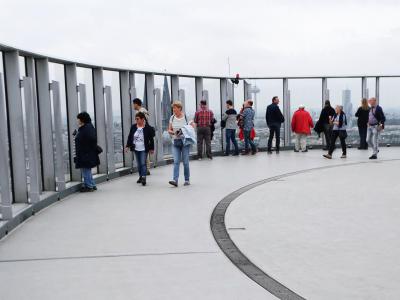
Perched atop the sleek KölnTriangle building, the Triangle Observation Deck isn’t just a fancy name-it’s a 103-meter-high front-row seat to Cologne in all its sprawling glory. The building itself is shaped like a Reuleaux triangle, which basically means someone got fancy with a geometry set and decided curves were cooler than corners. Bonus: Its double-skin south facade acts like the building’s lungs, breathing in fresh air for your convenience.
Up at the top, the observation deck delivers a full panoramic wow-factor. Directly across the Rhine, the Cologne Cathedral poses majestically like it knows it’s being watched (because it is). The deck is outdoors but protected by glass panels, so you can embrace the wind in your hair without worrying about losing your hat-or your dignity.
Feeling peckish after all that skyline admiration? There's a rooftop restaurant that serves up views and food, both equally worth savoring.
Whether you're a daytime wanderer or a dusk-chaser, the deck stays open from sun-up to starlight, letting you witness Cologne flip its switch from postcard-perfect to nighttime sparkle.
Up at the top, the observation deck delivers a full panoramic wow-factor. Directly across the Rhine, the Cologne Cathedral poses majestically like it knows it’s being watched (because it is). The deck is outdoors but protected by glass panels, so you can embrace the wind in your hair without worrying about losing your hat-or your dignity.
Feeling peckish after all that skyline admiration? There's a rooftop restaurant that serves up views and food, both equally worth savoring.
Whether you're a daytime wanderer or a dusk-chaser, the deck stays open from sun-up to starlight, letting you witness Cologne flip its switch from postcard-perfect to nighttime sparkle.
2) Groß St. Martin (Great St. Martin Church) (must see)
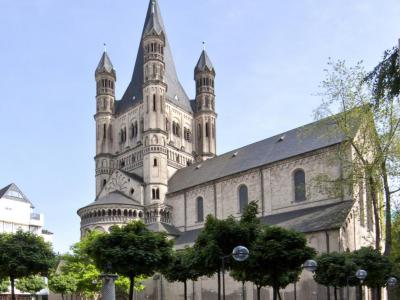
Ah, the Great Saint Martin Church-this seriously good-looking temple with a riverside address and medieval drama to spare is proof that if a building can survive fire, war, and questionable Baroque interior design choices, it deserves your full attention.
This Romanesque heavyweight was built between 1150 and 1250, and its iconic tower has been photobombing Old Town’s skyline ever since. But the site’s résumé goes way back. In Roman times, this spot was actually an island in the Rhine, where they built a humble chapel-probably to appease both the gods and the weather.
In the 10th century, a new church was built. In 1150: Boom. Fire. Ashes. Time to build again! By 1172, they’d got a fancy tri-apsidal structure. It survived another fire in 1185. But in 1378, the towers' roofs caught fire again, and by 1434, a storm decided to finish the job and blew them clean off. Truly, the medieval weather had no chill...
In the 1700s, someone got ambitious with the interior, adding Baroque decorations. Not everyone was thrilled. Some clergy officials thought it looked more Versailles than virtue, and out came the paintbrushes.
Then came the French in 1794. They stuck around for 20 years, turned the abbey into barracks, and eventually pulled the plug on the monastery altogether. Monks out, soldiers in. Not exactly a spiritual upgrade...
By 1847, restoration kicked off, and not a moment too soon. Because in World War II, the church took a beating-fires again, naturally-but was lovingly rebuilt between 1948 and 1985. Now, that’s what we call long-term commitment...
Pro tip:
The entrance plays hard to get-it’s tucked away at the back. And if you fancy ancient basements, head downstairs to see the Roman foundations. Because nothing says timeless like a church that’s literally built on history.
This Romanesque heavyweight was built between 1150 and 1250, and its iconic tower has been photobombing Old Town’s skyline ever since. But the site’s résumé goes way back. In Roman times, this spot was actually an island in the Rhine, where they built a humble chapel-probably to appease both the gods and the weather.
In the 10th century, a new church was built. In 1150: Boom. Fire. Ashes. Time to build again! By 1172, they’d got a fancy tri-apsidal structure. It survived another fire in 1185. But in 1378, the towers' roofs caught fire again, and by 1434, a storm decided to finish the job and blew them clean off. Truly, the medieval weather had no chill...
In the 1700s, someone got ambitious with the interior, adding Baroque decorations. Not everyone was thrilled. Some clergy officials thought it looked more Versailles than virtue, and out came the paintbrushes.
Then came the French in 1794. They stuck around for 20 years, turned the abbey into barracks, and eventually pulled the plug on the monastery altogether. Monks out, soldiers in. Not exactly a spiritual upgrade...
By 1847, restoration kicked off, and not a moment too soon. Because in World War II, the church took a beating-fires again, naturally-but was lovingly rebuilt between 1948 and 1985. Now, that’s what we call long-term commitment...
Pro tip:
The entrance plays hard to get-it’s tucked away at the back. And if you fancy ancient basements, head downstairs to see the Roman foundations. Because nothing says timeless like a church that’s literally built on history.
3) Historic Town Hall
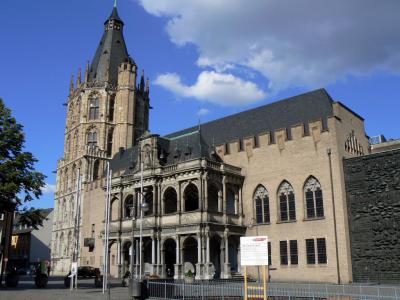
Cologne’s Historic Town Hall - where ancient Rome meets medieval ambition and Renaissance flair, all crammed into one delightfully stubborn complex. This city hall is the oldest in Germany, proudly perched atop the ruins of the Roman Praetorium, once the power seat of the Roman governor of the Lower Germania province. That is, until an 8th-century earthquake gave it a rather abrupt renovation.
A few centuries later, precisely in the 11th, Cologne’s citizens got organized and formed a commune. By 1114, the city's coat of arms had already made its debut-because every self-respecting city needs a good logo... The oldest part of the complex is a roofed hall from 1330, decorated with stone figures who represent the Emperor, Privileges, and the Nine Worthies - think of them as the medieval version of a motivational poster.
Then came the Gothic tower: built between 1407 and 1414, it was Cologne’s first secular skyscraper (five whole stories tall!), reaching an impressive 61 meters. It’s adorned with 130 stone statues, some of which appear to be judging you. Bombed in WWII but restored since, the tower also plays a carillon tune four times a day - because even stone buildings like to show off a little...
Swing around to the Renaissance-style loggia - the Town Hall Arbor - completed in 1573. This two-story arcade served both as an elegant entryway and a stage for balcony speeches. Look up and you’ll find a sculpted lion doing battle with Mayor Gryn. Who won? Depends on who’s telling the story.
And let’s not forget the so-called Spanish Structure, finished in 1615, featuring Dutch Renaissance architecture with a Spanish twist, thanks to some rather well-travelled delegates from the Thirty Years’ War. The Piazzetta (or “Little Square”), a post-WWII addition, ties it all together.
Tip:
Catch a postcard-perfect view from across the Rhine. Bonus points if you frame it with the Hohenzollern Bridge and Cologne Cathedral in the background. Now that’s a skyline...
A few centuries later, precisely in the 11th, Cologne’s citizens got organized and formed a commune. By 1114, the city's coat of arms had already made its debut-because every self-respecting city needs a good logo... The oldest part of the complex is a roofed hall from 1330, decorated with stone figures who represent the Emperor, Privileges, and the Nine Worthies - think of them as the medieval version of a motivational poster.
Then came the Gothic tower: built between 1407 and 1414, it was Cologne’s first secular skyscraper (five whole stories tall!), reaching an impressive 61 meters. It’s adorned with 130 stone statues, some of which appear to be judging you. Bombed in WWII but restored since, the tower also plays a carillon tune four times a day - because even stone buildings like to show off a little...
Swing around to the Renaissance-style loggia - the Town Hall Arbor - completed in 1573. This two-story arcade served both as an elegant entryway and a stage for balcony speeches. Look up and you’ll find a sculpted lion doing battle with Mayor Gryn. Who won? Depends on who’s telling the story.
And let’s not forget the so-called Spanish Structure, finished in 1615, featuring Dutch Renaissance architecture with a Spanish twist, thanks to some rather well-travelled delegates from the Thirty Years’ War. The Piazzetta (or “Little Square”), a post-WWII addition, ties it all together.
Tip:
Catch a postcard-perfect view from across the Rhine. Bonus points if you frame it with the Hohenzollern Bridge and Cologne Cathedral in the background. Now that’s a skyline...
4) Chocolate Museum (must see)
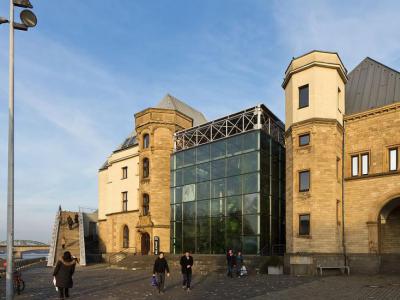
The Imhoff-Schokoladenmuseum was opened by Hans Imhoff on 31 October 1993. It is situated in the Cologne quarter Altstadt-Süd on the Rheinauhafen-peninsula. The exhibition shows the whole history of chocolate, from the beginning at the Olmecs, Maya and Aztecs until the contemporary products and their production methods. The museum belongs to the Top Ten of German museums with 5,000 guidances and 600,000 visitors a year.
A special attraction is the three-meter-high chocolate fountain, at which a woman dips wafers in the liquid chocolate and distributes them to visitors. Another interesting thing for visitors is the small tropiarium consisting of a glass cube with 10-meter edge length showing cacao trees of the species Theobroma cacao and Theobroma grandiflorum. Several production machineries were built as miniatures so that you can have a look at the production process of the small chocolate bars, which are given to the visitors at the entrance of the museum.
Why You Should Visit:
Gives a brief history of chocolate as well as more esoteric things like the religion & culture related to it. Great spot to view the Rhine river, too.
Tip:
Lots of free samples during visits and you can have your own personalized chocolate made.
A special attraction is the three-meter-high chocolate fountain, at which a woman dips wafers in the liquid chocolate and distributes them to visitors. Another interesting thing for visitors is the small tropiarium consisting of a glass cube with 10-meter edge length showing cacao trees of the species Theobroma cacao and Theobroma grandiflorum. Several production machineries were built as miniatures so that you can have a look at the production process of the small chocolate bars, which are given to the visitors at the entrance of the museum.
Why You Should Visit:
Gives a brief history of chocolate as well as more esoteric things like the religion & culture related to it. Great spot to view the Rhine river, too.
Tip:
Lots of free samples during visits and you can have your own personalized chocolate made.
5) Kranhäuser im Rheinauhafen
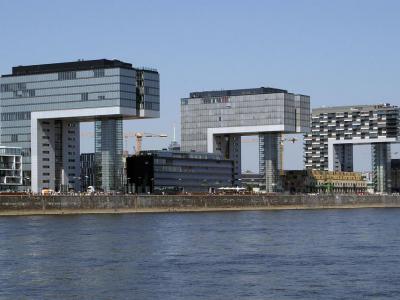
Kranhaus is a stunning architectural gem located in the northern section of Cologne's Rheinauhafen. The building ensemble comprises of three high-rise crane houses, which were constructed between 2006 and 2010. The architects Hadi Teherani and Alfons Linster won the urban development competition organized by the city of Cologne in 1992 to design this unique structure.
The most striking feature of the Kranhaus buildings is their typical Haft crane shape, which extends its arms at right angles reaching the Rhine. The crane houses are 61 meters tall, with two five-storey building blocks forming a cantilevered crane arm at a height of 40 meters, which stretches towards the river. The total length of the buildings is approximately 70 meters, with a total width of 33 meters.
The three Kranhaus buildings are arranged in a row with a right angle in the north-south direction on the promenade. The Rhine promenade offers open spaces and walkways for visitors to enjoy. Each crane house can be accessed through two entrances, with the main entrance located in the vertical crane hull of the building's glazed reception area. A second glazed elevator and staircase is positioned 32 meters away between the two cantilevered building blocks, serving as an additional support and escape route.
Kranhaus 1 and Kranhaus Mitte were built first in 2006, with flexible floor plans and different office types ranging from 600 to 16,000 square meters. Kranhaus Süd, designed as an office building, was started in 2007, similar to the middle Kranhaus. Kranhaus Nord, the last of the Kranhaus buildings, was completed in 2010. The Kranhaus Nord differs from the other two buildings by its balconies protruding from the facade.
The most striking feature of the Kranhaus buildings is their typical Haft crane shape, which extends its arms at right angles reaching the Rhine. The crane houses are 61 meters tall, with two five-storey building blocks forming a cantilevered crane arm at a height of 40 meters, which stretches towards the river. The total length of the buildings is approximately 70 meters, with a total width of 33 meters.
The three Kranhaus buildings are arranged in a row with a right angle in the north-south direction on the promenade. The Rhine promenade offers open spaces and walkways for visitors to enjoy. Each crane house can be accessed through two entrances, with the main entrance located in the vertical crane hull of the building's glazed reception area. A second glazed elevator and staircase is positioned 32 meters away between the two cantilevered building blocks, serving as an additional support and escape route.
Kranhaus 1 and Kranhaus Mitte were built first in 2006, with flexible floor plans and different office types ranging from 600 to 16,000 square meters. Kranhaus Süd, designed as an office building, was started in 2007, similar to the middle Kranhaus. Kranhaus Nord, the last of the Kranhaus buildings, was completed in 2010. The Kranhaus Nord differs from the other two buildings by its balconies protruding from the facade.
6) Peek & Cloppenburg Weltstadthaus (Global City Building)
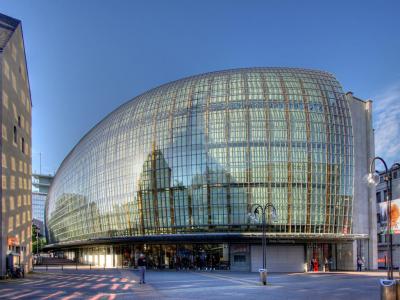
The Global City Building is a dramatic modern building that houses the Peek & Cloppenburg department store. To some viewers, it resembles a whale, and to others, it resembles a ship. Residents call it the Walfisch, which can be translated as the whale.
Italian architect Renzo Piano designed the Global City Building, which was completed in 2005. The building's atrium is 36 meters (118 feet) tall. The building bridges the gap between Cologne's modern and classic architecture. The modern wood and glass facade reflects the nearby Gothic church, while the stone facade faces the more recent concrete buildings.
The glass facade features 6800 individual glass panes and 66 enormous Siberian larch beams. The northern facade features natural stone. The glass dome is only supported in a few locations. It is supported by tension cables and attached to the fourth floor.
The Global City Building is a fabulous example of Cologne's modern architecture.
Weltstadthaus in Cologne is a modern, multi-story building that offers a range of high-end shops and boutiques catering to luxury shoppers. The building is spacious and well-designed, with a wide range of high-end fashion brands, including Hugo Boss, Armani, Calvin Klein, and Tommy Hilfiger, among others. Additionally, shoppers can find a range of luxury goods, such as jewelry and beauty products. Weltstadthaus also has several dining options, including a rooftop restaurant with stunning views of the city, as well as many cafes throughout the building.
Italian architect Renzo Piano designed the Global City Building, which was completed in 2005. The building's atrium is 36 meters (118 feet) tall. The building bridges the gap between Cologne's modern and classic architecture. The modern wood and glass facade reflects the nearby Gothic church, while the stone facade faces the more recent concrete buildings.
The glass facade features 6800 individual glass panes and 66 enormous Siberian larch beams. The northern facade features natural stone. The glass dome is only supported in a few locations. It is supported by tension cables and attached to the fourth floor.
The Global City Building is a fabulous example of Cologne's modern architecture.
Weltstadthaus in Cologne is a modern, multi-story building that offers a range of high-end shops and boutiques catering to luxury shoppers. The building is spacious and well-designed, with a wide range of high-end fashion brands, including Hugo Boss, Armani, Calvin Klein, and Tommy Hilfiger, among others. Additionally, shoppers can find a range of luxury goods, such as jewelry and beauty products. Weltstadthaus also has several dining options, including a rooftop restaurant with stunning views of the city, as well as many cafes throughout the building.
7) Hahnentorburg (Hahnen Gate)
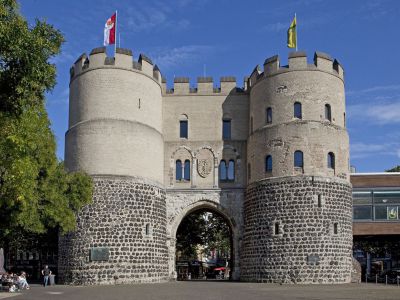
You can enter the city of Cologne through 12 gates and the Hahnen Gate, or 'Hahnentorburg' is the most popular among them. It was through this gate that the German Kings arrived in this city after their coronation in Aachen. They paid a visit to the Cologne Cathedral and prayed at the Three Magi shrine. Construction of this gate spanned five years between 1235 and 1240. The land surrounding the gate was owned by a citizen Hageno and the gate was probably named after him. Over a period of time, people started referring to the gate as Hahnentorburg.
This gate features two towers that are crenelated and semi-circular in shape. Before you enter, look up above the entrance where you will find a beautiful depiction of Cologne’s coat of arms. It was in 1890 that the tower was first renovated. Renovation work was carried out by Josef Stubben, one of the city's famous architects. You can find a memorial plaque here that commemorates his construction outside the city walls. During World War II, the tower was again damaged and reconstructed later.
Hahnentorburg has performed many functions through ages. It has been used as an exposition hall, museum and a prison. Today, this popular tourist spot is home to the carnival society, Ehrengarde der Stadt Köln 1902 e.V.
Why You Should Visit:
Massive gateway from medieval times and probably the best in Cologne.
Tip:
Some great pubs, bars, and restaurants close-by, and worth the walk along parts of the old wall or to the Rhein...
This gate features two towers that are crenelated and semi-circular in shape. Before you enter, look up above the entrance where you will find a beautiful depiction of Cologne’s coat of arms. It was in 1890 that the tower was first renovated. Renovation work was carried out by Josef Stubben, one of the city's famous architects. You can find a memorial plaque here that commemorates his construction outside the city walls. During World War II, the tower was again damaged and reconstructed later.
Hahnentorburg has performed many functions through ages. It has been used as an exposition hall, museum and a prison. Today, this popular tourist spot is home to the carnival society, Ehrengarde der Stadt Köln 1902 e.V.
Why You Should Visit:
Massive gateway from medieval times and probably the best in Cologne.
Tip:
Some great pubs, bars, and restaurants close-by, and worth the walk along parts of the old wall or to the Rhein...
8) Colonius
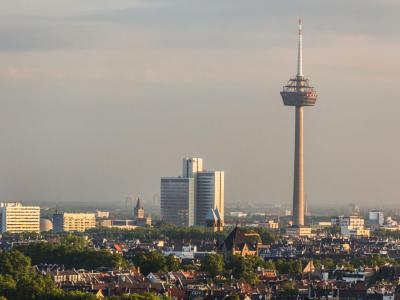
Colonius is a prominent telecommunications tower. It is the tallest structure in the city, with a height of 266 meters (873 ft.) and was built in the early 1980s by the Bavarian construction company Dyckerhoff & Widmann. Initially, it was the sixth-tallest communications tower in Germany. The tower is made of concrete and steel and is situated northwest of the city's inner center, at the green belt (Innerer Grüngürtel) that encircles the historic center of Cologne.
The tower has a tower basket that is nine meters high and contains transmission mechanisms for analogue and digital radio and digital television. Until 1999, the tower's observation deck and revolving restaurant situated at a height of 166 meters were open to visitors. From this point, visitors could enjoy breathtaking views of Cologne, Bonn, and Düsseldorf on clear days.
Sadly, the visitor's area including the restaurant and observation deck has been closed since 1992 due to the absence of a leaseholder. However, the tower still serves as an important broadcasting hub for radio relay and radio services within the VHF range. In 2004, a radio tower was added by helicopter, increasing its height to 266 meters. This new addition allowed for the broadcast of digital television (DVB-T) from the tower in the Cologne/Bonn region.
The tower has a tower basket that is nine meters high and contains transmission mechanisms for analogue and digital radio and digital television. Until 1999, the tower's observation deck and revolving restaurant situated at a height of 166 meters were open to visitors. From this point, visitors could enjoy breathtaking views of Cologne, Bonn, and Düsseldorf on clear days.
Sadly, the visitor's area including the restaurant and observation deck has been closed since 1992 due to the absence of a leaseholder. However, the tower still serves as an important broadcasting hub for radio relay and radio services within the VHF range. In 2004, a radio tower was added by helicopter, increasing its height to 266 meters. This new addition allowed for the broadcast of digital television (DVB-T) from the tower in the Cologne/Bonn region.
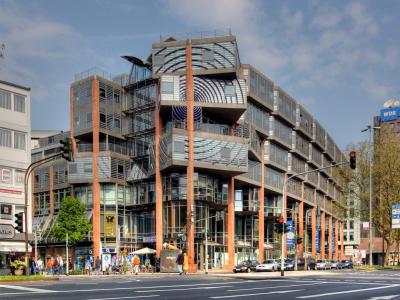
9) WDR Arcades
Gottfried and Elizabeth Bohm designed the modern WDR Arcades building. The building was completed during the 1990s. The building is owned by the area's largest broadcasting company, Westdeutscher Rundfunk. The design features an urban facade and an interior atrium with a glass dome.
The WDR Arcades houses a shopping center, WDR newsroom, and offices. The shopping center is located on the first floor, and the WDR spaces are located on the upper floors.
The building houses the WDR's central newsrooms, library, press archive, and historical archive. In addition, the Deutsche Post has offices in the WDR building.
The shops and restaurants are located in the first-floor atrium. Visitors can check out fashion boutiques, jewelry stores, and shop for souvenirs. Maus & Co. is a popular store that sells Captain Bluebear merchandise.
The WDR Arcades houses a shopping center, WDR newsroom, and offices. The shopping center is located on the first floor, and the WDR spaces are located on the upper floors.
The building houses the WDR's central newsrooms, library, press archive, and historical archive. In addition, the Deutsche Post has offices in the WDR building.
The shops and restaurants are located in the first-floor atrium. Visitors can check out fashion boutiques, jewelry stores, and shop for souvenirs. Maus & Co. is a popular store that sells Captain Bluebear merchandise.
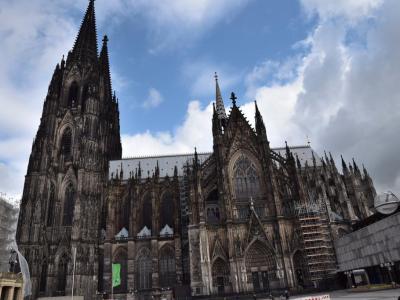
10) Kölner Dom (Cologne Cathedral) (must see)
The Cologne Cathedral - a place where Gothic ambition met a 600-year-long construction delay and still came out looking fabulous... Indeed, the magnitude of this building dwarfs your expectations and your camera’s field of view.
This towering masterpiece is Germany’s most visited landmark, with 20,000 people dropping by daily - not bad for a church that took over six centuries to finish. At 157 meters (that’s 515 feet for those who still think in feet), it’s the tallest twin-spired church on Earth, the second-tallest church in Europe, and the third tallest in the world. Clearly, Cologne doesn’t do things halfway...
Construction began in 1248, then took a casual break around 1560. The west tower wasn't completed until 1880, when 19th-century officials unearthed the original blueprints and reasoned, “Why not finish it?”
But the site’s sacred history runs much deeper than that. Since the 4th century, Christians have been building here. The "Old Cathedral" stood from 818 to 1248, and even earlier, a baptistery once graced the eastern end.
So, what kicked off this giant Gothic project? A golden box. Specifically, the Shrine of the Three Kings, believed to hold relics of the Three Wise Men (also known as the Magi - the ones who visited baby Jesus and offered him gifts). Its construction started at the eastern arm to house the shrine, then the west front followed - until everything just kind of stopped in 1473. The work-in-progress look lasted for centuries, complete with a giant crane stuck on top for 400 years. Talk about an eternal fixer-upper...
The cathedral's highlights include the 1322 black marble High Altar and that aforementioned blingy shrine, which began in 1190 and shines brighter than a royal wedding. There's also the 10th-century Gero Crucifix, the 1290 Milan Madonna, and a legal twist - a 13th-century stone tablet that once granted rights to Cologne’s Jewish residents.
And, of course, there are bells - eleven in total. The Saint Peter Bell, cast in 1922, was once the biggest free-swinging bell in the world. You’ll feel it before you hear it...
Insider Tip:
Don’t skip the rear mosaics - they're stunning. Brave the climb for sky-high views, or sneak into the underground parking to see the cathedral’s ancient roots... literally.
This towering masterpiece is Germany’s most visited landmark, with 20,000 people dropping by daily - not bad for a church that took over six centuries to finish. At 157 meters (that’s 515 feet for those who still think in feet), it’s the tallest twin-spired church on Earth, the second-tallest church in Europe, and the third tallest in the world. Clearly, Cologne doesn’t do things halfway...
Construction began in 1248, then took a casual break around 1560. The west tower wasn't completed until 1880, when 19th-century officials unearthed the original blueprints and reasoned, “Why not finish it?”
But the site’s sacred history runs much deeper than that. Since the 4th century, Christians have been building here. The "Old Cathedral" stood from 818 to 1248, and even earlier, a baptistery once graced the eastern end.
So, what kicked off this giant Gothic project? A golden box. Specifically, the Shrine of the Three Kings, believed to hold relics of the Three Wise Men (also known as the Magi - the ones who visited baby Jesus and offered him gifts). Its construction started at the eastern arm to house the shrine, then the west front followed - until everything just kind of stopped in 1473. The work-in-progress look lasted for centuries, complete with a giant crane stuck on top for 400 years. Talk about an eternal fixer-upper...
The cathedral's highlights include the 1322 black marble High Altar and that aforementioned blingy shrine, which began in 1190 and shines brighter than a royal wedding. There's also the 10th-century Gero Crucifix, the 1290 Milan Madonna, and a legal twist - a 13th-century stone tablet that once granted rights to Cologne’s Jewish residents.
And, of course, there are bells - eleven in total. The Saint Peter Bell, cast in 1922, was once the biggest free-swinging bell in the world. You’ll feel it before you hear it...
Insider Tip:
Don’t skip the rear mosaics - they're stunning. Brave the climb for sky-high views, or sneak into the underground parking to see the cathedral’s ancient roots... literally.
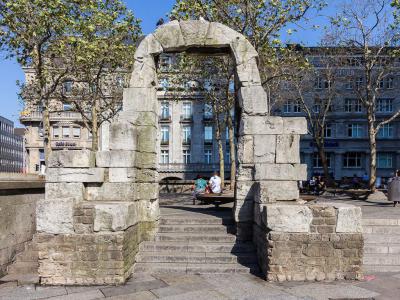
11) Roman Gate
On the side of Domplatz [Cathedral Square] there is an ancient structure vaguely reminiscent of what was once a Roman wall. Built in the days of the Roman Empire, a symbolic gate now stands in its place.
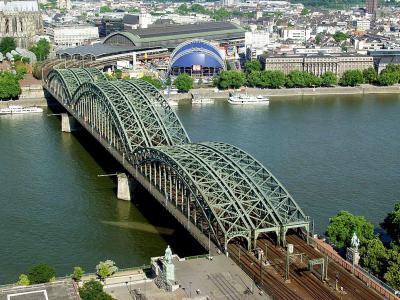
12) Hohenzollernbrücke (Hohenzollern Bridge) (must see)
The Hohenzollern Bridge-Cologne’s grand old crossing that’s equal parts iron, history, and sentimental hardware. Stretching across the Rhine like a steel spine, it’s the city’s most beloved blend of romance and railway precision.
Built in 1911 to replace the overworked Cathedral Bridge, this heavy-duty thoroughfare was Cologne’s answer to the rising tide of traffic. It handled trains, trams, cars, pedestrians-you name it. Its name is a royal nod to the House of Hohenzollern, the Prussian dynasty that once ruled over this corner of the world. In fact, the whole project was inaugurated by none other than Kaiser Wilhelm II, who likely admired it for being both majestic and punctual.
Watch your step-or your stirrup-because each end of the bridge is guarded by towering equestrian statues of German emperors and Prussian kings. On one side: Friedrich Wilhelm IV and Wilhelm I. On the other: Friedrich III and Wilhelm II. A cavalry of stone to usher you across.
Now, history took a turn in 1945 when German forces-perhaps not appreciating the bridge’s architectural flair-blew it up during their retreat. Luckily, the bridge rose from the ashes, rebuilt by 1959, and polished up again in the '80s. It still carries trains today-lots of them-and now features pedestrian paths and bike lanes too.
But wait-this is no longer just a bridge. Since 2008, it’s become Cologne’s unofficial temple of love. Couples attach padlocks to the railings, whisper sweet nothings, and toss the keys into the Rhine. By 2015, over half a million locks had been added. That’s a lot of commitment. And a lot of extra weight, too...
A place where steel meets sentiment, this is the best spot to gaze at the Cologne Cathedral from across the water-and maybe reflect on the nature of love, war, and urban planning...
Pro tip:
Go at night. The city lights up, the cathedral glows like a Gothic lantern, and the bridge hums with quiet magic. Trust us, it’s a whole different mood after sunset.
Built in 1911 to replace the overworked Cathedral Bridge, this heavy-duty thoroughfare was Cologne’s answer to the rising tide of traffic. It handled trains, trams, cars, pedestrians-you name it. Its name is a royal nod to the House of Hohenzollern, the Prussian dynasty that once ruled over this corner of the world. In fact, the whole project was inaugurated by none other than Kaiser Wilhelm II, who likely admired it for being both majestic and punctual.
Watch your step-or your stirrup-because each end of the bridge is guarded by towering equestrian statues of German emperors and Prussian kings. On one side: Friedrich Wilhelm IV and Wilhelm I. On the other: Friedrich III and Wilhelm II. A cavalry of stone to usher you across.
Now, history took a turn in 1945 when German forces-perhaps not appreciating the bridge’s architectural flair-blew it up during their retreat. Luckily, the bridge rose from the ashes, rebuilt by 1959, and polished up again in the '80s. It still carries trains today-lots of them-and now features pedestrian paths and bike lanes too.
But wait-this is no longer just a bridge. Since 2008, it’s become Cologne’s unofficial temple of love. Couples attach padlocks to the railings, whisper sweet nothings, and toss the keys into the Rhine. By 2015, over half a million locks had been added. That’s a lot of commitment. And a lot of extra weight, too...
A place where steel meets sentiment, this is the best spot to gaze at the Cologne Cathedral from across the water-and maybe reflect on the nature of love, war, and urban planning...
Pro tip:
Go at night. The city lights up, the cathedral glows like a Gothic lantern, and the bridge hums with quiet magic. Trust us, it’s a whole different mood after sunset.
