Custom Walk in Cusco, Peru by andersonlorenw7982 created on 2025-04-10
Guide Location: Peru » Cusco
Guide Type: Custom Walk
# of Sights: 13
Tour Duration: 4 Hour(s)
Travel Distance: 7.2 Km or 4.5 Miles
Share Key: N6KYW
Guide Type: Custom Walk
# of Sights: 13
Tour Duration: 4 Hour(s)
Travel Distance: 7.2 Km or 4.5 Miles
Share Key: N6KYW
How It Works
Please retrieve this walk in the GPSmyCity app. Once done, the app will guide you from one tour stop to the next as if you had a personal tour guide. If you created the walk on this website or come to the page via a link, please follow the instructions below to retrieve the walk in the app.
Retrieve This Walk in App
Step 1. Download the app "GPSmyCity: Walks in 1K+ Cities" on Apple App Store or Google Play Store.



Step 2. In the GPSmyCity app, download(or launch) the guide "Cusco Map and Walking Tours".
Step 3. Tap the menu button located at upper right corner of the "Walks" screen and select "Retrieve custom walk". Enter the share key: N6KYW
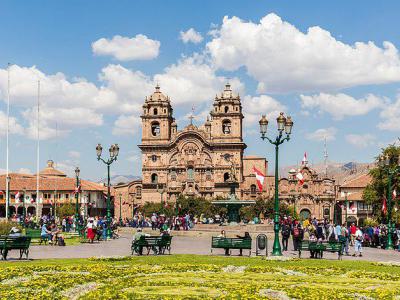
1) Plaza de Armas (Main Square) (must see)
Main Square is Cusco's central hub of activity. Main Square has a colonial look, but the area has been central to human settlements since the Inca Empire. Here, the Inca army celebrated victories, and the residents held ceremonies. Back then, the square was known as the "Square of the Warrior".
Before Main Square was a meeting place, it was a swamp. Legendary Manco Capac, the founder of the Inca civilization in Cusco, built a palace and a city around the swamp. Then, his son began drying the swamp, and the area became a central location.
During the Inca era, the square was the center of the Inca Empire. The square was larger than it is today and was home to administrative and religious activities in addition to fairs and festivals. Impressive palaces lined the square.
The Spanish arrived in the early 1500s and took over the palaces. The Spanish built chapels, cathedrals, and mansions over the Inca palaces. Today's buildings feature colonial architecture with Inca foundations and some Inca walls.
Main Square has a beautiful central fountain. It is surrounded by impressive landmark buildings such as the Cusco Cathedral, the Church of the Company of Jesus, and the Chapel of Triumph. In addition, the square features many museums, restaurants, cafes, bars, and shops. Main Square hosts parades, festivals, and celebrations.
The square features a statue celebrating Jose Gabriel Tupac Amaru. He fought for independence from the Spanish but was publicly executed in the square as a warning to other residents.
Before Main Square was a meeting place, it was a swamp. Legendary Manco Capac, the founder of the Inca civilization in Cusco, built a palace and a city around the swamp. Then, his son began drying the swamp, and the area became a central location.
During the Inca era, the square was the center of the Inca Empire. The square was larger than it is today and was home to administrative and religious activities in addition to fairs and festivals. Impressive palaces lined the square.
The Spanish arrived in the early 1500s and took over the palaces. The Spanish built chapels, cathedrals, and mansions over the Inca palaces. Today's buildings feature colonial architecture with Inca foundations and some Inca walls.
Main Square has a beautiful central fountain. It is surrounded by impressive landmark buildings such as the Cusco Cathedral, the Church of the Company of Jesus, and the Chapel of Triumph. In addition, the square features many museums, restaurants, cafes, bars, and shops. Main Square hosts parades, festivals, and celebrations.
The square features a statue celebrating Jose Gabriel Tupac Amaru. He fought for independence from the Spanish but was publicly executed in the square as a warning to other residents.
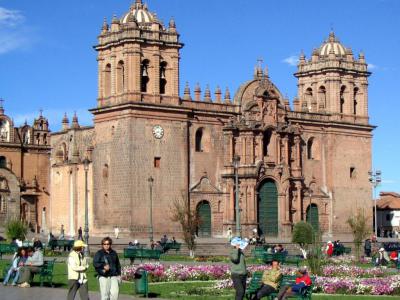
2) Cusco Cathedral (must see)
The Cusco Cathedral is part of Cusco's UNESCO World Heritage Site. The Spanish built the Cusco Cathedral between 1560 and 1654. The Roman Catholic church is Main Square's most impressive building. It has a Spanish colonial style and is home to significant colonial artworks as well as archeological finds.
The Cusco Cathedral replaced an Inca temple and was built on the temple's foundations. Many of the cathedral's stones are from the Sacsayhuamán citadel on the northern outskirts of the city. The Spanish also used the square's sacred sand in the construction. The Cusco Cathedral features a classic colonial Gothic-Renaissance style. The Spanish used conquered residents as their labor, and included some Inca symbols in the cathedral, such as the carved jaguar head on the doors.
The cathedral's north tower features the remarkable Maria Angola Bell. The bell was cast in 1659, is 2.15 meters (seven feet) high, and weighs over 13,000 pounds. The bell was named after an Angola enslaved person who added gold to the crucible when the bell was created. The bell is audible up to 20 miles away but is only rung for special occasions.
Visitors will find a collection of Peruvian painter Marcos Zapata's paintings in the sacristy. A highlight of Zapata's paintings is the fascinating "The Last Supper" showing Jesus and his disciples eating traditional Peruvian dishes such as guinea pig and and drinking chicha. Zapata was born in Cusco and was known for introducing local elements in his paintings.
In addition, the cathedral hosts portraits of Cusco's bishops. The cathedral also displays works from the Cusco School of Art. The wooden Christ of the Earthquakes crucifix is tarnished with centuries of candle smoke. The crucifix is taken outdoors during Holy Week to commemorate the 1650 earthquake.
The Cusco Cathedral replaced an Inca temple and was built on the temple's foundations. Many of the cathedral's stones are from the Sacsayhuamán citadel on the northern outskirts of the city. The Spanish also used the square's sacred sand in the construction. The Cusco Cathedral features a classic colonial Gothic-Renaissance style. The Spanish used conquered residents as their labor, and included some Inca symbols in the cathedral, such as the carved jaguar head on the doors.
The cathedral's north tower features the remarkable Maria Angola Bell. The bell was cast in 1659, is 2.15 meters (seven feet) high, and weighs over 13,000 pounds. The bell was named after an Angola enslaved person who added gold to the crucible when the bell was created. The bell is audible up to 20 miles away but is only rung for special occasions.
Visitors will find a collection of Peruvian painter Marcos Zapata's paintings in the sacristy. A highlight of Zapata's paintings is the fascinating "The Last Supper" showing Jesus and his disciples eating traditional Peruvian dishes such as guinea pig and and drinking chicha. Zapata was born in Cusco and was known for introducing local elements in his paintings.
In addition, the cathedral hosts portraits of Cusco's bishops. The cathedral also displays works from the Cusco School of Art. The wooden Christ of the Earthquakes crucifix is tarnished with centuries of candle smoke. The crucifix is taken outdoors during Holy Week to commemorate the 1650 earthquake.
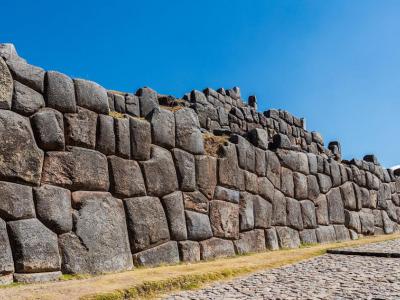
3) Sacsayhuaman (must see)
The Inca built this complex in the 1400s, probably under the famed ruler Pachacuti and his successors. It sits at an elevation of 12,142 feet above sea level overlooking the city of Cusco below.
While the structures you see now are from the 15th century, archaeological evidence suggests that the site was occupied as far back as 900 CE. This means the Killke culture first developed the site before the Inca came to the area.
According to Inca legends, the city of Cusco is the "lion city." The tail is formed where the two rivers unite, and the body is the town with its squares and houses. The Inca built Sacsayhuaman as the head of the lion. It is a fortress built on a high plateau north of town.
Spaniard Pedro Cieza De Leon wrote that the Inca ordered 20,000 men to come in from the provinces to aid in the construction of the fortress. The laborers quarried stone, hauled them with leather and hemp cables, and dug the foundations.
The center of the site was a large communal plaza. Around the plaza are three huge stone terrace walls. The stones are some of the biggest used in any pre-Hispanic buildings in the Americas, and the joinery between the stones is unmatched. The stones sit so tightly together in many places that not even a sheet of paper could be put through the gap.
After the Spanish seized Cusco, they began taking the blocks from Sacsayhuaman to build new government and religious buildings. As a result, the only stones remaining at the site today are those that were too large and too heavy for the Spanish to move easily.
The site is used today to celebrate Inti Raymi, the Inca festival of the winter solstice. Together with the city of Cusco, Sacsayhuaman is a UNESCO World Heritage Site.
It is generally recommended to allow two or three hours to see the ruins at Sacsayhuaman. It's a spectacular site, full of history, impressive feats of stonework, and gorgeous views of Cusco below.
While the structures you see now are from the 15th century, archaeological evidence suggests that the site was occupied as far back as 900 CE. This means the Killke culture first developed the site before the Inca came to the area.
According to Inca legends, the city of Cusco is the "lion city." The tail is formed where the two rivers unite, and the body is the town with its squares and houses. The Inca built Sacsayhuaman as the head of the lion. It is a fortress built on a high plateau north of town.
Spaniard Pedro Cieza De Leon wrote that the Inca ordered 20,000 men to come in from the provinces to aid in the construction of the fortress. The laborers quarried stone, hauled them with leather and hemp cables, and dug the foundations.
The center of the site was a large communal plaza. Around the plaza are three huge stone terrace walls. The stones are some of the biggest used in any pre-Hispanic buildings in the Americas, and the joinery between the stones is unmatched. The stones sit so tightly together in many places that not even a sheet of paper could be put through the gap.
After the Spanish seized Cusco, they began taking the blocks from Sacsayhuaman to build new government and religious buildings. As a result, the only stones remaining at the site today are those that were too large and too heavy for the Spanish to move easily.
The site is used today to celebrate Inti Raymi, the Inca festival of the winter solstice. Together with the city of Cusco, Sacsayhuaman is a UNESCO World Heritage Site.
It is generally recommended to allow two or three hours to see the ruins at Sacsayhuaman. It's a spectacular site, full of history, impressive feats of stonework, and gorgeous views of Cusco below.
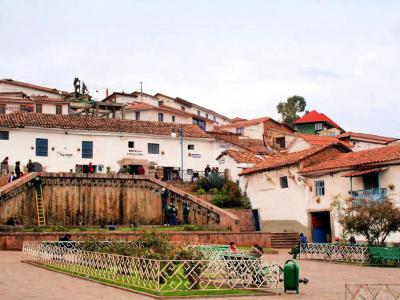
4) San Blas Square and District (must see)
Uphill and northeast from the Main Square, you'll find the San Blas District of town. The area is known as the artist's quarter, and it has been described as the most picturesque area of town. It's quieter here, too. You'll find great cafes and beautiful views of the rest of Cusco below.
The road up to San Blas Square is called the San Blas Slope. There are numerous art galleries and workshops along the way. Walking here is a pleasure for the senses.
San Blas Square is located in the heart of the area. It's bounded by Carmen Bajo and Calle Tandepata and is dominated by a large fountain. The cobbled streets in the area are steep, built narrow with Inca stone steps.
The Inca called this part of town Salt Cave. Even since those times, this charming barrio has been popular with artisans. It is believed that the area was also popular with the Inca elite.
The district's name changed with the Spaniards, who named it in honor of the third-century bishop who dedicated his time to healing people and animals.
There are two attractions on the square that you won't want to miss. The first is the San Blas Church. The second is the Hilario Mendivil and Family Gallery. Mendivil is a well-known artist from the area known for his religious imagery.
The road up to San Blas Square is called the San Blas Slope. There are numerous art galleries and workshops along the way. Walking here is a pleasure for the senses.
San Blas Square is located in the heart of the area. It's bounded by Carmen Bajo and Calle Tandepata and is dominated by a large fountain. The cobbled streets in the area are steep, built narrow with Inca stone steps.
The Inca called this part of town Salt Cave. Even since those times, this charming barrio has been popular with artisans. It is believed that the area was also popular with the Inca elite.
The district's name changed with the Spaniards, who named it in honor of the third-century bishop who dedicated his time to healing people and animals.
There are two attractions on the square that you won't want to miss. The first is the San Blas Church. The second is the Hilario Mendivil and Family Gallery. Mendivil is a well-known artist from the area known for his religious imagery.
5) Hatun Rumiyoq Street
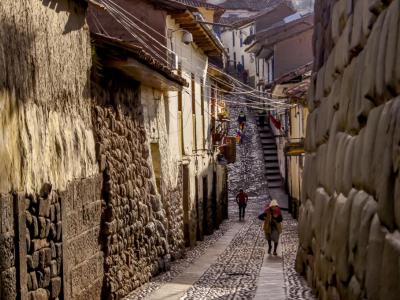
Hatun Rumiyoc Street in Cusco stands as a testament to the architectural prowess of the ancient Inca civilization. This well-preserved, narrow cobbled pedestrian street once served as a pathway to the Antisuyu quarter of the Inca Empire and features some of the most iconic remnants of Inca engineering. The street is famous for the Twelve-Angled Stone, a marvel of stonework located roughly at its midpoint. This intricately carved stone boasts twelve corners and fits seamlessly with the surrounding stones without the use of mortar, a testament to the precision of Inca craftsmanship.
The historical significance of Hatun Rumiyoc Street is further underscored by the remnants of Inka Roca Palace, an impressive wall that dominates much of the street. This site once served as a palace for Inca nobility before being taken over by Spanish conquerors and later transformed into the Archbishop’s Palace in the early 20th century. Today, it houses Cusco’s Religious Art Museum, which showcases works from the Escuela Cusqueña period.
The street offers a unique visual experience, particularly striking under the street lights at night, which highlight the three-dimensional aspect of the ancient stones, providing excellent photographic opportunities. During the day, visitors can capture a moment with an Inca in traditional attire, near the Twelve-Angled Stone, for a small fee. The street's journey ends at its intersection with Choquechaca Street (Calle Choquechaca), where it transitions into a narrow road leading into the San Blas district, continuing its uphill route amidst modern vehicular traffic. Hatun Rumiyoc Street not only reflects the historical and cultural heritage of Cusco but also offers a blend of ancient allure and contemporary life.
The historical significance of Hatun Rumiyoc Street is further underscored by the remnants of Inka Roca Palace, an impressive wall that dominates much of the street. This site once served as a palace for Inca nobility before being taken over by Spanish conquerors and later transformed into the Archbishop’s Palace in the early 20th century. Today, it houses Cusco’s Religious Art Museum, which showcases works from the Escuela Cusqueña period.
The street offers a unique visual experience, particularly striking under the street lights at night, which highlight the three-dimensional aspect of the ancient stones, providing excellent photographic opportunities. During the day, visitors can capture a moment with an Inca in traditional attire, near the Twelve-Angled Stone, for a small fee. The street's journey ends at its intersection with Choquechaca Street (Calle Choquechaca), where it transitions into a narrow road leading into the San Blas district, continuing its uphill route amidst modern vehicular traffic. Hatun Rumiyoc Street not only reflects the historical and cultural heritage of Cusco but also offers a blend of ancient allure and contemporary life.
6) Archbishop Palace and Twelve-Angle Stone
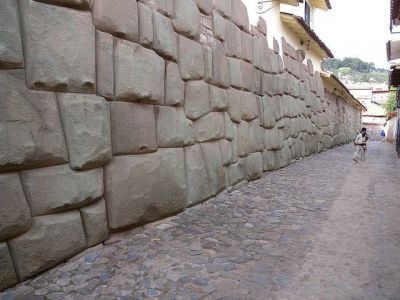
You'll find the Archbishop Palace and the Twelve-Angled Stone along Hatun Rumiyoq Street. The most impressive part of the walk up the street is the Inca stone walls that make up the palace.
The Twelve-Angled Stone is part of the palace wall. It's noted for its fine finishing and stands as a testament to the advanced stonework created by the Inca. While other stones have as many angles, this is the best-known twelve-angle stone.
The palace was home to the sixth Inca emperor, Inca Roca. After the Spanish conquest, it was dismantled and rebuilt into farmhouses for Spanish landowners. It features a Renaissance courtyard with arches. A large pool and decorative tiles round out the colonial features added.
Today, the palace is home to the Religious Art Museum. In addition to the Twelve-Angle Stone, you can view a collection of colonial religious paintings. Several Andean paintings by masters like Juan Zapata are also on display. The structure is also beautiful, full of carved cedar ceilings, Moorish-style doors, and gorgeous stained glass windows.
The Twelve-Angled Stone is part of the palace wall. It's noted for its fine finishing and stands as a testament to the advanced stonework created by the Inca. While other stones have as many angles, this is the best-known twelve-angle stone.
The palace was home to the sixth Inca emperor, Inca Roca. After the Spanish conquest, it was dismantled and rebuilt into farmhouses for Spanish landowners. It features a Renaissance courtyard with arches. A large pool and decorative tiles round out the colonial features added.
Today, the palace is home to the Religious Art Museum. In addition to the Twelve-Angle Stone, you can view a collection of colonial religious paintings. Several Andean paintings by masters like Juan Zapata are also on display. The structure is also beautiful, full of carved cedar ceilings, Moorish-style doors, and gorgeous stained glass windows.
7) The Four Busts House
The House of the Four Busts in Cusco stands as a notable example of Spanish colonial architecture seamlessly integrated with the ancient Inca foundations. This historically rich mansion is located in the center of Cusco. Its proximity to the Main Square (Plaza Mayor) allows easy access for visitors, with a brief seven-minute walk from Portal Belén through Loreto Street and Maruri Street leading directly to the mansion.
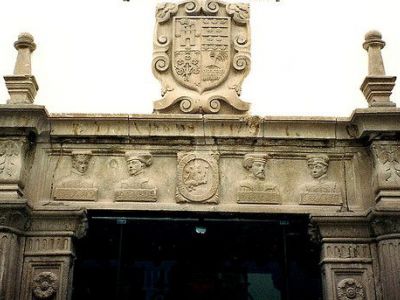
Originally inhabited by Francisco Pizarro, the mansion later became the residence of Marquis Don Juan Salas y Valdez, who added a second floor and adorned the exterior facade with four stone-carved busts of his family, symbolizing their noble status and Spanish heritage. These busts depict Marquis Don Juan de Salas, his wife Usenda Bazan, their son Fernando Salas, and his wife Leonor de Tordoya Palomino, positioned around a central coat of arms featuring a castle, lion, fleur-de-lis, blades, and sword, crowned by a lion.
Today, the building serves as the Inka Palace (Palacio Inka) hotel, a name that honors its ancestral and cultural origins. The hotel retains the mansion’s original charm, with a façade that boasts the distinctive colonial design and the iconic busts. Upon entering, visitors are welcomed into a courtyard framed by stone arches, adorned with floral and artistic details, reflecting the mansion’s historical legacy and its role in the cultural amalgamation that occurred during the Spanish conquest of Peru. This site not only encapsulates a piece of Cusco’s colonial past but also serves as a living museum, telling the story of its time through architecture and artistry.
Originally inhabited by Francisco Pizarro, the mansion later became the residence of Marquis Don Juan Salas y Valdez, who added a second floor and adorned the exterior facade with four stone-carved busts of his family, symbolizing their noble status and Spanish heritage. These busts depict Marquis Don Juan de Salas, his wife Usenda Bazan, their son Fernando Salas, and his wife Leonor de Tordoya Palomino, positioned around a central coat of arms featuring a castle, lion, fleur-de-lis, blades, and sword, crowned by a lion.
Today, the building serves as the Inka Palace (Palacio Inka) hotel, a name that honors its ancestral and cultural origins. The hotel retains the mansion’s original charm, with a façade that boasts the distinctive colonial design and the iconic busts. Upon entering, visitors are welcomed into a courtyard framed by stone arches, adorned with floral and artistic details, reflecting the mansion’s historical legacy and its role in the cultural amalgamation that occurred during the Spanish conquest of Peru. This site not only encapsulates a piece of Cusco’s colonial past but also serves as a living museum, telling the story of its time through architecture and artistry.
8) Coricancha and Convent of Santo Domingo (must see)
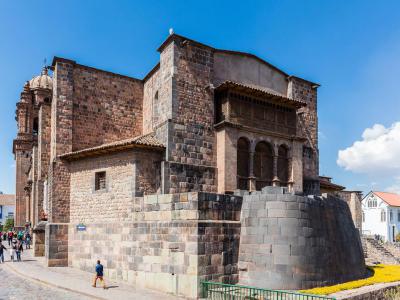
The Coricancha, "Golden Temple" or sometimes "Temple of the Sun," was the most important temple in the Inca Empire. Unfortunately, most of the temple was destroyed by Spanish conquistadors, but the remaining stonework was used to make the foundation of the Santo Domingo Convent.
You'll notice many variations of spelling used for "Coricancha" since there is no single agreed-upon English spelling. A few alternatives that you'll see include Qorikancha and Koricancha.
The Inca used ashlar masonry to construct Coricancha. This alone is a testament to the building's importance since ashlar is labor intensive and requires the use of only perfectly faced and squared stones.
At one time, the walls of Coricancha were covered in gold, and the courtyards were filled with gold statues. The Spanish described the opulence as "fabulous beyond belief." In 1533, the Spanish demanded a gold ransom for the Inca leader Atahualpa's life. Most of the gold came from Coricancha. A nearby archaeological museum has a collection of mummies, idols, and textiles from the site.
The Spanish eventually built the Convent of Santo Domingo on the site. Some of the stones from Coricancha were used for the foundation, and others found their way into other churches around town.
The convent was the first Dominican convent in Peru. It was founded in 1534, and the first building was completed in 1610. Unfortunately, a severe earthquake caused an earlier structure to collapse completely.
The building you see today was built in 1680. The baroque bell tower was added in the early 1700s. The museum here is divided into four areas: the Coricancha, the Cusco School, a contemporary art collection, and a collection of work collected by the convent to recognize modern works made in the city of Cusco.
You'll notice many variations of spelling used for "Coricancha" since there is no single agreed-upon English spelling. A few alternatives that you'll see include Qorikancha and Koricancha.
The Inca used ashlar masonry to construct Coricancha. This alone is a testament to the building's importance since ashlar is labor intensive and requires the use of only perfectly faced and squared stones.
At one time, the walls of Coricancha were covered in gold, and the courtyards were filled with gold statues. The Spanish described the opulence as "fabulous beyond belief." In 1533, the Spanish demanded a gold ransom for the Inca leader Atahualpa's life. Most of the gold came from Coricancha. A nearby archaeological museum has a collection of mummies, idols, and textiles from the site.
The Spanish eventually built the Convent of Santo Domingo on the site. Some of the stones from Coricancha were used for the foundation, and others found their way into other churches around town.
The convent was the first Dominican convent in Peru. It was founded in 1534, and the first building was completed in 1610. Unfortunately, a severe earthquake caused an earlier structure to collapse completely.
The building you see today was built in 1680. The baroque bell tower was added in the early 1700s. The museum here is divided into four areas: the Coricancha, the Cusco School, a contemporary art collection, and a collection of work collected by the convent to recognize modern works made in the city of Cusco.
9) Centro Artesanal Cuzco (Handicraft Center Cusco)
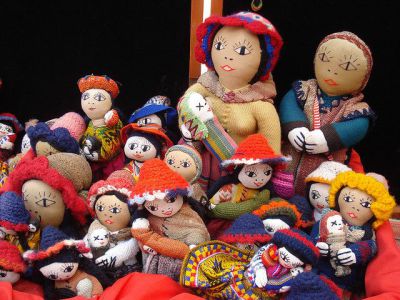
The Handicraft Center Cusco (Centro Artesanal Cuzco), located at the bustling intersection of Sun Avenue (Avenida El Sol) and Tullumayo Avenue (Avenida Tullumayo) in Cusco, stands as a vibrant hub of Andean culture and craftsmanship. This expansive facility, measuring 4,800 square meters, hosts an impressive 350 stores, making it the largest craft market in Cusco.
At Handicraft Center, visitors can explore a vast array of high-quality products ranging from Andean jewelry, intricately woven textiles, and alpaca wool clothing to colorful pottery, handmade fabrics, and unique silver and gold jewelry. Each item reflects the rich cultural heritage of the region, offered at prices that appeal to a variety of budgets.
The center is not just about shopping; it's an immersive cultural experience. Live art areas and a gastronomic section enhance the visit, allowing patrons to enjoy local cuisine while appreciating the craftsmanship. Artisans can be seen working on their crafts, offering visitors a chance to interact and learn about the artistic processes firsthand.
Adding to its cultural offerings, Handicraft Center Cusco includes art galleries featuring modern crafts inspired by pre-Columbian art, detailed silverware, paintings, and other artistic expressions. Visitors can also enjoy a spiritual moment at the back of the center, where a dedicated space houses the image of the Virgin of Rosario, surrounded by long benches for prayer and reflection.
For convenience, the center is equipped with comfortable facilities, ensuring a safe and welcoming environment. Additional amenities like ATMs and the soothing sounds of Andean music played on traditional instruments such as panpipes and quenas further enrich the shopping experience.
At Handicraft Center, visitors can explore a vast array of high-quality products ranging from Andean jewelry, intricately woven textiles, and alpaca wool clothing to colorful pottery, handmade fabrics, and unique silver and gold jewelry. Each item reflects the rich cultural heritage of the region, offered at prices that appeal to a variety of budgets.
The center is not just about shopping; it's an immersive cultural experience. Live art areas and a gastronomic section enhance the visit, allowing patrons to enjoy local cuisine while appreciating the craftsmanship. Artisans can be seen working on their crafts, offering visitors a chance to interact and learn about the artistic processes firsthand.
Adding to its cultural offerings, Handicraft Center Cusco includes art galleries featuring modern crafts inspired by pre-Columbian art, detailed silverware, paintings, and other artistic expressions. Visitors can also enjoy a spiritual moment at the back of the center, where a dedicated space houses the image of the Virgin of Rosario, surrounded by long benches for prayer and reflection.
For convenience, the center is equipped with comfortable facilities, ensuring a safe and welcoming environment. Additional amenities like ATMs and the soothing sounds of Andean music played on traditional instruments such as panpipes and quenas further enrich the shopping experience.
10) Pachacuti Monument
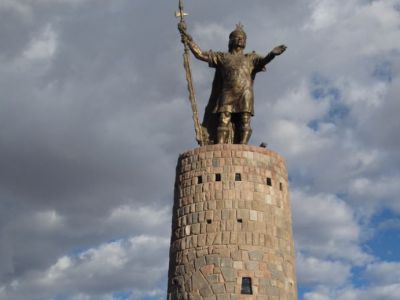
The Monument to Pachacuti in Cusco stands as a modern tribute to one of the most significant figures in the history of the Inca Empire-Emperor Pachacuti. Located on the bustling Sun Avenue, this architectural marvel is easily recognized by its unique conical structure, which is reminiscent of ancient Inca buildings. The monument reaches a total height of over 30 meters, combining a cylindrical stone base with a towering bronze statue of the emperor himself.
The stone base of the monument is constructed from stones sourced from various communities around Cusco. It is composed of nine levels and reaches 22.40 meters in height. Above this, the bronze statue of Pachacutec extends an additional 11.50 meters, culminating in a striking depiction of the emperor that overlooks the city.
Inside, the monument houses a museum dedicated to the Inca civilization. This museum spans the nine levels of the base and features a variety of displays, including panels, infographics, photographs, and maps that highlight the rich history and culture of the Incas and the city of Cusco itself. Educational exhibitions provide visitors with insights into the numerous achievements of Pachacuti.
Visitors can ascend to the top of the monument, where they are rewarded with panoramic views of Cusco. This vantage point, coupled with its historical significance, makes the Monument to Pachacuti one of the most photographed attractions in the city.
The stone base of the monument is constructed from stones sourced from various communities around Cusco. It is composed of nine levels and reaches 22.40 meters in height. Above this, the bronze statue of Pachacutec extends an additional 11.50 meters, culminating in a striking depiction of the emperor that overlooks the city.
Inside, the monument houses a museum dedicated to the Inca civilization. This museum spans the nine levels of the base and features a variety of displays, including panels, infographics, photographs, and maps that highlight the rich history and culture of the Incas and the city of Cusco itself. Educational exhibitions provide visitors with insights into the numerous achievements of Pachacuti.
Visitors can ascend to the top of the monument, where they are rewarded with panoramic views of Cusco. This vantage point, coupled with its historical significance, makes the Monument to Pachacuti one of the most photographed attractions in the city.
11) San Pedro Central Market (must see)
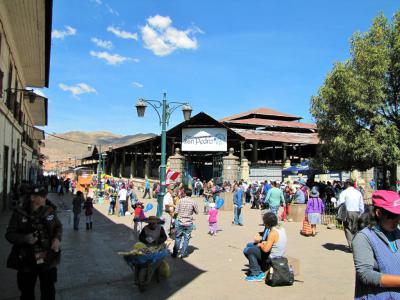
San Pedro Central Market in Cusco is a vibrant and bustling hub that encapsulates the rich cultural tapestry of the region. Dating back to colonial times, the market originally served as a gathering spot for various merchants on the streets of Cusco. Over the years, it has undergone architectural transformations to become a more organized and clean space, attracting not only locals but also tourists from around the world.
Located just a short walk from the Main Square (Plaza de Armas) in Cusco, the market offers a genuine glimpse into the daily lives and customs of the Cusqueñians. It is especially renowned for its eclectic array of foods, including local delicacies like chicharrones made from pig heads, sheep head soup, and more exotic offerings such as frog juice, believed to boost intelligence.
For those interested in traditional crafts and souvenirs, San Pedro is a treasure trove. The market features a wide range of textiles made from alpaca, llama, and sheep wool, often blended with synthetic materials. It also offers ceramics, leather goods, and a variety of hand-made items, all available at negotiable prices, providing a perfect opportunity for bargain hunters.
Additionally, the market is a fantastic place to explore Peruvian biodiversity, with a section dedicated to local fruits that were domesticated by the Incas. Visitors can try rare fruits like chirimoya, lucuma, and granadilla, and learn about their uses and significance.
San Pedro Market also serves as a cultural center where visitors can observe traditional rituals and offerings to Pachamama (Mother Earth), including the sale of llama and alpaca fetuses, old coins, and incense.
A visit to San Pedro Central Market offers an authentic slice of everyday life in Cusco, making it a must-visit destination for those looking to immerse themselves in the local culture and gastronomy.
Located just a short walk from the Main Square (Plaza de Armas) in Cusco, the market offers a genuine glimpse into the daily lives and customs of the Cusqueñians. It is especially renowned for its eclectic array of foods, including local delicacies like chicharrones made from pig heads, sheep head soup, and more exotic offerings such as frog juice, believed to boost intelligence.
For those interested in traditional crafts and souvenirs, San Pedro is a treasure trove. The market features a wide range of textiles made from alpaca, llama, and sheep wool, often blended with synthetic materials. It also offers ceramics, leather goods, and a variety of hand-made items, all available at negotiable prices, providing a perfect opportunity for bargain hunters.
Additionally, the market is a fantastic place to explore Peruvian biodiversity, with a section dedicated to local fruits that were domesticated by the Incas. Visitors can try rare fruits like chirimoya, lucuma, and granadilla, and learn about their uses and significance.
San Pedro Market also serves as a cultural center where visitors can observe traditional rituals and offerings to Pachamama (Mother Earth), including the sale of llama and alpaca fetuses, old coins, and incense.
A visit to San Pedro Central Market offers an authentic slice of everyday life in Cusco, making it a must-visit destination for those looking to immerse themselves in the local culture and gastronomy.
12) Santa Clara Convent
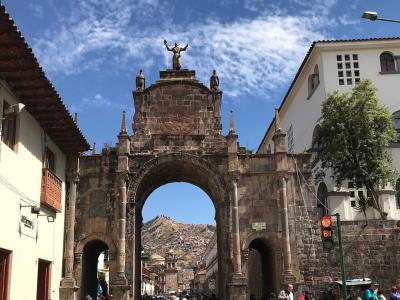
The Convent and Church of Santa Clara in Cusco is a religious and tourist landmark just 600 meters from the city's Main Square. Founded initially as a beguinage in 1549, the institution served to house mestizo girls, descendants of the Incas. Its first location was in the Inca neighborhood of Chaquilchaca, later moving in 1558 to Casa Cabrera, and finally established at its current location on Santa Clara Street.
Constructed in 1602 and reshaped after the 1650 earthquake, the architecture of Santa Clara showcases the Andean Baroque style. The building is noted for its resilience, particularly its stone and adobe structure, which helped it withstand subsequent earthquakes in 1650 and 1950 with only minor damages to the bell tower.
The convent, now managed by the Poor Clare nuns, remains an active religious site and houses an impressive collection of colonial relics, including Cusco school canvases, altarpieces, and liturgical objects made of gold and silver. The interior is renowned for its main altar, lavishly adorned with mirrors, earning it the nickname ‘the resplendent church of Cusco’. Its single nave, rectangular layout, and high bell tower exemplify its architectural significance. Despite its more restrained external ornamentation compared to other local colonial churches, its strong walls and solid bell tower are notable.
Today, Santa Clara continues to receive visitors and retains its historical role in educating girls. It also serves daily masses, attracting both locals and tourists. The location of the convent on an ancient royal Inca trail adds to its historical allure, making it a central piece in understanding both the colonial and pre-Columbian past of Cusco.
Constructed in 1602 and reshaped after the 1650 earthquake, the architecture of Santa Clara showcases the Andean Baroque style. The building is noted for its resilience, particularly its stone and adobe structure, which helped it withstand subsequent earthquakes in 1650 and 1950 with only minor damages to the bell tower.
The convent, now managed by the Poor Clare nuns, remains an active religious site and houses an impressive collection of colonial relics, including Cusco school canvases, altarpieces, and liturgical objects made of gold and silver. The interior is renowned for its main altar, lavishly adorned with mirrors, earning it the nickname ‘the resplendent church of Cusco’. Its single nave, rectangular layout, and high bell tower exemplify its architectural significance. Despite its more restrained external ornamentation compared to other local colonial churches, its strong walls and solid bell tower are notable.
Today, Santa Clara continues to receive visitors and retains its historical role in educating girls. It also serves daily masses, attracting both locals and tourists. The location of the convent on an ancient royal Inca trail adds to its historical allure, making it a central piece in understanding both the colonial and pre-Columbian past of Cusco.
13) Pedazo de Arte
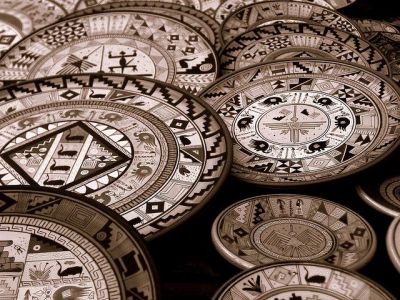
Located in the heart of Cusco, Pedazo de Arte is a distinctive store established in 1993 that offers an exquisite collection of both modern and traditional handicrafts. With a name that translates to "piece of art," the store truly lives up to its name by showcasing a wide variety of original items, numbering over 1,000 unique pieces. The offerings include Peruvian folkcraft, stationery, home decor, and jewelry, as well as unique antiques that can’t be found elsewhere.
The highlight of Pedazo de Arte's collection includes an array of Andean-themed silver and gold bracelets and necklaces, intricate pottery, and high-quality alpaca clothing. Each piece in the store is a reflection of the profound influence of pre-colonial civilizations, brought to life through the creative talents of Miki Suzuki, a Japanese artist known for her passion for Inca culture and history.
Every purchase at Pedazo de Arte is wrapped with care and love, enhancing the customer experience. Additionally, shoppers receive a hand-drawn original map of Cusco, adding a personal touch that enriches their visit. Pedazo de Arte stands out not only for its products but also for its commitment to enhancing its clients' experience through creativity and originality, whether their needs are small or large. This unique shop remains a cherished destination for those looking to take a piece of Peruvian art and culture back home.
The highlight of Pedazo de Arte's collection includes an array of Andean-themed silver and gold bracelets and necklaces, intricate pottery, and high-quality alpaca clothing. Each piece in the store is a reflection of the profound influence of pre-colonial civilizations, brought to life through the creative talents of Miki Suzuki, a Japanese artist known for her passion for Inca culture and history.
Every purchase at Pedazo de Arte is wrapped with care and love, enhancing the customer experience. Additionally, shoppers receive a hand-drawn original map of Cusco, adding a personal touch that enriches their visit. Pedazo de Arte stands out not only for its products but also for its commitment to enhancing its clients' experience through creativity and originality, whether their needs are small or large. This unique shop remains a cherished destination for those looking to take a piece of Peruvian art and culture back home.
