Custom Walk in Chester, England by billnoon22_e26f8 created on 2025-04-15
Guide Location: England » Chester
Guide Type: Custom Walk
# of Sights: 13
Tour Duration: 2 Hour(s)
Travel Distance: 3.7 Km or 2.3 Miles
Share Key: WZXHB
Guide Type: Custom Walk
# of Sights: 13
Tour Duration: 2 Hour(s)
Travel Distance: 3.7 Km or 2.3 Miles
Share Key: WZXHB
How It Works
Please retrieve this walk in the GPSmyCity app. Once done, the app will guide you from one tour stop to the next as if you had a personal tour guide. If you created the walk on this website or come to the page via a link, please follow the instructions below to retrieve the walk in the app.
Retrieve This Walk in App
Step 1. Download the app "GPSmyCity: Walks in 1K+ Cities" on Apple App Store or Google Play Store.



Step 2. In the GPSmyCity app, download(or launch) the guide "Chester Map and Walking Tours".
Step 3. Tap the menu button located at upper right corner of the "Walks" screen and select "Retrieve custom walk". Enter the share key: WZXHB
1) Chester City Walls (must see)
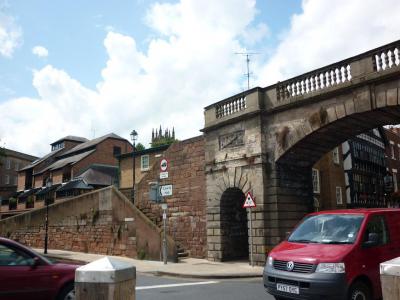
The Chester City Walls were built by Romans when the Deva Victrix fortress was established between 70 and 80 ADE. The walls were built as defensive structures, but took more than 100 years to complete. The construction was carried out using sandstone and a wooden palisade.
The walls were expanded after the Norman conquest. The full circuit was completed in the mid-12th century. The walls were severely damaged during the English Civil War, after which they were no longer needed for defense.
The city chose to repair the walls for recreational use in 1707. The gates were rebuilt with wider arches to allow more walkers to use the walls. A number of steps were also added to make walking easier for pedestrians. The Chester City Walls form a walkway of about 1.8 miles.
The city walls continue to be a primary tourist attraction in the city. This is largely due to the fact that the walls are the oldest in all of Britain. They are also the most complete and the longest city walls in the country.
Those who wish to walk along the walls can access them from one of four main gateways. These gateways are Northgate, Eastgate, Watergate and Bridgegate. The walls are also accessible by steps and some accessible ramps in the city. Visitors should plan their entry points in advance as water damage regularly causes closures of certain areas.
The city walls regularly undergo repair projects in order to maintain the safety of walkers.
Why You Should Visit:
- To see the largest and oldest city walls in Britain
- To have an excellent view of the city from multiple vantage points
Tips:
Chester Walls are open throughout the year with open and free access.
The walls were expanded after the Norman conquest. The full circuit was completed in the mid-12th century. The walls were severely damaged during the English Civil War, after which they were no longer needed for defense.
The city chose to repair the walls for recreational use in 1707. The gates were rebuilt with wider arches to allow more walkers to use the walls. A number of steps were also added to make walking easier for pedestrians. The Chester City Walls form a walkway of about 1.8 miles.
The city walls continue to be a primary tourist attraction in the city. This is largely due to the fact that the walls are the oldest in all of Britain. They are also the most complete and the longest city walls in the country.
Those who wish to walk along the walls can access them from one of four main gateways. These gateways are Northgate, Eastgate, Watergate and Bridgegate. The walls are also accessible by steps and some accessible ramps in the city. Visitors should plan their entry points in advance as water damage regularly causes closures of certain areas.
The city walls regularly undergo repair projects in order to maintain the safety of walkers.
Why You Should Visit:
- To see the largest and oldest city walls in Britain
- To have an excellent view of the city from multiple vantage points
Tips:
Chester Walls are open throughout the year with open and free access.
2) Chester Castle
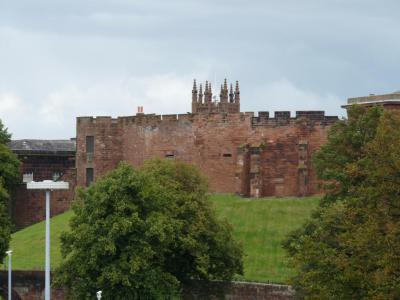
Chester Castle, located in Chester’s southwest corner, blends medieval fortifications with Neoclassical grandeur, overlooking the River Dee. Built in 1070 by Hugh d'Avranches, the original motte-and-bailey design featured a wooden tower, later replaced in the 12th century by the stone Flag Tower and the Agricola Tower. The latter houses the Chapel of Saint Mary de Castro, showcasing fine Norman architecture.
Under Henry III in the 13th century, Chester Castle gained outer walls, royal quarters, and the Great Hall. Edward I added further fortifications, including a new gateway with half-drum towers, royal chambers, and stables.
In the late 18th century, architect Thomas Harrison transformed the site with striking Neoclassical designs. Visitors enter through The Propylaeum, featuring Doric columns and flanked by temple-like lodges. The former Shire Hall, now the Crown Court, boasts an imposing 19-bay façade. Adjacent stands the barracks block, home to the Cheshire Military Museum, and the armory block, once an officers’ mess.
The castle’s medieval core, including the Agricola Tower, remains intact. The first-floor chapel still holds services and features 13th-century frescoes depicting the Visitation and miracles of the Virgin Mary, uncovered during 1990s conservation.
Managed by Cheshire West and Chester Council for English Heritage, Chester Castle offers visitors a glimpse of England’s architectural evolution. With its Grade I listed walls, historic chapel, and Victorian statue of Queen Victoria, the castle remains a captivating blend of medieval and Neoclassical heritage.
Under Henry III in the 13th century, Chester Castle gained outer walls, royal quarters, and the Great Hall. Edward I added further fortifications, including a new gateway with half-drum towers, royal chambers, and stables.
In the late 18th century, architect Thomas Harrison transformed the site with striking Neoclassical designs. Visitors enter through The Propylaeum, featuring Doric columns and flanked by temple-like lodges. The former Shire Hall, now the Crown Court, boasts an imposing 19-bay façade. Adjacent stands the barracks block, home to the Cheshire Military Museum, and the armory block, once an officers’ mess.
The castle’s medieval core, including the Agricola Tower, remains intact. The first-floor chapel still holds services and features 13th-century frescoes depicting the Visitation and miracles of the Virgin Mary, uncovered during 1990s conservation.
Managed by Cheshire West and Chester Council for English Heritage, Chester Castle offers visitors a glimpse of England’s architectural evolution. With its Grade I listed walls, historic chapel, and Victorian statue of Queen Victoria, the castle remains a captivating blend of medieval and Neoclassical heritage.
3) Bear and Billet
The Bear and Billet, a historic public house on Lower Bridge Street in Chester, is a quintessential example of 17th-century timber-framed architecture. Recognized as a Grade I listed building, it holds the distinction of being one of the finest and last remaining timber-framed townhouses in England, celebrated for its exceptional craftsmanship and historical significance.
Constructed in 1664, the building originally served as the town residence for the Earls of Shrewsbury, who oversaw the nearby Bridgegate. While its primary function was residential, it likely doubled as a grain warehouse, evidenced by the double doors and a hoist bracket on its street-facing gable. By the 18th century, the property transitioned into an inn, retaining connections to the Shrewsbury family until 1867. Its name, Bear and Billet, references the heraldic emblem of the Earls, depicting a bear tethered to a billet (or stake).
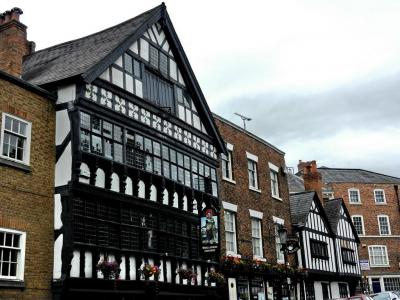
The building’s design is a striking showcase of timber framing with plaster panels, rising from its cellars to include three stories and an attic. The jettied stories create a layered façade, adding depth and visual intrigue. The roof, clad in purple slates, runs at a right angle to the street, crowned by a carved bargeboard and a decorative finial at the gable’s apex.
The ground floor has two doors (one central, one to the south) framed by three-light windows. The first floor showcases 16 plaster panels and a 32-light mullioned and transomed window with leaded lights. The second floor includes 12 arched timber panels and a wide window like the one below, topped by 12 square decorative panels. The attic features a double timber door with panels and two light-led windows, while the gable’s apex displays decorative herringbone timber framing.
Today, the Bear and Billet stands as a cherished piece of Chester’s architectural and cultural heritage. Its legacy as both a residence and an inn, combined with its impeccable timber-framed design, makes it a landmark worth admiring for history enthusiasts and casual visitors alike.
Constructed in 1664, the building originally served as the town residence for the Earls of Shrewsbury, who oversaw the nearby Bridgegate. While its primary function was residential, it likely doubled as a grain warehouse, evidenced by the double doors and a hoist bracket on its street-facing gable. By the 18th century, the property transitioned into an inn, retaining connections to the Shrewsbury family until 1867. Its name, Bear and Billet, references the heraldic emblem of the Earls, depicting a bear tethered to a billet (or stake).
The building’s design is a striking showcase of timber framing with plaster panels, rising from its cellars to include three stories and an attic. The jettied stories create a layered façade, adding depth and visual intrigue. The roof, clad in purple slates, runs at a right angle to the street, crowned by a carved bargeboard and a decorative finial at the gable’s apex.
The ground floor has two doors (one central, one to the south) framed by three-light windows. The first floor showcases 16 plaster panels and a 32-light mullioned and transomed window with leaded lights. The second floor includes 12 arched timber panels and a wide window like the one below, topped by 12 square decorative panels. The attic features a double timber door with panels and two light-led windows, while the gable’s apex displays decorative herringbone timber framing.
Today, the Bear and Billet stands as a cherished piece of Chester’s architectural and cultural heritage. Its legacy as both a residence and an inn, combined with its impeccable timber-framed design, makes it a landmark worth admiring for history enthusiasts and casual visitors alike.
4) Billy Hobby's Well
Nestled within the serene Grosvenor Park in Chester, Billy Hobby's Well is a historical gem with an air of mystery. This Grade II listed structure is not just an architectural piece but also a nod to local folklore. Grosvenor Park itself owes its existence to Richard Grosvenor, 2nd Marquess of Westminster, who donated the land in the 1860s. Among the rolling fields overlooking the River Dee, the largest was known as Billy Obbies' Field, home to a spring reputed for its magical powers. Legend has it that hopeful maidens once stood with their right leg in the water, wishing for a husband.
As the park took shape, Chester architect John Douglas was commissioned to design various features, including the charming canopy that now shelters the well. Over time, the well transitioned into a pump house for the park's water garden.
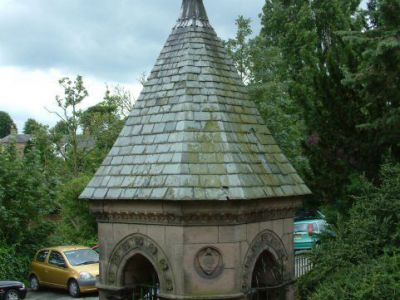
The canopy is a striking example of Victorian craftsmanship, constructed from red and buff sandstone ashlar. Its square plinth with canted corners supports pointed arches framed by granite columns and adorned with wrought iron bars. The arches themselves are crowned by carved roses, while the corners feature intricate carvings of sheaves and portcullises. Above it all, a tiled spire rises, topped with a lead finial and a charming copper fish weather vane, which adds a whimsical touch to this historical structure.
Billy Hobby's Well is more than a picturesque feature of Grosvenor Park-it’s a tangible link to Chester’s past, blending folklore, history, and Victorian design into a unique landmark.
As the park took shape, Chester architect John Douglas was commissioned to design various features, including the charming canopy that now shelters the well. Over time, the well transitioned into a pump house for the park's water garden.
The canopy is a striking example of Victorian craftsmanship, constructed from red and buff sandstone ashlar. Its square plinth with canted corners supports pointed arches framed by granite columns and adorned with wrought iron bars. The arches themselves are crowned by carved roses, while the corners feature intricate carvings of sheaves and portcullises. Above it all, a tiled spire rises, topped with a lead finial and a charming copper fish weather vane, which adds a whimsical touch to this historical structure.
Billy Hobby's Well is more than a picturesque feature of Grosvenor Park-it’s a tangible link to Chester’s past, blending folklore, history, and Victorian design into a unique landmark.
5) Chester Roman Amphitheatre
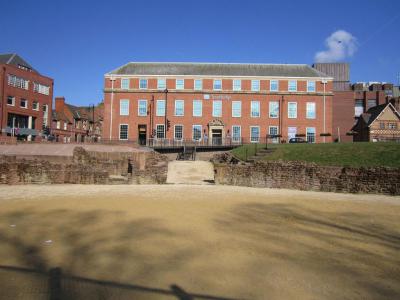
Chester Amphitheatre is a Roman amphitheater. It is the largest uncovered Roman amphitheater in Great Britain. The amphitheater was first discovered in 1929 when gardening works at one of the buildings on the southern end of the arena revealed a long curved wall.
The earliest amphitheater is believed to have been built between 70 and 80 ADE by the Roman army stationed in the Roman fortress of Deva Victrix. The amphitheater was in active use through much of the Roman occupation of Britain and fell derelict following the Roman departure from Britain.
The ruins uncovered today are those of a large stone amphitheater, similar to those found in continental Europe. Historians believe that a smaller wooden amphitheater existed on the site beforehand and excavations since 1999 have shown that the wooden grillage is the base of the seating. Today, only the northern half of the structure is exposed; the southern half is covered by buildings.
There is a myth that the amphitheater was primarily for military training and drill. However, archaeological findings show that the amphitheater was used for cock fighting, boxing, wrestling and gladiatorial combat. Likewise, a number of cheap Roman pots with images of gladiatorial combat were uncovered. This led historians to believe this site was one of the first to create souvenirs for sale.
The amphitheater could easily seat 8,000 people making it the largest Roman amphitheater in Great Britain. Around it, a sprawling complex of dungeons, stables and food stands were built to support the contests, while a shrine to Nemesis, goddess of retribution, was built at the north entrance to the arena. The complex's unusual size and development has led historians to speculate that Chester would have become capital of Roman Britain had the Romans successfully captured Ireland.
Chester Amphitheatre is managed by English Heritage. It was designated as a Grade I listed building. The amphitheater is open daily during daylight hours. There is no admission to walk the grounds.
The earliest amphitheater is believed to have been built between 70 and 80 ADE by the Roman army stationed in the Roman fortress of Deva Victrix. The amphitheater was in active use through much of the Roman occupation of Britain and fell derelict following the Roman departure from Britain.
The ruins uncovered today are those of a large stone amphitheater, similar to those found in continental Europe. Historians believe that a smaller wooden amphitheater existed on the site beforehand and excavations since 1999 have shown that the wooden grillage is the base of the seating. Today, only the northern half of the structure is exposed; the southern half is covered by buildings.
There is a myth that the amphitheater was primarily for military training and drill. However, archaeological findings show that the amphitheater was used for cock fighting, boxing, wrestling and gladiatorial combat. Likewise, a number of cheap Roman pots with images of gladiatorial combat were uncovered. This led historians to believe this site was one of the first to create souvenirs for sale.
The amphitheater could easily seat 8,000 people making it the largest Roman amphitheater in Great Britain. Around it, a sprawling complex of dungeons, stables and food stands were built to support the contests, while a shrine to Nemesis, goddess of retribution, was built at the north entrance to the arena. The complex's unusual size and development has led historians to speculate that Chester would have become capital of Roman Britain had the Romans successfully captured Ireland.
Chester Amphitheatre is managed by English Heritage. It was designated as a Grade I listed building. The amphitheater is open daily during daylight hours. There is no admission to walk the grounds.
6) Chester Cathedral (must see)
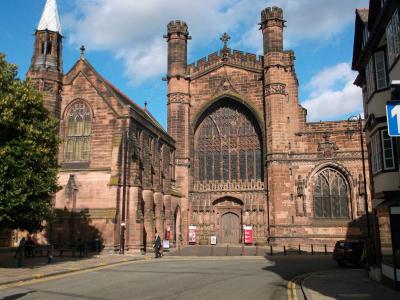
Chester Cathedral is a prominent Church of England cathedral and the mother church of the Diocese of Chester, located in the historic city of Chester. Originally the abbey church of a Benedictine monastery dedicated to Saint Werburgh, the cathedral is now dedicated to Christ and the Blessed Virgin Mary. Since 1541, it has served as the seat of the Bishop of Chester.
The cathedral is a Grade I listed building, renowned for its architectural significance. Construction spans several centuries, from the 10th to the early 16th century, showcasing a rich blend of Norman to Perpendicular English medieval styles. The site itself holds historical depth, with evidence suggesting Christian worship dating back to Roman times, possibly as a basilica under Legio XX Valeria Victrix during Chester’s era as a Roman stronghold.
The cathedral follows a traditional east-west cruciform layout, with an asymmetrical design reflecting its extensive history of modifications. A central tower rises above the crossing, while the west façade features contrasting towers from the Norman period and the early 16th century. The nave and choir are flanked by wide aisles, illuminated by clerestory and multi-light windows. The eastern end features an apse, a departure from the original symmetrical aisle arrangement.
To the north lie monastic buildings, including a cloister, refectory, and chapter house, which are also Grade I listed. These spaces reflect the cathedral’s monastic origins, providing insight into medieval ecclesiastical life.
The cathedral's storied past includes its role as a minster founded or refounded in 907, likely by Lady of the Mercians, to house the relics of Saint Werburgh. During the Middle Ages, it also became a site of veneration for Saint Barloc of Norbury. In 1057, Leofric, Earl of Mercia, and Lady Godiva restored the collegiate church before it was replaced by the current structure around 1090.
Chester Cathedral underwent extensive restoration in the 19th century, which included some controversial changes. A free-standing bell tower, a 20th-century addition, complements the historical architecture.
Today, Chester Cathedral is a hub of spiritual, cultural, and tourist activity. It hosts regular services, concerts, and exhibitions, attracting visitors from around the globe. The site is a living testament to Chester’s Roman, Saxon, and medieval heritage, making it a cornerstone of the city’s historical and architectural identity.
Why You Should Visit:
- To see one of the most popular tourist attractions in Chester
- To explore the beauty of medieval architecture
Tips:
The cafe and gift shop are open from 10 AM to 4 PM Monday through Saturday and from noon to 4 PM on Sundays. Visitors who wish to tour the interior of the cathedral must make advance arrangements for a 60-minute ground floor tour or a half-hour tour that ends with views from the cathedral's tower.
The cathedral is a Grade I listed building, renowned for its architectural significance. Construction spans several centuries, from the 10th to the early 16th century, showcasing a rich blend of Norman to Perpendicular English medieval styles. The site itself holds historical depth, with evidence suggesting Christian worship dating back to Roman times, possibly as a basilica under Legio XX Valeria Victrix during Chester’s era as a Roman stronghold.
The cathedral follows a traditional east-west cruciform layout, with an asymmetrical design reflecting its extensive history of modifications. A central tower rises above the crossing, while the west façade features contrasting towers from the Norman period and the early 16th century. The nave and choir are flanked by wide aisles, illuminated by clerestory and multi-light windows. The eastern end features an apse, a departure from the original symmetrical aisle arrangement.
To the north lie monastic buildings, including a cloister, refectory, and chapter house, which are also Grade I listed. These spaces reflect the cathedral’s monastic origins, providing insight into medieval ecclesiastical life.
The cathedral's storied past includes its role as a minster founded or refounded in 907, likely by Lady of the Mercians, to house the relics of Saint Werburgh. During the Middle Ages, it also became a site of veneration for Saint Barloc of Norbury. In 1057, Leofric, Earl of Mercia, and Lady Godiva restored the collegiate church before it was replaced by the current structure around 1090.
Chester Cathedral underwent extensive restoration in the 19th century, which included some controversial changes. A free-standing bell tower, a 20th-century addition, complements the historical architecture.
Today, Chester Cathedral is a hub of spiritual, cultural, and tourist activity. It hosts regular services, concerts, and exhibitions, attracting visitors from around the globe. The site is a living testament to Chester’s Roman, Saxon, and medieval heritage, making it a cornerstone of the city’s historical and architectural identity.
Why You Should Visit:
- To see one of the most popular tourist attractions in Chester
- To explore the beauty of medieval architecture
Tips:
The cafe and gift shop are open from 10 AM to 4 PM Monday through Saturday and from noon to 4 PM on Sundays. Visitors who wish to tour the interior of the cathedral must make advance arrangements for a 60-minute ground floor tour or a half-hour tour that ends with views from the cathedral's tower.
7) 27–31 Northgate Street
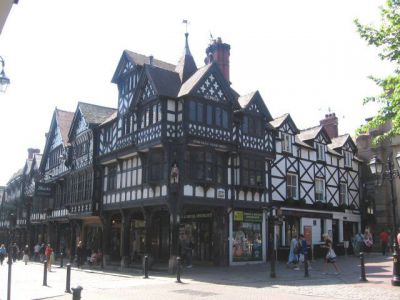
The building at 27–31 Northgate Street in Chester is a captivating mix of architectural styles and purposes, housing shops, offices, and a public house. Its dual-facing structure-one side overlooking Northgate Street, the other gazing out onto Town Hall Square-adds to its urban prominence.
The public house, likely originating in the early 19th century, anchors the building's historical roots. The rest of the structure was given a striking new frontage in 1902, courtesy of renowned architect John Douglas. The building rises to three stories, complemented by a small attic and cellars, offering a layered complexity characteristic of Chester’s historic streetscape.
The ground level features a charming three-bay arcade, its columns adorned with carved capitals. Above the capitals, niches hold intricately carved figures, adding a touch of Elizabethan theatricality. Musicians in period costumes grace the niches facing the street, while corner figures hold scrolls, visually linking the two facades.
The middle story is notable for its jettied design, a hallmark of traditional timber-framed buildings. Highlights include a two-light mullioned and transomed casement window at number 29 and a more elaborate four-light oriel window at number 31. A painted effigy of Edward VII, rendered in half-size, occupies a corner position, lending regal charm to the building’s ensemble.
The upper level is a testament to architectural intricacy. Number 27 features a simple two-light casement window. Number 28, however, boasts a jettied, gabled attic with a five-light casement window topped by a carved finial. Number 31 adds its flourish with a four-light casement window, a gabled attic with a shaped bargeboard, and another finely detailed finial. Rising above the gable, a flèche crowned with a gilt weather vane completes the decorative skyline.
27–31 Northgate Street exemplifies the fusion of historical elements and architectural innovation, showcasing the skill of John Douglas in marrying 19th-century practicality with the ornamentation of earlier periods. The building remains a cherished piece of Chester's urban fabric, its rich details inviting admiration from both locals and visitors.
The public house, likely originating in the early 19th century, anchors the building's historical roots. The rest of the structure was given a striking new frontage in 1902, courtesy of renowned architect John Douglas. The building rises to three stories, complemented by a small attic and cellars, offering a layered complexity characteristic of Chester’s historic streetscape.
The ground level features a charming three-bay arcade, its columns adorned with carved capitals. Above the capitals, niches hold intricately carved figures, adding a touch of Elizabethan theatricality. Musicians in period costumes grace the niches facing the street, while corner figures hold scrolls, visually linking the two facades.
The middle story is notable for its jettied design, a hallmark of traditional timber-framed buildings. Highlights include a two-light mullioned and transomed casement window at number 29 and a more elaborate four-light oriel window at number 31. A painted effigy of Edward VII, rendered in half-size, occupies a corner position, lending regal charm to the building’s ensemble.
The upper level is a testament to architectural intricacy. Number 27 features a simple two-light casement window. Number 28, however, boasts a jettied, gabled attic with a five-light casement window topped by a carved finial. Number 31 adds its flourish with a four-light casement window, a gabled attic with a shaped bargeboard, and another finely detailed finial. Rising above the gable, a flèche crowned with a gilt weather vane completes the decorative skyline.
27–31 Northgate Street exemplifies the fusion of historical elements and architectural innovation, showcasing the skill of John Douglas in marrying 19th-century practicality with the ornamentation of earlier periods. The building remains a cherished piece of Chester's urban fabric, its rich details inviting admiration from both locals and visitors.
8) 11–13 Northgate Street
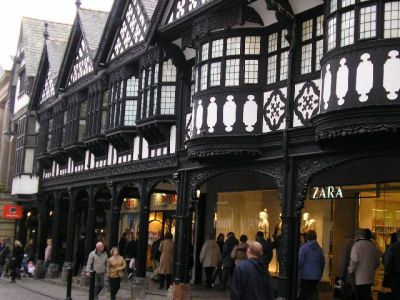
11–13 Northgate Street stands as a striking example of Chester's architectural charm, blending modern functionality with historic craftsmanship. This Grade II-listed structure is primarily celebrated for its magnificent bow windows on the upper floor, a hallmark of the building's design by the renowned local architect John Douglas. Built in 1900 for J. F. Denson and Sons, the building serves as a vivid representation of the city's timber-framed heritage.
The ground floor features a modern shop front recessed behind a charming arcade supported by Doric columns and rusticated piers. Above this contemporary addition, the upper storey exudes historical elegance. Decorated panels sit beneath two seven-light bowed oriel windows, each accompanied by additional side windows, creating a seamless row of glazing. The jettied gable adds to the visual appeal, showcasing two rows of quatrefoil panels and a carved bargeboard, embodying the traditional craftsmanship of Chester's timber-framed buildings.
Internally, the building reveals another layer of history, with its medieval sandstone undercrofts, offering a glimpse into the city's storied past. The use of black and white timber framing contrasts sharply with the brick construction, making the structure a notable feature of Northgate Street.
This building forms part of a terrace that includes shops, offices, and a public house, all characterized by a unique blend of architectural styles. Together, they represent Chester’s rich history, where medieval roots meet Victorian ingenuity, creating a vibrant urban streetscape.
The ground floor features a modern shop front recessed behind a charming arcade supported by Doric columns and rusticated piers. Above this contemporary addition, the upper storey exudes historical elegance. Decorated panels sit beneath two seven-light bowed oriel windows, each accompanied by additional side windows, creating a seamless row of glazing. The jettied gable adds to the visual appeal, showcasing two rows of quatrefoil panels and a carved bargeboard, embodying the traditional craftsmanship of Chester's timber-framed buildings.
Internally, the building reveals another layer of history, with its medieval sandstone undercrofts, offering a glimpse into the city's storied past. The use of black and white timber framing contrasts sharply with the brick construction, making the structure a notable feature of Northgate Street.
This building forms part of a terrace that includes shops, offices, and a public house, all characterized by a unique blend of architectural styles. Together, they represent Chester’s rich history, where medieval roots meet Victorian ingenuity, creating a vibrant urban streetscape.
9) 5–9 Northgate Street
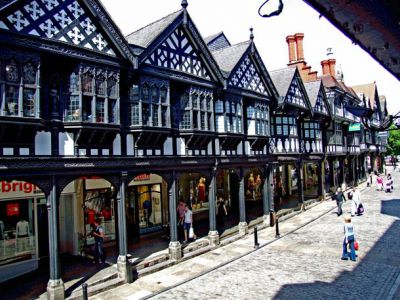
Located on the west side of Northgate Street in Chester, 5–9 Northgate Street forms part of the historic terrace known as Shoemakers' Row or Sadler's Row, a series of Grade II* and II listed buildings characterized by their timber-framed upper stories and set-back ground floors with covered walkways. Designed by prominent local architect John Douglas, who also owned the site, the building showcases the distinctive architectural flair typical of Chester's Rows.
Constructed in 1900, the building has two stories and six bays. Its ground floor features modern shopfronts recessed behind an arcade, elevated by two steps from the street. A carved bressumer, inscribed with the construction date, adorns the transition to the upper story. The first floor is defined by three pairs of canted five-light oriel windows, separated by intricately carved figures. The façade culminates in three gables, each decorated with carved bargeboards and finials, further emphasizing the craftsmanship.
In 1914, number 9 was reconstructed following a fire, preserving the building's architectural integrity. Notably, the terrace also includes a pair of brick houses, originally residences and later converted into offices. These have three stories, slate roofs, and two bays each. Their front elevations feature round-headed doorways with fanlights, fluted pillars, and decorative architraves, complemented by sash windows with wedge lintels. A modillion cornice crowns the structure.
The rich detailing and layered history of 5–9 Northgate Street exemplify Chester’s blend of functionality and heritage, making it a standout feature of one of the city’s most celebrated streets.
Constructed in 1900, the building has two stories and six bays. Its ground floor features modern shopfronts recessed behind an arcade, elevated by two steps from the street. A carved bressumer, inscribed with the construction date, adorns the transition to the upper story. The first floor is defined by three pairs of canted five-light oriel windows, separated by intricately carved figures. The façade culminates in three gables, each decorated with carved bargeboards and finials, further emphasizing the craftsmanship.
In 1914, number 9 was reconstructed following a fire, preserving the building's architectural integrity. Notably, the terrace also includes a pair of brick houses, originally residences and later converted into offices. These have three stories, slate roofs, and two bays each. Their front elevations feature round-headed doorways with fanlights, fluted pillars, and decorative architraves, complemented by sash windows with wedge lintels. A modillion cornice crowns the structure.
The rich detailing and layered history of 5–9 Northgate Street exemplify Chester’s blend of functionality and heritage, making it a standout feature of one of the city’s most celebrated streets.
10) 1 Bridge Street
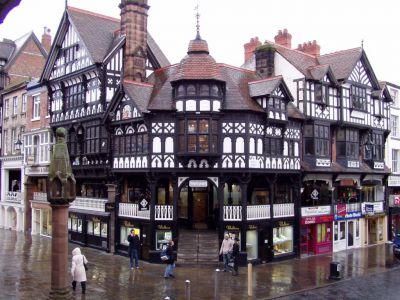
1 Bridge Street is a striking example of Chester’s iconic black-and-white revival architecture. Located at the bustling junction of Bridge Street and Eastgate Street at Chester Cross, the building is an integral part of the city’s historical and architectural charm. A Grade II* listed structure, it also incorporates part of the famous Chester Rows, adding to its historic significance.
Designed by Thomas Lockwood and completed in 1888 for the 1st Duke of Westminster, the building reflects Lockwood's most flamboyant style. It is considered by many, including the National Heritage List for England, to be his most admired work in Chester. By 1889, ownership had passed to Chester City Council, and today, the building serves as a hub for retail activity.
The four-story structure features an undercroft below street level, an attic, and impressive architectural detailing. A prominent octagonal turret at the corner marks the entrance, reached by a flight of seven steps leading to the Rows level. Above the steps, a canted, mullioned, and transomed oriel window draws attention, crowned by three pargetted panels and a four-light canted casement window beneath a curved roof topped with a weather vane.
The building boasts decorative panels, balustrades, and shopfronts that align seamlessly with the Rows’ unique layout. On Bridge Street, the third-story façade showcases intricate panels and a three-light window, while a gabled dormer adds to the visual complexity. Along Eastgate Street, a six-light window dominates the third story, flanked by panels that include the Grosvenor family arms. Above this, a dormer enhances the skyline, completing the building’s ornate and historic character.
Historian Simon Ward aptly described 1 Bridge Street as an “iconic” structure, a timeless representation of Chester’s architectural heritage. Its picturesque detailing and prominent location continue to make it a cherished landmark in the heart of the city.
Designed by Thomas Lockwood and completed in 1888 for the 1st Duke of Westminster, the building reflects Lockwood's most flamboyant style. It is considered by many, including the National Heritage List for England, to be his most admired work in Chester. By 1889, ownership had passed to Chester City Council, and today, the building serves as a hub for retail activity.
The four-story structure features an undercroft below street level, an attic, and impressive architectural detailing. A prominent octagonal turret at the corner marks the entrance, reached by a flight of seven steps leading to the Rows level. Above the steps, a canted, mullioned, and transomed oriel window draws attention, crowned by three pargetted panels and a four-light canted casement window beneath a curved roof topped with a weather vane.
The building boasts decorative panels, balustrades, and shopfronts that align seamlessly with the Rows’ unique layout. On Bridge Street, the third-story façade showcases intricate panels and a three-light window, while a gabled dormer adds to the visual complexity. Along Eastgate Street, a six-light window dominates the third story, flanked by panels that include the Grosvenor family arms. Above this, a dormer enhances the skyline, completing the building’s ornate and historic character.
Historian Simon Ward aptly described 1 Bridge Street as an “iconic” structure, a timeless representation of Chester’s architectural heritage. Its picturesque detailing and prominent location continue to make it a cherished landmark in the heart of the city.

11) Chester Rows (must see)
Chester Rows, located along the city’s four main streets, is an iconic feature of Chester, offering a fascinating blend of medieval architecture and modern utility. Originally designed as buildings combining shops with living quarters, the Rows now host a mix of shops, restaurants, offices, and meeting rooms, making them a vibrant part of Chester’s cityscape.
The exact origins of Chester Rows remain a topic of speculation. Many believe they were constructed atop Roman ruins during the medieval period, possibly after a devastating fire in 1278 destroyed much of the city. The earliest documented reference to Chester Rows dates back to 1293. These structures served dual purposes in medieval times: the lower floors acted as business premises, while the upper levels provided private living accommodations.
The medieval Rows were ingeniously designed. The entrance led into a hall, often utilized as a shop. In cases where the hall was large, it could accommodate multiple businesses. The upper stories served as private residences, while additional domestic spaces, including separate kitchens, were located in backyards. These yards also contained cesspits for waste disposal and rubbish storage. Beneath the Rows were undercrofts-stone-lined, rib-vaulted crypts used for storing valuable goods or general storage.
Today, about 20 original Rows still stand, with Cowper House serving as the finest example of their architecture. Its six-bay undercroft with rib vaulting has earned it a Grade I listing on the National Heritage List for England.
Modern visitors to Chester Rows will find them transformed into bustling retail and leisure hubs, such as the Grosvenor Shopping Center. The pedestrian-friendly streets make it easy to explore the Rows, which remain one of Chester’s top tourist attractions. Whether you’re shopping, dining, or simply marveling at the historic architecture, Chester Rows offers an immersive journey into the past within a contemporary setting.
The exact origins of Chester Rows remain a topic of speculation. Many believe they were constructed atop Roman ruins during the medieval period, possibly after a devastating fire in 1278 destroyed much of the city. The earliest documented reference to Chester Rows dates back to 1293. These structures served dual purposes in medieval times: the lower floors acted as business premises, while the upper levels provided private living accommodations.
The medieval Rows were ingeniously designed. The entrance led into a hall, often utilized as a shop. In cases where the hall was large, it could accommodate multiple businesses. The upper stories served as private residences, while additional domestic spaces, including separate kitchens, were located in backyards. These yards also contained cesspits for waste disposal and rubbish storage. Beneath the Rows were undercrofts-stone-lined, rib-vaulted crypts used for storing valuable goods or general storage.
Today, about 20 original Rows still stand, with Cowper House serving as the finest example of their architecture. Its six-bay undercroft with rib vaulting has earned it a Grade I listing on the National Heritage List for England.
Modern visitors to Chester Rows will find them transformed into bustling retail and leisure hubs, such as the Grosvenor Shopping Center. The pedestrian-friendly streets make it easy to explore the Rows, which remain one of Chester’s top tourist attractions. Whether you’re shopping, dining, or simply marveling at the historic architecture, Chester Rows offers an immersive journey into the past within a contemporary setting.
12) Bishop Lloyd's Palace
Bishop Lloyd's Palace, also known as Bishop Lloyd's House, is an iconic timber-framed building located on Watergate Street in Chester. This Grade I listed structure is celebrated for its architectural splendor, with historian Nikolaus Pevsner deeming it "perhaps the best" house in Chester. Its fascinating history and intricate design make it a must-visit landmark.
The building stands on two medieval sandstone undercrofts with timber framing above, showcasing Chester’s unique architectural heritage. Its first floor incorporates a section of the Chester Rows, a distinctive feature of the city. Originally two separate townhouses, the structure was rebuilt in the 17th century, unifying the buildings and introducing a more modern design.
The house is named after George Lloyd, Bishop of Chester from 1605 to 1615. It has connections to the Yale family, notable for their association with Yale University. By the 18th century, one side of the house bore the name "Edgar's Academy." However, neglect in the 19th century left the property in disrepair until a major restoration in the 1890s by architect Thomas Lockwood, who revitalized its façade and structural elements.
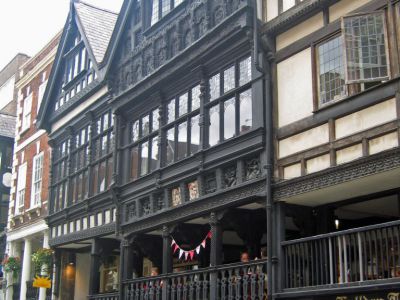
Bishop Lloyd's Palace consists of two gabled houses with three stories and attic spaces. A stone staircase with a wrought-iron railing leads to the row level, featuring a shopfront with an oak handrail. The façade is adorned with carved brackets of figures, square panels, mullioned windows, and ornate gables.
Inside, a Chinese Chippendale staircase connects the floors. One upper room features a grand 17th-century plaster ceiling and a large fireplace from the Bishop's Palace. The smaller room has Tudor rose motifs, a sea monster frieze, and a unique Cupid-on-lion fireplace overmantel.
Today, the building is home to shops at street and row levels, while the upper floors house Chester Civic Trust’s headquarters. Visitors can explore the historic rooms, which are open free of charge at designated times, and hire elegant meeting spaces for events. Bishop Lloyd's Palace remains a testament to Chester’s rich history and architectural excellence, drawing both tourists and locals to admire its timeless beauty.
The building stands on two medieval sandstone undercrofts with timber framing above, showcasing Chester’s unique architectural heritage. Its first floor incorporates a section of the Chester Rows, a distinctive feature of the city. Originally two separate townhouses, the structure was rebuilt in the 17th century, unifying the buildings and introducing a more modern design.
The house is named after George Lloyd, Bishop of Chester from 1605 to 1615. It has connections to the Yale family, notable for their association with Yale University. By the 18th century, one side of the house bore the name "Edgar's Academy." However, neglect in the 19th century left the property in disrepair until a major restoration in the 1890s by architect Thomas Lockwood, who revitalized its façade and structural elements.
Bishop Lloyd's Palace consists of two gabled houses with three stories and attic spaces. A stone staircase with a wrought-iron railing leads to the row level, featuring a shopfront with an oak handrail. The façade is adorned with carved brackets of figures, square panels, mullioned windows, and ornate gables.
Inside, a Chinese Chippendale staircase connects the floors. One upper room features a grand 17th-century plaster ceiling and a large fireplace from the Bishop's Palace. The smaller room has Tudor rose motifs, a sea monster frieze, and a unique Cupid-on-lion fireplace overmantel.
Today, the building is home to shops at street and row levels, while the upper floors house Chester Civic Trust’s headquarters. Visitors can explore the historic rooms, which are open free of charge at designated times, and hire elegant meeting spaces for events. Bishop Lloyd's Palace remains a testament to Chester’s rich history and architectural excellence, drawing both tourists and locals to admire its timeless beauty.
13) Bonewaldesthorne's Tower
Bonewaldesthorne's Tower, a Grade I listed medieval structure, is a prominent feature of Chester's historic city walls, located at their northwest corner. Dating back to 1249, it played a key role in Chester's defensive system and is connected to the Water Tower via a spur wall. The tower underwent significant rebuilding or alterations between 1322 and 1326, serving as the gatehouse to the Water Tower.
In the 19th century, Bonewaldesthorne's Tower transitioned from a military role to a cultural one. The Chester Mechanics' Institution, established in 1835, leased the tower and its neighbor for use as a museum. This museum, which opened in 1838, showcased various artifacts and innovations. Key additions during this period included a camera obscura (1840), an observatory (1848), and a salvaged Queen Anne statue from the fire-destroyed Exchange.
The Chester Mechanics' Institution disbanded in 1876, but the exhibits stayed under city council care, and the tower operated as a museum until 1901–02 when it closed for city wall restoration. Reopened in 1903, it saw 12,000 visitors in one season but gradually became less accessible, with closures starting in 1916. The Grosvenor Museum acquired it in 1954, reopening in 1962. Since 2016, Bonewaldesthorne's Tower and the Water Tower have hosted the 'Sick to Death' museum, showcasing the history of medicine.
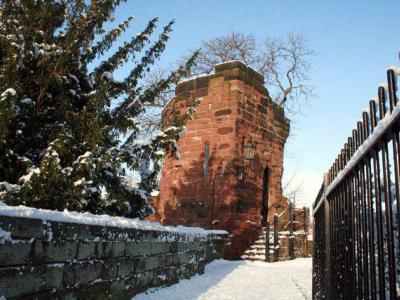
The tower's rectangular structure is built in coursed red sandstone rubble, standing on a tall plinth. Visitors access it via seven steps leading to an arched doorway from the city walls, with another doorway opening onto the spur wall to the Water Tower. The top of the tower is battlemented, enhancing its defensive appearance. Inside, features include a fireplace and a closed staircase lit by a single slit window, underscoring its medieval design.
Bonewaldesthorne's Tower remains a testament to Chester's rich history, blending medieval defense with cultural heritage and modern engagement.
In the 19th century, Bonewaldesthorne's Tower transitioned from a military role to a cultural one. The Chester Mechanics' Institution, established in 1835, leased the tower and its neighbor for use as a museum. This museum, which opened in 1838, showcased various artifacts and innovations. Key additions during this period included a camera obscura (1840), an observatory (1848), and a salvaged Queen Anne statue from the fire-destroyed Exchange.
The Chester Mechanics' Institution disbanded in 1876, but the exhibits stayed under city council care, and the tower operated as a museum until 1901–02 when it closed for city wall restoration. Reopened in 1903, it saw 12,000 visitors in one season but gradually became less accessible, with closures starting in 1916. The Grosvenor Museum acquired it in 1954, reopening in 1962. Since 2016, Bonewaldesthorne's Tower and the Water Tower have hosted the 'Sick to Death' museum, showcasing the history of medicine.
The tower's rectangular structure is built in coursed red sandstone rubble, standing on a tall plinth. Visitors access it via seven steps leading to an arched doorway from the city walls, with another doorway opening onto the spur wall to the Water Tower. The top of the tower is battlemented, enhancing its defensive appearance. Inside, features include a fireplace and a closed staircase lit by a single slit window, underscoring its medieval design.
Bonewaldesthorne's Tower remains a testament to Chester's rich history, blending medieval defense with cultural heritage and modern engagement.
