Custom Walk in Maastricht, Netherlands by laihang_tam_82c49 created on 2025-04-19
Guide Location: Netherlands » Maastricht
Guide Type: Custom Walk
# of Sights: 10
Tour Duration: 2 Hour(s)
Travel Distance: 4.4 Km or 2.7 Miles
Share Key: 2KDW9
Guide Type: Custom Walk
# of Sights: 10
Tour Duration: 2 Hour(s)
Travel Distance: 4.4 Km or 2.7 Miles
Share Key: 2KDW9
How It Works
Please retrieve this walk in the GPSmyCity app. Once done, the app will guide you from one tour stop to the next as if you had a personal tour guide. If you created the walk on this website or come to the page via a link, please follow the instructions below to retrieve the walk in the app.
Retrieve This Walk in App
Step 1. Download the app "GPSmyCity: Walks in 1K+ Cities" on Apple App Store or Google Play Store.



Step 2. In the GPSmyCity app, download(or launch) the guide "Maastricht Map and Walking Tours".
Step 3. Tap the menu button located at upper right corner of the "Walks" screen and select "Retrieve custom walk". Enter the share key: 2KDW9
1) Fort St. Pieter (Saint Peter's Fortress) (must see)
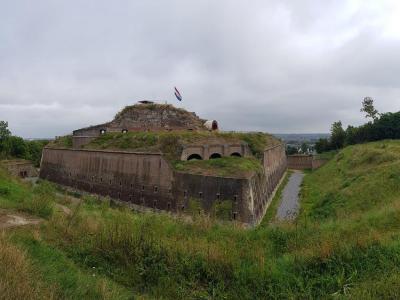
Perched atop Saint Peter’s Mount, Saint Peter’s Fortress (Fort Sint Pieter) is a historic military structure in Maastricht. Constructed in the 18th century, the fortress was designed to strengthen the city’s defenses following the devastating French invasion and sack of Maastricht in 1673. Its imposing hexagonal shape, thick walls, and extensive underground tunnels made it a formidable stronghold.
The fortress was put to the test in 1793 when a Dutch garrison of 4,500 men, under the command of Prince Frederick of Hesse-Kassel, successfully defended Maastricht against a 15,000-strong French army. The defensive design, featuring gunnery windows and strategic fortifications, proved nearly impenetrable. However, in 1794, during another French siege led by General Kléber, the fortress was attacked from the rear. Though it withstood significant force, the fort was ultimately decommissioned in the 19th century and underwent modernization.
Today, Saint Peter’s Fortress is a well-preserved historical site offering guided tours that take visitors through its intricate network of tunnels, cannon galleries, and a hidden water well. From its elevated position, the fortress provides stunning panoramic views of Maastricht and the surrounding Limburg countryside. Visitors can also explore the nearby marl caves, which are closely linked to the fortress, and enjoy the charming eateries and walking trails around the site.
Restored in 2011, the fortress remains an enduring symbol of Maastricht’s resilience. It serves as both a reminder of the city’s turbulent past and a popular attraction for those interested in military history, architecture, and scenic landscapes. Tickets for tours can be purchased at the adjacent Maastricht Underground shop, where visitors can also book combination tours that include cave explorations or cycling excursions.
The fortress was put to the test in 1793 when a Dutch garrison of 4,500 men, under the command of Prince Frederick of Hesse-Kassel, successfully defended Maastricht against a 15,000-strong French army. The defensive design, featuring gunnery windows and strategic fortifications, proved nearly impenetrable. However, in 1794, during another French siege led by General Kléber, the fortress was attacked from the rear. Though it withstood significant force, the fort was ultimately decommissioned in the 19th century and underwent modernization.
Today, Saint Peter’s Fortress is a well-preserved historical site offering guided tours that take visitors through its intricate network of tunnels, cannon galleries, and a hidden water well. From its elevated position, the fortress provides stunning panoramic views of Maastricht and the surrounding Limburg countryside. Visitors can also explore the nearby marl caves, which are closely linked to the fortress, and enjoy the charming eateries and walking trails around the site.
Restored in 2011, the fortress remains an enduring symbol of Maastricht’s resilience. It serves as both a reminder of the city’s turbulent past and a popular attraction for those interested in military history, architecture, and scenic landscapes. Tickets for tours can be purchased at the adjacent Maastricht Underground shop, where visitors can also book combination tours that include cave explorations or cycling excursions.
2) Ezelke (Donkey)
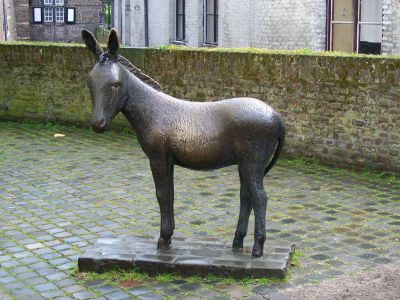
One of Maastricht’s most peculiar landmarks, the Ezelke statue-meaning donkey in Dutch-stands quietly in Ezelmarkt, the former marketplace where horses and donkeys were once traded. Installed in 1976, this small yet wistful bronze donkey was sculpted by Gertrud Januszewski as part of a broader initiative to expand green spaces in the city.
Ezelke is not alone in its symbolic role; it joins other animal sculptures that pay tribute to Maastricht’s past while advocating for a more sustainable urban landscape. But among them, this humble donkey holds a special charm-a nostalgic nod to the days when donkeys roamed the city's streets as trusted transport animals.
Over the years, the statue has become a favorite among children, who eagerly climb onto its back, turning this contemplative figure into an impromptu playground companion. Whether seen as a historical tribute, a piece of public art, or simply a lovable bronze donkey, Ezelke remains a quirky and enduring part of Maastricht’s cityscape.
Ezelke is not alone in its symbolic role; it joins other animal sculptures that pay tribute to Maastricht’s past while advocating for a more sustainable urban landscape. But among them, this humble donkey holds a special charm-a nostalgic nod to the days when donkeys roamed the city's streets as trusted transport animals.
Over the years, the statue has become a favorite among children, who eagerly climb onto its back, turning this contemplative figure into an impromptu playground companion. Whether seen as a historical tribute, a piece of public art, or simply a lovable bronze donkey, Ezelke remains a quirky and enduring part of Maastricht’s cityscape.
3) Sint-Janskerk (St. John's Church)
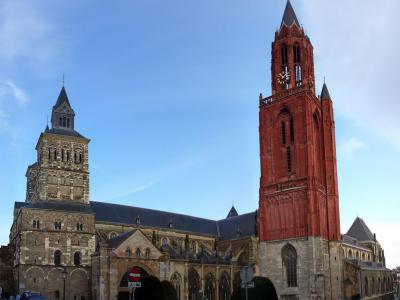
The Protestant Saint John's Church is immediately next to the Roman Catholic Basilica of Saint Servatius. The churches are often referred to as the church twins.
Saint John's Church is named after John the Baptist and was founded around 1200 by the chapter of Saint Servatius to function as a baptismal and parish church for the parish of Saint Servatius. This relieved the load on the Saint Servatius Church and allowed it to function exclusively as a collegiate and pilgrimage church.
Saint John was one of Masstricht's four Catholic parish churches during the Middle Ages. The current structure was built in the 14th and 15th centuries. The Gothic baptistery was added in 1414.
During the medieval times, on the Saturdays before Easter and Pentecost, the canons of Saint Servatius went in procession to Saint John to consecrate the baptismal water. On that occasion, the church choir sang to the canons from the first transept of Saint John's.
Saint John's became a Protestant church in 1632, while Saint Servatius remained a Catholic church. Some original Catholic wall paintings remain in Saint John's.
The interior features an impressive rib vault. The polychrome corbels feature angels, bishops, and the twelve apostles.
The church has had dozens of renovations over the years. The church has many detailed furnishings, including a Baroque Louis XVI-style pulpit that dates to 1779. The church's organ was built in 1992 using the organ case from 1780.
Saint John's main feature is its red 79-meter (259 feet) tall tower built in the 15th century after the previous tower collapsed. The tower includes a wooden belfry and a 1687 bell. A small bell, the so-called gate bell, used to be rung daily to open and close the city gates, but sadly it was stolen in 1943 by the German occupiers.
Visitors can climb the tower's 218 narrow steps to the belfry's viewing platform for a stunning view of the city.
Saint John's Church is named after John the Baptist and was founded around 1200 by the chapter of Saint Servatius to function as a baptismal and parish church for the parish of Saint Servatius. This relieved the load on the Saint Servatius Church and allowed it to function exclusively as a collegiate and pilgrimage church.
Saint John was one of Masstricht's four Catholic parish churches during the Middle Ages. The current structure was built in the 14th and 15th centuries. The Gothic baptistery was added in 1414.
During the medieval times, on the Saturdays before Easter and Pentecost, the canons of Saint Servatius went in procession to Saint John to consecrate the baptismal water. On that occasion, the church choir sang to the canons from the first transept of Saint John's.
Saint John's became a Protestant church in 1632, while Saint Servatius remained a Catholic church. Some original Catholic wall paintings remain in Saint John's.
The interior features an impressive rib vault. The polychrome corbels feature angels, bishops, and the twelve apostles.
The church has had dozens of renovations over the years. The church has many detailed furnishings, including a Baroque Louis XVI-style pulpit that dates to 1779. The church's organ was built in 1992 using the organ case from 1780.
Saint John's main feature is its red 79-meter (259 feet) tall tower built in the 15th century after the previous tower collapsed. The tower includes a wooden belfry and a 1687 bell. A small bell, the so-called gate bell, used to be rung daily to open and close the city gates, but sadly it was stolen in 1943 by the German occupiers.
Visitors can climb the tower's 218 narrow steps to the belfry's viewing platform for a stunning view of the city.
4) Statue of Hendrik van Veldeke
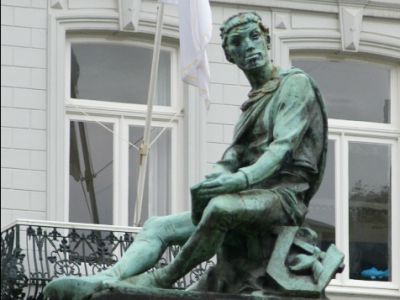
The statue of Hendrik van Veldeke stands on a quiet square near the Saint Servaas Church in Maastricht-a fitting tribute to a man often considered the first author to write in the Dutch language. Born before or around 1150 in Veldeke (now part of Hasselt, Belgium), van Veldeke was a pioneering figure in medieval European literature. He wrote in Old Limburgish and was the first known writer from the Low Countries to compose in a vernacular European language rather than Latin.
One of his most celebrated works is The Legend of Saint Servatius, written in the 12th century, which connects him thematically and geographically to Maastricht. Another key work is his adaptation of the classical tale of Eneas, showing his familiarity with Latin sources and European courtly traditions. His lyrical poems and stories traveled far beyond the Low Countries, sung by troubadours across Europe.
The bronze statue, created by renowned Maastricht sculptor Charles Vos, was unveiled in 1934. It captures van Veldeke's lasting cultural legacy and serves as a reminder of the city's deep literary and historical roots.
One of his most celebrated works is The Legend of Saint Servatius, written in the 12th century, which connects him thematically and geographically to Maastricht. Another key work is his adaptation of the classical tale of Eneas, showing his familiarity with Latin sources and European courtly traditions. His lyrical poems and stories traveled far beyond the Low Countries, sung by troubadours across Europe.
The bronze statue, created by renowned Maastricht sculptor Charles Vos, was unveiled in 1934. It captures van Veldeke's lasting cultural legacy and serves as a reminder of the city's deep literary and historical roots.
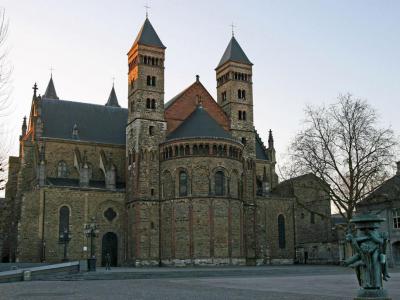
5) Basilica of Saint Servatius (must see)
The Romanesque Basilica of Saint Servatius is built on Saint Servatius's gravesite. It is likely that the current structure is the fourth iteration of churches on this site.
Saint Servatius was an Armenian missionary and Tongeren's bishop. He reportedly died in Maastricht in 384. The first church was a small memorial chapel, which was replaced by a larger church. Next, a pilgrim church was built. Finally, the current church was built between the 11th and 12th centuries. Emperor Henry III and a dozen bishops attended the church's dedication in 1039.
The impressive Berg Portal is located on the south side of the church and gives visitors access to the church via descending steps. The portal was probably built during the 12th and 13th centuries and is the first Gothic construction in Maastricht. An intricate tile labyrinth covers the floor.
The portal features vibrantly decorated walls and 72 statues of kings, prophets, apostles, saints, and angels. In addition, reliefs depict Mary's life. In 1566, many statues had their heads removed because of a cultural movement against icons. The damage was poorly repaired in 1596. A Baroque facade was added in the 18th century and removed in the 19th century.
The side chapels were added in the 14th and 15th centuries and feature Gothic architecture. A Gothic spire was added in 1556, and Baroque helmet spires were added in 1770.
French revolutionaries used the church as a horse stable in 1797. As a result, many of the church furnishings were sold or damaged. Since 1866, the church has undergone several restorations.
Throughout the Middle Ages, the Pilgrimage of the Relics took place every seven years. The pilgrimage was revived in the 19th century and again takes place every seven years.
Saint Servatius was an Armenian missionary and Tongeren's bishop. He reportedly died in Maastricht in 384. The first church was a small memorial chapel, which was replaced by a larger church. Next, a pilgrim church was built. Finally, the current church was built between the 11th and 12th centuries. Emperor Henry III and a dozen bishops attended the church's dedication in 1039.
The impressive Berg Portal is located on the south side of the church and gives visitors access to the church via descending steps. The portal was probably built during the 12th and 13th centuries and is the first Gothic construction in Maastricht. An intricate tile labyrinth covers the floor.
The portal features vibrantly decorated walls and 72 statues of kings, prophets, apostles, saints, and angels. In addition, reliefs depict Mary's life. In 1566, many statues had their heads removed because of a cultural movement against icons. The damage was poorly repaired in 1596. A Baroque facade was added in the 18th century and removed in the 19th century.
The side chapels were added in the 14th and 15th centuries and feature Gothic architecture. A Gothic spire was added in 1556, and Baroque helmet spires were added in 1770.
French revolutionaries used the church as a horse stable in 1797. As a result, many of the church furnishings were sold or damaged. Since 1866, the church has undergone several restorations.
Throughout the Middle Ages, the Pilgrimage of the Relics took place every seven years. The pilgrimage was revived in the 19th century and again takes place every seven years.
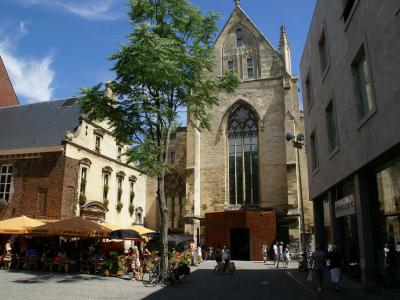
6) Boekhandel Dominicanen (Dominicanen Bookstore) (must see)
This unique bookstore features an independent bookstore located in a 13th-century church.
The Gothic-style cathedral was built in 1294. The church features a 14th-century fresco showing scenes from Thomas Aquinas' life. The fresco is known as Netherlands' oldest ecclesiastical wall painting. Other wall paintings date to the 1600s.
In 1794, Napolean Bonaparte used the church to house personnel and store equipment. After the monastery's dissolution in the 18th century, the church found a variety of other uses. For example, it was used as bike storage, a warehouse, a carnival, a boxing ring, and a printing house.
In 2006, the ancient church was converted into the Selexyx bookstore. The conversion project is known as Selexyz Dominicanen Maastricht. The conversion features open spaces, and the bookstore has been divided into three stories. The bookstore's design doesn't interfere with or detract from the church's stunning interior.
Selexyz became Polare, and Polare filed for bankruptcy. In 2014, the bookstore became independent and updated its name to Boekhandel Dominicanen. The bookstore features Dutch and English titles, children's books, art histories, travel guides, and more. In addition, the bookstore has a music department with vinyl records and CDs.
Over 150 events take place every year in the bookstore. Visitors can attend interviews with authors, readings, and debates.
The Dominicanen Bookstore also has a delightful cafe. Visitors can enjoy lunch and coffee in the former church's choir area.
Whether you are looking to peruse books, attend an event, grab a coffee, or enjoy the beauty of the ancient church, Dominicanen Bookstore is a must-see.
The Gothic-style cathedral was built in 1294. The church features a 14th-century fresco showing scenes from Thomas Aquinas' life. The fresco is known as Netherlands' oldest ecclesiastical wall painting. Other wall paintings date to the 1600s.
In 1794, Napolean Bonaparte used the church to house personnel and store equipment. After the monastery's dissolution in the 18th century, the church found a variety of other uses. For example, it was used as bike storage, a warehouse, a carnival, a boxing ring, and a printing house.
In 2006, the ancient church was converted into the Selexyx bookstore. The conversion project is known as Selexyz Dominicanen Maastricht. The conversion features open spaces, and the bookstore has been divided into three stories. The bookstore's design doesn't interfere with or detract from the church's stunning interior.
Selexyz became Polare, and Polare filed for bankruptcy. In 2014, the bookstore became independent and updated its name to Boekhandel Dominicanen. The bookstore features Dutch and English titles, children's books, art histories, travel guides, and more. In addition, the bookstore has a music department with vinyl records and CDs.
Over 150 events take place every year in the bookstore. Visitors can attend interviews with authors, readings, and debates.
The Dominicanen Bookstore also has a delightful cafe. Visitors can enjoy lunch and coffee in the former church's choir area.
Whether you are looking to peruse books, attend an event, grab a coffee, or enjoy the beauty of the ancient church, Dominicanen Bookstore is a must-see.
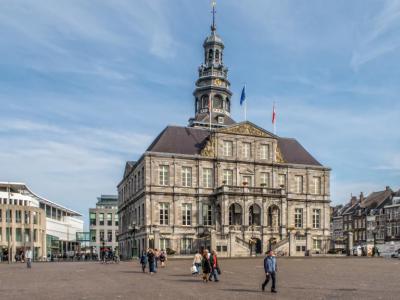
7) Marktplaats (Market Square) (must see)
Market Square is home to Maastricht's most popular market. In addition, the square features Maastricht's city hall and numerous imposing mansions.
Market Square has hosted commodity markets for centuries. In Medieval times, the square was much smaller. In the 13th century, a cloth hall was built against the old city wall and traders would gather here. In 1659, the old city walls and the cloth hall were demolished to make way for the new City Hall.
City Hall was built by architect Pieter Post between 1659 and 1664. The building's tower dates to 1684. The 49-bell carillon chimes on the hour. City Hall's interior features stunning ceiling paintings, stucco work, and wall tapestries.
The square's current layout and most of the square's buildings were constructed in the 17th and 18th centuries.
The market operates every Wednesday and Friday. The Wednesday market features around 200 stalls. The Friday market is busier, with around 400 stalls.
Sellers offer plants, flowers, food items, fresh produce, cosmetics, and clothes. Market Square also features many permanent restaurants, boutiques, and stores.
A statue of Johanne Petrus Mincklelers stands in the center of the square. The statue is called "Eternal Burning Flame." Mincklelers invented illuminating gas, and his statue depicts him holding a gas torch. The gas torch is lit with natural gas, and visitors can feel the heat up-close.
The square features a bluestone fountain called Mooswief. The statue honors women who used the market to sell their vegetables.
Market Square has hosted commodity markets for centuries. In Medieval times, the square was much smaller. In the 13th century, a cloth hall was built against the old city wall and traders would gather here. In 1659, the old city walls and the cloth hall were demolished to make way for the new City Hall.
City Hall was built by architect Pieter Post between 1659 and 1664. The building's tower dates to 1684. The 49-bell carillon chimes on the hour. City Hall's interior features stunning ceiling paintings, stucco work, and wall tapestries.
The square's current layout and most of the square's buildings were constructed in the 17th and 18th centuries.
The market operates every Wednesday and Friday. The Wednesday market features around 200 stalls. The Friday market is busier, with around 400 stalls.
Sellers offer plants, flowers, food items, fresh produce, cosmetics, and clothes. Market Square also features many permanent restaurants, boutiques, and stores.
A statue of Johanne Petrus Mincklelers stands in the center of the square. The statue is called "Eternal Burning Flame." Mincklelers invented illuminating gas, and his statue depicts him holding a gas torch. The gas torch is lit with natural gas, and visitors can feel the heat up-close.
The square features a bluestone fountain called Mooswief. The statue honors women who used the market to sell their vegetables.

8) Boulanger
For over forty years, Chocolaterie Boulanger has been a household name in Maastricht, delighting locals and visitors alike with its exquisite chocolates. Tucked away on Spilstraat, just off the bustling Grote Staat, this charming shop offers a world of indulgence behind its elegant façade.
The heart of Boulanger lies in its expertly crafted chocolates, boasting over forty varieties with luscious fillings ranging from coffee and praline to strawberry and limoncello. A customer favorite is the “dropping” bonbon, featuring a creamy coffee filling, a delicate marzipan layer, and a rich chocolate coating-essentially a miniature pastry of pure bliss.
For those seeking a refined treat, Boulanger also offers a sugar-free selection in milk, dark, and white chocolate, sweetened with maltitol yet packed with delicious flavors. Whether it’s a birthday, wedding, or simply a thoughtful gesture, the shop’s beautifully wrapped chocolates make for the perfect gift.
At Boulanger, every bite is a moment of happiness, crafted with passion and tradition.
The heart of Boulanger lies in its expertly crafted chocolates, boasting over forty varieties with luscious fillings ranging from coffee and praline to strawberry and limoncello. A customer favorite is the “dropping” bonbon, featuring a creamy coffee filling, a delicate marzipan layer, and a rich chocolate coating-essentially a miniature pastry of pure bliss.
For those seeking a refined treat, Boulanger also offers a sugar-free selection in milk, dark, and white chocolate, sweetened with maltitol yet packed with delicious flavors. Whether it’s a birthday, wedding, or simply a thoughtful gesture, the shop’s beautifully wrapped chocolates make for the perfect gift.
At Boulanger, every bite is a moment of happiness, crafted with passion and tradition.
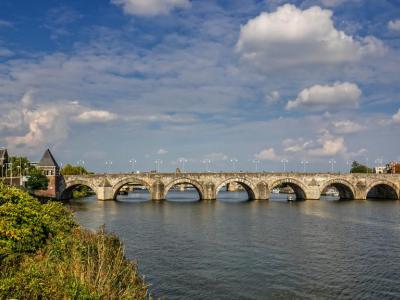
9) Sint Servaasbrug (St. Servatius Bridge)
Saint Servatius Bridge crosses the Meuse River. This stone footbridge is named after Maastricht's first bishop, Saint Servatius. While the bridge was severely damaged and rebuilt during World War II, it is known as the oldest bridge in the Netherlands.
The Romans first built a wooden bridge around AD 50 and the Latin phrase for "crossing of the Meuse" became the name of the city. For many years the bridge provided the only crossing of the lower Meuse River.
Unfortunately, this bridge collapsed during a procession in 1275. The collapse killed 400 people. Today, a pillar marks the location of the old Roman bridge.
The current bridge was built between 1280 and 1298. It is located north of the original Roman bridge. The bridge was named in honor of Saint Servatius around this time.
In 1850, a channel was cut on the bridge's west side. The bridge was renovated in the 1930s. The arches were reconstructed in concrete and then covered by the original stones. Two arches on the eastern side were removed, and a vertical-lift bridge was added.
During World War II, German troops heavily damaged the bridge. As a result, Saint Servatius Bridge was rebuilt in 1948. The east side of the bridge now features a steel drawbridge.
The Romans first built a wooden bridge around AD 50 and the Latin phrase for "crossing of the Meuse" became the name of the city. For many years the bridge provided the only crossing of the lower Meuse River.
Unfortunately, this bridge collapsed during a procession in 1275. The collapse killed 400 people. Today, a pillar marks the location of the old Roman bridge.
The current bridge was built between 1280 and 1298. It is located north of the original Roman bridge. The bridge was named in honor of Saint Servatius around this time.
In 1850, a channel was cut on the bridge's west side. The bridge was renovated in the 1930s. The arches were reconstructed in concrete and then covered by the original stones. Two arches on the eastern side were removed, and a vertical-lift bridge was added.
During World War II, German troops heavily damaged the bridge. As a result, Saint Servatius Bridge was rebuilt in 1948. The east side of the bridge now features a steel drawbridge.
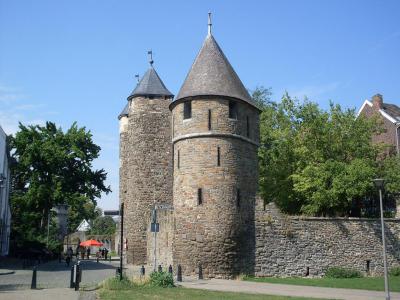
10) Helpoort (Hell's Gate)
Hell’s Gate (Dutch: Helpoort) is a striking medieval landmark located in the Jekerkwartier district of Maastricht. Built shortly after 1229, when Henry I, Duke of Brabant, authorized the construction of stone fortifications, the gate is part of the city's first city wall and stands as the oldest surviving city gate in the Netherlands.
Originally called Hoogbruggepoort (“gate of the high bridge”), the structure was likely completed around 1230 and served as a defensive stronghold for nearly two centuries. Positioned near the Jeker River, the gate once connected to a bridge and was one of thirteen city gates in the original wall system-walls made of coal sandstone that stretched about 2.4 kilometers and were dotted with towers and water gates.
Hell’s Gate stands 14 meters (46 feet) tall and played a key role in protecting the city until the 15th century when Maastricht expanded and new fortifications (the Second City Walls) made the gate obsolete as a main entry point. After losing its military function, the gate had a second life in various roles: armory, powder magazine, a meeting place for cloth makers, and even a private residence.
Today, the Helpoort is home to a small but engaging museum focused on Maastricht’s fortification history. Tucked away on a quiet square, the museum is staffed by volunteers who share historical insights with visitors. Guests can also climb the gate’s tower for panoramic views of the old town.
Hell’s Gate is more than just a medieval relic-it’s a symbol of Maastricht’s layered past and a unique piece of Dutch heritage still standing proud in the heart of the city.
Originally called Hoogbruggepoort (“gate of the high bridge”), the structure was likely completed around 1230 and served as a defensive stronghold for nearly two centuries. Positioned near the Jeker River, the gate once connected to a bridge and was one of thirteen city gates in the original wall system-walls made of coal sandstone that stretched about 2.4 kilometers and were dotted with towers and water gates.
Hell’s Gate stands 14 meters (46 feet) tall and played a key role in protecting the city until the 15th century when Maastricht expanded and new fortifications (the Second City Walls) made the gate obsolete as a main entry point. After losing its military function, the gate had a second life in various roles: armory, powder magazine, a meeting place for cloth makers, and even a private residence.
Today, the Helpoort is home to a small but engaging museum focused on Maastricht’s fortification history. Tucked away on a quiet square, the museum is staffed by volunteers who share historical insights with visitors. Guests can also climb the gate’s tower for panoramic views of the old town.
Hell’s Gate is more than just a medieval relic-it’s a symbol of Maastricht’s layered past and a unique piece of Dutch heritage still standing proud in the heart of the city.
