Custom Walk in Shanghai, China by fhin_25437 created on 2025-04-27
Guide Location: China » Shanghai
Guide Type: Custom Walk
# of Sights: 5
Tour Duration: 4 Hour(s)
Travel Distance: 10.7 Km or 6.6 Miles
Share Key: WM6S2
Guide Type: Custom Walk
# of Sights: 5
Tour Duration: 4 Hour(s)
Travel Distance: 10.7 Km or 6.6 Miles
Share Key: WM6S2
How It Works
Please retrieve this walk in the GPSmyCity app. Once done, the app will guide you from one tour stop to the next as if you had a personal tour guide. If you created the walk on this website or come to the page via a link, please follow the instructions below to retrieve the walk in the app.
Retrieve This Walk in App
Step 1. Download the app "GPSmyCity: Walks in 1K+ Cities" on Apple App Store or Google Play Store.



Step 2. In the GPSmyCity app, download(or launch) the guide "Shanghai Map and Walking Tours".
Step 3. Tap the menu button located at upper right corner of the "Walks" screen and select "Retrieve custom walk". Enter the share key: WM6S2
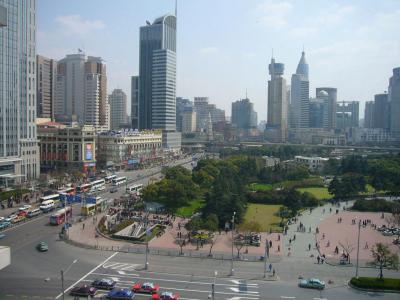
1) People's Square and Park (must see)
People's Square, situated at the very center of Shanghai, serves as a prominent location in the city. It features world-class museums, the Grand Theater, luxurious five-star hotels, a large water fountain, and the imposing Shanghai City Hall. These structures were constructed in the late 1990s and each of them serves as a significant architectural representation of Shanghai's economic and cultural advancement.
This area stands out in China due to its exceptional collection of remarkable attractions and stunning skyline, making it a highly popular meeting place and a venue for various celebrations. Today, there are few visual reminders of People's Square's history as Asia's finest racecourse, where wealthy individuals once watched horse races. During the wartime Japanese administration, the racetrack was utilized as a detention facility, and after World War II, the Chinese nationalist government transformed it into a sports arena.
By 1952, the new Communist regime had abolished horse racing and gambling, and a section of the racetrack was converted into a recreational space, now referred to as People's Park. Both the square and the park are meticulously maintained and offer numerous benches for relaxation. The park boasts pleasant landscaping, with tree-lined pathways and ponds that are beloved by locals who often visit for leisurely walks, exercise, kite flying, and where children can enjoy various activities at the playground.
Tip:
Underneath the park, there's a fantastic underground labyrinth of galleries with colorful stores, a subway station, and a food court. A definite must-visit!
This area stands out in China due to its exceptional collection of remarkable attractions and stunning skyline, making it a highly popular meeting place and a venue for various celebrations. Today, there are few visual reminders of People's Square's history as Asia's finest racecourse, where wealthy individuals once watched horse races. During the wartime Japanese administration, the racetrack was utilized as a detention facility, and after World War II, the Chinese nationalist government transformed it into a sports arena.
By 1952, the new Communist regime had abolished horse racing and gambling, and a section of the racetrack was converted into a recreational space, now referred to as People's Park. Both the square and the park are meticulously maintained and offer numerous benches for relaxation. The park boasts pleasant landscaping, with tree-lined pathways and ponds that are beloved by locals who often visit for leisurely walks, exercise, kite flying, and where children can enjoy various activities at the playground.
Tip:
Underneath the park, there's a fantastic underground labyrinth of galleries with colorful stores, a subway station, and a food court. A definite must-visit!
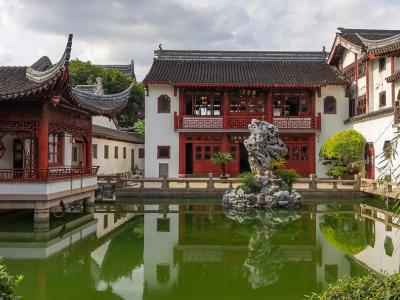
2) Shanghai Confucian Temple (must see)
This ancient shrine is the main temple of Shanghai and a definite must-see for those visiting the city. It is dedicated to the famous Chinese philosopher Confucius and was founded under the Yuan Dynasty, when Shanghai, then a small fishing village, was granted the status of a county seat. With time, this shrine became China's most prestigious academic institution and a religious temple combined.
The complex is well-tended and is much larger than it looks on the outside. Within its walls are a number of scenic spots such as the Music Terrace, Study Gate, Etiquette Gate, Hall to Listen to the Rain, Sky and Cloud Reflection Pond, and Confucian Study Hall, to mention but a few.
Facing the front gate is the Dacheng Hall, or the Hall of Great Perfection, to the right of which is found the eponymous huge Dacheng Bell, weighing some 1500 kg. They say, the sound of this bell is loud and clear, and its reverberations last up to three minutes!
The appealing atmosphere of scholarly introspection infuses the complex and is enhanced with the statues of Confucius, particularly the seated golden one beside the Dacheng Hall, flanked by the statues of his two most illustrious disciples, Yan Hui and Zeng Shen. Modern-day students, wishing to excel at exams, come here to tie a red ribbon around the pine tree for good luck.
In addition to the ancient Confucian texts, the temple houses a collection of ceramics and a tea house where tea lovers can enjoy a Chinese tea ceremony and sample local varieties of tea free of charge.
In keeping with the ancient tradition originated in the Ming and Qing periods, each Sunday in the northeastern part of the temple there is a book fair where people come to buy, sell or exchange books. Some truly old and rare editions can be found there, so it's well worth attending.
The area outside the temple is packed with stores and several eateries selling authentic Shanghai food at reasonable prices. Also nearby is the famous Xintiandi district.
Tip:
The Sunday book market has to be visited as it is something different in Shanghai, but beware that it opens at 8am and closes early around 3-4pm.
If you want full access then pay 10RMB; otherwise, you can just go to the book market inside the inner courtyard. 10RMB gets you into the temple as well as the other courtyards.
Go towards the temple and the guards will ask for your tickets. Most people think they cannot go up, but that's what your ticket covers for.
Temple
The complex is well-tended and is much larger than it looks on the outside. Within its walls are a number of scenic spots such as the Music Terrace, Study Gate, Etiquette Gate, Hall to Listen to the Rain, Sky and Cloud Reflection Pond, and Confucian Study Hall, to mention but a few.
Facing the front gate is the Dacheng Hall, or the Hall of Great Perfection, to the right of which is found the eponymous huge Dacheng Bell, weighing some 1500 kg. They say, the sound of this bell is loud and clear, and its reverberations last up to three minutes!
The appealing atmosphere of scholarly introspection infuses the complex and is enhanced with the statues of Confucius, particularly the seated golden one beside the Dacheng Hall, flanked by the statues of his two most illustrious disciples, Yan Hui and Zeng Shen. Modern-day students, wishing to excel at exams, come here to tie a red ribbon around the pine tree for good luck.
In addition to the ancient Confucian texts, the temple houses a collection of ceramics and a tea house where tea lovers can enjoy a Chinese tea ceremony and sample local varieties of tea free of charge.
In keeping with the ancient tradition originated in the Ming and Qing periods, each Sunday in the northeastern part of the temple there is a book fair where people come to buy, sell or exchange books. Some truly old and rare editions can be found there, so it's well worth attending.
The area outside the temple is packed with stores and several eateries selling authentic Shanghai food at reasonable prices. Also nearby is the famous Xintiandi district.
Tip:
The Sunday book market has to be visited as it is something different in Shanghai, but beware that it opens at 8am and closes early around 3-4pm.
If you want full access then pay 10RMB; otherwise, you can just go to the book market inside the inner courtyard. 10RMB gets you into the temple as well as the other courtyards.
Go towards the temple and the guards will ask for your tickets. Most people think they cannot go up, but that's what your ticket covers for.
Temple
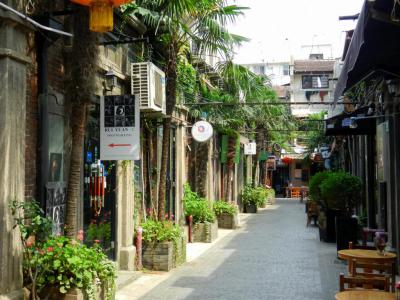
3) Tianzifang District (must see)
Tianzifang is a lively enclave that has evolved from a renovated traditional residential area in the French Concession district of Shanghai. This neighborhood abounds in tiny labyrinthine alleyways that can keep you wandering infinitely, as it is probably the most accessible, authentic, charming and vibrant example of Shanghai’s trademark back-lane architecture.
What started off as an attempt to foster a district of arts, crafts, boutiques, and cafes, based around a former candy factory, has now become a major tourist destination and a much-needed counterpoint to the mega-malls and dwarfing skyscrapers elsewhere in the city.
Some of the best bars and restaurants are found in this area, together with a handful of art galleries, handicraft workshops and jewelry and ethnic clothing boutiques – a great place to pick up one-off souvenirs, as well to practice your bargaining skills when shopping.
In particular, look out for the hand-embroidered ethnic-styled accessories at Harvest Studio and photographic prints of Shanghai scenes at Deke Erh Art Center. Wonderful surprises are practically waiting to be found around every corner, but try to arrange your visit during weekdays, since the narrow streets can get pretty packed on Saturdays and Sundays.
What started off as an attempt to foster a district of arts, crafts, boutiques, and cafes, based around a former candy factory, has now become a major tourist destination and a much-needed counterpoint to the mega-malls and dwarfing skyscrapers elsewhere in the city.
Some of the best bars and restaurants are found in this area, together with a handful of art galleries, handicraft workshops and jewelry and ethnic clothing boutiques – a great place to pick up one-off souvenirs, as well to practice your bargaining skills when shopping.
In particular, look out for the hand-embroidered ethnic-styled accessories at Harvest Studio and photographic prints of Shanghai scenes at Deke Erh Art Center. Wonderful surprises are practically waiting to be found around every corner, but try to arrange your visit during weekdays, since the narrow streets can get pretty packed on Saturdays and Sundays.
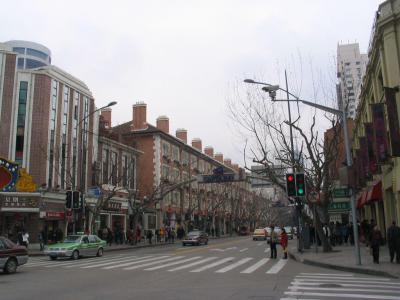
4) Former French Concession (must see)
The Former French Concession in Shanghai, represents a significant historical and cultural enclave that spanned nearly a century, from 1849 until 1946. Established after China's defeat in the Opium Wars and the forced opening of Shanghai as an international port, this area was conceded to the French government and became a symbol of colonial presence in China. Initially marked on April 6, 1849, the concession grew through expansions, notably in 1936, to encompass what are today the Xuhui and Luwan districts.
During its heyday, the French Concession was a semi-autonomous region with its own laws and police, where entry by local Chinese was heavily restricted. It became a melting pot of cultures, attracting Chinese artists, intellectuals, and a significant number of American, British, and Russian settlers, especially following the Russian Revolution. The concession was known for its opulent lifestyle, with opium dens and gambling houses being prevalent in the 1930s.
The area's distinct European influence is evident in its architecture, which showcases a blend of Chinese and European styles, funded by French and Belgian investments. Streets lined with trees, alongside a modern infusion of trendy boutiques, restaurants, and small designer clothing shops, particularly along Changle Road and Xinle Road, highlight the area's evolution from a colonial enclave to a bustling, contemporary tourist destination.
A notable landmark within the Former French Concession is Soong Ching Ling's Former Residence, built in 1843 and now serving as a museum dedicated to China's political history up to the founding of the People's Republic of China. The residence, along with its original artifacts, photographs, and state-used cars, offers a glimpse into the life of one of China's most influential figures and the tumultuous period leading up to the establishment of the PRC.
Today, despite significant redevelopment, the Former French Concession retains its unique character, blending historical significance with modern vibrancy, making it a beloved destination for both locals and tourists seeking to experience the legacy of Shanghai's colonial past and its dynamic present.
During its heyday, the French Concession was a semi-autonomous region with its own laws and police, where entry by local Chinese was heavily restricted. It became a melting pot of cultures, attracting Chinese artists, intellectuals, and a significant number of American, British, and Russian settlers, especially following the Russian Revolution. The concession was known for its opulent lifestyle, with opium dens and gambling houses being prevalent in the 1930s.
The area's distinct European influence is evident in its architecture, which showcases a blend of Chinese and European styles, funded by French and Belgian investments. Streets lined with trees, alongside a modern infusion of trendy boutiques, restaurants, and small designer clothing shops, particularly along Changle Road and Xinle Road, highlight the area's evolution from a colonial enclave to a bustling, contemporary tourist destination.
A notable landmark within the Former French Concession is Soong Ching Ling's Former Residence, built in 1843 and now serving as a museum dedicated to China's political history up to the founding of the People's Republic of China. The residence, along with its original artifacts, photographs, and state-used cars, offers a glimpse into the life of one of China's most influential figures and the tumultuous period leading up to the establishment of the PRC.
Today, despite significant redevelopment, the Former French Concession retains its unique character, blending historical significance with modern vibrancy, making it a beloved destination for both locals and tourists seeking to experience the legacy of Shanghai's colonial past and its dynamic present.
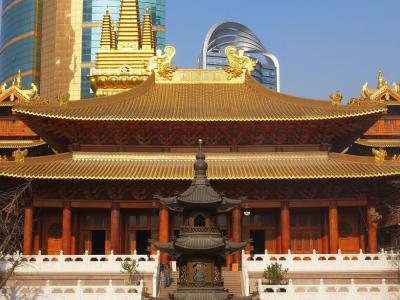
5) Jing'an Temple (must see)
Translated literally as the “Temple of Peace and Tranquility”, the Jing'an Temple of Shanghai is a Buddhist shrine located on the West Nanjing Road within the district bearing the same name - Jing'an.
First built in 247 AD during the Three Kingdoms period of ancient China, the temple was originally set beside the Suzhou Creek in the Wu Kingdom, but then moved to its present location in 1216 under the Song Dynasty. During the Qing Dynasty it was rebuilt and, during the Cultural Revolution period, it housed a plastic factory. In 1983, the temple returned to its original service as a house of worship, upon which it was renovated and had the Jing'An Pagoda added in 2010.
Today, the temple comprises six halls including the main Mahavira Hall (the "Precious Hall of the Great Hero"), the Guanyin Hall, the Jade Buddha Hall, and three Southern-style halls, namely: the Hall of Heavenly Kings, the Hall of the Three Saints, and the Hall of Virtuous Works, each with its own courtyard. The latter three halls were added as part of the reconstruction of 1880.
Within the Guanyin Hall there is a statue of Guan Yin goddess – measuring 6.2 meters tall and weighing 5 tons – made of camphor wood, standing atop a lotus-shaped base. Opposite the Guanyin hall, inside the Jade Buddha Hall, there is a 3.8-meter statue of sitting jade Buddha placed in the center, the largest of its kind in China. Other notable features within the temple include the Ming Dynasty copper bell (Hongwu Bell), weighing 3.5 tons, stone Buddhas from the Southern and Northern Dynasties period (420-589 AD), and paintings by renowned artists, such as Chu Zhishan, Zhang Daqian and Wen Zhenming.
First built in 247 AD during the Three Kingdoms period of ancient China, the temple was originally set beside the Suzhou Creek in the Wu Kingdom, but then moved to its present location in 1216 under the Song Dynasty. During the Qing Dynasty it was rebuilt and, during the Cultural Revolution period, it housed a plastic factory. In 1983, the temple returned to its original service as a house of worship, upon which it was renovated and had the Jing'An Pagoda added in 2010.
Today, the temple comprises six halls including the main Mahavira Hall (the "Precious Hall of the Great Hero"), the Guanyin Hall, the Jade Buddha Hall, and three Southern-style halls, namely: the Hall of Heavenly Kings, the Hall of the Three Saints, and the Hall of Virtuous Works, each with its own courtyard. The latter three halls were added as part of the reconstruction of 1880.
Within the Guanyin Hall there is a statue of Guan Yin goddess – measuring 6.2 meters tall and weighing 5 tons – made of camphor wood, standing atop a lotus-shaped base. Opposite the Guanyin hall, inside the Jade Buddha Hall, there is a 3.8-meter statue of sitting jade Buddha placed in the center, the largest of its kind in China. Other notable features within the temple include the Ming Dynasty copper bell (Hongwu Bell), weighing 3.5 tons, stone Buddhas from the Southern and Northern Dynasties period (420-589 AD), and paintings by renowned artists, such as Chu Zhishan, Zhang Daqian and Wen Zhenming.
