Custom Walk in Dublin, Ireland by emurphy_74f69 created on 2025-05-07
Guide Location: Ireland » Dublin
Guide Type: Custom Walk
# of Sights: 5
Tour Duration: 1 Hour(s)
Travel Distance: 2.5 Km or 1.6 Miles
Share Key: ZMRR6
Guide Type: Custom Walk
# of Sights: 5
Tour Duration: 1 Hour(s)
Travel Distance: 2.5 Km or 1.6 Miles
Share Key: ZMRR6
How It Works
Please retrieve this walk in the GPSmyCity app. Once done, the app will guide you from one tour stop to the next as if you had a personal tour guide. If you created the walk on this website or come to the page via a link, please follow the instructions below to retrieve the walk in the app.
Retrieve This Walk in App
Step 1. Download the app "GPSmyCity: Walks in 1K+ Cities" on Apple App Store or Google Play Store.



Step 2. In the GPSmyCity app, download(or launch) the guide "Dublin Map and Walking Tours".
Step 3. Tap the menu button located at upper right corner of the "Walks" screen and select "Retrieve custom walk". Enter the share key: ZMRR6
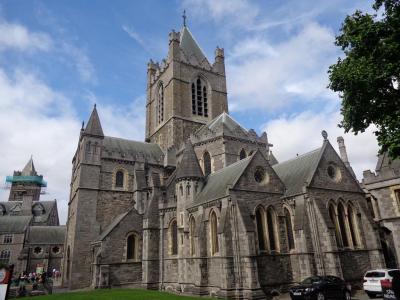
1) Christ Church Cathedral (must see)
Step into the Christ Church Cathedral - here, medieval majesty meets a touch of mystery, and not everything is quite what it seems. While the cathedral's story begins back in the 12th and 13th centuries, time wasn’t always kind to the original structure. By the 1870s, it was crumbling faster than a biscuit in tea. Luckily, Henry Roe, a 19th-century whiskey magnate and unlikely architectural hero, bankrolled its full-scale reconstruction. The result was a faithful revival of Romanesque and Early English Gothic splendour, with a pinch of Victorian flourish.
Wander the grounds and you’ll stumble across ghostly echoes of the past: a ruined 13th-century chapter house in the courtyard, and inside the southern aisle, a knight’s tomb - the monument's nose suspiciously missing. Local legend suggests that it’s Strongbow’s (the nobleman in charge of the Anglo-Norman invasion of Ireland) final resting place, though historians claim otherwise that his original tomb was lost in a 1562 collapse of the south wall. Still, it makes for a dramatic photo op.
Don't miss the Peace Chapel, where the heart of Archbishop Laurence O’Toole - Dublin’s patron saint and 12th-century peacemaker - sits encased in a reliquary, beating metaphorically with centuries of reverence.
And now for something truly bizarre: behold “Tom and Jerry,” a mummified cat-and-rat duo frozen mid-chase inside a church organ. Yep, you heard that right. Add in some oddly tilted arches on the north aisle, and you’ve got yourself a guided tour through ecclesiastical eccentricity.
Venture down into the cathedral’s crypt - the oldest surviving structure in Dublin - and prepare to be both amazed and mildly unsettled. Among ancient tombs and treasures, you’ll find regal statues of Charles I and II looking a bit smug, and sparkling silverware gifted by William of Orange after he thrashed his rival in 1690 at the Battle of the Boyne.
Open daily, the cathedral also hosts spellbinding Evensong services, with music that dates back to the Reformation - ideal if you like your choir with a side of history. And if you're feeling brave (or simply bell-curious), guided tours up to the belfry let you ring a bell and enjoy panoramic views over the city.
Let’s just say: it’s not your average Sunday visit.
Wander the grounds and you’ll stumble across ghostly echoes of the past: a ruined 13th-century chapter house in the courtyard, and inside the southern aisle, a knight’s tomb - the monument's nose suspiciously missing. Local legend suggests that it’s Strongbow’s (the nobleman in charge of the Anglo-Norman invasion of Ireland) final resting place, though historians claim otherwise that his original tomb was lost in a 1562 collapse of the south wall. Still, it makes for a dramatic photo op.
Don't miss the Peace Chapel, where the heart of Archbishop Laurence O’Toole - Dublin’s patron saint and 12th-century peacemaker - sits encased in a reliquary, beating metaphorically with centuries of reverence.
And now for something truly bizarre: behold “Tom and Jerry,” a mummified cat-and-rat duo frozen mid-chase inside a church organ. Yep, you heard that right. Add in some oddly tilted arches on the north aisle, and you’ve got yourself a guided tour through ecclesiastical eccentricity.
Venture down into the cathedral’s crypt - the oldest surviving structure in Dublin - and prepare to be both amazed and mildly unsettled. Among ancient tombs and treasures, you’ll find regal statues of Charles I and II looking a bit smug, and sparkling silverware gifted by William of Orange after he thrashed his rival in 1690 at the Battle of the Boyne.
Open daily, the cathedral also hosts spellbinding Evensong services, with music that dates back to the Reformation - ideal if you like your choir with a side of history. And if you're feeling brave (or simply bell-curious), guided tours up to the belfry let you ring a bell and enjoy panoramic views over the city.
Let’s just say: it’s not your average Sunday visit.
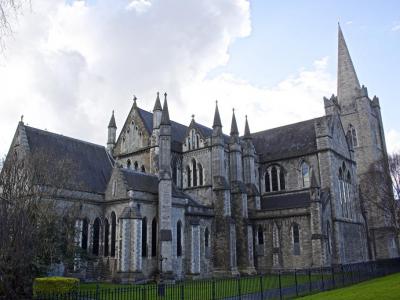
2) St. Patrick's Cathedral (must see)
Saint Patrick’s Cathedral – Dublin’s oldest and tallest church, and possibly the only place where getting baptized by a saint, attending university, and stabling your horse all happened under the same roof...
Legend has it that Saint Patrick himself once dunked a few converts right here – a Celtic cross in the nave marks the alleged holy splash zone, dating things back to around 450 AD. Outside, there’s a peaceful park and a marker showing where the Holy Well once was – a perfect spot for pondering ancient blessings or just enjoying your sandwich...
Inside, the cathedral stretches an impressive 90 meters long, making it the longest church in Ireland – and tall too, with a 45-meter tower that houses the country’s largest peal of bells. Keep your ears ready and your neck limber. Above the choir stalls, look up to see carved helmets and swords – because sometimes "divine inspiration" can arrive amid medieval battle accessories.
Most of what you see today isn’t from the original 1191 structure, though. A fire in the 14th century did a number on it, and later restorations – especially in the Victorian era – gave it the grandeur we see now, minus the medieval draft...
This place has worn many hats over the centuries. In 1320, it was home to Ireland’s first university. Later, under Cromwell, it became an impromptu barracks – complete with equestrian parking in the aisles. But one of its most famous residents was Jonathan Swift, author of Gulliver’s Travels, who served as dean from 1713 to 1745. Known for his razor-sharp wit and concern for Dublin’s poor, Swift is buried here alongside Esther Johnson (otherwise known as "Stella," an Englishwoman and a close friend of Swift's). His pulpit and self-penned epitaph are still on display here, just in case you’d like to hear from the man himself, posthumously...
And then there's the door. Not just any door – but the door. A medieval peace treaty carved in wood. During a 1492 siege, Lord Kildare literally "chanced his arm" by cutting a hole in a door and reaching through to shake hands with his enemy. A bold move, and the source of a phrase still alive and kicking today.
Quick tip:
Check the cathedral’s website for upcoming concerts or events – because if you’re going to soak in history, you might as well do it with a choir echoing around you.
Legend has it that Saint Patrick himself once dunked a few converts right here – a Celtic cross in the nave marks the alleged holy splash zone, dating things back to around 450 AD. Outside, there’s a peaceful park and a marker showing where the Holy Well once was – a perfect spot for pondering ancient blessings or just enjoying your sandwich...
Inside, the cathedral stretches an impressive 90 meters long, making it the longest church in Ireland – and tall too, with a 45-meter tower that houses the country’s largest peal of bells. Keep your ears ready and your neck limber. Above the choir stalls, look up to see carved helmets and swords – because sometimes "divine inspiration" can arrive amid medieval battle accessories.
Most of what you see today isn’t from the original 1191 structure, though. A fire in the 14th century did a number on it, and later restorations – especially in the Victorian era – gave it the grandeur we see now, minus the medieval draft...
This place has worn many hats over the centuries. In 1320, it was home to Ireland’s first university. Later, under Cromwell, it became an impromptu barracks – complete with equestrian parking in the aisles. But one of its most famous residents was Jonathan Swift, author of Gulliver’s Travels, who served as dean from 1713 to 1745. Known for his razor-sharp wit and concern for Dublin’s poor, Swift is buried here alongside Esther Johnson (otherwise known as "Stella," an Englishwoman and a close friend of Swift's). His pulpit and self-penned epitaph are still on display here, just in case you’d like to hear from the man himself, posthumously...
And then there's the door. Not just any door – but the door. A medieval peace treaty carved in wood. During a 1492 siege, Lord Kildare literally "chanced his arm" by cutting a hole in a door and reaching through to shake hands with his enemy. A bold move, and the source of a phrase still alive and kicking today.
Quick tip:
Check the cathedral’s website for upcoming concerts or events – because if you’re going to soak in history, you might as well do it with a choir echoing around you.
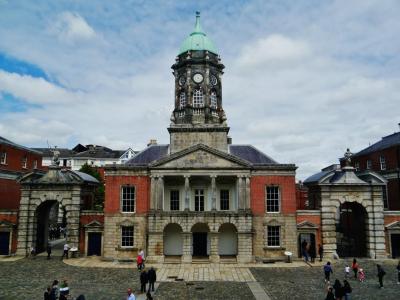
3) Dublin Castle (must see)
Standing tall and slightly smug on a ridge above the River Liffey, Dublin Castle is like that one friend who’s seen it all and still dresses sharp. This place packs over 800 years of drama - Vikings, royals, revolts, and a whole lot of renovations - into one surprisingly elegant complex.
Originally whipped up by the Anglo-Normans in the 1200s, it was built over a Viking settlement and served as the control center of English (and later British) rule in Ireland for seven centuries. A fire in 1684 charred most of the medieval bits, so the castle reinvented itself in the 18th century with Georgian flair. Think less fortress, more fancy manor - though if you join a guided tour, you can still find some medieval bones beneath the beauty.
The Upper Yard keeps the old castle layout alive, while the Cork Hill entrance, topped with a statue of Justice, offers a not-so-subtle historical joke - Lady Justice turns her back to the city. Not shady at all...
Inside, you’ll find the plush State Apartments, where British viceroys once threw parties and where Irish presidents now make things official. Expect glittering chandeliers, dramatic tapestries, and a strong "please don't touch" vibe. The nearby Chapel Royal, all Gothic charm and carved woodwork, is open for a peek - though the only thing being preached nowadays is great design.
Go underground and time-travel even further back: you’ll spot the remains of a Viking wall and the famed Dubh Linn (or “Black Pool”) that gave Dublin its name. Above ground, in that very spot, the Dubhlinn Gardens now bloom in Celtic patterns - ideal for pretending you’re in a historical drama, minus the beheadings...
And don’t skip the Chester Beatty Library set behind the castle walls. This under-the-radar gem is packed with ancient manuscripts and rare books from all over the world - basically, the Louvre of library nerds.
Dublin Castle isn’t just a relic of power; it’s a mash-up of past and present, stateliness and surprises. No matter if you're here for the politics, the Vikings, or the velvet furniture, it’s the kind of place that makes history feel less like homework and more like a plot twist.
Originally whipped up by the Anglo-Normans in the 1200s, it was built over a Viking settlement and served as the control center of English (and later British) rule in Ireland for seven centuries. A fire in 1684 charred most of the medieval bits, so the castle reinvented itself in the 18th century with Georgian flair. Think less fortress, more fancy manor - though if you join a guided tour, you can still find some medieval bones beneath the beauty.
The Upper Yard keeps the old castle layout alive, while the Cork Hill entrance, topped with a statue of Justice, offers a not-so-subtle historical joke - Lady Justice turns her back to the city. Not shady at all...
Inside, you’ll find the plush State Apartments, where British viceroys once threw parties and where Irish presidents now make things official. Expect glittering chandeliers, dramatic tapestries, and a strong "please don't touch" vibe. The nearby Chapel Royal, all Gothic charm and carved woodwork, is open for a peek - though the only thing being preached nowadays is great design.
Go underground and time-travel even further back: you’ll spot the remains of a Viking wall and the famed Dubh Linn (or “Black Pool”) that gave Dublin its name. Above ground, in that very spot, the Dubhlinn Gardens now bloom in Celtic patterns - ideal for pretending you’re in a historical drama, minus the beheadings...
And don’t skip the Chester Beatty Library set behind the castle walls. This under-the-radar gem is packed with ancient manuscripts and rare books from all over the world - basically, the Louvre of library nerds.
Dublin Castle isn’t just a relic of power; it’s a mash-up of past and present, stateliness and surprises. No matter if you're here for the politics, the Vikings, or the velvet furniture, it’s the kind of place that makes history feel less like homework and more like a plot twist.
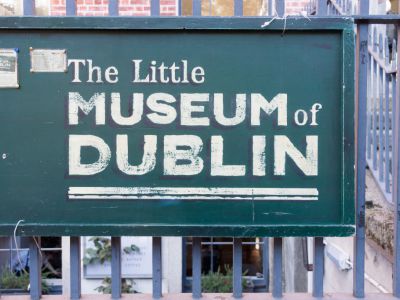
4) Little Museum of Dublin (must see)
Squeezed snugly into the confines of a quaint Georgian house, the Little Museum of Dublin displays an impressive collection of over 5,000 artifacts and oddities that narrate the social saga of 20th-century Dublin. It's a whirlwind journey that kicks off with a snapshot of Queen Victoria's grand entrance into Dún Laoghaire in 1900 and continues through a century's worth of transformations in the city. Along the way, visitors are treated to a mishmash of historical tidbits, from newspaper clippings to vintage photos, children's playthings, posters, ticket stubs, and even personal letters – all generously lent by the fine folk of Dublin since the museum's inception in 2011.
The ever-changing lineup of temporary exhibits tackles an eclectic array of topics, from the Irish exodus to America and the struggles of tenement life in 1913, to the formative years of U2 and the ever-evolving street style of Dublin over the decades. And if that's not enough to pique your interest, regular lectures delve deep into Dublin's cultural veins, exploring everything from literature and art to the city's musical heritage and beyond.
Tip:
For those keen on immersing themselves further into the Dublin experience, there's the museum's delightful "City of a Thousand Welcomes" initiative. Here, visitors can hop online and sign up for a chance to mingle with locals over a free drink, exchanging stories and insights to gain a firsthand understanding of the city's heartbeat.
The ever-changing lineup of temporary exhibits tackles an eclectic array of topics, from the Irish exodus to America and the struggles of tenement life in 1913, to the formative years of U2 and the ever-evolving street style of Dublin over the decades. And if that's not enough to pique your interest, regular lectures delve deep into Dublin's cultural veins, exploring everything from literature and art to the city's musical heritage and beyond.
Tip:
For those keen on immersing themselves further into the Dublin experience, there's the museum's delightful "City of a Thousand Welcomes" initiative. Here, visitors can hop online and sign up for a chance to mingle with locals over a free drink, exchanging stories and insights to gain a firsthand understanding of the city's heartbeat.
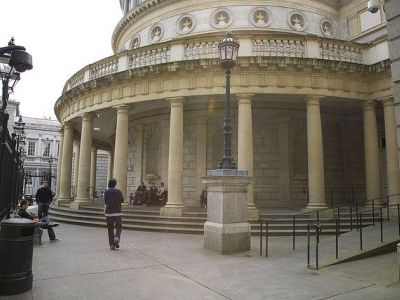
5) National Museum of Ireland – Archaeology (must see)
Dublin's got museums galore, but one particularly steals the limelight with its remarkable collection housed in a building that's practically the Irish version of the Roman Pantheon. This place is a treasure trove spanning every epoch of Irish history, showcasing prehistoric tools, Bronze Age jewelry, early Christian and medieval relics, Viking artifacts, 18th- and 19th-century craftsmanship, and even remarkably preserved bog bodies.
Among its prized possessions, the Tara Brooch, Ardagh Chalice, and Cross of Cong stand as shining examples of Celtic craftsmanship from different periods. Everything of archaeological significance discovered across the country finds its way here, creating a mesmerizing display under glass – including the unsettling bog bodies. Temporary exhibitions, ranging from ancient Egyptian to Roman and Byzantine artifacts, add depth to the already rich tapestry of Irish history.
Why You Should Visit:
While the prehistoric gold and ecclesiastical treasures steal the show, the entire collection weaves a compelling narrative of Irish archaeology and heritage.
Tip:
Don't miss the opportunity to explore the shop offering crafts inspired by the museum's exhibits and grab a bite at the quaint café nestled in the beautiful entrance rotunda.
Among its prized possessions, the Tara Brooch, Ardagh Chalice, and Cross of Cong stand as shining examples of Celtic craftsmanship from different periods. Everything of archaeological significance discovered across the country finds its way here, creating a mesmerizing display under glass – including the unsettling bog bodies. Temporary exhibitions, ranging from ancient Egyptian to Roman and Byzantine artifacts, add depth to the already rich tapestry of Irish history.
Why You Should Visit:
While the prehistoric gold and ecclesiastical treasures steal the show, the entire collection weaves a compelling narrative of Irish archaeology and heritage.
Tip:
Don't miss the opportunity to explore the shop offering crafts inspired by the museum's exhibits and grab a bite at the quaint café nestled in the beautiful entrance rotunda.
