Custom Walk in Cairo, Egypt by emurphy_74f69 created on 2025-05-08
Guide Location: Egypt » Cairo
Guide Type: Custom Walk
# of Sights: 5
Tour Duration: 8 Hour(s)
Travel Distance: 23.4 Km or 14.5 Miles
Share Key: F59KQ
Guide Type: Custom Walk
# of Sights: 5
Tour Duration: 8 Hour(s)
Travel Distance: 23.4 Km or 14.5 Miles
Share Key: F59KQ
How It Works
Please retrieve this walk in the GPSmyCity app. Once done, the app will guide you from one tour stop to the next as if you had a personal tour guide. If you created the walk on this website or come to the page via a link, please follow the instructions below to retrieve the walk in the app.
Retrieve This Walk in App
Step 1. Download the app "GPSmyCity: Walks in 1K+ Cities" on Apple App Store or Google Play Store.



Step 2. In the GPSmyCity app, download(or launch) the guide "Cairo Map and Walking Tours".
Step 3. Tap the menu button located at upper right corner of the "Walks" screen and select "Retrieve custom walk". Enter the share key: F59KQ
1) Cairo Opera House
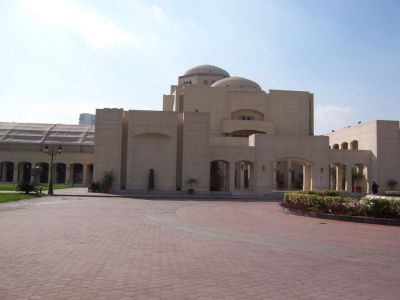
The Cairo Opera House was built with funds donated by the Japanese Government and inaugurated in 1988. The first performance was a Japanese Kabuki show. It was the first ever Kabuki performance in the African continent.
The first Cairo Opera House was the Khedivial Opera House commissioned by Khedive Ismail in 1869 to celebrate the opening of the Suez Canal. Guiseppe Verdi was commissioned to write the opera Aida with an Egyptian theme. The building was inaugurated with the performance of Verdi’s Rigoletto. In 1971, the building was completely destroyed by a fire. The Japanese Government gave the new building as a gift on former President Hosni Mubarak’s visit to Japan in 1983 and the inauguration of the new building was by President Mubarak and Prince Tomohito of Mikasa, the younger brother of the present Emperor of Japan.
The Cairo Opera House has seven floors and was designed by Egyptian and Japanese architects with an Islamic style. It has three levels and can seat up to 1,300 people. The building houses a smaller hall that seats up to 500 people on a and is used for chamber music and recitals. There is also an amphitheater for outdoor performances. It is the home of the Cairo Ballet Company, the Cairo Choir, the Arab Music Ensemble and the Cairo Children’s Choir.
Why You Should Visit:
Very nice place especially by the night lights; however, the interior lighting and sound are also amazing.
Well worth a stroll through the music library, art gallery and museum, even if you're not seeing a performance.
You can find all the details & monthly schedule on the official website and reserve online.
Tip:
Make sure to stop by the on-site café that has one of the most beautiful atmospheres.
The first Cairo Opera House was the Khedivial Opera House commissioned by Khedive Ismail in 1869 to celebrate the opening of the Suez Canal. Guiseppe Verdi was commissioned to write the opera Aida with an Egyptian theme. The building was inaugurated with the performance of Verdi’s Rigoletto. In 1971, the building was completely destroyed by a fire. The Japanese Government gave the new building as a gift on former President Hosni Mubarak’s visit to Japan in 1983 and the inauguration of the new building was by President Mubarak and Prince Tomohito of Mikasa, the younger brother of the present Emperor of Japan.
The Cairo Opera House has seven floors and was designed by Egyptian and Japanese architects with an Islamic style. It has three levels and can seat up to 1,300 people. The building houses a smaller hall that seats up to 500 people on a and is used for chamber music and recitals. There is also an amphitheater for outdoor performances. It is the home of the Cairo Ballet Company, the Cairo Choir, the Arab Music Ensemble and the Cairo Children’s Choir.
Why You Should Visit:
Very nice place especially by the night lights; however, the interior lighting and sound are also amazing.
Well worth a stroll through the music library, art gallery and museum, even if you're not seeing a performance.
You can find all the details & monthly schedule on the official website and reserve online.
Tip:
Make sure to stop by the on-site café that has one of the most beautiful atmospheres.
2) Al-Azhar Park (must see)
Al-Azhar Park, situated in Old Cairo, spans 72 acres and offers a lush oasis inspired by the traditional Islamic garden design. Back in 1984, His Highness the Aga Khan conceived the idea of creating a park for the residents of Cairo, a city known for its high population density. The chosen location was selected due to its significant potential as a "green lung" within the historic core of the city. Notably, Al-Azhar Park has earned recognition as one of the world's distinguished public spaces, being among the top 60.
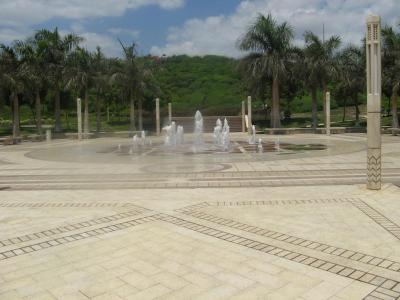
After extensive work, including debris removal, terrain reshaping, and plant nurseries to select suitable flora for the soil and climate, the park has transformed. It now boasts walkways, serene pools, gentle hills, picnic spots, planned gardens, and various amenities. The vegetation ranges from arid succulents to lush meadows with shade trees, formal gardens, and orchard-like spaces resembling bustans. The design reflects traditional Islamic gardens with symmetric layouts, inner and outer zones, pools, fountains, and strategic axis placement.
The park boasts a formal central axis running the entire length, flanked by a continuous water channel. Along this axis, water fountains and pools are thoughtfully scattered, eventually leading to the more natural form of a picturesque lake. Classic Islamic-style gardens and pavilions, nestled amidst geometrically arranged orchards, create a captivating focal point along the lake's edge. The main pathway, complemented by smaller alleys and a series of formal gardens, is anchored at each end by a hilltop restaurant and a café by the lakeside. Informal pathways meander through the more structured areas, guiding visitors to explore all corners of this delightful sanctuary.
Why You Should Visit:
An excellent example of Islamic garden style – lots of water features, marble and tile mosaic patterning and complex gardens.
Has a beautiful city view and some great events at night. Also quite far from the city so a bit cleaner for air and no traffic noise.
There are several restaurants/cafes on-site (including Studio Misr located on a high-rise), but also a few spots where you can eat & drink under parasols protecting from the sun.
Tip:
If you are seeking a peaceful quiet experience, avoid the weekends.
After extensive work, including debris removal, terrain reshaping, and plant nurseries to select suitable flora for the soil and climate, the park has transformed. It now boasts walkways, serene pools, gentle hills, picnic spots, planned gardens, and various amenities. The vegetation ranges from arid succulents to lush meadows with shade trees, formal gardens, and orchard-like spaces resembling bustans. The design reflects traditional Islamic gardens with symmetric layouts, inner and outer zones, pools, fountains, and strategic axis placement.
The park boasts a formal central axis running the entire length, flanked by a continuous water channel. Along this axis, water fountains and pools are thoughtfully scattered, eventually leading to the more natural form of a picturesque lake. Classic Islamic-style gardens and pavilions, nestled amidst geometrically arranged orchards, create a captivating focal point along the lake's edge. The main pathway, complemented by smaller alleys and a series of formal gardens, is anchored at each end by a hilltop restaurant and a café by the lakeside. Informal pathways meander through the more structured areas, guiding visitors to explore all corners of this delightful sanctuary.
Why You Should Visit:
An excellent example of Islamic garden style – lots of water features, marble and tile mosaic patterning and complex gardens.
Has a beautiful city view and some great events at night. Also quite far from the city so a bit cleaner for air and no traffic noise.
There are several restaurants/cafes on-site (including Studio Misr located on a high-rise), but also a few spots where you can eat & drink under parasols protecting from the sun.
Tip:
If you are seeking a peaceful quiet experience, avoid the weekends.
3) Mosque of Muhammad Ali (must see)
The Mosque of Muhammad Ali Pasha is located at the top of the Salah-ad-Din Citadel in Cairo. It is one of the most visited sites in Cairo.
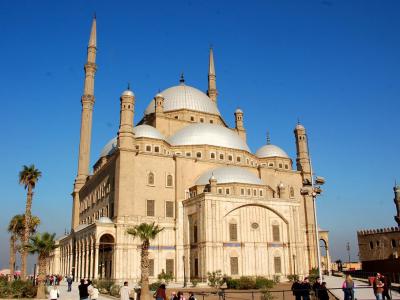
The mosque was commissioned by the founder of modern Egypt and the last dynasty that ruled Egypt. It is also called the alabaster mosque because of the extensive use of the material in the structure. Unlike other mosques in Egypt that were built in the Mamluk architectural style, it had the style of Turkish Mosques especially the Yeni Mosque in Istanbul. It was designed by the Turkish architect, Yusuf Bushnak.
The Mosque of Muhammad Ali Pasha has a central dome surrounded by four small domes and four semicircular domes. The slender minarets have a Turkish architectural style and are 82 meters high. The tomb of Muhammad Ali Pasha is located at the center of the courtyard and is made of Carrara marble. The arcaded courtyard offers a spectacular view of the city across to the pyramids at Giza. The large prayer hall is covered by a large Turkish-style dome. The Southwestern parapet offers views of Cairo, the Sultan Hassan Mosque and the Ibn Tulun Mosque.
Why You Should Visit:
As part of the Citadel that you get to explore, this mosque stands out the most, especially at night with its beautiful illumination.
Add to this the design and intricacy of the mosaic inside, which truly makes it a great antiquity.
Because it sits on top of a mountain, you can also take in expansive views of the city and the pyramids.
Tip:
Try to go early in the morning or late afternoon to avoid the heat and go on a sunny day as well – makes a lot of difference when enjoying the view!
Be sure to ask the cost of the "tour guide" assistance before you agree to hear more about the mosque.
The mosque was commissioned by the founder of modern Egypt and the last dynasty that ruled Egypt. It is also called the alabaster mosque because of the extensive use of the material in the structure. Unlike other mosques in Egypt that were built in the Mamluk architectural style, it had the style of Turkish Mosques especially the Yeni Mosque in Istanbul. It was designed by the Turkish architect, Yusuf Bushnak.
The Mosque of Muhammad Ali Pasha has a central dome surrounded by four small domes and four semicircular domes. The slender minarets have a Turkish architectural style and are 82 meters high. The tomb of Muhammad Ali Pasha is located at the center of the courtyard and is made of Carrara marble. The arcaded courtyard offers a spectacular view of the city across to the pyramids at Giza. The large prayer hall is covered by a large Turkish-style dome. The Southwestern parapet offers views of Cairo, the Sultan Hassan Mosque and the Ibn Tulun Mosque.
Why You Should Visit:
As part of the Citadel that you get to explore, this mosque stands out the most, especially at night with its beautiful illumination.
Add to this the design and intricacy of the mosaic inside, which truly makes it a great antiquity.
Because it sits on top of a mountain, you can also take in expansive views of the city and the pyramids.
Tip:
Try to go early in the morning or late afternoon to avoid the heat and go on a sunny day as well – makes a lot of difference when enjoying the view!
Be sure to ask the cost of the "tour guide" assistance before you agree to hear more about the mosque.
4) Al-Rifa'i Mosque
Al-Rifa’i Mosque was built on the site of a small shrine dedicated to the medieval Islamic saint Al-Rifa’i. It was later called the Royal Mosque because part of the complex houses the mausoleum of members of the royal family and serves as a storehouse of many royal treasures.
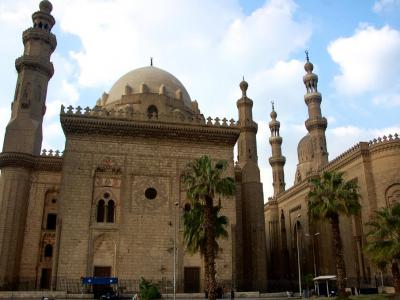
The mosque was commissioned by Khushyar Hanim, the mother of the then Pasha, Khedive Isma'il Pasha. It was built between 1869 and 1912. The building has many architectural styles from the Mamluk period of Egyptian history. The dome and the minaret are particularly reflective of Bahri Mamluk Architecture that was popular in 19th and 20th century Egypt. It consists of a large prayer hall, shrines for the three Islamic saints, Al-Rifa’i, Ali Abi-Shubbak and Yahya al-Ansari and a mausoleum where members of the royal family are interred. It has a rectangular shape and covers an area of 6500 square meters.
The Al-Rifa’i Mosque is the final resting place of the Egyptian Royal family and other Royals. Kushyar Hanem who commissioned the mosque and her son, Ismail Pasha and the last reigning King of Egypt, King Faroukh are interred in the mausoleum. The last remains of Reza Shah Pahlavi of Iran were first interred in the mausoleum until they were returned to Iran after World War II. The burial chamber is today the final resting place of his son, Mohammed Reza Pahlavi. The Al-Rifa’i Mosque is the living reminder of Egypt’s royal past.
Why You Should Visit:
Probably the most impressive and beautiful building of the neo-Mamluk style (the style imitating medieval Cairo architecture).
Along with the much older but equally large Madrassa of Sultan Hassan next to it, it forms one of the most extraordinary set-pieces of Islamic Cairo.
Tip:
At all times, throughout the building, make sure to look up at the richly decorated ceilings, or at the stone portals of the various entrances to the mosque.
Admission is charged. Wear socks and bring some small cash to tip the shoe collector.
Women: dress modest, cover your ankles, knees and arms. Wear headscarf.
The mosque was commissioned by Khushyar Hanim, the mother of the then Pasha, Khedive Isma'il Pasha. It was built between 1869 and 1912. The building has many architectural styles from the Mamluk period of Egyptian history. The dome and the minaret are particularly reflective of Bahri Mamluk Architecture that was popular in 19th and 20th century Egypt. It consists of a large prayer hall, shrines for the three Islamic saints, Al-Rifa’i, Ali Abi-Shubbak and Yahya al-Ansari and a mausoleum where members of the royal family are interred. It has a rectangular shape and covers an area of 6500 square meters.
The Al-Rifa’i Mosque is the final resting place of the Egyptian Royal family and other Royals. Kushyar Hanem who commissioned the mosque and her son, Ismail Pasha and the last reigning King of Egypt, King Faroukh are interred in the mausoleum. The last remains of Reza Shah Pahlavi of Iran were first interred in the mausoleum until they were returned to Iran after World War II. The burial chamber is today the final resting place of his son, Mohammed Reza Pahlavi. The Al-Rifa’i Mosque is the living reminder of Egypt’s royal past.
Why You Should Visit:
Probably the most impressive and beautiful building of the neo-Mamluk style (the style imitating medieval Cairo architecture).
Along with the much older but equally large Madrassa of Sultan Hassan next to it, it forms one of the most extraordinary set-pieces of Islamic Cairo.
Tip:
At all times, throughout the building, make sure to look up at the richly decorated ceilings, or at the stone portals of the various entrances to the mosque.
Admission is charged. Wear socks and bring some small cash to tip the shoe collector.
Women: dress modest, cover your ankles, knees and arms. Wear headscarf.
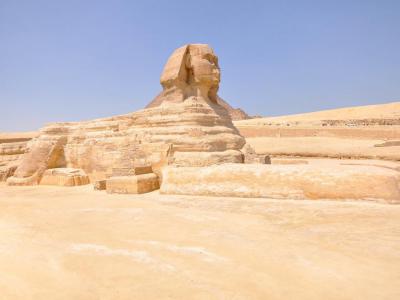
5) Great Sphinx of Giza (must see)
The Great Sphinx of Giza, often simply called the Sphinx, is a massive statue made of limestone. It depicts a reclining creature known as a sphinx, which has the body of a lion and the head of a human. This iconic statue is located on the Giza Plateau, on the western side of the Nile River in Giza. The Sphinx faces directly from the west to the east and is widely believed to represent the ancient Egyptian pharaoh Khafre.
Originally carved from the natural rock bed, the Sphinx's original shape has been preserved through the addition of layers of stone blocks. It holds the distinction of being the oldest known monumental sculpture in Egypt and is generally thought to have been designed, crafted, and erected during the rule of Pharaoh Khafre, approximately between 2558 and 2532 BC in the Old Kingdom era.
Unfortunately, the exact name given to this statue by its creators remains a mystery. There are no inscriptions from the Old Kingdom period that mention the Great Sphinx, nor do we have any descriptions of its construction or intended purpose from that time. However, during the New Kingdom period, the Sphinx took on a new identity as the solar deity Hor-em-akhet, which translates to "Horus of the Horizon" in English. Pharaoh Thutmose IV, who ruled between 1401 and 1391 or 1397 and 1388 BC, explicitly referred to the Sphinx as such in his Dream Stele, a rectangular granite monument standing 3.6 meters (12 feet) tall and weighing 15 tons. This inscription, located between the front paws of the Sphinx, was a common practice among New Kingdom rulers to legitimize their divine right to rule.
Originally carved from the natural rock bed, the Sphinx's original shape has been preserved through the addition of layers of stone blocks. It holds the distinction of being the oldest known monumental sculpture in Egypt and is generally thought to have been designed, crafted, and erected during the rule of Pharaoh Khafre, approximately between 2558 and 2532 BC in the Old Kingdom era.
Unfortunately, the exact name given to this statue by its creators remains a mystery. There are no inscriptions from the Old Kingdom period that mention the Great Sphinx, nor do we have any descriptions of its construction or intended purpose from that time. However, during the New Kingdom period, the Sphinx took on a new identity as the solar deity Hor-em-akhet, which translates to "Horus of the Horizon" in English. Pharaoh Thutmose IV, who ruled between 1401 and 1391 or 1397 and 1388 BC, explicitly referred to the Sphinx as such in his Dream Stele, a rectangular granite monument standing 3.6 meters (12 feet) tall and weighing 15 tons. This inscription, located between the front paws of the Sphinx, was a common practice among New Kingdom rulers to legitimize their divine right to rule.
