Custom Walk in Rome, Italy by emurphy_74f69 created on 2025-05-08
Guide Location: Italy » Rome
Guide Type: Custom Walk
# of Sights: 5
Tour Duration: 3 Hour(s)
Travel Distance: 8.1 Km or 5 Miles
Share Key: 9KRVV
Guide Type: Custom Walk
# of Sights: 5
Tour Duration: 3 Hour(s)
Travel Distance: 8.1 Km or 5 Miles
Share Key: 9KRVV
How It Works
Please retrieve this walk in the GPSmyCity app. Once done, the app will guide you from one tour stop to the next as if you had a personal tour guide. If you created the walk on this website or come to the page via a link, please follow the instructions below to retrieve the walk in the app.
Retrieve This Walk in App
Step 1. Download the app "GPSmyCity: Walks in 1K+ Cities" on Apple App Store or Google Play Store.



Step 2. In the GPSmyCity app, download(or launch) the guide "Rome Map and Walking Tours".
Step 3. Tap the menu button located at upper right corner of the "Walks" screen and select "Retrieve custom walk". Enter the share key: 9KRVV
1) Basilica di Santa Maria Maggiore (Basilica of Saint Mary Major) (must see)
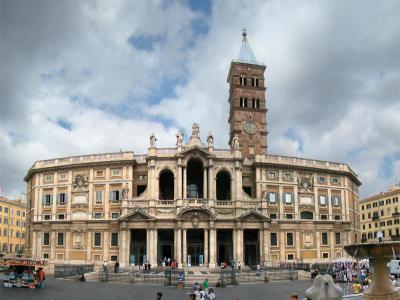
As the largest among the 26 churches in Rome dedicated to the Virgin Mary, the Basilica of Saint Mary Major holds a significant place in history. Originally constructed by Pope Liberius in the 4th century, the grandiose church has undergone renovations and enhancements by successive popes while still retaining its early medieval structure. The colonnaded nave, an integral part of the original 5th-century building, offers a glimpse into its ancient origins. The medieval era contributed the captivating Cosmatesque marble floor and the delightful Romanesque bell tower adorned with intricate blue ceramic roundels. During the Renaissance, a new coffered ceiling was introduced, while the Baroque period left its imprint with twin domes and grand facades at the front and rear. All in all, it’s a most successful blend of different architectural styles.
However, the true splendor of Saint Mary Major lies in its mosaics, which are among the oldest in Rome. The biblical scenes adorning the aisles date back to the 5th century, captivating visitors with their artistic depiction. The mosaics on the triumphal arch are particularly breathtaking, showcasing the skill and craftsmanship of the time. Among other medieval highlights is a magnificent 13th-century mosaic featuring an enthroned Christ in the loggia, adding to the artistic treasures within.
In 2001, Pope John Paul II inaugurated the Basilica Museum, dedicated to the church's history and the spread of Catholicism throughout the world. Here you will see ecclesiastical paintings, ritual vestments, scores from the choir and various manuscripts.
Tips: When visiting, be sure to take advantage of the small tours available to explore the church's hidden treasures. Additionally, don't miss the opportunity to visit the balcony loggia, which offers a unique perspective and allows you to admire more of the church's architecture. As evening sets in, find a serene spot by the fountain and marvel at the illuminated beauty of the building.
However, the true splendor of Saint Mary Major lies in its mosaics, which are among the oldest in Rome. The biblical scenes adorning the aisles date back to the 5th century, captivating visitors with their artistic depiction. The mosaics on the triumphal arch are particularly breathtaking, showcasing the skill and craftsmanship of the time. Among other medieval highlights is a magnificent 13th-century mosaic featuring an enthroned Christ in the loggia, adding to the artistic treasures within.
In 2001, Pope John Paul II inaugurated the Basilica Museum, dedicated to the church's history and the spread of Catholicism throughout the world. Here you will see ecclesiastical paintings, ritual vestments, scores from the choir and various manuscripts.
Tips: When visiting, be sure to take advantage of the small tours available to explore the church's hidden treasures. Additionally, don't miss the opportunity to visit the balcony loggia, which offers a unique perspective and allows you to admire more of the church's architecture. As evening sets in, find a serene spot by the fountain and marvel at the illuminated beauty of the building.
2) Galleria Borghese (Borghese Gallery and Museum) (must see)
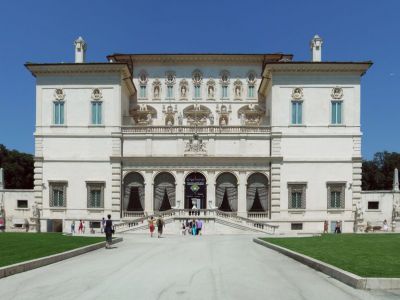
If you find yourself with a couple of free hours during your stay in Rome, it is highly recommended that you make a reservation to visit the Galleria Borghese, with its remarkable gallery that showcases a stunning collection of ancient artifacts, paintings, and sculptures.
The gallery is located within the Villa Borghese, which was constructed between 1609 and 1618 based on designs created by Cardinal Scipione Borghese. As the nephew of Pope Paul V and holding the esteemed position of Cardinal Nephew, the cardinal enjoyed considerable wealth and the authority to "confiscate" various artworks in the name of the Church. Many of these seized treasures ended up in his private collection. Despite the cardinal's unconventional methods, he possessed a genuine passion for art and antiquities, and he served as a patron to Caravaggio, marking the beginning of his collection.
Presently, the gallery comprises 20 rooms spread across two floors. There, you can marvel at notable works such as Titian's "Sacred and Profane Love," as well as two magnificent paintings of the "Disposition" by Rubens and Raphael, among other masterpieces. The ground floor primarily features antiquities, including a splendid mosaic of gladiators from the 3rd century, Canova's "Venus Victrix," and a captivating trompe-l'oeil fresco on the ceiling. Additionally, you'll encounter several sculptures by Bernini, another favored artist of the cardinal. These include "Apollo and Daphne," "David," and the awe-inspiring "Rape of Proserpina." The intricately crafted marble sculpture brings the scene to life, with Pluto's fingers seemingly sinking into the flesh of Proserpina's thigh, and one side of his face distorted as she attempts to push him away.
Why You Should Visit:
Probably one of the best museums not only in Italy but the world.
Its manageable size allows to explore and appreciate the majority of exhibits within the allotted 2-hour timeframe.
The surrounding park offers a plethora of attractions, such as biking, a zoo, walking paths, and bike carts for families, ensuring a well-rounded experience.
Tip:
It is absolutely essential to make a reservation in advance, either online or by phone, as this is the only way to gain entrance.
Arriving early is advisable to collect tickets, check bags, and potentially rent an audio guide.
The gallery is located within the Villa Borghese, which was constructed between 1609 and 1618 based on designs created by Cardinal Scipione Borghese. As the nephew of Pope Paul V and holding the esteemed position of Cardinal Nephew, the cardinal enjoyed considerable wealth and the authority to "confiscate" various artworks in the name of the Church. Many of these seized treasures ended up in his private collection. Despite the cardinal's unconventional methods, he possessed a genuine passion for art and antiquities, and he served as a patron to Caravaggio, marking the beginning of his collection.
Presently, the gallery comprises 20 rooms spread across two floors. There, you can marvel at notable works such as Titian's "Sacred and Profane Love," as well as two magnificent paintings of the "Disposition" by Rubens and Raphael, among other masterpieces. The ground floor primarily features antiquities, including a splendid mosaic of gladiators from the 3rd century, Canova's "Venus Victrix," and a captivating trompe-l'oeil fresco on the ceiling. Additionally, you'll encounter several sculptures by Bernini, another favored artist of the cardinal. These include "Apollo and Daphne," "David," and the awe-inspiring "Rape of Proserpina." The intricately crafted marble sculpture brings the scene to life, with Pluto's fingers seemingly sinking into the flesh of Proserpina's thigh, and one side of his face distorted as she attempts to push him away.
Why You Should Visit:
Probably one of the best museums not only in Italy but the world.
Its manageable size allows to explore and appreciate the majority of exhibits within the allotted 2-hour timeframe.
The surrounding park offers a plethora of attractions, such as biking, a zoo, walking paths, and bike carts for families, ensuring a well-rounded experience.
Tip:
It is absolutely essential to make a reservation in advance, either online or by phone, as this is the only way to gain entrance.
Arriving early is advisable to collect tickets, check bags, and potentially rent an audio guide.
3) Piazza di Trevi & Fontana di Trevi (Trevi Square & Trevi Fountain) (must see)
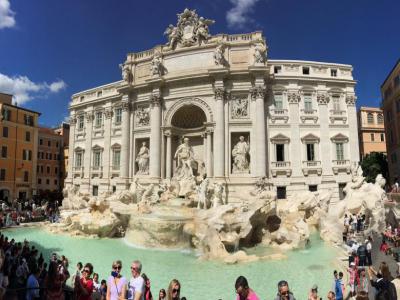
The Trevi Fountain is one of Rome’s most iconic landmarks, drawing visitors to the eponymous Trevi Square all day long. Surprisingly, the fountain was not initially built in the heart of the city; instead, the city grew around it. Its name derives from the Latin word "trivium," which means “three streets,” as it sits at the junction of three streets: De Crocicchi, Poli, and Delle Muratte.
The fountain’s history dates back to 1629 when Pope Urban VIII commissioned Gian Lorenzo Bernini to redesign it, though his plans were never realized. Later, Pope Clement XII organized a competition in 1730, leading to Nicola Salvi's selection for the project, who incorporated the fountain into the rear of the Poli Palace. Salvi passed away before its completion. Giuseppe Pannini and other artists finalized the work in 1762.
Measuring over 26 meters in height and 49 meters in width, it is the largest Baroque fountain in Rome.
The Trevi Fountain features a Corinthian façade and bas-reliefs depicting the origins of the Acqua Vergine aqueduct, constructed in 19 BC. According to legend, a virgin guided Roman engineers to the aqueduct’s source, an event depicted in the fountain’s bas-reliefs. The aqueduct, which survived the Gothic invasions and was restored during the Middle Ages, still supplies water to the fountain today.
At the heart of the fountain is Oceanus, depicted riding a shell-shaped chariot drawn by two horses and guided by Tritons. The horses symbolize the sea’s contrasting moods-calm and turbulent. Flanking Oceanus are the statues of Abundance and Salubrity, representing prosperity and health. The symmetrical Rococo design combines dynamic artistry with Baroque grandeur, reflecting 18th-century European trends.
The Trevi Fountain is also known for the tradition of tossing coins, which promises a return to Rome. Popularized by the 1954 Hollywood film "Three Coins in the Fountain," visitors toss coins over their left shoulder with their right hand, generating daily about €3,000. This money, collected by municipal authorities, is donated to charity.
Celebrated in films like Roman Holiday and La Dolce Vita, the Trevi Fountain’s global fame is further evidenced by replicas worldwide. Access to the fountain is now limited to 400 visitors at a time, ensuring a more enjoyable visit to this timeless masterpiece. Surrounding the fountain are charming shops, restaurants, and gelaterias, making it a delightful spot to soak in Rome’s vibrant atmosphere.
Tip:
The fountain holds particular allure at night, especially after 10 pm when it is beautifully illuminated and the crowds dissipate, allowing you to enjoy the site almost exclusively.
The fountain’s history dates back to 1629 when Pope Urban VIII commissioned Gian Lorenzo Bernini to redesign it, though his plans were never realized. Later, Pope Clement XII organized a competition in 1730, leading to Nicola Salvi's selection for the project, who incorporated the fountain into the rear of the Poli Palace. Salvi passed away before its completion. Giuseppe Pannini and other artists finalized the work in 1762.
Measuring over 26 meters in height and 49 meters in width, it is the largest Baroque fountain in Rome.
The Trevi Fountain features a Corinthian façade and bas-reliefs depicting the origins of the Acqua Vergine aqueduct, constructed in 19 BC. According to legend, a virgin guided Roman engineers to the aqueduct’s source, an event depicted in the fountain’s bas-reliefs. The aqueduct, which survived the Gothic invasions and was restored during the Middle Ages, still supplies water to the fountain today.
At the heart of the fountain is Oceanus, depicted riding a shell-shaped chariot drawn by two horses and guided by Tritons. The horses symbolize the sea’s contrasting moods-calm and turbulent. Flanking Oceanus are the statues of Abundance and Salubrity, representing prosperity and health. The symmetrical Rococo design combines dynamic artistry with Baroque grandeur, reflecting 18th-century European trends.
The Trevi Fountain is also known for the tradition of tossing coins, which promises a return to Rome. Popularized by the 1954 Hollywood film "Three Coins in the Fountain," visitors toss coins over their left shoulder with their right hand, generating daily about €3,000. This money, collected by municipal authorities, is donated to charity.
Celebrated in films like Roman Holiday and La Dolce Vita, the Trevi Fountain’s global fame is further evidenced by replicas worldwide. Access to the fountain is now limited to 400 visitors at a time, ensuring a more enjoyable visit to this timeless masterpiece. Surrounding the fountain are charming shops, restaurants, and gelaterias, making it a delightful spot to soak in Rome’s vibrant atmosphere.
Tip:
The fountain holds particular allure at night, especially after 10 pm when it is beautifully illuminated and the crowds dissipate, allowing you to enjoy the site almost exclusively.
4) Musei Vaticani (Vatican Museums) (must see)
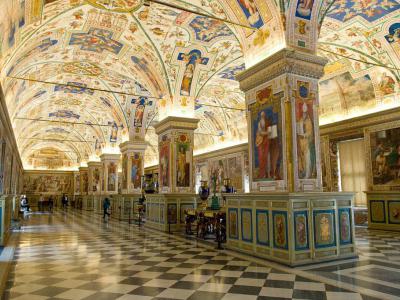
The Vatican Museums house an extensive collection of art and historical artifacts amassed by the Catholic Church over centuries. With approximately 70,000 works, of which 20,000 are on display, they rank among the most significant museums in the world and are the second most-visited art museum after the Louvre.
The museums trace their origins to Pope Julius II in the early 16th century. Their foundation is closely linked to the discovery of the famous Roman sculpture "Laocoon and His Sons" in 1506. Following expert advice from Michelangelo and Giuliano da Sangallo, who was an Italian sculptor, architect, and military engineer, the Pope acquired the piece and put it on display. Over time, the collection expanded, with Pope Pius IX establishing the Museum Christianum and Lateran Museum in 1854. In 2006, the museums celebrated their 500th anniversary by opening the Vatican Hill necropolis to the public.
The museums include 24 galleries, culminating in the Sistine Chapel, famous for Michelangelo’s frescoed ceiling and The Last Judgment. Other highlights include the Raphael Rooms, featuring masterpieces like The School of Athens, and the Vatican Art Gallery, showcasing works by Giotto, Leonardo da Vinci, Raphael, Titian, Caravaggio, and Veronese.
Several museums surrounding the Belvedere Courtyard specialize in sculpture. The Pio-Clementino Museum is the most prominent, housing Greek and Roman sculptures, such as Apollo Belvedere and Laocoön and His Sons. The Chiaramonti Museum displays statues, friezes, and sarcophagi, while the Gregoriano Etrusco and Gregoriano Egiziano museums feature Etruscan and Egyptian antiquities, respectively.
The Vatican Historical Museum (established in 1973) displays papal artifacts, including a red marble papal throne. The Gallery of Maps, commissioned by Pope Gregory XIII, remains the largest geographical pictorial study ever created. The Borgia Apartment, once home to Pope Alexander VI, contains Renaissance frescoes. Another highlight is the Bramante Staircase, a stunning double-helix design from 1932.
Tip:
Before embarking on a visit, ensure you have a satisfying breakfast and wear comfortable walking shoes. It can be helpful to prioritize a few key pieces of art that you don't want to miss and focus on experiencing those. Alternatively, if you wish to explore the entire collection, plan for multiple visits.
It is highly recommended to book tickets in advance online, particularly for an afternoon visit during the middle of the week. Saturdays and Mondays tend to be the busiest days, so opting for other times can enhance your experience.
The museums trace their origins to Pope Julius II in the early 16th century. Their foundation is closely linked to the discovery of the famous Roman sculpture "Laocoon and His Sons" in 1506. Following expert advice from Michelangelo and Giuliano da Sangallo, who was an Italian sculptor, architect, and military engineer, the Pope acquired the piece and put it on display. Over time, the collection expanded, with Pope Pius IX establishing the Museum Christianum and Lateran Museum in 1854. In 2006, the museums celebrated their 500th anniversary by opening the Vatican Hill necropolis to the public.
The museums include 24 galleries, culminating in the Sistine Chapel, famous for Michelangelo’s frescoed ceiling and The Last Judgment. Other highlights include the Raphael Rooms, featuring masterpieces like The School of Athens, and the Vatican Art Gallery, showcasing works by Giotto, Leonardo da Vinci, Raphael, Titian, Caravaggio, and Veronese.
Several museums surrounding the Belvedere Courtyard specialize in sculpture. The Pio-Clementino Museum is the most prominent, housing Greek and Roman sculptures, such as Apollo Belvedere and Laocoön and His Sons. The Chiaramonti Museum displays statues, friezes, and sarcophagi, while the Gregoriano Etrusco and Gregoriano Egiziano museums feature Etruscan and Egyptian antiquities, respectively.
The Vatican Historical Museum (established in 1973) displays papal artifacts, including a red marble papal throne. The Gallery of Maps, commissioned by Pope Gregory XIII, remains the largest geographical pictorial study ever created. The Borgia Apartment, once home to Pope Alexander VI, contains Renaissance frescoes. Another highlight is the Bramante Staircase, a stunning double-helix design from 1932.
Tip:
Before embarking on a visit, ensure you have a satisfying breakfast and wear comfortable walking shoes. It can be helpful to prioritize a few key pieces of art that you don't want to miss and focus on experiencing those. Alternatively, if you wish to explore the entire collection, plan for multiple visits.
It is highly recommended to book tickets in advance online, particularly for an afternoon visit during the middle of the week. Saturdays and Mondays tend to be the busiest days, so opting for other times can enhance your experience.
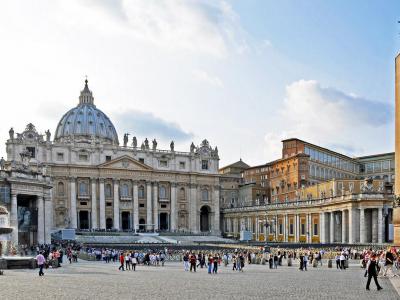
5) Basilica Papale di San Pietro in Vaticano (Saint Peter's Basilica) (must see)
Despite not being the mother church of Catholicism or Rome's cathedral, Saint Peter's Basilica in the Vatican is one of Christianity's holiest sites. Tradition holds that Saint Peter, the first Bishop of Rome, is buried inside, beneath the high altar, known as the Altar of the Confession.
Built to replace the aging original basilica, the new construction began in 1506, under Pope Julius II, and was completed in 1626. Designed by Renaissance masters such as Donato Bramante, Michelangelo, and Carlo Maderno, the structure embodies the grandeur of Italian High Renaissance architecture. Its vast interior makes it the largest church in the world by space.
The Latin cross layout features a vast dome, spanning 42 meters in diameter and towering 120 meters high. Meanwhile, the imposing façade adorned with statues of Saints Peter and Paul is complemented by a narthex housing the Holy Door. The latter, walled up with bricks, is opened only during jubilee years. Inside, the immense nave, wide aisles, and chapels are decorated with elaborate sculptures and artwork. Among these are Michelangelo’s Pietà and Bernini’s Baldachin, a monumental canopy over the Papal Altar. Other notable artworks include Giotto’s Navicella mosaic and equestrian statues of Constantine and Charlemagne.
Michelangelo played a crucial role in shaping the place, refining its design into a more unified and monumental form. His dome, completed in 1590, has profoundly influenced Western church architecture. Slightly more pointed than Michelangelo's original plan, the dome's design blends Renaissance ideals with Baroque dynamism. Encircling the interior is an inscription that reads: "You are Peter, and on this rock I will build my church... and I will give you the keys of the kingdom of heaven."
The basilica also has six bells. The largest of them, "Campanone," weighs 9 tons and is used for ringing for papal blessings. Up on the roof are the sculptures of Christ the Redeemer, Saint John the Baptist, and 11 Apostles. Meanwhile, inside, there are over 100 tombs. Among those laid to rest are many popes, including Pope Jean Paul II, royals, and other historical figures, such as Holy Roman Emperor Otto II and Italian composer Giovanni Pierluigi da Palestrina.
Tips:
Arrive early in the morning to avoid long queues. Admission is free (until 5 PM when the gates close), but expect to undergo a security check before entering. Remember to dress modestly, with knees and shoulders covered (affordable scarves for ladies are available from nearby vendors). If you're feeling adventurous, ascend to the top of the dome. An elevator ride can save you from climbing more than 300 stairs.
Built to replace the aging original basilica, the new construction began in 1506, under Pope Julius II, and was completed in 1626. Designed by Renaissance masters such as Donato Bramante, Michelangelo, and Carlo Maderno, the structure embodies the grandeur of Italian High Renaissance architecture. Its vast interior makes it the largest church in the world by space.
The Latin cross layout features a vast dome, spanning 42 meters in diameter and towering 120 meters high. Meanwhile, the imposing façade adorned with statues of Saints Peter and Paul is complemented by a narthex housing the Holy Door. The latter, walled up with bricks, is opened only during jubilee years. Inside, the immense nave, wide aisles, and chapels are decorated with elaborate sculptures and artwork. Among these are Michelangelo’s Pietà and Bernini’s Baldachin, a monumental canopy over the Papal Altar. Other notable artworks include Giotto’s Navicella mosaic and equestrian statues of Constantine and Charlemagne.
Michelangelo played a crucial role in shaping the place, refining its design into a more unified and monumental form. His dome, completed in 1590, has profoundly influenced Western church architecture. Slightly more pointed than Michelangelo's original plan, the dome's design blends Renaissance ideals with Baroque dynamism. Encircling the interior is an inscription that reads: "You are Peter, and on this rock I will build my church... and I will give you the keys of the kingdom of heaven."
The basilica also has six bells. The largest of them, "Campanone," weighs 9 tons and is used for ringing for papal blessings. Up on the roof are the sculptures of Christ the Redeemer, Saint John the Baptist, and 11 Apostles. Meanwhile, inside, there are over 100 tombs. Among those laid to rest are many popes, including Pope Jean Paul II, royals, and other historical figures, such as Holy Roman Emperor Otto II and Italian composer Giovanni Pierluigi da Palestrina.
Tips:
Arrive early in the morning to avoid long queues. Admission is free (until 5 PM when the gates close), but expect to undergo a security check before entering. Remember to dress modestly, with knees and shoulders covered (affordable scarves for ladies are available from nearby vendors). If you're feeling adventurous, ascend to the top of the dome. An elevator ride can save you from climbing more than 300 stairs.
