Custom Walk in Aix-en-Provence, France by fergua_66e68 created on 2025-05-12
Guide Location: France » Aix-en-Provence
Guide Type: Custom Walk
# of Sights: 15
Tour Duration: 3 Hour(s)
Travel Distance: 6.2 Km or 3.9 Miles
Share Key: FEK8C
Guide Type: Custom Walk
# of Sights: 15
Tour Duration: 3 Hour(s)
Travel Distance: 6.2 Km or 3.9 Miles
Share Key: FEK8C
How It Works
Please retrieve this walk in the GPSmyCity app. Once done, the app will guide you from one tour stop to the next as if you had a personal tour guide. If you created the walk on this website or come to the page via a link, please follow the instructions below to retrieve the walk in the app.
Retrieve This Walk in App
Step 1. Download the app "GPSmyCity: Walks in 1K+ Cities" on Apple App Store or Google Play Store.



Step 2. In the GPSmyCity app, download(or launch) the guide "Aix-en-Provence Map and Walking Tours".
Step 3. Tap the menu button located at upper right corner of the "Walks" screen and select "Retrieve custom walk". Enter the share key: FEK8C
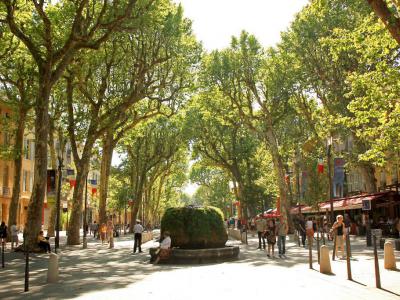
1) Cours Mirabeau (Mirabeau Boulevard) (must see)
Gabriel Riqueti, Count of Mirabeau, was a man of big gestures and even bigger contradictions. He spoke for liberty, flirted with monarchy, and somehow managed to represent Aix at the General Assembly in 1789 without burning any bridges-at least not immediately. When he died in 1791, France collectively put down its quills and mourned.
A few decades and revolutions later, Aix named its most iconic street after him: Mirabeau Boulevard. Back in 1649, however, this grand promenade was just a gleam in Archbishop Michel Mazarin’s eye. With the city bursting at the seams, Mazarin tore down the southern ramparts to build a tree-lined thoroughfare fit for gilded carriages, powdered wigs, and Sunday strolls. Architect Jean Lombard helped draft the blueprint for this upscale expansion, turning what was once a defense wall into something much more stylish.
It took fifteen years of rubble removal to make way for the noble set, but the result still impresses: a leafy tunnel of plane trees lined with elegant mansions, wrought-iron balconies, and enough cafés to caffeinate all of Provence. The name “Mirabeau” wasn’t slapped on until 1876, but the spirit of grandeur had been there from the beginning.
Fountains punctuate the boulevard like commas in a particularly well-watered sentence. There’s the showy Fountain of the Rotunda at one end, the Fountain of the Nine Canons mid-way, and the Mossy Fountain, which looks exactly like it sounds. As for the Fountain of the Seahorses, it vanished in 1777; today, only a stony lump remains to tell the tale.
A statue of King René marks the east end of the boulevard, looking pleased with the view-shopfronts now outnumber mansions, but the Boulevard still holds its swagger. Like its namesake, it doesn’t quite pick a side-bourgeois polish, revolutionary echoes, and a strong preference for table service.
A few decades and revolutions later, Aix named its most iconic street after him: Mirabeau Boulevard. Back in 1649, however, this grand promenade was just a gleam in Archbishop Michel Mazarin’s eye. With the city bursting at the seams, Mazarin tore down the southern ramparts to build a tree-lined thoroughfare fit for gilded carriages, powdered wigs, and Sunday strolls. Architect Jean Lombard helped draft the blueprint for this upscale expansion, turning what was once a defense wall into something much more stylish.
It took fifteen years of rubble removal to make way for the noble set, but the result still impresses: a leafy tunnel of plane trees lined with elegant mansions, wrought-iron balconies, and enough cafés to caffeinate all of Provence. The name “Mirabeau” wasn’t slapped on until 1876, but the spirit of grandeur had been there from the beginning.
Fountains punctuate the boulevard like commas in a particularly well-watered sentence. There’s the showy Fountain of the Rotunda at one end, the Fountain of the Nine Canons mid-way, and the Mossy Fountain, which looks exactly like it sounds. As for the Fountain of the Seahorses, it vanished in 1777; today, only a stony lump remains to tell the tale.
A statue of King René marks the east end of the boulevard, looking pleased with the view-shopfronts now outnumber mansions, but the Boulevard still holds its swagger. Like its namesake, it doesn’t quite pick a side-bourgeois polish, revolutionary echoes, and a strong preference for table service.

2) Statue de Paul Cezanne (Statue of Paul Cezanne)
At the edge of Aix’s bustling Rotunda, a bronze figure keeps quiet watch-Paul Cézanne, rendered with character. He’s not striking a grand pose or draped in laurels. Instead, he’s in his usual work jacket, boots laced for walking, hat pulled low over his brow, like he's halfway between a hike and a painting session. Backpack slung and walking stick in hand, he could be sizing up a canvas-or just deciding where to eat.
Sculpted by Dutch artist Gabriel Sterk-who clearly knew how to channel admiration without getting too sentimental-the statue was gifted to the city in 2006 for the centenary of Cézanne’s death. At over six feet tall, it’s not trying to impress with sheer size. It’s the posture that sticks with you: still, observant, ready to move.
Born in Aix in January 1839, Cézanne left his brushstrokes all over the history of modern art. Though often grouped with the Impressionists, he didn’t quite follow their rules-he preferred geometry to fleeting light and was more about structure than shimmer. His style helped bridge the classical with the abstract, laying the groundwork for post-impressionism and even cubism.
Among his most famous obsessions was Mountain Saint-Victoire, that stubbornly present mountain just outside Aix. He painted it dozens of times, as if chasing its shifting form could explain everything. Today, they call him the Father of Modern Art-not because he tried to change the course of painting, but because he did it anyway.
Sculpted by Dutch artist Gabriel Sterk-who clearly knew how to channel admiration without getting too sentimental-the statue was gifted to the city in 2006 for the centenary of Cézanne’s death. At over six feet tall, it’s not trying to impress with sheer size. It’s the posture that sticks with you: still, observant, ready to move.
Born in Aix in January 1839, Cézanne left his brushstrokes all over the history of modern art. Though often grouped with the Impressionists, he didn’t quite follow their rules-he preferred geometry to fleeting light and was more about structure than shimmer. His style helped bridge the classical with the abstract, laying the groundwork for post-impressionism and even cubism.
Among his most famous obsessions was Mountain Saint-Victoire, that stubbornly present mountain just outside Aix. He painted it dozens of times, as if chasing its shifting form could explain everything. Today, they call him the Father of Modern Art-not because he tried to change the course of painting, but because he did it anyway.
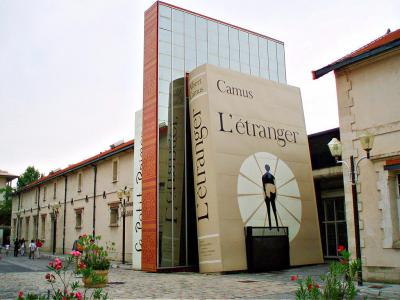
3) Cite du Livre (City of Books)
The Cité du Livre d' Aix-en-Provence (City of Books), opened in 1993 in the former match factory, brings together the listed municipal library of Aix-en-Provence, better known as the Méjanes library, and partners institutions and associations. It consists of two main buildings as well as two pavilions, built at the end of the 19th and the beginning of the 20th century on the edge of the railway line to house the match factory; a small glass building was recently built at the time of the rehabilitation of the whole.
Its premises, which include reading rooms and library stores, premises used by associative partners, include classrooms allocated to the IUT Métiers du livre et du Patrimoine, a 480 m2 showroom, a 300-seat amphitheater, a 160-seat conference room (which is also labeled as an Arthouse cinema hall ), a 40-seat auditorium and an interior courtyard with trees.
The Méjanes library is the listed municipal library of Aix-en-Provence. It originated in the rich library of Jean-Baptiste Marie de Piquet, Marquis de Méjanes , who, on his death in 1788 , bequeathed his library to the Estates of Provence. The administrators, and in particular the Archbishop of Aix, Monsignor de Boisgelin but also Portalis , took care of implementing his will and assembled his library. During the Revolution, it became a revolutionary depot. This deposit remains at the Town Hall and is enriched by several confiscated libraries. The first librarian was Jacques Gibelin , who protected the library during the Revolution. He was then replaced by Étienne Rouart, Édouard Aude, Bruno Durand , Suzanne Estève, Xavier Lavagne, Danièle Oppetit, Gilles Eboli and Corinne Prévost. The félibre Jean-Baptiste Gaut was also an employee of the library at the end of the 19th century.
The Aix library opened to the public in 1810. In the 20th century, it experienced periods of opulence but also of abandonment: in the inter-war period, Inspector Pol Neveux thus came to the library every year to try to help with its upkeep. The Méjanes library remained at the Hôtel de Ville until 1989. It then moved to the match factory which became the Cité du Livre four years later. Annexes had been opened: one at the Halle aux grains, which still exists, the other at the Bastide Jourdan.
Today the Méjanes library has two annexes, the Halle aux grains library and the Deux-Ormes library. It is directed by Corinne Prévost.
Its premises, which include reading rooms and library stores, premises used by associative partners, include classrooms allocated to the IUT Métiers du livre et du Patrimoine, a 480 m2 showroom, a 300-seat amphitheater, a 160-seat conference room (which is also labeled as an Arthouse cinema hall ), a 40-seat auditorium and an interior courtyard with trees.
The Méjanes library is the listed municipal library of Aix-en-Provence. It originated in the rich library of Jean-Baptiste Marie de Piquet, Marquis de Méjanes , who, on his death in 1788 , bequeathed his library to the Estates of Provence. The administrators, and in particular the Archbishop of Aix, Monsignor de Boisgelin but also Portalis , took care of implementing his will and assembled his library. During the Revolution, it became a revolutionary depot. This deposit remains at the Town Hall and is enriched by several confiscated libraries. The first librarian was Jacques Gibelin , who protected the library during the Revolution. He was then replaced by Étienne Rouart, Édouard Aude, Bruno Durand , Suzanne Estève, Xavier Lavagne, Danièle Oppetit, Gilles Eboli and Corinne Prévost. The félibre Jean-Baptiste Gaut was also an employee of the library at the end of the 19th century.
The Aix library opened to the public in 1810. In the 20th century, it experienced periods of opulence but also of abandonment: in the inter-war period, Inspector Pol Neveux thus came to the library every year to try to help with its upkeep. The Méjanes library remained at the Hôtel de Ville until 1989. It then moved to the match factory which became the Cité du Livre four years later. Annexes had been opened: one at the Halle aux grains, which still exists, the other at the Bastide Jourdan.
Today the Méjanes library has two annexes, the Halle aux grains library and the Deux-Ormes library. It is directed by Corinne Prévost.
Sight description based on Wikipedia.
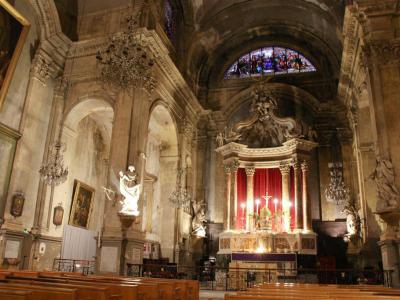
4) Eglise du Saint-Esprit (Church of the Holy Spirit)
The Église du Saint-Esprit (Church of the Holy Spirit) is a Roman Catholic church in Aix-en-Provence. In the 18th century, the Hôpital du Saint-Esprit, a hospital of the Order of the Holy Ghost, and several houses were torn down to make way for the construction of a new church. It was designed by architects Laurent Vallon (1652-1724) and Georges Vallon (1688-1767), and built from 1706 to 1728. It was then known as Église Saint-Jérôme, in honour of Jérôme de Grimaldi (1597–1685), who served as Archbishop of Aix from 1655 to 1683. It was dedicated by Forbin-La Barben in 1716. It was fully sculpted and painted from 1726 to 1728.
Inside, there is a retable dating back to 1505.
It is the main parish church for university students in Aix. The current priests are Fr Gilles-Marie Lecomte and Fr Benoît Coppeaux
It is open every day from 7:30am to 11pm. The Chaplet of Divine Mercy is said every day from 5:30pm to 6pm, Confession and Adoration are from 6pm to 7pm. Additionally, the Eucharist is every day (except Saturdays), at 7pm. There is also a Mass on Saturdays at 6pm and on Sundays.
It has been listed as a monument historique since December 31, 1985.
Inside, there is a retable dating back to 1505.
It is the main parish church for university students in Aix. The current priests are Fr Gilles-Marie Lecomte and Fr Benoît Coppeaux
It is open every day from 7:30am to 11pm. The Chaplet of Divine Mercy is said every day from 5:30pm to 6pm, Confession and Adoration are from 6pm to 7pm. Additionally, the Eucharist is every day (except Saturdays), at 7pm. There is also a Mass on Saturdays at 6pm and on Sundays.
It has been listed as a monument historique since December 31, 1985.
Sight description based on Wikipedia.
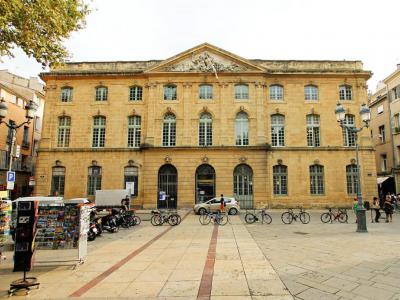
5) Halle Aux Grains (Grain Hall)
The Grain Hall, or the Corn Exchange Hall (Halle Aux Grains), was the central home of the corn trade in the 18th century.
The hall was built in the neo-Classical architectural style from a design by architect Laurent Vallon. Before the construction of the building, grain traders met in Market Square. The city purchased many houses near the square to move trade transactions off the street and indoors. The old houses were demolished to make way for the new building.
The facades were designed in the Baroque architectural style by sculptor Jean-Pancrace Chastel. They were sculpted to show the soil fertility and the importance of the water, represented by figures of Saturn, the Roman God of Agriculture, and Cybele, the Roman Goddess of Fertility.
The Halle Aux Grains is now home to the General Post Office of Aix-en-Provence. It was listed as a historic monument in 1983.
The hall was built in the neo-Classical architectural style from a design by architect Laurent Vallon. Before the construction of the building, grain traders met in Market Square. The city purchased many houses near the square to move trade transactions off the street and indoors. The old houses were demolished to make way for the new building.
The facades were designed in the Baroque architectural style by sculptor Jean-Pancrace Chastel. They were sculpted to show the soil fertility and the importance of the water, represented by figures of Saturn, the Roman God of Agriculture, and Cybele, the Roman Goddess of Fertility.
The Halle Aux Grains is now home to the General Post Office of Aix-en-Provence. It was listed as a historic monument in 1983.
6) Place de l'Hôtel de Ville (Town Hall Square) (must see)
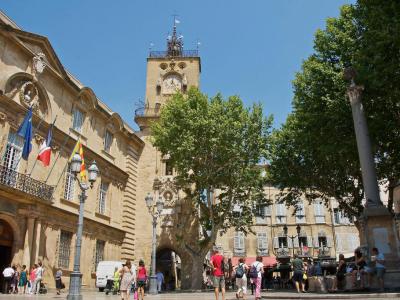
Town Hall Square may sound like bureaucracy central, but in Aix-en-Provence, it’s where history and art come together in a picturesque standoff. This central square has been keeping civic life scenic since the 14th century-though the current Town Hall, finished in 1678, is the spruced-up version by architect Pierre Pavillon. Bonus trivia: Paul Cézanne, tied the knot here in 1886. Romance and paperwork-two Provence traditions.
Towering above the square is the Clock Tower, built in 1510 from white limestone and accessorized with an astronomical clock from 1661. It also sports a medieval bell once used to enforce feudal dues-a cheerful reminder that history is full of taxes in disguise. Think of it as a giant stone calendar that occasionally scolds peasants.
Right beside the Town Hall sits the former Corn Exchange Hall, an 18th-century building that clearly believed grain deserved glamour. Now repurposed as a library and post office, it continues to deliver-just with books and stamps. Sorry, no more corn. Anchoring the square is a glorious fountain by Jean Chastel, topped with a Roman column from 1755, adding a touch of imperial flair to your afternoon amble.
Today, the square balances old-world elegance with everyday charm. You’ll find café tables spilling into the cobbles, a flower market in full bloom on Tuesdays, Thursdays, and Saturdays, and a book fair on the first Sunday of every month. Bureaucracy has never looked this lovely.
Towering above the square is the Clock Tower, built in 1510 from white limestone and accessorized with an astronomical clock from 1661. It also sports a medieval bell once used to enforce feudal dues-a cheerful reminder that history is full of taxes in disguise. Think of it as a giant stone calendar that occasionally scolds peasants.
Right beside the Town Hall sits the former Corn Exchange Hall, an 18th-century building that clearly believed grain deserved glamour. Now repurposed as a library and post office, it continues to deliver-just with books and stamps. Sorry, no more corn. Anchoring the square is a glorious fountain by Jean Chastel, topped with a Roman column from 1755, adding a touch of imperial flair to your afternoon amble.
Today, the square balances old-world elegance with everyday charm. You’ll find café tables spilling into the cobbles, a flower market in full bloom on Tuesdays, Thursdays, and Saturdays, and a book fair on the first Sunday of every month. Bureaucracy has never looked this lovely.
7) Cathedrale Saint-Sauveur d'Aix-en-Provence (Aix Cathedral) (must see)
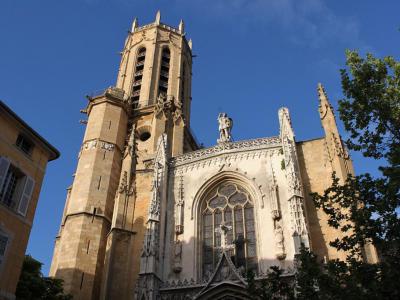
Seventeenth-century writer Jean Pitton claimed that Aix Cathedral rose where a Roman temple to Apollo once stood-proof that even the gods can’t hold onto prime real estate forever. The site’s first church was reportedly founded around 500 AD by Saint Maximinus, who, according to tradition, arrived from Jerusalem with Mary Magdalene in a boat generously lent by Saint Lazarus. Apparently divine Uber was a thing back then.
The cathedral we see today took root in the 12th century with a solid Romanesque nave. Then came a second one in 1171, dedicated to Saint Maximinus himself, squeezing in between the original nave and baptistry like a holy architectural remix. The 14th century brought more flair, with a Gothic-style transept added in 1318-clearly, Aix was keeping up with cathedral trends.
Outside, the façade is a theatrical display of late Gothic drama: pointed arches, slim yellowish buttresses, and twelve Apostles playing hide-and-seek in the niches-three upfront, the rest loitering in the wings. Above it all, Archangel Michael takes center stage, dramatically skewering a dragon atop the balustrade. The walnut portal doors, carved in 1505, add a final flourish of detail, leading into a space that juggles three styles-Romanesque on one side, Gothic down the middle, and Baroque along the north.
Inside, it’s not just architecture on show. You’ll find the 5th-century baptistry with Roman columns still holding their ground, plus a high altar supported by bronze figures of the Holy Trinity. The walls display works by Nicolas Froment, Jean Daret, and Louis Finson-a follower of Caravaggio known for his dramatic flair. One standout treasure is a set of 16th-century tapestries, originally woven for Canterbury Cathedral and brought to Aix long before international art loans became the norm.
And then there’s Cézanne. The hometown icon, who once called Aix the best place to live, painted the cathedral repeatedly from a spot just a short walk from his studio.When he died in 1906, it was here-under the watch of archangels, apostles, and centuries of layered stone-that he took his final bow.
The cathedral we see today took root in the 12th century with a solid Romanesque nave. Then came a second one in 1171, dedicated to Saint Maximinus himself, squeezing in between the original nave and baptistry like a holy architectural remix. The 14th century brought more flair, with a Gothic-style transept added in 1318-clearly, Aix was keeping up with cathedral trends.
Outside, the façade is a theatrical display of late Gothic drama: pointed arches, slim yellowish buttresses, and twelve Apostles playing hide-and-seek in the niches-three upfront, the rest loitering in the wings. Above it all, Archangel Michael takes center stage, dramatically skewering a dragon atop the balustrade. The walnut portal doors, carved in 1505, add a final flourish of detail, leading into a space that juggles three styles-Romanesque on one side, Gothic down the middle, and Baroque along the north.
Inside, it’s not just architecture on show. You’ll find the 5th-century baptistry with Roman columns still holding their ground, plus a high altar supported by bronze figures of the Holy Trinity. The walls display works by Nicolas Froment, Jean Daret, and Louis Finson-a follower of Caravaggio known for his dramatic flair. One standout treasure is a set of 16th-century tapestries, originally woven for Canterbury Cathedral and brought to Aix long before international art loans became the norm.
And then there’s Cézanne. The hometown icon, who once called Aix the best place to live, painted the cathedral repeatedly from a spot just a short walk from his studio.When he died in 1906, it was here-under the watch of archangels, apostles, and centuries of layered stone-that he took his final bow.
8) Atelier de Cezanne (Cezanne's Studio) (must see)
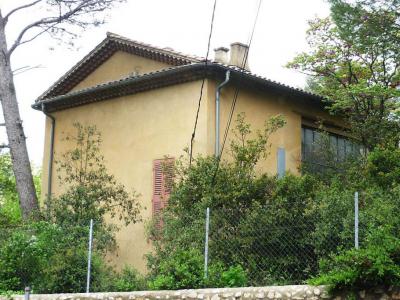
Head uphill from the city, and you'll find what might be the quietest place in Aix with the loudest artistic legacy-Cézanne’s Studio. Perched on Lauves Hill, this was Paul Cézanne’s creative headquarters from 1902 until his death in 1906. No gallery glitz here-just the real deal, exactly where he stood, mixed his paints, and glared at fruit until it revealed its geometric truth.
After his mother passed away and the family estate was sold, Cézanne bought an old farmhouse with a generous patch of land and a postcard view of his muse-Mountain Saint-Victoire. He added a studio upstairs with big south-facing windows and a glass roof to let in that famously moody Provence light. Downstairs was for living, upstairs was for working. The layout proved worthwhile as the result was paintings like The Bathers, still studied and swooned over.
When Cézanne died, the studio passed to his son, who eventually sold it to writer Marcel Provence. Luckily, Provence was the sentimental type-he left the studio just as Cézanne had, and artists and historians made quiet pilgrimages to soak in the genius vibes. After Provence’s death, art historian John Rewald and writer James Lord rallied to buy and preserve the site. By 1952, the Cézanne Memorial Committee had turned the place into a museum.
Today, it’s owned by the Aix-en-Provence Tourist Office and recognized as a House of the Illustrious-which is France’s fancy way of saying “Yes, this place really matters.” Inside, you’ll find Cézanne’s brushes, easel, still-life props, and a sense of paused time. Temporary exhibits rotate through, but the real magic is standing in the room where modern art found its backbone.
After his mother passed away and the family estate was sold, Cézanne bought an old farmhouse with a generous patch of land and a postcard view of his muse-Mountain Saint-Victoire. He added a studio upstairs with big south-facing windows and a glass roof to let in that famously moody Provence light. Downstairs was for living, upstairs was for working. The layout proved worthwhile as the result was paintings like The Bathers, still studied and swooned over.
When Cézanne died, the studio passed to his son, who eventually sold it to writer Marcel Provence. Luckily, Provence was the sentimental type-he left the studio just as Cézanne had, and artists and historians made quiet pilgrimages to soak in the genius vibes. After Provence’s death, art historian John Rewald and writer James Lord rallied to buy and preserve the site. By 1952, the Cézanne Memorial Committee had turned the place into a museum.
Today, it’s owned by the Aix-en-Provence Tourist Office and recognized as a House of the Illustrious-which is France’s fancy way of saying “Yes, this place really matters.” Inside, you’ll find Cézanne’s brushes, easel, still-life props, and a sense of paused time. Temporary exhibits rotate through, but the real magic is standing in the room where modern art found its backbone.
9) Maison Natale de Cezanne (Cezanne's Birth House)
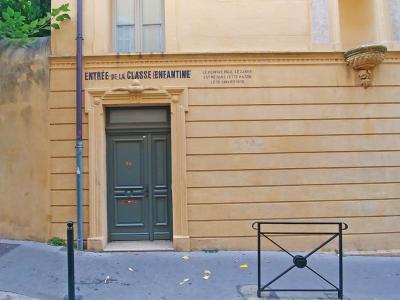
Paul Cézanne was born on January 19th, 1839, in Aix-en-Provence-back when opera wasn’t just a street name but a sign you might be doing well. His father, Louis-Auguste Cézanne, started out as a hatter and worked his way up to banker. His mother, Elisabeth-Honorine Aubert, rounded out the household at 28 Opera street, where young Paul spent his early years sketching.
By 1844, the family had moved to 14 Icehouse Road. That’s where the paperwork for his parents’ marriage turned up, listing Louis-Auguste as a former milliner who had moved on to property ownership-swapping hats for houses. The Church of the Madeleine saw a lot of Cézanne family milestones: Paul’s parents were married there, his sister Marie was baptized in 1841, and his other sister, Rose, tied the knot there four decades later.
From 1850 to 1870, the Cézannes lived at 14 Matheron street, just a few minutes’ walk from Paul’s first address. Although Cézanne traveled often-especially to Paris-Aix always pulled him back like a canvas waiting for its next layer.
He studied at the local municipal school on Thorn street, then at the Bourbon College-now known as Mignet College-on Cardinal street. His art training came from the school housed inside the Granet Museum, conveniently parked on Saint John Square.
Cézanne married Hortense Fiquet at the Town Hall in Aix-en-Provence. For company and conversation, he often chose a table at Les Deux Garçons on Mirabeau Boulevard-a place where painters, poets, and politics all shared the bill.
Today, you’ll find brass markers scattered around town-on walls, streets, and squares-quietly guiding you through the places where Cézanne lived, loved, painted, and occasionally dodged his father’s advice to get a “real job.”
By 1844, the family had moved to 14 Icehouse Road. That’s where the paperwork for his parents’ marriage turned up, listing Louis-Auguste as a former milliner who had moved on to property ownership-swapping hats for houses. The Church of the Madeleine saw a lot of Cézanne family milestones: Paul’s parents were married there, his sister Marie was baptized in 1841, and his other sister, Rose, tied the knot there four decades later.
From 1850 to 1870, the Cézannes lived at 14 Matheron street, just a few minutes’ walk from Paul’s first address. Although Cézanne traveled often-especially to Paris-Aix always pulled him back like a canvas waiting for its next layer.
He studied at the local municipal school on Thorn street, then at the Bourbon College-now known as Mignet College-on Cardinal street. His art training came from the school housed inside the Granet Museum, conveniently parked on Saint John Square.
Cézanne married Hortense Fiquet at the Town Hall in Aix-en-Provence. For company and conversation, he often chose a table at Les Deux Garçons on Mirabeau Boulevard-a place where painters, poets, and politics all shared the bill.
Today, you’ll find brass markers scattered around town-on walls, streets, and squares-quietly guiding you through the places where Cézanne lived, loved, painted, and occasionally dodged his father’s advice to get a “real job.”
10) Rue d'Italie (Italy Street)
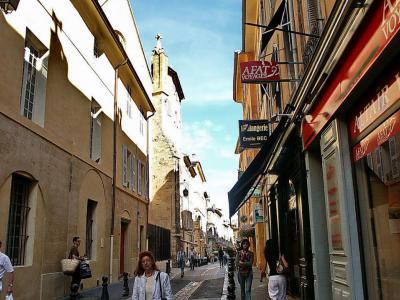
Italy Street ranks among the oldest in Aix-and in all of France, for that matter. Its name tips the hat to Napoleon’s Italian campaigns, though its roots stretch much further back. It traces the route of the ancient Roman Aurelia way, which once linked Rome to Spain, passing right through the Baths of Sextius, a colony founded by consul Gaius Sextius Calvinus in the 2nd century BCE. Time has layered names onto the street like sediment-from the medieval "Way of Saint Maximinus" to "Way of Saint John," thanks to the nearby church.
By 1540, a manor near that same church was sacrificed to strengthen city fortifications, only to give way again in 1671 to a priory built by chaplain Jean-Claude Viany. A few centuries later, that priory transformed into the Granet Museum-today, one of the city’s cultural cornerstones.
Set in the old Mazarin district, Italy Street doesn’t scream grandeur, but its quiet mix of townhouses, shops, and eateries makes it one of the friendliest walks in town. You’re never far from a plate of pasta at La Dolce Italia or a cold drink at A Casa.
The cobblestones underfoot are distinctly Provence-style, and one side of the Church of Saint John quietly watches over it all. If you're there around midday, snag a seat at Between Noon and Two - some names just speak for themselves.
By 1540, a manor near that same church was sacrificed to strengthen city fortifications, only to give way again in 1671 to a priory built by chaplain Jean-Claude Viany. A few centuries later, that priory transformed into the Granet Museum-today, one of the city’s cultural cornerstones.
Set in the old Mazarin district, Italy Street doesn’t scream grandeur, but its quiet mix of townhouses, shops, and eateries makes it one of the friendliest walks in town. You’re never far from a plate of pasta at La Dolce Italia or a cold drink at A Casa.
The cobblestones underfoot are distinctly Provence-style, and one side of the Church of Saint John quietly watches over it all. If you're there around midday, snag a seat at Between Noon and Two - some names just speak for themselves.
11) Eglise Saint-Jean-de-Malte (Church of Saint John)
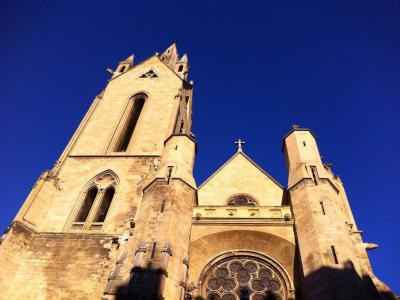
The Church of Saint John stands at the crossroads of Italy street and Cardinal street-a quiet corner with a rather loud claim to fame: it's the first Gothic Catholic church in Provence. Back in 1270, the Knights of Malta had a hospice and chapel here-until someone decided it was too good a spot not to build a full-blown Gothic church.
In the 1600s, the church officially joined city life when the ramparts shifted south to make way for the Mazarin district. The Revolution, in classic fashion, wasn’t kind: the church was stripped of its valuables and acted as a military warehouse. Things didn’t improve until Napoleon came along and handed it back to the faithful.
Film buffs might recognize its interior from Michelangelo Antonioni’s Beyond the Clouds (which aired in 1995), but the real wonder is in the stained glass. Installed in 1858, the window features a divine family photo of God the Father blessing Count Ramon Berenguer IV, Beatrice of Provence, and three very stoic knights.
After its revival, the church slowly rebuilt its art collection. Today, you’ll find works like Sir Henry Pleading with the Virgin (dated to 1687), The Annunciation (from 1678), and the gorgeous Crucifixion (made in 1820) by none other than Delacroix. Not bad for a church that once doubled as storage.
In the 1600s, the church officially joined city life when the ramparts shifted south to make way for the Mazarin district. The Revolution, in classic fashion, wasn’t kind: the church was stripped of its valuables and acted as a military warehouse. Things didn’t improve until Napoleon came along and handed it back to the faithful.
Film buffs might recognize its interior from Michelangelo Antonioni’s Beyond the Clouds (which aired in 1995), but the real wonder is in the stained glass. Installed in 1858, the window features a divine family photo of God the Father blessing Count Ramon Berenguer IV, Beatrice of Provence, and three very stoic knights.
After its revival, the church slowly rebuilt its art collection. Today, you’ll find works like Sir Henry Pleading with the Virgin (dated to 1687), The Annunciation (from 1678), and the gorgeous Crucifixion (made in 1820) by none other than Delacroix. Not bad for a church that once doubled as storage.
12) Musee Granet (Granet Museum) (must see)
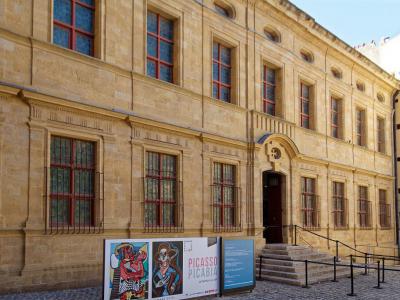
Henri Pointier, curator of the Aix museum from 1892 to 1925, was no fan of Cézanne. In fact, he reportedly swore the painter’s work would only hang there “over my dead body.” Wish granted: Pointier died in 1949, and within months, the museum started collecting Cézannes like overdue apologies. That same year, it also rebranded as Granet Museum, in honor of local artist and major benefactor François-Marius Granet.
The museum itself occupies the former priory of Saint John's Church and still shares a peaceful garden with the neighboring church-a rare case of art and religion staying civil. In 2009, it mounted a centenary exhibition of Cézanne’s death, turning the whole affair into poetic payback.
Among the collection: works by Ingres (his thunderous Jupiter and Thetis included), a self-portrait by Rembrandt, pieces by Van Dyck, Giacometti, and yes, Cézanne-front and center at last.
In 2011, the Jean and Suzanne Planque Foundation kicked off a long-term show at the museum with over 180 works from the late Swiss collector’s archive. Eventually topping 300 pieces, the collection includes heavy-hitters like Degas, Renoir, Monet, Van Gogh, Picasso and Dubuffet. The ensemble now lives in a dedicated annex: the beautifully repurposed Chapel of the White Penitents-where penance meets prestige.
The museum itself occupies the former priory of Saint John's Church and still shares a peaceful garden with the neighboring church-a rare case of art and religion staying civil. In 2009, it mounted a centenary exhibition of Cézanne’s death, turning the whole affair into poetic payback.
Among the collection: works by Ingres (his thunderous Jupiter and Thetis included), a self-portrait by Rembrandt, pieces by Van Dyck, Giacometti, and yes, Cézanne-front and center at last.
In 2011, the Jean and Suzanne Planque Foundation kicked off a long-term show at the museum with over 180 works from the late Swiss collector’s archive. Eventually topping 300 pieces, the collection includes heavy-hitters like Degas, Renoir, Monet, Van Gogh, Picasso and Dubuffet. The ensemble now lives in a dedicated annex: the beautifully repurposed Chapel of the White Penitents-where penance meets prestige.
13) Hotel de Gallifet (Gallifet Hotel)
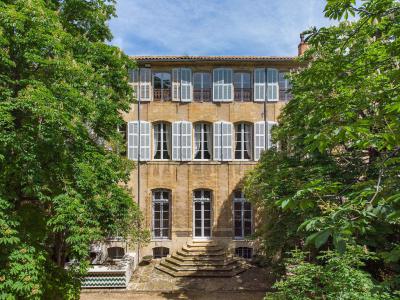
Hôtel de Gallifet (Gallifet Hotel) is an 18th-century Hôtel Particulier located in the Quartier Mazarin of Aix-en-Provence in France. Today, it serves as a contemporary art center for the public.
Hôtel de Gallifet was built in the early 18th century by Jean-Leon Leotard, the Lord of Entrages. Léotard bestowed the building onto the House of Gallifet, a noble family originating from the Dauphin region of the South of France, as part of a marriage agreement for his daughter Madeleine de Léotard d’Entrages to Simon Alexandre Jean de Galliffet, seigneur du Tholonet from 1716-1793. He was head of the eldest branch of the Gallifet family in the 16th century, the king's advisor and Treasurer of the cardinals of Bourbon.
The couple had one child in 1748, named Louis François Alexandre, Prince de Martigues de Galliffet, Comte de Galliffet. The building was later owned by General and Marquis Gaston-Alexandre-August, Prince of Martigues, a French military man born in Paris in 1830. He was Minister of War under the government of Waldeck-Rousseau.
In the mid nineteenth century, the Hôtel de Gallifet was the residence of the Jewish Crémieux family. During the Second World War, the building was occupied by German officers. The members of the Crémieux family who lived in Hôtel de Gallifet at the time were obliged to flee, but were saved from deportation along with the other Jewish families of Aix-en-Provence, because they were specially protected Jews of the Pope.
Later the Hôtel de Gallifet came under the ownership of Nicolas Mazet, and in 2010 he opened it as a workspace for contemporary artists of Aix-en-Provence. The ground floor of Hôtel de Gallifet became an art center for cultural and artistic exchange. It is one of the largest of several Hotel Particuliers of the Quartier Mazarin which have been opened to the public as art centers and museums, each focusing on a specific aspect of art and culture.
Throughout the year Hôtel de Gallifet hosts exhibitions by both established and emerging contemporary artists. Works by Carl André, Francois Arnal, Diadji Diop, Jannis Kounellis, Mario Merz, and Huang Yong Ping were displayed over the during five years in personal shows, group shows, as well as shows built around private collections. Since 2013, conferences, concerts, and workshops have also been regularly organized.
In the courtyard, an installation entitled "Nager dans le Bonheur]," by Senegalese artist Diadji Diop] features a sculpture of a red man giving the illusion of swimming through the gravel of the courtyard. The courtyard additionally has original graffiti by artist Miss.Tic
Hôtel de Gallifet was built in the early 18th century by Jean-Leon Leotard, the Lord of Entrages. Léotard bestowed the building onto the House of Gallifet, a noble family originating from the Dauphin region of the South of France, as part of a marriage agreement for his daughter Madeleine de Léotard d’Entrages to Simon Alexandre Jean de Galliffet, seigneur du Tholonet from 1716-1793. He was head of the eldest branch of the Gallifet family in the 16th century, the king's advisor and Treasurer of the cardinals of Bourbon.
The couple had one child in 1748, named Louis François Alexandre, Prince de Martigues de Galliffet, Comte de Galliffet. The building was later owned by General and Marquis Gaston-Alexandre-August, Prince of Martigues, a French military man born in Paris in 1830. He was Minister of War under the government of Waldeck-Rousseau.
In the mid nineteenth century, the Hôtel de Gallifet was the residence of the Jewish Crémieux family. During the Second World War, the building was occupied by German officers. The members of the Crémieux family who lived in Hôtel de Gallifet at the time were obliged to flee, but were saved from deportation along with the other Jewish families of Aix-en-Provence, because they were specially protected Jews of the Pope.
Later the Hôtel de Gallifet came under the ownership of Nicolas Mazet, and in 2010 he opened it as a workspace for contemporary artists of Aix-en-Provence. The ground floor of Hôtel de Gallifet became an art center for cultural and artistic exchange. It is one of the largest of several Hotel Particuliers of the Quartier Mazarin which have been opened to the public as art centers and museums, each focusing on a specific aspect of art and culture.
Throughout the year Hôtel de Gallifet hosts exhibitions by both established and emerging contemporary artists. Works by Carl André, Francois Arnal, Diadji Diop, Jannis Kounellis, Mario Merz, and Huang Yong Ping were displayed over the during five years in personal shows, group shows, as well as shows built around private collections. Since 2013, conferences, concerts, and workshops have also been regularly organized.
In the courtyard, an installation entitled "Nager dans le Bonheur]," by Senegalese artist Diadji Diop] features a sculpture of a red man giving the illusion of swimming through the gravel of the courtyard. The courtyard additionally has original graffiti by artist Miss.Tic
Sight description based on Wikipedia.
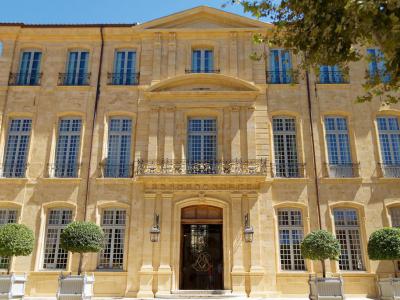
14) Hotel de Caumont (Caumont Hotel) (must see)
The Caumont Hotel may sound like a boutique stay with extra fluff pillows, but it's actually one of Aix’s finest 18th-century mansions-now operating as an art centre. Designed in 1715 by Robert de Cotte and Georges Vallon for the Marquess of Cabannes, the residence comes complete with an imposing entrance flanked by an Atlas sculpture courtesy of Rambot and Toro-yes, real sculptors, not a circus duo.
Over the centuries, the place rotated through various hands, eventually landing with the city of Aix in 1964. It moonlighted as a post office until 1970, and then hosted the Darius Milhaud Conservatory-proof that this house has always had good acoustics and a social calendar. The original owners of this Mazarin Quarter gem weren’t shy about entertaining either; they even had rooms dedicated just to music and mingling.
Inside, it’s all aristocratic finesse -curvy decorations, playful ceiling angels, and the frame of a harpsichord by Jean-Henri Naderman, because no proper 18th-century evening skipped the string section. The bedrooms feature cozy nooks, private corners, and wall monkeys that look like they wandered in from someone’s exotic daydream.
Outside, there’s an impressive courtyard, over 1,000 square meters of sculpted gardens, and an indoor fountain doing its best impression of refined understatement. Temporary exhibitions fill the elegant halls, along with a gift shop and a pocket-sized theatre-because this mansion really does have it all.
Over the centuries, the place rotated through various hands, eventually landing with the city of Aix in 1964. It moonlighted as a post office until 1970, and then hosted the Darius Milhaud Conservatory-proof that this house has always had good acoustics and a social calendar. The original owners of this Mazarin Quarter gem weren’t shy about entertaining either; they even had rooms dedicated just to music and mingling.
Inside, it’s all aristocratic finesse -curvy decorations, playful ceiling angels, and the frame of a harpsichord by Jean-Henri Naderman, because no proper 18th-century evening skipped the string section. The bedrooms feature cozy nooks, private corners, and wall monkeys that look like they wandered in from someone’s exotic daydream.
Outside, there’s an impressive courtyard, over 1,000 square meters of sculpted gardens, and an indoor fountain doing its best impression of refined understatement. Temporary exhibitions fill the elegant halls, along with a gift shop and a pocket-sized theatre-because this mansion really does have it all.

15) Fontaine des Neuf-Canons (Fountain of the Nine Cannons)
The Fountain of the Nine Cannons (Fontaine des Neuf-Canons) is a fountain and historical monument located on Mirabeau Boulevard, at the intersection of Nazareth Street and Joseph Cabassol Street in Aix-en-Provence.
The fountain, designed by architect Laurent Vallon and constructed in 1691, was named for the nine cannons that shoot water into the basin.
The Fountain of the Nine Cannons was built to provide water to sheep as they passed through the area. At that time, an easement authorized herds of sheep on transhumance between the commune La Crau and the Alps to come and drink there. The lower coping of the basin, as well as the length of its perimeter, was designed in the 17th century.
The fountain was partially destroyed in 1944 during the liberation of Aix-en-Provence. An American tank has taken away one of the four lobes of the basin, this arm was not rebuilt, and its opposite lobe was, on the occasion of this incident, suppressed.
The Fountain of the Nine Cannons was listed as a historical monument in 1929.
The fountain, designed by architect Laurent Vallon and constructed in 1691, was named for the nine cannons that shoot water into the basin.
The Fountain of the Nine Cannons was built to provide water to sheep as they passed through the area. At that time, an easement authorized herds of sheep on transhumance between the commune La Crau and the Alps to come and drink there. The lower coping of the basin, as well as the length of its perimeter, was designed in the 17th century.
The fountain was partially destroyed in 1944 during the liberation of Aix-en-Provence. An American tank has taken away one of the four lobes of the basin, this arm was not rebuilt, and its opposite lobe was, on the occasion of this incident, suppressed.
The Fountain of the Nine Cannons was listed as a historical monument in 1929.
