Custom Walk in Glasgow, Scotland by ajbirch_82782 created on 2025-05-13
Guide Location: Scotland » Glasgow
Guide Type: Custom Walk
# of Sights: 13
Tour Duration: 6 Hour(s)
Travel Distance: 15.5 Km or 9.6 Miles
Share Key: Z2TR4
Guide Type: Custom Walk
# of Sights: 13
Tour Duration: 6 Hour(s)
Travel Distance: 15.5 Km or 9.6 Miles
Share Key: Z2TR4
How It Works
Please retrieve this walk in the GPSmyCity app. Once done, the app will guide you from one tour stop to the next as if you had a personal tour guide. If you created the walk on this website or come to the page via a link, please follow the instructions below to retrieve the walk in the app.
Retrieve This Walk in App
Step 1. Download the app "GPSmyCity: Walks in 1K+ Cities" on Apple App Store or Google Play Store.



Step 2. In the GPSmyCity app, download(or launch) the guide "Glasgow Map and Walking Tours".
Step 3. Tap the menu button located at upper right corner of the "Walks" screen and select "Retrieve custom walk". Enter the share key: Z2TR4
1) Saint Enoch Square
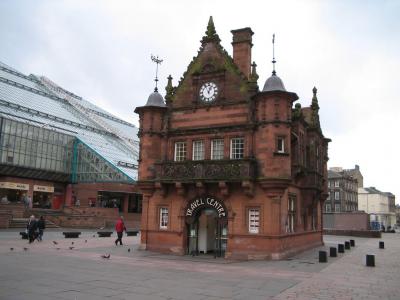
Saint Enoch Square is one of Glasgow’s most central gathering spots, located at the southern end of Buchanan Street, the city’s busiest shopping thoroughfare. Its history stretches back to the 18th century when it was first laid out as a public square. The name commemorates Saint Thenew (often called Saint Enoch), the mother of Saint Mungo, Glasgow’s patron saint. Over the years, the square has been transformed from a churchyard and burial ground into a bustling urban space, reflecting the city’s continuous growth and reinvention.
In the 19th century, the square gained prominence with the construction of the Saint Enoch railway station and the adjoining grand Saint Enoch Hotel, once among the largest in Europe. Though both were later demolished in the late 20th century, their memory remains an important chapter in Glasgow’s industrial and transport heritage. Today, the site of the former station is occupied by the Saint Enoch Centre, a major shopping mall that draws both locals and visitors with its wide range of stores, dining options, and entertainment facilities.
The square itself also holds a key place in Glasgow’s public life. The striking glass entrance of the Saint Enoch Subway Station, part of the city’s famed underground system, has become a modern landmark. Public art installations and open spaces add vibrancy, making it not just a transit hub but also a place to pause and take in the rhythm of the city. Its central position makes it an ideal meeting point and gateway to explore Glasgow’s shopping streets and cultural attractions.
For visitors, Saint Enoch Square offers a blend of history and modern life. While little remains of its original religious and transport landmarks, the square continues to serve as a crossroads where Glasgow’s past meets its contemporary urban energy.
In the 19th century, the square gained prominence with the construction of the Saint Enoch railway station and the adjoining grand Saint Enoch Hotel, once among the largest in Europe. Though both were later demolished in the late 20th century, their memory remains an important chapter in Glasgow’s industrial and transport heritage. Today, the site of the former station is occupied by the Saint Enoch Centre, a major shopping mall that draws both locals and visitors with its wide range of stores, dining options, and entertainment facilities.
The square itself also holds a key place in Glasgow’s public life. The striking glass entrance of the Saint Enoch Subway Station, part of the city’s famed underground system, has become a modern landmark. Public art installations and open spaces add vibrancy, making it not just a transit hub but also a place to pause and take in the rhythm of the city. Its central position makes it an ideal meeting point and gateway to explore Glasgow’s shopping streets and cultural attractions.
For visitors, Saint Enoch Square offers a blend of history and modern life. While little remains of its original religious and transport landmarks, the square continues to serve as a crossroads where Glasgow’s past meets its contemporary urban energy.
2) Planetarium
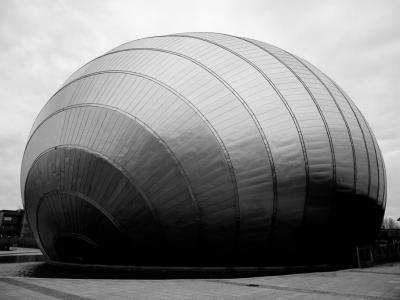
Rising above the banks of the River Clyde, the Glasgow Science Centre’s Planetarium offers visitors an immersive journey through the wonders of the universe. Housed within the Science Centre’s gleaming titanium-clad building, this state-of-the-art facility is one of the finest in the United Kingdom for stargazing indoors. Whether you’re a seasoned astronomer or simply curious about what lies beyond Earth’s atmosphere, the planetarium provides a captivating way to explore the cosmos, even on Scotland’s cloudiest days.
At the heart of the experience is a 15-metre domed theatre equipped with advanced projection technology. When the lights dim and the stars come alive overhead, you are transported from the streets of Glasgow to the farthest reaches of the galaxy. Expert astronomers lead live shows, guiding you through constellations, planets, and celestial events in real time, while full-dome films offer cinematic journeys across black holes, distant galaxies, and the history of space exploration.
The planetarium is part of the larger Glasgow Science Centre complex, which includes interactive exhibits, a science mall, and the iconic Glasgow Tower. Families with children find it especially engaging, thanks to its mix of hands-on displays and awe-inspiring visuals. For those with a passion for space, the programming often features themed evenings, special events, and collaborations with scientific institutions, making each visit unique.
A visit to the Planetarium is as much about wonder as it is about learning. It invites you to step away from daily life, tilt your head back, and lose yourself in the endless possibilities of the night sky. Tracing Orion’s Belt, gliding past Saturn’s rings, or pondering the mysteries of black holes, the experience offers a cosmic perspective that stays with you long after leaving the dome.
At the heart of the experience is a 15-metre domed theatre equipped with advanced projection technology. When the lights dim and the stars come alive overhead, you are transported from the streets of Glasgow to the farthest reaches of the galaxy. Expert astronomers lead live shows, guiding you through constellations, planets, and celestial events in real time, while full-dome films offer cinematic journeys across black holes, distant galaxies, and the history of space exploration.
The planetarium is part of the larger Glasgow Science Centre complex, which includes interactive exhibits, a science mall, and the iconic Glasgow Tower. Families with children find it especially engaging, thanks to its mix of hands-on displays and awe-inspiring visuals. For those with a passion for space, the programming often features themed evenings, special events, and collaborations with scientific institutions, making each visit unique.
A visit to the Planetarium is as much about wonder as it is about learning. It invites you to step away from daily life, tilt your head back, and lose yourself in the endless possibilities of the night sky. Tracing Orion’s Belt, gliding past Saturn’s rings, or pondering the mysteries of black holes, the experience offers a cosmic perspective that stays with you long after leaving the dome.
3) The Tall Ship Glenlee
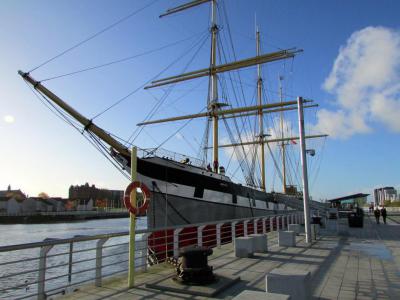
The Tall Ship Glenlee is one of Glasgow’s most distinctive maritime landmarks, a proud reminder of the city’s centuries-long connection to shipbuilding and seafaring. Built in 1896 at a Clyde shipyard, the three-masted steel sailing vessel was among the many magnificent ships launched during the height of Glasgow’s industrial golden age, when the River Clyde was a powerhouse of global trade. Originally designed as a cargo vessel, the Glenlee travelled the world’s oceans for decades, carrying goods as far as South America and Australia before eventually being used as a training ship by the Spanish Navy.
After years of service abroad, the ship was rediscovered in Spain in the 1990s in a state of disrepair. A remarkable effort led by the Clyde Maritime Trust brought the Glenlee home to Glasgow in 1993, where she was meticulously restored to her former glory. Today, she is berthed alongside the Riverside Museum, offering visitors a rare opportunity to step aboard one of only a handful of surviving Clyde-built sailing ships still afloat anywhere in the world.
Exploring the Glenlee is like stepping back in time. Visitors can wander through the cargo hold where goods once travelled across oceans, climb the decks to admire the ship’s tall masts and rigging, and even descend into the engine room. Exhibits tell the story not only of the vessel itself but also of the city’s maritime heritage and the lives of the sailors who worked the seas.
For those interested in Glasgow’s history beyond its grand buildings and bustling streets, the Glenlee provides a different perspective-one that highlights the city’s role in international trade and its shipbuilding legacy.
After years of service abroad, the ship was rediscovered in Spain in the 1990s in a state of disrepair. A remarkable effort led by the Clyde Maritime Trust brought the Glenlee home to Glasgow in 1993, where she was meticulously restored to her former glory. Today, she is berthed alongside the Riverside Museum, offering visitors a rare opportunity to step aboard one of only a handful of surviving Clyde-built sailing ships still afloat anywhere in the world.
Exploring the Glenlee is like stepping back in time. Visitors can wander through the cargo hold where goods once travelled across oceans, climb the decks to admire the ship’s tall masts and rigging, and even descend into the engine room. Exhibits tell the story not only of the vessel itself but also of the city’s maritime heritage and the lives of the sailors who worked the seas.
For those interested in Glasgow’s history beyond its grand buildings and bustling streets, the Glenlee provides a different perspective-one that highlights the city’s role in international trade and its shipbuilding legacy.
4) Kibble Palace and Glasgow Botanic Gardens (must see)
Glasgow Botanic Gardens, located just off the Great Western Road, was established in 1817 by William Hooker, who later became the director of Kew Gardens in London. This lovely arboretum and public park is managed and maintained by the Royal Botanic Institute of Glasgow.
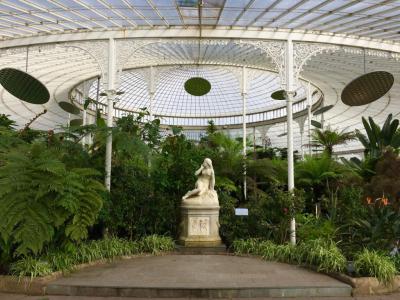
Within the gardens, you'll find several greenhouses, with the most famous being the Kibble Palace. Inside, visitors can admire rare orchids, various types of begonias, tree ferns, and tropical plants. This expansive greenhouse, covering an area of 2137 square meters, was originally constructed by John Kibble in 1863 as a conservatory on his property near Loch Long. In 1870, it was dismantled and transported up the River Clyde by barge to its current location, where it was reassembled in 1871.
The Kibble Palace is a striking structure made of glass panels set within curved wrought iron frames crafted by Walter MacFarlane. It is supported by ornate columns and sits on cast iron foundations with a stone base. In 2003, the palace underwent extensive and costly restoration work. Since its restoration, it has been open to the public, and during the summer, small concerts are often held in a central area surrounded by an impressive collection of orchids, carnivorous plants, and tree ferns.
In addition to the Kibble Palace, the Hopkirk Building serves as a venue for exhibitions, concerts, and lectures by renowned horticulturists. Workshops and a children's arts and crafts center are also available on the premises. As you explore the grounds, you'll come across a disused railway station that closed down several years ago, which is preserved as an example of such structures.
The gardens themselves are designed with various themes, including a Chronological Garden, a Flower Garden showcasing diverse plant varieties, a Herb Garden, a Rose Garden, and a garden highlighting rare vegetables. Furthermore, the arboretum boasts numerous ancient trees, including a 200-year-old weeping Ash tree.
Within the gardens, you'll find several greenhouses, with the most famous being the Kibble Palace. Inside, visitors can admire rare orchids, various types of begonias, tree ferns, and tropical plants. This expansive greenhouse, covering an area of 2137 square meters, was originally constructed by John Kibble in 1863 as a conservatory on his property near Loch Long. In 1870, it was dismantled and transported up the River Clyde by barge to its current location, where it was reassembled in 1871.
The Kibble Palace is a striking structure made of glass panels set within curved wrought iron frames crafted by Walter MacFarlane. It is supported by ornate columns and sits on cast iron foundations with a stone base. In 2003, the palace underwent extensive and costly restoration work. Since its restoration, it has been open to the public, and during the summer, small concerts are often held in a central area surrounded by an impressive collection of orchids, carnivorous plants, and tree ferns.
In addition to the Kibble Palace, the Hopkirk Building serves as a venue for exhibitions, concerts, and lectures by renowned horticulturists. Workshops and a children's arts and crafts center are also available on the premises. As you explore the grounds, you'll come across a disused railway station that closed down several years ago, which is preserved as an example of such structures.
The gardens themselves are designed with various themes, including a Chronological Garden, a Flower Garden showcasing diverse plant varieties, a Herb Garden, a Rose Garden, and a garden highlighting rare vegetables. Furthermore, the arboretum boasts numerous ancient trees, including a 200-year-old weeping Ash tree.
5) University of Glasgow (must see)
The United Kingdom is home to several prestigious and ancient universities that enjoy global renown. Among these institutions, the University of Glasgow holds a significant position as the fourth oldest in English-speaking countries.
Its establishment can be traced back to 1451 when it received formal recognition through a Papal Bull issued during the papacy of Pope Nicholas V. Subsequently, King James II granted permission to Bishop William Turnbill to integrate the university with the city's cathedral. However, during the Reformation period, both the Mace and the Bull were transported to France. While the Mace eventually found its way back, the fate of the Bull remains uncertain, possibly lost or stolen.
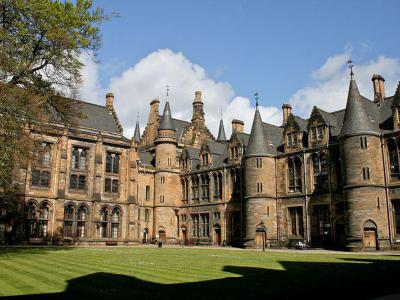
In 1870, Sir George Scott oversaw the construction of the university's main campus on Gilmorehill, adopting a Gothic architectural style and featuring a twin-quadrangle design with an open undercroft. A spire was later added to the bell tower in 1887. The university's various departments are dispersed across different buildings within the city and across the country.
During the 18th century, the University of Glasgow played a central role in the Scottish Enlightenment movement, while in the 19th century, it broadened its admissions, welcoming students beyond the privileged upper classes. Children of merchants enrolled to pursue studies in fields such as law, medicine, education, engineering, science, and theology.
Within the campus, visitors can explore the impressive Hunterian Museum & Gallery, as well as the Mackintosh House, offering enriching cultural experiences.
Its establishment can be traced back to 1451 when it received formal recognition through a Papal Bull issued during the papacy of Pope Nicholas V. Subsequently, King James II granted permission to Bishop William Turnbill to integrate the university with the city's cathedral. However, during the Reformation period, both the Mace and the Bull were transported to France. While the Mace eventually found its way back, the fate of the Bull remains uncertain, possibly lost or stolen.
In 1870, Sir George Scott oversaw the construction of the university's main campus on Gilmorehill, adopting a Gothic architectural style and featuring a twin-quadrangle design with an open undercroft. A spire was later added to the bell tower in 1887. The university's various departments are dispersed across different buildings within the city and across the country.
During the 18th century, the University of Glasgow played a central role in the Scottish Enlightenment movement, while in the 19th century, it broadened its admissions, welcoming students beyond the privileged upper classes. Children of merchants enrolled to pursue studies in fields such as law, medicine, education, engineering, science, and theology.
Within the campus, visitors can explore the impressive Hunterian Museum & Gallery, as well as the Mackintosh House, offering enriching cultural experiences.
6) Stewart Memorial Fountain
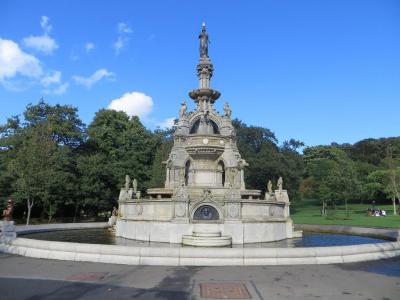
The Stewart Memorial Fountain in Glasgow’s Kelvingrove Park is one of the city’s most enchanting landmarks, blending Victorian artistry with a celebration of progress. Completed in 1872, the ornate red sandstone structure was built in honour of Lord Provost Robert Stewart, who played a pivotal role in bringing fresh water from Loch Katrine to Glasgow. At the time, this monumental engineering feat transformed the health of the city, drastically reducing outbreaks of cholera and typhoid and improving the quality of life for its residents. The fountain became both a tribute to Stewart’s civic vision and a symbol of clean water as a public good.
Architecturally, the fountain is a fine example of Victorian Gothic design. Its soaring central column rises nearly 12 metres, crowned with a statue of the goddess of truth. Around the base are allegorical sculptures of children, animals, and figures representing the rivers and industries of Scotland, carved with remarkable detail. As water cascades from different levels, it highlights the intricate stonework and creates a calming soundtrack that complements the surrounding greenery.
Today, the fountain remains a focal point in Kelvingrove Park, a popular gathering place for both locals and visitors. In summer, families and students lounge on the lawns while the fountain provides a refreshing mist, and in autumn, its warm red stone contrasts beautifully with the golden leaves. Though it has undergone restoration over the years, it continues to evoke the pride of a city that turned a basic necessity-clean water-into a work of public art.
For travellers exploring Glasgow’s West End, the Stewart Memorial Fountain offers not just a picturesque spot for photographs, but also a window into the city’s nineteenth-century story of urban improvement, civic pride, and artistic ambition. It is a peaceful place to pause between visits to the nearby Kelvingrove Art Gallery and Museum or the University of Glasgow, while reflecting on the enduring importance of community, health, and heritage.
Architecturally, the fountain is a fine example of Victorian Gothic design. Its soaring central column rises nearly 12 metres, crowned with a statue of the goddess of truth. Around the base are allegorical sculptures of children, animals, and figures representing the rivers and industries of Scotland, carved with remarkable detail. As water cascades from different levels, it highlights the intricate stonework and creates a calming soundtrack that complements the surrounding greenery.
Today, the fountain remains a focal point in Kelvingrove Park, a popular gathering place for both locals and visitors. In summer, families and students lounge on the lawns while the fountain provides a refreshing mist, and in autumn, its warm red stone contrasts beautifully with the golden leaves. Though it has undergone restoration over the years, it continues to evoke the pride of a city that turned a basic necessity-clean water-into a work of public art.
For travellers exploring Glasgow’s West End, the Stewart Memorial Fountain offers not just a picturesque spot for photographs, but also a window into the city’s nineteenth-century story of urban improvement, civic pride, and artistic ambition. It is a peaceful place to pause between visits to the nearby Kelvingrove Art Gallery and Museum or the University of Glasgow, while reflecting on the enduring importance of community, health, and heritage.
7) Buchanan Street (must see)
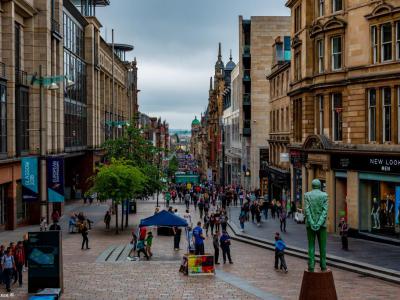
Buchanan Street is the beating heart of Glasgow’s shopping and cultural scene, a broad pedestrian thoroughfare that has been drawing locals and visitors alike since the late 18th century. Named after the wealthy tobacco merchant Andrew Buchanan, the street has transformed from a residential area for the city’s elite into one of Britain’s busiest retail destinations. Stretching from Saint Enoch Square in the south to Sauchiehall Street in the north, it forms the centrepiece of what Glaswegians fondly call the “Style Mile,” a lively hub of shops, cafés, and entertainment venues.
As you stroll along its polished paving stones, your eyes are drawn upward to the dramatic architecture that defines the street. Victorian and Edwardian buildings dominate the landscape, their ornate façades and grand stonework a reminder of the city’s mercantile prosperity. Among the highlights is the 19th-century Argyll Arcade, one of Europe’s oldest covered shopping arcades, where glittering jewellers’ windows line a glass-roofed passageway. The Buchanan Galleries shopping centre, on the street’s northern end, contrasts with sleek modern lines, reflecting Glasgow’s blend of history and contemporary energy.
Beyond shopping, Buchanan Street is a stage for the city’s street culture. Buskers, musicians, and performers add an ever-changing soundtrack, from soulful singers to lively bagpipers. The street is also dotted with inviting cafés and restaurants, offering everything from quick bites to leisurely meals-perfect for resting your feet between explorations. Seasonal decorations, from festive winter lights to summer events, ensure that each visit feels different.
For visitors, Buchanan Street is more than a commercial boulevard-it’s an experience of Glasgow itself. Browsing the latest fashions, stopping to catch a performance, or simply taking in the energy of city life, this iconic promenade offers a striking glimpse into the city’s mix of tradition and modernity. It’s an essential stop for anyone wishing to feel the pulse of Scotland’s largest city.
As you stroll along its polished paving stones, your eyes are drawn upward to the dramatic architecture that defines the street. Victorian and Edwardian buildings dominate the landscape, their ornate façades and grand stonework a reminder of the city’s mercantile prosperity. Among the highlights is the 19th-century Argyll Arcade, one of Europe’s oldest covered shopping arcades, where glittering jewellers’ windows line a glass-roofed passageway. The Buchanan Galleries shopping centre, on the street’s northern end, contrasts with sleek modern lines, reflecting Glasgow’s blend of history and contemporary energy.
Beyond shopping, Buchanan Street is a stage for the city’s street culture. Buskers, musicians, and performers add an ever-changing soundtrack, from soulful singers to lively bagpipers. The street is also dotted with inviting cafés and restaurants, offering everything from quick bites to leisurely meals-perfect for resting your feet between explorations. Seasonal decorations, from festive winter lights to summer events, ensure that each visit feels different.
For visitors, Buchanan Street is more than a commercial boulevard-it’s an experience of Glasgow itself. Browsing the latest fashions, stopping to catch a performance, or simply taking in the energy of city life, this iconic promenade offers a striking glimpse into the city’s mix of tradition and modernity. It’s an essential stop for anyone wishing to feel the pulse of Scotland’s largest city.
8) Connal's Building
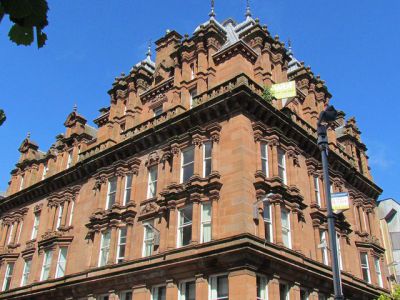
Rising with elegance on the corner of West George Street and Dundas Street, Connal’s Building is one of Glasgow’s most striking late Victorian landmarks. Completed in 1892, it was commissioned by the wealthy iron merchant George Washington Connal as the headquarters for his family business. Designed by architect Charles Rennie Mackintosh’s contemporary, James Thomson, the building reflects the city’s late 19th-century ambition, when Glasgow was establishing itself as a powerhouse of trade, commerce, and architecture.
The building’s style is a distinctive mix of Venetian Renaissance and Scottish baronial influences, a combination that gives it both grandeur and character. Look up to notice the elegant façade, where arched windows, decorative stonework, and sculpted details showcase the craftsmanship of the period. The turreted corner feature, a signature of Thomson’s work, adds vertical emphasis and drama, making it instantly recognizable among Glasgow’s eclectic architectural landscape.
Over the decades, Connal’s Building has housed a variety of tenants, reflecting the city’s changing economy. Today, it remains a functional part of the urban fabric, blending heritage with modernity. Though no longer the headquarters of its original merchant family, the structure continues to remind passersby of the city’s prosperous Victorian past, when Glasgow was known as the “Second City of the Empire.”
For visitors, the building is best appreciated as part of a wider walk through the city centre, where it stands alongside other architectural gems such as the nearby Royal Exchange and George Square. Architecture enthusiast or casual passerby, stopping to admire the craftsmanship of Connal’s Building reveals a glimpse of Glasgow’s enduring spirit of enterprise and design.
The building’s style is a distinctive mix of Venetian Renaissance and Scottish baronial influences, a combination that gives it both grandeur and character. Look up to notice the elegant façade, where arched windows, decorative stonework, and sculpted details showcase the craftsmanship of the period. The turreted corner feature, a signature of Thomson’s work, adds vertical emphasis and drama, making it instantly recognizable among Glasgow’s eclectic architectural landscape.
Over the decades, Connal’s Building has housed a variety of tenants, reflecting the city’s changing economy. Today, it remains a functional part of the urban fabric, blending heritage with modernity. Though no longer the headquarters of its original merchant family, the structure continues to remind passersby of the city’s prosperous Victorian past, when Glasgow was known as the “Second City of the Empire.”
For visitors, the building is best appreciated as part of a wider walk through the city centre, where it stands alongside other architectural gems such as the nearby Royal Exchange and George Square. Architecture enthusiast or casual passerby, stopping to admire the craftsmanship of Connal’s Building reveals a glimpse of Glasgow’s enduring spirit of enterprise and design.
9) George Square (must see)
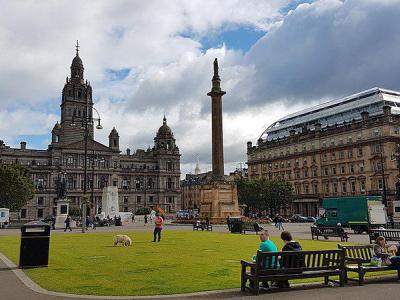
George Square is the beating civic heart of Glasgow, a grand public space that has witnessed more than two centuries of the city’s history. Laid out in 1781 and named after King George III, the square was originally designed as a residential area, but it quickly became the centrepiece of Glasgow’s growing prosperity during the Industrial Revolution. Today, it serves as both a gathering place for locals and a starting point for visitors eager to explore the city’s architecture, history, and culture. With its wide open spaces framed by historic buildings, George Square is as much a stage for public life as it is a monument to Glasgow’s past.
At its centre, you’ll find an impressive collection of statues and monuments that tell the story of Scotland’s heroes, inventors, and poets. Figures such as Robert Burns, Sir Walter Scott, and James Watt stand proudly, while a towering column dedicated to Sir Walter Scott dominates the square. These statues serve as reminders of Glasgow’s role as a hub of Enlightenment thought, engineering innovation, and political activism. The square has also long been a venue for public events-from grand celebrations to political rallies-that continue to shape the city’s identity.
Surrounding George Square are some of Glasgow’s most notable buildings. The City Chambers, completed in 1888, is a striking Victorian civic building with an ornate façade and lavish interiors that reflect the wealth and confidence of Glasgow during its industrial zenith. Hotels, banks, and historic offices ring the square, making it not only a cultural focal point but also a centre of business and public life.
For today’s visitor, George Square is both a place to pause and a hub from which to set out. Admiring its statues, watching the bustle from a café terrace, or using it as a starting point to explore Buchanan Street’s shops and the Merchant City’s restaurants, the square conveys the essence of Glasgow’s civic pride and enduring spirit.
At its centre, you’ll find an impressive collection of statues and monuments that tell the story of Scotland’s heroes, inventors, and poets. Figures such as Robert Burns, Sir Walter Scott, and James Watt stand proudly, while a towering column dedicated to Sir Walter Scott dominates the square. These statues serve as reminders of Glasgow’s role as a hub of Enlightenment thought, engineering innovation, and political activism. The square has also long been a venue for public events-from grand celebrations to political rallies-that continue to shape the city’s identity.
Surrounding George Square are some of Glasgow’s most notable buildings. The City Chambers, completed in 1888, is a striking Victorian civic building with an ornate façade and lavish interiors that reflect the wealth and confidence of Glasgow during its industrial zenith. Hotels, banks, and historic offices ring the square, making it not only a cultural focal point but also a centre of business and public life.
For today’s visitor, George Square is both a place to pause and a hub from which to set out. Admiring its statues, watching the bustle from a café terrace, or using it as a starting point to explore Buchanan Street’s shops and the Merchant City’s restaurants, the square conveys the essence of Glasgow’s civic pride and enduring spirit.
10) Glasgow City Chambers
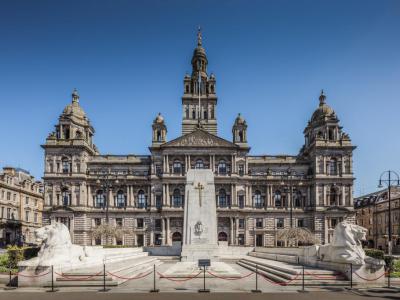
Standing proudly on George Square, the Glasgow City Chambers is one of the city’s most impressive landmarks and a symbol of civic pride. Opened in 1888 by Queen Victoria, the grand building was designed by architect William Young to house the headquarters of Glasgow City Council at the height of the city’s industrial and commercial might. Its imposing façade, blending Victorian and Renaissance Revival styles, reflects the confidence of a city that was then known as the “Second City of the Empire.” Even today, the City Chambers serves as a striking reminder of Glasgow’s past prosperity and civic ambition.
Inside, visitors encounter a series of opulent spaces that rival the interiors of many European palaces. The grand marble staircase, carved from imported Italian stone, rises dramatically through the building and is often considered one of the most beautiful of its kind in the United Kingdom. Ornate mosaics, gilded ceilings, and lavish chandeliers add to the sense of grandeur, while the Council Chambers showcase the city’s long tradition of self-governance. Murals painted by local artists depict scenes from Glasgow’s history, celebrating its transformation from a medieval settlement to a thriving centre of shipbuilding and trade.
For tourists, the City Chambers offers more than just architectural splendor. Guided tours, when available, open up areas not usually accessible to the public, allowing a closer look at the building’s hidden details. Outside, the square itself often bustles with festivals, seasonal markets, and public gatherings, making the Chambers a natural focal point in the city.
Inside, visitors encounter a series of opulent spaces that rival the interiors of many European palaces. The grand marble staircase, carved from imported Italian stone, rises dramatically through the building and is often considered one of the most beautiful of its kind in the United Kingdom. Ornate mosaics, gilded ceilings, and lavish chandeliers add to the sense of grandeur, while the Council Chambers showcase the city’s long tradition of self-governance. Murals painted by local artists depict scenes from Glasgow’s history, celebrating its transformation from a medieval settlement to a thriving centre of shipbuilding and trade.
For tourists, the City Chambers offers more than just architectural splendor. Guided tours, when available, open up areas not usually accessible to the public, allowing a closer look at the building’s hidden details. Outside, the square itself often bustles with festivals, seasonal markets, and public gatherings, making the Chambers a natural focal point in the city.
11) Glasgow Necropolis (must see)
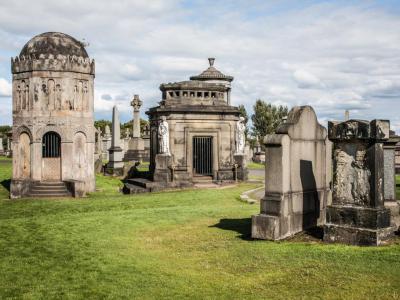
Rising above the city on a low but commanding hill, the Glasgow Necropolis is one of Scotland’s most striking Victorian landmarks. Established in 1833 on the site of a former quarry, this vast garden cemetery was inspired by Paris’s Père Lachaise and soon became a resting place for Glasgow’s elite during the city’s industrial heyday. Over the years, it has grown into a landscape of more than 50,000 memorials, monuments, and tombs, many of them designed by prominent architects and sculptors of the 19th century. For visitors, the Necropolis is both a fascinating historical archive and a serene green space with panoramic views over the city.
The cemetery is often described as a “city of the dead,” with its network of meandering paths, ornate mausoleums, and elaborate Victorian funerary art. Among its most impressive monuments is the towering memorial to John Knox, the fiery Protestant reformer, which dominates the summit of the hill. As you wander through, you’ll encounter intricate Celtic crosses, weeping angels, and finely carved stonework that reflect Glasgow’s artistic and architectural richness. Many of the tombs were designed by leading figures such as Charles Rennie Mackintosh and Alexander “Greek” Thomson, giving the Necropolis the feel of an open-air museum.
Beyond its architecture, the Necropolis tells the story of Glasgow’s rise as a centre of industry and commerce. Shipbuilders, merchants, engineers, and philanthropists are buried here, each memorial carrying a fragment of the city’s social and economic history. Plaques and inscriptions reveal the civic pride and religious fervour that shaped Victorian Glasgow. In this way, a walk among the graves becomes a journey into the city’s past, offering glimpses of the people who built its wealth and culture.
Today, the Necropolis is cherished not only as a historical site but also as a place of reflection and quiet beauty. Its elevated position affords sweeping views across the River Clyde, the spires of Glasgow Cathedral, and the city’s ever-changing skyline.
The cemetery is often described as a “city of the dead,” with its network of meandering paths, ornate mausoleums, and elaborate Victorian funerary art. Among its most impressive monuments is the towering memorial to John Knox, the fiery Protestant reformer, which dominates the summit of the hill. As you wander through, you’ll encounter intricate Celtic crosses, weeping angels, and finely carved stonework that reflect Glasgow’s artistic and architectural richness. Many of the tombs were designed by leading figures such as Charles Rennie Mackintosh and Alexander “Greek” Thomson, giving the Necropolis the feel of an open-air museum.
Beyond its architecture, the Necropolis tells the story of Glasgow’s rise as a centre of industry and commerce. Shipbuilders, merchants, engineers, and philanthropists are buried here, each memorial carrying a fragment of the city’s social and economic history. Plaques and inscriptions reveal the civic pride and religious fervour that shaped Victorian Glasgow. In this way, a walk among the graves becomes a journey into the city’s past, offering glimpses of the people who built its wealth and culture.
Today, the Necropolis is cherished not only as a historical site but also as a place of reflection and quiet beauty. Its elevated position affords sweeping views across the River Clyde, the spires of Glasgow Cathedral, and the city’s ever-changing skyline.
12) Doulton Fountain
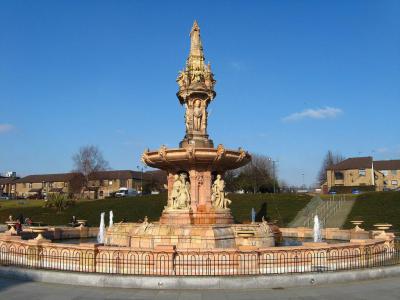
Rising from the heart of Glasgow Green, the Doulton Fountain is one of the city’s most distinctive landmarks and the largest terracotta fountain in the world. Completed in 1888, it was originally commissioned by Sir Henry Doulton, the English pottery manufacturer, as a gift to the people of Glasgow to mark Queen Victoria’s Golden Jubilee. Designed by architect Arthur Edward Pearce, the fountain is an exuberant celebration of Victorian artistry, blending ornate detail with monumental scale. Its warm red terracotta, richly adorned with sculptural figures, stands out against the park’s greenery and immediately draws the eye.
The fountain is both decorative and symbolic. Rising over 14 metres high, it is crowned by a statue of Queen Victoria, beneath which are tiers of basins adorned with cherubs, mythological figures, and elaborate floral motifs. Around its base, four striking groups of statues represent the corners of the British Empire at the time-South Africa, India, Canada, and Australia-illustrating Glasgow’s connections to global trade and imperial expansion.
Over the years, the fountain endured weather damage and neglect, but a major restoration completed in 2008 brought it back to life. The structure was cleaned, repaired, and carefully moved to a more prominent position on Glasgow Green, where its cascades now flow once more. At night, the fountain is beautifully illuminated, creating a dramatic centrepiece that celebrates the city’s industrial past while offering a tranquil spot for modern visitors.
The fountain is both decorative and symbolic. Rising over 14 metres high, it is crowned by a statue of Queen Victoria, beneath which are tiers of basins adorned with cherubs, mythological figures, and elaborate floral motifs. Around its base, four striking groups of statues represent the corners of the British Empire at the time-South Africa, India, Canada, and Australia-illustrating Glasgow’s connections to global trade and imperial expansion.
Over the years, the fountain endured weather damage and neglect, but a major restoration completed in 2008 brought it back to life. The structure was cleaned, repaired, and carefully moved to a more prominent position on Glasgow Green, where its cascades now flow once more. At night, the fountain is beautifully illuminated, creating a dramatic centrepiece that celebrates the city’s industrial past while offering a tranquil spot for modern visitors.
13) Argyle Street
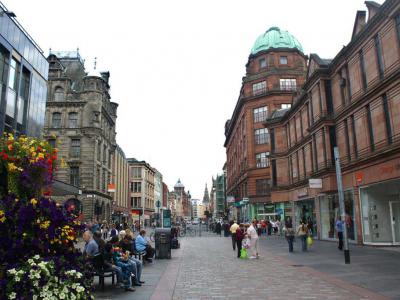
Argyle Street is one of Glasgow’s liveliest and most historic thoroughfares, stretching from the city centre’s George Square all the way westward through the heart of the city and into the trendy Finnieston district. As one of the longest streets in Scotland, it has been a hub of trade, shopping, and social life for centuries. Today, it remains a bustling artery where grand Victorian architecture meets modern retail, entertainment, and a vibrant dining scene, making it an essential stop for anyone exploring the city.
The street’s central section, running through the “Style Mile,” is one of Glasgow’s premier shopping destinations. Here you’ll find a mix of high-street brands, independent boutiques, and the striking Saint Enoch Centre, a glass-roofed shopping mall that combines historic façades with contemporary design. Street performers often add a lively soundtrack, while the colourful shopfronts and bustling crowds reflect Glasgow’s dynamic spirit.
As you move west, Argyle Street leads into the hip Finnieston area, a former industrial quarter now known for its creative energy. Once home to shipyards and warehouses, it has transformed into a hub of artisan cafés, craft beer bars, and acclaimed restaurants, making it one of the city’s most fashionable districts. In the evenings, the atmosphere comes alive with music venues, cocktail lounges, and a buzzing nightlife scene.
Argyle Street also offers a glimpse into Glasgow’s architectural evolution. From the grand façade of the Saint Enoch Hotel to the red sandstone tenements and modern cultural spaces like the SSE Hydro just off its western stretch, the street embodies the city’s ability to blend tradition with innovation.
The street’s central section, running through the “Style Mile,” is one of Glasgow’s premier shopping destinations. Here you’ll find a mix of high-street brands, independent boutiques, and the striking Saint Enoch Centre, a glass-roofed shopping mall that combines historic façades with contemporary design. Street performers often add a lively soundtrack, while the colourful shopfronts and bustling crowds reflect Glasgow’s dynamic spirit.
As you move west, Argyle Street leads into the hip Finnieston area, a former industrial quarter now known for its creative energy. Once home to shipyards and warehouses, it has transformed into a hub of artisan cafés, craft beer bars, and acclaimed restaurants, making it one of the city’s most fashionable districts. In the evenings, the atmosphere comes alive with music venues, cocktail lounges, and a buzzing nightlife scene.
Argyle Street also offers a glimpse into Glasgow’s architectural evolution. From the grand façade of the Saint Enoch Hotel to the red sandstone tenements and modern cultural spaces like the SSE Hydro just off its western stretch, the street embodies the city’s ability to blend tradition with innovation.
