

University of Glasgow, Glasgow (must see)
The United Kingdom is home to several prestigious and ancient universities that enjoy global renown. Among these institutions, the University of Glasgow holds a significant position as the fourth oldest in English-speaking countries.
Its establishment can be traced back to 1451 when it received formal recognition through a Papal Bull issued during the papacy of Pope Nicholas V. Subsequently, King James II granted permission to Bishop William Turnbill to integrate the university with the city's cathedral. However, during the Reformation period, both the Mace and the Bull were transported to France. While the Mace eventually found its way back, the fate of the Bull remains uncertain, possibly lost or stolen.
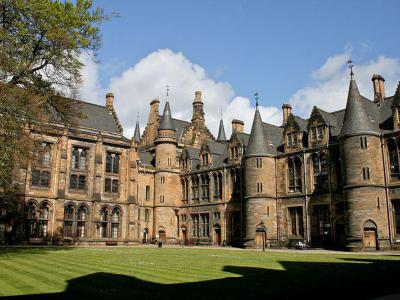
In 1870, Sir George Scott oversaw the construction of the university's main campus on Gilmorehill, adopting a Gothic architectural style and featuring a twin-quadrangle design with an open undercroft. A spire was later added to the bell tower in 1887. The university's various departments are dispersed across different buildings within the city and across the country.
During the 18th century, the University of Glasgow played a central role in the Scottish Enlightenment movement, while in the 19th century, it broadened its admissions, welcoming students beyond the privileged upper classes. Children of merchants enrolled to pursue studies in fields such as law, medicine, education, engineering, science, and theology.
Within the campus, visitors can explore the impressive Hunterian Museum & Gallery, as well as the Mackintosh House, offering enriching cultural experiences.
Its establishment can be traced back to 1451 when it received formal recognition through a Papal Bull issued during the papacy of Pope Nicholas V. Subsequently, King James II granted permission to Bishop William Turnbill to integrate the university with the city's cathedral. However, during the Reformation period, both the Mace and the Bull were transported to France. While the Mace eventually found its way back, the fate of the Bull remains uncertain, possibly lost or stolen.
In 1870, Sir George Scott oversaw the construction of the university's main campus on Gilmorehill, adopting a Gothic architectural style and featuring a twin-quadrangle design with an open undercroft. A spire was later added to the bell tower in 1887. The university's various departments are dispersed across different buildings within the city and across the country.
During the 18th century, the University of Glasgow played a central role in the Scottish Enlightenment movement, while in the 19th century, it broadened its admissions, welcoming students beyond the privileged upper classes. Children of merchants enrolled to pursue studies in fields such as law, medicine, education, engineering, science, and theology.
Within the campus, visitors can explore the impressive Hunterian Museum & Gallery, as well as the Mackintosh House, offering enriching cultural experiences.
Want to visit this sight? Check out these Self-Guided Walking Tours in Glasgow. Alternatively, you can download the mobile app "GPSmyCity: Walks in 1K+ Cities" from Apple App Store or Google Play Store. The app turns your mobile device to a personal tour guide and it works offline, so no data plan is needed when traveling abroad.
Download The GPSmyCity App



University of Glasgow on Map
Sight Name: University of Glasgow
Sight Location: Glasgow, Scotland (See walking tours in Glasgow)
Sight Type: Attraction/Landmark
Guide(s) Containing This Sight:
Sight Location: Glasgow, Scotland (See walking tours in Glasgow)
Sight Type: Attraction/Landmark
Guide(s) Containing This Sight:
Nearby Sights
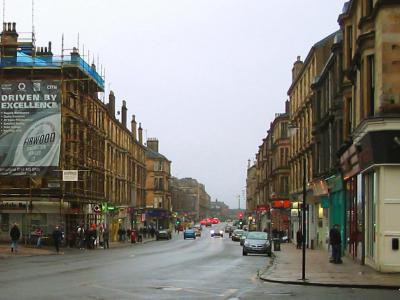
Walking Tours in Glasgow, Scotland

Create Your Own Walk in Glasgow
Creating your own self-guided walk in Glasgow is easy and fun. Choose the city attractions that you want to see and a walk route map will be created just for you. You can even set your hotel as the start point of the walk.
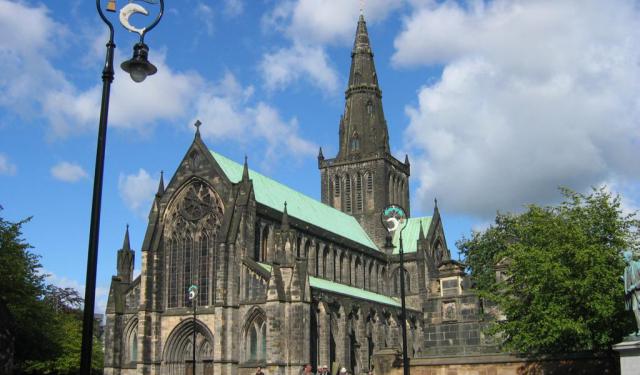
Historical Churches
The feeling of serenity and being free from stress and worries is quite precious these days. And where better to find this than inside a church? Glasgow is home to a number of great churches that are notable for their architectural design, mostly in the Gothic style.
One of the city's most iconic ecclesiastical landmarks and a stunning example of Gothic architecture is Saint Mungo's... view more
Tour Duration: 2 Hours
Travel Distance: 4.1 Km or 2.5 Miles
One of the city's most iconic ecclesiastical landmarks and a stunning example of Gothic architecture is Saint Mungo's... view more
Tour Duration: 2 Hours
Travel Distance: 4.1 Km or 2.5 Miles
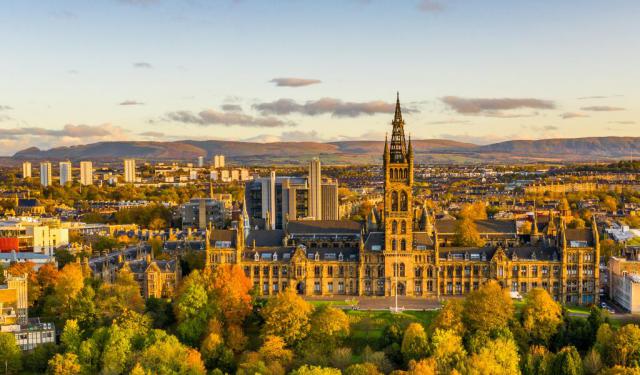
Glasgow West End Walking Tour
Glasgow is a home to a great number of historic, cultural and architectural landmarks, the lion's share of which are found in the West End. The adjectives applicable to this part of Glasgow speak volumes: cosmopolitan, multi-cultured, bohemian, intellectual, grand, leafy, confident, tolerant, and trendy. Indeed all of them are true, especially given that inside the area there are several... view more
Tour Duration: 2 Hours
Travel Distance: 3.4 Km or 2.1 Miles
Tour Duration: 2 Hours
Travel Distance: 3.4 Km or 2.1 Miles

Glasgow Music Spots Walking Tour
“There’s no audience quite like a Glasgow crowd.” According to the Royal Conservatoire of Scotland, Glasgow has long been a major destination for artists, not least because the city has helped launch so many careers.
Glasgow’s live music scene grew from a mix of working-class entertainment, dance halls, pubs, theatres, clubs, and, later, a strong network of independent venues. Long... view more
Tour Duration: 2 Hours
Travel Distance: 3.5 Km or 2.2 Miles
Glasgow’s live music scene grew from a mix of working-class entertainment, dance halls, pubs, theatres, clubs, and, later, a strong network of independent venues. Long... view more
Tour Duration: 2 Hours
Travel Distance: 3.5 Km or 2.2 Miles
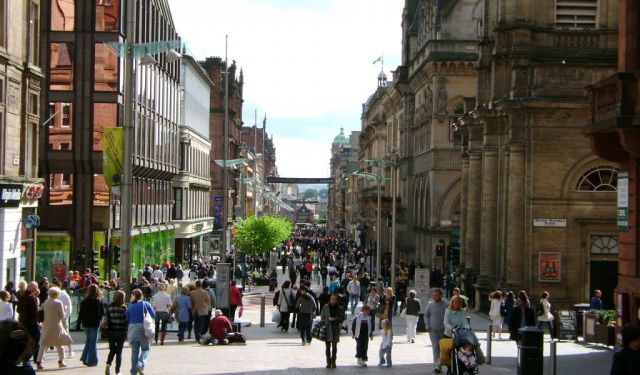
Glasgow City Center Walking Tour
English writer Daniel Defoe, visiting Glasgow in the early 18th century, famously described it as “the cleanest and beautifullest, and best-built city in Britain, London excepted.”
Glasgow, the largest city and seaport in Scotland, stands on the River Clyde. The area has been inhabited for millennia, with the river providing a natural setting for fishing, settlement, and later trade.... view more
Tour Duration: 2 Hours
Travel Distance: 3.5 Km or 2.2 Miles
Glasgow, the largest city and seaport in Scotland, stands on the River Clyde. The area has been inhabited for millennia, with the river providing a natural setting for fishing, settlement, and later trade.... view more
Tour Duration: 2 Hours
Travel Distance: 3.5 Km or 2.2 Miles