Custom Walk in Beijing, China by emurphy_74f69 created on 2025-05-15
Guide Location: China » Beijing
Guide Type: Custom Walk
# of Sights: 5
Tour Duration: 2 Hour(s)
Travel Distance: 3.4 Km or 2.1 Miles
Share Key: V5WRV
Guide Type: Custom Walk
# of Sights: 5
Tour Duration: 2 Hour(s)
Travel Distance: 3.4 Km or 2.1 Miles
Share Key: V5WRV
How It Works
Please retrieve this walk in the GPSmyCity app. Once done, the app will guide you from one tour stop to the next as if you had a personal tour guide. If you created the walk on this website or come to the page via a link, please follow the instructions below to retrieve the walk in the app.
Retrieve This Walk in App
Step 1. Download the app "GPSmyCity: Walks in 1K+ Cities" on Apple App Store or Google Play Store.



Step 2. In the GPSmyCity app, download(or launch) the guide "Beijing Map and Walking Tours".
Step 3. Tap the menu button located at upper right corner of the "Walks" screen and select "Retrieve custom walk". Enter the share key: V5WRV
1) Xindong'an Market
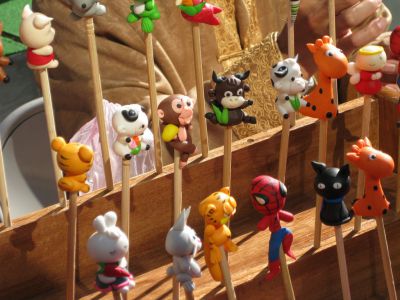
What to buy here: Beijing Dough Figurines.
Beijing dough figurines are a traditional handicraft, they are made of wheat and glutinous rice flour, and carved with a small bamboo knife. The dough figurines have a high artistic value for the locals and may be compared to Chinese sculpture. Although an ancient handicraft, it hasn't received widespread attention until the Qing dynasty, and only became truly popular at the beginning of the 21st century. The figurines are made on different occasions throughout the year and are used as gifts for children. Please keep in mind that there are edible and inedible dough toys. These can be found in abundance at temple fairs during the Spring Festival.
Beijing dough figurines are a traditional handicraft, they are made of wheat and glutinous rice flour, and carved with a small bamboo knife. The dough figurines have a high artistic value for the locals and may be compared to Chinese sculpture. Although an ancient handicraft, it hasn't received widespread attention until the Qing dynasty, and only became truly popular at the beginning of the 21st century. The figurines are made on different occasions throughout the year and are used as gifts for children. Please keep in mind that there are edible and inedible dough toys. These can be found in abundance at temple fairs during the Spring Festival.
2) Wangfujing Street (must see)
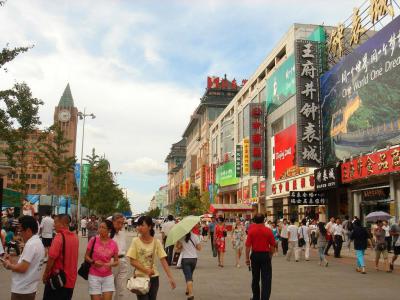
Wangfujing Street is a very popular street in Beijing. This street is 1500 meters long and is well known for its combination of commerce, culture, modernity and tradition. Starting from the East Changan Street, Wangfujing Street extends to the China Art Museum.
On Wangfujing Street you can find a symbolically restored ancient well after which the street was named. Some of the prominent tourist attractions close to the street include the Tiananmen Square and the Forbidden City.
As you walk around this charming and attractive street, enjoy browsing around the 200 odd shops. Some of the most popular shopping spots here include Wangfujing Book Store, Beijing Department Store, Sun Dong An Market and Donghuamen Night Fair.
The Catholic Church on this street was originally built in 1905. This church was refurbished in 2000 and is lit by bright lights. There are many luxury hotels around Wangfujing Street where tourists prefer to stay. Some of the popular hotels include The Grand Hotel Beijing, Beijing Hotel, Taiwan Hotel, Peace Hotel, Palace Hotel and Tianlun Dynasty Hotel.
A visit to this street is a must on your trip to Beijing. Shop to your heart’s content for exclusive Chinese artifacts and enjoy delicious food at any of the fine dining restaurants here.
Why You Should Visit:
To soak in the atmosphere and check out the little Chinese things you can buy not mentioning the various Beijing delicacies you can try – from noodle soup and dumplings to starfish-on-a-stick. Lots of people daring each other to try various insects and taking pics, so a very interesting place to visit. Easy to get around but crowded and open late.
Tip:
Make sure to check out the side streets, as there are plenty of curious things to see, but don't forget to barter with the vendors!
On Wangfujing Street you can find a symbolically restored ancient well after which the street was named. Some of the prominent tourist attractions close to the street include the Tiananmen Square and the Forbidden City.
As you walk around this charming and attractive street, enjoy browsing around the 200 odd shops. Some of the most popular shopping spots here include Wangfujing Book Store, Beijing Department Store, Sun Dong An Market and Donghuamen Night Fair.
The Catholic Church on this street was originally built in 1905. This church was refurbished in 2000 and is lit by bright lights. There are many luxury hotels around Wangfujing Street where tourists prefer to stay. Some of the popular hotels include The Grand Hotel Beijing, Beijing Hotel, Taiwan Hotel, Peace Hotel, Palace Hotel and Tianlun Dynasty Hotel.
A visit to this street is a must on your trip to Beijing. Shop to your heart’s content for exclusive Chinese artifacts and enjoy delicious food at any of the fine dining restaurants here.
Why You Should Visit:
To soak in the atmosphere and check out the little Chinese things you can buy not mentioning the various Beijing delicacies you can try – from noodle soup and dumplings to starfish-on-a-stick. Lots of people daring each other to try various insects and taking pics, so a very interesting place to visit. Easy to get around but crowded and open late.
Tip:
Make sure to check out the side streets, as there are plenty of curious things to see, but don't forget to barter with the vendors!
3) National Museum of China (must see)
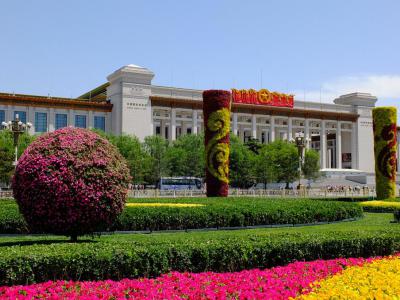
Situated on the eastern flank of Beijing's Tiananmen Square, the National Museum of China serves as an educational institution dedicated to illuminating the rich tapestry of Chinese arts and history. Oversight of the museum falls under the purview of the Ministry of Culture of the People's Republic of China.
Dating back to its establishment in 2003, the museum was the result of a merger between two distinct institutions that had occupied the same architectural space since 1959: the Museum of the Chinese Revolution in the northern wing and the National Museum of Chinese History in the southern wing.
Spanning an expansive timeline from the Yuanmou Man of 1.7 million years ago to the culmination of the Qing Dynasty, the museum boasts an extensive permanent collection comprising 1,050,000 artifacts. Within this collection are numerous invaluable and singular items that are not replicated in any other museum in China or across the globe.
Prominent treasures within the confines of the National Museum of China encompass a diverse array of historical periods. These include the renowned "Simuwu Ding" from the Shang Dynasty (1600 BC - 1064 BC), holding the distinction of being the heaviest extant piece of ancient bronzeware at 833 kg. Additional remarkable pieces feature a square-shaped Shang Dynasty bronze "zun" adorned with intricately crafted sheep heads, an uncommonly inscribed bronze water pan from the Western Zhou Dynasty, a Qin Dynasty bronze tally embellished with gold inlay in the form of a tiger, opulent Han Dynasty jade burial attire adorned with golden thread, and an extensive compilation of Tang Dynasty tri-colored glazed sancai as well as Song Dynasty ceramics. Complementing these treasures is a notable numismatic collection that encompasses 15,000 coins generously contributed by Luo Bozhao.
Why You Should Visit:
The "Ancient China" exhibit on the lower floor could easily keep you busy for 2-3 hours and the quality of the works is at least comparable to the Chinese section at the Met in New York and Guimet in Paris. Additionally, you're able to see many outstanding visiting exhibitions from other parts of the world.
Tip:
Take a look at the several different sections in the information section before jumping in and decide what is most likely to appeal to you if you have only one day or a half day. Entrance is free but do take your passport/ID with you. Security is tight so expect checks both entering and leaving the museum.
Dating back to its establishment in 2003, the museum was the result of a merger between two distinct institutions that had occupied the same architectural space since 1959: the Museum of the Chinese Revolution in the northern wing and the National Museum of Chinese History in the southern wing.
Spanning an expansive timeline from the Yuanmou Man of 1.7 million years ago to the culmination of the Qing Dynasty, the museum boasts an extensive permanent collection comprising 1,050,000 artifacts. Within this collection are numerous invaluable and singular items that are not replicated in any other museum in China or across the globe.
Prominent treasures within the confines of the National Museum of China encompass a diverse array of historical periods. These include the renowned "Simuwu Ding" from the Shang Dynasty (1600 BC - 1064 BC), holding the distinction of being the heaviest extant piece of ancient bronzeware at 833 kg. Additional remarkable pieces feature a square-shaped Shang Dynasty bronze "zun" adorned with intricately crafted sheep heads, an uncommonly inscribed bronze water pan from the Western Zhou Dynasty, a Qin Dynasty bronze tally embellished with gold inlay in the form of a tiger, opulent Han Dynasty jade burial attire adorned with golden thread, and an extensive compilation of Tang Dynasty tri-colored glazed sancai as well as Song Dynasty ceramics. Complementing these treasures is a notable numismatic collection that encompasses 15,000 coins generously contributed by Luo Bozhao.
Why You Should Visit:
The "Ancient China" exhibit on the lower floor could easily keep you busy for 2-3 hours and the quality of the works is at least comparable to the Chinese section at the Met in New York and Guimet in Paris. Additionally, you're able to see many outstanding visiting exhibitions from other parts of the world.
Tip:
Take a look at the several different sections in the information section before jumping in and decide what is most likely to appeal to you if you have only one day or a half day. Entrance is free but do take your passport/ID with you. Security is tight so expect checks both entering and leaving the museum.
4) Tiananmen Square (must see)
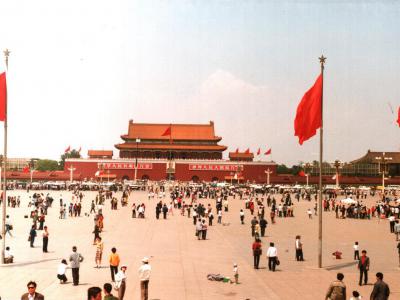
The name Tiananmen Square is the heart of Beijing. Tourists flock from all over China and around the world to this square that features the Tiananmen tower, Mao Zedong Memorial Hall, the Monument to the People’s Heroes and the Great Hall of the People.
Functionally this square was Forbidden City’s front door. Constructed during the Ming Dynasty in 1417, the square was used to inform people whenever a change of ruling power occurred. The tower located to the north of the square was accessible only to aristocrats and the royal family and was not open to the public until 1911 when feudal rule came to an end. The Monument of People’s Heroes, constructed in 1952 is the largest in China. This granite monument is located at the center of the square.
The Great Hall of the People is located to the west of the square. Constructed in 1959, this hall is an impressive site where prominent diplomatic activities and political meetings are held. To the south of the square, you can find the Memorial Hall of Chairman Mao. Chairman Mao’s body is kept here in a crystal coffin and decorated with flowers. The National Museum of China is located to the square’s eastern side. This museum showcases the country’s rich history.
Why You Should Visit:
A must-see place for its historical and political significance, but also a great place to meet and interact with people from China. It is quite a sight in the evening, completely lit up, with lots of people around.
Tip:
To be allowed access to the Tiananmen Square you must go through a series of security checks and you must have your passport. This goes for a visit to the Forbidden City as well since the south entrance is facing the square.
Functionally this square was Forbidden City’s front door. Constructed during the Ming Dynasty in 1417, the square was used to inform people whenever a change of ruling power occurred. The tower located to the north of the square was accessible only to aristocrats and the royal family and was not open to the public until 1911 when feudal rule came to an end. The Monument of People’s Heroes, constructed in 1952 is the largest in China. This granite monument is located at the center of the square.
The Great Hall of the People is located to the west of the square. Constructed in 1959, this hall is an impressive site where prominent diplomatic activities and political meetings are held. To the south of the square, you can find the Memorial Hall of Chairman Mao. Chairman Mao’s body is kept here in a crystal coffin and decorated with flowers. The National Museum of China is located to the square’s eastern side. This museum showcases the country’s rich history.
Why You Should Visit:
A must-see place for its historical and political significance, but also a great place to meet and interact with people from China. It is quite a sight in the evening, completely lit up, with lots of people around.
Tip:
To be allowed access to the Tiananmen Square you must go through a series of security checks and you must have your passport. This goes for a visit to the Forbidden City as well since the south entrance is facing the square.
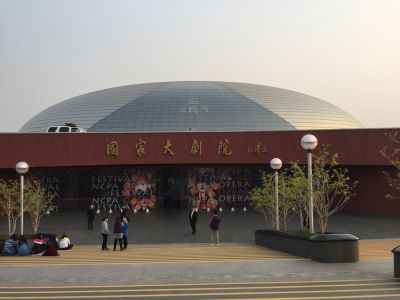
5) National Centre for the Performing Arts (must see)
The National Centre for the Performing Arts, colloquially described as The Giant Egg, is an arts centre containing an opera house in Beijing. If you wish to enjoy the quintessence of China, you must not miss the Beijing Opera on your trip to Beijing. Also known as the Oriental Opera, this is the most significant form of Chinese opera in existence for the past 160 years.
Beijing Opera has witnessed an abundance of repertoires, opera troupes, artists and spectators through the ages. Developed from the “Huiban”, a local drama art of the 18th century China, Beijing Opera has grown into a scenic art that integrates literature, performance, music, face-painting and aria.
Ever since it came into existence, Beijing Opera has had different names such as Pingju, Daxi, Jinghuang and Jingxi. Four artistic methods namely dancing, dialogue, singing and martial art are used by the artists in Beijing Opera to present dramatic figures and plays.
Male characters, known as Xiao Sheng and Lao Sheng, are the two groups of male characters in the opera. Xiao Sheng refers to beardless young men and Lao Sheng to bearded middle-aged wise men. Dan or female characters, on the other hand, are subdivided into Laodan – senior women, Huadan – little girls at the bottom rung of society, Zhengdan – middle-aged, strong women, and Wudan – female fighters.
Why You Should Visit:
Incredible building from the outside, but with even more surprising things hidden inside.
Beautiful to discover, comfortable, optimized for music enjoyment and world class shows.
Tip:
Do check for the performance schedule online, as orchestras & musicians from around the world come to perform here on a regular basis.
Go in the day, well before shows start, to get a better choice of seats and prices, or you can just join the visiting tour for walking around inside the hall and viewing the exhibition.
Visiting Hours:
Tue-Sun: 9am-5pm
Beijing Opera has witnessed an abundance of repertoires, opera troupes, artists and spectators through the ages. Developed from the “Huiban”, a local drama art of the 18th century China, Beijing Opera has grown into a scenic art that integrates literature, performance, music, face-painting and aria.
Ever since it came into existence, Beijing Opera has had different names such as Pingju, Daxi, Jinghuang and Jingxi. Four artistic methods namely dancing, dialogue, singing and martial art are used by the artists in Beijing Opera to present dramatic figures and plays.
Male characters, known as Xiao Sheng and Lao Sheng, are the two groups of male characters in the opera. Xiao Sheng refers to beardless young men and Lao Sheng to bearded middle-aged wise men. Dan or female characters, on the other hand, are subdivided into Laodan – senior women, Huadan – little girls at the bottom rung of society, Zhengdan – middle-aged, strong women, and Wudan – female fighters.
Why You Should Visit:
Incredible building from the outside, but with even more surprising things hidden inside.
Beautiful to discover, comfortable, optimized for music enjoyment and world class shows.
Tip:
Do check for the performance schedule online, as orchestras & musicians from around the world come to perform here on a regular basis.
Go in the day, well before shows start, to get a better choice of seats and prices, or you can just join the visiting tour for walking around inside the hall and viewing the exhibition.
Visiting Hours:
Tue-Sun: 9am-5pm
