Custom Walk in San Francisco, California by audrey_56a65 created on 2025-05-15
Guide Location: USA » San Francisco
Guide Type: Custom Walk
# of Sights: 7
Tour Duration: 9 Hour(s)
Travel Distance: 23.5 Km or 14.6 Miles
Share Key: MDLN7
Guide Type: Custom Walk
# of Sights: 7
Tour Duration: 9 Hour(s)
Travel Distance: 23.5 Km or 14.6 Miles
Share Key: MDLN7
How It Works
Please retrieve this walk in the GPSmyCity app. Once done, the app will guide you from one tour stop to the next as if you had a personal tour guide. If you created the walk on this website or come to the page via a link, please follow the instructions below to retrieve the walk in the app.
Retrieve This Walk in App
Step 1. Download the app "GPSmyCity: Walks in 1K+ Cities" on Apple App Store or Google Play Store.



Step 2. In the GPSmyCity app, download(or launch) the guide "San Francisco Map and Walking Tours".
Step 3. Tap the menu button located at upper right corner of the "Walks" screen and select "Retrieve custom walk". Enter the share key: MDLN7
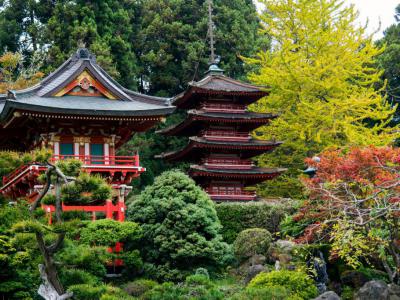
1) Japanese Tea Garden (must see)
The Japanese Tea Garden in San Francisco holds a significant place within Golden Gate Park, originally established during the 1894 California Midwinter International Exposition, a grand World's Fair. While many of its original attractions remain, the garden has changed throughout its history, shaping it into the captivating sanctuary it is today.
This cherished complex, sprawling across 3 acres, boasts a network of serene paths, enchanting ponds, and an inviting teahouse, all meticulously arranged in the traditional Japanese style. Embracing elements from Buddhist and Shinto beliefs, the garden features sculptures and structures, while water and rocks are thoughtfully integrated to create a calming ambiance that encourages a slower pace of life.
The Japanese Tea Garden was created by George Turner Marsh, an Australian. Skilled Japanese craftsmen aided him in bringing his vision to life. Makoto Hagiwara, a Japanese immigrant, and gardener, became the garden's manager. Under his care, the temporary village transformed into the permanent Japanese Tea Garden. From 1895 to 1925, Hagiwara expanded the garden with various plants, birds, and the renowned koi fish.
The Tea House at the Japanese Tea Garden is steeped in history, connected to the sacred Japanese Tea Ceremony dating back to 1203 AD. It has been rebuilt multiple times and continues to serve generations of visitors with whipped green tea, Matcha, and a variety of snacks. Today, it remains a symbol of tranquility and beauty within the garden's enchanting landscape.
As a place of revered ritual, the Japanese Tea Garden serves as a profound representation of Japanese culture and religious philosophy, expressed through the esteemed art forms of landscaping and architecture. The design of the garden reflects the influence of Japan's geographic location, emphasizing elements like isolation and the significance of water. Both Buddhist and Shinto influences are gracefully interwoven into the essence of the Japanese Tea Garden, creating a haven of serenity and spiritual connection.
This cherished complex, sprawling across 3 acres, boasts a network of serene paths, enchanting ponds, and an inviting teahouse, all meticulously arranged in the traditional Japanese style. Embracing elements from Buddhist and Shinto beliefs, the garden features sculptures and structures, while water and rocks are thoughtfully integrated to create a calming ambiance that encourages a slower pace of life.
The Japanese Tea Garden was created by George Turner Marsh, an Australian. Skilled Japanese craftsmen aided him in bringing his vision to life. Makoto Hagiwara, a Japanese immigrant, and gardener, became the garden's manager. Under his care, the temporary village transformed into the permanent Japanese Tea Garden. From 1895 to 1925, Hagiwara expanded the garden with various plants, birds, and the renowned koi fish.
The Tea House at the Japanese Tea Garden is steeped in history, connected to the sacred Japanese Tea Ceremony dating back to 1203 AD. It has been rebuilt multiple times and continues to serve generations of visitors with whipped green tea, Matcha, and a variety of snacks. Today, it remains a symbol of tranquility and beauty within the garden's enchanting landscape.
As a place of revered ritual, the Japanese Tea Garden serves as a profound representation of Japanese culture and religious philosophy, expressed through the esteemed art forms of landscaping and architecture. The design of the garden reflects the influence of Japan's geographic location, emphasizing elements like isolation and the significance of water. Both Buddhist and Shinto influences are gracefully interwoven into the essence of the Japanese Tea Garden, creating a haven of serenity and spiritual connection.
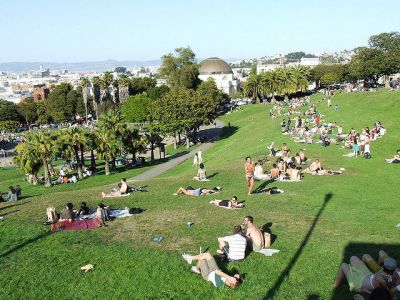
2) Dolores Park
Dolores Park, also known as Mission Dolores Park, is a spacious urban park situated in San Francisco. It resides just two blocks south of Mission Dolores, at the western boundary of the Mission District.
The park is bordered by 18th Street (north), 20th Street (south), Dolores Street (east), and Church Street (west). Mission High School is across from the park's northern end. Surrounding the park are residential buildings of varying heights and styles. South of the park is "Dolores Heights," and the Castro neighborhood is nearby. The park slopes from southwest to northeast, offering a clear view of downtown San Francisco, especially from the southwest corner.
Dolores Park offers a range of amenities, including numerous tennis courts, a basketball court, a multi-purpose court, a soccer field, a children's playground, and a designated area for dogs to play. The southern portion of the park is particularly noteworthy for its panoramic vistas of the Mission district, downtown San Francisco, San Francisco Bay, and the East Bay. Running along the park's western edge is the Muni Metro J-Church streetcar line.
Located east of Twin Peaks, Dolores Park enjoys a warm and sunny microclimate within the Mission neighborhood, which was recognized as one of the world's coolest neighborhoods in 2016. In recent years, the park's popularity among San Franciscans seeking outdoor relaxation and recreational activities has grown significantly.
The park is bordered by 18th Street (north), 20th Street (south), Dolores Street (east), and Church Street (west). Mission High School is across from the park's northern end. Surrounding the park are residential buildings of varying heights and styles. South of the park is "Dolores Heights," and the Castro neighborhood is nearby. The park slopes from southwest to northeast, offering a clear view of downtown San Francisco, especially from the southwest corner.
Dolores Park offers a range of amenities, including numerous tennis courts, a basketball court, a multi-purpose court, a soccer field, a children's playground, and a designated area for dogs to play. The southern portion of the park is particularly noteworthy for its panoramic vistas of the Mission district, downtown San Francisco, San Francisco Bay, and the East Bay. Running along the park's western edge is the Muni Metro J-Church streetcar line.
Located east of Twin Peaks, Dolores Park enjoys a warm and sunny microclimate within the Mission neighborhood, which was recognized as one of the world's coolest neighborhoods in 2016. In recent years, the park's popularity among San Franciscans seeking outdoor relaxation and recreational activities has grown significantly.
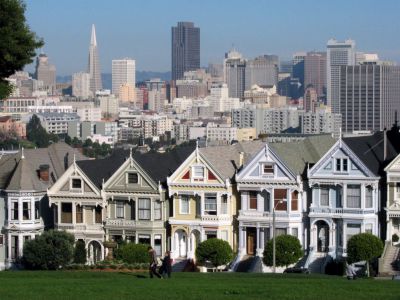
3) Painted Ladies
In American architecture, there exists a captivating style known as "Painted Ladies," which refers to Victorian and Edwardian houses and buildings adorned with vibrant colors to accentuate their architectural intricacies. This trend emerged during the 1960s and involved repainting these structures with three or more colors, creating a delightful visual spectacle. The term "Painted Ladies" was initially coined by writers Elizabeth Pomada and Michael Larsen in their 1978 book, "Painted Ladies: San Francisco's Resplendent Victorians," primarily focusing on the Victorian houses in San Francisco.
During the Victorian era, polychrome decoration was common, but the color combinations on these houses aren't historically accurate. In 1963, artist Butch Kardum started a trend by painting his Italianate-style Victorian house with intense blues and greens, inspiring others to do the same. This led to a colorist movement, impacting streets and neighborhoods throughout the 1970s and leaving a lasting mark on the cityscape, which continues today.
The famous "Painted Ladies" on 710–720 Steiner Street, known as "Postcard Row" or the "Seven Sisters," were built between 1892 and 1896 by developer Matthew Kavanaugh. Interestingly, Kavanaugh himself lived in the luxurious 1892 mansion at 722 Steiner Street. This block has become a popular spot in media and attracts tourists due to its appearances in about 70 movies, TV shows, and advertisements, including the iconic opening credits of "Full House" and "Fuller House."
During the Victorian era, polychrome decoration was common, but the color combinations on these houses aren't historically accurate. In 1963, artist Butch Kardum started a trend by painting his Italianate-style Victorian house with intense blues and greens, inspiring others to do the same. This led to a colorist movement, impacting streets and neighborhoods throughout the 1970s and leaving a lasting mark on the cityscape, which continues today.
The famous "Painted Ladies" on 710–720 Steiner Street, known as "Postcard Row" or the "Seven Sisters," were built between 1892 and 1896 by developer Matthew Kavanaugh. Interestingly, Kavanaugh himself lived in the luxurious 1892 mansion at 722 Steiner Street. This block has become a popular spot in media and attracts tourists due to its appearances in about 70 movies, TV shows, and advertisements, including the iconic opening credits of "Full House" and "Fuller House."
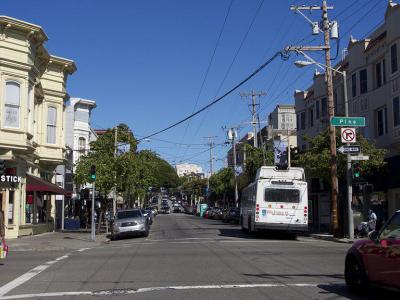
4) Fillmore Street
Fillmore Street, located in San Francisco, begins in the Lower Haight neighborhood and extends northwards through the Fillmore District and Pacific Heights until it reaches the Marina District. It serves as the main roadway and is named after Millard Fillmore, a former American President.
The portion of Fillmore Street that runs through the Fillmore neighborhood reflects the area's diverse character. Here, you can find a blend of family-owned local businesses, popular chain stores, lively jazz clubs, and a wide array of ethnic restaurants. Plaques on the sidewalk commemorate the stores, restaurants, and clubs that were lost due to redevelopment.
The neighborhood's historical connections are also preserved. For instance, Jimbo's Bop City, a nightclub that was frequented by renowned jazz musicians in the 1940s and 1950s, had its original building relocated to Fillmore Street during redevelopment. It now houses Marcus Bookstore, an Afrocentric bookstore.
Another notable feature of Fillmore Street is "the Triangle," which is formed at the intersection of Fillmore and Greenwich streets. This area gained a reputation and is known for the presence of three prominent bars: Balboa Cafe, East Side West, and City Tavern.
The Fillmore, west of Larkin Street, was established in the 1880s and became a bustling commercial hub. Streetcar service started in July 1895. Despite the 1906 earthquake, Fillmore Street stayed mostly intact and became a major route for the first resumed streetcar service. The street also attracted theaters and department stores after the disaster. However, the decorative arches on the street's intersections from 1907 to 1943 were removed for the war effort.
Why You Should Visit:
Lively street in a charming neighborhood. Wonderful jazz clubs, eating places and shops to buy that something special you won't find everywhere. Great for nightlife!
Tip:
Stray off of the street to see gorgeous Victorian homes.
The portion of Fillmore Street that runs through the Fillmore neighborhood reflects the area's diverse character. Here, you can find a blend of family-owned local businesses, popular chain stores, lively jazz clubs, and a wide array of ethnic restaurants. Plaques on the sidewalk commemorate the stores, restaurants, and clubs that were lost due to redevelopment.
The neighborhood's historical connections are also preserved. For instance, Jimbo's Bop City, a nightclub that was frequented by renowned jazz musicians in the 1940s and 1950s, had its original building relocated to Fillmore Street during redevelopment. It now houses Marcus Bookstore, an Afrocentric bookstore.
Another notable feature of Fillmore Street is "the Triangle," which is formed at the intersection of Fillmore and Greenwich streets. This area gained a reputation and is known for the presence of three prominent bars: Balboa Cafe, East Side West, and City Tavern.
The Fillmore, west of Larkin Street, was established in the 1880s and became a bustling commercial hub. Streetcar service started in July 1895. Despite the 1906 earthquake, Fillmore Street stayed mostly intact and became a major route for the first resumed streetcar service. The street also attracted theaters and department stores after the disaster. However, the decorative arches on the street's intersections from 1907 to 1943 were removed for the war effort.
Why You Should Visit:
Lively street in a charming neighborhood. Wonderful jazz clubs, eating places and shops to buy that something special you won't find everywhere. Great for nightlife!
Tip:
Stray off of the street to see gorgeous Victorian homes.
5) Ghirardelli Square
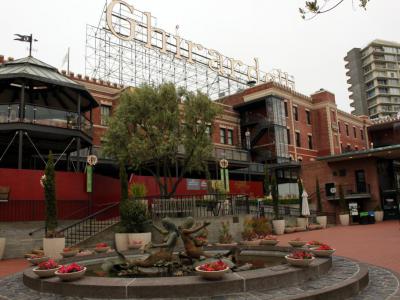
Once a chocolate factory and a wool mill, this is the most attractive of San Fran's refurbished industrial facilities. Looming above the Maritime National Historical Park with its mix of old red-brick buildings and modern stores and restaurants, this shopping center retains the famous Ghirardelli trademark clock tower and original electric roof sign.
The Ghirardelli Chocolate Manufactory on the plaza beneath the tower still houses vintage chocolate-making machinery and sells the confection. These days, you can find pretty much everything under the sun here (if you know where to look), from succulents to small souvenirs and mementos to coffee, cheese, and ice cream sundaes.
At the square, there is always some live music playing. Its centerpiece, Andrea's Fountain, is decorated with bronze sculptures of mermaids and turtles and is the most popular gathering point for shoppers, day and night, much as the top location for all Instagram-ers looking for a perfect backdrop.
The views at night, opening from the end of Van Ness Pier, are even better. You can frame the quaint square (with high rises looming up behind it), the Coit Tower on the left, and a quiet cove full of sailboats immediately in front. And the whole image is reflected in the water.
Tip:
The chocolate shop gives out free samples every day, so stop in and give yourself a treat.
The Ghirardelli Chocolate Manufactory on the plaza beneath the tower still houses vintage chocolate-making machinery and sells the confection. These days, you can find pretty much everything under the sun here (if you know where to look), from succulents to small souvenirs and mementos to coffee, cheese, and ice cream sundaes.
At the square, there is always some live music playing. Its centerpiece, Andrea's Fountain, is decorated with bronze sculptures of mermaids and turtles and is the most popular gathering point for shoppers, day and night, much as the top location for all Instagram-ers looking for a perfect backdrop.
The views at night, opening from the end of Van Ness Pier, are even better. You can frame the quaint square (with high rises looming up behind it), the Coit Tower on the left, and a quiet cove full of sailboats immediately in front. And the whole image is reflected in the water.
Tip:
The chocolate shop gives out free samples every day, so stop in and give yourself a treat.
6) Pier 39 (must see)
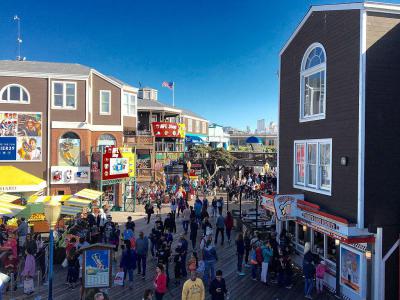
Pier 39—the beating, barking heart of Fisherman’s Wharf—isn’t much of a fisherman’s pier anymore. The old fleet has long since sailed off into history, but in its place rose something entirely different: a carnival by the sea. Imagine a boardwalk that decided to go full extrovert—complete with a glittering carousel (hidden toward the end of the pier like a shy performer), neon amusements, and the constant hum of tourists chasing their next photo op. Revamped in the 1970s to resemble a quaint wooden fishing village, it now welcomes thousands daily—none of whom are catching fish, though, but plenty of those catching Instagram stories...
It’s essentially an open-air shopping mall in a sailor’s disguise. Between the street performers, the Aquarium of the Bay, and enough snack stands to feed a small ship’s crew, there’s no shortage of things to distract you from the ocean view. If you need a recharge, the visitor center has you covered—literally—with phone-charging stations and a place to stash your bags while you explore.
Then there’s the food—because let’s be honest, half the crowd here comes for the chowder. Fourteen restaurants dish out everything from cioppino (which is the Italian-American shellfish and tomato stew) to locally-sourced oysters, with Fog Harbor Fish House leading the pack in both flavor and sustainability. If you’re feeling adventurous, there’s even a floating restaurant—Forbes Island—where the catch of the day comes with a side of gentle rocking.
But the true stars of Pier 39 aren’t human at all. The sea lions, self-appointed landlords since 1989, lounge across the docks like sunbathing celebrities—loud, lazy, and utterly unbothered by their audience. Slightly stinky, yes, but undeniably charming...
From the pier, you’ll spot Angel Island, Alcatraz, and both the Golden Gate and Bay Bridges stretching across the horizon. Boat tickets and ferry rides await those itching to head out on the water. Just remember: San Francisco’s sea breeze doesn’t care about your vacation outfit—so bring a jacket, or risk looking windswept in every photo...
It’s essentially an open-air shopping mall in a sailor’s disguise. Between the street performers, the Aquarium of the Bay, and enough snack stands to feed a small ship’s crew, there’s no shortage of things to distract you from the ocean view. If you need a recharge, the visitor center has you covered—literally—with phone-charging stations and a place to stash your bags while you explore.
Then there’s the food—because let’s be honest, half the crowd here comes for the chowder. Fourteen restaurants dish out everything from cioppino (which is the Italian-American shellfish and tomato stew) to locally-sourced oysters, with Fog Harbor Fish House leading the pack in both flavor and sustainability. If you’re feeling adventurous, there’s even a floating restaurant—Forbes Island—where the catch of the day comes with a side of gentle rocking.
But the true stars of Pier 39 aren’t human at all. The sea lions, self-appointed landlords since 1989, lounge across the docks like sunbathing celebrities—loud, lazy, and utterly unbothered by their audience. Slightly stinky, yes, but undeniably charming...
From the pier, you’ll spot Angel Island, Alcatraz, and both the Golden Gate and Bay Bridges stretching across the horizon. Boat tickets and ferry rides await those itching to head out on the water. Just remember: San Francisco’s sea breeze doesn’t care about your vacation outfit—so bring a jacket, or risk looking windswept in every photo...
7) Golden Gate Bridge (must see)
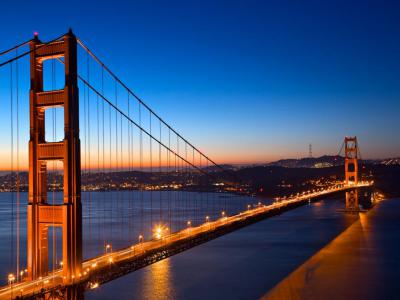
The Golden Gate Bridge stands proudly as a suspension bridge that spans the Golden Gate, a one-mile-wide (1.6 kilometers) strait connecting the majestic San Francisco Bay to the vast Pacific Ocean. This iconic structure serves as a vital link, connecting the bustling city of San Francisco, situated at the northern tip of the San Francisco Peninsula, to Marin County. It bears the weight of both U.S. Route 101 and California State Route 1, facilitating smooth transportation across the strait for vehicles and serves as a pathway for pedestrians and cyclists, also designated as a part of U.S. Bicycle Route 95. Notably, the American Society of Civil Engineers recognizes it as one of the Wonders of the Modern World, contributing to its international fame and making it a symbol synonymous with San Francisco and California.
The concept of establishing a fixed link between San Francisco and Marin had been gaining popularity since the late 19th century. However, it was not until the early 20th century that the idea became a feasible reality. Spearheading the endeavor, Joseph Strauss took on the role of chief engineer, while Leon Moisseiff, Irving Morrow, and Charles Ellis made significant design contributions. In 1937, the Golden Gate Bridge opened its doors to the public, marking a monumental achievement in engineering. Over the years, it has undergone various retrofits and improvement projects, ensuring its continued functionality and safety.
With its captivating beauty and iconic allure, the Golden Gate Bridge has been aptly described in Frommer's travel guide as "possibly the most beautiful, certainly the most photographed, bridge in the world." A testament to its grandeur, at the time of its inauguration in 1937, it held the titles of the longest and tallest suspension bridge globally, relinquishing them only in 1964 and 1998, respectively. The bridge's main span measures an impressive 4,200 feet (1,280 meters), while its total height soars to 746 feet (227 meters).
Why You Should Visit:
The highlight of any San Francisco trip.
Tip:
Some suggested viewpoints are from: Baker Beach on the southern end of the bridge as well as from Fort Point National Historic Site. These two will give you very nice scenic views of the bridge as a landscape. There is also the parking and visitor center on the northern end. It can be crowded, but this is one spot to begin your walking journey across the bridge.
The best photos can be taken on a ferry boat ride which will take you under the bridge and back again.
The concept of establishing a fixed link between San Francisco and Marin had been gaining popularity since the late 19th century. However, it was not until the early 20th century that the idea became a feasible reality. Spearheading the endeavor, Joseph Strauss took on the role of chief engineer, while Leon Moisseiff, Irving Morrow, and Charles Ellis made significant design contributions. In 1937, the Golden Gate Bridge opened its doors to the public, marking a monumental achievement in engineering. Over the years, it has undergone various retrofits and improvement projects, ensuring its continued functionality and safety.
With its captivating beauty and iconic allure, the Golden Gate Bridge has been aptly described in Frommer's travel guide as "possibly the most beautiful, certainly the most photographed, bridge in the world." A testament to its grandeur, at the time of its inauguration in 1937, it held the titles of the longest and tallest suspension bridge globally, relinquishing them only in 1964 and 1998, respectively. The bridge's main span measures an impressive 4,200 feet (1,280 meters), while its total height soars to 746 feet (227 meters).
Why You Should Visit:
The highlight of any San Francisco trip.
Tip:
Some suggested viewpoints are from: Baker Beach on the southern end of the bridge as well as from Fort Point National Historic Site. These two will give you very nice scenic views of the bridge as a landscape. There is also the parking and visitor center on the northern end. It can be crowded, but this is one spot to begin your walking journey across the bridge.
The best photos can be taken on a ferry boat ride which will take you under the bridge and back again.
