Custom Walk in San Juan, Puerto Rico by emurphy_74f69 created on 2025-05-16
Guide Location: Puerto Rico » San Juan
Guide Type: Custom Walk
# of Sights: 5
Tour Duration: 1 Hour(s)
Travel Distance: 2 Km or 1.2 Miles
Share Key: 4HY2Y
Guide Type: Custom Walk
# of Sights: 5
Tour Duration: 1 Hour(s)
Travel Distance: 2 Km or 1.2 Miles
Share Key: 4HY2Y
How It Works
Please retrieve this walk in the GPSmyCity app. Once done, the app will guide you from one tour stop to the next as if you had a personal tour guide. If you created the walk on this website or come to the page via a link, please follow the instructions below to retrieve the walk in the app.
Retrieve This Walk in App
Step 1. Download the app "GPSmyCity: Walks in 1K+ Cities" on Apple App Store or Google Play Store.



Step 2. In the GPSmyCity app, download(or launch) the guide "San Juan Map and Walking Tours".
Step 3. Tap the menu button located at upper right corner of the "Walks" screen and select "Retrieve custom walk". Enter the share key: 4HY2Y
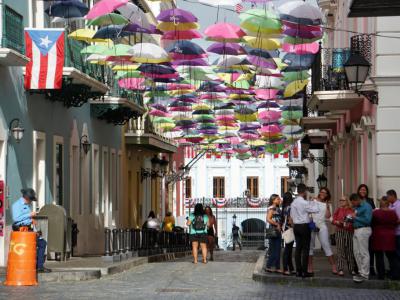
1) Calle de la Fortaleza (Fortaleza Street) (must see)
Proudly presiding over the bay of San Juan is the imposing La Fortaleza (Fortress), formally known as the Palace of Santa Catalina, the official residence of the Governor of Puerto Rico. The narrow road leading to the building, called Fortaleza Street, is the main artery of San Juan's historic quarter, cutting through most of it, and is also the oldest street in the area. It starts from Columbus Square and for the whole of its duration is lined with governmental buildings, hotels, perfumeries, craft shops, jewelry stores, and restaurants, gradually transforming into Avenue Juan Ponce de León in the east.
Just like many other colorful cobblestone streets in Old San Juan, each one more photogenic than the other, this thoroughfare is an important tourist attraction, in large part due to its historical and cultural significance. Visiting Fortaleza Street should be an integral part of every Old San Juan itinerary.
While the walled-in Old City has no shortage of vibrant photo spots, Fortaleza Street stands out above the rest due to the display of umbrellas – at the end of the street, near La Fortaleza itself – creating an overhead canopy that makes it particularly recognizable. These umbrellas tend to change colors during the year, from rainbow to all pink. Before the umbrellas, La Fortaleza Street was adorned with colorful kites.
Just like many other colorful cobblestone streets in Old San Juan, each one more photogenic than the other, this thoroughfare is an important tourist attraction, in large part due to its historical and cultural significance. Visiting Fortaleza Street should be an integral part of every Old San Juan itinerary.
While the walled-in Old City has no shortage of vibrant photo spots, Fortaleza Street stands out above the rest due to the display of umbrellas – at the end of the street, near La Fortaleza itself – creating an overhead canopy that makes it particularly recognizable. These umbrellas tend to change colors during the year, from rainbow to all pink. Before the umbrellas, La Fortaleza Street was adorned with colorful kites.
Sight description based on Wikipedia.
2) La Calle Shopping Mall
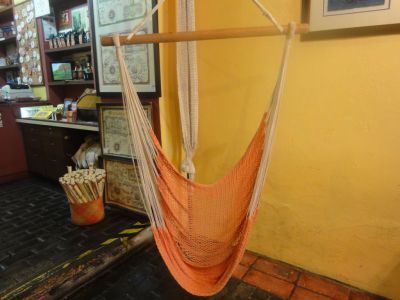
Hammock weaving has long been a specialty in the Puerto Rican town of San Sebastian, located in northwest corner of the island. The town even hosts a hammock festival in July. Legend has it that hammock weaving, like so many of the arts and craft making in Puerto Rico, has been handed down from the Taino Indians. Even the word “hammock” was most likely derived from the Taino word for this comfortable lounging chair, “hamaca.”
While most hammocks are designed and made in small towns across the island by individual craftspeople, you can find these authentic and durable hammocks being sold in a handful of places in the city of San Juan. The hammocks are made from cotton and cord and are sometimes dyed in bright colors. They come in a variety of sizes, like a chair for one person, or a double for two people. Some hammocks can even hold up to 450 pounds. Price: $50-$200.
What to buy here: Puerto Rican Hammocks.
While most hammocks are designed and made in small towns across the island by individual craftspeople, you can find these authentic and durable hammocks being sold in a handful of places in the city of San Juan. The hammocks are made from cotton and cord and are sometimes dyed in bright colors. They come in a variety of sizes, like a chair for one person, or a double for two people. Some hammocks can even hold up to 450 pounds. Price: $50-$200.
What to buy here: Puerto Rican Hammocks.
Image Courtesy of Stacey Hocheiser.
3) La Fortaleza (The Fortress) (must see)
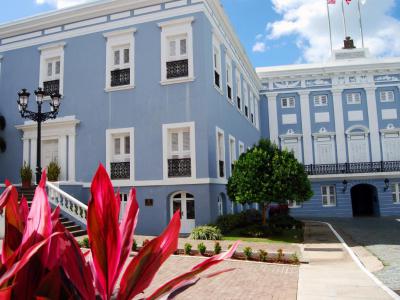
La Fortaleza, or the Fortress, is the current official residence of the Governor of Puerto Rico. Built between 1533 and 1540 to defend the harbor of San Juan, it is the oldest executive mansion in the New World. During the 1640 reconstruction, the chapel of Santa Catalina, then located outside the city walls, was demolished and integrated into the complex, which, upon that, assumed the new (current) name, Palacio de Santa Catalina.
La Fortaleza was the first defensive fortification built in San Juan, and the first of the series of military installations designed to protect the city, among which were the Fort San Felipe del Morro and Fort San Cristóbal. The construction was authorized by Charles V, the Holy Roman Emperor, as a defensive measure against the attacks from Carib Indians and the rivaling European powers.
The fortress underwent massive reconstruction in 1846 to convert from military use to a palatial residence. Since then, La Fortaleza has been the home to more than 170 governors of Puerto Rico and hosted various dignitaries, including President John F. Kennedy and his wife, Jacqueline Kennedy, who stayed here in 1961. At present, the complex consists of a few attached buildings with formal living quarters on the second floor, and private quarters on the third. The palace overlooks the high city walls fronting the bay, and its northern part contains sheltered gardens and a swimming pool.
The complex has been a UNESCO World Heritage Site since 1983 and as such may present definite interest to both history and architecture buffs with a taste for Spanish designs.
La Fortaleza was the first defensive fortification built in San Juan, and the first of the series of military installations designed to protect the city, among which were the Fort San Felipe del Morro and Fort San Cristóbal. The construction was authorized by Charles V, the Holy Roman Emperor, as a defensive measure against the attacks from Carib Indians and the rivaling European powers.
The fortress underwent massive reconstruction in 1846 to convert from military use to a palatial residence. Since then, La Fortaleza has been the home to more than 170 governors of Puerto Rico and hosted various dignitaries, including President John F. Kennedy and his wife, Jacqueline Kennedy, who stayed here in 1961. At present, the complex consists of a few attached buildings with formal living quarters on the second floor, and private quarters on the third. The palace overlooks the high city walls fronting the bay, and its northern part contains sheltered gardens and a swimming pool.
The complex has been a UNESCO World Heritage Site since 1983 and as such may present definite interest to both history and architecture buffs with a taste for Spanish designs.
Sight description based on Wikipedia.
4) San Juan Gate and City Wall (must see)
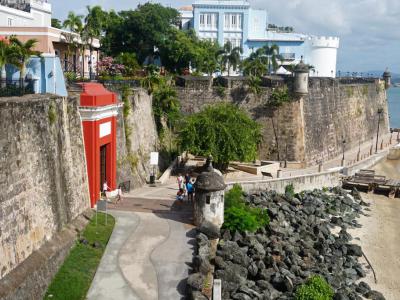
Built in the late 1700s, the San Juan Gate is a giant (40 feet high) structure, the last remaining of the original five gates carved into the three-mile wall that once surrounded the city. Today, the wall wraps around Old San Juan, from the cruise ship piers on San Juan Harbor to the capitol on the Atlantic.
Originally, each gate had a designated function. The red gate of San Juan played a symbolic role, serving as the main entrance to the city, and was named in honor of Saint John the Baptist. The first thing you notice approaching it is the inscription of The Sanctus ("Holy") hymn from the Catholic liturgy.
The city wall is the most enduring symbol of Puerto Rico and was built by the Spanish between 1539 and 1782. Made of sandstone, rubble, and mortar blocks – 20 feet thick, the wall measures 45 feet wide and 40 feet high in some parts and was meant to protect San Juan from invaders, notably the English, the Dutch, and the Americans. Its iconic sentry boxes now symbolize the island's Spanish heritage and resilience in an ever-changing world.
Nearly impenetrable to foreign attack, the city wall proved defenseless, nonetheless, against modern automobile traffic, pollution, and misguided attempts to preserve it that have seriously endangered the wall, leaving it crumbling in some places.
Currently a National Historic Site, the city wall is maintained by the National Park Service which attempts to recreate the magic mixture of sand, water, and limestone that was once used to stucco the wall. Along with the adjoining fortresses of El Morro and San Cristóbal, the city wall attracts 1.2 million visitors each year.
Tip:
As you walk through the gate, just pause for a second and notice how thick the walls really are. Also, check out the street vendors outside, on the corner, offering refreshments including Puerto Ricans' favorite, piragua.
Originally, each gate had a designated function. The red gate of San Juan played a symbolic role, serving as the main entrance to the city, and was named in honor of Saint John the Baptist. The first thing you notice approaching it is the inscription of The Sanctus ("Holy") hymn from the Catholic liturgy.
The city wall is the most enduring symbol of Puerto Rico and was built by the Spanish between 1539 and 1782. Made of sandstone, rubble, and mortar blocks – 20 feet thick, the wall measures 45 feet wide and 40 feet high in some parts and was meant to protect San Juan from invaders, notably the English, the Dutch, and the Americans. Its iconic sentry boxes now symbolize the island's Spanish heritage and resilience in an ever-changing world.
Nearly impenetrable to foreign attack, the city wall proved defenseless, nonetheless, against modern automobile traffic, pollution, and misguided attempts to preserve it that have seriously endangered the wall, leaving it crumbling in some places.
Currently a National Historic Site, the city wall is maintained by the National Park Service which attempts to recreate the magic mixture of sand, water, and limestone that was once used to stucco the wall. Along with the adjoining fortresses of El Morro and San Cristóbal, the city wall attracts 1.2 million visitors each year.
Tip:
As you walk through the gate, just pause for a second and notice how thick the walls really are. Also, check out the street vendors outside, on the corner, offering refreshments including Puerto Ricans' favorite, piragua.
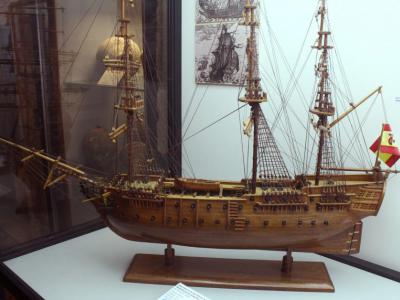
5) Museo del Mar (Maritime Museum)
Maritime Museum, dedicated to Puerto Rico’s maritime history, contains various interesting exhibits, including maps, a wide collection of maritime tools (such as life rings) and other naval items. You will learn about the various countries and ships that have used the San Juan harbor. It gives a history lesson of Puerto Rico from an interesting angle. It is a small museum so it does not take much time to see it but it is well worth a visit if you are in the area.
