Custom Walk in Montreal, Canada by abhay_grewal810_4f6a7 created on 2025-05-19
Guide Location: Canada » Montreal
Guide Type: Custom Walk
# of Sights: 5
Tour Duration: 3 Hour(s)
Travel Distance: 6.6 Km or 4.1 Miles
Share Key: 3452G
Guide Type: Custom Walk
# of Sights: 5
Tour Duration: 3 Hour(s)
Travel Distance: 6.6 Km or 4.1 Miles
Share Key: 3452G
How It Works
Please retrieve this walk in the GPSmyCity app. Once done, the app will guide you from one tour stop to the next as if you had a personal tour guide. If you created the walk on this website or come to the page via a link, please follow the instructions below to retrieve the walk in the app.
Retrieve This Walk in App
Step 1. Download the app "GPSmyCity: Walks in 1K+ Cities" on Apple App Store or Google Play Store.



Step 2. In the GPSmyCity app, download(or launch) the guide "Montreal Map and Walking Tours".
Step 3. Tap the menu button located at upper right corner of the "Walks" screen and select "Retrieve custom walk". Enter the share key: 3452G
1) Notre-Dame Basilica (must see)
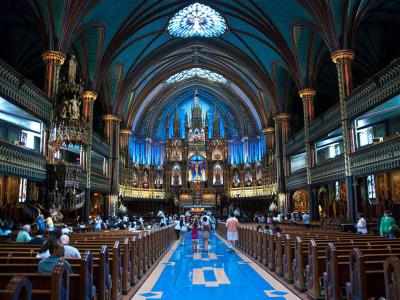
The Notre Dame Basilica of Montreal (Basilique Notre-Dame de Montréal) is a stunning piece of Gothic Revival architecture. Designed by the Irish-American architect James O'Donnell, it was completed, for the most part, in 1829.
The sanctuary was constructed a year later, while the first and second towers were added in 1841 and 1843, respectively. Both towers have bells: the West Tower (La Persévérance), has a bourdon bell nicknamed Jean-Baptiste. It was cast in John Dod Ward’s Eagle Foundry in 1848 and weighs 10,900 kg. Jean-Baptiste tolls only on special occasions, such as funerals, great religious festivals, and Christmas Eve. The East Tower (La Temperance), houses a ten-bell carillon from the same foundry, made in 1842.
The facade of the church was completed in 1865 and includes, among other features, three statues by the French sculptor Henri Bouriché, namely: the Virgin Mary (representing Montreal), Saint John the Baptist (representing Quebec), and Saint Joseph (representing Canada).
The interior – colorful and lavish – took much longer to complete and is quite impressive with its richly decorated columns, intricate wood carvings, statues, and elaborate stained glass windows. Quite unusual for a church, the stained glass windows here depict scenes from the history of Montreal rather than biblical scenes. Another spectacular highlight of the basilica is the Casavant Frères pipe organ, created in 1891, which is one of the largest organs in North America, comprising four keyboards and 7,000 individual pipes.
The Notre-Dame church was raised to the status of a minor basilica, by Pope John Paul II, in 1982 and was designated a National Historic Site of Canada in 1989.
Today, the Notre Dame of Montreal is a popular landmark, attracting yearly more than 11 million tourists from around the globe, making it one of the most visited sites in North America. Even the $10 admission fee doesn't turn visitors away.
Over the years, the basilica has hosted a number of important events, such as Céline Dion's wedding in 1994 and the funeral of the former Canadian Prime Minister, Pierre Trudeau, in 2000.
If you're interested in classical and religious music, the basilica offers musical programming of choral and organ performances, including Handel's Messiah every Christmas.
Tip:
The provided on-site brochure is very informative and can be used as a self-guide. Additionally, there's a free 20-minute English/French tour available at entry.
The 'AURA' light show (starting usually at 7 and 9 pm) is exceptional but often sold out, so plan your visit in advance: you can book a ticket online or come early to get a place. Try sitting somewhere in the middle to get the best music & light experience.
The sanctuary was constructed a year later, while the first and second towers were added in 1841 and 1843, respectively. Both towers have bells: the West Tower (La Persévérance), has a bourdon bell nicknamed Jean-Baptiste. It was cast in John Dod Ward’s Eagle Foundry in 1848 and weighs 10,900 kg. Jean-Baptiste tolls only on special occasions, such as funerals, great religious festivals, and Christmas Eve. The East Tower (La Temperance), houses a ten-bell carillon from the same foundry, made in 1842.
The facade of the church was completed in 1865 and includes, among other features, three statues by the French sculptor Henri Bouriché, namely: the Virgin Mary (representing Montreal), Saint John the Baptist (representing Quebec), and Saint Joseph (representing Canada).
The interior – colorful and lavish – took much longer to complete and is quite impressive with its richly decorated columns, intricate wood carvings, statues, and elaborate stained glass windows. Quite unusual for a church, the stained glass windows here depict scenes from the history of Montreal rather than biblical scenes. Another spectacular highlight of the basilica is the Casavant Frères pipe organ, created in 1891, which is one of the largest organs in North America, comprising four keyboards and 7,000 individual pipes.
The Notre-Dame church was raised to the status of a minor basilica, by Pope John Paul II, in 1982 and was designated a National Historic Site of Canada in 1989.
Today, the Notre Dame of Montreal is a popular landmark, attracting yearly more than 11 million tourists from around the globe, making it one of the most visited sites in North America. Even the $10 admission fee doesn't turn visitors away.
Over the years, the basilica has hosted a number of important events, such as Céline Dion's wedding in 1994 and the funeral of the former Canadian Prime Minister, Pierre Trudeau, in 2000.
If you're interested in classical and religious music, the basilica offers musical programming of choral and organ performances, including Handel's Messiah every Christmas.
Tip:
The provided on-site brochure is very informative and can be used as a self-guide. Additionally, there's a free 20-minute English/French tour available at entry.
The 'AURA' light show (starting usually at 7 and 9 pm) is exceptional but often sold out, so plan your visit in advance: you can book a ticket online or come early to get a place. Try sitting somewhere in the middle to get the best music & light experience.
2) Old Montreal (must see)
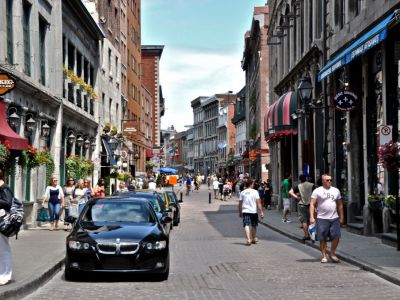
Transporting you back to the era of New France, Old Montreal stands as one of the most ancient districts frequented by tourists. Positioned ideally within Ville-Marie's borough, this neighborhood is bordered by Ruelle des Fortifications to the north, McGill Street to the west, the majestic Saint Lawrence River to the south, and Berri Street to the east.
Ville-Marie borough remains vibrant and dynamic, fueled by its perpetually lively neighborhoods, including the bustling downtown core, McGill Ghetto, Latin Quarter, Chinatown, Gay Village, and Old Montreal. Visitors revel in exploring this area using public transportation, indulging in shopping, dining at exquisite restaurants, and exploring renowned museums within Ville-Marie.
Should you find yourself in Old Montreal between July and October, an enthralling experience awaits you-the renowned Montreal Ghost Walks. Led by a local storyteller, this captivating journey uncovers the darker aspects of the area's history, guiding you through haunted locations that will send chills down your spine. You have the option to embark on either the west or east side walking tour. Undoubtedly, Old Montreal offers an unparalleled visitor experience, leaving a lasting impression.
Why You Should Visit:
A stroll through Old Montreal will give you a feel of European charm in North America. The cobblestone streets, the architecture, the restaurants and art galleries – all make an irresistible combination.
Tip:
You can walk from one end to the other of what is Old Montreal in 15-20 minutes, but there is a lot packed into that small section so you can easily spend 2 to 3 days exploring it.
Ville-Marie borough remains vibrant and dynamic, fueled by its perpetually lively neighborhoods, including the bustling downtown core, McGill Ghetto, Latin Quarter, Chinatown, Gay Village, and Old Montreal. Visitors revel in exploring this area using public transportation, indulging in shopping, dining at exquisite restaurants, and exploring renowned museums within Ville-Marie.
Should you find yourself in Old Montreal between July and October, an enthralling experience awaits you-the renowned Montreal Ghost Walks. Led by a local storyteller, this captivating journey uncovers the darker aspects of the area's history, guiding you through haunted locations that will send chills down your spine. You have the option to embark on either the west or east side walking tour. Undoubtedly, Old Montreal offers an unparalleled visitor experience, leaving a lasting impression.
Why You Should Visit:
A stroll through Old Montreal will give you a feel of European charm in North America. The cobblestone streets, the architecture, the restaurants and art galleries – all make an irresistible combination.
Tip:
You can walk from one end to the other of what is Old Montreal in 15-20 minutes, but there is a lot packed into that small section so you can easily spend 2 to 3 days exploring it.
3) Saint-Paul Street (Rue St-Paul) (must see)
Saint-Paul (Rue Saint-Paul) is the oldest street in Montreal, laid out in 1673 according to a plan by François Dollier de Casson. It follows the path that once bordered the northern edge of the former Fort Ville-Marie and is named after Paul de Chomedey de Maisonneuve, founder of the fort and the first governor of Montreal, who built a home for himself in this area in 1650.
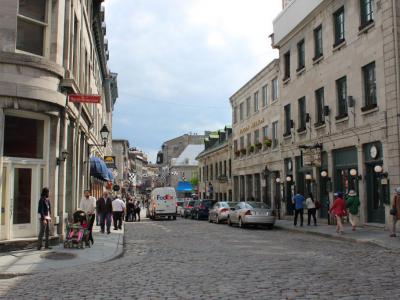
Unlike other – straight – streets drawn by Dollier de Casson, the cavernous cobblestone Saint-Paul is a bit winding. Centered on Royal Square (Place Royale), a major marketplace until 1803, it was destined to become, for many years, the city's main thoroughfare. In the 19th century, Old Montreal was the cradle of the local press, making Saint Paul home to a multitude of French- and English-language newspapers and journals. Busy day and night, the street was the first in the city to benefit from oil lighting.
There are several historic buildings lining Saint-Paul such as the Intendance Palace of 1698 and the Vaudreuil Castle (Château de Vaudreuil) of 1724. The street is also home to such prominent landmarks as the Bonsecours Market and the Chapel of Our Lady of Good Help (Notre-Dame-de-Bon-Secours). It also boasts perhaps the highest in the city concentration of tourist-themed souvenir shops, art galleries, boutique hotels, lively rooftop terraces, cafés, and eateries with international cuisine.
Tip:
In case you are budget-conscious, remember that the prices in this area are a bit higher than usual.
Unlike other – straight – streets drawn by Dollier de Casson, the cavernous cobblestone Saint-Paul is a bit winding. Centered on Royal Square (Place Royale), a major marketplace until 1803, it was destined to become, for many years, the city's main thoroughfare. In the 19th century, Old Montreal was the cradle of the local press, making Saint Paul home to a multitude of French- and English-language newspapers and journals. Busy day and night, the street was the first in the city to benefit from oil lighting.
There are several historic buildings lining Saint-Paul such as the Intendance Palace of 1698 and the Vaudreuil Castle (Château de Vaudreuil) of 1724. The street is also home to such prominent landmarks as the Bonsecours Market and the Chapel of Our Lady of Good Help (Notre-Dame-de-Bon-Secours). It also boasts perhaps the highest in the city concentration of tourist-themed souvenir shops, art galleries, boutique hotels, lively rooftop terraces, cafés, and eateries with international cuisine.
Tip:
In case you are budget-conscious, remember that the prices in this area are a bit higher than usual.
4) Schwartz's / Jewish Quarter (must see)
Along with bagels, smoked meat has been popular in Montreal since the 19th century and is identified as emblematic of the city's cuisine. Many have laid claims to its introduction into the city; regardless, all of these stories indicate the creators are of the Jewish Diaspora from Romania or Eastern Europe. Although the preparation method may be similar to New York pastrami, the meat is cured in seasoning with more cracked peppercorns and savory flavorings, such as coriander, garlic, and mustard seeds, and significantly less sugar.
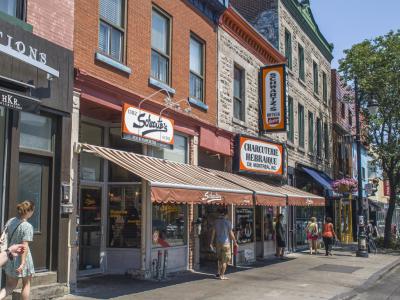
Soft and succulent with a flavor of its own, the meat served at Schwartz's tastes all the better layered on bread with coleslaw, pickles and a dash of mustard. Opened in 1928, the deli's long popularity has led to it being considered a cultural institution of Montreal. The place remains largely unchanged, right down to its place-mat menus, banquette seating, fast service, fluorescent lighting, and location in the Jewish Quarter.
You can order the old-fashioned sandwich or, if you are going for the first time, try the combination platter which has both smoked meat and rib eye steak with in-house spices. Not only does the platter have a good serving size of meat but you also get to sample two of the restaurant's signature meats and decide what to order if you need more.
Tip:
If you are going for dinner, try to arrive early (around 6pm) for minimal wait times.
Soft and succulent with a flavor of its own, the meat served at Schwartz's tastes all the better layered on bread with coleslaw, pickles and a dash of mustard. Opened in 1928, the deli's long popularity has led to it being considered a cultural institution of Montreal. The place remains largely unchanged, right down to its place-mat menus, banquette seating, fast service, fluorescent lighting, and location in the Jewish Quarter.
You can order the old-fashioned sandwich or, if you are going for the first time, try the combination platter which has both smoked meat and rib eye steak with in-house spices. Not only does the platter have a good serving size of meat but you also get to sample two of the restaurant's signature meats and decide what to order if you need more.
Tip:
If you are going for dinner, try to arrive early (around 6pm) for minimal wait times.
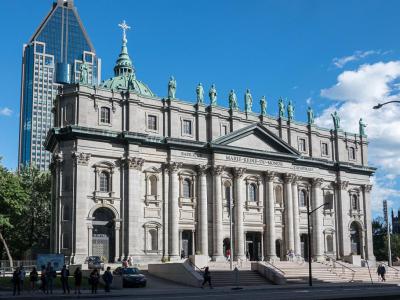
5) Mary, Queen of the World Cathedral (Cathedrale Marie-Reine-du-Monde) (must see)
Montréal has many beautiful churches and this is one of those that you should see when visiting downtown. Despite being nestled among many high-rise structures, its dome is unmistakable, modeled on Saint Peter's in Rome. Though somewhat “scaled-down”, the church is a perfect replica of the same, right down to the red copper baldachin over the altar that was fully hand-carved in Rome.
Dating back to in the 1890s, the cathedral appears older than its years, while at the same time feeling relatively modern as compared to Notre-Dame across town or even other cathedrals in other major cities – mostly due to the cleaner, simpler design. While not particularly ornate, the interior is still pretty, marked by soft hues that lend a gentle and slightly feminine touch. On a sunny day, the brilliant colors of the stained glass windows make it easy to observe the details – from the vibrant ceiling to the altar and the beautiful organ pipes at the back. You may also notice the baptismal font is surmounted by an impressive stucco crucifix – one of the most important pieces of religious sculpture in Quebec.
While the floor and walls are covered in Italian marble the main works of art are dedicated to the city's devout Catholics, including depictions of Marguerite Bourgeoys and Grey Nuns founder Marguerite d'Youville. Like Saint Peter's, the cathedral also has 13 statues that adorn the facade, but breaking with tradition they do not represent Jesus and the 12 apostles. Instead, they represent the patron saints of parishes that offered them to the diocese and include Saint Hyacinthe, Saint Francis of Assisi, and Saint John the Baptist.
Why You Should Visit:
Peaceful and ornate, this Cathedral will make you feel as if you are in an old basilica in Europe.
Tip:
Don't forget to check the gift shop that has many unique gift and jewelry items.
Dating back to in the 1890s, the cathedral appears older than its years, while at the same time feeling relatively modern as compared to Notre-Dame across town or even other cathedrals in other major cities – mostly due to the cleaner, simpler design. While not particularly ornate, the interior is still pretty, marked by soft hues that lend a gentle and slightly feminine touch. On a sunny day, the brilliant colors of the stained glass windows make it easy to observe the details – from the vibrant ceiling to the altar and the beautiful organ pipes at the back. You may also notice the baptismal font is surmounted by an impressive stucco crucifix – one of the most important pieces of religious sculpture in Quebec.
While the floor and walls are covered in Italian marble the main works of art are dedicated to the city's devout Catholics, including depictions of Marguerite Bourgeoys and Grey Nuns founder Marguerite d'Youville. Like Saint Peter's, the cathedral also has 13 statues that adorn the facade, but breaking with tradition they do not represent Jesus and the 12 apostles. Instead, they represent the patron saints of parishes that offered them to the diocese and include Saint Hyacinthe, Saint Francis of Assisi, and Saint John the Baptist.
Why You Should Visit:
Peaceful and ornate, this Cathedral will make you feel as if you are in an old basilica in Europe.
Tip:
Don't forget to check the gift shop that has many unique gift and jewelry items.
