Custom Walk in Jerusalem, Israel by emurphy_74f69 created on 2025-05-19
Guide Location: Israel » Jerusalem
Guide Type: Custom Walk
# of Sights: 5
Tour Duration: 12 Hour(s)
Travel Distance: 36.1 Km or 22.4 Miles
Share Key: FYBCE
Guide Type: Custom Walk
# of Sights: 5
Tour Duration: 12 Hour(s)
Travel Distance: 36.1 Km or 22.4 Miles
Share Key: FYBCE
How It Works
Please retrieve this walk in the GPSmyCity app. Once done, the app will guide you from one tour stop to the next as if you had a personal tour guide. If you created the walk on this website or come to the page via a link, please follow the instructions below to retrieve the walk in the app.
Retrieve This Walk in App
Step 1. Download the app "GPSmyCity: Walks in 1K+ Cities" on Apple App Store or Google Play Store.



Step 2. In the GPSmyCity app, download(or launch) the guide "Jerusalem Map and Walking Tours".
Step 3. Tap the menu button located at upper right corner of the "Walks" screen and select "Retrieve custom walk". Enter the share key: FYBCE
1) Al-Aqsa Mosque (Masjid al-Aqsa)
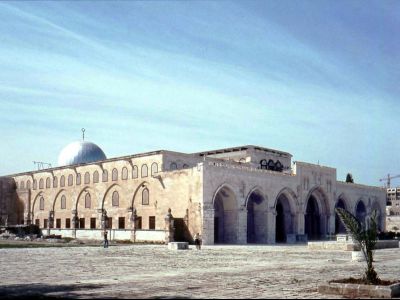
Masjid al-Aqsa, meaning "the Farthest Mosque", is simpler and less grandiose compared to the Dome of the Rock. Situated on the Temple Mount, it is believed to occupy the site of the first mosque built in Jerusalem in 638 AD to commemorate Mohammed's "night journey".
Throughout its history, Al-Aqsa has faced destruction and damage from earthquakes and various causes, prompting continuous rebuilding. During the Crusades, it served as the headquarters for the Crusaders, who converted the structure into a church, topping its dome with a cross, while the underground vaults housed Crusader horses, earning them the name Solomon's Stables. The military order of the Knights Templar, founded in 1118, took its name from the complex, which was referred to simply as the Templum by the Crusaders.
Under Saladin' rule, however, the Templar constructions were removed, and the mosque was restored to its original purpose. The mihrab was decorated, and a magnificent cedarwood minbar (pulpit) from Damascus, adorned with ivory and mother-of-pearl, was installed. Despite being destroyed in a fire in 1969, the mosque's beautiful mosaics, rose window, and original columns have endured.
Although much of the mosque's interior dates from the 20th century, it is not less beautiful, including seven aisles, 121 stained-glass windows, and marble columns. Non-Muslims are not permitted to enter without a guide, but they can still appreciate the exterior architecture as part of a visit to the Dome of the Rock.
Throughout its history, Al-Aqsa has faced destruction and damage from earthquakes and various causes, prompting continuous rebuilding. During the Crusades, it served as the headquarters for the Crusaders, who converted the structure into a church, topping its dome with a cross, while the underground vaults housed Crusader horses, earning them the name Solomon's Stables. The military order of the Knights Templar, founded in 1118, took its name from the complex, which was referred to simply as the Templum by the Crusaders.
Under Saladin' rule, however, the Templar constructions were removed, and the mosque was restored to its original purpose. The mihrab was decorated, and a magnificent cedarwood minbar (pulpit) from Damascus, adorned with ivory and mother-of-pearl, was installed. Despite being destroyed in a fire in 1969, the mosque's beautiful mosaics, rose window, and original columns have endured.
Although much of the mosque's interior dates from the 20th century, it is not less beautiful, including seven aisles, 121 stained-glass windows, and marble columns. Non-Muslims are not permitted to enter without a guide, but they can still appreciate the exterior architecture as part of a visit to the Dome of the Rock.
2) Armenian Museum
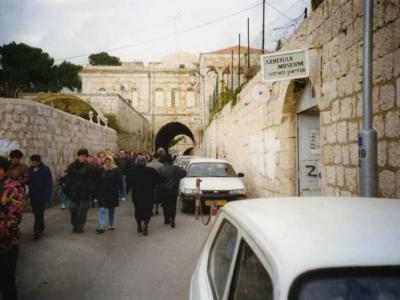
Set in a rather magnificent open courtyard just off the main road to the Armenian Quarter, this museum gives a rare glimpse into the art, culture and history of Jerusalem's Armenian community. Its rich collection is arranged in nearly 40 rooms and features Roman and Byzantine mosaics alleged to have been made by Armenian artisans, but perhaps the most substantial and exquisite exhibits are the jewel-encrusted, brightly colored, illuminated manuscripts, some dating back to the 10th century.
Other highlights include the first printing machine of the Middle East and some of the first photos of Jerusalem, depicting 19th-century everyday life in the Holy City, intricate 17th-century filigree artifacts, and ritual objects such as jeweled crosses, miters, and embroidery.
Another section is devoted to the Armenian Genocide, with numerous testimonies and facts about the crimes committed in the name of ethnic purity and religious supremacy.
Other highlights include the first printing machine of the Middle East and some of the first photos of Jerusalem, depicting 19th-century everyday life in the Holy City, intricate 17th-century filigree artifacts, and ritual objects such as jeweled crosses, miters, and embroidery.
Another section is devoted to the Armenian Genocide, with numerous testimonies and facts about the crimes committed in the name of ethnic purity and religious supremacy.
3) Ammunition Hill
Ammunition Hill played a pivotal role as the Jordanians' primary defensive stronghold during the Six-Day War of 1967. The successful assault on this position by Israeli forces marked a significant turning point, granting them control over East Jerusalem, albeit at a cost of 37 lives lost. Israeli paratroopers were initially caught off guard by the underestimated strength of Jordanian troops, facing twice the anticipated resistance. However, reinforcements were swiftly mobilized, leading to a decisive victory and initiating the drive to reunify Jerusalem.
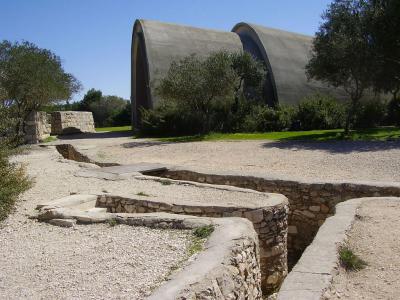
Today, the trenches from the intense battle are faithfully preserved, offering a glimpse into the wartime struggles. A museum housed within the former Jordanian command post bunker provides further insights, displaying military insignia, as well as names and photographs of fallen soldiers. While primarily appealing to military enthusiasts and Israeli patriots, the museum's auditorium presents gripping films recounting the victory.
Visitors can also explore the trenches themselves, set amidst a tranquil grassy park with panoramic views overlooking East Jerusalem. This serene setting offers a respite from the bustle of the city below, making it a worthwhile stop for reflection and historical appreciation.
Today, the trenches from the intense battle are faithfully preserved, offering a glimpse into the wartime struggles. A museum housed within the former Jordanian command post bunker provides further insights, displaying military insignia, as well as names and photographs of fallen soldiers. While primarily appealing to military enthusiasts and Israeli patriots, the museum's auditorium presents gripping films recounting the victory.
Visitors can also explore the trenches themselves, set amidst a tranquil grassy park with panoramic views overlooking East Jerusalem. This serene setting offers a respite from the bustle of the city below, making it a worthwhile stop for reflection and historical appreciation.
4) Armored Corps Memorial Site's bird-tracking facility
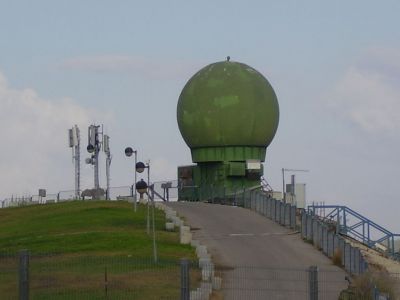
Within the Armored Corps Memorial at Latrun lies a birdwatching facility equipped with a radar system designed to monitor migratory birds. Positioned along a major migratory bird flight path connecting three continents, Israel witnesses the passage of approximately 500 million birds twice annually as they journey between their winter and summer habitats. This substantial avian traffic poses potential risks to aircraft, prompting the establishment of monitoring measures.
Spanning 8 acres of land donated by the Armored Corps Memorial, the facility operates a radar system sourced from Russia and staffed by Russian scientists. Collaborating closely with various Israeli organizations, they collect and disseminate crucial data to enhance air safety. Their efforts have contributed to an impressive 80% reduction in air accidents caused by bird strikes, thereby safeguarding lives and saving the Israeli government substantial financial resources.
Beyond air safety concerns, the center employs satellite transmitters to monitor a diverse array of bird species and actively participates in environmental conservation initiatives aimed at preserving bird habitats. Furthermore, the center plays a pivotal role in establishing monitoring centers worldwide to track and safeguard bird populations and overall health. As part of its ongoing efforts, the center is spearheading the development of an expanding eco-tourism birding network spanning Israel and neighboring countries.
Spanning 8 acres of land donated by the Armored Corps Memorial, the facility operates a radar system sourced from Russia and staffed by Russian scientists. Collaborating closely with various Israeli organizations, they collect and disseminate crucial data to enhance air safety. Their efforts have contributed to an impressive 80% reduction in air accidents caused by bird strikes, thereby safeguarding lives and saving the Israeli government substantial financial resources.
Beyond air safety concerns, the center employs satellite transmitters to monitor a diverse array of bird species and actively participates in environmental conservation initiatives aimed at preserving bird habitats. Furthermore, the center plays a pivotal role in establishing monitoring centers worldwide to track and safeguard bird populations and overall health. As part of its ongoing efforts, the center is spearheading the development of an expanding eco-tourism birding network spanning Israel and neighboring countries.
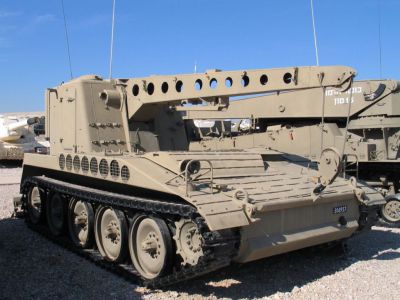
5) Armored Corps Memorial Site and Museum (Latrun)
Yad La-Shiryon, or the Armored Corps Memorial Site and Museum, stands as Israel's official tribute to fallen soldiers in the armored corps. Situated in Latrun, it is renowned as one of the most comprehensive tank museums globally, hosting a diverse collection of tanks and armored vehicles from various nations, including Israel, the former Soviet Union, the United States, Britain, Germany, and France.
Visitors to the museum can explore a wide array of exhibits, ranging from a model of Leonardo da Vinci's tank to full-scale replicas of armored knights, Assyrian and Egyptian chariots, and a battle heritage room. The site also features a Wall of Names honoring fallen soldiers and a recreational park for families to enjoy.
The museum's location at the historic Latrun Police Station, dating back to the British Mandate era, holds profound significance for the Jewish people. During the 1948 War of Independence, Latrun witnessed intense battles as Jewish forces sought to break through the siege on the road to Jerusalem. The area was eventually captured by the Israel Defense Forces (IDF) during the Six-Day War in 1967.
Visitors to the museum can explore a wide array of exhibits, ranging from a model of Leonardo da Vinci's tank to full-scale replicas of armored knights, Assyrian and Egyptian chariots, and a battle heritage room. The site also features a Wall of Names honoring fallen soldiers and a recreational park for families to enjoy.
The museum's location at the historic Latrun Police Station, dating back to the British Mandate era, holds profound significance for the Jewish people. During the 1948 War of Independence, Latrun witnessed intense battles as Jewish forces sought to break through the siege on the road to Jerusalem. The area was eventually captured by the Israel Defense Forces (IDF) during the Six-Day War in 1967.
