

Masjid al-Aqsa (Al-Aqsa Mosque), Jerusalem
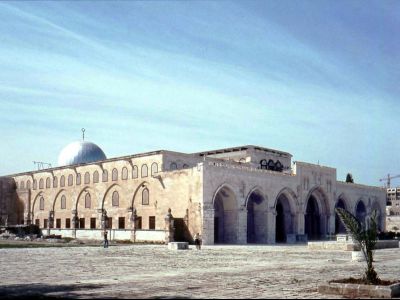
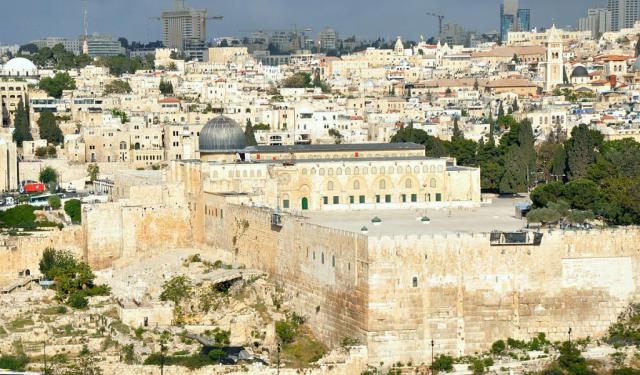
Masjid al-Aqsa-literally “the Farthest Mosque”-doesn’t try to outshine its flashier neighbor, the Dome of the Rock. It’s more restrained, more grounded, and very much aware of its own long memory. Standing on the Temple Mount, it marks the site traditionally linked to the first mosque built in Jerusalem in 638, connected to the Prophet Muhammad’s Night Journey, which placed this spot firmly into Islamic sacred geography.
History, however, has rarely left Al-Aqsa alone. Earthquakes, fires, and political upheavals have damaged it repeatedly, turning rebuilding into a recurring theme rather than a one-off event.
During the Crusader period, subtlety went out the window. The mosque was converted into a church, a cross was planted on its dome, and the underground vaults were repurposed as stables for Crusader horses-hence the enduring nickname, “Solomon’s Stables.” The Knights Templar order, founded in 1118, even borrowed their name from this complex, which the Crusaders confidently labeled the Templum, as if the past could be neatly reassigned.
That phase didn’t last, though. When Saladin retook Jerusalem, the Christian alterations were removed, and Al-Aqsa was restored as a mosque. The interior was carefully renewed, including the installation of an elaborate cedarwood minbar (pulpit) brought from Damascus, richly inlaid with ivory and mother-of-pearl. Although that pulpit was lost in a devastating fire in 1969, much of the mosque’s character survived-its mosaics, rose window, and original columns still quietly holding their ground.
What you see today is largely the result of 20th-century restoration, but don’t mistake “modern” for “plain.” Inside are seven aisles, marble columns, and 121 stained-glass windows that soften the light and slow the pace. Entry for non-Muslims is restricted, yet even from the outside, Al-Aqsa speaks volumes. It’s a building that doesn’t shout its importance-it lets history do the talking.
History, however, has rarely left Al-Aqsa alone. Earthquakes, fires, and political upheavals have damaged it repeatedly, turning rebuilding into a recurring theme rather than a one-off event.
During the Crusader period, subtlety went out the window. The mosque was converted into a church, a cross was planted on its dome, and the underground vaults were repurposed as stables for Crusader horses-hence the enduring nickname, “Solomon’s Stables.” The Knights Templar order, founded in 1118, even borrowed their name from this complex, which the Crusaders confidently labeled the Templum, as if the past could be neatly reassigned.
That phase didn’t last, though. When Saladin retook Jerusalem, the Christian alterations were removed, and Al-Aqsa was restored as a mosque. The interior was carefully renewed, including the installation of an elaborate cedarwood minbar (pulpit) brought from Damascus, richly inlaid with ivory and mother-of-pearl. Although that pulpit was lost in a devastating fire in 1969, much of the mosque’s character survived-its mosaics, rose window, and original columns still quietly holding their ground.
What you see today is largely the result of 20th-century restoration, but don’t mistake “modern” for “plain.” Inside are seven aisles, marble columns, and 121 stained-glass windows that soften the light and slow the pace. Entry for non-Muslims is restricted, yet even from the outside, Al-Aqsa speaks volumes. It’s a building that doesn’t shout its importance-it lets history do the talking.
Want to visit this sight? Check out these Self-Guided Walking Tours in Jerusalem. Alternatively, you can download the mobile app "GPSmyCity: Walks in 1K+ Cities" from Apple App Store or Google Play Store. The app turns your mobile device to a personal tour guide and it works offline, so no data plan is needed when traveling abroad.
Download The GPSmyCity App



Masjid al-Aqsa (Al-Aqsa Mosque) on Map
Sight Name: Masjid al-Aqsa (Al-Aqsa Mosque)
Sight Location: Jerusalem, Israel (See walking tours in Jerusalem)
Sight Type: Religious
Guide(s) Containing This Sight:
Sight Location: Jerusalem, Israel (See walking tours in Jerusalem)
Sight Type: Religious
Guide(s) Containing This Sight:
Walking Tours in Jerusalem, Israel

Create Your Own Walk in Jerusalem
Creating your own self-guided walk in Jerusalem is easy and fun. Choose the city attractions that you want to see and a walk route map will be created just for you. You can even set your hotel as the start point of the walk.
Mount Scopus Walking Tour
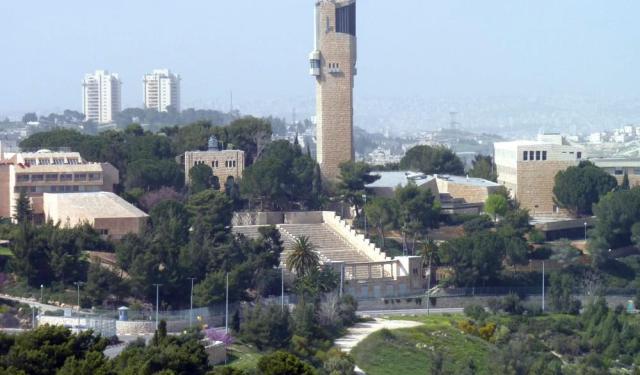
Dotted with many sightseeing places, Mount Scopus – translating as the “Observation Mount” from Greek – is a great place to get views over the whole Old City of Jerusalem on a nice day. The mount has been of major strategic importance since Roman times, with forces setting up camp here prior to laying the siege that culminated in the final Roman victory over Jerusalem around 70 AD.... view more
Tour Duration: 1 Hour(s)
Travel Distance: 2.3 Km or 1.4 Miles
Tour Duration: 1 Hour(s)
Travel Distance: 2.3 Km or 1.4 Miles
Jewish Quarter Walking Tour
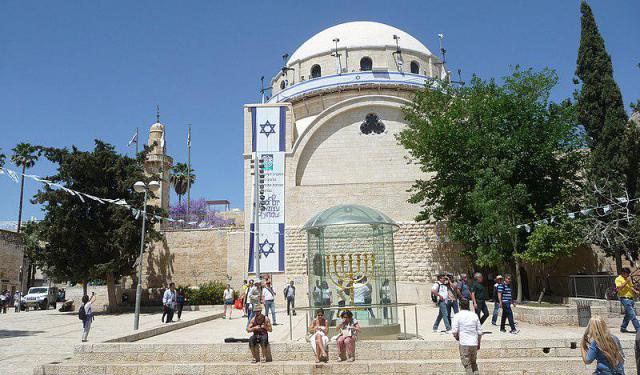
Entirely rebuilt in the 1980s after having been largely destroyed during the 1948 War, the Jewish Quarter is quite distinct from the rest of the Old City. Good signposting, spacious passageways, art galleries and a somewhat less buzzing atmosphere make the area a relaxing place to spend some time.
With its rebuilt residential buildings, some almost consider this area the "New... view more
Tour Duration: 1 Hour(s)
Travel Distance: 1.3 Km or 0.8 Miles
With its rebuilt residential buildings, some almost consider this area the "New... view more
Tour Duration: 1 Hour(s)
Travel Distance: 1.3 Km or 0.8 Miles
Armenian Quarter Walking Tour
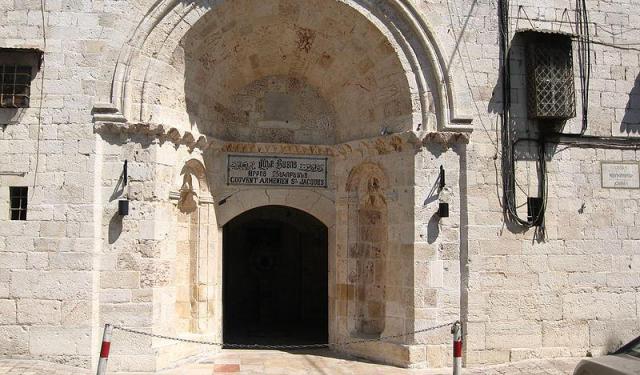
Smaller and quieter than the Old City's other three quarters, the Armenian quarter contains a series of winding cobblestoned streets and alleyways teeming with people, shops, coffee stands, ceramic workshops and hookah bars. A city in miniature with distinct language, alphabet and culture, it has been in place since the 4th century, when Armenia adopted Christianity as a national religion.
... view more
Tour Duration: 1 Hour(s)
Travel Distance: 1.2 Km or 0.7 Miles
... view more
Tour Duration: 1 Hour(s)
Travel Distance: 1.2 Km or 0.7 Miles
Jerusalem Old City Walking Tour
Jerusalem has been around long enough to see empires rise, fall, and try again. This is one of the world’s oldest continuously inhabited cities, shaped by faith, power, and a long rhythm of destruction followed by rebuilding. Archaeology traces settlement on the site of today's Jerusalem back to the Bronze Age, when it was just a modest Canaanite stronghold.
The city’s name tells a... view more
Tour Duration: 3 Hour(s)
Travel Distance: 5.0 Km or 3.1 Miles
The city’s name tells a... view more
Tour Duration: 3 Hour(s)
Travel Distance: 5.0 Km or 3.1 Miles
Bethlehem Walking Tour
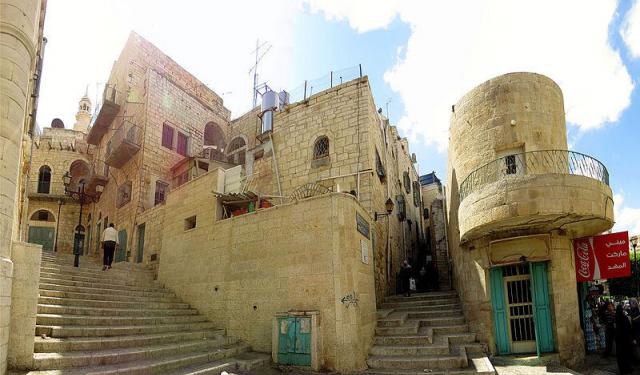
Just a few kilometers south of Jerusalem, Bethlehem carries a name that echoes across continents. For more than two millennia, it has been known as the birthplace of Jesus Christ - complete with a guiding star, candlelit carols, and a December soundtrack that practically plays on its own. Yet when you arrive, you quickly realize this is not a frozen nativity scene. It’s a living, breathing... view more
Tour Duration: 1 Hour(s)
Travel Distance: 1.5 Km or 0.9 Miles
Tour Duration: 1 Hour(s)
Travel Distance: 1.5 Km or 0.9 Miles
Christian Quarter Walking Tour
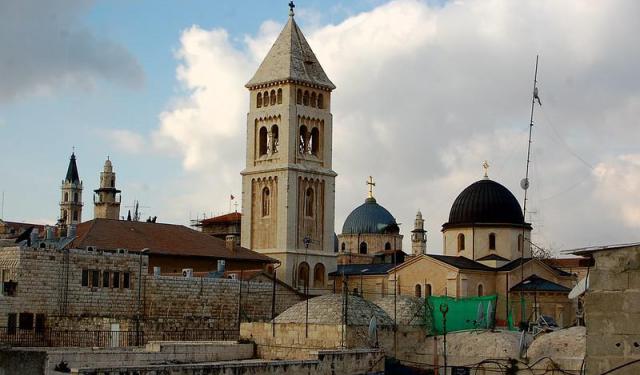
One of the epicenters of worldwide Christianity, the Christian Quarter is the 2nd-largest of Jerusalem’s four ancient quarters. A fascinating place to stroll through, it covers the Old City’s northwestern part, just beyond Jaffa Gate – the traditional pilgrim’s entrance to Jerusalem and a prime destination for most visitors.
With its tangle of broad streets and winding, narrow alleys,... view more
Tour Duration: 1 Hour(s)
Travel Distance: 1.1 Km or 0.7 Miles
With its tangle of broad streets and winding, narrow alleys,... view more
Tour Duration: 1 Hour(s)
Travel Distance: 1.1 Km or 0.7 Miles
Useful Travel Guides for Planning Your Trip
16 Uniquely Israel Things to Buy in Jerusalem
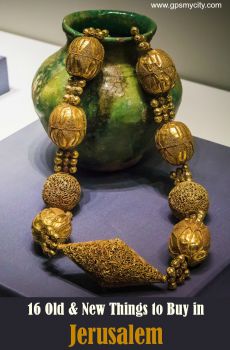
Modern day Jerusalem is a mosaic of neighborhoods, reflecting different historical periods, cultures, and religions. The influx of repatriates in recent years has made the cultural and artisanal scene of the city even more colourful and diverse. To find your way through Jerusalem's intricate...