Custom Walk in Cordoba, Spain by dimus_63bd2 created on 2025-05-19
Guide Location: Spain » Cordoba
Guide Type: Custom Walk
# of Sights: 7
Tour Duration: 2 Hour(s)
Travel Distance: 2.5 Km or 1.6 Miles
Share Key: T2LJL
Guide Type: Custom Walk
# of Sights: 7
Tour Duration: 2 Hour(s)
Travel Distance: 2.5 Km or 1.6 Miles
Share Key: T2LJL
How It Works
Please retrieve this walk in the GPSmyCity app. Once done, the app will guide you from one tour stop to the next as if you had a personal tour guide. If you created the walk on this website or come to the page via a link, please follow the instructions below to retrieve the walk in the app.
Retrieve This Walk in App
Step 1. Download the app "GPSmyCity: Walks in 1K+ Cities" on Apple App Store or Google Play Store.



Step 2. In the GPSmyCity app, download(or launch) the guide "Cordoba Map and Walking Tours".
Step 3. Tap the menu button located at upper right corner of the "Walks" screen and select "Retrieve custom walk". Enter the share key: T2LJL
1) Mezquita Catedral de Cordoba (Mosque-Cathedral of Cordoba) (must see)
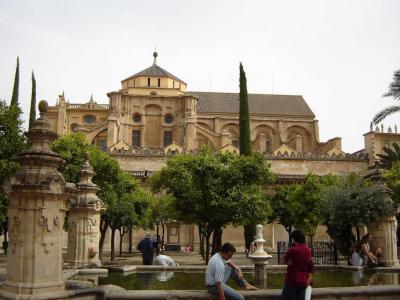
Back in 755, Abd al-Rahman I had one priority: staying alive. The last prince of the Umayyad dynasty, he was on the run from the Abbasids, who had toppled his family in Syria with a finality that left little room for second chances. He crossed into Iberia with more nerve than backup-and found just enough political tension among the local Muslim rulers to make a comeback. By 785, he wasn’t just surviving. He was laying the foundations of the Great Mosque of Córdoba.
What started as one man’s foothold became, over the next two centuries, the largest mosque in the Islamic world. At its peak in the 10th century, the complex covered a footprint rivaling Saint Peter’s in Rome-though the style couldn’t have been more different. No domes-on-domes here. Instead, the mosque stretched out low and wide, echoing the vast courtyards of desert prayer grounds. A third of the space is open air-now the Courtyard of the Orange Trees, once used for ritual ablutions. Nearby, the Gate of Forgiveness still leads toward the massive bell tower, which began life as a 10th-century minaret.
Inside, it’s a grid of visual rhythm-856 columns of jasper, onyx, marble, and granite supporting a ceiling painted in gold and rich geometric designs. Furthermore, the famous red-and-white arches are not just decorative-they hold the roof up while holding your gaze. The prayer hall remains one of the most atmospheric interiors in Europe, with light shifting across shadowy stone like a silent procession.
Then came the Reconquest in 1236, and with it, King Ferdinand III. Córdoba changed hands, and so did the mosque. Chapels were added. The first was the Villaviciosa Chapel. Later on, Renaissance builders dropped a full cathedral right into the middle of the mosque’s open hall-arches and all. They didn’t hold back, adding a cross-shaped layout, a grand central chapel, and side wings. The result? A style mix that sounds like it should clash, but doesn’t: bits of Gothic height, Baroque flair, elegant Renaissance shapes, and the delicate touch of the original Islamic design still visible beneath it all.
There’s even an elliptical dome adorned with prophets and evangelists, just in case the architectural layering wasn’t obvious enough. Today, the Mosque-Cathedral of Córdoba is a UNESCO World Heritage Site and a headline act in Spain’s architectural repertoire-part sanctuary, part time capsule, and entirely unforgettable.
What started as one man’s foothold became, over the next two centuries, the largest mosque in the Islamic world. At its peak in the 10th century, the complex covered a footprint rivaling Saint Peter’s in Rome-though the style couldn’t have been more different. No domes-on-domes here. Instead, the mosque stretched out low and wide, echoing the vast courtyards of desert prayer grounds. A third of the space is open air-now the Courtyard of the Orange Trees, once used for ritual ablutions. Nearby, the Gate of Forgiveness still leads toward the massive bell tower, which began life as a 10th-century minaret.
Inside, it’s a grid of visual rhythm-856 columns of jasper, onyx, marble, and granite supporting a ceiling painted in gold and rich geometric designs. Furthermore, the famous red-and-white arches are not just decorative-they hold the roof up while holding your gaze. The prayer hall remains one of the most atmospheric interiors in Europe, with light shifting across shadowy stone like a silent procession.
Then came the Reconquest in 1236, and with it, King Ferdinand III. Córdoba changed hands, and so did the mosque. Chapels were added. The first was the Villaviciosa Chapel. Later on, Renaissance builders dropped a full cathedral right into the middle of the mosque’s open hall-arches and all. They didn’t hold back, adding a cross-shaped layout, a grand central chapel, and side wings. The result? A style mix that sounds like it should clash, but doesn’t: bits of Gothic height, Baroque flair, elegant Renaissance shapes, and the delicate touch of the original Islamic design still visible beneath it all.
There’s even an elliptical dome adorned with prophets and evangelists, just in case the architectural layering wasn’t obvious enough. Today, the Mosque-Cathedral of Córdoba is a UNESCO World Heritage Site and a headline act in Spain’s architectural repertoire-part sanctuary, part time capsule, and entirely unforgettable.
2) Alcazar de los Reyes Cristianos (Castle of the Christian Monarchs) (must see)
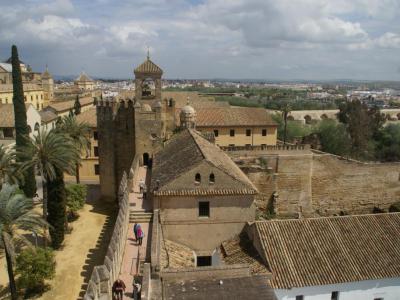
Long before it became the Castle of the Christian Monarchs, this patch of Córdoba was guarded by a Visigothic fortress. In the late 8th century, Abd ar-Rahman I decided the city deserved something grander-so up went a fortified palace with baths, gardens, and a library that could humble most of Europe. The Almohads, a Berber dynasty with a taste for expansion, kept the upgrades coming in the 12th and 13th centuries.
Everything changed in 1236, when Christian forces claimed Córdoba. Alfonso XI rebuilt the castle in the Mudejar style, mixing Islamic elegance with Gothic muscle. By the time gunpowder made its noisy debut in European warfare, the fortress had its walls beefed up for cannon fire.
It wasn’t all flowers and fountains. In the late 15th century, Isabella I of Castile and Ferdinand II of Aragon moved in and turned the place into headquarters for the Spanish Inquisition. Christopher Columbus came here in 1486 to pitch his “let’s sail west” idea, while the Inquisition turned the Arab Baths into interrogation rooms. Napoleon’s troops bunked here in 1810; by 1821, it was a prison.
Four towers guard its corners like mismatched sentinels: the octagonal Tower of Homage with its graceful ogival ceiling; the Tower of Lions, watched over by stone gargoyles; the circular Tower of the Inquisition, as ominous as it sounds; and the Tower of the Dove, a 19th-century stand-in for the one that didn’t survive.
Inside, the Hall of the Mosaics lines its walls with Roman artistry, while the Courtyard of the Moriscos pairs arched verandas with a central fountain and twin ponds. The Royal Baths of Doña Leonor-built in 1328 for Alfonso XI’s mistress-add another layer to the palace’s tangled past, and the Courtyard of the Women recalls its years as a women’s prison.
Since 1931, the Alcázar has held Cultural Interest Heritage status, and in 1994 it joined Córdoba’s UNESCO-listed Historic Centre. Between its fortified towers, manicured gardens, and centuries of political intrigue, it’s less a single monument than an entire chapter of Spanish history bound in stone.
Everything changed in 1236, when Christian forces claimed Córdoba. Alfonso XI rebuilt the castle in the Mudejar style, mixing Islamic elegance with Gothic muscle. By the time gunpowder made its noisy debut in European warfare, the fortress had its walls beefed up for cannon fire.
It wasn’t all flowers and fountains. In the late 15th century, Isabella I of Castile and Ferdinand II of Aragon moved in and turned the place into headquarters for the Spanish Inquisition. Christopher Columbus came here in 1486 to pitch his “let’s sail west” idea, while the Inquisition turned the Arab Baths into interrogation rooms. Napoleon’s troops bunked here in 1810; by 1821, it was a prison.
Four towers guard its corners like mismatched sentinels: the octagonal Tower of Homage with its graceful ogival ceiling; the Tower of Lions, watched over by stone gargoyles; the circular Tower of the Inquisition, as ominous as it sounds; and the Tower of the Dove, a 19th-century stand-in for the one that didn’t survive.
Inside, the Hall of the Mosaics lines its walls with Roman artistry, while the Courtyard of the Moriscos pairs arched verandas with a central fountain and twin ponds. The Royal Baths of Doña Leonor-built in 1328 for Alfonso XI’s mistress-add another layer to the palace’s tangled past, and the Courtyard of the Women recalls its years as a women’s prison.
Since 1931, the Alcázar has held Cultural Interest Heritage status, and in 1994 it joined Córdoba’s UNESCO-listed Historic Centre. Between its fortified towers, manicured gardens, and centuries of political intrigue, it’s less a single monument than an entire chapter of Spanish history bound in stone.
3) Calle de los Judios (Jewish Street in Jewish Quarter) (must see)
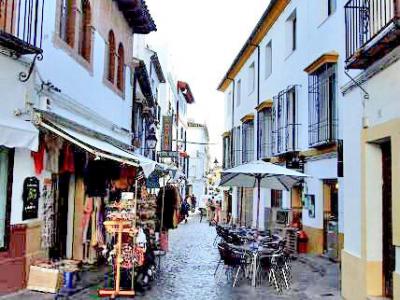
The Jewish Quarter of Córdoba isn’t so much a neighbourhood as it is a time capsule with street signs. Dating back to the 10th century, it sprawls through a knot of lanes named Deanes, Manríquez, Tomás Conde, Judíos, Almanzor, and Romero. This UNESCO-listed patch of the Old City packs in some heavy hitters: the Mosque-Cathedral, the city’s sole surviving synagogue, the Zoco Municipal Market, and, in a twist only Spain could pull off, the Bullfighting Museum.
Along Jewish Street, you’ll find a bronze statue of Maimonides-the Jewish philosopher and physician whose reputation travelled farther than most armies of his day. Back when Córdoba was under Umayyad rule, roughly from the 10th to the 15th century, the city was considered the cultural capital of the Western world, a place where ideas and inventions crossed paths as easily as merchants in its markets.
The fortified Gate of Almodóvar serves as one of the quarter’s main entrances, its two towers bridged by a stone arch topped with a crown of battlements. Nearby, Maimonides Square offers a quiet pause before you plunge back into streets that are equal parts map and maze-many of them ending abruptly, as if the medieval planners just got distracted. The famous Alley of the Flowers is here too, framing postcard shots with practiced ease. Keep going, and you’ll reach the quarter’s spiritual heart: Córdoba’s synagogue, a survivor that has worn many hats over the centuries-temple, hospital, hermitage, nursery school.
Right next door, the House of Sepharad-also called the House of Memory-preserves the stories, music, and traditions of Jewish Spain in a 14th-century building. The Andalusian House showcases the city’s role in early papermaking, back when the Caliphate was churning out books faster than most of Europe could read them. And then there’s Handkerchief Alley, a sliver of a street so narrow you could block it with an outstretched scarf. At its end, as if to reward your efforts, is a tiny courtyard with a fountain murmuring away like nothing’s changed in centuries.
Along Jewish Street, you’ll find a bronze statue of Maimonides-the Jewish philosopher and physician whose reputation travelled farther than most armies of his day. Back when Córdoba was under Umayyad rule, roughly from the 10th to the 15th century, the city was considered the cultural capital of the Western world, a place where ideas and inventions crossed paths as easily as merchants in its markets.
The fortified Gate of Almodóvar serves as one of the quarter’s main entrances, its two towers bridged by a stone arch topped with a crown of battlements. Nearby, Maimonides Square offers a quiet pause before you plunge back into streets that are equal parts map and maze-many of them ending abruptly, as if the medieval planners just got distracted. The famous Alley of the Flowers is here too, framing postcard shots with practiced ease. Keep going, and you’ll reach the quarter’s spiritual heart: Córdoba’s synagogue, a survivor that has worn many hats over the centuries-temple, hospital, hermitage, nursery school.
Right next door, the House of Sepharad-also called the House of Memory-preserves the stories, music, and traditions of Jewish Spain in a 14th-century building. The Andalusian House showcases the city’s role in early papermaking, back when the Caliphate was churning out books faster than most of Europe could read them. And then there’s Handkerchief Alley, a sliver of a street so narrow you could block it with an outstretched scarf. At its end, as if to reward your efforts, is a tiny courtyard with a fountain murmuring away like nothing’s changed in centuries.
4) Puerta de Almodovar (Almodovar Gate)
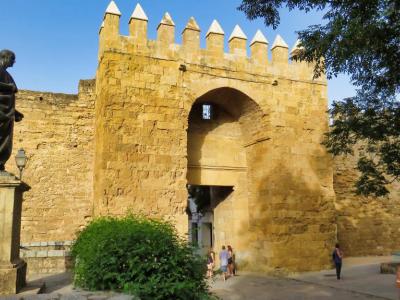
The Almodóvar Gate isn’t just a hole in Córdoba’s old town walls-it’s a survivor. Dating from the 14th century, it’s one of only three medieval gates still standing, named for the road that once led to the nearby town of Almodóvar del Río. Built from sandstone and brick, the gate’s big open arch is flanked by two sturdy towers capped with battlements, like it’s still half-expecting trouble from the past. Step through and you’re straight into the Jewish Quarter, where the streets seem to have been designed by someone who liked puzzles.
Just outside, Cairuán Street runs alongside the walls like a quiet backstage corridor. It’s a stone walkway shaded by greenery, with a fountain feeding a neat row of rectangular ponds-an easy stroll for anyone wanting a break from the city’s buzz.
Keeping watch by the gate is a bronze statue of Seneca the Younger, born here in 4 B.C., who went on to become a Roman philosopher, playwright, and, at times, reluctant political insider. Follow Cairuán Street a little further and you’ll meet another hometown heavyweight: Averroes, the medieval philosopher who brought Aristotle back into fashion in the Islamic world. Two thinkers, two statues, and one gate that’s been standing long enough to hear it all.
Just outside, Cairuán Street runs alongside the walls like a quiet backstage corridor. It’s a stone walkway shaded by greenery, with a fountain feeding a neat row of rectangular ponds-an easy stroll for anyone wanting a break from the city’s buzz.
Keeping watch by the gate is a bronze statue of Seneca the Younger, born here in 4 B.C., who went on to become a Roman philosopher, playwright, and, at times, reluctant political insider. Follow Cairuán Street a little further and you’ll meet another hometown heavyweight: Averroes, the medieval philosopher who brought Aristotle back into fashion in the Islamic world. Two thinkers, two statues, and one gate that’s been standing long enough to hear it all.
5) Murallas Romana de Cordoba (Roman Walls of Cordoba)
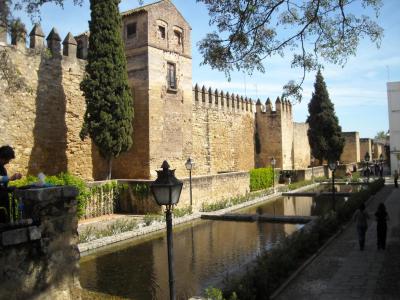
The Roman Walls (Murallas Romana de Córdoba) surrounded Cordoba. They were almost 9,000 feet in length and made of cut stone. There was an outer wall nine feet high and a four-foot inner wall. A 20-foot gap between the outer and inner walls was filled with rubble. There were semicircular defensive towers along the external wall.
The southern wall was demolished during the reign of Augustus to extend the city limits to the river Guadalquivir. The ruins of the Roman Walls remain in the Alcazar, by the Roman Bridge and the Roman Temple. The arches next to the Sevilla Gate (Puerta de Sevilla) are part of the Roman aqueduct.
In 711 AD, seven hundred Moorish soldiers led by a Berber commander Tariq Ibn Ziyad scaled the walls at night and drove out the startled Visigoths. Since the Islamic settlements were generally without defensive walls, the Roman structure gradually crumbled. In 1236 King Fernando of Castile conquered the city after a long siege.
In the 14th century, the walls were extended parallel to the river from the Albolafia water mill north and back again, reconnecting with the old walls at the Seville Gate (Puerta de Seville). Napoleon demolished parts of the wall. Today the remaining gates are the Almodovar Gate, Seville Gate, Bridge Gate, and the 1408 Malmuerta Tower.
The Roman Walls now form part of the historic center of Córdoba, a UNESCO World Heritage site, since 1984.
The southern wall was demolished during the reign of Augustus to extend the city limits to the river Guadalquivir. The ruins of the Roman Walls remain in the Alcazar, by the Roman Bridge and the Roman Temple. The arches next to the Sevilla Gate (Puerta de Sevilla) are part of the Roman aqueduct.
In 711 AD, seven hundred Moorish soldiers led by a Berber commander Tariq Ibn Ziyad scaled the walls at night and drove out the startled Visigoths. Since the Islamic settlements were generally without defensive walls, the Roman structure gradually crumbled. In 1236 King Fernando of Castile conquered the city after a long siege.
In the 14th century, the walls were extended parallel to the river from the Albolafia water mill north and back again, reconnecting with the old walls at the Seville Gate (Puerta de Seville). Napoleon demolished parts of the wall. Today the remaining gates are the Almodovar Gate, Seville Gate, Bridge Gate, and the 1408 Malmuerta Tower.
The Roman Walls now form part of the historic center of Córdoba, a UNESCO World Heritage site, since 1984.
6) Mercado Victoria (Victoria Market)
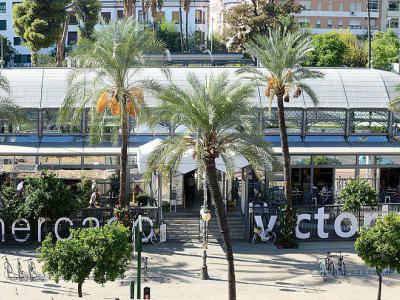
Victoria Market is a lively and popular gourmet market located in the heart of Cordoba. This modern food hall features dozens of food and drink vendors, offering a wide variety of traditional Andalusian cuisine, as well as international dishes from around the world. The market is housed in a historic building that has been beautifully restored, with high ceilings, wrought-iron railings, and a spacious outdoor terrace.
Opened in 2013, the Mercado Victoria has quickly become a favorite destination for foodies and locals alike. The market is known for its lively atmosphere, delicious food, and excellent selection of local wines and craft beers. Visitors can sample traditional Andalusian dishes like salmorejo, rabo de toro, and flamenquín, as well as international cuisine like sushi, tacos, and burgers.
In addition to food and drink, the Mercado Victoria also hosts a variety of events and activities, including live music performances, cooking demonstrations, and workshops. The market is open daily from mid-morning until late at night, making it a popular spot for a leisurely lunch, a quick snack, or a night out with friends.
Whether you're looking to sample the flavors of Andalusia, discover new international cuisine, or simply enjoy the lively atmosphere of a modern food hall, the Mercado Victoria is a must-visit foodie destination in Cordoba.
Opened in 2013, the Mercado Victoria has quickly become a favorite destination for foodies and locals alike. The market is known for its lively atmosphere, delicious food, and excellent selection of local wines and craft beers. Visitors can sample traditional Andalusian dishes like salmorejo, rabo de toro, and flamenquín, as well as international cuisine like sushi, tacos, and burgers.
In addition to food and drink, the Mercado Victoria also hosts a variety of events and activities, including live music performances, cooking demonstrations, and workshops. The market is open daily from mid-morning until late at night, making it a popular spot for a leisurely lunch, a quick snack, or a night out with friends.
Whether you're looking to sample the flavors of Andalusia, discover new international cuisine, or simply enjoy the lively atmosphere of a modern food hall, the Mercado Victoria is a must-visit foodie destination in Cordoba.
7) Calleja de las Flores (Alley of the Flowers)
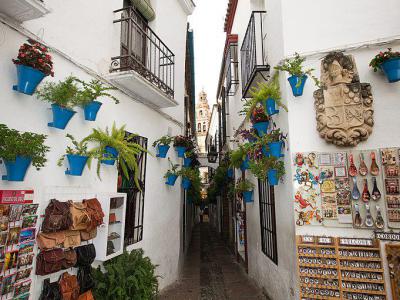
Just off the main artery of Córdoba’s historic centre-close enough to the Mosque-Cathedral to hear its bells stretch-there’s a street with a long name and a short introduction. It’s called Ricardo Velázquez Bosco, and if you spot a fading Arabesque carving near the curb, congratulations: you’ve found the entrance to the Alley of the Flowers. This narrow, cobbled alleyway is famous for its picturesque beauty, with whitewashed walls adorned with vibrant flower pots overflowing with seasonal blooms.
Walls on both sides are whitewashed so bright they could double as light reflectors, and every window grid competes in a silent showdown of vines, reds, and ivy-green. The path snakes to a tiny courtyard, where the Mosque-Cathedral’s bell tower politely photobombs every frame. There’s a fountain tucked in a corner, modest in size but serious in pedigree-its column once belonged to a Roman structure, now still trickling away as it has for decades.
Architect Victor Ucelay gave the whole scene a tune-up in the 20th century. He swapped in local river stones for paving, threw in some granite slabs for good measure, and arched a few doorways to complete the look. The red geraniums and green pots weren’t part of the instructions, but the neighborhood made sure they showed up anyway.
Come early May, when Córdoba’s flowers are busy taking over the city, this narrow alley hums with restraint. Birds handle the melody, the Cathedral chimes in occasionally, and the fountain-always on time-keeps rhythm in the square.
Walls on both sides are whitewashed so bright they could double as light reflectors, and every window grid competes in a silent showdown of vines, reds, and ivy-green. The path snakes to a tiny courtyard, where the Mosque-Cathedral’s bell tower politely photobombs every frame. There’s a fountain tucked in a corner, modest in size but serious in pedigree-its column once belonged to a Roman structure, now still trickling away as it has for decades.
Architect Victor Ucelay gave the whole scene a tune-up in the 20th century. He swapped in local river stones for paving, threw in some granite slabs for good measure, and arched a few doorways to complete the look. The red geraniums and green pots weren’t part of the instructions, but the neighborhood made sure they showed up anyway.
Come early May, when Córdoba’s flowers are busy taking over the city, this narrow alley hums with restraint. Birds handle the melody, the Cathedral chimes in occasionally, and the fountain-always on time-keeps rhythm in the square.
