Custom Walk in Canterbury, England by solenne_flotte_adb49 created on 2025-05-20
Guide Location: England » Canterbury
Guide Type: Custom Walk
# of Sights: 6
Tour Duration: 1 Hour(s)
Travel Distance: 2.1 Km or 1.3 Miles
Share Key: BRHWU
Guide Type: Custom Walk
# of Sights: 6
Tour Duration: 1 Hour(s)
Travel Distance: 2.1 Km or 1.3 Miles
Share Key: BRHWU
How It Works
Please retrieve this walk in the GPSmyCity app. Once done, the app will guide you from one tour stop to the next as if you had a personal tour guide. If you created the walk on this website or come to the page via a link, please follow the instructions below to retrieve the walk in the app.
Retrieve This Walk in App
Step 1. Download the app "GPSmyCity: Walks in 1K+ Cities" on Apple App Store or Google Play Store.



Step 2. In the GPSmyCity app, download(or launch) the guide "Canterbury Map and Walking Tours".
Step 3. Tap the menu button located at upper right corner of the "Walks" screen and select "Retrieve custom walk". Enter the share key: BRHWU
1) Canterbury Cathedral (must see)
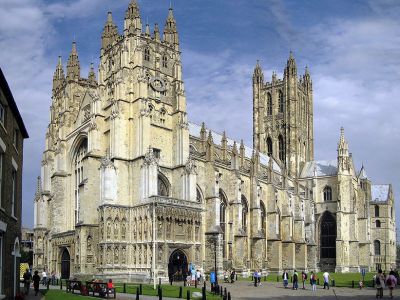
The formal name of the Canterbury Cathedral is the Cathedral and Metropolitical Church of Christ at Canterbury. It is one of the oldest and most well-known Christian structures in all of England and it is a World Heritage Site.
It was originally founded in 597 and has been expanded and rebuilt many times in its history.
In its earliest days, the church was part of a Benedictine monastic community and was the seat of the archbishop. The first bishop was Augustine of Canterbury, a missionary sent in 596 by Pope Gregory I. He also founded Saint Augustine's Abbey, though it was not called that then, located outside the city walls.
The building as it is now was more or less laid out by Archbishop Lanfranc and dedicated in 1077 after the Norman Conquest. It was built from stone from France and designed to be like the Abbey of Saint-Étienne in Caen.
A pivotal moment in the Cathedral's history was the murder of Archbishop Thomas Becket. Becket was murdered in the northwest transept in 1170 by knights of King Henry II. The events transformed the Cathedral into a place of pilgrimage. Such pilgrims were depicted in Chaucer's Canterbury Tales.
Today the Archbishop of Canterbury serves as the global leader for the Anglican Communion and leader of the Church of England.
Why You Should Visit:
The Cathedral is a World Heritage Site and one of the most stunning examples of Gothic architecture in England.
Tips:
Plan to dedicate at least three hours to tour the Cathedral. GPSmyCity offers a self-guided tour to help you explore the Cathedral and its grounds.
Be sure to look up! Some of the most impressive examples of architecture lie in the fan vaulting, ornate carvings, and beautiful stained glassworks.
It was originally founded in 597 and has been expanded and rebuilt many times in its history.
In its earliest days, the church was part of a Benedictine monastic community and was the seat of the archbishop. The first bishop was Augustine of Canterbury, a missionary sent in 596 by Pope Gregory I. He also founded Saint Augustine's Abbey, though it was not called that then, located outside the city walls.
The building as it is now was more or less laid out by Archbishop Lanfranc and dedicated in 1077 after the Norman Conquest. It was built from stone from France and designed to be like the Abbey of Saint-Étienne in Caen.
A pivotal moment in the Cathedral's history was the murder of Archbishop Thomas Becket. Becket was murdered in the northwest transept in 1170 by knights of King Henry II. The events transformed the Cathedral into a place of pilgrimage. Such pilgrims were depicted in Chaucer's Canterbury Tales.
Today the Archbishop of Canterbury serves as the global leader for the Anglican Communion and leader of the Church of England.
Why You Should Visit:
The Cathedral is a World Heritage Site and one of the most stunning examples of Gothic architecture in England.
Tips:
Plan to dedicate at least three hours to tour the Cathedral. GPSmyCity offers a self-guided tour to help you explore the Cathedral and its grounds.
Be sure to look up! Some of the most impressive examples of architecture lie in the fan vaulting, ornate carvings, and beautiful stained glassworks.
2) King's School
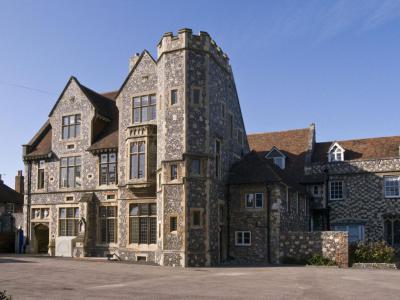
Welcome to The King’s School in Canterbury, a living tapestry of history, education, and architectural beauty. Steeped in nearly 1,400 years of tradition, this is officially the oldest continuously operating school in the world, founded in AD 597 by Augustine of Canterbury. Overlooking the majestic Cathedral and the atmospheric ruins of Saint Augustine’s Abbey-a UNESCO World Heritage Site-the school offers an extraordinary setting where medieval stones meet 21st-century learning.
Stroll the historic cloisters and Green Court to witness a seamless blend of eras: your path may take you past the Norman Staircase, a photo favourite since the 12th century, before arriving at state-of-the-art buildings like the Science Centre (opened in 2023) and a modern sports complex. Visitors remark on the "gray‑stoned houses… cobbled pathways" that whisper centuries past, while pupils excel in cutting‑edge labs and contemporary studios.
The school isn’t just for scholars-it’s a cultural heartbeat of Canterbury. Every summer, the acclaimed King’s Week festival fills historic halls and the city streets with free performances, from choral masterpieces to dramatic showcases-a tradition since 1952, founded by headmaster Fred Shirley. Its music and drama departments thrive in remarkable venues, including the Old Synagogue (built 1848, repurposed as a recital hall) and the repurposed Tithe Barn at Sturry, now a Junior King's performance centre.
The King’s School is a rare chance to walk through history while witnessing vibrant, modern academic life. Whether you’re drawn to majestic Gothic architecture, the stately traditions like the purple gowns of prefects and court dress ceremonies, or simply keen to enjoy a concert in centuries-old surroundings, this living heritage merits a prime spot on your Canterbury itinerary.
Stroll the historic cloisters and Green Court to witness a seamless blend of eras: your path may take you past the Norman Staircase, a photo favourite since the 12th century, before arriving at state-of-the-art buildings like the Science Centre (opened in 2023) and a modern sports complex. Visitors remark on the "gray‑stoned houses… cobbled pathways" that whisper centuries past, while pupils excel in cutting‑edge labs and contemporary studios.
The school isn’t just for scholars-it’s a cultural heartbeat of Canterbury. Every summer, the acclaimed King’s Week festival fills historic halls and the city streets with free performances, from choral masterpieces to dramatic showcases-a tradition since 1952, founded by headmaster Fred Shirley. Its music and drama departments thrive in remarkable venues, including the Old Synagogue (built 1848, repurposed as a recital hall) and the repurposed Tithe Barn at Sturry, now a Junior King's performance centre.
The King’s School is a rare chance to walk through history while witnessing vibrant, modern academic life. Whether you’re drawn to majestic Gothic architecture, the stately traditions like the purple gowns of prefects and court dress ceremonies, or simply keen to enjoy a concert in centuries-old surroundings, this living heritage merits a prime spot on your Canterbury itinerary.
3) Westgate Gardens and Tower House (must see)
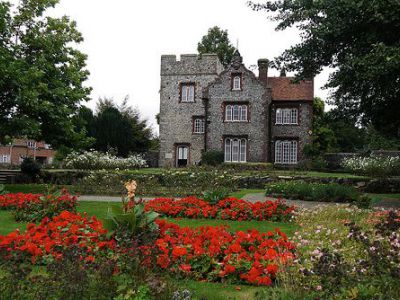
A peaceful haven just steps from Canterbury West train station, Westgate Gardens is one of the city’s most beloved public green spaces. Set beside the River Stour, the gardens are known for their vibrant floral displays, tree-lined paths, and proximity to the ancient Westgate Towers. Visitors are drawn year-round to this tranquil park, which is particularly popular in spring and summer when the flower beds come alive and the riverside footpaths fill with life. Fans of the anime Sakura Quest also make pilgrimages here, as one of the park’s views inspired a scene in the series.
The park is spacious enough to never feel crowded, with broad lawns ideal for sunbathing, picnicking, or simply lounging beneath towering redwoods, beech, walnut, and tulip trees. One of the park’s oldest residents is the Oriental Plane Tree, easily spotted by its thick, sculptural trunk. The River Stour flows through the gardens, and punting tours offered by Westgate Punts provide a gentle way to learn about the area’s history or enjoy the scenery-open seasonally from March through October. Keep an eye out for Alluvia, an underwater sculpture by Jason deCaires Taylor resting in the riverbed.
Overlooking the park is Tower House, a handsome historic building that now serves as a venue for weddings and private events. During summer, it hosts a mobile café with outdoor seating, adding to the park’s welcoming atmosphere. Families can also venture to the Toddler’s Cove playground, while walkers can follow the riverside path to the charming village of Chartham.
Westgate Gardens is more than just a beauty spot-it’s also a place of remembrance and community. A physic garden and several memorial gardens, including one honoring WWII medal recipients, provide quiet spaces for reflection. The park regularly hosts seasonal art exhibitions, performances, and community gatherings, making it a dynamic part of Canterbury’s cultural life as well as a serene escape.
The park is spacious enough to never feel crowded, with broad lawns ideal for sunbathing, picnicking, or simply lounging beneath towering redwoods, beech, walnut, and tulip trees. One of the park’s oldest residents is the Oriental Plane Tree, easily spotted by its thick, sculptural trunk. The River Stour flows through the gardens, and punting tours offered by Westgate Punts provide a gentle way to learn about the area’s history or enjoy the scenery-open seasonally from March through October. Keep an eye out for Alluvia, an underwater sculpture by Jason deCaires Taylor resting in the riverbed.
Overlooking the park is Tower House, a handsome historic building that now serves as a venue for weddings and private events. During summer, it hosts a mobile café with outdoor seating, adding to the park’s welcoming atmosphere. Families can also venture to the Toddler’s Cove playground, while walkers can follow the riverside path to the charming village of Chartham.
Westgate Gardens is more than just a beauty spot-it’s also a place of remembrance and community. A physic garden and several memorial gardens, including one honoring WWII medal recipients, provide quiet spaces for reflection. The park regularly hosts seasonal art exhibitions, performances, and community gatherings, making it a dynamic part of Canterbury’s cultural life as well as a serene escape.
4) Westgate Tower
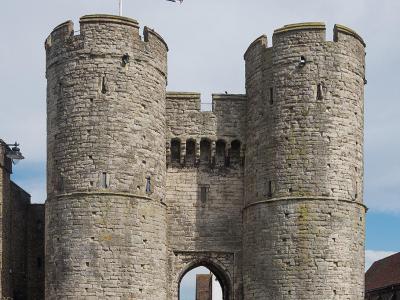
The western gate in the city walls is the 60-foot (18-meter) high Westgate. This impressive structure is the largest surviving medieval gatehouse in England. It was built of local ragstone around 1379 and is the only one of Canterbury's original seven gates still standing.
The Romans built the first city walls in 300 AD. Westgate was always the most crucial entrance, as this was the road from London. The present gate was built to replace the original Roman one.
The building has had various other uses over the years. It was used as the local prison from the 1400s to the 1800s. There was even a cage built in the gateway where select prisoners were allowed to beg from or chat with passers-by.
After the city walls were dismantled in the early 1800s, the jailer's house was built to the north. This building wound up serving as the Canterbury City Police headquarters. It was connected to the jail by an iron bridge. This building is now a bar and cafe.
Presently the structure houses the West Gate Towers Museum and several very realistic and historically-themed escape rooms.
The Romans built the first city walls in 300 AD. Westgate was always the most crucial entrance, as this was the road from London. The present gate was built to replace the original Roman one.
The building has had various other uses over the years. It was used as the local prison from the 1400s to the 1800s. There was even a cage built in the gateway where select prisoners were allowed to beg from or chat with passers-by.
After the city walls were dismantled in the early 1800s, the jailer's house was built to the north. This building wound up serving as the Canterbury City Police headquarters. It was connected to the jail by an iron bridge. This building is now a bar and cafe.
Presently the structure houses the West Gate Towers Museum and several very realistic and historically-themed escape rooms.

5) The Marlowe Theatre (must see)
The Marlowe Theatre is Canterbury’s premier performance venue and cultural beacon, nestled in the heart of this historic cathedral city. Named after the illustrious Elizabethan playwright Christopher Marlowe, the modern theatre reopened in October 2011 after an extensive rebuild designed by Keith Williams Architects, boasting a 1,200-seat auditorium, a striking fly-tower, and a sleek glass-fronted foyer that complements the skyline alongside Canterbury Cathedral’s majestic spires.
With first-class acoustics and sightlines praised by reviewers, Marlowe Theatre delivers a world-class experience across a diverse programme. From touring West End musicals, Shakespearean drama via the Royal Shakespeare Company, and grand opera by Glyndebourne, to contemporary dance, comedy, and family pantomime, there’s something for every theatre-lover. The intimate 150-seat studio offers cutting-edge drama and fringe performances, championing new writing in the spirit of Canterbury’s creative heritage.
Beyond performances, the venue is deeply rooted in the local community: it houses The Poor Priests’ Hospital creative learning centre, supports youth programmes, bursaries, and open workshops, and proudly operates as a registered charity under The Marlowe Trust, championing access and inclusion in the arts. The striking “Muse of Poetry” statue outside-Christopher Marlowe memorialised in bronze-adds a poetic flourish to the public space.
Whether you’re drawn by world-class performances, architectural elegance, or community spirit, The Marlowe Theatre is an unmissable highlight of any Canterbury visit.
With first-class acoustics and sightlines praised by reviewers, Marlowe Theatre delivers a world-class experience across a diverse programme. From touring West End musicals, Shakespearean drama via the Royal Shakespeare Company, and grand opera by Glyndebourne, to contemporary dance, comedy, and family pantomime, there’s something for every theatre-lover. The intimate 150-seat studio offers cutting-edge drama and fringe performances, championing new writing in the spirit of Canterbury’s creative heritage.
Beyond performances, the venue is deeply rooted in the local community: it houses The Poor Priests’ Hospital creative learning centre, supports youth programmes, bursaries, and open workshops, and proudly operates as a registered charity under The Marlowe Trust, championing access and inclusion in the arts. The striking “Muse of Poetry” statue outside-Christopher Marlowe memorialised in bronze-adds a poetic flourish to the public space.
Whether you’re drawn by world-class performances, architectural elegance, or community spirit, The Marlowe Theatre is an unmissable highlight of any Canterbury visit.
6) The Old Buttermarket
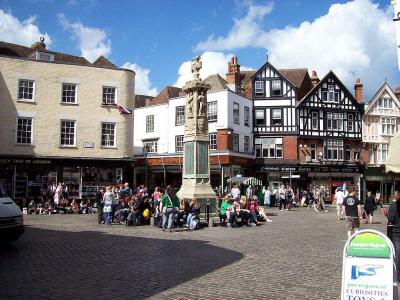
An unassuming British pub located near the Cathedral has quite the history. The Old Buttermarket is currently everything you'd expect from such an establishment - it's the perfect place for a pint after a long day touring the Cathedral. If you're feeling nippish, the meat pies and fish and chips are excellent.
But what makes The Old Buttermarket a special stop is its history. There is certainly a lot to be told, and some of it we still don't know. Flint pieces found in the cellars give clues that the Romans used the site. Tunnels have been found that once connected the site to the Cathedral.
There has been an operating public house on this site for over 500 years. A coaching inn called the Black Boy was in business from the 1600s until 1908.
The name also clues you to an interesting tidbit of history. The town butter market was held on the square right outside the pub.
But what makes The Old Buttermarket a special stop is its history. There is certainly a lot to be told, and some of it we still don't know. Flint pieces found in the cellars give clues that the Romans used the site. Tunnels have been found that once connected the site to the Cathedral.
There has been an operating public house on this site for over 500 years. A coaching inn called the Black Boy was in business from the 1600s until 1908.
The name also clues you to an interesting tidbit of history. The town butter market was held on the square right outside the pub.
