Custom Walk in Toulouse, France by astrot10_dd94c created on 2025-05-21
Guide Location: France » Toulouse
Guide Type: Custom Walk
# of Sights: 12
Tour Duration: 2 Hour(s)
Travel Distance: 3.9 Km or 2.4 Miles
Share Key: DSGSA
Guide Type: Custom Walk
# of Sights: 12
Tour Duration: 2 Hour(s)
Travel Distance: 3.9 Km or 2.4 Miles
Share Key: DSGSA
How It Works
Please retrieve this walk in the GPSmyCity app. Once done, the app will guide you from one tour stop to the next as if you had a personal tour guide. If you created the walk on this website or come to the page via a link, please follow the instructions below to retrieve the walk in the app.
Retrieve This Walk in App
Step 1. Download the app "GPSmyCity: Walks in 1K+ Cities" on Apple App Store or Google Play Store.



Step 2. In the GPSmyCity app, download(or launch) the guide "Toulouse Map and Walking Tours".
Step 3. Tap the menu button located at upper right corner of the "Walks" screen and select "Retrieve custom walk". Enter the share key: DSGSA
1) Capitole de Toulouse (Toulouse City Hall) (must see)
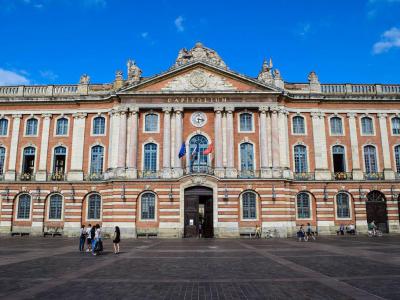
The Toulouse City Hall, commonly known simply as the Capitol, is the heart of the city’s administration.
While the site itself dates back to Roman times, the current building began construction in the 12th century. In 1096, Raymond IV, Count of Toulouse, urged by the Pope, joined the Crusades. A few wars later, the count's power was diminished. The result of that was local "notables" forming a group of consuls – also known as “capitouls” – to govern the city. The city hall was initially built to house this chapter of governing magistrates.
Throughout history, the building underwent various transformations, notably in the 19th century when its surroundings and façade were redesigned. The latter, originally completed in 1750 in a Neoclassical style using pink brick, spans 135 meters and features eight columns representing the original eight capitouls. A significant addition – the bell tower atop the donjon – was made in 1873.
A donjon is not a dungeon, but a keep – the strongest part of a castle. The Toulouse Capitol's donjon has a dark past. In 1761, it played a part in the historic case of Jean Calas, an unlucky Protestant, who was interrogated there in connection with the false accusation of murder of his Catholic son. Later, the place housed the city archives, it today serves as the tourist office.
Despite numerous renovations, some parts of the building retain their medieval ambiance. One such is the Henri IV courtyard – the site of the execution of the Duke de Montmorency, the enemy of Cardinal Richelieu. He was beheaded in 1632.
Once inside, the Hall of Illustrious must not be missed. It showcases 19th-century art, notably the paintings of Paul Gervais and Henri Martin, among others. The room is over 60 meters long and, apart from paintings, is filled with sculptures and stunning murals dedicated to the famous historical people and events of Toulouse. These include the Cathar period, the early Counts, and the sieges of Toulouse, as well as the Floral Games which were poetry competitions held in May since 1324.
Today, apart from accommodating the City Hall, the Capitol also houses the Capitol Theater Opera Company and Orchestra. The adjacent Capitol Square was redesigned in 1995 to prioritize pedestrian use.
While the site itself dates back to Roman times, the current building began construction in the 12th century. In 1096, Raymond IV, Count of Toulouse, urged by the Pope, joined the Crusades. A few wars later, the count's power was diminished. The result of that was local "notables" forming a group of consuls – also known as “capitouls” – to govern the city. The city hall was initially built to house this chapter of governing magistrates.
Throughout history, the building underwent various transformations, notably in the 19th century when its surroundings and façade were redesigned. The latter, originally completed in 1750 in a Neoclassical style using pink brick, spans 135 meters and features eight columns representing the original eight capitouls. A significant addition – the bell tower atop the donjon – was made in 1873.
A donjon is not a dungeon, but a keep – the strongest part of a castle. The Toulouse Capitol's donjon has a dark past. In 1761, it played a part in the historic case of Jean Calas, an unlucky Protestant, who was interrogated there in connection with the false accusation of murder of his Catholic son. Later, the place housed the city archives, it today serves as the tourist office.
Despite numerous renovations, some parts of the building retain their medieval ambiance. One such is the Henri IV courtyard – the site of the execution of the Duke de Montmorency, the enemy of Cardinal Richelieu. He was beheaded in 1632.
Once inside, the Hall of Illustrious must not be missed. It showcases 19th-century art, notably the paintings of Paul Gervais and Henri Martin, among others. The room is over 60 meters long and, apart from paintings, is filled with sculptures and stunning murals dedicated to the famous historical people and events of Toulouse. These include the Cathar period, the early Counts, and the sieges of Toulouse, as well as the Floral Games which were poetry competitions held in May since 1324.
Today, apart from accommodating the City Hall, the Capitol also houses the Capitol Theater Opera Company and Orchestra. The adjacent Capitol Square was redesigned in 1995 to prioritize pedestrian use.
2) Place du Capitole (Capitol Square)
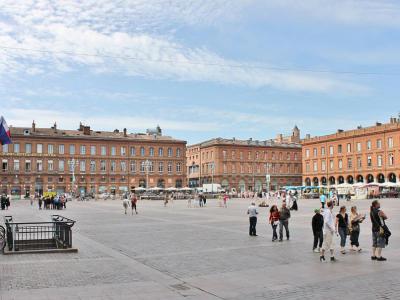
Capitol Square (Place du Capitole) in Toulouse stands as a vibrant and historic epicenter in the city's heart. This grand square, central to Toulouse's social and cultural life, serves as a primary gathering spot, a starting point for city exploration, and a venue for various events. Known for its Neoclassical elegance, the square has been a fixture for approximately 800 years, with its current prominent feature, the Capitole building, gracing its space since the mid-18th century. The Capitole's stunning 128-meter facade is a popular backdrop for photography and social media, reflecting its status as a key Toulouse landmark.
The Capitol Square is not just about its majestic main building. The western side features canopied terraces under Byzantine arches reminiscent of Saint Mark's Square in Venice. To the north, the medieval Bull Street (Rue du Taur) buzzes with a lively mix of South American bistros and quirky shops and even hosts an open-air cinema, leading to the Basilica of Saint-Sernin with its distinctive octagonal bell tower.
Visitors can explore the Capitole's interior, particularly the Salle des Illustres, adorned with some of Toulouse’s finest 19th-century paintings. The entrance features a grand staircase, an opulent chandelier, and a patterned mosaic floor, enhancing the grandeur of the experience. The square is also known for its eclectic daily market, where vendors sell everything from flowing summer dresses and vintage vinyl records to practical items like straw hats and sunglasses.
The square's site is steeped in history, reportedly the location of the martyrdom of Saint Saturninus in 257 CE. While the existing Capitole building dates back to the 18th century, the area's significance extends to Roman times, previously centered around the nearby square of Carmes. The 1990s pedestrianization transformed Capitol Square into a thriving tourist attraction, cementing its place as Toulouse’s focal point of tourism and local life.
The Capitol Square is not just about its majestic main building. The western side features canopied terraces under Byzantine arches reminiscent of Saint Mark's Square in Venice. To the north, the medieval Bull Street (Rue du Taur) buzzes with a lively mix of South American bistros and quirky shops and even hosts an open-air cinema, leading to the Basilica of Saint-Sernin with its distinctive octagonal bell tower.
Visitors can explore the Capitole's interior, particularly the Salle des Illustres, adorned with some of Toulouse’s finest 19th-century paintings. The entrance features a grand staircase, an opulent chandelier, and a patterned mosaic floor, enhancing the grandeur of the experience. The square is also known for its eclectic daily market, where vendors sell everything from flowing summer dresses and vintage vinyl records to practical items like straw hats and sunglasses.
The square's site is steeped in history, reportedly the location of the martyrdom of Saint Saturninus in 257 CE. While the existing Capitole building dates back to the 18th century, the area's significance extends to Roman times, previously centered around the nearby square of Carmes. The 1990s pedestrianization transformed Capitol Square into a thriving tourist attraction, cementing its place as Toulouse’s focal point of tourism and local life.
3) Rue d'Alsace-Lorraine (Alsace-Lorraine Street)
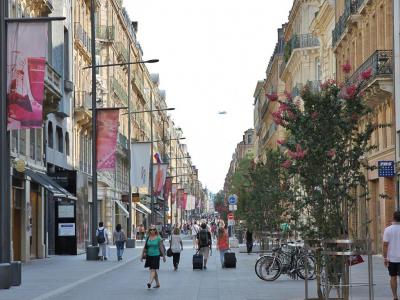
Alsace-Lorraine Street is one of the major shopping destinations in Toulouse. Until 1872, the street was known as Longitudinal Street, a temporary name used during the urban development stage. On November 26, 1872, it was renamed in memory of the two provinces – Alsace and Lorraine – lost to Germany in the Franco-Prussian War of 1870. After a thorough reconstruction that lasted almost ten years, Alsace-Lorraine Street was finally opened in 1873.
Along the way, the street provides access to several notable sites, primarily the Augustins Museum, the municipal repository of fine arts, occupying the former Augustinian convent.
Among other architectural jewels, there is the Consular Palace, originally a mid-17th-century private mansion. Over time, it underwent various transformations, serving different purposes, from a residence for archbishops to a commercial hub. In the early 20th century, it was remodeled, accommodating shops and a commercial museum. Its Neo-classical facade, a pastiche of 18th-century Toulouse architecture, stands out with its polychrome stone and brick composition.
The street also hosts major department stores like La Maison Universelle and Monoprix, each with a unique architectural style reflective of their respective eras. The Monoprix building, constructed in 1963, features a modern design with red brick facing, while Au Capitole, built in the early 20th century, displays Art Nouveau influences with its cast-iron and light brick structure.
In addition, several historical buildings line the street, such as the Grand Hotel Tivollier with its eclectic Haussmann style and the Art Deco Hall Dispatch, showcasing modernity with its striking blue mosaic facade. Each building on Alsace-Lorraine Street contributes to the architectural tapestry that characterizes this historic thoroughfare, making it a vital part of Toulouse's cultural and historical landscape.
Along the way, the street provides access to several notable sites, primarily the Augustins Museum, the municipal repository of fine arts, occupying the former Augustinian convent.
Among other architectural jewels, there is the Consular Palace, originally a mid-17th-century private mansion. Over time, it underwent various transformations, serving different purposes, from a residence for archbishops to a commercial hub. In the early 20th century, it was remodeled, accommodating shops and a commercial museum. Its Neo-classical facade, a pastiche of 18th-century Toulouse architecture, stands out with its polychrome stone and brick composition.
The street also hosts major department stores like La Maison Universelle and Monoprix, each with a unique architectural style reflective of their respective eras. The Monoprix building, constructed in 1963, features a modern design with red brick facing, while Au Capitole, built in the early 20th century, displays Art Nouveau influences with its cast-iron and light brick structure.
In addition, several historical buildings line the street, such as the Grand Hotel Tivollier with its eclectic Haussmann style and the Art Deco Hall Dispatch, showcasing modernity with its striking blue mosaic facade. Each building on Alsace-Lorraine Street contributes to the architectural tapestry that characterizes this historic thoroughfare, making it a vital part of Toulouse's cultural and historical landscape.
4) Victor Hugo Market
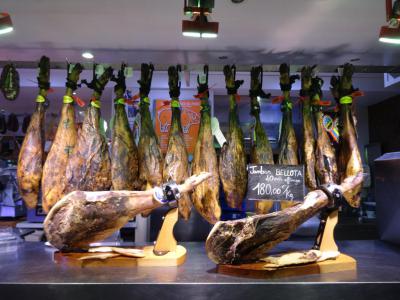
In the midst of the city find the Victor Hugo (covered) Market. Where is it? No surprise, walk down Victor Hugo Street to Victor Hugo Place. Can't miss it. There is a ground floor with shops and a second floor with restaurants and cafes. Come early, they close at 2pm. It is possibly the most popular market in the city.
Over 80 stallholders hold forth with a cornucopia of fresh products. Let us count the ways. There are Fishmongers, butchers, tripe sellers (really?), and poultry. Vegetarians get greengrocers, bakers, pastry makers, cheese makers, and creamers, wine makers, etc. Eat there or try the restaurants on the upper floor ("first" floor in France).
The market opened in 1892. The Victor Hugo Market is host to more than a hundred friendly merchants, and restaurants. And there are nocturnal activities. English speaking tours are available. If one doesn't visit the Victor Hugo Market, they miss one of the best parts of Toulouse.
Over 80 stallholders hold forth with a cornucopia of fresh products. Let us count the ways. There are Fishmongers, butchers, tripe sellers (really?), and poultry. Vegetarians get greengrocers, bakers, pastry makers, cheese makers, and creamers, wine makers, etc. Eat there or try the restaurants on the upper floor ("first" floor in France).
The market opened in 1892. The Victor Hugo Market is host to more than a hundred friendly merchants, and restaurants. And there are nocturnal activities. English speaking tours are available. If one doesn't visit the Victor Hugo Market, they miss one of the best parts of Toulouse.
5) Basilica of Saint Sernin (must see)
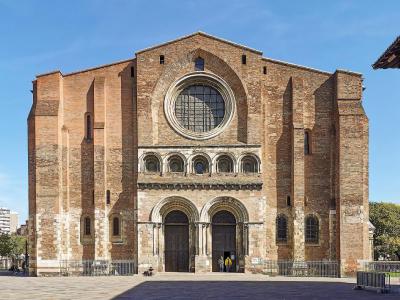
The Basilica of Saint-Sernin in Toulouse is a historic church located on the site of a previous basilica of the 4th century which contained the body of Saint Sernin, the first bishop of Toulouse around the year 250. Noted for its exceptional Romanesque sculpture, the church was designated a UNESCO World Heritage Site in 1998 as part of the Routes of Saint James in France.
The original basilica, initiated by Saint Sylvius in the 4th century, was part of the Abbey of Saint Sernin and gained prominence after King Charlemagne's donation of relics, making it a key pilgrimage site.
The current basilica – featuring Romanesque style – was built in the early 12th century. Its construction continued over the centuries with many fits and starts and is estimated to have comprised at least four major building undertakings. Curiously enough, 19th-century restorations are now being reversed to preserve the church's original design.
Although called “basilica”, Saint-Sernin diverges from traditional early Christian basilica plans, incorporating features of the so-called "pilgrimage plan." Notably larger than its predecessors, at 104 meters long, and predominantly built of brick, its design includes a cruciform shape and vaulted ceilings. Unlike earlier churches, Saint-Sernin features an ambulatory and radiating chapels that house important relics, allowing visitors to view them without disrupting ongoing masses.
The basilica's exterior is marked by a bell tower with Romanesque arches from the 12th century and a 15th-century spire. Key external features include the Comtes Gate and the elaborately sculpted Miegeville Gate. Internally, the vast space is structured with a barrel-vaulted nave and rib-vaulted aisles. The basilica also houses a significant Cavaillé-Coll organ, among France's most important.
Tips:
While there is no admission charge, donations are welcome.
The original basilica, initiated by Saint Sylvius in the 4th century, was part of the Abbey of Saint Sernin and gained prominence after King Charlemagne's donation of relics, making it a key pilgrimage site.
The current basilica – featuring Romanesque style – was built in the early 12th century. Its construction continued over the centuries with many fits and starts and is estimated to have comprised at least four major building undertakings. Curiously enough, 19th-century restorations are now being reversed to preserve the church's original design.
Although called “basilica”, Saint-Sernin diverges from traditional early Christian basilica plans, incorporating features of the so-called "pilgrimage plan." Notably larger than its predecessors, at 104 meters long, and predominantly built of brick, its design includes a cruciform shape and vaulted ceilings. Unlike earlier churches, Saint-Sernin features an ambulatory and radiating chapels that house important relics, allowing visitors to view them without disrupting ongoing masses.
The basilica's exterior is marked by a bell tower with Romanesque arches from the 12th century and a 15th-century spire. Key external features include the Comtes Gate and the elaborately sculpted Miegeville Gate. Internally, the vast space is structured with a barrel-vaulted nave and rib-vaulted aisles. The basilica also houses a significant Cavaillé-Coll organ, among France's most important.
Tips:
While there is no admission charge, donations are welcome.
6) Garonne
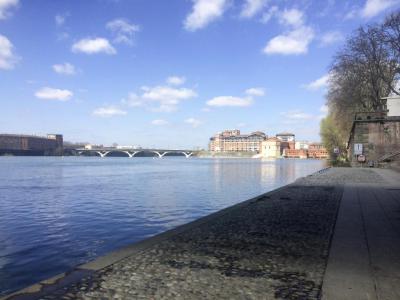
The Garonne is a significant river that originates in the central Spanish Pyrenees and concludes its journey in the Gironde estuary at Bordeaux, France. This river plays an essential role in both the historical and natural landscape of southwest France and northern Spain.
Historically, the Garonne was the site of the notable Battle of the River Garonne in 732, where Umayyad and Aquitanian forces clashed near the area of present-day Bordeaux. This battle underscores the river's historical significance as a strategic location in ancient military history.
A unique natural phenomenon associated with the Garonne is its tidal bore, making it one of the few rivers worldwide to exhibit this feature. The tidal bore is a strong tide that pushes a wave or series of waves up the river, creating a surfer's and jet skier's paradise. Enthusiasts have been known to ride this tidal wave for distances exceeding 120 kilometers from the Atlantic, reaching as far as Cambes and even further to Cadillac. The occurrence of the tidal bore, however, is dependent on the changing bathymetry of the river’s channel, making it an unpredictable yet thrilling natural event.
In terms of scientific interest, the Garonne has been the subject of various studies, notably detailed field studies conducted in 2010 and 2012 in the Arcins channel, located between Arcins Island and the right bank near Lastrene township. These studies highlighted significant findings regarding the turbulent velocities and turbulent stresses during the tidal bore and flood flow. The data from these studies indicated large and rapid fluctuations, providing valuable insights into the dynamic and powerful natural processes at work in the Garonne.
Overall, the Garonne River not only enriches the cultural tapestry of the regions it traverses but also serves as a fascinating subject for both recreational and scientific communities.
Historically, the Garonne was the site of the notable Battle of the River Garonne in 732, where Umayyad and Aquitanian forces clashed near the area of present-day Bordeaux. This battle underscores the river's historical significance as a strategic location in ancient military history.
A unique natural phenomenon associated with the Garonne is its tidal bore, making it one of the few rivers worldwide to exhibit this feature. The tidal bore is a strong tide that pushes a wave or series of waves up the river, creating a surfer's and jet skier's paradise. Enthusiasts have been known to ride this tidal wave for distances exceeding 120 kilometers from the Atlantic, reaching as far as Cambes and even further to Cadillac. The occurrence of the tidal bore, however, is dependent on the changing bathymetry of the river’s channel, making it an unpredictable yet thrilling natural event.
In terms of scientific interest, the Garonne has been the subject of various studies, notably detailed field studies conducted in 2010 and 2012 in the Arcins channel, located between Arcins Island and the right bank near Lastrene township. These studies highlighted significant findings regarding the turbulent velocities and turbulent stresses during the tidal bore and flood flow. The data from these studies indicated large and rapid fluctuations, providing valuable insights into the dynamic and powerful natural processes at work in the Garonne.
Overall, the Garonne River not only enriches the cultural tapestry of the regions it traverses but also serves as a fascinating subject for both recreational and scientific communities.
7) Quai de la Daurade (Daurade Quay) (must see)
The Daurade Quay in Toulouse is steeped in historical significance. It is derived largely from its connection to the Benedictine priory of the Daurade which had been there since the 9th century. Originally, the area included the priory’s lands, such as the cemetery of the Counts and the adjoining gardens that sloped down towards the Garonne River.
Development of the quay area commenced in 1766, encouraged by the Archbishop of Toulouse. The construction faced resistance from the Benedictines but progressed nonetheless. By 1777, the major construction work neared completion with key modifications including the addition, relocation, and reconstruction of some notable architectural elements such as the statue of Christ, the bust of Louis XIV, and various sculpted emblems.
During the French Revolution in 1794, the quay was briefly renamed Rousseau Quay, and the local church was desecrated. By the 19th century, better heads prevailed and the church regained its spiritual destiny becoming the Basilica of Notre Dame de La Daurada. Today, it is celebrated as the home of the Black Madonna (a painted wooden bust of the Holy Virgin dressed up to look like a full-size statue).
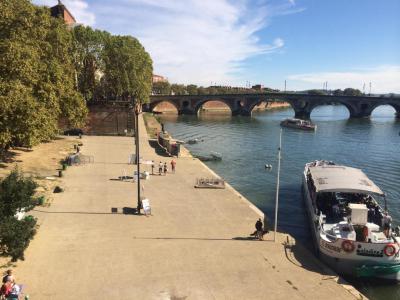
During the same period, the quay transitioned from a monastic site to a vibrant public space integral to Toulouse’s cultural and social fabric. In 1892, the School of Arts moved to the former Tobacco factory on the quay and was inaugurated in 1895 as the Palace of Arts and Sciences. Additionally, the quay has become a beloved walking area, known for its scenic views and historical cafes, such as Café des Pyrénées and Café Bellevue, opened in 1920 and 1935, respectively.
While walking on the Henri Martin promenade along the quay, feel free to descend the steps to the river and take a cruise. Boat tours are available in the mornings and afternoons. Also, see the finely engineered New Bridge, erected in 1632, the only bridge in town consistently impervious to the Garonne's ravaging floods.
Development of the quay area commenced in 1766, encouraged by the Archbishop of Toulouse. The construction faced resistance from the Benedictines but progressed nonetheless. By 1777, the major construction work neared completion with key modifications including the addition, relocation, and reconstruction of some notable architectural elements such as the statue of Christ, the bust of Louis XIV, and various sculpted emblems.
During the French Revolution in 1794, the quay was briefly renamed Rousseau Quay, and the local church was desecrated. By the 19th century, better heads prevailed and the church regained its spiritual destiny becoming the Basilica of Notre Dame de La Daurada. Today, it is celebrated as the home of the Black Madonna (a painted wooden bust of the Holy Virgin dressed up to look like a full-size statue).
During the same period, the quay transitioned from a monastic site to a vibrant public space integral to Toulouse’s cultural and social fabric. In 1892, the School of Arts moved to the former Tobacco factory on the quay and was inaugurated in 1895 as the Palace of Arts and Sciences. Additionally, the quay has become a beloved walking area, known for its scenic views and historical cafes, such as Café des Pyrénées and Café Bellevue, opened in 1920 and 1935, respectively.
While walking on the Henri Martin promenade along the quay, feel free to descend the steps to the river and take a cruise. Boat tours are available in the mornings and afternoons. Also, see the finely engineered New Bridge, erected in 1632, the only bridge in town consistently impervious to the Garonne's ravaging floods.
8) Pont Neuf (New Bridge) (must see)
The New Bridge in Toulouse, otherwise known as the Big or Stone Bridge, is a historically significant structure dating back over 400 years. Its construction began in 1544 and concluded in 1632, spanning almost a century of work marked by challenges such as the Garonne River's violent floods and unstable subsoil. The project was initiated by King Francis I of France, who recognized the strategic threat from the Spanish King Charles V during that period. He considered it vital to have an overpass for quickly moving defending armies across the Garonne in any weather or season.
The New Bridge replaced the Daurade Bridge which provided a link between the pilgrim hospital of Saint Mary of the Daurade and the Benedictine monastery across the river in the Middle Ages. In 1541, King Francis declared a tax levy to finance the construction, which came to fruition in 1561 as a sturdy, invincible structure.
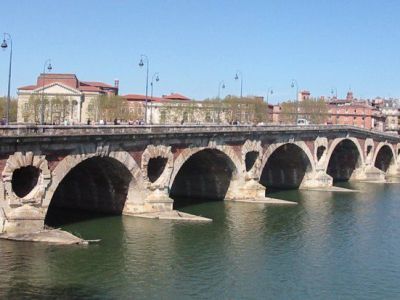
Renowned for its mix of Renaissance and early 17th-century styles, the bridge was designed to be innovative compared to its predecessors. It was free from the common medieval practice of housing stores on it and thus provided clear passage. The design combined ancient Roman and more modern – Renaissance – influences, featuring among other elements the extensive use of the so-called "basket-handle" arches which are wider than height, allowing for fewer piles.
The bridge's durability and quality of construction were proven when it remained standing after the devastating flood of 1875, which destroyed all the other bridges in town and numerous houses. Notably, the bridge is not symmetrical due to the differing elevations of the river banks, which adds a great deal of uniqueness to its design.
The bridge has crests before each pier to part flows, and eye-like round openings to allow water to pass through it when the arches are submerged. Spanning 220 meters with seven arches, the biggest of which measures 56 meters, the New Bridge of Toulouse is a testament to the architectural prowess of its era.
The New Bridge replaced the Daurade Bridge which provided a link between the pilgrim hospital of Saint Mary of the Daurade and the Benedictine monastery across the river in the Middle Ages. In 1541, King Francis declared a tax levy to finance the construction, which came to fruition in 1561 as a sturdy, invincible structure.
Renowned for its mix of Renaissance and early 17th-century styles, the bridge was designed to be innovative compared to its predecessors. It was free from the common medieval practice of housing stores on it and thus provided clear passage. The design combined ancient Roman and more modern – Renaissance – influences, featuring among other elements the extensive use of the so-called "basket-handle" arches which are wider than height, allowing for fewer piles.
The bridge's durability and quality of construction were proven when it remained standing after the devastating flood of 1875, which destroyed all the other bridges in town and numerous houses. Notably, the bridge is not symmetrical due to the differing elevations of the river banks, which adds a great deal of uniqueness to its design.
The bridge has crests before each pier to part flows, and eye-like round openings to allow water to pass through it when the arches are submerged. Spanning 220 meters with seven arches, the biggest of which measures 56 meters, the New Bridge of Toulouse is a testament to the architectural prowess of its era.
9) Hotel d'Assezat (Assezat Mansion) and Bemberg Foundation (must see)
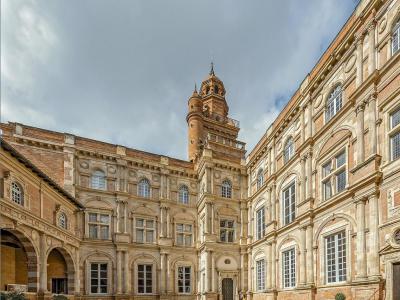
The Assezat Mansion in Toulouse is a 16th-century French Renaissance mansion originally built for merchant Pierre Assézat. It now houses the Bemberg Foundation's art gallery. Noted for its pristine condition, the property is a jewel of Renaissance architecture in southern France, showcasing early French classicism with Italian Mannerist influences.
Pierre Assézat, a prosperous founder of the local Merchant Exchange, initiated the construction of this mansion around 1562. As a Calvinist, he faced religious persecution and was temporarily exiled. He returned and recanted ten years later, dying in Toulouse in 1581. Since then the mansion had changed hands several times before in 1894 the last owner bequeathed it to the city for use by learned societies.
The building showcases a blend of classical and mannerist architecture, with its facade inspired by classical models like the Coliseum, featuring twin columns across three floors (Doric, Ionic, Corinthian). Unique to this structure are the various mannerist ornaments such as cabochons and masks, illustrating themes of luxury and abundance. The main gate marries strength with intricate detailing, highlighted by Doric pilasters and a mullioned window framed by Ionic pilasters, adding a refined elegance to the overall composition.
Inside the courtyard, the loggia and the passageway decorated with arches and grotesque masks on scrolled consoles illustrate the manneristic aesthetic, merging the mineral, vegetable, and animal kingdoms. The staircase pavilion features a large staircase adorned with architectural orders and a male term (which is half man and half pilaster), symbolizing both knowledge and humor through its design.
Since 1994, the building has been home to the Bemberg Foundation, showcasing the extensive private art collection of Argentine Georges Bemberg. This collection features a wide array of European artworks, including paintings, sculptures, and ancient books. In particular, it encompasses significant pieces from the Flemish, Dutch, and Italian Renaissance, with notable works by Titian and Tintoretto. Highlights also include 19th- and early 20th-century paintings, showcasing styles like impressionism and fauvism, featuring Henri de Toulouse-Lautrec, Claude Monet, Edgar Degas, Paul Gauguin, and Paul Cézanne, as well as Henri Matisse, Pablo Picasso, Amedeo Modigliani and others.
Pierre Assézat, a prosperous founder of the local Merchant Exchange, initiated the construction of this mansion around 1562. As a Calvinist, he faced religious persecution and was temporarily exiled. He returned and recanted ten years later, dying in Toulouse in 1581. Since then the mansion had changed hands several times before in 1894 the last owner bequeathed it to the city for use by learned societies.
The building showcases a blend of classical and mannerist architecture, with its facade inspired by classical models like the Coliseum, featuring twin columns across three floors (Doric, Ionic, Corinthian). Unique to this structure are the various mannerist ornaments such as cabochons and masks, illustrating themes of luxury and abundance. The main gate marries strength with intricate detailing, highlighted by Doric pilasters and a mullioned window framed by Ionic pilasters, adding a refined elegance to the overall composition.
Inside the courtyard, the loggia and the passageway decorated with arches and grotesque masks on scrolled consoles illustrate the manneristic aesthetic, merging the mineral, vegetable, and animal kingdoms. The staircase pavilion features a large staircase adorned with architectural orders and a male term (which is half man and half pilaster), symbolizing both knowledge and humor through its design.
Since 1994, the building has been home to the Bemberg Foundation, showcasing the extensive private art collection of Argentine Georges Bemberg. This collection features a wide array of European artworks, including paintings, sculptures, and ancient books. In particular, it encompasses significant pieces from the Flemish, Dutch, and Italian Renaissance, with notable works by Titian and Tintoretto. Highlights also include 19th- and early 20th-century paintings, showcasing styles like impressionism and fauvism, featuring Henri de Toulouse-Lautrec, Claude Monet, Edgar Degas, Paul Gauguin, and Paul Cézanne, as well as Henri Matisse, Pablo Picasso, Amedeo Modigliani and others.
10) Rue Saint-Rome (Saint-Rome Street)
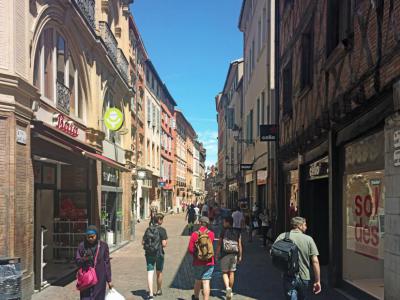
Saint-Rome Street (Rue Saint-Rome) is a historic pedestrian lane in Toulouse, quite pleasant to spend an afternoon shopping and snacking one's way from the Capitol down to Esquirol Street (Rue Esquirol). This thoroughfare, bustling with an array of stores, is lined with opulent facades of private mansions and merchant buildings dating from the 15th to the 19th centuries, reflecting the wealth of Toulouse's bourgeoisie. The architectural highlights here include the towers of the Serta and Roguier buildings (at No. 2 and No. 30, respectively), as well as the Comère and Comynihan hotels (at No. 3 and No. 21), symbolizing their affluent residents who often achieved significant civic status.
The street's name has its roots in the 12th century, originally associated with the Saint-Romain church, and has always been a favorite place to do business. The first major guild to settle here, back in the mid 1200s, was that of the butchers. The fishmongers followed soon after, but they didn't last long because of the smell that the locals didn't like too much.
Leather workers, who came afterwards, passed the smell test and were later joined by other artisans. From the 16th century onward, the street was firmly associated with the city’s merchant elite, including book printers and sellers, who established prestigious residences and participated actively in the vibrant trading tradition.
Multiple fires throughout the 15th and 16th centuries led to a shift from half-timbered houses to more durable brick structures. The street's socio-economic dynamics were further influenced by the French Revolution. During that period, in line with the nationwide trend, the street was briefly renamed Liberty Street (Rue de la Liberté). This name, however, didn't stick and in 1806 Saint-Rome Street reappeared.
In the 20th century, Saint-Rome Street continued to thrive as a commercial hub, influenced by nearby urban developments. It was designated as the city’s first one-way street in 1926 and continued evolving throughout the century with a focus on retail catering to younger demographics. The 21st century has seen the street adapt to changing commercial trends with the introduction of low-cost brands and mobile telephony shops. Saint-Rome's historical and cultural significance was officially recognized in 1986, ensuring its preservation as part of Toulouse’s remarkable heritage site.
The street's name has its roots in the 12th century, originally associated with the Saint-Romain church, and has always been a favorite place to do business. The first major guild to settle here, back in the mid 1200s, was that of the butchers. The fishmongers followed soon after, but they didn't last long because of the smell that the locals didn't like too much.
Leather workers, who came afterwards, passed the smell test and were later joined by other artisans. From the 16th century onward, the street was firmly associated with the city’s merchant elite, including book printers and sellers, who established prestigious residences and participated actively in the vibrant trading tradition.
Multiple fires throughout the 15th and 16th centuries led to a shift from half-timbered houses to more durable brick structures. The street's socio-economic dynamics were further influenced by the French Revolution. During that period, in line with the nationwide trend, the street was briefly renamed Liberty Street (Rue de la Liberté). This name, however, didn't stick and in 1806 Saint-Rome Street reappeared.
In the 20th century, Saint-Rome Street continued to thrive as a commercial hub, influenced by nearby urban developments. It was designated as the city’s first one-way street in 1926 and continued evolving throughout the century with a focus on retail catering to younger demographics. The 21st century has seen the street adapt to changing commercial trends with the introduction of low-cost brands and mobile telephony shops. Saint-Rome's historical and cultural significance was officially recognized in 1986, ensuring its preservation as part of Toulouse’s remarkable heritage site.

11) Place Saint-Georges (Saint-Georges Square and Market)
Saint-Georges Square is named for a small chapel that was in the middle of the square. The chapel was moved hundreds of years ago to a corner of the street only to be demolished in 1808. The Square was once a popular locale for the burning of heretics during the Inquisition. No nostalgia for that "old time religion" here.
Prior to the French Revolution of 1794 the square was named Montaygon, after a local landlord. Come the Revolution the square was named Place Calas. Jean Calas was executed in the square. At one time the square was named for composer Paul Vidal. Vidal, happily, was not executed anywhere. Finally, in 1914, the City brought back Saint-Georges Square.
There is no shortage of good places to dine around the square. One may sit inside or outside. Outside is recommended for relaxed people watching. Every morning, except Sunday there is a farmers market in the Saint-Georges Square. Go early.
Prior to the French Revolution of 1794 the square was named Montaygon, after a local landlord. Come the Revolution the square was named Place Calas. Jean Calas was executed in the square. At one time the square was named for composer Paul Vidal. Vidal, happily, was not executed anywhere. Finally, in 1914, the City brought back Saint-Georges Square.
There is no shortage of good places to dine around the square. One may sit inside or outside. Outside is recommended for relaxed people watching. Every morning, except Sunday there is a farmers market in the Saint-Georges Square. Go early.
12) Cathédrale Saint-Étienne de Toulouse (Toulouse Cathedral) (must see)
The Cathedral of Saint Stephen, commonly known as the Toulouse Cathedral, is a prominent Roman Catholic church and a national monument, tracing its origins back to the 3rd century. Established by Saint Saturnin, it was later rebuilt by Bishop Saint Exuperius into a Romanesque structure in 1078.
During the early 13th century, the cathedral underwent substantial modifications in the Raymondine Gothic style.
The building suffered a significant fire in 1609, leading to a fundraising effort for its restoration. The French Revolution brought further destruction when the site was sacked and transformed into a "Temple of Reason." Inside, the cathedral was severely destroyed and used as a warehouse for scrap iron. By 1802, Napoleon had made up with the Pope, and the cathedral was returned to the Catholic Church, upon which the City of Toulouse made repairs.
A major restoration in 1911 harmonized the old and new parts of the cathedral, further beautified by a surrounding public garden.
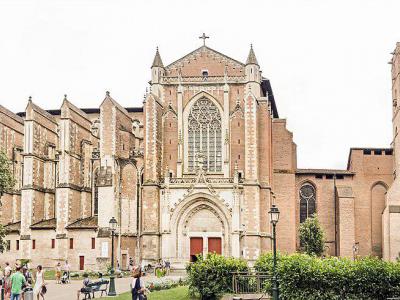
The structure is notable for its irregular facade, resulting from the merger of two incomplete churches from different periods, and its use of brick due to regional stone shortages. The oversized buttresses were formed for a choir much higher than the one that was eventually built. There is also a 16th-century bell tower joined with a donjon of fortress-like proportions. Post-Revolution, all religious bells were melted down. A new set – of 13 bells – was made later on. The largest of them, Etienne-Florian, was cast in 1876 and weighs 3.9 tons.
The cathedral's interior is a source of confusion, featuring contrasting Gothic styles: a large nave originally built in 1078, and a choir from 1272, which are architecturally misaligned. A massive pillar stands between the two sections.
Despite the chaos of its history, however, the cathedral is an island of peace with richly decorated chapels, significant stained glass, and finely carved choir stalls.
Also, the cathedral boasts two organs: the main tribune organ built in 1612, and a smaller choir one from 1868.
During the early 13th century, the cathedral underwent substantial modifications in the Raymondine Gothic style.
The building suffered a significant fire in 1609, leading to a fundraising effort for its restoration. The French Revolution brought further destruction when the site was sacked and transformed into a "Temple of Reason." Inside, the cathedral was severely destroyed and used as a warehouse for scrap iron. By 1802, Napoleon had made up with the Pope, and the cathedral was returned to the Catholic Church, upon which the City of Toulouse made repairs.
A major restoration in 1911 harmonized the old and new parts of the cathedral, further beautified by a surrounding public garden.
The structure is notable for its irregular facade, resulting from the merger of two incomplete churches from different periods, and its use of brick due to regional stone shortages. The oversized buttresses were formed for a choir much higher than the one that was eventually built. There is also a 16th-century bell tower joined with a donjon of fortress-like proportions. Post-Revolution, all religious bells were melted down. A new set – of 13 bells – was made later on. The largest of them, Etienne-Florian, was cast in 1876 and weighs 3.9 tons.
The cathedral's interior is a source of confusion, featuring contrasting Gothic styles: a large nave originally built in 1078, and a choir from 1272, which are architecturally misaligned. A massive pillar stands between the two sections.
Despite the chaos of its history, however, the cathedral is an island of peace with richly decorated chapels, significant stained glass, and finely carved choir stalls.
Also, the cathedral boasts two organs: the main tribune organ built in 1612, and a smaller choir one from 1868.
