Custom Walk in Glasgow, Scotland by odilia_festjens_4eeab created on 2025-05-27
Guide Location: Scotland » Glasgow
Guide Type: Custom Walk
# of Sights: 6
Tour Duration: 1 Hour(s)
Travel Distance: 1.9 Km or 1.2 Miles
Share Key: H4S8N
Guide Type: Custom Walk
# of Sights: 6
Tour Duration: 1 Hour(s)
Travel Distance: 1.9 Km or 1.2 Miles
Share Key: H4S8N
How It Works
Please retrieve this walk in the GPSmyCity app. Once done, the app will guide you from one tour stop to the next as if you had a personal tour guide. If you created the walk on this website or come to the page via a link, please follow the instructions below to retrieve the walk in the app.
Retrieve This Walk in App
Step 1. Download the app "GPSmyCity: Walks in 1K+ Cities" on Apple App Store or Google Play Store.



Step 2. In the GPSmyCity app, download(or launch) the guide "Glasgow Map and Walking Tours".
Step 3. Tap the menu button located at upper right corner of the "Walks" screen and select "Retrieve custom walk". Enter the share key: H4S8N
1) Saint Mungo's Cathedral (must see)
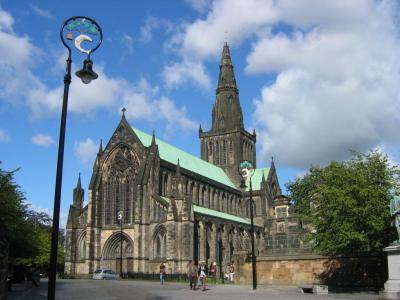
Rising proudly over the city with its striking spire and darkened stone, Saint Mungo’s Cathedral-also known as Glasgow Cathedral or the High Kirk of Glasgow-is one of Scotland’s most remarkable medieval landmarks. Dedicated to the city’s patron saint, Saint Mungo (also called Saint Kentigern), it stands on the very spot where the saint is believed to have built his church in the 6th century. The present structure, begun in the 12th century, is the only mainland Scottish cathedral to have survived the Protestant Reformation intact, making it a rare and atmospheric link to the nation’s medieval past.
Step inside and you’ll find a vast interior filled with soaring stone arches, stained-glass windows that cast jewel-like colors across the nave, and centuries-old carvings that reward close attention. The cathedral’s crowning treasure is the Lower Church, a beautifully preserved medieval crypt that houses the shrine of Saint Mungo himself. This hushed, vaulted space is one of the most evocative sites in Glasgow, where pilgrims and visitors alike pause in quiet reflection.
The upper choir and nave showcase the craftsmanship of medieval masons, with intricately carved stone screens and elaborate vaulted ceilings. Many visitors are struck by the contrast between the building’s austere Gothic exterior and the light filtering through its stained glass, much of which was created in the 19th and 20th centuries, yet harmonizes seamlessly with the ancient fabric.
Surrounded by the atmospheric Glasgow Necropolis and the remains of the medieval hospital of the Bishop’s Castle, Saint Mungo’s Cathedral is more than a church-it is a living monument to Glasgow’s deep historical roots. Drawn by architecture, history, or the desire for quiet contemplation, a visit here reveals a glimpse of the city’s soul and its enduring faith.
Step inside and you’ll find a vast interior filled with soaring stone arches, stained-glass windows that cast jewel-like colors across the nave, and centuries-old carvings that reward close attention. The cathedral’s crowning treasure is the Lower Church, a beautifully preserved medieval crypt that houses the shrine of Saint Mungo himself. This hushed, vaulted space is one of the most evocative sites in Glasgow, where pilgrims and visitors alike pause in quiet reflection.
The upper choir and nave showcase the craftsmanship of medieval masons, with intricately carved stone screens and elaborate vaulted ceilings. Many visitors are struck by the contrast between the building’s austere Gothic exterior and the light filtering through its stained glass, much of which was created in the 19th and 20th centuries, yet harmonizes seamlessly with the ancient fabric.
Surrounded by the atmospheric Glasgow Necropolis and the remains of the medieval hospital of the Bishop’s Castle, Saint Mungo’s Cathedral is more than a church-it is a living monument to Glasgow’s deep historical roots. Drawn by architecture, history, or the desire for quiet contemplation, a visit here reveals a glimpse of the city’s soul and its enduring faith.
2) Provand's Lordship
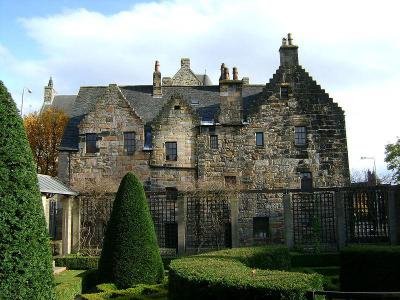
At the top of Castle Street lies Provand's Lordship, the oldest house in Glasgow. It serves as a captivating house museum, offering visitors a glimpse into medieval life.
Constructed in 1471, this medieval building was originally a part of Saint Nicholas Hospital. While initially intended for the hospital's Master, it was subsequently occupied by various Canons from the Cathedral Chapter. During the 19th century, it became the residence of the Lord Prebendary of Balenock, a title related to a stipend allocated to Anglican Church priests. Interestingly, the term "provand" may have evolved from a corruption of "prebend."
In 1906, the house was purchased by a confectioner's family who established a sweet shop at the front and operated a factory in the rear. They continued this business until the end of World War II when they sold the property to the Provand's Lordship Society. The society aimed to restore the house to its former glory. In 1978, facing financial constraints, they transferred ownership to the City of Glasgow, which funded renovations. Subsequently, the house was opened to the public as a museum in 1983.
Today, a visit to this historic house will transport you to the 17th century, with period-accurate wooden furnishings adorning its three stories connected by a winding staircase. The presence of numerous stained glass windows adds to its charm. Beyond the house, you can explore the Saint Nicholas Garden, where a profusion of medicinal herbs fills the warm summer air with their delicate fragrance.
Tip:
Start with the video introduction for a nice background and be sure to see all three floors (the steps can be difficult for those with balance issues). Make sure you then go to the end of St Nicholas' garden to see the building from a different angle.
Constructed in 1471, this medieval building was originally a part of Saint Nicholas Hospital. While initially intended for the hospital's Master, it was subsequently occupied by various Canons from the Cathedral Chapter. During the 19th century, it became the residence of the Lord Prebendary of Balenock, a title related to a stipend allocated to Anglican Church priests. Interestingly, the term "provand" may have evolved from a corruption of "prebend."
In 1906, the house was purchased by a confectioner's family who established a sweet shop at the front and operated a factory in the rear. They continued this business until the end of World War II when they sold the property to the Provand's Lordship Society. The society aimed to restore the house to its former glory. In 1978, facing financial constraints, they transferred ownership to the City of Glasgow, which funded renovations. Subsequently, the house was opened to the public as a museum in 1983.
Today, a visit to this historic house will transport you to the 17th century, with period-accurate wooden furnishings adorning its three stories connected by a winding staircase. The presence of numerous stained glass windows adds to its charm. Beyond the house, you can explore the Saint Nicholas Garden, where a profusion of medicinal herbs fills the warm summer air with their delicate fragrance.
Tip:
Start with the video introduction for a nice background and be sure to see all three floors (the steps can be difficult for those with balance issues). Make sure you then go to the end of St Nicholas' garden to see the building from a different angle.
3) Glasgow Necropolis (must see)
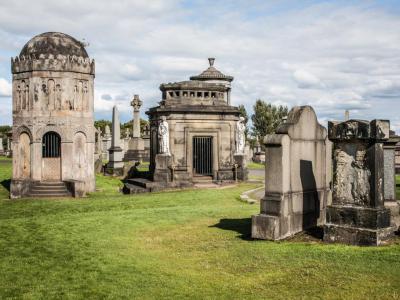
Rising above the city on a low but commanding hill, the Glasgow Necropolis is one of Scotland’s most striking Victorian landmarks. Established in 1833 on the site of a former quarry, this vast garden cemetery was inspired by Paris’s Père Lachaise and soon became a resting place for Glasgow’s elite during the city’s industrial heyday. Over the years, it has grown into a landscape of more than 50,000 memorials, monuments, and tombs, many of them designed by prominent architects and sculptors of the 19th century. For visitors, the Necropolis is both a fascinating historical archive and a serene green space with panoramic views over the city.
The cemetery is often described as a “city of the dead,” with its network of meandering paths, ornate mausoleums, and elaborate Victorian funerary art. Among its most impressive monuments is the towering memorial to John Knox, the fiery Protestant reformer, which dominates the summit of the hill. As you wander through, you’ll encounter intricate Celtic crosses, weeping angels, and finely carved stonework that reflect Glasgow’s artistic and architectural richness. Many of the tombs were designed by leading figures such as Charles Rennie Mackintosh and Alexander “Greek” Thomson, giving the Necropolis the feel of an open-air museum.
Beyond its architecture, the Necropolis tells the story of Glasgow’s rise as a centre of industry and commerce. Shipbuilders, merchants, engineers, and philanthropists are buried here, each memorial carrying a fragment of the city’s social and economic history. Plaques and inscriptions reveal the civic pride and religious fervour that shaped Victorian Glasgow. In this way, a walk among the graves becomes a journey into the city’s past, offering glimpses of the people who built its wealth and culture.
Today, the Necropolis is cherished not only as a historical site but also as a place of reflection and quiet beauty. Its elevated position affords sweeping views across the River Clyde, the spires of Glasgow Cathedral, and the city’s ever-changing skyline.
The cemetery is often described as a “city of the dead,” with its network of meandering paths, ornate mausoleums, and elaborate Victorian funerary art. Among its most impressive monuments is the towering memorial to John Knox, the fiery Protestant reformer, which dominates the summit of the hill. As you wander through, you’ll encounter intricate Celtic crosses, weeping angels, and finely carved stonework that reflect Glasgow’s artistic and architectural richness. Many of the tombs were designed by leading figures such as Charles Rennie Mackintosh and Alexander “Greek” Thomson, giving the Necropolis the feel of an open-air museum.
Beyond its architecture, the Necropolis tells the story of Glasgow’s rise as a centre of industry and commerce. Shipbuilders, merchants, engineers, and philanthropists are buried here, each memorial carrying a fragment of the city’s social and economic history. Plaques and inscriptions reveal the civic pride and religious fervour that shaped Victorian Glasgow. In this way, a walk among the graves becomes a journey into the city’s past, offering glimpses of the people who built its wealth and culture.
Today, the Necropolis is cherished not only as a historical site but also as a place of reflection and quiet beauty. Its elevated position affords sweeping views across the River Clyde, the spires of Glasgow Cathedral, and the city’s ever-changing skyline.
4) George Square (must see)
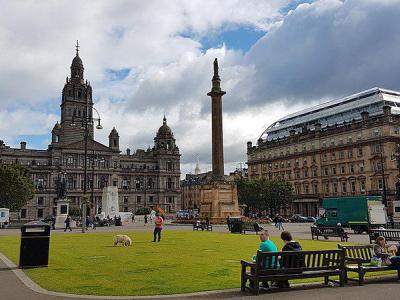
George Square is the beating civic heart of Glasgow, a grand public space that has witnessed more than two centuries of the city’s history. Laid out in 1781 and named after King George III, the square was originally designed as a residential area, but it quickly became the centrepiece of Glasgow’s growing prosperity during the Industrial Revolution. Today, it serves as both a gathering place for locals and a starting point for visitors eager to explore the city’s architecture, history, and culture. With its wide open spaces framed by historic buildings, George Square is as much a stage for public life as it is a monument to Glasgow’s past.
At its centre, you’ll find an impressive collection of statues and monuments that tell the story of Scotland’s heroes, inventors, and poets. Figures such as Robert Burns, Sir Walter Scott, and James Watt stand proudly, while a towering column dedicated to Sir Walter Scott dominates the square. These statues serve as reminders of Glasgow’s role as a hub of Enlightenment thought, engineering innovation, and political activism. The square has also long been a venue for public events-from grand celebrations to political rallies-that continue to shape the city’s identity.
Surrounding George Square are some of Glasgow’s most notable buildings. The City Chambers, completed in 1888, is a striking Victorian civic building with an ornate façade and lavish interiors that reflect the wealth and confidence of Glasgow during its industrial zenith. Hotels, banks, and historic offices ring the square, making it not only a cultural focal point but also a centre of business and public life.
For today’s visitor, George Square is both a place to pause and a hub from which to set out. Admiring its statues, watching the bustle from a café terrace, or using it as a starting point to explore Buchanan Street’s shops and the Merchant City’s restaurants, the square conveys the essence of Glasgow’s civic pride and enduring spirit.
At its centre, you’ll find an impressive collection of statues and monuments that tell the story of Scotland’s heroes, inventors, and poets. Figures such as Robert Burns, Sir Walter Scott, and James Watt stand proudly, while a towering column dedicated to Sir Walter Scott dominates the square. These statues serve as reminders of Glasgow’s role as a hub of Enlightenment thought, engineering innovation, and political activism. The square has also long been a venue for public events-from grand celebrations to political rallies-that continue to shape the city’s identity.
Surrounding George Square are some of Glasgow’s most notable buildings. The City Chambers, completed in 1888, is a striking Victorian civic building with an ornate façade and lavish interiors that reflect the wealth and confidence of Glasgow during its industrial zenith. Hotels, banks, and historic offices ring the square, making it not only a cultural focal point but also a centre of business and public life.
For today’s visitor, George Square is both a place to pause and a hub from which to set out. Admiring its statues, watching the bustle from a café terrace, or using it as a starting point to explore Buchanan Street’s shops and the Merchant City’s restaurants, the square conveys the essence of Glasgow’s civic pride and enduring spirit.
5) Buchanan Street (must see)
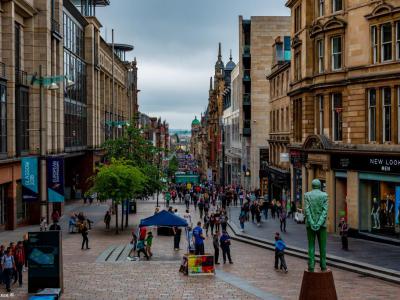
Buchanan Street is the beating heart of Glasgow’s shopping and cultural scene, a broad pedestrian thoroughfare that has been drawing locals and visitors alike since the late 18th century. Named after the wealthy tobacco merchant Andrew Buchanan, the street has transformed from a residential area for the city’s elite into one of Britain’s busiest retail destinations. Stretching from Saint Enoch Square in the south to Sauchiehall Street in the north, it forms the centrepiece of what Glaswegians fondly call the “Style Mile,” a lively hub of shops, cafés, and entertainment venues.
As you stroll along its polished paving stones, your eyes are drawn upward to the dramatic architecture that defines the street. Victorian and Edwardian buildings dominate the landscape, their ornate façades and grand stonework a reminder of the city’s mercantile prosperity. Among the highlights is the 19th-century Argyll Arcade, one of Europe’s oldest covered shopping arcades, where glittering jewellers’ windows line a glass-roofed passageway. The Buchanan Galleries shopping centre, on the street’s northern end, contrasts with sleek modern lines, reflecting Glasgow’s blend of history and contemporary energy.
Beyond shopping, Buchanan Street is a stage for the city’s street culture. Buskers, musicians, and performers add an ever-changing soundtrack, from soulful singers to lively bagpipers. The street is also dotted with inviting cafés and restaurants, offering everything from quick bites to leisurely meals-perfect for resting your feet between explorations. Seasonal decorations, from festive winter lights to summer events, ensure that each visit feels different.
For visitors, Buchanan Street is more than a commercial boulevard-it’s an experience of Glasgow itself. Browsing the latest fashions, stopping to catch a performance, or simply taking in the energy of city life, this iconic promenade offers a striking glimpse into the city’s mix of tradition and modernity. It’s an essential stop for anyone wishing to feel the pulse of Scotland’s largest city.
As you stroll along its polished paving stones, your eyes are drawn upward to the dramatic architecture that defines the street. Victorian and Edwardian buildings dominate the landscape, their ornate façades and grand stonework a reminder of the city’s mercantile prosperity. Among the highlights is the 19th-century Argyll Arcade, one of Europe’s oldest covered shopping arcades, where glittering jewellers’ windows line a glass-roofed passageway. The Buchanan Galleries shopping centre, on the street’s northern end, contrasts with sleek modern lines, reflecting Glasgow’s blend of history and contemporary energy.
Beyond shopping, Buchanan Street is a stage for the city’s street culture. Buskers, musicians, and performers add an ever-changing soundtrack, from soulful singers to lively bagpipers. The street is also dotted with inviting cafés and restaurants, offering everything from quick bites to leisurely meals-perfect for resting your feet between explorations. Seasonal decorations, from festive winter lights to summer events, ensure that each visit feels different.
For visitors, Buchanan Street is more than a commercial boulevard-it’s an experience of Glasgow itself. Browsing the latest fashions, stopping to catch a performance, or simply taking in the energy of city life, this iconic promenade offers a striking glimpse into the city’s mix of tradition and modernity. It’s an essential stop for anyone wishing to feel the pulse of Scotland’s largest city.
6) Buchanan Galleries
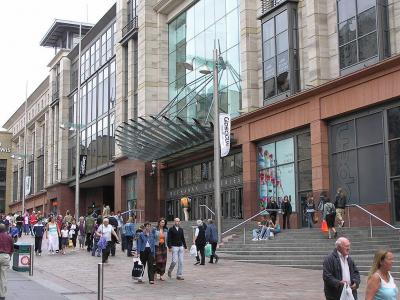
Rising above the bustle of Buchanan Street, one of the United Kingdom’s busiest shopping avenues, Buchanan Galleries is a modern retail landmark in the heart of Glasgow. Opened in 1999, this bright, glass-fronted mall quickly became a cornerstone of the city’s commercial life, offering a contemporary counterpoint to the Victorian and Edwardian architecture that lines the surrounding streets. For visitors exploring central Glasgow, it serves as both a convenient shopping destination and a gateway to the wider cultural quarter, with the Royal Concert Hall just next door.
Inside, the centre brings together more than 80 shops and eateries under one roof. International brands such as John Lewis, Mango, and LEGO sit alongside British high-street staples, making it an accessible stop for fashion, beauty, books, and homeware. The spacious, light-filled atrium provides an easy place to navigate, while numerous cafés and restaurants offer chances to pause over coffee or enjoy a relaxed meal in between browsing.
For travellers, Buchanan Galleries is more than a retail hub-it’s a window into Glasgow’s energy. The centre opens directly onto Buchanan Street, often alive with street performers and locals heading to and from work. A short stroll leads to George Square, the Gallery of Modern Art, and the Victorian arcades that give this part of the city its character. Searching for a new wardrobe piece, picking up gifts, or simply enjoying the atmosphere, Buchanan Galleries makes a welcoming stop in the lively heart of Glasgow.
Inside, the centre brings together more than 80 shops and eateries under one roof. International brands such as John Lewis, Mango, and LEGO sit alongside British high-street staples, making it an accessible stop for fashion, beauty, books, and homeware. The spacious, light-filled atrium provides an easy place to navigate, while numerous cafés and restaurants offer chances to pause over coffee or enjoy a relaxed meal in between browsing.
For travellers, Buchanan Galleries is more than a retail hub-it’s a window into Glasgow’s energy. The centre opens directly onto Buchanan Street, often alive with street performers and locals heading to and from work. A short stroll leads to George Square, the Gallery of Modern Art, and the Victorian arcades that give this part of the city its character. Searching for a new wardrobe piece, picking up gifts, or simply enjoying the atmosphere, Buchanan Galleries makes a welcoming stop in the lively heart of Glasgow.
