Custom Walk in Rome, Italy by bill_yoder_36bdb created on 2025-05-28
Guide Location: Italy » Rome
Guide Type: Custom Walk
# of Sights: 8
Tour Duration: 2 Hour(s)
Travel Distance: 5.1 Km or 3.2 Miles
Share Key: CZP7M
Guide Type: Custom Walk
# of Sights: 8
Tour Duration: 2 Hour(s)
Travel Distance: 5.1 Km or 3.2 Miles
Share Key: CZP7M
How It Works
Please retrieve this walk in the GPSmyCity app. Once done, the app will guide you from one tour stop to the next as if you had a personal tour guide. If you created the walk on this website or come to the page via a link, please follow the instructions below to retrieve the walk in the app.
Retrieve This Walk in App
Step 1. Download the app "GPSmyCity: Walks in 1K+ Cities" on Apple App Store or Google Play Store.



Step 2. In the GPSmyCity app, download(or launch) the guide "Rome Map and Walking Tours".
Step 3. Tap the menu button located at upper right corner of the "Walks" screen and select "Retrieve custom walk". Enter the share key: CZP7M
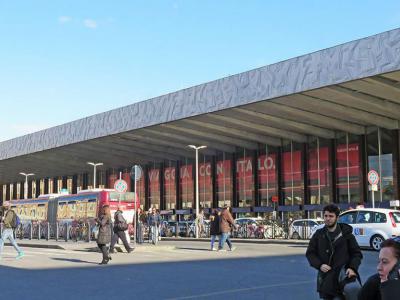
1) Roma Termini (Rome's main railway station)
Roma Termini, also known as Stazione Termini, stands as the central hub of Rome's railway system. Located in the district bearing the same name, which is derived from the ancient Baths of Diocletian ("thermae" in Latin), the station boasts a prime position just across the street from this historic site.
With an impressive 29 platforms and an extensive network of daily services reaching destinations throughout Italy and beyond, Roma Termini is one of the largest railway stations in Europe. It provides travelers with numerous amenities and seamless connections, including ItaliaRail's exclusive VIP oasis, the ItaliaPass Lounge situated at the beginning of Track 25.
As you enter the station from Piazza dei Cinquecento, you'll find a bustling entrance hall adorned with restaurants, a spacious ticket office, travel agencies, currency exchange booths, as well as a vibrant cluster of shops that shops remain open until 10pm, even on Sundays, making it a convenient "shop before you hop" destination. From popular chains like Mango, Moleskine, and Sephora to bookstores offering a wide selection of English-language bestsellers, you'll find a diverse range of options. Additionally, there is a grocery store and a well-stocked food court, providing a variety of culinary delights to satisfy your cravings.
With an impressive 29 platforms and an extensive network of daily services reaching destinations throughout Italy and beyond, Roma Termini is one of the largest railway stations in Europe. It provides travelers with numerous amenities and seamless connections, including ItaliaRail's exclusive VIP oasis, the ItaliaPass Lounge situated at the beginning of Track 25.
As you enter the station from Piazza dei Cinquecento, you'll find a bustling entrance hall adorned with restaurants, a spacious ticket office, travel agencies, currency exchange booths, as well as a vibrant cluster of shops that shops remain open until 10pm, even on Sundays, making it a convenient "shop before you hop" destination. From popular chains like Mango, Moleskine, and Sephora to bookstores offering a wide selection of English-language bestsellers, you'll find a diverse range of options. Additionally, there is a grocery store and a well-stocked food court, providing a variety of culinary delights to satisfy your cravings.
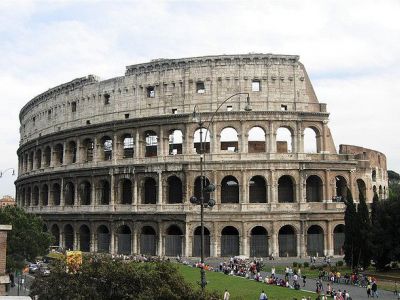
2) Colosseo (Colosseum) (must see)
The Colosseum, Rome’s iconic elliptical amphitheater, is the largest ancient amphitheater ever built, covering 24,000 square meters. Constructed between 69 and 80 AD by the Flavian dynasty, it was initially called the Flavian Amphitheater. Its modern name stems from the Colossus of Nero statue that once stood nearby, with the term "Colosseum" emerging during the medieval period.
Built on the land reclaimed from Emperor Nero’s landscaped Domus Aurea complex after the Great Fire of 64 AD, the Colosseum represented a gift to the Roman people under Emperor Vespasian. It was constructed using travertine, tuff, and concrete and was funded by spoils from the Jewish War. The latter, fought in 70 AD, led to the Siege of Jerusalem and brought back numerous prisoners who largely contributed to the massive workforce needed for the construction. The amphitheater comprised four tiers that could hold between 50,000 and 80,000 spectators at a time. Its free-standing structure features three architectural orders – Doric, Ionic, and Corinthian.
The lowest tier was for the emperor and the royal family, the two middle ones were for the noble Romans and members of government, while the highest tier was for the ordinary citizens. The elaborate system included 80 entrances, passageways for crowd control, and numbered pottery tickets for seating. Admission was free and the main sponsor was the emperor himself.
The Colosseum hosted gladiatorial contests, animal hunts, and mythological reenactments. Events often featured exotic animals imported from Africa and the Middle East. Emperor Trajan's games, for example, involved over 11,000 animals and 10,000 gladiators over 123 days! The below-ground passages were used to bring men and animals into the arena, which was separated from the audience by a ditch. Occasionally, it was reportedly even flooded for naval battles. Executions were common during intervals, with the condemned facing wild beasts or acting out tragic myths.
During the medieval period, the Colosseum served as a fortress and even a stone quarry. Passers-by habitually chipped off pieces of it for souvenirs which, together with some natural causes like earthquakes, led to its partial destruction.
Despite popular belief that the early Christians were martyred here in numbers, evidence suggests that most executions occurred elsewhere. By the 17th century, the Colosseum became recognized as a sacred site. Today, it hosts the Pope’s Good Friday “Way of the Cross” procession.
Only the north side of the building, as well as the underground passages, have survived intact. The arena floor is totally gone. Inside the Colosseum, there's a historical exhibition with both permanent and changing displays.
Tips:
Visit early in the morning or late in the evening to avoid long queues and heat. The ground and first floors are open to visitors without a special ticket, while the subterranean part and the third floor are accessed on pre-booked tours only. Opt for a guided tour to skip lines and access the Forum area. Alternatively, buy tickets in advance or at the Roman Forum. Enhance your experience with an audio guide for detailed historical insights.
Built on the land reclaimed from Emperor Nero’s landscaped Domus Aurea complex after the Great Fire of 64 AD, the Colosseum represented a gift to the Roman people under Emperor Vespasian. It was constructed using travertine, tuff, and concrete and was funded by spoils from the Jewish War. The latter, fought in 70 AD, led to the Siege of Jerusalem and brought back numerous prisoners who largely contributed to the massive workforce needed for the construction. The amphitheater comprised four tiers that could hold between 50,000 and 80,000 spectators at a time. Its free-standing structure features three architectural orders – Doric, Ionic, and Corinthian.
The lowest tier was for the emperor and the royal family, the two middle ones were for the noble Romans and members of government, while the highest tier was for the ordinary citizens. The elaborate system included 80 entrances, passageways for crowd control, and numbered pottery tickets for seating. Admission was free and the main sponsor was the emperor himself.
The Colosseum hosted gladiatorial contests, animal hunts, and mythological reenactments. Events often featured exotic animals imported from Africa and the Middle East. Emperor Trajan's games, for example, involved over 11,000 animals and 10,000 gladiators over 123 days! The below-ground passages were used to bring men and animals into the arena, which was separated from the audience by a ditch. Occasionally, it was reportedly even flooded for naval battles. Executions were common during intervals, with the condemned facing wild beasts or acting out tragic myths.
During the medieval period, the Colosseum served as a fortress and even a stone quarry. Passers-by habitually chipped off pieces of it for souvenirs which, together with some natural causes like earthquakes, led to its partial destruction.
Despite popular belief that the early Christians were martyred here in numbers, evidence suggests that most executions occurred elsewhere. By the 17th century, the Colosseum became recognized as a sacred site. Today, it hosts the Pope’s Good Friday “Way of the Cross” procession.
Only the north side of the building, as well as the underground passages, have survived intact. The arena floor is totally gone. Inside the Colosseum, there's a historical exhibition with both permanent and changing displays.
Tips:
Visit early in the morning or late in the evening to avoid long queues and heat. The ground and first floors are open to visitors without a special ticket, while the subterranean part and the third floor are accessed on pre-booked tours only. Opt for a guided tour to skip lines and access the Forum area. Alternatively, buy tickets in advance or at the Roman Forum. Enhance your experience with an audio guide for detailed historical insights.
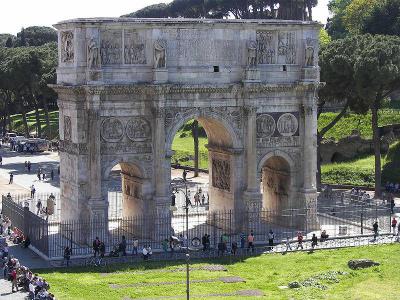
3) Arco di Costantino (Arch of Constantine)
On October 28, 312 AD, Roman emperor Constantine had an epic battle with his rival, co-emperor Maxentius. It went down in history as the Battle of the Milvian Bridge. Victorious Constantine became the sole ruler of the Roman Empire, thus ending the system of Tetrarchy. He is generally regarded as the last great emperor of Rome.
The Arch of Constantine, Rome’s largest triumphal arch, was dedicated in 315 AD to commemorate Constantine’s victory. Located between the Colosseum and Palatine Hill, it spans the Road of Triumph, marking the route of Roman military parades. The arch stands 21 meters high, featuring three bays and incorporating elements from earlier monuments, including reliefs and statues from the reigns of Trajan, Hadrian, and Marcus Aurelius, reworked to celebrate Constantine.
Scholars have debated the arch's origins, suggesting it may predate Constantine and even have ties to Hadrian’s or Maxentius’s reigns. The arch exemplifies Late Antique artistic styles, with a blend of reused classical Greek-inspired elements and newly-created simpler, symbolic works. Reliefs from earlier monuments display classical proportions and dynamic movement, while the 4th-century additions feature rigid and geometric forms, reflecting changes in artistic priorities or economic constraints at that time. This stylistic contrast highlights the transition from Rome’s classical tradition to the evolving aesthetics of Late Antiquity.
Decorative elements on the arch include reliefs of Dacians from Trajan’s reign, panels depicting Marcus Aurelius’s military campaigns, and roundels from Hadrian’s era reworked to depict Constantine. A Constantinian frieze narrates his campaign against Maxentius, while inscriptions celebrate him as a pious and victorious leader.
One such inscription credits Constantine with saving the Roman people by divine inspiration. It refers to his vision before the Battle of Milvian Bridge in 312 AD, where he claimed to have seen a cross in the sky and heard the words: "In this sign, you will conquer." This event is often linked to Constantine's promotion of Christianity within the Roman Empire. The arch also balances pagan and Christian themes, symbolizing Constantine’s shifting religious stance during this period.
The Arch of Constantine's global influence as a monument includes the likes of the Arch of Triumph in Paris, the Marble Arch in London, Washington Union Station in Washington DC, and the American Museum of Natural History in New York City.
The Arch of Constantine, Rome’s largest triumphal arch, was dedicated in 315 AD to commemorate Constantine’s victory. Located between the Colosseum and Palatine Hill, it spans the Road of Triumph, marking the route of Roman military parades. The arch stands 21 meters high, featuring three bays and incorporating elements from earlier monuments, including reliefs and statues from the reigns of Trajan, Hadrian, and Marcus Aurelius, reworked to celebrate Constantine.
Scholars have debated the arch's origins, suggesting it may predate Constantine and even have ties to Hadrian’s or Maxentius’s reigns. The arch exemplifies Late Antique artistic styles, with a blend of reused classical Greek-inspired elements and newly-created simpler, symbolic works. Reliefs from earlier monuments display classical proportions and dynamic movement, while the 4th-century additions feature rigid and geometric forms, reflecting changes in artistic priorities or economic constraints at that time. This stylistic contrast highlights the transition from Rome’s classical tradition to the evolving aesthetics of Late Antiquity.
Decorative elements on the arch include reliefs of Dacians from Trajan’s reign, panels depicting Marcus Aurelius’s military campaigns, and roundels from Hadrian’s era reworked to depict Constantine. A Constantinian frieze narrates his campaign against Maxentius, while inscriptions celebrate him as a pious and victorious leader.
One such inscription credits Constantine with saving the Roman people by divine inspiration. It refers to his vision before the Battle of Milvian Bridge in 312 AD, where he claimed to have seen a cross in the sky and heard the words: "In this sign, you will conquer." This event is often linked to Constantine's promotion of Christianity within the Roman Empire. The arch also balances pagan and Christian themes, symbolizing Constantine’s shifting religious stance during this period.
The Arch of Constantine's global influence as a monument includes the likes of the Arch of Triumph in Paris, the Marble Arch in London, Washington Union Station in Washington DC, and the American Museum of Natural History in New York City.
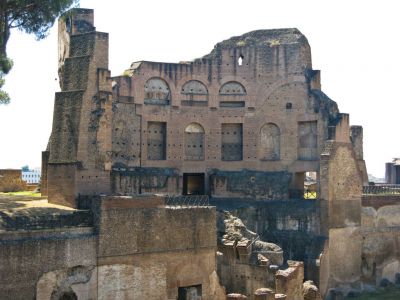
4) Palatino (Palatine Hill) (must see)
The Palatine Hill, centrally located among Rome’s seven hills, is one of the city’s oldest and most historically significant areas. Often referred to as "the first nucleus of the Roman Empire," it is now a vast open-air museum.
Overlooking the Roman Forum and Circus Maximus, Palatine Hill became the desirable location for the homes of Rome's wealthiest citizens during the Republican era. During the Imperial era, starting from the reign of Augustus, it was an exclusive domain of emperors, featuring luxurious palaces like those of Augustus, Tiberius, and Domitian. Before imperial development, the hill had two summits, Palatium and Germalus, separated by a depression. Over time, the Palatine played a central role in Rome’s evolution, with continuous habitation traced back to the 10th century BC. Excavations reveal funerary huts from the 9th–7th centuries BC, aligning with the city’s mythological founding period.
The modern-day word “palace” is derived from the word “Palatine”.
Roman mythology enriches its legacy, as the hill was believed to be the site where Rome was reportedly founded. According to legend, it was on this hill that the twins Romulus and Remus, the legendary founders of Rome, were discovered by a she-wolf who raised them. When they grew up, the twins set out to build a city of their own. While Remus wanted to build it on Aventine Hill, Romulus had his mind set firmly on Palatine Hill. The brothers argued fiercely, and during the fight, Romulus killed Remus. He went on to build the city in 753 BC, calling it Rome, and reigned as its first king.
Monumental structures dominate the site, including the Palace of Domitian and the House of Livia, the latter renowned for its well-preserved frescoes. The House of Tiberius partially survives within the Farnese Gardens.
Extensive archaeological excavations, dating back to Augustus’ time, have uncovered significant finds, including Bronze Age artifacts and the Palatine House, thought to be the birthplace of Emperor Augustus. Modern investigations have revealed frescoed walls and mosaics, along with the Lupercal, the cave at the southwest foot of the Palatine Hill, where Romulus and Remus were suckled by the she-wolf.
Tip:
"Super" tickets provide access to the key attractions on the Hill, including the Roman Forum and Colosseum. Prepare with water, snacks, sunscreen, a hat, and sturdy shoes, as the steep paths and lack of vending machines can be challenging.
Overlooking the Roman Forum and Circus Maximus, Palatine Hill became the desirable location for the homes of Rome's wealthiest citizens during the Republican era. During the Imperial era, starting from the reign of Augustus, it was an exclusive domain of emperors, featuring luxurious palaces like those of Augustus, Tiberius, and Domitian. Before imperial development, the hill had two summits, Palatium and Germalus, separated by a depression. Over time, the Palatine played a central role in Rome’s evolution, with continuous habitation traced back to the 10th century BC. Excavations reveal funerary huts from the 9th–7th centuries BC, aligning with the city’s mythological founding period.
The modern-day word “palace” is derived from the word “Palatine”.
Roman mythology enriches its legacy, as the hill was believed to be the site where Rome was reportedly founded. According to legend, it was on this hill that the twins Romulus and Remus, the legendary founders of Rome, were discovered by a she-wolf who raised them. When they grew up, the twins set out to build a city of their own. While Remus wanted to build it on Aventine Hill, Romulus had his mind set firmly on Palatine Hill. The brothers argued fiercely, and during the fight, Romulus killed Remus. He went on to build the city in 753 BC, calling it Rome, and reigned as its first king.
Monumental structures dominate the site, including the Palace of Domitian and the House of Livia, the latter renowned for its well-preserved frescoes. The House of Tiberius partially survives within the Farnese Gardens.
Extensive archaeological excavations, dating back to Augustus’ time, have uncovered significant finds, including Bronze Age artifacts and the Palatine House, thought to be the birthplace of Emperor Augustus. Modern investigations have revealed frescoed walls and mosaics, along with the Lupercal, the cave at the southwest foot of the Palatine Hill, where Romulus and Remus were suckled by the she-wolf.
Tip:
"Super" tickets provide access to the key attractions on the Hill, including the Roman Forum and Colosseum. Prepare with water, snacks, sunscreen, a hat, and sturdy shoes, as the steep paths and lack of vending machines can be challenging.
5) Foro Romano (Roman Forum) (must see)
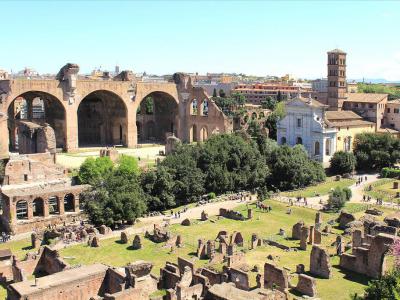
The Roman Forum, once the pulsating heart of ancient Rome's public life, evolved from a simple marketplace around 500 BC into the epicenter of Roman political, social, and religious activity. Known as the Forum Magnum, it became a hub for triumphal processions, public speeches, elections, criminal trials, gladiatorial matches, and commerce. Statues and monuments celebrating Roman leaders solidified its status as one of history’s most significant meeting places.
Initially featuring early structures like the Regia (a royal residence) and the Temple of Vesta, the Forum developed into a formal assembly area called the Comitium, where the Senate and government convened. Over centuries, temples, tribunals, and public buildings, such as the Senate House and the Temple of Saturn, transformed the Forum into a multifunctional hub. The Basilica Aemilia, built in 179 BC, expanded judicial activities, while Julius Caesar’s enhancements, including the Basilica Julia and Curia Julia, underscored its role as a center for politics, commerce, and religion.
Despite its prominence, the Forum’s importance began to decline with the emergence of grander structures, such as Trajan's Forum and the Basilica Ulpia, to the north. Unlike the more planned Imperial Forums, the Roman Forum grew organically, reflecting a mix of architectural styles across periods. Constantine the Great’s construction of the Maxentius Basilica in 312 AD marked its final significant addition, temporarily restoring its political centrality. However, the fall of the Western Roman Empire in the 5th century AD led to the Forum's destruction and decline.
Today, the Roman Forum is a sprawling ruin but remains a priceless historical treasure. Though reduced to crumbling remains, it continues to captivate visitors, drawing nearly five million annually. Highlights of the site include the Sacred Street, the Arch of Titus, and remnants of iconic buildings like the Temple of Castor and Pollux.
Initially featuring early structures like the Regia (a royal residence) and the Temple of Vesta, the Forum developed into a formal assembly area called the Comitium, where the Senate and government convened. Over centuries, temples, tribunals, and public buildings, such as the Senate House and the Temple of Saturn, transformed the Forum into a multifunctional hub. The Basilica Aemilia, built in 179 BC, expanded judicial activities, while Julius Caesar’s enhancements, including the Basilica Julia and Curia Julia, underscored its role as a center for politics, commerce, and religion.
Despite its prominence, the Forum’s importance began to decline with the emergence of grander structures, such as Trajan's Forum and the Basilica Ulpia, to the north. Unlike the more planned Imperial Forums, the Roman Forum grew organically, reflecting a mix of architectural styles across periods. Constantine the Great’s construction of the Maxentius Basilica in 312 AD marked its final significant addition, temporarily restoring its political centrality. However, the fall of the Western Roman Empire in the 5th century AD led to the Forum's destruction and decline.
Today, the Roman Forum is a sprawling ruin but remains a priceless historical treasure. Though reduced to crumbling remains, it continues to captivate visitors, drawing nearly five million annually. Highlights of the site include the Sacred Street, the Arch of Titus, and remnants of iconic buildings like the Temple of Castor and Pollux.
6) Piazza di Trevi & Fontana di Trevi (Trevi Square & Trevi Fountain) (must see)
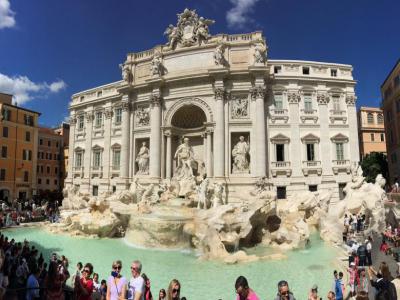
The Trevi Fountain is one of Rome’s most iconic landmarks, drawing visitors to the eponymous Trevi Square all day long. Surprisingly, the fountain was not initially built in the heart of the city; instead, the city grew around it. Its name derives from the Latin word "trivium," which means “three streets,” as it sits at the junction of three streets: De Crocicchi, Poli, and Delle Muratte.
The fountain’s history dates back to 1629 when Pope Urban VIII commissioned Gian Lorenzo Bernini to redesign it, though his plans were never realized. Later, Pope Clement XII organized a competition in 1730, leading to Nicola Salvi's selection for the project, who incorporated the fountain into the rear of the Poli Palace. Salvi passed away before its completion. Giuseppe Pannini and other artists finalized the work in 1762.
Measuring over 26 meters in height and 49 meters in width, it is the largest Baroque fountain in Rome.
The Trevi Fountain features a Corinthian façade and bas-reliefs depicting the origins of the Acqua Vergine aqueduct, constructed in 19 BC. According to legend, a virgin guided Roman engineers to the aqueduct’s source, an event depicted in the fountain’s bas-reliefs. The aqueduct, which survived the Gothic invasions and was restored during the Middle Ages, still supplies water to the fountain today.
At the heart of the fountain is Oceanus, depicted riding a shell-shaped chariot drawn by two horses and guided by Tritons. The horses symbolize the sea’s contrasting moods-calm and turbulent. Flanking Oceanus are the statues of Abundance and Salubrity, representing prosperity and health. The symmetrical Rococo design combines dynamic artistry with Baroque grandeur, reflecting 18th-century European trends.
The Trevi Fountain is also known for the tradition of tossing coins, which promises a return to Rome. Popularized by the 1954 Hollywood film "Three Coins in the Fountain," visitors toss coins over their left shoulder with their right hand, generating daily about €3,000. This money, collected by municipal authorities, is donated to charity.
Celebrated in films like Roman Holiday and La Dolce Vita, the Trevi Fountain’s global fame is further evidenced by replicas worldwide. Access to the fountain is now limited to 400 visitors at a time, ensuring a more enjoyable visit to this timeless masterpiece. Surrounding the fountain are charming shops, restaurants, and gelaterias, making it a delightful spot to soak in Rome’s vibrant atmosphere.
Tip:
The fountain holds particular allure at night, especially after 10 pm when it is beautifully illuminated and the crowds dissipate, allowing you to enjoy the site almost exclusively.
The fountain’s history dates back to 1629 when Pope Urban VIII commissioned Gian Lorenzo Bernini to redesign it, though his plans were never realized. Later, Pope Clement XII organized a competition in 1730, leading to Nicola Salvi's selection for the project, who incorporated the fountain into the rear of the Poli Palace. Salvi passed away before its completion. Giuseppe Pannini and other artists finalized the work in 1762.
Measuring over 26 meters in height and 49 meters in width, it is the largest Baroque fountain in Rome.
The Trevi Fountain features a Corinthian façade and bas-reliefs depicting the origins of the Acqua Vergine aqueduct, constructed in 19 BC. According to legend, a virgin guided Roman engineers to the aqueduct’s source, an event depicted in the fountain’s bas-reliefs. The aqueduct, which survived the Gothic invasions and was restored during the Middle Ages, still supplies water to the fountain today.
At the heart of the fountain is Oceanus, depicted riding a shell-shaped chariot drawn by two horses and guided by Tritons. The horses symbolize the sea’s contrasting moods-calm and turbulent. Flanking Oceanus are the statues of Abundance and Salubrity, representing prosperity and health. The symmetrical Rococo design combines dynamic artistry with Baroque grandeur, reflecting 18th-century European trends.
The Trevi Fountain is also known for the tradition of tossing coins, which promises a return to Rome. Popularized by the 1954 Hollywood film "Three Coins in the Fountain," visitors toss coins over their left shoulder with their right hand, generating daily about €3,000. This money, collected by municipal authorities, is donated to charity.
Celebrated in films like Roman Holiday and La Dolce Vita, the Trevi Fountain’s global fame is further evidenced by replicas worldwide. Access to the fountain is now limited to 400 visitors at a time, ensuring a more enjoyable visit to this timeless masterpiece. Surrounding the fountain are charming shops, restaurants, and gelaterias, making it a delightful spot to soak in Rome’s vibrant atmosphere.
Tip:
The fountain holds particular allure at night, especially after 10 pm when it is beautifully illuminated and the crowds dissipate, allowing you to enjoy the site almost exclusively.
7) Pantheon (must see)
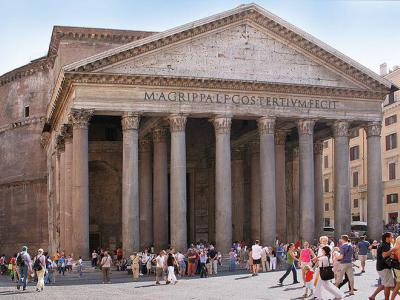
The Pantheon is one of Rome’s most iconic landmarks, renowned for its architectural brilliance. Originally a Roman temple, its name comes from the Ancient Greek "pan theos," which means dedication to all gods. Built on the site of a temple commissioned by consul Marcus Agrippa during Augustus’ reign, the current structure was completed under Emperor Hadrian around 126 AD. It was transformed into a Catholic Church of Saint Mary and the Martyrs in 609 AD, ensuring its preservation through centuries.
The Pantheon’s unique design combines a classical portico supported by Corinthian granite columns with a domed cylindrical structure (called a rotunda). The unsupported concrete dome, still the largest of its kind in the world, features a central oculus that provides natural light, ventilation, and symbolic celestial connections. The rotunda's harmonious dimensions-43 meters in both height and diameter-epitomize Roman engineering excellence, while its original massive bronze doors, each weighing over 20 tons, and intricate drainage system (allowing to effectively divert rainwater) highlight the ingenuity of its creators.
Throughout its history, the Pantheon has been a vibrant part of Roman life. It served as a burial site during the Renaissance, housing notable figures like painter Raphael and Italian kings Victor Emmanuel II and Umberto I. Its materials, such as bronze, have been repurposed for other projects like Bernini’s baldachin above the high altar of Saint Peter's Basilica. However, its core structure remains remarkably intact. Today, the church still host religious ceremonies, including masses, weddings, and Pentecost celebrations.
The Pantheon’s influence extends far beyond Rome. Its dome inspired architectural marvels like the Florence Cathedral and Rotunda of the U.S. Capital in Washington D.C., while its combination of classical and modern elements shaped countless government and academic buildings worldwide.
With over six million annual visitors, the Pantheon remains a symbol of Roman ingenuity and artistic achievement. Tourists can enjoy free entry to this historic site or soak in its splendor from Rotonda Square, savoring gelato while marveling at its timeless beauty.
Tip:
Incredible at night (from the outside), it is especially so if you enjoy musicians with talent and engagement... but beware of pickpockets.
The Pantheon’s unique design combines a classical portico supported by Corinthian granite columns with a domed cylindrical structure (called a rotunda). The unsupported concrete dome, still the largest of its kind in the world, features a central oculus that provides natural light, ventilation, and symbolic celestial connections. The rotunda's harmonious dimensions-43 meters in both height and diameter-epitomize Roman engineering excellence, while its original massive bronze doors, each weighing over 20 tons, and intricate drainage system (allowing to effectively divert rainwater) highlight the ingenuity of its creators.
Throughout its history, the Pantheon has been a vibrant part of Roman life. It served as a burial site during the Renaissance, housing notable figures like painter Raphael and Italian kings Victor Emmanuel II and Umberto I. Its materials, such as bronze, have been repurposed for other projects like Bernini’s baldachin above the high altar of Saint Peter's Basilica. However, its core structure remains remarkably intact. Today, the church still host religious ceremonies, including masses, weddings, and Pentecost celebrations.
The Pantheon’s influence extends far beyond Rome. Its dome inspired architectural marvels like the Florence Cathedral and Rotunda of the U.S. Capital in Washington D.C., while its combination of classical and modern elements shaped countless government and academic buildings worldwide.
With over six million annual visitors, the Pantheon remains a symbol of Roman ingenuity and artistic achievement. Tourists can enjoy free entry to this historic site or soak in its splendor from Rotonda Square, savoring gelato while marveling at its timeless beauty.
Tip:
Incredible at night (from the outside), it is especially so if you enjoy musicians with talent and engagement... but beware of pickpockets.
8) Piazza Navona (Navona Square) (must see)
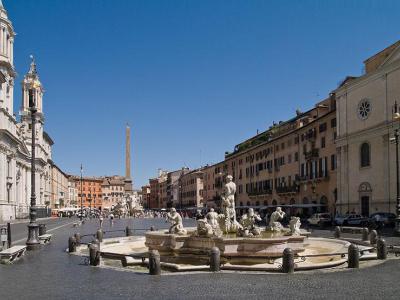
Navona Square, one of Rome’s most iconic places, is built on the site of the ancient (1st-century AD) Stadium of Domitian. The stadium’s elongated oval shape defines the square’s layout, which was originally designed for Roman games (or agones). Over time, the name evolved from Circus Agonalis (which means “competition arena”) to Navona. After the fall of the Roman Empire, the stadium fell into ruin and was quarried for materials, leaving few remnants today.
In the late 15th century, Navona Square was designated a public space when the city market moved there from Capitoline Hill. It became a celebrated example of Baroque architecture and art during the mid-17th century under Pope Innocent X, whose family property, the Pamphili Palace, overlooks the square. The latter also features several masterpieces, including Gian Lorenzo Bernini’s Fountain of the Four Rivers at its center, crowned by the Obelisk of Domitian. The renowned Church of Saint Agnes in Agone with its impressive dome further highlights the area's artistic significance. Also noteworthy are the Braschi Palace, presently home to the Museum of Rome, and the Cupis Palace, which now offers pre-booked accommodations.
Navona Square is also home to two additional fountains. The Fountain of the Moor, at the southern end, was originally sculpted by Giacomo della Porta in 1575, with Bernini adding a statue of a Moor wrestling a dolphin in 1673. At the northern end, the Fountain of Neptune, also by della Porta (created in 1574), gained its central Neptune statue in 1878.
The square has a rich cultural history, hosting theatrical performances and festivals, including a popular annual Christmas market, from December to January.
Navona Square made an appearance in several movies, including “Angels & Demons” (of 2008, starring Tom Hanks), “Yesterday, Today and Tomorrow” (with Sophie Loren, made in 1964), and “The Talented Mr. Ripley” (directed in 1999 by Anthony Minghella, featuring Matt Damon). The atmosphere in Navona Square exudes a cool and relaxed vibe which, complete with its cinematic and architectural appeal, makes it an ideal spot for photography.
Tip:
In the evenings, when the central fountain is illuminated, the square becomes particularly scenic.
If looking for more intimate and more value-for-money meals and refreshments, consider venturing onto one of the side streets adjacent to the square, filled with multiple eateries and cafes.
In the late 15th century, Navona Square was designated a public space when the city market moved there from Capitoline Hill. It became a celebrated example of Baroque architecture and art during the mid-17th century under Pope Innocent X, whose family property, the Pamphili Palace, overlooks the square. The latter also features several masterpieces, including Gian Lorenzo Bernini’s Fountain of the Four Rivers at its center, crowned by the Obelisk of Domitian. The renowned Church of Saint Agnes in Agone with its impressive dome further highlights the area's artistic significance. Also noteworthy are the Braschi Palace, presently home to the Museum of Rome, and the Cupis Palace, which now offers pre-booked accommodations.
Navona Square is also home to two additional fountains. The Fountain of the Moor, at the southern end, was originally sculpted by Giacomo della Porta in 1575, with Bernini adding a statue of a Moor wrestling a dolphin in 1673. At the northern end, the Fountain of Neptune, also by della Porta (created in 1574), gained its central Neptune statue in 1878.
The square has a rich cultural history, hosting theatrical performances and festivals, including a popular annual Christmas market, from December to January.
Navona Square made an appearance in several movies, including “Angels & Demons” (of 2008, starring Tom Hanks), “Yesterday, Today and Tomorrow” (with Sophie Loren, made in 1964), and “The Talented Mr. Ripley” (directed in 1999 by Anthony Minghella, featuring Matt Damon). The atmosphere in Navona Square exudes a cool and relaxed vibe which, complete with its cinematic and architectural appeal, makes it an ideal spot for photography.
Tip:
In the evenings, when the central fountain is illuminated, the square becomes particularly scenic.
If looking for more intimate and more value-for-money meals and refreshments, consider venturing onto one of the side streets adjacent to the square, filled with multiple eateries and cafes.
