Custom Walk in Minneapolis, Minnesota by pspioch_32423 created on 2025-05-30
Guide Location: USA » Minneapolis
Guide Type: Custom Walk
# of Sights: 10
Tour Duration: 17 Hour(s)
Travel Distance: 48.9 Km or 30.4 Miles
Share Key: 8NDNU
Guide Type: Custom Walk
# of Sights: 10
Tour Duration: 17 Hour(s)
Travel Distance: 48.9 Km or 30.4 Miles
Share Key: 8NDNU
How It Works
Please retrieve this walk in the GPSmyCity app. Once done, the app will guide you from one tour stop to the next as if you had a personal tour guide. If you created the walk on this website or come to the page via a link, please follow the instructions below to retrieve the walk in the app.
Retrieve This Walk in App
Step 1. Download the app "GPSmyCity: Walks in 1K+ Cities" on Apple App Store or Google Play Store.



Step 2. In the GPSmyCity app, download(or launch) the guide "Minneapolis Map and Walking Tours".
Step 3. Tap the menu button located at upper right corner of the "Walks" screen and select "Retrieve custom walk". Enter the share key: 8NDNU

1) Minnesota State Capitol (must see)
When local architect Cass Gilbert set out to design Minnesota’s third state Capitol, he clearly had more in mind than a building-it was an architectural power move. Construction kicked off in 1896, and by the time the Capitol debuted in January 1905, it was turning heads. Visitors who strolled through its doors were floored by the soaring marble dome (one of the world’s largest self-supporting ones, no less), expansive chambers for state officials, and art-filled walls that looked more like galleries than government décor. Not to mention, over twenty types of stone imported from across the globe were bathed in the warm glow of electric lighting-pure cutting-edge elegance for the time.
Fast forward 113 years, and the Capitol still dazzles-especially after a meticulous four-year restoration. Like a vintage car brought back to its showroom glory, the building now gleams with repaired exterior stonework, refreshed decorative wall panels, and murals that pop with color. Original light fixtures shine brighter than ever, and over a hundred restored pieces of furniture have been reunited with their old haunts, complementing other historic treasures throughout the corridors, chambers, and meeting rooms.
But it’s not just a facelift. New roof and copper panels? Check. Updated electrical and mechanical systems? Check. Modern LED lighting? Absolutely. There’s even more room for meetings, conferences, and exhibits. The once-cluttered basement has been transformed into an inviting public space, complete with exposed foundation stones and easier access to the original German rathskeller-a charming cafeteria during legislative sessions.
With its marriage of art and architecture, the Capitol is a true visual banquet-a feast of grand spaces and vibrant details. And if you want to savor the full experience, guided tours are available Monday through Saturday, every hour from 10 AM to 2 PM. Just check in at the Capitol Information and Tour Center on the first floor, and get ready to marvel at this Minnesota landmark.
Fast forward 113 years, and the Capitol still dazzles-especially after a meticulous four-year restoration. Like a vintage car brought back to its showroom glory, the building now gleams with repaired exterior stonework, refreshed decorative wall panels, and murals that pop with color. Original light fixtures shine brighter than ever, and over a hundred restored pieces of furniture have been reunited with their old haunts, complementing other historic treasures throughout the corridors, chambers, and meeting rooms.
But it’s not just a facelift. New roof and copper panels? Check. Updated electrical and mechanical systems? Check. Modern LED lighting? Absolutely. There’s even more room for meetings, conferences, and exhibits. The once-cluttered basement has been transformed into an inviting public space, complete with exposed foundation stones and easier access to the original German rathskeller-a charming cafeteria during legislative sessions.
With its marriage of art and architecture, the Capitol is a true visual banquet-a feast of grand spaces and vibrant details. And if you want to savor the full experience, guided tours are available Monday through Saturday, every hour from 10 AM to 2 PM. Just check in at the Capitol Information and Tour Center on the first floor, and get ready to marvel at this Minnesota landmark.
2) Summit Avenue (must see)
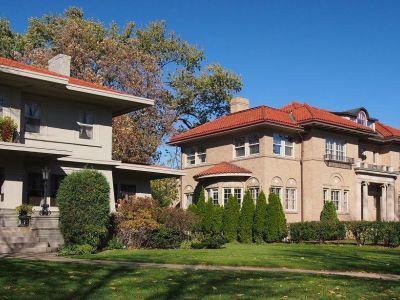
Stretching four and a half miles, Summit Avenue proudly hosts 373 of the 440 homes representing the Victorian era. Some even come with a ghostly side hustle-haunted reputations that add a dash of intrigue to the mix. The avenue’s story begins in 1855, when Reverend Edward Duffield Neill, a Pennsylvanian transplant, built the first house here. Civil War-era construction slowed things down, but by the late 1880s, the advent of cable cars and later streetcars re-ignited Summit’s development boom.
This stately boulevard quickly became a playground for the well-to-do, with railroads, dry goods, and lumber fortunes funding architectural showpieces. During the Victorian construction spree, houses sprung up in a medley of styles-Queen Anne, Romanesque, and Tudor Revival-and were arranged in elegant rows rather than compact blocks, creating the perfect stage for horse-drawn carriage rides. The avenue’s prestige also attracted institutions like Macalester College, Saint Paul Seminary, and the College of Saint Thomas, all established in the late 19th century.
Summit Avenue is more than just a residential street; it’s a living history lesson. National Historic Landmarks include the Frank B. Kellogg House, the F. Scott Fitzgerald House, and the James J. Hill House, while the National Register of Historic Places recognizes the Burbank–Livingston–Griggs House, Pierce and Walter Butler House, and Dr. Ward Beebe House. Not to be outdone, the Cathedral of Saint Paul and the Minnesota Governor’s Residence add their own historic gravitas.
If you’re curious to peek inside, the James J. Hill House offers public tours Wednesday through Sunday. Otherwise, many of these architectural treasures are best admired from the sidewalk-ideal for photo ops or simply a leisurely stroll past some of the most storied homes in Saint Paul.
This stately boulevard quickly became a playground for the well-to-do, with railroads, dry goods, and lumber fortunes funding architectural showpieces. During the Victorian construction spree, houses sprung up in a medley of styles-Queen Anne, Romanesque, and Tudor Revival-and were arranged in elegant rows rather than compact blocks, creating the perfect stage for horse-drawn carriage rides. The avenue’s prestige also attracted institutions like Macalester College, Saint Paul Seminary, and the College of Saint Thomas, all established in the late 19th century.
Summit Avenue is more than just a residential street; it’s a living history lesson. National Historic Landmarks include the Frank B. Kellogg House, the F. Scott Fitzgerald House, and the James J. Hill House, while the National Register of Historic Places recognizes the Burbank–Livingston–Griggs House, Pierce and Walter Butler House, and Dr. Ward Beebe House. Not to be outdone, the Cathedral of Saint Paul and the Minnesota Governor’s Residence add their own historic gravitas.
If you’re curious to peek inside, the James J. Hill House offers public tours Wednesday through Sunday. Otherwise, many of these architectural treasures are best admired from the sidewalk-ideal for photo ops or simply a leisurely stroll past some of the most storied homes in Saint Paul.
3) Fort Snelling (must see)
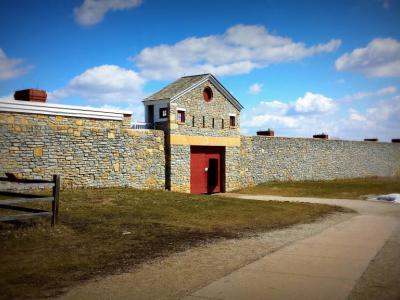
One spot on the bluffs, countless voices echoing through time. At Historic Fort Snelling, perched where the Minnesota and Mississippi rivers meet, you’ll uncover 10,000 years of Minnesota’s tale. Dive into the story of the 1820s military fort-officially a military reservation and lauded as a “National Treasure” by the National Trust for Historic Preservation-and its neighborhood. This ground has seen it all: the lives of Native peoples, the hustle of trade, the courage of soldiers and veterans, the struggles of enslaved people, and waves of immigrants-all set against a landscape in constant flux. The shiny new Plank Museum & Visitor Center is open all year.
Pro tip: Consider visiting the nearby Minnesota Air National Guard Museum. It’s one of the largest collections of military aircraft in five states, boasting fighters, cargo haulers, helicopters, and utility planes used by the U.S. military. Marvel at ejection seats, flight simulators, jet engines, and weaponry spanning WWI to today. But remember: book your tour at least 10 days ahead so you don’t get grounded!
Pro tip: Consider visiting the nearby Minnesota Air National Guard Museum. It’s one of the largest collections of military aircraft in five states, boasting fighters, cargo haulers, helicopters, and utility planes used by the U.S. military. Marvel at ejection seats, flight simulators, jet engines, and weaponry spanning WWI to today. But remember: book your tour at least 10 days ahead so you don’t get grounded!
4) Minnehaha Falls
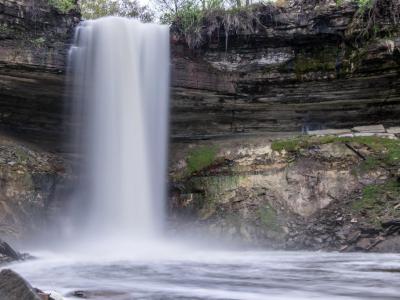
Minnehaha Falls, the iconic 53-foot cascade that once inspired Henry Wadsworth Longfellow to pen “The Song of Hiawatha,” remains one of Minneapolis’s most treasured landmarks. Its thundering rush of water and the refreshing mist it kicks up offer a welcome contrast to the bustling city surroundings. Admire the falls from above or descend the staircase to see it from below-either way, the views are worth it.
But the fun doesn’t stop at the falls. Wander through Minnehaha Park and grab a picnic table, or let someone else do the cooking at Sea Salt. Known for their top-notch tacos and seafood, this seasonal favorite draws crowds-so snag a drink and soak up the scenery while you wait.
After your meal, hit the trails. The paths wind past charming stone bridges and riverside beaches, with the soothing river sounds accompanying you along the way. Bring your bike to tackle the Grand Rounds National Scenic Byway, a 50-mile loop showcasing Minneapolis’s beauty. Got a four-legged friend? The off-leash dog park is a perfect spot to let them stretch their legs.
However you get here, don’t miss it. It’s a classic Minneapolis experience.
But the fun doesn’t stop at the falls. Wander through Minnehaha Park and grab a picnic table, or let someone else do the cooking at Sea Salt. Known for their top-notch tacos and seafood, this seasonal favorite draws crowds-so snag a drink and soak up the scenery while you wait.
After your meal, hit the trails. The paths wind past charming stone bridges and riverside beaches, with the soothing river sounds accompanying you along the way. Bring your bike to tackle the Grand Rounds National Scenic Byway, a 50-mile loop showcasing Minneapolis’s beauty. Got a four-legged friend? The off-leash dog park is a perfect spot to let them stretch their legs.
However you get here, don’t miss it. It’s a classic Minneapolis experience.

5) Minnehaha Park (must see)
The 53-foot waterfall-named for the Dakota words for “water” and “waterfall”-steals the spotlight at this beloved Minneapolis park, established way back in 1889. But it’s hardly the only reason to visit. Meander through the serene gardens of the upper park, or tackle the wilder terrain in the lower park if you’re up for a heartier hike.
If you’d rather explore on two wheels, rent a bike and check out the park’s historic gems: the Princess Depot, a petite transport museum; the John H. Stevens House, the first wood-frame home west of the Mississippi; and a replica of Longfellow’s home, where you can dig into the story behind Minneapolis’s expansive park system. For extra fun, there’s a disc golf course, a wading pool, and-drumroll-Sea Salt. Open from April to October, this seasonal hot spot serves up beachy bites like calamari, crab cakes, fried fish tacos, and oyster po’ boys. The lines are long, but the falls are gorgeous, so take in the view while you wait.
Flower lovers, take note: The Minnehaha Falls Pergola Garden is packed with stunning blooms and native plants (perfect for family photos) and the Song of Hiawatha Garden features a fountain brimming with colorful annuals. Meanwhile, Longfellow Gardens-once a zoo-boasts a replica of the poet’s house in Cambridge, Massachusetts. With so much beauty to explore, you might forget all about the waterfall. Almost.
If you’d rather explore on two wheels, rent a bike and check out the park’s historic gems: the Princess Depot, a petite transport museum; the John H. Stevens House, the first wood-frame home west of the Mississippi; and a replica of Longfellow’s home, where you can dig into the story behind Minneapolis’s expansive park system. For extra fun, there’s a disc golf course, a wading pool, and-drumroll-Sea Salt. Open from April to October, this seasonal hot spot serves up beachy bites like calamari, crab cakes, fried fish tacos, and oyster po’ boys. The lines are long, but the falls are gorgeous, so take in the view while you wait.
Flower lovers, take note: The Minnehaha Falls Pergola Garden is packed with stunning blooms and native plants (perfect for family photos) and the Song of Hiawatha Garden features a fountain brimming with colorful annuals. Meanwhile, Longfellow Gardens-once a zoo-boasts a replica of the poet’s house in Cambridge, Massachusetts. With so much beauty to explore, you might forget all about the waterfall. Almost.
6) Lyndale Rose Garden and Peace Park (Lake Harriet) (must see)
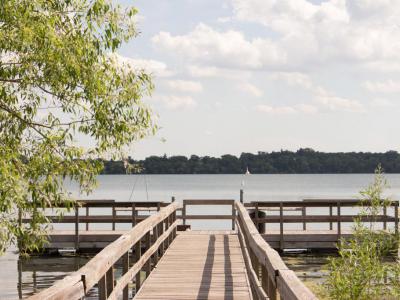
Lyndale Park’s 60 acres slope gracefully down to the parkway that hugs Lake Harriet, showcasing a bouquet of beautiful gardens. One standout is the Lyndale Park Rose Garden, crafted in 1907 by Theodore Wirth, a Minneapolis parks visionary. Rose enthusiasts can stroll among 100 varieties, neatly arranged in rows (albeit fenced in chain-link for their protection). The blooms are at their best from mid-June to early September-prime time for a fragrant, floral escape.
Another treasure is the Peace Garden, born from the passion of dedicated neighbors. Blending elements of a traditional Japanese garden and a formal rock garden, it features stones from Nagasaki and Hiroshima as symbols of reconciliation. Stroll across the serene Japanese-style bridge or meander into the nearby Roberts bird sanctuary to round out your visit.
In Lyndale Park, natural beauty and history go hand in hand.
Pro tip: Kick back on the lakeshore, dive into your favorite book, and let the peaceful vibes wash over you. Feeling more daring? Grab your kayak and paddle out for a front-row seat to Minneapolis’s gorgeous scenery.
Another treasure is the Peace Garden, born from the passion of dedicated neighbors. Blending elements of a traditional Japanese garden and a formal rock garden, it features stones from Nagasaki and Hiroshima as symbols of reconciliation. Stroll across the serene Japanese-style bridge or meander into the nearby Roberts bird sanctuary to round out your visit.
In Lyndale Park, natural beauty and history go hand in hand.
Pro tip: Kick back on the lakeshore, dive into your favorite book, and let the peaceful vibes wash over you. Feeling more daring? Grab your kayak and paddle out for a front-row seat to Minneapolis’s gorgeous scenery.
7) Minneapolis Sculpture Garden (must see)
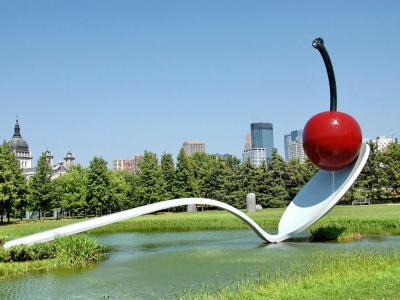
Directly across the street from the Walker Art Center, the Minneapolis Sculpture Garden claims the title of the world’s largest urban sculpture park. Spanning 11 acres (45,000 square meters), this green oasis once served as a military drill ground, but it now showcases an impressive collection of around 40 modern and contemporary artworks. The most photographed-and perhaps most beloved-piece is undoubtedly Claes Oldenburg and Coosje van Bruggen’s “Spoonbridge and Cherry”, a whimsical, oversized spoon delicately balancing a bright red cherry. There’s also “Hahn/Cock”, a strikingly blue rooster that stands proud, nearly daring visitors to snap its photo against the backdrop of the downtown Minneapolis skyline and the magnificent Basilica of Saint Mary.
Even better, admission to the Sculpture Garden is absolutely free. Come rain, shine, or snow, you can wander the grounds every single day of the year. Beyond the outdoor sculptures, the Garden also offers the delights of the Cowles Conservatory-an indoor sanctuary that features tropical flora, a lush escape from the chilly Minnesota winters, and, of course, art. Inside, you’ll find Frank Gehry’s dazzling “Standing Glass Fish”-proof that art and nature aren’t just neighbors here; they’re inextricably entwined.
Pro tip: When you’re ready to keep the art-inspired stroll going, make your way across the brightly-hued Irene Hixon Whitney Bridge over Hennepin Avenue to Loring Park. Once there, meander through the park’s tree-lined paths while taking in more art and nature. Feeling peckish? Head to Café and Bar Lurcat for a dining experience that’s as refined as it is relaxed.
Even better, admission to the Sculpture Garden is absolutely free. Come rain, shine, or snow, you can wander the grounds every single day of the year. Beyond the outdoor sculptures, the Garden also offers the delights of the Cowles Conservatory-an indoor sanctuary that features tropical flora, a lush escape from the chilly Minnesota winters, and, of course, art. Inside, you’ll find Frank Gehry’s dazzling “Standing Glass Fish”-proof that art and nature aren’t just neighbors here; they’re inextricably entwined.
Pro tip: When you’re ready to keep the art-inspired stroll going, make your way across the brightly-hued Irene Hixon Whitney Bridge over Hennepin Avenue to Loring Park. Once there, meander through the park’s tree-lined paths while taking in more art and nature. Feeling peckish? Head to Café and Bar Lurcat for a dining experience that’s as refined as it is relaxed.
8) Stone Arch Bridge (must see)
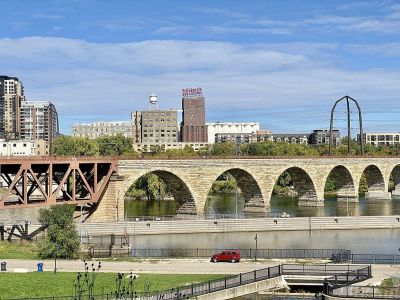
The Stone Arch Bridge in Minneapolis is a striking symbol of the city’s industrial glory days. Stretching across the Mississippi River at Saint Anthony Falls, it serves as a gateway to some of the city’s most picturesque views. Not only is it the only stone-arched bridge along the entire Mississippi River, but it also claims the title of the second-oldest bridge on the waterway-only losing to Saint Louis’s Eads Bridge in a historical game of “who’s older”.
Built in 1883 by railroad tycoon James J. Hill to shuttle passenger trains to a station a mile west, the bridge was initially nicknamed “Hill’s Folly”. Yet once its value in connecting passengers became clear, those skeptics had to eat their words (and maybe some humble pie). Engineer Charles C. Smith designed its graceful arches to flow with the nearby falls and surrounding terrain, using local granite from Sauk Rapids and magnesium limestone from Mankato and Iowa for the upper sections.
In its long lifetime, the Stone Arch Bridge has worn many hats. It got a wider girth in 1925 to support larger railcars, only to trade the rail life for a pedestrian and cyclist paradise in 1994. By 1971, it made the National Register of Historic Places, and in 1974, it nabbed a National Historic Civil Engineering Landmark title. Fast forward to 2005, and the bridge received a glow-up with indirect lighting.
Today, the bridge moonlights as a festival hotspot, hosting Independence Day fireworks and Minneapolis Aquatennial displays that draw oohs and ahhs from the crowds. It’s also a year-round runway for skyline selfies, views of the historic Pillsbury “A” Mill, the Mill City Museum, and more. And with the lively Main Street restaurants and the Guthrie Theater just steps away, the Stone Arch Bridge is less a relic of the past and more a vibrant link between history and modern city life.
Built in 1883 by railroad tycoon James J. Hill to shuttle passenger trains to a station a mile west, the bridge was initially nicknamed “Hill’s Folly”. Yet once its value in connecting passengers became clear, those skeptics had to eat their words (and maybe some humble pie). Engineer Charles C. Smith designed its graceful arches to flow with the nearby falls and surrounding terrain, using local granite from Sauk Rapids and magnesium limestone from Mankato and Iowa for the upper sections.
In its long lifetime, the Stone Arch Bridge has worn many hats. It got a wider girth in 1925 to support larger railcars, only to trade the rail life for a pedestrian and cyclist paradise in 1994. By 1971, it made the National Register of Historic Places, and in 1974, it nabbed a National Historic Civil Engineering Landmark title. Fast forward to 2005, and the bridge received a glow-up with indirect lighting.
Today, the bridge moonlights as a festival hotspot, hosting Independence Day fireworks and Minneapolis Aquatennial displays that draw oohs and ahhs from the crowds. It’s also a year-round runway for skyline selfies, views of the historic Pillsbury “A” Mill, the Mill City Museum, and more. And with the lively Main Street restaurants and the Guthrie Theater just steps away, the Stone Arch Bridge is less a relic of the past and more a vibrant link between history and modern city life.
9) Mill City Museum (must see)
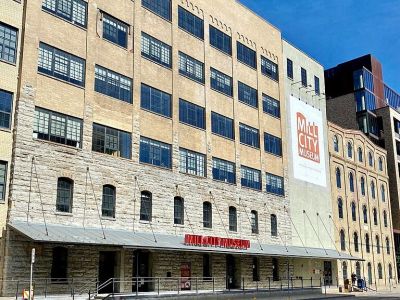
Opened in 2003, Mill City Museum rose from the ashes of the Washburn “A” Mill-literally. Once the largest and most cutting-edge flour mill on the planet back in 1880, this grand mill sparked a milling revolution that gave Minneapolis bragging rights as the flour milling capital of the world from 1880 to 1930. Talk about rolling in the dough.
By 1965, the mill had run its course and shut down, and a fire in 1991 left it looking like something out of a post-apocalyptic movie. But rather than letting it crumble, Minneapolis decided to turn lemons into lemonade-or, rather, wheat into, well, an award-winning museum.
The Minnesota Historical Society stepped in and called on architect Thomas Meyer to design a building that respected the past while welcoming the future. The result? A blend of preserved flour bins, milling machinery, and a rail corridor-all complemented with sleek modern touches, including a glass curtain wall etched with historic mill diagrams and multiple entry points that effortlessly link downtown with the Mississippi riverfront.
It’s not just a pretty face, either. The museum has racked up major design awards and continues to draw visitors into the city’s milling heritage. Inside, you can witness baking demonstrations, nibble on fresh bread, gawk at a model mill explosion, and enjoy amazing views of Saint Anthony Falls and the Stone Arch Bridge from the observation deck. Among other highlights are the Flour Tower exhibit and the much-recommended short film “Minneapolis in 19 Minutes Flat!”
By 1965, the mill had run its course and shut down, and a fire in 1991 left it looking like something out of a post-apocalyptic movie. But rather than letting it crumble, Minneapolis decided to turn lemons into lemonade-or, rather, wheat into, well, an award-winning museum.
The Minnesota Historical Society stepped in and called on architect Thomas Meyer to design a building that respected the past while welcoming the future. The result? A blend of preserved flour bins, milling machinery, and a rail corridor-all complemented with sleek modern touches, including a glass curtain wall etched with historic mill diagrams and multiple entry points that effortlessly link downtown with the Mississippi riverfront.
It’s not just a pretty face, either. The museum has racked up major design awards and continues to draw visitors into the city’s milling heritage. Inside, you can witness baking demonstrations, nibble on fresh bread, gawk at a model mill explosion, and enjoy amazing views of Saint Anthony Falls and the Stone Arch Bridge from the observation deck. Among other highlights are the Flour Tower exhibit and the much-recommended short film “Minneapolis in 19 Minutes Flat!”

10) 1010 Washington Wine & Spirits
One of downtown Minneapolis’s last remaining liquor outposts is a gem you don’t want to miss. Not only is it packed with hard-to-find wine, beer, and spirits, but the staff-friendly, knowledgeable, and always eager to help-make every visit a breeze. They regularly host tastings of beer, whiskey, wine, and other spirits, so there’s always something new to sip and savor.
Feeling adventurous? Their $20 mystery beer packs in brown paper bags let you spin the craft brew roulette wheel. Inside, you’ll find a collection of pricier, top-notch beers that might not have made it into your usual cart. Bargain hunters will also love their mini Fireball shots-available freezer-cold or room-temp-for a steal. And if freebies are your thing, keep an eye out for the free glasses and other swag they regularly give away.
Pro tip: Grab your haul and head to the serene Zen garden at Gold Medal Park or the Guthrie’s endless bridge for a picture-perfect backdrop. It’s more than a shopping trip-it’s a full-on downtown adventure.
Feeling adventurous? Their $20 mystery beer packs in brown paper bags let you spin the craft brew roulette wheel. Inside, you’ll find a collection of pricier, top-notch beers that might not have made it into your usual cart. Bargain hunters will also love their mini Fireball shots-available freezer-cold or room-temp-for a steal. And if freebies are your thing, keep an eye out for the free glasses and other swag they regularly give away.
Pro tip: Grab your haul and head to the serene Zen garden at Gold Medal Park or the Guthrie’s endless bridge for a picture-perfect backdrop. It’s more than a shopping trip-it’s a full-on downtown adventure.
