Custom Walk in Palermo, Italy by info_c5fce created on 2025-06-04
Guide Location: Italy » Palermo
Guide Type: Custom Walk
# of Sights: 7
Tour Duration: 1 Hour(s)
Travel Distance: 2.2 Km or 1.4 Miles
Share Key: 3HWXM
Guide Type: Custom Walk
# of Sights: 7
Tour Duration: 1 Hour(s)
Travel Distance: 2.2 Km or 1.4 Miles
Share Key: 3HWXM
How It Works
Please retrieve this walk in the GPSmyCity app. Once done, the app will guide you from one tour stop to the next as if you had a personal tour guide. If you created the walk on this website or come to the page via a link, please follow the instructions below to retrieve the walk in the app.
Retrieve This Walk in App
Step 1. Download the app "GPSmyCity: Walks in 1K+ Cities" on Apple App Store or Google Play Store.



Step 2. In the GPSmyCity app, download(or launch) the guide "Palermo Map and Walking Tours".
Step 3. Tap the menu button located at upper right corner of the "Walks" screen and select "Retrieve custom walk". Enter the share key: 3HWXM
1) Porto di Palermo (Port of Palermo)
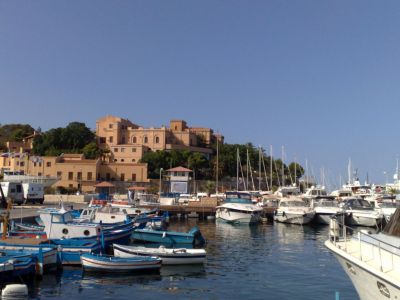
The Port of Palermo stands as a major Mediterranean hub, renowned for its extensive passenger traffic and considerable size. Spanning eastward from Francesco Crispi Street and covering areas like Arenella and Acqua Santa, it integrates seamlessly into the city’s coastal landscape. This port is not only pivotal for local maritime activities but also serves as the headquarters for the Western Sicily Sea Port System Authority, overseeing additional ports including Porto Empedocle, Termini Imerese, Trapani, Gela, and Licata.
Originally established by Phoenician navigators, the Port of Palermo has been central to trade since its inception, recognized by the ancient Greeks as Panormos, or "all port." Its evolution continued through various dominations including Phoenician, Carthaginian, Roman, Arab, and Norman. The modern port began taking shape in 1567 under Viceroy García Álvarez de Toledo y Osorio to address the existing port's inadequacies. Development included the Santa Lucia district, now Borgo Vecchio, and the construction of Molo Nuovo in 1590, with further expansions and shipyards added in the 19th century.
Today, the Port of Palermo is a vital maritime node, offering regular ferry connections to several Italian and Mediterranean destinations, including Naples, Livorno, and Tunis, among others. It is also a crucial point for hydrofoil services to the Aeolian Islands and Ustica. The port handles a significant volume of freight traffic, with containers arriving from around the globe via Gioia Tauro, servicing all of Sicily. Furthermore, the port houses the Palermo shipyard, operated by Fincantieri, which is one of the few facilities capable of building and refurbishing ships in Southern Italy.
As one of the leading Mediterranean ports for cruise traffic, the Port of Palermo continues to be a cornerstone in the development and economic activity of the region, maintaining its historical legacy while evolving to meet modern demands.
Originally established by Phoenician navigators, the Port of Palermo has been central to trade since its inception, recognized by the ancient Greeks as Panormos, or "all port." Its evolution continued through various dominations including Phoenician, Carthaginian, Roman, Arab, and Norman. The modern port began taking shape in 1567 under Viceroy García Álvarez de Toledo y Osorio to address the existing port's inadequacies. Development included the Santa Lucia district, now Borgo Vecchio, and the construction of Molo Nuovo in 1590, with further expansions and shipyards added in the 19th century.
Today, the Port of Palermo is a vital maritime node, offering regular ferry connections to several Italian and Mediterranean destinations, including Naples, Livorno, and Tunis, among others. It is also a crucial point for hydrofoil services to the Aeolian Islands and Ustica. The port handles a significant volume of freight traffic, with containers arriving from around the globe via Gioia Tauro, servicing all of Sicily. Furthermore, the port houses the Palermo shipyard, operated by Fincantieri, which is one of the few facilities capable of building and refurbishing ships in Southern Italy.
As one of the leading Mediterranean ports for cruise traffic, the Port of Palermo continues to be a cornerstone in the development and economic activity of the region, maintaining its historical legacy while evolving to meet modern demands.
2) Giardino Garibaldi (Garibaldi Garden)
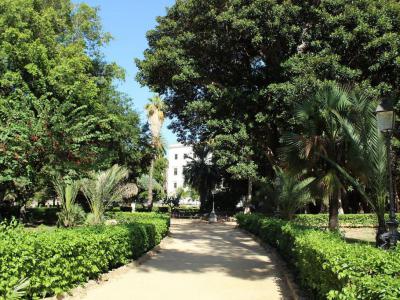
Garibaldi Garden, located in the historic Kalsa district of Palermo, is a verdant public garden established between 1861 and 1864. Designed by Giovan Battista Filippo Basile, a noted architect also responsible for Palermo's Teatro Massimo, the garden sits in Marina Square (Piazza Marina). Named after Giuseppe Garibaldi, a pivotal figure in Italian unification, the garden commemorates the birth of the Italian nation.
The garden is enclosed by a fine cast iron fence from the Oretea Foundry, which dates back to the period of the garden's creation. Accessible through the main roads converging in Marina Square, the park houses several sculptural busts of notable Italian figures such as Giuseppe Garibaldi, Enrico Albanese, and others, including a bust of Luigi Tukory, which was stolen in 2015 but later recovered.
A standout feature of the garden is its exceptional collection of trees and plants, including the Ficus macrophylla, which is regarded as the largest tree in Europe and one of the oldest in Italy. This tree stands at a majestic 30 meters in height with a trunk circumference exceeding 21 meters. The garden also features rare botanical specimens like the Himalayan podocarp, a Mexican oak, and an arboreal gardenia from South Africa. In spring, the garden bursts with vibrant blooms from various plants, adding a fragrant and colorful display to the serene environment.
Historically, the site of the garden was a medieval square, a hub for folk festivals, trade, and social gatherings. Notably, it also witnessed several executions during its proximity to the Inquisition court, adding a darker layer to its rich history.
Today, Garibaldi Garden stands as a testament to Palermo's cultural and natural heritage, offering a tranquil escape filled with historical significance and botanical beauty. It is surrounded by significant palaces and the nearby Church of Santa Maria dei Miracoli, enhancing its cultural and historical context. The paths, flanked by a diverse array of plants and leading to enchanting spots like an old fountain, invite visitors to explore and revel in its historical ambiance.
The garden is enclosed by a fine cast iron fence from the Oretea Foundry, which dates back to the period of the garden's creation. Accessible through the main roads converging in Marina Square, the park houses several sculptural busts of notable Italian figures such as Giuseppe Garibaldi, Enrico Albanese, and others, including a bust of Luigi Tukory, which was stolen in 2015 but later recovered.
A standout feature of the garden is its exceptional collection of trees and plants, including the Ficus macrophylla, which is regarded as the largest tree in Europe and one of the oldest in Italy. This tree stands at a majestic 30 meters in height with a trunk circumference exceeding 21 meters. The garden also features rare botanical specimens like the Himalayan podocarp, a Mexican oak, and an arboreal gardenia from South Africa. In spring, the garden bursts with vibrant blooms from various plants, adding a fragrant and colorful display to the serene environment.
Historically, the site of the garden was a medieval square, a hub for folk festivals, trade, and social gatherings. Notably, it also witnessed several executions during its proximity to the Inquisition court, adding a darker layer to its rich history.
Today, Garibaldi Garden stands as a testament to Palermo's cultural and natural heritage, offering a tranquil escape filled with historical significance and botanical beauty. It is surrounded by significant palaces and the nearby Church of Santa Maria dei Miracoli, enhancing its cultural and historical context. The paths, flanked by a diverse array of plants and leading to enchanting spots like an old fountain, invite visitors to explore and revel in its historical ambiance.
3) Palazzo Butera (Butera Palace)
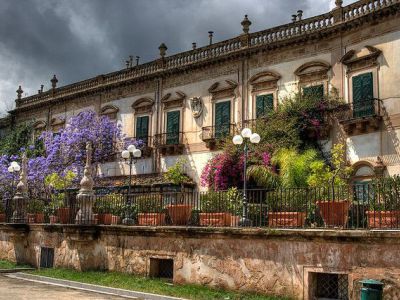
Palazzo Butera is an impressive waterside palace. Girolamo Branciforti commissioned the home in 1701. The palace welcomed Charles de Bourbon, who was crowned King of Sicily in Palmero in 1735. The terrace was built in 1750. In 1760 the Prince of Butera bought the palace next door and joined them. This addition doubles the size of the palace. The entire palace was renovated and Gioacchino Martorana and Gaspare Fumagalli painted beautiful ceiling frescoes.
In 2016, Francesa and Massimo Valsecchi bought the palace and have been restoring it. Today, it is a museum. The rooms feature ceiling paintings, frescoes, and artworks from throughout the centuries.
The Valsecchi's are moving their art collection from England to display it in the Palazzo Butera. Visitors can tour the palace, see exhibitions, and explore the courtyards and the terrace.
In 2016, Francesa and Massimo Valsecchi bought the palace and have been restoring it. Today, it is a museum. The rooms feature ceiling paintings, frescoes, and artworks from throughout the centuries.
The Valsecchi's are moving their art collection from England to display it in the Palazzo Butera. Visitors can tour the palace, see exhibitions, and explore the courtyards and the terrace.
4) Palazzo Abatellis (Abatellis Palace)
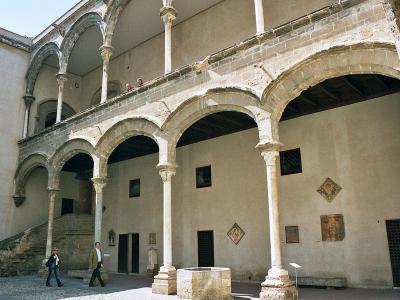
Abatellis Palace (Palazzo Abatellis), also known as Palazzo Patella, is located in the historic Kalsa quarter of Palermo. This grand palace is the setting for the Galleria Regionale della Sicilia, Sicily's premier art gallery, which showcases a vast collection of art historically linked to the region.
The palace became the repository of numerous significant artworks following the suppression of various religious orders in 1866. Initially stored in the Pinacoteca della Regia Università and later transferred to the Museo Nazionale of Palermo, these works found their permanent home at Abatellis Palace when Sicily gained autonomous status.
The ground floor of the palace houses an impressive range of artworks. Visitors can find ancient 12th-century wooden artifacts alongside 14th and 15th-century artworks, including creations by Antonello Gagini. There are also beautifully painted maiolica pieces from the 14th to the 17th centuries, as well as the 15th-century Bust of a Gentlewoman by Francesco Laurana. Notable too is the grand fresco of the Triumph of Death, believed to have been painted around 1445, and displayed in what was formerly the chapel.
The first floor of the palace is even more captivating with its collection of Renaissance masterpieces. It boasts the Virgin Annunciate by Antonello da Messina, a 15th-century work that ranks among the finest Renaissance paintings in Italy. The same artist's depictions of Saint Augustine, Saint Gregory the Great, and Saint Jerome, originally part of a now-destroyed polyptych, are also on display. The gallery includes Saint Agatha’s Vision of Saint Peter in Prison by Vouet, as well as the Netherlandish Malvagna Triptych by Jan Gossaert and Gerard David, and Jan Provost’s Deposition. Additionally, the museum showcases a portrayal of Moses by Pietro Novelli.
Abatellis Palace thus serves not only as a magnificent example of historical architecture but also as a treasure trove of art that narrates the rich cultural and religious history of Sicily. Visitors to the palace can immerse themselves in the art and history of the region, preserved and presented in this remarkable setting.
The palace became the repository of numerous significant artworks following the suppression of various religious orders in 1866. Initially stored in the Pinacoteca della Regia Università and later transferred to the Museo Nazionale of Palermo, these works found their permanent home at Abatellis Palace when Sicily gained autonomous status.
The ground floor of the palace houses an impressive range of artworks. Visitors can find ancient 12th-century wooden artifacts alongside 14th and 15th-century artworks, including creations by Antonello Gagini. There are also beautifully painted maiolica pieces from the 14th to the 17th centuries, as well as the 15th-century Bust of a Gentlewoman by Francesco Laurana. Notable too is the grand fresco of the Triumph of Death, believed to have been painted around 1445, and displayed in what was formerly the chapel.
The first floor of the palace is even more captivating with its collection of Renaissance masterpieces. It boasts the Virgin Annunciate by Antonello da Messina, a 15th-century work that ranks among the finest Renaissance paintings in Italy. The same artist's depictions of Saint Augustine, Saint Gregory the Great, and Saint Jerome, originally part of a now-destroyed polyptych, are also on display. The gallery includes Saint Agatha’s Vision of Saint Peter in Prison by Vouet, as well as the Netherlandish Malvagna Triptych by Jan Gossaert and Gerard David, and Jan Provost’s Deposition. Additionally, the museum showcases a portrayal of Moses by Pietro Novelli.
Abatellis Palace thus serves not only as a magnificent example of historical architecture but also as a treasure trove of art that narrates the rich cultural and religious history of Sicily. Visitors to the palace can immerse themselves in the art and history of the region, preserved and presented in this remarkable setting.
5) Villa Giulia
Villa Giulia is a historic urban park located in Palermo. Positioned to the east of the Botanical Garden of Palermo, this park was initiated by magistrate D. Antonino La Grua e Talamanca, Marquis of Regalmici, in 1777 and inspired by Giovanni Meli. The park's design was crafted by Nicolò Palma and it was named after Giulia Guevara, the wife of Marcantonio Colonna, the then Viceroy of Sicily. The construction of the villa, to which the park was dedicated, started in the same year and concluded swiftly in 1778, marking it as Palermo’s first public park.
In 1866, the park underwent significant enlargements and enhancements. The original entrance of the park, which faces the Foro Italico, showcases a Neoclassical monumental design but is now permanently closed. Presently, visitors enter through the primary entrance on Lincoln Street.
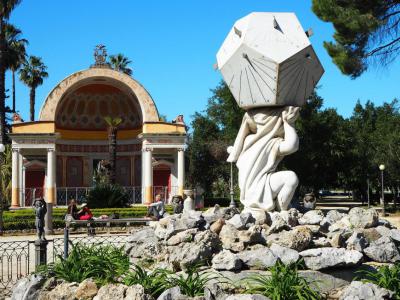
The centerpiece of Villa Giulia is a unique dodecahedron fountain that includes a marble clock, devised by mathematician Lorenzo Federici. Each face of the dodecahedron serves as a sundial, and it is crowned by a statue of Atlas, crafted by Ignazio Marabitti. This setup is enclosed within a circular fountain adorned with various metal sculptures.
The park also features four exedras designed by Giuseppe Damiani Almeyda, which were historically used for musical and theatrical performances, enhancing the villa's cultural ambiance. Originally, each corner of the park had round seating areas for rest and leisure, although only two remain today. The garden pathways are lined with busts that commemorate notable historical figures from the city.
Among the array of marble sculptures within the park, the "Fountain of the Genius in Villa Giulia" (Fontana del Genio a Villa Giulia), depicting the Genius of Palermo, stands out as a significant emblem of the city. This sculpture, also created by Ignazio Marabitti in 1778, continues to be a prominent feature and a symbol of Palermo’s rich cultural heritage. Villa Giulia remains a cherished historical site, offering a blend of artistic, architectural, and recreational appeal.
In 1866, the park underwent significant enlargements and enhancements. The original entrance of the park, which faces the Foro Italico, showcases a Neoclassical monumental design but is now permanently closed. Presently, visitors enter through the primary entrance on Lincoln Street.
The centerpiece of Villa Giulia is a unique dodecahedron fountain that includes a marble clock, devised by mathematician Lorenzo Federici. Each face of the dodecahedron serves as a sundial, and it is crowned by a statue of Atlas, crafted by Ignazio Marabitti. This setup is enclosed within a circular fountain adorned with various metal sculptures.
The park also features four exedras designed by Giuseppe Damiani Almeyda, which were historically used for musical and theatrical performances, enhancing the villa's cultural ambiance. Originally, each corner of the park had round seating areas for rest and leisure, although only two remain today. The garden pathways are lined with busts that commemorate notable historical figures from the city.
Among the array of marble sculptures within the park, the "Fountain of the Genius in Villa Giulia" (Fontana del Genio a Villa Giulia), depicting the Genius of Palermo, stands out as a significant emblem of the city. This sculpture, also created by Ignazio Marabitti in 1778, continues to be a prominent feature and a symbol of Palermo’s rich cultural heritage. Villa Giulia remains a cherished historical site, offering a blend of artistic, architectural, and recreational appeal.
6) Orto Botanico di Palermo (Palermo Botanical Garden)
Palermo Botanical Garden (Orto Botanico di Palermo) is a significant botanical and educational institution located in Palermo. Managed by the University of Palermo's Department of Botany, this garden spans approximately 30 acres on a distinctive red soil base that has developed over a calcareous tufaceous substratum. The garden boasts a rich collection of around 12,000 plant species, highlighting its role as a center for botanical study and conservation.
The origins of the Palermo Botanical Garden trace back to 1779, with the establishment of a botanical chair entitled "Botany and medicinal properties" by the Accademia dei Regi Studi. This academic initiative led to the allocation of land for the creation of a modest botanical garden dedicated to the cultivation of medicinal plants. The primary goals of this early garden were to enhance general learning and promote public health through the study of plant properties.
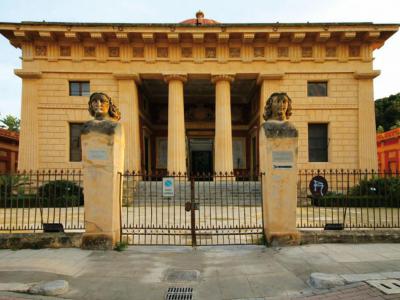
The central architectural feature of the garden is the Gymnasium, a Neo-classical building located near the main entrance. This historical building originally housed the main office of the Schola Regia Botanice (Royal School of Botany), the herbarium, the botanical library, and the director's office, playing a crucial role in the academic and administrative functions of the garden.
One of the oldest parts of the garden is the Linneian section, which is designed in a rectangular layout divided into four quadrangles, known as "quatrains" or "quartini." These quadrants are further subdivided into flowerbeds where plants were originally organized according to the Linnaean system of classification. This layout not only reflects the historical botanical practices but also serves as a living museum illustrating the development of botanical sciences.
Today, the Palermo Botanical Garden continues to serve as a vibrant site for botanical research, education, and conservation, attracting scholars, students, and visitors interested in the rich diversity of plant life and the history of botanical studies.
The origins of the Palermo Botanical Garden trace back to 1779, with the establishment of a botanical chair entitled "Botany and medicinal properties" by the Accademia dei Regi Studi. This academic initiative led to the allocation of land for the creation of a modest botanical garden dedicated to the cultivation of medicinal plants. The primary goals of this early garden were to enhance general learning and promote public health through the study of plant properties.
The central architectural feature of the garden is the Gymnasium, a Neo-classical building located near the main entrance. This historical building originally housed the main office of the Schola Regia Botanice (Royal School of Botany), the herbarium, the botanical library, and the director's office, playing a crucial role in the academic and administrative functions of the garden.
One of the oldest parts of the garden is the Linneian section, which is designed in a rectangular layout divided into four quadrangles, known as "quatrains" or "quartini." These quadrants are further subdivided into flowerbeds where plants were originally organized according to the Linnaean system of classification. This layout not only reflects the historical botanical practices but also serves as a living museum illustrating the development of botanical sciences.
Today, the Palermo Botanical Garden continues to serve as a vibrant site for botanical research, education, and conservation, attracting scholars, students, and visitors interested in the rich diversity of plant life and the history of botanical studies.
7) Chiesa di Ss. Trinità alla Magione (Church of the Holy Trinity of the Chancellor)
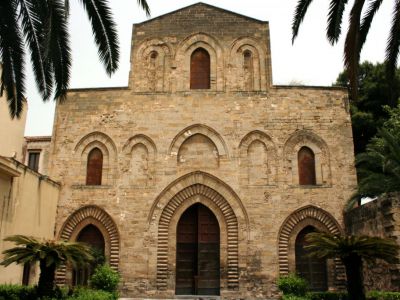
The Church of the Holy Trinity of the Chancellor, more commonly known as the Basilica of the Magione, stands as a historical and cultural landmark in Palermo. Nestled near the Kalsa district and facing the square that shares its name, this church holds a special place among Palermo's oldest religious structures. Its significance is further underscored by its unique dedication to the Holy Trinity, making it the only parish in Palermo with this particular dedication.
The basilica was founded in 1191 by Matteo d'Aiello, the chancellor of the Norman kingdom under William II of Altavilla, following the tenure of Stefano di Why. It was built alongside an adjacent abbey as part of the Cistercian Order and was entrusted to the followers of Bernard of Clairvaux. This connection highlights its foundational roots in both religious and royal mandates of the time.
This church is notable not only for its age but also as the last church constructed under the Norman Altavilla dynasty. It holds historical gravitas as the burial site of Tancredi, who laid to rest his son Ruggero and later himself within its sacred walls. The basilica's narrative took a dramatic turn in 1197 when Henry VI of Swabia ousted the Cistercians, who opposed him, and favored the Teutonic Knights. The knights, having received generous donations, significantly enhanced the church’s prestige and holdings, thereby transforming it into a central establishment for their order, known as the "House of the Teutonic Knights."
The surrounding parish, while small, encapsulates a striking juxtaposition of old and new, wealth and poverty, and cultural vibrancy against social challenges. Local efforts spearheaded by a range of community members-from the parish priest and school teachers to tourism and catering professionals-aim to harmonize these contrasting elements. The basilica serves as the focal point of these endeavors, attracting not just the local populace but also visitors from across Sicily, Italy, and beyond.
The basilica was founded in 1191 by Matteo d'Aiello, the chancellor of the Norman kingdom under William II of Altavilla, following the tenure of Stefano di Why. It was built alongside an adjacent abbey as part of the Cistercian Order and was entrusted to the followers of Bernard of Clairvaux. This connection highlights its foundational roots in both religious and royal mandates of the time.
This church is notable not only for its age but also as the last church constructed under the Norman Altavilla dynasty. It holds historical gravitas as the burial site of Tancredi, who laid to rest his son Ruggero and later himself within its sacred walls. The basilica's narrative took a dramatic turn in 1197 when Henry VI of Swabia ousted the Cistercians, who opposed him, and favored the Teutonic Knights. The knights, having received generous donations, significantly enhanced the church’s prestige and holdings, thereby transforming it into a central establishment for their order, known as the "House of the Teutonic Knights."
The surrounding parish, while small, encapsulates a striking juxtaposition of old and new, wealth and poverty, and cultural vibrancy against social challenges. Local efforts spearheaded by a range of community members-from the parish priest and school teachers to tourism and catering professionals-aim to harmonize these contrasting elements. The basilica serves as the focal point of these endeavors, attracting not just the local populace but also visitors from across Sicily, Italy, and beyond.
