Custom Walk in Hague, Netherlands by psteijlen_346e4 created on 2025-06-08
Guide Location: Netherlands » Hague
Guide Type: Custom Walk
# of Sights: 8
Tour Duration: 2 Hour(s)
Travel Distance: 3.7 Km or 2.3 Miles
Share Key: EXBBG
Guide Type: Custom Walk
# of Sights: 8
Tour Duration: 2 Hour(s)
Travel Distance: 3.7 Km or 2.3 Miles
Share Key: EXBBG
How It Works
Please retrieve this walk in the GPSmyCity app. Once done, the app will guide you from one tour stop to the next as if you had a personal tour guide. If you created the walk on this website or come to the page via a link, please follow the instructions below to retrieve the walk in the app.
Retrieve This Walk in App
Step 1. Download the app "GPSmyCity: Walks in 1K+ Cities" on Apple App Store or Google Play Store.



Step 2. In the GPSmyCity app, download(or launch) the guide "Hague Map and Walking Tours".
Step 3. Tap the menu button located at upper right corner of the "Walks" screen and select "Retrieve custom walk". Enter the share key: EXBBG
1) Central Station
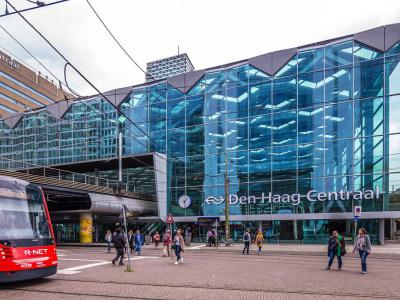
The Hague Central Station, known in Dutch as Den Haag Centraal, is a prominent transportation hub in The Hague. Opened in 1973, it is the main station, located along the western section of the Gouda – The Hague railway line. The station features 12 platforms connecting The Hague with cities like Gouda, Zoetermeer, Voorburg, Amsterdam, and Rotterdam. It's estimated that around 73,000 passengers use the station daily, totaling approximately 26.5 million people annually.
The station is not just a train station but also an underground station for RET and a tram station for HTMbuzz, thanks to its elevated railway system. The main hall of the station is equipped with various amenities like shops, ticket offices, toilets, cafés, and facilities for passengers with disabilities, including escalators.
A significant transformation of The Hague Central Station was completed in 2016, led by BenthemCrouwel Architects. The renovation replaced the 1970s concrete structure with a design focused on transparency, earning it the nickname "a railway station of glass, a cathedral of light."
Architecturally, the new station is designed as a roofed urban plaza, incorporating four entrances that connect the city center with the financial district (Beatrixkwartier). The roof is a distinctive feature, made of lozenge-shaped panels that create a play of light and shadow and serve multiple functions like ventilation, solar protection, and acoustics. The station, almost entirely made of glass, measures 120 by 96 meters and is 22 meters tall. It is supported by eight elegant columns and provides a clear view of all transport modes (train, tram, bus), retail, and hospitality areas.
The station is not just a train station but also an underground station for RET and a tram station for HTMbuzz, thanks to its elevated railway system. The main hall of the station is equipped with various amenities like shops, ticket offices, toilets, cafés, and facilities for passengers with disabilities, including escalators.
A significant transformation of The Hague Central Station was completed in 2016, led by BenthemCrouwel Architects. The renovation replaced the 1970s concrete structure with a design focused on transparency, earning it the nickname "a railway station of glass, a cathedral of light."
Architecturally, the new station is designed as a roofed urban plaza, incorporating four entrances that connect the city center with the financial district (Beatrixkwartier). The roof is a distinctive feature, made of lozenge-shaped panels that create a play of light and shadow and serve multiple functions like ventilation, solar protection, and acoustics. The station, almost entirely made of glass, measures 120 by 96 meters and is 22 meters tall. It is supported by eight elegant columns and provides a clear view of all transport modes (train, tram, bus), retail, and hospitality areas.
2) Escher in Het Paleis (Escher in The Palace) (must see)
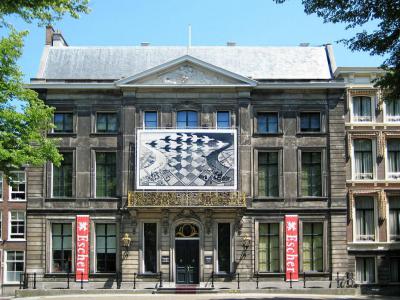
Maurits Cornelis Escher said, "...the dividing line between two adjacent figures, ...bring(s) me great joy...." M.C. Escher's works are in the winter palace of Queen Mother Emma.
Queen Mother Emma is the great-great grandmother of King Willem-Alexander. She used the palace until 1934. It is now home for the work of M.C. Escher.
Pieter de Swart designed the house on the Lange Vourout in 1760. The street and the house have always been a big draw for tourists. Napoleon stayed there for 14 hours in 1811. Perhaps he had lunch and took a nap.
The Queen installed a staircase. This staircase is strange. It appears to go to the second floor, but it does not. Only the Queen and her ladies were allowed to use it.
A palace with trompe l'oiel, the perfect place for M.C. Escher. In 1990 the Royal family sold the building to the Local Authority of The Hague. There was a condition the palace could be used only for art and cultural events.
The display of Escher's artistry is the "main thing" of the museum. His early woodcuts focused in great detail on nature and landscapes. Later years he created his odd "tessellations." He loved shape changing and illusion.
In Day and Night a Dutch landscape changes into flying black and white birds. In Relativity are realities that reject gravity. In Metamorphosis he redefines eternity and infinity.
Escher's universe has layers of questions. Remove one layer to find another. See truth in illusion and illusion in truth.
Queen Mother Emma is the great-great grandmother of King Willem-Alexander. She used the palace until 1934. It is now home for the work of M.C. Escher.
Pieter de Swart designed the house on the Lange Vourout in 1760. The street and the house have always been a big draw for tourists. Napoleon stayed there for 14 hours in 1811. Perhaps he had lunch and took a nap.
The Queen installed a staircase. This staircase is strange. It appears to go to the second floor, but it does not. Only the Queen and her ladies were allowed to use it.
A palace with trompe l'oiel, the perfect place for M.C. Escher. In 1990 the Royal family sold the building to the Local Authority of The Hague. There was a condition the palace could be used only for art and cultural events.
The display of Escher's artistry is the "main thing" of the museum. His early woodcuts focused in great detail on nature and landscapes. Later years he created his odd "tessellations." He loved shape changing and illusion.
In Day and Night a Dutch landscape changes into flying black and white birds. In Relativity are realities that reject gravity. In Metamorphosis he redefines eternity and infinity.
Escher's universe has layers of questions. Remove one layer to find another. See truth in illusion and illusion in truth.
3) Mauritshuis Royal Picture Gallery (must see)
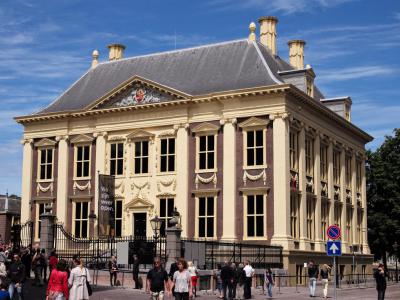
In 1631, John Maurice, Prince of Nassau-Siegen, Bought a plot of land next to the Binnenhof and built there a house which he called the Mauritshuis. The building was designed by architects Jacob van Campen and Pieter Post. Prince John was at the time Governor of Dutch Brazil. Most of his wealth, it is said, was tied up in slaves.
Mauritshuis was a two story building containing four apartments and one great hall. Prince John passed in 1679 and ownership of Mauritshuis went to the Maes family who let the house to the government. In 1820 the house was purchased by the state to hold the Royal Cabinet of Paintings and the Royal Cabinet of Rarities.
The Maurithuis became privatized in 1995. The building and the collection are today administered by a foundation. In 2007 the museum expanded into two buildings connected by a tunnel.
The Collection of William V, Prince of Orange, was a group of 200 paintings called the Royal Picture Gallery. At present, the collection holds nearly 800 paintings. Some of the artists featured are: Pieter Brueghel, Paulus Potter, Peter Paul Rubens, Rembrandt van Rijn, Johannes Vermeer, Rogier van der Weyden and Hans Holbein, and many others.
Private tours are available and there is also a stunning virtual tour available on line. The Mauritshuis is home to many of the best paintings of Holland's golden age of art.
Mauritshuis was a two story building containing four apartments and one great hall. Prince John passed in 1679 and ownership of Mauritshuis went to the Maes family who let the house to the government. In 1820 the house was purchased by the state to hold the Royal Cabinet of Paintings and the Royal Cabinet of Rarities.
The Maurithuis became privatized in 1995. The building and the collection are today administered by a foundation. In 2007 the museum expanded into two buildings connected by a tunnel.
The Collection of William V, Prince of Orange, was a group of 200 paintings called the Royal Picture Gallery. At present, the collection holds nearly 800 paintings. Some of the artists featured are: Pieter Brueghel, Paulus Potter, Peter Paul Rubens, Rembrandt van Rijn, Johannes Vermeer, Rogier van der Weyden and Hans Holbein, and many others.
Private tours are available and there is also a stunning virtual tour available on line. The Mauritshuis is home to many of the best paintings of Holland's golden age of art.
4) Ridderzaal (Knight's Hall) (must see)
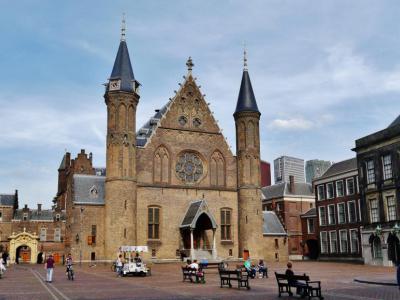
Once a year on Prinsjesdag, the Sovereign of the Netherlands rides in a Golden Coach all the way to the Knight's Hall to sit on the Throne and deliver a speech. The Knight's Hall was built by William II, King of the Romans and son of Floris IV of Holland. William died in battle in 1256 but the Knight's Hall was completed by his son, Floris V.
The Hall was used mainly for festive gettogethers by the Counts of Holland. In the 17th and 18th centuries it was used as a storage space and office of the state lottery. By the 19th century the building was in a state of ruin. In 1904 the building was restored in the Gothic style. The interior was designed by Pierre Cuypers.
Lately the Knight's Hall has been the venue for the State Opening of Parliament, the Speech from the Throne on Prinsjesdag, and for receptions and conferences. The government held a celebratory dinner there in honor of Queen Beatrix at her Silver Jubilee. The Hall has also been the venue for Royal Weddings and similar observances.
The Knight's Hall is administered by the Government Buildings Agency. Guided tours are given by the visitors' center of the ProDemos Centre for Democracy and the Rule of Law.
Editor's Note: The Knight's Hall is closed for extensive renovations until at least 2030, as part of the ongoing restoration of the Binnenhof complex. Visitors can still view the site from the free yellow observation tower and learn more at the Binnenhof Renovation Information Centre.
The Hall was used mainly for festive gettogethers by the Counts of Holland. In the 17th and 18th centuries it was used as a storage space and office of the state lottery. By the 19th century the building was in a state of ruin. In 1904 the building was restored in the Gothic style. The interior was designed by Pierre Cuypers.
Lately the Knight's Hall has been the venue for the State Opening of Parliament, the Speech from the Throne on Prinsjesdag, and for receptions and conferences. The government held a celebratory dinner there in honor of Queen Beatrix at her Silver Jubilee. The Hall has also been the venue for Royal Weddings and similar observances.
The Knight's Hall is administered by the Government Buildings Agency. Guided tours are given by the visitors' center of the ProDemos Centre for Democracy and the Rule of Law.
Editor's Note: The Knight's Hall is closed for extensive renovations until at least 2030, as part of the ongoing restoration of the Binnenhof complex. Visitors can still view the site from the free yellow observation tower and learn more at the Binnenhof Renovation Information Centre.
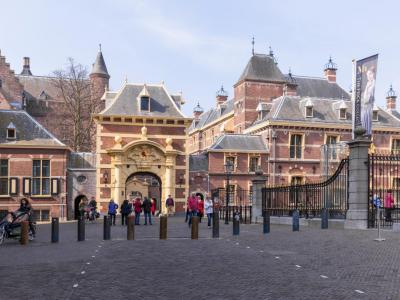
5) Binnenhof (Inner Court) (must see)
In November 1229 Count Floris IV of County Holland bought a lakeside homestead from one Meiland van Wassenaar. Count Floris improved the property, changing the homestead into a Keep. Floris' son, William, continued the development and built the Ridderzaal.
The Ridderzaal was in two parts, attached to the rear of the Binnenhof and facing the lake, Hofvijver. On one side was the court chapel and on the other the Knights' House. The Ridderhuis functioned as a resting place and shelter for visiting knights. It was the airport motel of its time.
Facing the calm waters of the Hofvijver on the western corner of the Binnenhof is the Senate chamber. The House of Representatives congregates in a chamber in the modern wing. The Prime Minister now inhabits the Torentje, his own "little tower." In the northwest wing is the Trevezaal. A conference room for the Cabinet.
The entire government complex of the Binnenhof is open to the public without charge. There are tours most days. The inner court has been kept basically unchanged. It is easy to imagine oneself in a much earlier time.
The Ridderzaal was in two parts, attached to the rear of the Binnenhof and facing the lake, Hofvijver. On one side was the court chapel and on the other the Knights' House. The Ridderhuis functioned as a resting place and shelter for visiting knights. It was the airport motel of its time.
Facing the calm waters of the Hofvijver on the western corner of the Binnenhof is the Senate chamber. The House of Representatives congregates in a chamber in the modern wing. The Prime Minister now inhabits the Torentje, his own "little tower." In the northwest wing is the Trevezaal. A conference room for the Cabinet.
The entire government complex of the Binnenhof is open to the public without charge. There are tours most days. The inner court has been kept basically unchanged. It is easy to imagine oneself in a much earlier time.
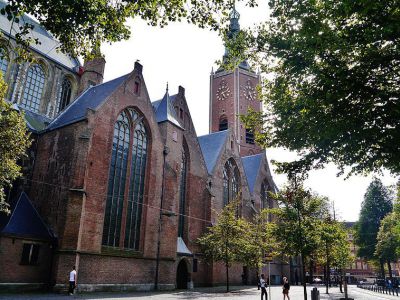
6) Grote Kerk (Great Church)
Great Church, also called Saint James' Church, is a designated landmark building in The Hague. It is the oldest church in The Hague. Members of the Royal Family, the House of Orange-Nassau, have traditionally been baptized and married there.
The Great Church was established in the 13th century. It was made of wood. Over the 14 and 16th centuries many renovations took place and the wood was gradually replaced with stone. It has a high vaulted interior, stained glass, a carved wooden pulpit, a large organ, and escutcheons of the knights of the Order of the Golden Fleece.
The form of the church was initially a cruciform type. In time the two lower aisles of the nave were raised to the roof level. When this was accomplished, the Great Church was called "Hague Hall Church". It was the first example of this type of church in the Low Countries.
The church is owned by the City of The Hague and managed by the Stichting Grote Kerk Den Haag. The Great Church is available for concerts and various other cultural activities.
The Great Church was established in the 13th century. It was made of wood. Over the 14 and 16th centuries many renovations took place and the wood was gradually replaced with stone. It has a high vaulted interior, stained glass, a carved wooden pulpit, a large organ, and escutcheons of the knights of the Order of the Golden Fleece.
The form of the church was initially a cruciform type. In time the two lower aisles of the nave were raised to the roof level. When this was accomplished, the Great Church was called "Hague Hall Church". It was the first example of this type of church in the Low Countries.
The church is owned by the City of The Hague and managed by the Stichting Grote Kerk Den Haag. The Great Church is available for concerts and various other cultural activities.
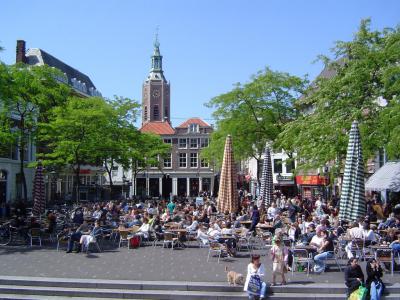
7) Grote Markt (Main Market Square)
Feeling bohemian, creative in a footloose kind of way? Maybe had your fill for now of high culture, history, churches and exotic gardens? Think you'd just like to kick it at the Hague? Then you need to pay a visit to the Great Market Street in the center of the Hague. It's an old market square lined with bars and clubs.
From early morning 'til late at night the square is jumping and the crowds are welcoming. The square is the place to be for the popular music scene. Bars and pubs join to program live music year-round.
Of course if you're not yet totally shopped out, you can feed your shopping Jones here as well. Many department stores have a foothold here. They would include HEMA, Peek & Cloppenburg, C&A, Mediamarkt, De Bijenkorf, and UNIQLO. Marktstraat also comes with entertainment. There's IMAX, Hommerson Casino, and others.
Market Street can be reached by tram from Central Station or simply by walking from Central Station. There is parking at Spui, Centrum and Turfmarkt car parks.
From early morning 'til late at night the square is jumping and the crowds are welcoming. The square is the place to be for the popular music scene. Bars and pubs join to program live music year-round.
Of course if you're not yet totally shopped out, you can feed your shopping Jones here as well. Many department stores have a foothold here. They would include HEMA, Peek & Cloppenburg, C&A, Mediamarkt, De Bijenkorf, and UNIQLO. Marktstraat also comes with entertainment. There's IMAX, Hommerson Casino, and others.
Market Street can be reached by tram from Central Station or simply by walking from Central Station. There is parking at Spui, Centrum and Turfmarkt car parks.
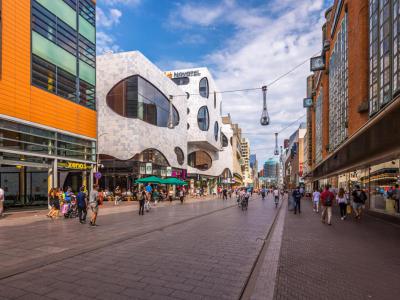
8) Grote Marktstraat (Main Market Street)
The Main Market Street (Grote Marktstraat) holds a significant place among the shopping streets in The Hague. It stands out for its limited presence of offices, residential properties, and dining establishments. Constructed in the late 1920s, its primary purpose was to establish a thoroughfare connecting the Prinsegracht with the southeastern part of the city, specifically Station Staatsspoor and Bezuidenhout. Today, it has been transformed into a pedestrian-only street, barring motorized traffic.
The creation of this road involved the demolition of numerous streets, buildings, and impoverished neighborhoods located between the Grote Markt and the Spui. The only remnants of the pre-Main Market Street era can still be found between the Grote Markt and the Raamstraat, represented by a row of facades that once belonged to the former Gerbrandstraatje. Its name originates from the Grote Markt, which marked the end of the Prinsegracht and the beginning of The Hague's city center at that time.
The municipal authorities in The Hague have set an ambitious goal to elevate the Grote Marktstraat's competitive status by transforming it into a shopping boulevard with international appeal. In 2014, the definitive renovation of Grote Marktstraat as a shopping promenade commenced. The opening of a Hudson's Bay branch in September 2017 marked the culmination of the refurbishment of the former V&D building in Grote Marktstraat, with other sections having already been occupied by different retail chains.
The creation of this road involved the demolition of numerous streets, buildings, and impoverished neighborhoods located between the Grote Markt and the Spui. The only remnants of the pre-Main Market Street era can still be found between the Grote Markt and the Raamstraat, represented by a row of facades that once belonged to the former Gerbrandstraatje. Its name originates from the Grote Markt, which marked the end of the Prinsegracht and the beginning of The Hague's city center at that time.
The municipal authorities in The Hague have set an ambitious goal to elevate the Grote Marktstraat's competitive status by transforming it into a shopping boulevard with international appeal. In 2014, the definitive renovation of Grote Marktstraat as a shopping promenade commenced. The opening of a Hudson's Bay branch in September 2017 marked the culmination of the refurbishment of the former V&D building in Grote Marktstraat, with other sections having already been occupied by different retail chains.
