

Grote Kerk (Great Church), Hague
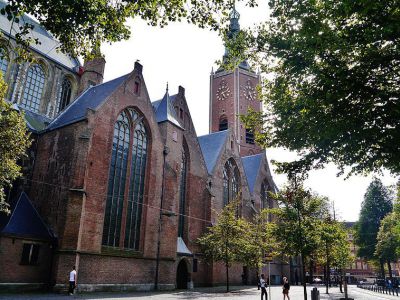
The Great Church is one of the oldest buildings, its origins dating back to the 13th century, when it began as a wooden parish church. Over the following centuries, particularly between the 14th and 16th centuries, it was gradually rebuilt in stone and expanded into a large Gothic structure. The church has long been associated with the Dutch royal family, with members of the House of Orange-Nassau traditionally baptized there.
Architecturally, the church is notable for its tall tower, which rises over 90 meters and remains a landmark in the city skyline. Inside, the space is defined by a high vaulted ceiling supported by columns that create multiple aisles. The building evolved from a traditional cruciform plan into a “hall church,” where the side aisles were raised to the same height as the central nave. Near the center of the church, look upward to see the painted wooden ceiling bosses decorated with coats of arms and symbolic motifs. Toward the eastern end stands the carved wooden pulpit, while the large organ occupies the western side above the entrance area.
As you move through the interior, several details stand out. Along the walls and between the columns are memorial plaques and tombs connected to prominent citizens and political figures from The Hague’s past. Decorative escutcheons of the Order of the Golden Fleece appear high within the nave, reflecting the church’s ties to noble and royal ceremonies. The church has served both religious and civic roles throughout its history. While it still hosts occasional services, it is now owned by the city and managed as a cultural venue. Concerts, exhibitions, and public events are regularly held inside.
Architecturally, the church is notable for its tall tower, which rises over 90 meters and remains a landmark in the city skyline. Inside, the space is defined by a high vaulted ceiling supported by columns that create multiple aisles. The building evolved from a traditional cruciform plan into a “hall church,” where the side aisles were raised to the same height as the central nave. Near the center of the church, look upward to see the painted wooden ceiling bosses decorated with coats of arms and symbolic motifs. Toward the eastern end stands the carved wooden pulpit, while the large organ occupies the western side above the entrance area.
As you move through the interior, several details stand out. Along the walls and between the columns are memorial plaques and tombs connected to prominent citizens and political figures from The Hague’s past. Decorative escutcheons of the Order of the Golden Fleece appear high within the nave, reflecting the church’s ties to noble and royal ceremonies. The church has served both religious and civic roles throughout its history. While it still hosts occasional services, it is now owned by the city and managed as a cultural venue. Concerts, exhibitions, and public events are regularly held inside.
Want to visit this sight? Check out these Self-Guided Walking Tours in Hague. Alternatively, you can download the mobile app "GPSmyCity: Walks in 1K+ Cities" from Apple App Store or Google Play Store. The app turns your mobile device to a personal tour guide and it works offline, so no data plan is needed when traveling abroad.
Download The GPSmyCity App



Grote Kerk (Great Church) on Map
Sight Name: Grote Kerk (Great Church)
Sight Location: Hague, Netherlands (See walking tours in Hague)
Sight Type: Religious
Guide(s) Containing This Sight:
Sight Location: Hague, Netherlands (See walking tours in Hague)
Sight Type: Religious
Guide(s) Containing This Sight:
Nearby Sights




Walking Tours in Hague, Netherlands

Create Your Own Walk in Hague
Creating your own self-guided walk in Hague is easy and fun. Choose the city attractions that you want to see and a walk route map will be created just for you. You can even set your hotel as the start point of the walk.
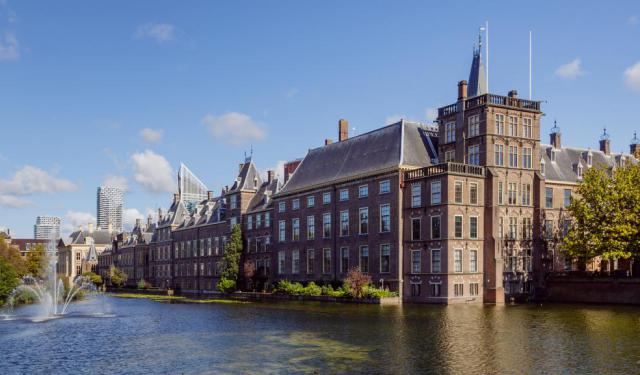
The Hague Old Town Walking Tour
In the 16th century, Italian writer Lodovico Guicciardini described The Hague as “the most beautiful, richest, and biggest village in Europe.”
The origins of The Hague date back to around 1230, when Count Floris IV of Holland purchased land near a dune lake, later known as the Hofvijver. The city name, The Hague, traces its origin to “the Count’s hedge”, referring to a wooded hunting... view more
Tour Duration: 2 Hours
Travel Distance: 3.5 Km or 2.2 Miles
The origins of The Hague date back to around 1230, when Count Floris IV of Holland purchased land near a dune lake, later known as the Hofvijver. The city name, The Hague, traces its origin to “the Count’s hedge”, referring to a wooded hunting... view more
Tour Duration: 2 Hours
Travel Distance: 3.5 Km or 2.2 Miles
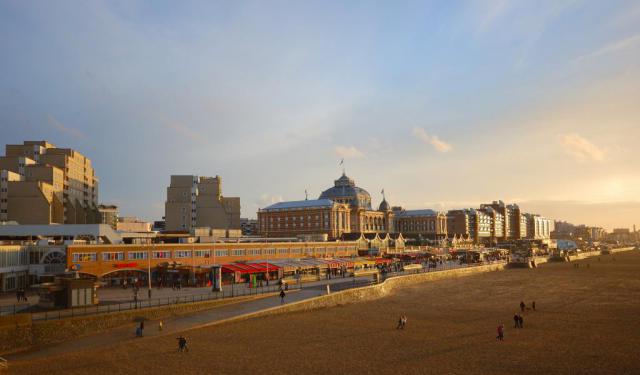
Scheveningen Walking Tour
Originally an independent fishing village, today Scheveningen is one of The Hague's eight districts. With its long beaches loved by both the young and old in all seasons, Scheveningen gets particularly crowded in summer.
Modern as it is, this seaside resort, the most popular in Holland, boasts a great deal of history - stretching all the way back to 1280 - with the locals still... view more
Tour Duration: 1 Hour
Travel Distance: 2.7 Km or 1.7 Miles
Modern as it is, this seaside resort, the most popular in Holland, boasts a great deal of history - stretching all the way back to 1280 - with the locals still... view more
Tour Duration: 1 Hour
Travel Distance: 2.7 Km or 1.7 Miles
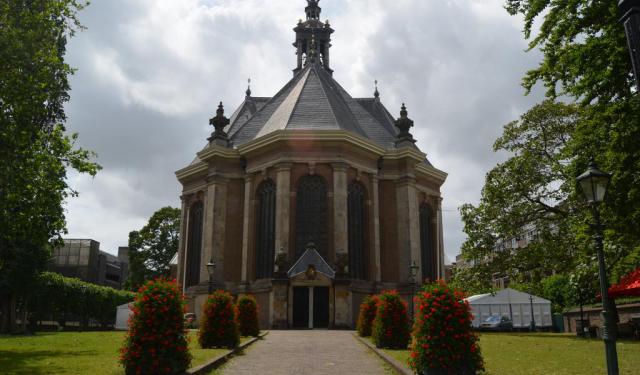
Hague's Classic Architectural Jewels
As the third largest metropolis in the Netherlands, The Hague has plenty to offer architecturally discerning travelers. The city is a living proof of a harmonious coexistence between a modern, easy on the eye skyline and a steeped in history downtown. Owing to its fascinating (political) past, The Hague has a plethora of historic buildings associated with worship, governance, royalty and... view more
Tour Duration: 2 Hours
Travel Distance: 2.9 Km or 1.8 Miles
Tour Duration: 2 Hours
Travel Distance: 2.9 Km or 1.8 Miles