Custom Walk in Sao Paulo, Brazil by csiegfried2_d9259 created on 2025-06-08
Guide Location: Brazil » Sao Paulo
Guide Type: Custom Walk
# of Sights: 9
Tour Duration: 7 Hour(s)
Travel Distance: 18 Km or 11.2 Miles
Share Key: BH8F9
Guide Type: Custom Walk
# of Sights: 9
Tour Duration: 7 Hour(s)
Travel Distance: 18 Km or 11.2 Miles
Share Key: BH8F9
How It Works
Please retrieve this walk in the GPSmyCity app. Once done, the app will guide you from one tour stop to the next as if you had a personal tour guide. If you created the walk on this website or come to the page via a link, please follow the instructions below to retrieve the walk in the app.
Retrieve This Walk in App
Step 1. Download the app "GPSmyCity: Walks in 1K+ Cities" on Apple App Store or Google Play Store.



Step 2. In the GPSmyCity app, download(or launch) the guide "Sao Paulo Map and Walking Tours".
Step 3. Tap the menu button located at upper right corner of the "Walks" screen and select "Retrieve custom walk". Enter the share key: BH8F9
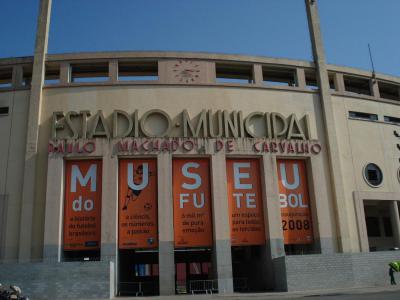
1) Football Museum (must see)
The Football Museum, located in the Pacaembu Stadium, is a 7,000 square mile facility dedicated to all things football. For a true fan of football, this exhibition hall is the thing to see. What makes this center unique is that it is dedicated to the national sport of Brazil and presents the game with no team bias whatsoever. The museum does an excellent job of telling the history of football and intertwining it with the history of the world.
Whether you are a fan of football, or not, you will enjoy an awesome multimedia experience as soon as you enter the building. The rooms are divided into sections that display different elements of the football experience. Banners, flags, and other fan items decorate the rooms. Photographs of football greats such as Pelé, Rivelino, Gilmar, Romário, and others line the walls. Video recordings of fan reactions play as you tour the movie theater.
There are also recordings of sports journalists such as Juca Kfouri, Daniel Piza, and Marcelo Tas announcing goals. The museum pays homage to the world cup and patrons will enjoy viewing the goals of football stars in the multimedia room.
Why You Should Visit:
Football history all under one roof!
Information is available in many languages and there are interactive activities that appeal to all ages.
You can even walk around the soccer field and experience the grandiosity of a football stadium first-hand.
Tip:
Make sure to see if there's a street market in front of the stadium, and include some of the best pastel and garapa (sugar cane juice) in your program.
Saturdays are free of charge but bear in mind the Museum is closed when games take place in Pacaembu, so you'd better check beforehand.
Whether you are a fan of football, or not, you will enjoy an awesome multimedia experience as soon as you enter the building. The rooms are divided into sections that display different elements of the football experience. Banners, flags, and other fan items decorate the rooms. Photographs of football greats such as Pelé, Rivelino, Gilmar, Romário, and others line the walls. Video recordings of fan reactions play as you tour the movie theater.
There are also recordings of sports journalists such as Juca Kfouri, Daniel Piza, and Marcelo Tas announcing goals. The museum pays homage to the world cup and patrons will enjoy viewing the goals of football stars in the multimedia room.
Why You Should Visit:
Football history all under one roof!
Information is available in many languages and there are interactive activities that appeal to all ages.
You can even walk around the soccer field and experience the grandiosity of a football stadium first-hand.
Tip:
Make sure to see if there's a street market in front of the stadium, and include some of the best pastel and garapa (sugar cane juice) in your program.
Saturdays are free of charge but bear in mind the Museum is closed when games take place in Pacaembu, so you'd better check beforehand.
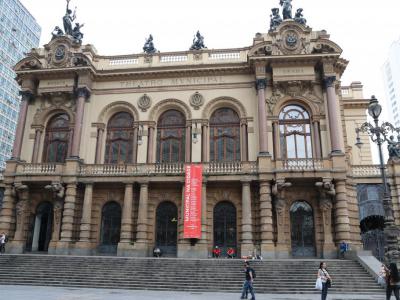
2) Theatro Municipal (Municipal Theatre) (must see)
The Municipal Theatre (Theatro Municipal) holds great significance as a theater and cultural establishment in Sao Paulo. It was constructed in 1911 by Brazilian architect Ramos de Azevedo, along with Italian architects Claudio Rossi and Domiziano Rossi. Drawing inspiration from the Paris Opera building, its design blends elements of Neoclassical and Baroque styles.
The creation of this edifice was driven by the necessity to provide a theater that would cater to the aspirations of the city's residents. Following a devastating fire that rendered the previous theater, Teatro São Bento, unsuitable for artistic performances, the people expressed their demand for a venue that could rival the cultural experiences found in Europe. In response to their fervent pleas, a theater befitting such extraordinary performances was granted. The stage of this illustrious establishment has been graced by renowned artists including Anna Pavlova, Duke Ellington, Isadora Duncan, Vivien Leigh, Mikhail Baryshnikov, Enrico Caruso, Maria Callas, and Rudolph Nureyev.
The Municipal Theatre is widely acclaimed for its association with the Week of Modern Art, an event that propelled Sao Paulo onto the global artistic landscape. Although already a significant cultural hub, Sao Paulo was considered relatively insignificant in terms of artistic influence. However, the Week of Modern Art served as a turning point, elevating Sao Paulo to a position of leadership and major influence within the modern art movement. Presently, the Municipal Theatre serves as the residence for the São Paulo Municipal Symphonic Orchestra, the Coral Lírico (Lyric Choir), and the City Ballet of São Paulo.
Why You Should Visit:
A true gem in the heart of the city – great spot for taking beautiful pictures.
Besides its sumptuousness, outside and especially inside, it gives insight into quite a few of Brazil's moments 100 years ago.
The ambiance is sophisticated, there is a great bar with drinks, soups and treats, and the selection of plays, concerts and operas is always great.
Tip:
Make sure you're there at 11 AM on weekdays for the free, guided, one-hour tour.
If you're leaving a performance late at night use caution as you would in any large urban setting.
The creation of this edifice was driven by the necessity to provide a theater that would cater to the aspirations of the city's residents. Following a devastating fire that rendered the previous theater, Teatro São Bento, unsuitable for artistic performances, the people expressed their demand for a venue that could rival the cultural experiences found in Europe. In response to their fervent pleas, a theater befitting such extraordinary performances was granted. The stage of this illustrious establishment has been graced by renowned artists including Anna Pavlova, Duke Ellington, Isadora Duncan, Vivien Leigh, Mikhail Baryshnikov, Enrico Caruso, Maria Callas, and Rudolph Nureyev.
The Municipal Theatre is widely acclaimed for its association with the Week of Modern Art, an event that propelled Sao Paulo onto the global artistic landscape. Although already a significant cultural hub, Sao Paulo was considered relatively insignificant in terms of artistic influence. However, the Week of Modern Art served as a turning point, elevating Sao Paulo to a position of leadership and major influence within the modern art movement. Presently, the Municipal Theatre serves as the residence for the São Paulo Municipal Symphonic Orchestra, the Coral Lírico (Lyric Choir), and the City Ballet of São Paulo.
Why You Should Visit:
A true gem in the heart of the city – great spot for taking beautiful pictures.
Besides its sumptuousness, outside and especially inside, it gives insight into quite a few of Brazil's moments 100 years ago.
The ambiance is sophisticated, there is a great bar with drinks, soups and treats, and the selection of plays, concerts and operas is always great.
Tip:
Make sure you're there at 11 AM on weekdays for the free, guided, one-hour tour.
If you're leaving a performance late at night use caution as you would in any large urban setting.
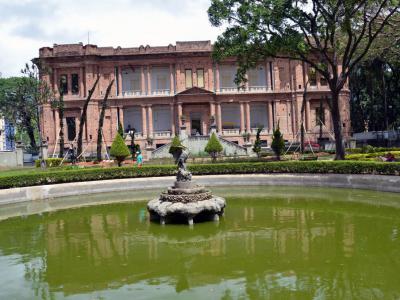
3) Pinacoteca do Estado de Sao Paulo (Art Gallery of the State of São Paulo) (must see)
The Art Gallery of the State of São Paulo (Pinacoteca do Estado de São Paulo) stands as the city's oldest art gallery, drawing a substantial number of tourists. The construction of the gallery's building spanned three years from 1897 to 1900. Originally designated for the School of Arts and Crafts, it underwent a conversion in 1911 to become a state museum.
Throughout its history, the Pinacoteca do Estado has served various purposes, including housing the High School of the State, accommodating governmental offices, and even acting as military barracks during World War II. In its early years, the exhibition space was limited to a mere four rooms in 1951. Presently, the gallery boasts an expansive presence with over 10 rooms, occupying both the ground and first floors of the building.
Additionally, the ground floor is home to the Resistance Memorial. While the gallery's collections predominantly focus on academic art, they also feature several works by modernist artists. Exploring the vast display of over 7,000 pieces, visitors may encounter historic paintings from the 19th and 20th centuries, capturing Brazil's essence through the skilled brushstrokes of artists such as Almeida Junior, Anita, and Alfredo Volpi Malfatti. Sculptures by Vitor Brecheret and numerous other captivating artworks further enrich the gallery's collection.
Why You Should Visit:
For a comprehensive and engaging overview of the country's best artists from the 19th and 20th centuries, and for getting a vision of São Paulo and other parts of Brazil in those times.
Not only can you see the way cities were before urban sprawl, but also the way of life then – certainly simpler and seemingly a lot more idyllic!
Tip:
There's a nice cafe with decent food selection, as well as a nice park adjacent, so you can spend 3-5 hrs to give yourself the time to explore it all, and have a lunch/snack/coffee and/or walk break.
Throughout its history, the Pinacoteca do Estado has served various purposes, including housing the High School of the State, accommodating governmental offices, and even acting as military barracks during World War II. In its early years, the exhibition space was limited to a mere four rooms in 1951. Presently, the gallery boasts an expansive presence with over 10 rooms, occupying both the ground and first floors of the building.
Additionally, the ground floor is home to the Resistance Memorial. While the gallery's collections predominantly focus on academic art, they also feature several works by modernist artists. Exploring the vast display of over 7,000 pieces, visitors may encounter historic paintings from the 19th and 20th centuries, capturing Brazil's essence through the skilled brushstrokes of artists such as Almeida Junior, Anita, and Alfredo Volpi Malfatti. Sculptures by Vitor Brecheret and numerous other captivating artworks further enrich the gallery's collection.
Why You Should Visit:
For a comprehensive and engaging overview of the country's best artists from the 19th and 20th centuries, and for getting a vision of São Paulo and other parts of Brazil in those times.
Not only can you see the way cities were before urban sprawl, but also the way of life then – certainly simpler and seemingly a lot more idyllic!
Tip:
There's a nice cafe with decent food selection, as well as a nice park adjacent, so you can spend 3-5 hrs to give yourself the time to explore it all, and have a lunch/snack/coffee and/or walk break.
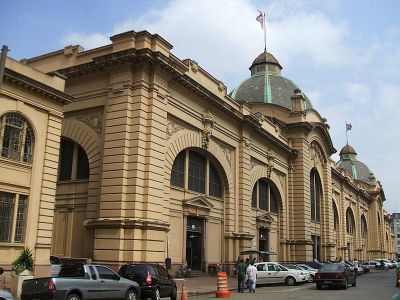
4) Mercado Municipal (Municipal Market) (must see)
This enormous eclectic-style market first opened in 1933. Since then, it has remained committed to serving as a central public market offering fruits, vegetables, meats, cereals, and spices.
The Municipal Market was inspired by the Berlin Central Market, featuring a covered building with side turrets. Its exterior combines neoclassical and Gothic influences, with grand columns and arches. Glazed windows flood the interior with natural light.
Inside, visitors can admire the market’s fabulous stained-glass windows, arranged in 32 panels. These were designed by Brazilian stained-glass master Conrado Sorgenicht Filho, who also created works for more than 300 churches across Brazil. Instead of religious themes, the panels here depict scenes of food production, perfectly suited to the market’s spirit.
On the first floor, visitors will find a wide range of food retailers. You can buy just about any ingredient imaginable — from Brazilian nuts, coffee, and fresh fish to oysters, meats, fruits, and vegetables.
The second floor is home to several restaurants where you can enjoy local specialties. To give you an idea of the market’s impressive scale, it employs over 1,500 workers, and more than 350 tons of food are traded here each day.
Tip:
Try the famous mortadella sandwich. The market is bustling at lunchtime, so if you love a hectic, immersive experience, try lunchtime. For a quieter pace, go before or after lunch.
The Municipal Market was inspired by the Berlin Central Market, featuring a covered building with side turrets. Its exterior combines neoclassical and Gothic influences, with grand columns and arches. Glazed windows flood the interior with natural light.
Inside, visitors can admire the market’s fabulous stained-glass windows, arranged in 32 panels. These were designed by Brazilian stained-glass master Conrado Sorgenicht Filho, who also created works for more than 300 churches across Brazil. Instead of religious themes, the panels here depict scenes of food production, perfectly suited to the market’s spirit.
On the first floor, visitors will find a wide range of food retailers. You can buy just about any ingredient imaginable — from Brazilian nuts, coffee, and fresh fish to oysters, meats, fruits, and vegetables.
The second floor is home to several restaurants where you can enjoy local specialties. To give you an idea of the market’s impressive scale, it employs over 1,500 workers, and more than 350 tons of food are traded here each day.
Tip:
Try the famous mortadella sandwich. The market is bustling at lunchtime, so if you love a hectic, immersive experience, try lunchtime. For a quieter pace, go before or after lunch.
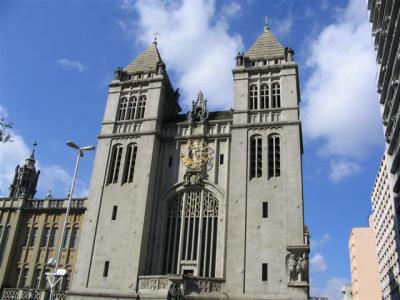
5) Mosteiro de São Bento (Sao Bento Monastery) (must see)
The soaring interior nave with its ornate details makes this the most beautiful and vivid church in Sao Paulo. The monastery was originally established in 1598.
In 1640, when the Duke of Bragança was crowned King of Portugal, a group in São Paulo rejected the new monarch and offered the title King of Sao Paulo to Amador Bueno. Bueno declined the offer and hid in the Sao Bento Monastery until the political unrest subsided and D. Joao was recognized as King.
The current neo-Gothic façade was completed in 1914. German architect Richard Berndl designed the new structure, while Belgian sculptor Adrien Henri Vital van Emelen created the impressive sculptures of the twelve apostles.
The interior craftsmanship is exquisite, and the stained glass windows are stunning. A friar crafted clay figures for the high altar in the 1600s, which is made of marble imported from Italy. The clock, installed in 1920, was considered the most accurate timepiece in São Paulo at the time. The impressive organ, with more than 6,000 pipes, can be heard during mass. Forty-five monks live in the monastery, devoting their lives to prayer and work.
Don’t miss experiencing the church in action and listening to its hauntingly beautiful acoustics. Attend a mass to hear the Gregorian chants—held on weekdays at 6 a.m. and weekends at 10 a.m.
There’s also an on-site bakery offering delicious treats made by the monks using secret recipes. You’ll find freshly baked bread, cakes, biscuits, jams, chocolates, and even craft beer.
In 1640, when the Duke of Bragança was crowned King of Portugal, a group in São Paulo rejected the new monarch and offered the title King of Sao Paulo to Amador Bueno. Bueno declined the offer and hid in the Sao Bento Monastery until the political unrest subsided and D. Joao was recognized as King.
The current neo-Gothic façade was completed in 1914. German architect Richard Berndl designed the new structure, while Belgian sculptor Adrien Henri Vital van Emelen created the impressive sculptures of the twelve apostles.
The interior craftsmanship is exquisite, and the stained glass windows are stunning. A friar crafted clay figures for the high altar in the 1600s, which is made of marble imported from Italy. The clock, installed in 1920, was considered the most accurate timepiece in São Paulo at the time. The impressive organ, with more than 6,000 pipes, can be heard during mass. Forty-five monks live in the monastery, devoting their lives to prayer and work.
Don’t miss experiencing the church in action and listening to its hauntingly beautiful acoustics. Attend a mass to hear the Gregorian chants—held on weekdays at 6 a.m. and weekends at 10 a.m.
There’s also an on-site bakery offering delicious treats made by the monks using secret recipes. You’ll find freshly baked bread, cakes, biscuits, jams, chocolates, and even craft beer.
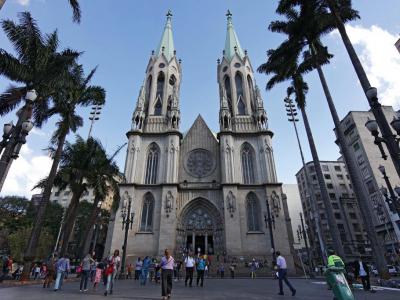
6) Sao Paulo Cathedral (must see)
Construction of Sao Paulo Cathedral began in 1913 and was finally completed in 1954, but this sacred site has hosted churches and cathedrals since 1589. Its impressive Neo-Gothic facade and soaring Renaissance-style dome make it one of the city’s most striking landmarks.
The twin towers, reaching 92 meters, were finished in 1967, and inside, the cathedral can hold up to 8,000 visitors. The capitals are decorated with carved Brazilian crops like coffee branches and pineapples, a charming nod to the country’s heritage.
The crypt holds fascinating history as well. Among the tombs of Sao Paulo’s archbishops and bishops, you’ll find the remains of Tibirica, a Guaianas chief who welcomed the first Jesuits in the 1500s and helped make the founding of Sao Paulo possible. Marble sculptures tell stories of Job and Saint Jerome, making the crypt both impressive and reflective.
Music lovers will be thrilled by the cathedral’s enormous 1954 organ, one of the largest in Latin America, boasting 12,000 pipes and intricate Gothic-style carvings. And don’t miss the carillon—the heaviest and largest in Central and South America—with its 61 bells filling the air with resounding tones.
Tip:
Tourists should be aware that the plaza around the cathedral can attract drug addicts, beggars, and grifters. It is safest to visit during the day and maintain a low profile. The contrast between the sacred interior and the bustling, sometimes chaotic exterior offers a striking portrait of São Paulo’s unique and complex character.
The twin towers, reaching 92 meters, were finished in 1967, and inside, the cathedral can hold up to 8,000 visitors. The capitals are decorated with carved Brazilian crops like coffee branches and pineapples, a charming nod to the country’s heritage.
The crypt holds fascinating history as well. Among the tombs of Sao Paulo’s archbishops and bishops, you’ll find the remains of Tibirica, a Guaianas chief who welcomed the first Jesuits in the 1500s and helped make the founding of Sao Paulo possible. Marble sculptures tell stories of Job and Saint Jerome, making the crypt both impressive and reflective.
Music lovers will be thrilled by the cathedral’s enormous 1954 organ, one of the largest in Latin America, boasting 12,000 pipes and intricate Gothic-style carvings. And don’t miss the carillon—the heaviest and largest in Central and South America—with its 61 bells filling the air with resounding tones.
Tip:
Tourists should be aware that the plaza around the cathedral can attract drug addicts, beggars, and grifters. It is safest to visit during the day and maintain a low profile. The contrast between the sacred interior and the bustling, sometimes chaotic exterior offers a striking portrait of São Paulo’s unique and complex character.
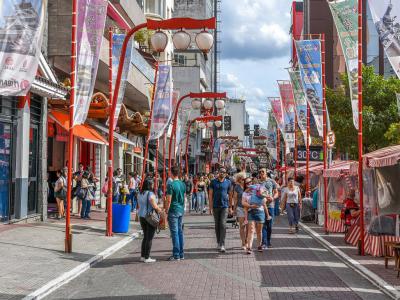
7) Liberdade District (must see)
The name Liberdade (literary meaning Freedom) comes from the 1888 abolition of slavery in Brazil. Before abolition, slaves and convicts were executed in the public square now known as Liberty Square.
In the early 1900s, the area became popular with Japanese immigrants. Today, over one million Japanese and Brazilian-Japanese people call this neighborhood home, making Liberdade the largest Japanese community outside Japan. In 1974, a nine-meter-tall traditional Japanese gate was erected, marking the entrance to Liberdade with stunning detail.
Liberdade is a vibrant spot for tourists and locals to immerse themselves in Asian culture. You’ll find Japanese comics (known as manga), cosplay enthusiasts dressed as their favorite anime characters, Japanese candy and gifts, and restaurants serving sushi and sashimi. Don’t miss the chance to enjoy a karaoke bar for a fun cultural experience.
Galvao Bueno Street is one of the main thoroughfares in Liberdade, lined with antique shops, bookstores, grocers, and an anime and manga mall. The street features a pedestrian bridge over the Glicerio Viaduct, a perfect spot for photos of Sao Paulo.
The Museum of Japanese Immigration offers a fascinating glimpse into the history and culture of Japanese immigrants in Brazil. Visitors can explore exhibits detailing the journeys, traditions, and daily lives of Japanese settlers, as well as their contributions to Brazilian society.
On weekends, the Liberdade street market offers traditional Japanese food, household items, and souvenirs, making it a lively destination for visitors.
Tip:
Visit on the weekend to take part in the street market. Check out the food stalls and try Japanese favorites such as ramen noodles, yakisoba (fried noodles), and gyoza (dumplings).
In the early 1900s, the area became popular with Japanese immigrants. Today, over one million Japanese and Brazilian-Japanese people call this neighborhood home, making Liberdade the largest Japanese community outside Japan. In 1974, a nine-meter-tall traditional Japanese gate was erected, marking the entrance to Liberdade with stunning detail.
Liberdade is a vibrant spot for tourists and locals to immerse themselves in Asian culture. You’ll find Japanese comics (known as manga), cosplay enthusiasts dressed as their favorite anime characters, Japanese candy and gifts, and restaurants serving sushi and sashimi. Don’t miss the chance to enjoy a karaoke bar for a fun cultural experience.
Galvao Bueno Street is one of the main thoroughfares in Liberdade, lined with antique shops, bookstores, grocers, and an anime and manga mall. The street features a pedestrian bridge over the Glicerio Viaduct, a perfect spot for photos of Sao Paulo.
The Museum of Japanese Immigration offers a fascinating glimpse into the history and culture of Japanese immigrants in Brazil. Visitors can explore exhibits detailing the journeys, traditions, and daily lives of Japanese settlers, as well as their contributions to Brazilian society.
On weekends, the Liberdade street market offers traditional Japanese food, household items, and souvenirs, making it a lively destination for visitors.
Tip:
Visit on the weekend to take part in the street market. Check out the food stalls and try Japanese favorites such as ramen noodles, yakisoba (fried noodles), and gyoza (dumplings).
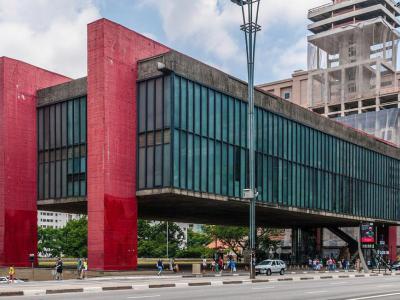
8) Sao Paulo Museum of Art (must see)
Established in 1947, the Museum of Art features fine art from Brazilian, English, French, African, Italian, Asian, and Latin American disciplines. The exhibition hall contains a collection of 8,000 items that features greats such as Renoir, Van Gogh, Matisse, Picasso, Warhol, Rubens, Rembrandt, Raphael, Boticelli, and Monet. It is one of the most extensive and largest collections of Western art in Latin America and the Southern Hemisphere. The current museum was inaugurated by Queen Elizabeth II during her 1968 visit to Brazil.
Located on the famous Paulista Avenue, the museum is locally known as the Museu de Arte. Designer Lina Bo Bardi is responsible for the two grand red lateral beams that grace the building. The beams support the building and enable the view of other buildings to remain unobstructed.
The building is much more than just a museum. A library, film gallery, photo gallery, two auditoriums, store, restaurant, and workshop rooms are available for public use. Concerts and other events are frequently held in the marketplace. Visitors should make sure to attend the antique market that happens every Sunday in the bazaar. Art courses are held for all who wish to attend.
Why You Should Visit:
The most famous museum in São Paulo, and for good reason: two floors of beautiful masterpieces from around the world! Downstairs is an excellent museum shop and very good cafe; however, Paulista Avenue is full of good eating options as well.
Tip:
Visit it on Tuesdays, when the admission is free, and focus on the main exhibition on the top floor, where most true gems are. If you want to know what you see, you have to walk around the back of the painting!
Located on the famous Paulista Avenue, the museum is locally known as the Museu de Arte. Designer Lina Bo Bardi is responsible for the two grand red lateral beams that grace the building. The beams support the building and enable the view of other buildings to remain unobstructed.
The building is much more than just a museum. A library, film gallery, photo gallery, two auditoriums, store, restaurant, and workshop rooms are available for public use. Concerts and other events are frequently held in the marketplace. Visitors should make sure to attend the antique market that happens every Sunday in the bazaar. Art courses are held for all who wish to attend.
Why You Should Visit:
The most famous museum in São Paulo, and for good reason: two floors of beautiful masterpieces from around the world! Downstairs is an excellent museum shop and very good cafe; however, Paulista Avenue is full of good eating options as well.
Tip:
Visit it on Tuesdays, when the admission is free, and focus on the main exhibition on the top floor, where most true gems are. If you want to know what you see, you have to walk around the back of the painting!
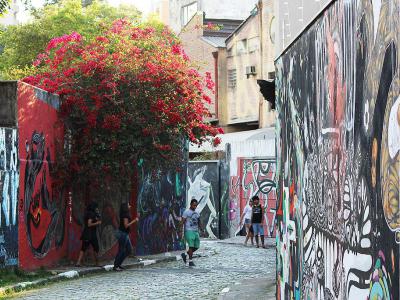
9) Beco do Batman (Batman Alley) (must see)
Batman's Alley (Beco do Batman) refers to the area surrounding Gonçalo Afonso Street and Medeiros de Albuquerque Street in São Paulo's Vila Madalena neighborhood. It has gained popularity among tourists due to its abundance of vibrant graffiti adorning the streets.
The name for this area originated from a graffiti artwork of Batman, the iconic character from DC Comics, which was painted on one of the walls in the 1980s. Subsequently, local art students began enriching the walls with an array of psychedelic and cubist-inspired designs.
During the 2014 FIFA World Cup, Vila Madalena attracted a significant influx of visitors, increasing reported incidents of theft and assault in and around Beco do Batman between 2013 and 2014.
Presently, the graffiti in Batman's Alley is consistently maintained and looked after by members of the local community. They undertake regular renovations to ensure the artwork remains vibrant and well-preserved.
The name for this area originated from a graffiti artwork of Batman, the iconic character from DC Comics, which was painted on one of the walls in the 1980s. Subsequently, local art students began enriching the walls with an array of psychedelic and cubist-inspired designs.
During the 2014 FIFA World Cup, Vila Madalena attracted a significant influx of visitors, increasing reported incidents of theft and assault in and around Beco do Batman between 2013 and 2014.
Presently, the graffiti in Batman's Alley is consistently maintained and looked after by members of the local community. They undertake regular renovations to ensure the artwork remains vibrant and well-preserved.
