Custom Walk in Buenos Aires, Argentina by csiegfried2_d9259 created on 2025-06-16
Guide Location: Argentina » Buenos Aires
Guide Type: Custom Walk
# of Sights: 16
Tour Duration: 6 Hour(s)
Travel Distance: 14.6 Km or 9.1 Miles
Share Key: FYCGZ
Guide Type: Custom Walk
# of Sights: 16
Tour Duration: 6 Hour(s)
Travel Distance: 14.6 Km or 9.1 Miles
Share Key: FYCGZ
How It Works
Please retrieve this walk in the GPSmyCity app. Once done, the app will guide you from one tour stop to the next as if you had a personal tour guide. If you created the walk on this website or come to the page via a link, please follow the instructions below to retrieve the walk in the app.
Retrieve This Walk in App
Step 1. Download the app "GPSmyCity: Walks in 1K+ Cities" on Apple App Store or Google Play Store.



Step 2. In the GPSmyCity app, download(or launch) the guide "Buenos Aires Map and Walking Tours".
Step 3. Tap the menu button located at upper right corner of the "Walks" screen and select "Retrieve custom walk". Enter the share key: FYCGZ
1) Puerto Madero (must see)
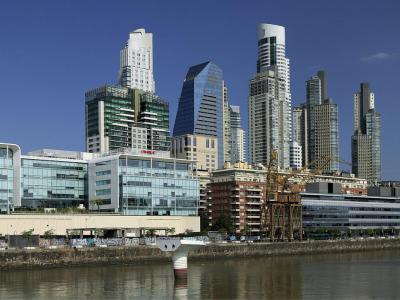
Puerto Madero, recognized in urban planning circles as the Puerto Madero Waterfront, constitutes a district within Buenos Aires, situated in the heart of the central business district. It commands a substantial stretch of the Rio de la Plata riverbank and serves as a showcase for contemporary architectural tendencies.
Starting from the year 2000, a multitude of modern residential skyscrapers, some towering up to 50 stories high, have emerged, all oriented toward the Rio de la Plata. Noteworthy among these structures are the Alvear Tower, Renoir Towers, El Faro Towers, Chateau Tower of Puerto Madero, and Mulieris Towers, among others. Recent additions to the skyline encompass the Le Parc Tower as well as the Hilton and River View Towers. Concurrently, the development of office and hotel skyscrapers is in progress. For instance, the Repsol YPF Headquarters and the Conrad Buenos Aires Hotel & Resort are in the pipeline, with anticipated construction commencement towards the end of 2008 and a slated completion by late 2010.
Within this vicinity, an array of museums and art galleries further enrich the cultural landscape, including the Fortabat Art Collection, Faena Arts Center, and De la Cárcova Museum. Notable vessels such as ARA Presidente Sarmiento and ARA Uruguay also contribute to the local ambiance.
Starting from the year 2000, a multitude of modern residential skyscrapers, some towering up to 50 stories high, have emerged, all oriented toward the Rio de la Plata. Noteworthy among these structures are the Alvear Tower, Renoir Towers, El Faro Towers, Chateau Tower of Puerto Madero, and Mulieris Towers, among others. Recent additions to the skyline encompass the Le Parc Tower as well as the Hilton and River View Towers. Concurrently, the development of office and hotel skyscrapers is in progress. For instance, the Repsol YPF Headquarters and the Conrad Buenos Aires Hotel & Resort are in the pipeline, with anticipated construction commencement towards the end of 2008 and a slated completion by late 2010.
Within this vicinity, an array of museums and art galleries further enrich the cultural landscape, including the Fortabat Art Collection, Faena Arts Center, and De la Cárcova Museum. Notable vessels such as ARA Presidente Sarmiento and ARA Uruguay also contribute to the local ambiance.
2) Calle Defensa (must see)
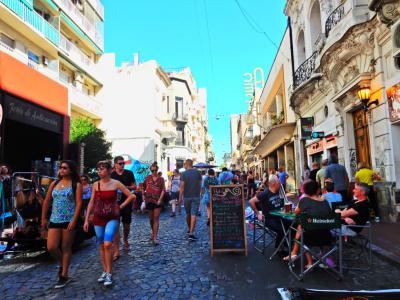
Calle Defensa (Defense Street) serves as a major thoroughfare traversing the historical core of Buenos Aires. Its significance lies in being a focal point for tourists, owing to its rich historical and cultural value to the city. During weekends, the majority of its stretch transforms into a pedestrian-only zone.
Stretching from south to north, this road cuts through two of Buenos Aires' oldest neighborhoods: Monserrat and San Telmo, eventually concluding its journey in the Barracas district. Within its central segment, you'll encounter well-preserved colonial structures, while the majority of homes date back to the latter half of the 19th century and the early 20th century.
This narrow cobblestone lane navigates the historical core of the capital, leading to the present-day Plaza de Mayo, once known as the Plaza Mayor when the city was established by Juan de Garay in 1580. Its modern name was bestowed upon it in 1849 as a tribute to the city's defense during the English invasions of 1806 and 1807. Towards the southern end, it terminated at today's Martín García Avenue, which connected to another route crossing the Riachuelo and spanning the present-day districts of Avellaneda and Quilmes (now Montes de Oca Avenue). In 1806, the English army entered Buenos Aires via this street, originating from Quilmes.
Stretching from south to north, this road cuts through two of Buenos Aires' oldest neighborhoods: Monserrat and San Telmo, eventually concluding its journey in the Barracas district. Within its central segment, you'll encounter well-preserved colonial structures, while the majority of homes date back to the latter half of the 19th century and the early 20th century.
This narrow cobblestone lane navigates the historical core of the capital, leading to the present-day Plaza de Mayo, once known as the Plaza Mayor when the city was established by Juan de Garay in 1580. Its modern name was bestowed upon it in 1849 as a tribute to the city's defense during the English invasions of 1806 and 1807. Towards the southern end, it terminated at today's Martín García Avenue, which connected to another route crossing the Riachuelo and spanning the present-day districts of Avellaneda and Quilmes (now Montes de Oca Avenue). In 1806, the English army entered Buenos Aires via this street, originating from Quilmes.
3) Plaza de Mayo (May Square) (must see)
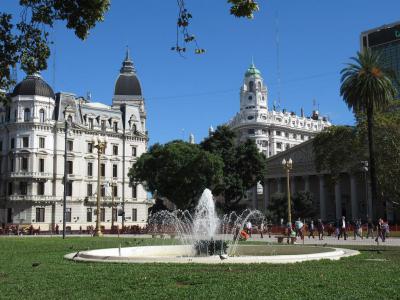
May Square is the oldest public square in Buenos Aires. Its story begins in 1580, when Juan de Garay founded the city. The plaza’s present form dates to 1884, when it was redesigned and named to honor the May Revolution of 1810, the movement that initiated Argentina’s break from Spanish rule.
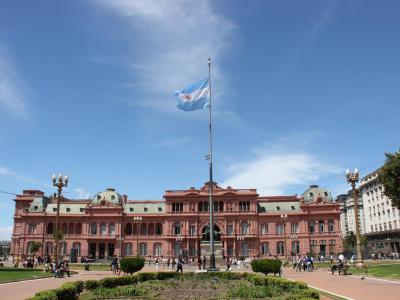
As you stand at the center of the plaza, the Pyramid of May rises directly beside you. This white monument, first erected in 1811 to commemorate the May Revolution, was moved to this central position in 1912. From here, turn your attention east: the pale pink facade of the Pink House, the seat of the national government, dominates the entire side of the square. Directly in front of it, also on the east side of the square, stands the Equestrian Monument to General Manuel Belgrano, leader of the May Revolution, dedicated in 1873.
Next, look west, where the long, white, arched building on the left is the Cabildo, the only surviving colonial government structure on the plaza. The original town council was built in 1608, and the current version-completed in 1751-has undergone several modifications. Today it houses the National Museum of the Cabildo and the May Revolution, featuring colonial-era art and furnishings.
From the same position near the Cabildo, turn northwest to see the Metropolitan Cathedral of Buenos Aires, the city’s principal Catholic church. Its neoclassical facade resembles a European temple, marking a contrast with the surrounding architecture. Finally, look toward the northeast corner of the square to spot the elegant Buenos Aires House of Culture, the building between the Cabildo and the Cathedral.
Standing here, with nearly four centuries of history surrounding you, May Square offers one of the clearest windows into the political and cultural life of Buenos Aires.
As you stand at the center of the plaza, the Pyramid of May rises directly beside you. This white monument, first erected in 1811 to commemorate the May Revolution, was moved to this central position in 1912. From here, turn your attention east: the pale pink facade of the Pink House, the seat of the national government, dominates the entire side of the square. Directly in front of it, also on the east side of the square, stands the Equestrian Monument to General Manuel Belgrano, leader of the May Revolution, dedicated in 1873.
Next, look west, where the long, white, arched building on the left is the Cabildo, the only surviving colonial government structure on the plaza. The original town council was built in 1608, and the current version-completed in 1751-has undergone several modifications. Today it houses the National Museum of the Cabildo and the May Revolution, featuring colonial-era art and furnishings.
From the same position near the Cabildo, turn northwest to see the Metropolitan Cathedral of Buenos Aires, the city’s principal Catholic church. Its neoclassical facade resembles a European temple, marking a contrast with the surrounding architecture. Finally, look toward the northeast corner of the square to spot the elegant Buenos Aires House of Culture, the building between the Cabildo and the Cathedral.
Standing here, with nearly four centuries of history surrounding you, May Square offers one of the clearest windows into the political and cultural life of Buenos Aires.
4) Casa Rosada Museum (Pink House Museum) (must see)
Pink House Museum is located inside the main office complex of the President of Argentina, known as Pink House. The museum features exhibits that explore more than 100 years of the Pink House’s role as the seat of power in Argentina.
The museum displays an extensive collection of objects belonging to Argentine leaders throughout the country’s history. The museum was created to exhibit presidential memorabilia. Among its holdings are artifacts from the remains of an old fort that once occupied the site, as well as elements from the former Customs House, designed by British architect Edward Taylor. At one time, the Customs House was the largest building in Argentina.
Exhibits include books, furniture, swords, uniforms, and carriages used by former presidents. More personal items-such as flatware and dolls used by presidential families-are also on display. Several underground rooms correspond to the foundations of earlier government structures that once stood here. In 2011, a modern extension was added to house a mural by Mexican artist David Alfaro Siqueiros-one of his most powerful and immersive works. There is also a dedicated section honoring Eva Perón, former First Lady of Argentina. A lesser-known highlight is the preserved section of colonial-era tunnels, offering a glimpse into the early defensive layout of Buenos Aires.
Tip:
Visitors must reserve in advance to join the free museum tours which are conducted in Spanish. These tours are absolutely worth it and easy to book online. On weekends, you can also visit the Pink House itself on a free guided tour available in both Spanish and English, also with a reservation.
The museum displays an extensive collection of objects belonging to Argentine leaders throughout the country’s history. The museum was created to exhibit presidential memorabilia. Among its holdings are artifacts from the remains of an old fort that once occupied the site, as well as elements from the former Customs House, designed by British architect Edward Taylor. At one time, the Customs House was the largest building in Argentina.
Exhibits include books, furniture, swords, uniforms, and carriages used by former presidents. More personal items-such as flatware and dolls used by presidential families-are also on display. Several underground rooms correspond to the foundations of earlier government structures that once stood here. In 2011, a modern extension was added to house a mural by Mexican artist David Alfaro Siqueiros-one of his most powerful and immersive works. There is also a dedicated section honoring Eva Perón, former First Lady of Argentina. A lesser-known highlight is the preserved section of colonial-era tunnels, offering a glimpse into the early defensive layout of Buenos Aires.
Tip:
Visitors must reserve in advance to join the free museum tours which are conducted in Spanish. These tours are absolutely worth it and easy to book online. On weekends, you can also visit the Pink House itself on a free guided tour available in both Spanish and English, also with a reservation.
5) Metropolitan Cathedral (must see)
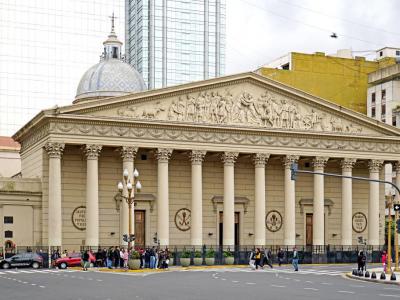
The Buenos Aires Metropolitan Cathedral is the most significant Catholic church in the city. The site was originally designated for a church in 1580, and several structures were built throughout the 1600s. However, the current building dates to the early 1700s, with a Greek Revival facade added in the early 1800s. In 1836, the church was formally designated as the cathedral.
As you admire the cathedral's facade, you'll observe 12 Neo-Classical columns, symbolizing the twelve apostles. Its frontispiece features a large bas-relief depicting two important figures from the Old Testament: Jacob and Joseph in Egypt, intended as a metaphor for national reconciliation after periods of civil conflict. Walking inside, the cathedral impresses with a 134-foot vaulted ceiling and five naves. Pay attention to the Venetian mosaic flooring, covering the entire interior floor of the cathedral. It illustrates a series of religious motifs and geometric designs crafted by Italian artisans in the late 19th century.
The cathedral’s oldest artwork is the 1671 Christ of Buenos Aires. To find it, walk down the central nave and turn right, where the Chapel of the Holy Christ appears among the first on that side; the wooden 17th-century image stands in a small altar niche and is easy to spot thanks to its expressive colonial style. The main gilded wood altarpiece, dating to 1785, rises at the far end of the central nave, directly facing visitors as they enter the cathedral. The monumental 1871 organ, with more than 3,500 pipes, is positioned above the entrance on the choir balcony and becomes visible when you look back toward the main doors. The beautifully preserved 18th-century wooden pulpit, decorated with gold leaf, stands to the left of the central nave, raised on a carved base and easily noticed as you walk toward the altar.
Several important memorials are housed inside the cathedral, each easy to locate as you move through the nave. To the left of the main altar, an ornate marble mausoleum holds the remains of General José de San Martín, one of Latin America’s great liberators; the monument is guarded by statues representing Argentina, Peru, and Chile. Just beside it stands the Tomb of the Unknown Soldier of Argentine Independence, marked by a simple yet solemn inscription.
Pope Francis celebrated Mass here during his years as Archbishop Jorge Bergoglio before his election as Pope in 2013. Today, the cathedral houses the Pope Francis Museum, displaying some of his personal items, liturgical garments, and photographs documenting his time in Buenos Aires.
As you admire the cathedral's facade, you'll observe 12 Neo-Classical columns, symbolizing the twelve apostles. Its frontispiece features a large bas-relief depicting two important figures from the Old Testament: Jacob and Joseph in Egypt, intended as a metaphor for national reconciliation after periods of civil conflict. Walking inside, the cathedral impresses with a 134-foot vaulted ceiling and five naves. Pay attention to the Venetian mosaic flooring, covering the entire interior floor of the cathedral. It illustrates a series of religious motifs and geometric designs crafted by Italian artisans in the late 19th century.
The cathedral’s oldest artwork is the 1671 Christ of Buenos Aires. To find it, walk down the central nave and turn right, where the Chapel of the Holy Christ appears among the first on that side; the wooden 17th-century image stands in a small altar niche and is easy to spot thanks to its expressive colonial style. The main gilded wood altarpiece, dating to 1785, rises at the far end of the central nave, directly facing visitors as they enter the cathedral. The monumental 1871 organ, with more than 3,500 pipes, is positioned above the entrance on the choir balcony and becomes visible when you look back toward the main doors. The beautifully preserved 18th-century wooden pulpit, decorated with gold leaf, stands to the left of the central nave, raised on a carved base and easily noticed as you walk toward the altar.
Several important memorials are housed inside the cathedral, each easy to locate as you move through the nave. To the left of the main altar, an ornate marble mausoleum holds the remains of General José de San Martín, one of Latin America’s great liberators; the monument is guarded by statues representing Argentina, Peru, and Chile. Just beside it stands the Tomb of the Unknown Soldier of Argentine Independence, marked by a simple yet solemn inscription.
Pope Francis celebrated Mass here during his years as Archbishop Jorge Bergoglio before his election as Pope in 2013. Today, the cathedral houses the Pope Francis Museum, displaying some of his personal items, liturgical garments, and photographs documenting his time in Buenos Aires.
6) Galerías Pacífico Shopping Center (must see)
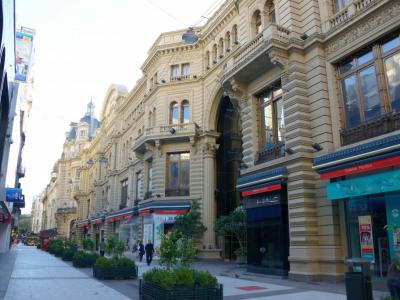
Galerías Pacífico is an elegant shopping center renowned for its stunning architecture and marked a national historical monument thanks to its admirable design. This Beaux-Arts style building was completed in 1889 and emulates the famous Galleria Vittorio Emanuele II in Milan. Originally constructed as a Le Bon Marché department store, Galerías Pacífico was transformed into a shopping center in 1990 and has since become one of the most beautiful malls in the world.
The centerpiece of the building is its impressive dome, adorned with murals by some of Argentina's most celebrated artists. To appreciate the art work, head towards the central atrium, where you can gaze up and appreciate the intricate frescoes that depict themes of Argentine history and culture.
Inside, visitors will find a range of stores, from international brands and high-end fashion to local clothing shops and leather crafts boutiques. To access the main shopping area, enter through the main entrance directly on Florida Street or via the entrance on Córdoba avenue. The food court is located on the lower level, beneath the dome. It is always lively, offering a variety of quick dining options, with several spots to enjoy ice-cream-a popular treat in Buenos Aires. To reach the food court, take one of the elevators located directly to the right and left of the central fountain in the middle of the main atrium.
Beyond shopping, Borges Cultural Center-located inside the building-adds cultural depth. To visit, head to the upper floors and look for signs leading to the “Centro Cultural Borges” entrance. This venue hosts a tango school where visitors can learn the passionate dance, as well as watch a tango show. The cultural center also features art exhibitions, workshops, and cultural events throughout the year, making it a must-visit for those interested in Argentine arts and heritage. The entrance to the tango shows is located in the back of the second floor, near the gallery spaces.
Tip:
If you plan to shop, be sure to look for the "tax-free" signs to take advantage of the tax refund system for foreign visitors before leaving Argentina.
The centerpiece of the building is its impressive dome, adorned with murals by some of Argentina's most celebrated artists. To appreciate the art work, head towards the central atrium, where you can gaze up and appreciate the intricate frescoes that depict themes of Argentine history and culture.
Inside, visitors will find a range of stores, from international brands and high-end fashion to local clothing shops and leather crafts boutiques. To access the main shopping area, enter through the main entrance directly on Florida Street or via the entrance on Córdoba avenue. The food court is located on the lower level, beneath the dome. It is always lively, offering a variety of quick dining options, with several spots to enjoy ice-cream-a popular treat in Buenos Aires. To reach the food court, take one of the elevators located directly to the right and left of the central fountain in the middle of the main atrium.
Beyond shopping, Borges Cultural Center-located inside the building-adds cultural depth. To visit, head to the upper floors and look for signs leading to the “Centro Cultural Borges” entrance. This venue hosts a tango school where visitors can learn the passionate dance, as well as watch a tango show. The cultural center also features art exhibitions, workshops, and cultural events throughout the year, making it a must-visit for those interested in Argentine arts and heritage. The entrance to the tango shows is located in the back of the second floor, near the gallery spaces.
Tip:
If you plan to shop, be sure to look for the "tax-free" signs to take advantage of the tax refund system for foreign visitors before leaving Argentina.
7) Teatro Colón (Colón Theatre) (must see)
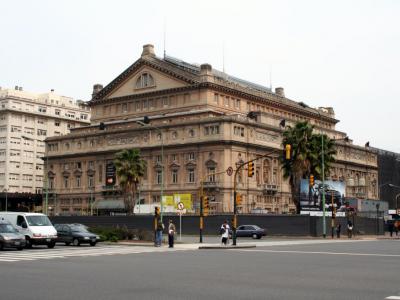
The Colón Theater is regarded as one of the finest opera houses in the world. Its construction took several years and involved multiple architects, but the result was an architectural masterpiece that continues to be ranked among the top three opera houses globally for acoustics and architectural quality. The design blends Italian Neoclassical, French Beaux-Arts, and German Renaissance influences, due to the succession of architects involved.
The flourishing opera scene in 19th-century Buenos Aires, driven by touring European companies, led to the construction of the first Colón Theater in 1857. It operated successfully for 30 years, but the growing popularity of opera soon made it clear that a larger and more modern venue was needed. After nearly 20 years of construction, the current theater opened in 1908.
The present structure was built using carefully selected materials from across Europe. It features Italian marble, French stained glass, Venetian mosaics, and Slavonic woodwork, reflecting a rich mixture of European craftsmanship. The main hall, shaped like a horseshoe, accommodates more than 2,500 seated spectators, with four levels of galleries and standing room for an additional 1,000. The orchestra pit can host up to 120 musicians. The hall’s acoustics are famously precise-so much so that the great tenor Luciano Pavarotti once remarked that it is one of the most challenging auditoriums in the world, where “even the slightest mistake can be heard”. Above the auditorium, the dome contains a hidden choir gallery, creating the effect of voices descending from the heavens.
An interesting feature of the theater is its historic stage machinery, which was some of the most advanced in the world at the time of its construction. This includes hidden trapdoors and a manual counterweight system used for quick scene changes during performances.
Tip:
Guided tours are offered daily in several languages; check at the box office for current schedules or availability. Don't miss the opportunity to visit the backstage area, where you can see the production rooms and get a behind-the-scenes look at how the theater prepares for its world-class performances.
The flourishing opera scene in 19th-century Buenos Aires, driven by touring European companies, led to the construction of the first Colón Theater in 1857. It operated successfully for 30 years, but the growing popularity of opera soon made it clear that a larger and more modern venue was needed. After nearly 20 years of construction, the current theater opened in 1908.
The present structure was built using carefully selected materials from across Europe. It features Italian marble, French stained glass, Venetian mosaics, and Slavonic woodwork, reflecting a rich mixture of European craftsmanship. The main hall, shaped like a horseshoe, accommodates more than 2,500 seated spectators, with four levels of galleries and standing room for an additional 1,000. The orchestra pit can host up to 120 musicians. The hall’s acoustics are famously precise-so much so that the great tenor Luciano Pavarotti once remarked that it is one of the most challenging auditoriums in the world, where “even the slightest mistake can be heard”. Above the auditorium, the dome contains a hidden choir gallery, creating the effect of voices descending from the heavens.
An interesting feature of the theater is its historic stage machinery, which was some of the most advanced in the world at the time of its construction. This includes hidden trapdoors and a manual counterweight system used for quick scene changes during performances.
Tip:
Guided tours are offered daily in several languages; check at the box office for current schedules or availability. Don't miss the opportunity to visit the backstage area, where you can see the production rooms and get a behind-the-scenes look at how the theater prepares for its world-class performances.
8) Palacio Barolo (Barolo Palace) (must see)
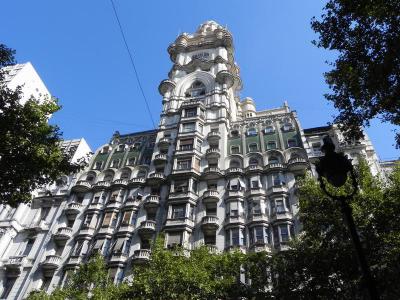
The Barolo Palace, commissioned by Argentine textile magnate Luis Barolo, was designed to house offices and stood as the tallest building in Buenos Aires until 1936 . Barolo hired Italian architect Mario Palanti in 1910, sharing the common fear among some Europeans of the era that Europe might collapse under the pressures of war. Palanti, an admirer of Dante Alighieri, designed the building as a symbolic architectural interpretation of The Divine Comedy.
The structure has 24 floors-2 underground and 22 above-with the basements and ground floor representing Hell, the first through fifteenth floors symbolizing Purgatory, and the sixteenth through twenty-second floors representing Paradise. The building’s height of 100 meters exceeded the legal limit for May Avenue, but Mayor Luis Cantilo granted a special exception to allow its ambitious scale. Construction was completed in 1923, and the building was inaugurated with a blessing from the papal representative, Monsignor Giovanni Beda Cardinali.
A remarkable architectural detail is the building’s lighthouse, designed to mirror the one atop the now-demolished Salvo Palace in Montevideo-also a Palanti design-symbolizing the spiritual link between the two sides of the River Plate. The lighthouse once projected a powerful rotating beam out to sea; today, it operates during special events and night tours. The building’s interior is rich in symbolic numerology: 22 floors for the 22 stanzas of Dante’s cantos, and 9 vaults representing the nine circles, terraces, and spheres of the afterlife.
Bilingual English and Spanish tours guide visitors through the Dante-inspired design and the story of its visionary owner. The upper-floor balconies offer panoramic views of Buenos Aires, and the lighthouse balcony provides one of the most dramatic night viewpoints in the city. The Barolo Palace was declared a National Historic Monument in 1997.
Tip:
All tours require advance reservations-check the official website for exact dates and times. Night tours are well worth the extra cost, offering breathtaking views from the lighthouse and a relaxed wine tasting to end the experience.
The structure has 24 floors-2 underground and 22 above-with the basements and ground floor representing Hell, the first through fifteenth floors symbolizing Purgatory, and the sixteenth through twenty-second floors representing Paradise. The building’s height of 100 meters exceeded the legal limit for May Avenue, but Mayor Luis Cantilo granted a special exception to allow its ambitious scale. Construction was completed in 1923, and the building was inaugurated with a blessing from the papal representative, Monsignor Giovanni Beda Cardinali.
A remarkable architectural detail is the building’s lighthouse, designed to mirror the one atop the now-demolished Salvo Palace in Montevideo-also a Palanti design-symbolizing the spiritual link between the two sides of the River Plate. The lighthouse once projected a powerful rotating beam out to sea; today, it operates during special events and night tours. The building’s interior is rich in symbolic numerology: 22 floors for the 22 stanzas of Dante’s cantos, and 9 vaults representing the nine circles, terraces, and spheres of the afterlife.
Bilingual English and Spanish tours guide visitors through the Dante-inspired design and the story of its visionary owner. The upper-floor balconies offer panoramic views of Buenos Aires, and the lighthouse balcony provides one of the most dramatic night viewpoints in the city. The Barolo Palace was declared a National Historic Monument in 1997.
Tip:
All tours require advance reservations-check the official website for exact dates and times. Night tours are well worth the extra cost, offering breathtaking views from the lighthouse and a relaxed wine tasting to end the experience.

9) El Ateneo Grand Splendid Bookstore (must see)
El Ateneo Grand Splendid is one of Recoleta’s most impressive landmarks, often described as one of the world’s most beautiful bookstores—not only for what it sells, but also for what it once was. Housed in the former Grand Splendid Theatre, the building retains the elegance of its original Beaux-Arts design. It first opened in 1919 as one of Buenos Aires’ grand early 20th-century theatres, hosting opera, ballet, tango performances, and film premieres during the city’s cultural golden age. In the 1920s, it also became a pioneering venue for recorded music, as the Nacional Odeon label used the space to produce some of Argentina’s earliest commercial recordings.
After decades of changing uses, the theatre was carefully converted into a bookstore in 2000, preserving its architectural character while giving it a new cultural life.
Today, the experience is as much visual as it is literary. Upon entering, walk straight ahead through the foyer toward the large circular space. Look up at the dome to see the artistic crown of the building. Painted by Italian artist Nazareno Orlandi in 1919, the fresco is an allegory of Peace. It was commissioned to celebrate the end of World War I, featuring a central female figure and various symbols representing the restoration of harmony.
Next, walk to the very back of the ground floor, where you can step onto the original theatre stage. It now houses the Ateneo Grand Splendid Café, offering a unique “performer’s view,” allowing you to look out across the thousands of books as if they were the theatre audience. Aim to arrive before 11:00 a.m. on weekdays to avoid a long wait.
Children’s books are located in the basement, while the upper floors often host exhibitions and quiet reading corners.
After decades of changing uses, the theatre was carefully converted into a bookstore in 2000, preserving its architectural character while giving it a new cultural life.
Today, the experience is as much visual as it is literary. Upon entering, walk straight ahead through the foyer toward the large circular space. Look up at the dome to see the artistic crown of the building. Painted by Italian artist Nazareno Orlandi in 1919, the fresco is an allegory of Peace. It was commissioned to celebrate the end of World War I, featuring a central female figure and various symbols representing the restoration of harmony.
Next, walk to the very back of the ground floor, where you can step onto the original theatre stage. It now houses the Ateneo Grand Splendid Café, offering a unique “performer’s view,” allowing you to look out across the thousands of books as if they were the theatre audience. Aim to arrive before 11:00 a.m. on weekdays to avoid a long wait.
Children’s books are located in the basement, while the upper floors often host exhibitions and quiet reading corners.

10) Recoleta Cemetery (must see)
Recoleta Cemetery is one of Buenos Aires’ most iconic landmarks. Set across fourteen acres, it is often referred to as the “City of the Dead.” The cemetery was established in 1822 on land that had belonged to the Recollect Friars, whose order had built the nearby Basilica of Our Lady of the Pillar in the 18th century. That year, the former church garden was converted into the city’s first public cemetery, marking an important shift in Buenos Aires’ urban layout.
Rather than graves set into the ground, Recoleta is organized like a miniature city, complete with stone-paved streets, blocks, and small plazas. Over 4,600 graves fill the site, many of them elaborate marble mausoleums created by leading architects and sculptors. Neoclassical, Gothic, Art Deco, and Art Nouveau styles appear side by side, expressed through marble façades, stained-glass windows, bronze doors, and richly symbolic statues. Ninety-four of these tombs have been declared National Historic Monuments.
Two of the cemetery’s most talked-about monuments belong to Eva Perón and Rufina Cambaceres. Rufina, often remembered as “the girl who died twice,” was only nineteen when she was declared dead in 1902 and laid to rest in her family’s vault. According to the story that followed, sounds were later reported from inside the tomb, and she was subsequently believed to have been buried alive. The episode influenced later funerals in Buenos Aires, as bell mechanisms were reportedly installed in coffins to signal if someone regained consciousness.
Rufina’s tomb is the closest to the cemetery’s gates. After entering, take the first path to your right. You will see a white marble statue of a woman standing with her hand on a carved stone door handle. The intricate carvings of flowers and flowing lines make it one of the most artistic structures in the cemetery.
Another most visited site in the cemetery is the tomb of Argentina’s iconic former First Lady, Eva Perón. Despite the grandeur of neighbouring mausoleums, this vault is famous for its relative simplicity. To find it, from the main entrance, walk straight down the central wide path to the large cross at the centre. Turn left and walk two blocks, then turn right into the narrow alley labelled “Calle 4.” The vault lies halfway down this row on the left side. Look for the black granite façade and the bronze plaques, often covered with fresh flowers. You will almost always find flowers tucked into the door and a crowd gathered nearby.
Apart from these two, the cemetery is the final resting place of most Argentine presidents, along with writers, poets, and public figures such as Carlos Saavedra Lamas—the first Latin American recipient of the Nobel Peace Prize.
Rather than graves set into the ground, Recoleta is organized like a miniature city, complete with stone-paved streets, blocks, and small plazas. Over 4,600 graves fill the site, many of them elaborate marble mausoleums created by leading architects and sculptors. Neoclassical, Gothic, Art Deco, and Art Nouveau styles appear side by side, expressed through marble façades, stained-glass windows, bronze doors, and richly symbolic statues. Ninety-four of these tombs have been declared National Historic Monuments.
Two of the cemetery’s most talked-about monuments belong to Eva Perón and Rufina Cambaceres. Rufina, often remembered as “the girl who died twice,” was only nineteen when she was declared dead in 1902 and laid to rest in her family’s vault. According to the story that followed, sounds were later reported from inside the tomb, and she was subsequently believed to have been buried alive. The episode influenced later funerals in Buenos Aires, as bell mechanisms were reportedly installed in coffins to signal if someone regained consciousness.
Rufina’s tomb is the closest to the cemetery’s gates. After entering, take the first path to your right. You will see a white marble statue of a woman standing with her hand on a carved stone door handle. The intricate carvings of flowers and flowing lines make it one of the most artistic structures in the cemetery.
Another most visited site in the cemetery is the tomb of Argentina’s iconic former First Lady, Eva Perón. Despite the grandeur of neighbouring mausoleums, this vault is famous for its relative simplicity. To find it, from the main entrance, walk straight down the central wide path to the large cross at the centre. Turn left and walk two blocks, then turn right into the narrow alley labelled “Calle 4.” The vault lies halfway down this row on the left side. Look for the black granite façade and the bronze plaques, often covered with fresh flowers. You will almost always find flowers tucked into the door and a crowd gathered nearby.
Apart from these two, the cemetery is the final resting place of most Argentine presidents, along with writers, poets, and public figures such as Carlos Saavedra Lamas—the first Latin American recipient of the Nobel Peace Prize.
11) National Museum of Fine Arts (must see)
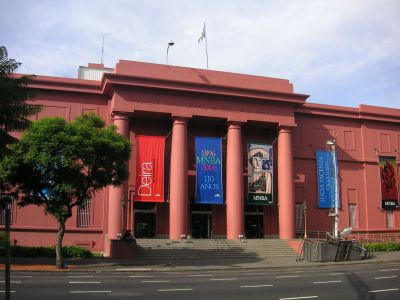
The National Museum of Fine Arts is one of Buenos Aires’ most important cultural institutions and a central stop in the Recoleta neighbourhood. It was established in 1896 and, after occupying several locations, moved into its current building in 1933. The structure was originally built in 1870 as a water-pumping station serving the city and was later remodelled to accommodate the museum’s rapidly expanding collection. Its restrained exterior reflects its industrial origins, while the interior was carefully adapted to create clear, well-lit gallery spaces.
The museum is best known for its outstanding permanent collection, considered one of the finest in Latin America. Finding your way through it is quite straightforward. As you step into the museum, walk straight ahead, climb a short flight of stairs, then continue forward until you pass through a rectangular gateway. Here, on the ground floor, you will encounter the Impressionist and Post-Impressionist Gallery, along with 19th-century Argentine art. The former’s anchors are Claude Monet’s The Bridge at Argenteuil and Vincent van Gogh’s The Windmill of the Galette. Argentine art is mainly represented by Cândido López’s panoramas—long, narrow paintings depicting scenes from the Paraguayan War with remarkable detail. Because López painted them with his left hand after losing his right arm in battle, the works have a distinctive, almost miniature-like perspective. These two galleries are easy to visit together, as they are laid out in a loop on the ground floor.
Apart from the permanent exhibition, temporary exhibitions rotate every three to six months, adding fresh perspectives and focused themes to the visit. Beyond the exhibition spaces, the museum also houses a specialised art library, a public auditorium used for lectures and cultural events, and a gift shop open during museum hours.
The museum is best known for its outstanding permanent collection, considered one of the finest in Latin America. Finding your way through it is quite straightforward. As you step into the museum, walk straight ahead, climb a short flight of stairs, then continue forward until you pass through a rectangular gateway. Here, on the ground floor, you will encounter the Impressionist and Post-Impressionist Gallery, along with 19th-century Argentine art. The former’s anchors are Claude Monet’s The Bridge at Argenteuil and Vincent van Gogh’s The Windmill of the Galette. Argentine art is mainly represented by Cândido López’s panoramas—long, narrow paintings depicting scenes from the Paraguayan War with remarkable detail. Because López painted them with his left hand after losing his right arm in battle, the works have a distinctive, almost miniature-like perspective. These two galleries are easy to visit together, as they are laid out in a loop on the ground floor.
Apart from the permanent exhibition, temporary exhibitions rotate every three to six months, adding fresh perspectives and focused themes to the visit. Beyond the exhibition spaces, the museum also houses a specialised art library, a public auditorium used for lectures and cultural events, and a gift shop open during museum hours.
12) "Floralis Genérica" Sculpture (must see)
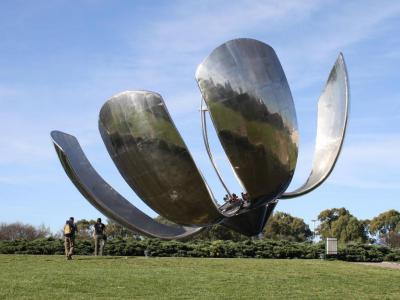
Floralis Genérica is one of the Recoleta neighbourhood’s most distinctive modern landmarks. The monumental steel flower was unveiled in 2002 and donated to the city by Argentine architect Eduardo Catalano, who was born in Buenos Aires and conceived the sculpture as a personal gift to his hometown. Rather than depicting a specific species, Catalano designed a generic flower meant to represent all flowers, standing for hope, renewal, and the ongoing cycle of life. This idea is reflected in the name itself: Floralis refers to flowers, while Genérica suggests something universal.
The sculpture rises 23 metres above a shallow reflecting pool at the centre of a landscaped park. Constructed from stainless steel and aluminium, it features six enormous petals, each measuring about 13 metres long and 7 metres wide. Pathways around the site are deliberately arranged to offer changing perspectives, allowing visitors to appreciate the flower’s scale, structure, and reflections from multiple angles. The mirrored surfaces catch the sky and surrounding greenery, shifting constantly with light and weather.
What truly sets Floralis Genérica apart is its kinetic design. An electrical mechanism allows the petals to open every morning at 8 a.m., symbolising renewed hope, and close again in the evening, with the full opening process taking around 20 minutes. When closed, a red light glows from within the flower. The petals also close automatically during strong winds to protect the structure. On special dates—May 25, September 21, Christmas Eve, and New Year’s Eve—the flower remains open all night, illuminated by red floodlights, while green lights trace the surrounding paths.
Editor’s note: In December 2023, a severe storm in Buenos Aires caused significant structural damage to the sculpture. One of the massive petals collapsed and was partially torn. As of March 2026, the structure no longer opens and closes as originally intended.
The sculpture rises 23 metres above a shallow reflecting pool at the centre of a landscaped park. Constructed from stainless steel and aluminium, it features six enormous petals, each measuring about 13 metres long and 7 metres wide. Pathways around the site are deliberately arranged to offer changing perspectives, allowing visitors to appreciate the flower’s scale, structure, and reflections from multiple angles. The mirrored surfaces catch the sky and surrounding greenery, shifting constantly with light and weather.
What truly sets Floralis Genérica apart is its kinetic design. An electrical mechanism allows the petals to open every morning at 8 a.m., symbolising renewed hope, and close again in the evening, with the full opening process taking around 20 minutes. When closed, a red light glows from within the flower. The petals also close automatically during strong winds to protect the structure. On special dates—May 25, September 21, Christmas Eve, and New Year’s Eve—the flower remains open all night, illuminated by red floodlights, while green lights trace the surrounding paths.
Editor’s note: In December 2023, a severe storm in Buenos Aires caused significant structural damage to the sculpture. One of the massive petals collapsed and was partially torn. As of March 2026, the structure no longer opens and closes as originally intended.
13) Museum of Latin-American Art of Buenos Aires (MALBA) (must see)
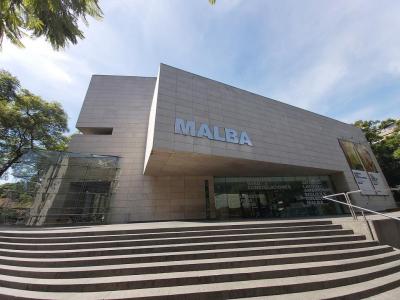
The Museum of Latin American Art of Buenos Aires, widely known as MALBA, is one of the city’s most important cultural institutions. It opened in 2001, founded by Argentine collector Eduardo F. Costantini, with the mission of preserving, studying, and promoting Latin American art while keeping it in dialogue with global artistic movements.
As you enter from the street, you will find a vast, light-filled atrium. To reach the museum’s central attraction—the permanent collection— take the long escalator directly to the first floor. The exhibition includes more than 200 works by 20th-century artists and offers a broad overview of Latin American artistic production, from early modernism to later experimental and politically engaged expressions. The permanent collection is laid out chronologically and by movement, and the easiest way to follow the highlights is to move clockwise through the galleries.
Once you reach the top of the escalator, enter the permanent collection galleries, beginning with the Brazilian Modernism section. There, look for a figure with oversized feet and a tiny head sitting beside a cactus under a bright sun. You have just found arguably the most important painting in the museum’s history—Abaporu by Brazilian artist Tarsila do Amaral. Painted in 1928, the work inspired Brazil’s Anthropophagic Movement, which argued that Brazilian artists should “eat” foreign influences and transform them into something uniquely their own.
Continue clockwise, and the art shifts from the experimental forms of the 1920s to the social concerns of the 1930s. Appropriately, Argentine painter Antonio Berni’s 1934 Manifestación captures the struggle and dignity of the Argentine working class during the global economic crisis. Its large scale makes it hard to miss.
Later in the circuit, look for Frida Kahlo’s 1942 Self-Portrait with Monkey and Parrot, a classic example of her intensely personal style. Notice the lush tropical foliage and the protective positioning of the animals around her. This smaller, more intimate work is displayed toward the latter half of the galleries, so you may need to look closely along the central walls.
Architecturally, MALBA is defined by a clean, contemporary design using stone, glass, and concrete. The interiors are filled with natural light, creating calm, well-balanced exhibition spaces that contrast with the busy avenues outside.
The second floor houses a theatre where classic and contemporary films from Argentina and abroad are screened. A well-stocked gift shop specializes in books on Latin American art in both English and Spanish, along with postcards, jewelry, and notebooks. A cafe rounds out the visit.
As you enter from the street, you will find a vast, light-filled atrium. To reach the museum’s central attraction—the permanent collection— take the long escalator directly to the first floor. The exhibition includes more than 200 works by 20th-century artists and offers a broad overview of Latin American artistic production, from early modernism to later experimental and politically engaged expressions. The permanent collection is laid out chronologically and by movement, and the easiest way to follow the highlights is to move clockwise through the galleries.
Once you reach the top of the escalator, enter the permanent collection galleries, beginning with the Brazilian Modernism section. There, look for a figure with oversized feet and a tiny head sitting beside a cactus under a bright sun. You have just found arguably the most important painting in the museum’s history—Abaporu by Brazilian artist Tarsila do Amaral. Painted in 1928, the work inspired Brazil’s Anthropophagic Movement, which argued that Brazilian artists should “eat” foreign influences and transform them into something uniquely their own.
Continue clockwise, and the art shifts from the experimental forms of the 1920s to the social concerns of the 1930s. Appropriately, Argentine painter Antonio Berni’s 1934 Manifestación captures the struggle and dignity of the Argentine working class during the global economic crisis. Its large scale makes it hard to miss.
Later in the circuit, look for Frida Kahlo’s 1942 Self-Portrait with Monkey and Parrot, a classic example of her intensely personal style. Notice the lush tropical foliage and the protective positioning of the animals around her. This smaller, more intimate work is displayed toward the latter half of the galleries, so you may need to look closely along the central walls.
Architecturally, MALBA is defined by a clean, contemporary design using stone, glass, and concrete. The interiors are filled with natural light, creating calm, well-balanced exhibition spaces that contrast with the busy avenues outside.
The second floor houses a theatre where classic and contemporary films from Argentina and abroad are screened. A well-stocked gift shop specializes in books on Latin American art in both English and Spanish, along with postcards, jewelry, and notebooks. A cafe rounds out the visit.
14) Jardín Japonés (Japanese Garden) (must see)
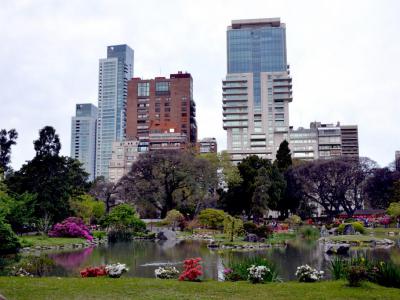
The Japanese Garden in Palermo is one of Buenos Aires’ most distinctive green spaces and a lasting symbol of the relationship between Argentina and Japan. Established in 1967 by the Japanese community of Buenos Aires, the five-acre garden was created as a gesture of gratitude toward the country that became their new home. In 1977, the garden was redesigned by Japanese landscape artist Yasuo Inomata, drawing inspiration from Zen garden principles to honor an official visit by the Japanese Crown Prince Akihito.
The garden follows traditional Japanese landscape design, emphasizing harmony, symbolism, and carefully balanced natural elements. More than 150 plant species brought from Japan grow alongside local vegetation adapted to the Buenos Aires climate. At its heart lies a large artificial lake, crossed by curved bridges that lead to small man-made islands. The most iconic of these is the Divine Bridge. Its steep, bright red curve is not merely decorative; it represents the challenging ascent from the human world to the divine. Its vivid color makes it impossible to miss.
After crossing the bridge, you reach the Island of the Gods, which offers a 360-degree view of the surrounding landscape. The island was designed as a symbolic miniature world, combining mountains, forests, and water to reflect the harmony of nature.
As you continue through the garden, consider stopping at the on-site Japanese restaurant and café. From the island, follow the path south along the lake, where koi fish glide through the water—visitors can even purchase food to feed them. After roughly 200 meters, look for a distinctive zigzag bridge crossing the lake’s surface. Known as the Bridge of Decisions, it replaces smooth curves with sharp angles. According to Japanese tradition, evil spirits can only move in straight lines, so the bridge’s shape is meant to disrupt negative energy as you cross. At the far end, you’ll find the restaurant and café. While reservations are recommended, especially at lunchtime, the reward is high-quality Japanese cuisine and access to a viewing balcony overlooking the garden.
Beyond the landscape itself, the garden offers a rich cultural experience. A monument honors Japanese immigrants, and a large peace bell reflects themes of memory and reconciliation. A tea house hosts exhibitions, performances, and cultural events, while guided tours—particularly on weekends—explain the meaning and symbolism behind Zen garden design.
The garden follows traditional Japanese landscape design, emphasizing harmony, symbolism, and carefully balanced natural elements. More than 150 plant species brought from Japan grow alongside local vegetation adapted to the Buenos Aires climate. At its heart lies a large artificial lake, crossed by curved bridges that lead to small man-made islands. The most iconic of these is the Divine Bridge. Its steep, bright red curve is not merely decorative; it represents the challenging ascent from the human world to the divine. Its vivid color makes it impossible to miss.
After crossing the bridge, you reach the Island of the Gods, which offers a 360-degree view of the surrounding landscape. The island was designed as a symbolic miniature world, combining mountains, forests, and water to reflect the harmony of nature.
As you continue through the garden, consider stopping at the on-site Japanese restaurant and café. From the island, follow the path south along the lake, where koi fish glide through the water—visitors can even purchase food to feed them. After roughly 200 meters, look for a distinctive zigzag bridge crossing the lake’s surface. Known as the Bridge of Decisions, it replaces smooth curves with sharp angles. According to Japanese tradition, evil spirits can only move in straight lines, so the bridge’s shape is meant to disrupt negative energy as you cross. At the far end, you’ll find the restaurant and café. While reservations are recommended, especially at lunchtime, the reward is high-quality Japanese cuisine and access to a viewing balcony overlooking the garden.
Beyond the landscape itself, the garden offers a rich cultural experience. A monument honors Japanese immigrants, and a large peace bell reflects themes of memory and reconciliation. A tea house hosts exhibitions, performances, and cultural events, while guided tours—particularly on weekends—explain the meaning and symbolism behind Zen garden design.
15) Bosques de Palermo (Palermo Woods) (must see)
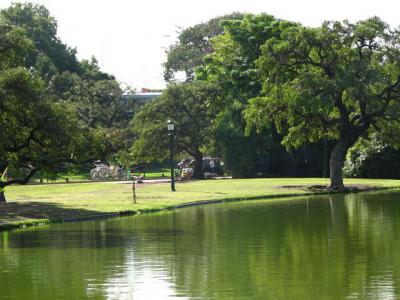
Parque Tres de Febrero, popularly known as Bosques de Palermo (Palermo Woods), stands as an urban park spanning around 400 hectares (nearly 989 acres) situated within the Palermo neighborhood of Buenos Aires. It boasts remarkable arrays of woodland, serene lakes, and the captivating rose gardens, famously referred to as El Rosedal.
After the overthrow of the authoritarian rule of Juan Manuel de Rosas in 1852, his expansive properties in the north of Buenos Aires were designated as public lands. In 1862, a municipal decree was established to transform a significant portion of this land into a city park. The inception of Parque Tres de Febrero, named in commemoration of the defeat of Governor Rosas on February 3, 1852, was initiated in 1874 through the collaborative efforts of Congressman Vicente Fidel López and President Domingo Sarmiento. Sarmiento had been one of the opponents of Governor Rosas during that time.
The park's blueprint was envisioned by urban planner Jordán Czeslaw Wysocki and architect Julio Dormal. Its official inauguration took place on November 11, 1875. With the prosperous economic expansion of Buenos Aires in the subsequent years, the park was transitioned into municipal ownership in 1888. This paved the way for French Argentine urbanist Carlos Thays to undertake the task of expansion and enhancing its aesthetic appeal between 1892 and 1912. Thays' contributions encompassed the creation of the Zoological Gardens, the Botanical Gardens, the adjoining Plaza Italia, and the captivating Rose Garden.
The park is a daily retreat for numerous individuals, catering to both pedestrians and cyclists. However, the influx of visitors significantly rises during weekends. Within the park, three artificial lakes offer the opportunity for leisurely boat rides. Adjacent to the boating lake, one can find the Poets' Garden, adorned with stone and bronze busts of illustrious poets, including the likes of Jorge Luis Borges, Luigi Pirandello, and William Shakespeare.
After the overthrow of the authoritarian rule of Juan Manuel de Rosas in 1852, his expansive properties in the north of Buenos Aires were designated as public lands. In 1862, a municipal decree was established to transform a significant portion of this land into a city park. The inception of Parque Tres de Febrero, named in commemoration of the defeat of Governor Rosas on February 3, 1852, was initiated in 1874 through the collaborative efforts of Congressman Vicente Fidel López and President Domingo Sarmiento. Sarmiento had been one of the opponents of Governor Rosas during that time.
The park's blueprint was envisioned by urban planner Jordán Czeslaw Wysocki and architect Julio Dormal. Its official inauguration took place on November 11, 1875. With the prosperous economic expansion of Buenos Aires in the subsequent years, the park was transitioned into municipal ownership in 1888. This paved the way for French Argentine urbanist Carlos Thays to undertake the task of expansion and enhancing its aesthetic appeal between 1892 and 1912. Thays' contributions encompassed the creation of the Zoological Gardens, the Botanical Gardens, the adjoining Plaza Italia, and the captivating Rose Garden.
The park is a daily retreat for numerous individuals, catering to both pedestrians and cyclists. However, the influx of visitors significantly rises during weekends. Within the park, three artificial lakes offer the opportunity for leisurely boat rides. Adjacent to the boating lake, one can find the Poets' Garden, adorned with stone and bronze busts of illustrious poets, including the likes of Jorge Luis Borges, Luigi Pirandello, and William Shakespeare.
16) Palermo Soho (must see)
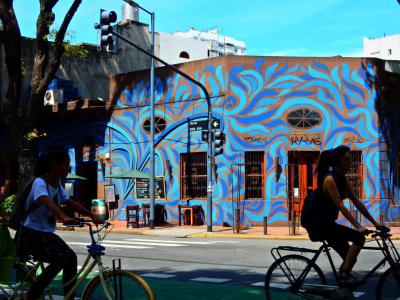
Palermo stands out as one of the expansive and captivating neighborhoods within Buenos Aires, with Palermo Soho shining as one of its most enchanting districts. Palermo "Soho" has gained renown for its upscale food emporiums, vibrant nightlife, and bohemian ambiance that wafts through its streets and cafes. Despite being the oldest sector of Palermo, Palermo Soho remains far from dilapidated.
This locale is perfect for leisurely walks along avenues lined with trees, passing by historical buildings and contemporary enterprises that uphold their traditional exteriors. Visitors can explore street markets in Plaza Palermo or Plaza Julio Cortázar (also referred to as Placita Serrano) and make pit stops at eateries and bars that preserve their essence and original architecture while incorporating innovative decor.
Palermo Soho presents a myriad of culinary options, encompassing Mediterranean, Armenian, Mexican, Chinese, Japanese, and global fare. Yet, Argentine barbecue is the highlight for most tourists. Dining out is affordable, catering to various budgets. Regardless of your choice, you'll encounter elegantly presented, top-notch cuisine.
As the day transitions into the evening, you can unwind with a cup of tea or a beverage at one of the cafes or bars encircling Plaza Serrano. Many establishments offer outdoor seating where you can bask in the sunlight or observe the continuous stream of pedestrians meandering along Palermo's avenues.
The district is equally renowned for its array of apparel and accessory boutiques. Alongside stores carrying established and high-end brands, a plethora of independent shops showcase exclusive, limited-edition original designs. Palermo Soho emerges as a shopping haven, accommodating a diverse range of preferences. You can procure clothing, decorative items, furniture, accessories, scented candles, shoes, bed and bath goods, and much more.
Palermo's nights brim with activity. Both locals and tourists who throng the streets usually begin the evening with pre-dinner libations at various neighborhood pubs before culminating their night at one of the trendsetting nightclubs. Palermo appeals particularly to young adults due to its abundant entertainment choices: independent theater, live performances, and live music at pubs.
This locale is perfect for leisurely walks along avenues lined with trees, passing by historical buildings and contemporary enterprises that uphold their traditional exteriors. Visitors can explore street markets in Plaza Palermo or Plaza Julio Cortázar (also referred to as Placita Serrano) and make pit stops at eateries and bars that preserve their essence and original architecture while incorporating innovative decor.
Palermo Soho presents a myriad of culinary options, encompassing Mediterranean, Armenian, Mexican, Chinese, Japanese, and global fare. Yet, Argentine barbecue is the highlight for most tourists. Dining out is affordable, catering to various budgets. Regardless of your choice, you'll encounter elegantly presented, top-notch cuisine.
As the day transitions into the evening, you can unwind with a cup of tea or a beverage at one of the cafes or bars encircling Plaza Serrano. Many establishments offer outdoor seating where you can bask in the sunlight or observe the continuous stream of pedestrians meandering along Palermo's avenues.
The district is equally renowned for its array of apparel and accessory boutiques. Alongside stores carrying established and high-end brands, a plethora of independent shops showcase exclusive, limited-edition original designs. Palermo Soho emerges as a shopping haven, accommodating a diverse range of preferences. You can procure clothing, decorative items, furniture, accessories, scented candles, shoes, bed and bath goods, and much more.
Palermo's nights brim with activity. Both locals and tourists who throng the streets usually begin the evening with pre-dinner libations at various neighborhood pubs before culminating their night at one of the trendsetting nightclubs. Palermo appeals particularly to young adults due to its abundant entertainment choices: independent theater, live performances, and live music at pubs.
