Custom Walk in Amsterdam, Netherlands by chloe_stoyanovski_556f4 created on 2025-06-17
Guide Location: Netherlands » Amsterdam
Guide Type: Custom Walk
# of Sights: 8
Tour Duration: 3 Hour(s)
Travel Distance: 7 Km or 4.3 Miles
Share Key: BXLRR
Guide Type: Custom Walk
# of Sights: 8
Tour Duration: 3 Hour(s)
Travel Distance: 7 Km or 4.3 Miles
Share Key: BXLRR
How It Works
Please retrieve this walk in the GPSmyCity app. Once done, the app will guide you from one tour stop to the next as if you had a personal tour guide. If you created the walk on this website or come to the page via a link, please follow the instructions below to retrieve the walk in the app.
Retrieve This Walk in App
Step 1. Download the app "GPSmyCity: Walks in 1K+ Cities" on Apple App Store or Google Play Store.



Step 2. In the GPSmyCity app, download(or launch) the guide "Amsterdam Map and Walking Tours".
Step 3. Tap the menu button located at upper right corner of the "Walks" screen and select "Retrieve custom walk". Enter the share key: BXLRR
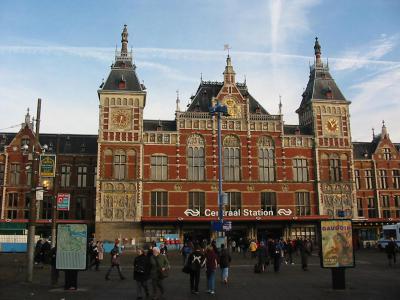
1) Centraal Station (must see)
When in Amsterdam, a visit to the Central Station is practically inevitable. Nearly every traveler to the city encounters it at least once.
Amsterdam Centraal is the largest railway station in the city and has the second longest railway platform in the country, with a length of 695 meters, and a cast-iron platform roof spanning approximately 40 meters. A major international railway hub, it is used daily by almost 200,000 passengers, making it the Netherlands' most visited national heritage object.
Amsterdam Centraal was designed by Dutch architect Pierre Cuypers, featuring a blend of Gothic and Renaissance Revival elements.
The station was constructed on three artificial islands, between 1882 and 1889. Controversially located at the city's waterfront, it took a precise total of 8,687 wooden piles to anchor such a monumental structure on the marshy ground. The station spurred significant urban redevelopment and shifted Amsterdam’s focus from a waterfront to an inland city, influencing both transportation and city planning.
Its design celebrates Dutch economic and colonial prowess through various decorative elements. Initially, the entire project seemed like a huge blunder and was swiftly criticized by numerous experts. However, the architects persevered and ultimately vindicated themselves, defying skeptics.
Through the decades, Amsterdam Centraal has undergone multiple renovations and expansions to meet modern demands. Significant developments included the creation of a pedestrian tunnel in the 1950s, expansion of metro facilities in the late 1970s, and a major overhaul in the 1980s and 1990s that introduced new signaling systems, expanded tracks, and additional roofing. Recent upgrades focus on enhancing capacity and accessibility, including extended platforms for international trains, a new bus station, and upgraded retail spaces, marking it as a central hub in Amsterdam’s urban landscape.
Tip:
Take advantage of the several free ferry trips navigating the canals, departing every 5 to 15 minutes from this location; they offer a rewarding experience. You can even cruise back to the station via boat if you wish, rounding out your visit with a picturesque waterborne journey.
Amsterdam Centraal is the largest railway station in the city and has the second longest railway platform in the country, with a length of 695 meters, and a cast-iron platform roof spanning approximately 40 meters. A major international railway hub, it is used daily by almost 200,000 passengers, making it the Netherlands' most visited national heritage object.
Amsterdam Centraal was designed by Dutch architect Pierre Cuypers, featuring a blend of Gothic and Renaissance Revival elements.
The station was constructed on three artificial islands, between 1882 and 1889. Controversially located at the city's waterfront, it took a precise total of 8,687 wooden piles to anchor such a monumental structure on the marshy ground. The station spurred significant urban redevelopment and shifted Amsterdam’s focus from a waterfront to an inland city, influencing both transportation and city planning.
Its design celebrates Dutch economic and colonial prowess through various decorative elements. Initially, the entire project seemed like a huge blunder and was swiftly criticized by numerous experts. However, the architects persevered and ultimately vindicated themselves, defying skeptics.
Through the decades, Amsterdam Centraal has undergone multiple renovations and expansions to meet modern demands. Significant developments included the creation of a pedestrian tunnel in the 1950s, expansion of metro facilities in the late 1970s, and a major overhaul in the 1980s and 1990s that introduced new signaling systems, expanded tracks, and additional roofing. Recent upgrades focus on enhancing capacity and accessibility, including extended platforms for international trains, a new bus station, and upgraded retail spaces, marking it as a central hub in Amsterdam’s urban landscape.
Tip:
Take advantage of the several free ferry trips navigating the canals, departing every 5 to 15 minutes from this location; they offer a rewarding experience. You can even cruise back to the station via boat if you wish, rounding out your visit with a picturesque waterborne journey.
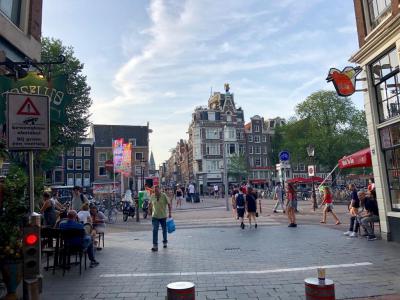
2) Haarlemmerstraat
Haarlemmerstraat, one of Amsterdam's newest and trendiest shopping streets, is a prime destination for boutique enthusiasts, high-end specialty stores, charming cafes, restaurants, unique gadgets, and personalized service. In essence, it's an excellent street for both shopping and leisurely strolls.
This vibrant street boasts a diverse range of shops, offering something for everyone. For instance, you can explore Jolanta Izabela's at #100, a quaint art boutique where you can purchase one-of-a-kind handmade jewelry, clothing, and sculptures. Then there's the atmospheric IBERICUS at #93, known for its high-quality Spanish cured hams suspended from the ceiling. If you're in the mood for coffee, you'll find coffee shops, as well as supermarkets, vintage clothing stores, and interior decorating boutiques.
Also make sure to visit the historic Posthoornkerk at #124, which represents architect Pierre Cuypers' inaugural creation in Amsterdam. Further down the street lies the West-Indisch Huis at #75, once the residence of the Dutch West India Company.
If you're looking for a hearty meal, Harlem Soul Food at #77 is the place to be, offering nourishing "soul food", along with hearty sandwiches and fruit shakes.
In summary, if you're seeking an authentic Amsterdam shopping experience, Haarlemmerstraat is a must-visit destination.
Bonus Tip:
Haarlemmerstraat seamlessly transitions into Haarlemmerdijk, where you'll discover the finest chocolate, delectable gelato, Spanish ham, Portuguese pastries, and the city's best hummus.
This vibrant street boasts a diverse range of shops, offering something for everyone. For instance, you can explore Jolanta Izabela's at #100, a quaint art boutique where you can purchase one-of-a-kind handmade jewelry, clothing, and sculptures. Then there's the atmospheric IBERICUS at #93, known for its high-quality Spanish cured hams suspended from the ceiling. If you're in the mood for coffee, you'll find coffee shops, as well as supermarkets, vintage clothing stores, and interior decorating boutiques.
Also make sure to visit the historic Posthoornkerk at #124, which represents architect Pierre Cuypers' inaugural creation in Amsterdam. Further down the street lies the West-Indisch Huis at #75, once the residence of the Dutch West India Company.
If you're looking for a hearty meal, Harlem Soul Food at #77 is the place to be, offering nourishing "soul food", along with hearty sandwiches and fruit shakes.
In summary, if you're seeking an authentic Amsterdam shopping experience, Haarlemmerstraat is a must-visit destination.
Bonus Tip:
Haarlemmerstraat seamlessly transitions into Haarlemmerdijk, where you'll discover the finest chocolate, delectable gelato, Spanish ham, Portuguese pastries, and the city's best hummus.
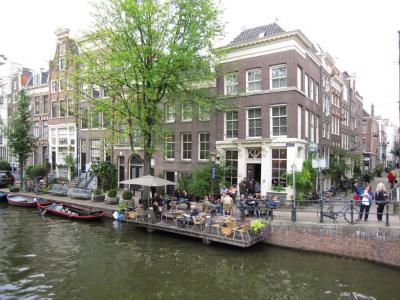
3) Café 't Smalle
Egelantiersgracht, a serene canal adorned with charming 17th- and 18th-century residences, is where you'll discover Café ’t Smalle. Originally a liquor distillery, it has transformed into a relaxed neighborhood café that warmly welcomes both tourists and locals alike. The café boasts a canalside terrace, creating a perfect setting for leisurely summer afternoons and offering one of the most picturesque sunset vistas in Amsterdam.
This historic establishment, dating back to 1786, maintains a tranquil atmosphere, making it an ideal location for unhurried conversations over a beverage. During the winter months, don't miss the opportunity to savor their mulled wine, known as glühwein. You can enjoy your drink on wooden tables positioned beside elegant stained glass windows. Additionally, they serve uncomplicated meals like soups, salads, and sandwiches from 11am to 5pm. As the sun sets, you can indulge in bar snacks while sampling a variety of exquisite Dutch beers on tap and intriguing wines available by the glass.
Tip:
As you stroll along the canal, take note of three splendid bell gables, with one of them showcasing an intricately carved falcon (#61–#65).
This historic establishment, dating back to 1786, maintains a tranquil atmosphere, making it an ideal location for unhurried conversations over a beverage. During the winter months, don't miss the opportunity to savor their mulled wine, known as glühwein. You can enjoy your drink on wooden tables positioned beside elegant stained glass windows. Additionally, they serve uncomplicated meals like soups, salads, and sandwiches from 11am to 5pm. As the sun sets, you can indulge in bar snacks while sampling a variety of exquisite Dutch beers on tap and intriguing wines available by the glass.
Tip:
As you stroll along the canal, take note of three splendid bell gables, with one of them showcasing an intricately carved falcon (#61–#65).
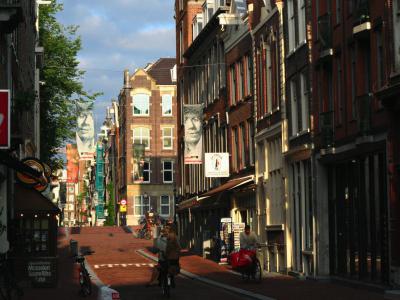
4) De Negen Straatjes (Nine Little Streets)
Amid the canal district of Amsterdam lies a charming enclave known as the "Nine Little Streets". This cluster of quaint byways, situated adjacent to the Prinsengracht, Keizersgracht, Herengracht, and Singel canals in the heart of Amsterdam, has borne this moniker since the 1990s. Collectively, these streets constitute a distinct micro-neighborhood nestled within the broader western Grachtengordel, or "Canal Belt", renowned for its eclectic array of small shops and eateries.
Woven with intricate brickwork lanes, the Nine Little Streets beckon with an assortment of offerings, including designer boutiques like Antonia by Yvette, Donna Fiera, and Sky Fashions, as well as inviting cafes, vintage emporiums, and specialty stores. Meandering through these charming streets can easily occupy your hours as you explore the diverse treasures they hold.
Tip:
Bij Ons Vintage, located at Reestraat #13, is a vintage boutique specializing in denim, leather, and sportswear dating from the 1950s to the 1970s. It's an excellent destination for discovering distinctive clothing and accessories that won't break the bank.
Meanwhile, at #20, the petite waxwork establishment known as Pontifex rivals Madame Tussauds with its vibrant assortment of candles in every conceivable variety. Adjacent to it, you'll find the intriguing clinic of the somewhat eerie doll doctor, Kramer.
Woven with intricate brickwork lanes, the Nine Little Streets beckon with an assortment of offerings, including designer boutiques like Antonia by Yvette, Donna Fiera, and Sky Fashions, as well as inviting cafes, vintage emporiums, and specialty stores. Meandering through these charming streets can easily occupy your hours as you explore the diverse treasures they hold.
Tip:
Bij Ons Vintage, located at Reestraat #13, is a vintage boutique specializing in denim, leather, and sportswear dating from the 1950s to the 1970s. It's an excellent destination for discovering distinctive clothing and accessories that won't break the bank.
Meanwhile, at #20, the petite waxwork establishment known as Pontifex rivals Madame Tussauds with its vibrant assortment of candles in every conceivable variety. Adjacent to it, you'll find the intriguing clinic of the somewhat eerie doll doctor, Kramer.
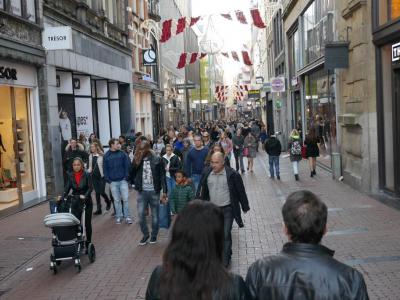
5) Kalverstraat (Calf Street)
Calf Street is a pedestrian zone and a major shopping street, running for about 750 meters from Dam Square to Muntplein Square. Alongside are a number of notable locations such as the former Orphanage building (now housing the Amsterdam Museum), the Saints Peter and Paul church, and the Orphanage Gate.
The street traces its roots back to the 14th century when it was known as The Lane and served as the western dike of the Amstel River. Later, it came to be known as Calf Street after the cattle market that existed there from 1486 until 1629.
On 16 March 1345, a Eucharistic miracle (known as the Miracle of Amsterdam or the Miracle of the Host) occurred in the area. Upon receiving the Holy Sacrament and last rites, a dying man vomited The Host (or the Sacramental bread used in the Christian ritual of the Eucharist). According to liturgical regulations, The Host was then put into fire but miraculously “survived” and was retrieved from the ashes intact the following day. This miracle was quickly acknowledged and, eventually, a large pilgrim chapel, called the "Holy Site", was built on the spot where it occurred. Presently, this miracle is commemorated annually with a Silent Procession through Calf Street.
By the late 19th century, Calf Street was the first street in Amsterdam to be paved, fitted with electricity, and hosted the first public film screening by the Lumière brothers (in 1896). The V&D branch on Calf Street, opened in 1912, was the Netherlands' first real department store and the first to feature elevators and escalators.
Today, Calf Street is the most expensive shopping street in the Netherlands, with rent prices reaching up to 3,000 euros per square meter. It has approximately 150 shops including several department stores, such as Bijenkorf (Amsterdam's premier option), Peek & Cloppenburg, and Maison de Bonneterie. The five-story Kalvertoren shopping center adds about 40+ stores to the area. At Number 212, you'll encounter the ever-present and budget-friendly HEMA, established in 1926, offering affordable designer goods, practical clothing, stationery, kitchenware, and food items.
Calf Street also features a branch of the Waterstone's bookshop chain, at Number 152. On Rokin, is one of the standout shops – the PGC Hajenius tobacconist, at Number 96. If you have a penchant for Havanas from a well-maintained humidor or seek a traditional clay pipe as a souvenir, this establishment is sure to delight you.
Introduced in 1995, the Shopping Sunday regulation, allowing local shops to work on Sundays, has been drawing additional crowds to the area ever since.
The street traces its roots back to the 14th century when it was known as The Lane and served as the western dike of the Amstel River. Later, it came to be known as Calf Street after the cattle market that existed there from 1486 until 1629.
On 16 March 1345, a Eucharistic miracle (known as the Miracle of Amsterdam or the Miracle of the Host) occurred in the area. Upon receiving the Holy Sacrament and last rites, a dying man vomited The Host (or the Sacramental bread used in the Christian ritual of the Eucharist). According to liturgical regulations, The Host was then put into fire but miraculously “survived” and was retrieved from the ashes intact the following day. This miracle was quickly acknowledged and, eventually, a large pilgrim chapel, called the "Holy Site", was built on the spot where it occurred. Presently, this miracle is commemorated annually with a Silent Procession through Calf Street.
By the late 19th century, Calf Street was the first street in Amsterdam to be paved, fitted with electricity, and hosted the first public film screening by the Lumière brothers (in 1896). The V&D branch on Calf Street, opened in 1912, was the Netherlands' first real department store and the first to feature elevators and escalators.
Today, Calf Street is the most expensive shopping street in the Netherlands, with rent prices reaching up to 3,000 euros per square meter. It has approximately 150 shops including several department stores, such as Bijenkorf (Amsterdam's premier option), Peek & Cloppenburg, and Maison de Bonneterie. The five-story Kalvertoren shopping center adds about 40+ stores to the area. At Number 212, you'll encounter the ever-present and budget-friendly HEMA, established in 1926, offering affordable designer goods, practical clothing, stationery, kitchenware, and food items.
Calf Street also features a branch of the Waterstone's bookshop chain, at Number 152. On Rokin, is one of the standout shops – the PGC Hajenius tobacconist, at Number 96. If you have a penchant for Havanas from a well-maintained humidor or seek a traditional clay pipe as a souvenir, this establishment is sure to delight you.
Introduced in 1995, the Shopping Sunday regulation, allowing local shops to work on Sundays, has been drawing additional crowds to the area ever since.
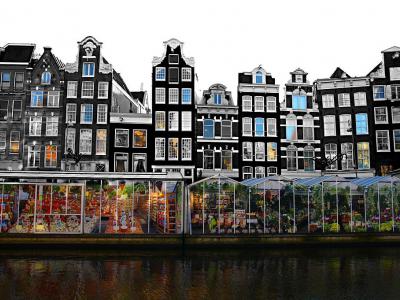
6) Bloemenmarkt (Floating Flower Market)
When you visit Amsterdam, especially during the springtime, you won't want to miss out on seeing some beautiful tulips. Even if they haven't fully bloomed or are past their prime, fear not – Bloemenmarkt has got you covered. This place has been around since the 1860s and is arguably the best, and still the most atmospheric, spot to discover (and buy) fresh flowers and bulbs.
As soon as you enter this little botanical wonderland situated along the canal, you'll be surrounded by all things floral (and sometimes more) – there's a dazzling array of souvenirs, and surprisingly, they're priced pretty much the same across various vendors. You can find a wide variety of bulbs for sale, including daffodils, amaryllis, crocus, narcissus, tulips, peony roots, and more. They even have some cacti and potted plants and herbs available for purchase.
Tip:
It you decide to buy tulip bulbs to take back home, be sure to get a "customs-cleared" stamp to avoid any issues with customs when upon arrival in your home country.
As soon as you enter this little botanical wonderland situated along the canal, you'll be surrounded by all things floral (and sometimes more) – there's a dazzling array of souvenirs, and surprisingly, they're priced pretty much the same across various vendors. You can find a wide variety of bulbs for sale, including daffodils, amaryllis, crocus, narcissus, tulips, peony roots, and more. They even have some cacti and potted plants and herbs available for purchase.
Tip:
It you decide to buy tulip bulbs to take back home, be sure to get a "customs-cleared" stamp to avoid any issues with customs when upon arrival in your home country.
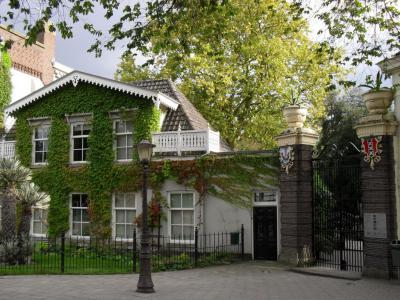
7) Hortus Botanicus (Botanical Gardens)
Hortus Botanicus, one of the world's oldest botanical gardens and a prominent tourist attraction in Amsterdam, is renowned for its extensive collection of over six thousand tropical and native trees and plants, some of which are listed on the Red List (such as the handkerchief tree and the Florida torreya). Its origins trace back to 1682 when it was established as medicinal gardens for the city's physicians and apothecaries in response to a severe plague outbreak. Subsequently, many merchants in the city began bringing back exotic plant species from the East.
The botanical complex encompasses three distinct climate-controlled greenhouses housing a wide array of plant varieties, all conveniently marked on a map available at the entrance. The outdoor areas predominantly feature plants, trees, and shrubs from temperate and Arctic regions, with several well-established trees dating back to a significant replanting effort in 1895. The largest among the greenhouses is the Three-Climate Greenhouse, divided into separate zones for subtropical, tropical, and desert plants. The gardens also house a grand Palm House, celebrated for its extensive collection of cycads and its elevated walkway offering panoramic views of the treetops. Additionally, there's a "tasting greenhouse" where visitors can sample different herbs and vegetables, and an unexpected delight is the butterfly house, where visitors are surrounded by various species of butterflies.
All in all, a splendid, visually pleasing, intellectually stimulating, and informative experience, making it an excellent value for your visit.
Tip:
Don't miss the De Hortus cafe-restaurant, offering a selection of light fare and hot and cold beverages, whether you prefer indoor or outdoor seating. If you make a purchase at the gift shop, hand in your guide leaflet for "recycling", and in return, you'll receive a 10% discount on most items.
The botanical complex encompasses three distinct climate-controlled greenhouses housing a wide array of plant varieties, all conveniently marked on a map available at the entrance. The outdoor areas predominantly feature plants, trees, and shrubs from temperate and Arctic regions, with several well-established trees dating back to a significant replanting effort in 1895. The largest among the greenhouses is the Three-Climate Greenhouse, divided into separate zones for subtropical, tropical, and desert plants. The gardens also house a grand Palm House, celebrated for its extensive collection of cycads and its elevated walkway offering panoramic views of the treetops. Additionally, there's a "tasting greenhouse" where visitors can sample different herbs and vegetables, and an unexpected delight is the butterfly house, where visitors are surrounded by various species of butterflies.
All in all, a splendid, visually pleasing, intellectually stimulating, and informative experience, making it an excellent value for your visit.
Tip:
Don't miss the De Hortus cafe-restaurant, offering a selection of light fare and hot and cold beverages, whether you prefer indoor or outdoor seating. If you make a purchase at the gift shop, hand in your guide leaflet for "recycling", and in return, you'll receive a 10% discount on most items.
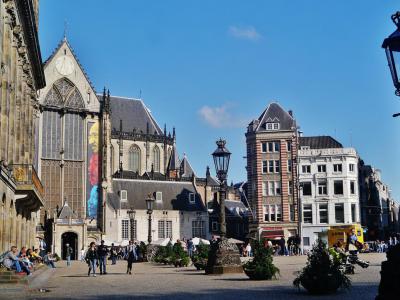
8) Dam Square (must see)
Dam Square, or the Dam, is a central town square in Amsterdam, known for its significant buildings and frequent events. Positioned in the historical heart of Amsterdam, it sits on the site of the original dam on the Amstel River. The square extends some 200 meters from west to east and 100 meters from north to south, connecting Damrak and Rokin streets that trace the Amstel's original course.
The square is also the termination point for other notable streets like New Dike, Calf Street, and Dam Street, with the main red-light district, De Wallen, just beyond its northeast corner. Prominent features on Dam Square include the neoclassical Royal Palace, the 15th-century Gothic New Church, the Madame Tussauds Wax Museum, and the National Monument which honors World War II victims, all of which collectively turn the Dam into a major tourist hub.
The name "Amsterdam" originates from a dam built on the Amstel River around 1270. This dam, integral to the city's development, included a discharge sluice and later locks to facilitate navigation and control water levels. By 1275, the settlement was significant enough to be recorded in connection with a road toll granted by the count of Holland, Floris V. Over time, the dam expanded to accommodate a town square, now known as Dam Square. Eventually, the area became a hub for commercial and governmental activities, featuring a large fish market and a town hall.
Significant changes occurred over the centuries, including the demolition of a weigh house in 1808 to clear the view for Louis Bonaparte’s Royal Palace and the infilling of Damrak Avenue in the 19th century. The square also hosted the Beurs van Zocher stock exchange until 1903. Today, the De Bijenkorf department store has been in its place since 1914. Dam Square has also been a site for national events – such as the National Memorial Day commemorations at the National Monument unveiled in 1956, and public demonstrations, – maintaining its status as a national and cultural gathering spot for the Dutch.
Tip:
For those in need of a restroom, free and well-maintained toilets are available at the De Bijenkorf shop on the 5th floor.
The square is also the termination point for other notable streets like New Dike, Calf Street, and Dam Street, with the main red-light district, De Wallen, just beyond its northeast corner. Prominent features on Dam Square include the neoclassical Royal Palace, the 15th-century Gothic New Church, the Madame Tussauds Wax Museum, and the National Monument which honors World War II victims, all of which collectively turn the Dam into a major tourist hub.
The name "Amsterdam" originates from a dam built on the Amstel River around 1270. This dam, integral to the city's development, included a discharge sluice and later locks to facilitate navigation and control water levels. By 1275, the settlement was significant enough to be recorded in connection with a road toll granted by the count of Holland, Floris V. Over time, the dam expanded to accommodate a town square, now known as Dam Square. Eventually, the area became a hub for commercial and governmental activities, featuring a large fish market and a town hall.
Significant changes occurred over the centuries, including the demolition of a weigh house in 1808 to clear the view for Louis Bonaparte’s Royal Palace and the infilling of Damrak Avenue in the 19th century. The square also hosted the Beurs van Zocher stock exchange until 1903. Today, the De Bijenkorf department store has been in its place since 1914. Dam Square has also been a site for national events – such as the National Memorial Day commemorations at the National Monument unveiled in 1956, and public demonstrations, – maintaining its status as a national and cultural gathering spot for the Dutch.
Tip:
For those in need of a restroom, free and well-maintained toilets are available at the De Bijenkorf shop on the 5th floor.
