Custom Walk in Barcelona, Spain by gerasgabalas_28c9a created on 2025-06-18
Guide Location: Spain » Barcelona
Guide Type: Custom Walk
# of Sights: 13
Tour Duration: 3 Hour(s)
Travel Distance: 4.9 Km or 3 Miles
Share Key: TFB2Y
Guide Type: Custom Walk
# of Sights: 13
Tour Duration: 3 Hour(s)
Travel Distance: 4.9 Km or 3 Miles
Share Key: TFB2Y
How It Works
Please retrieve this walk in the GPSmyCity app. Once done, the app will guide you from one tour stop to the next as if you had a personal tour guide. If you created the walk on this website or come to the page via a link, please follow the instructions below to retrieve the walk in the app.
Retrieve This Walk in App
Step 1. Download the app "GPSmyCity: Walks in 1K+ Cities" on Apple App Store or Google Play Store.



Step 2. In the GPSmyCity app, download(or launch) the guide "Barcelona Map and Walking Tours".
Step 3. Tap the menu button located at upper right corner of the "Walks" screen and select "Retrieve custom walk". Enter the share key: TFB2Y
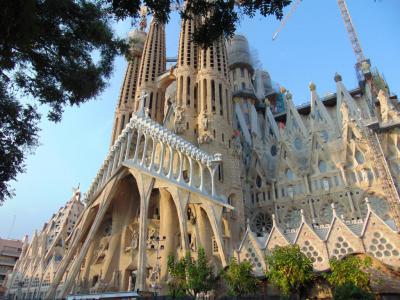
1) La Sagrada Familia (Basilica of the Holy Family) (must see)
The Basilica and Expiatory Temple of the Holy Family, commonly known as La Sagrada Família, is an iconic, unfinished church in Barcelona designed by Catalan Modernist architect Antoni Gaudí. Construction began in 1882 with architect Francisco de Paula del Villar, who envisioned a Gothic revival-style church. Upon taking over the project in 1883, Gaudí transformed the design into a unique blend of Gothic and Art Nouveau styles. Despite spending an impressive 43 years of his life designing this monument, by the time of Gaudí's death in 1926, only 15-25% of the basilica had been completed.
Relied on private donations, the construction has faced multiple interruptions like the Spanish Civil War in the 1930s. Modern technology has sped up the progress, however, and the church is now set to be finished by 2026, with further decorative work expected until 2034.
The Sagrada Família features eighteen planned spires symbolizing the Twelve Apostles, four Evangelists, the Virgin Mary, and Jesus Christ. Thirteen spires have been completed so far. The basilica’s three façades-the Nativity, Passion, and Glory-each represent different phases of Christ’s life and showcase a blend of naturalistic and minimalist styles.
The interior, designed as a Latin cross with five aisles, showcases Gaudí’s mastery of geometry and organic forms. The central nave vaults reach 45 meters, while the apse vault extends to 75 meters. The columns, which change shape as they rise, contribute to the basilica’s distinct look. Gaudí's use of hyperboloid structures and ruled surfaces enhances both the stability and aesthetic appeal of the building.
As of 2017, visitors can book tickets online to access various parts of the basilica, including the Nave, Crypt, and museum, as well as the Passion and Nativity steeples. A visit to the steeples includes a challenging descent through a narrow spiral staircase of over 300 steps. Also of note is the museum below, offering a wealth of information, including audiovisual presentations about the Sagrada Família project's history, plans, and Gaudí himself. You may also want to visit the small school built by Antoni Gaudí for the children of the construction workers right on the site.
Once completed, the Sagrada Família is to become the tallest church in the world and a lasting testament to Gaudí’s vision of blending architecture, nature, and spirituality.
Tip:
Please note that children under 6 are not permitted to ascend the towers; some adults may find the spiral staircase challenging too. If you decide to climb, ask the staff for directions to the "backside elevator", as it is usually less crowded.
Relied on private donations, the construction has faced multiple interruptions like the Spanish Civil War in the 1930s. Modern technology has sped up the progress, however, and the church is now set to be finished by 2026, with further decorative work expected until 2034.
The Sagrada Família features eighteen planned spires symbolizing the Twelve Apostles, four Evangelists, the Virgin Mary, and Jesus Christ. Thirteen spires have been completed so far. The basilica’s three façades-the Nativity, Passion, and Glory-each represent different phases of Christ’s life and showcase a blend of naturalistic and minimalist styles.
The interior, designed as a Latin cross with five aisles, showcases Gaudí’s mastery of geometry and organic forms. The central nave vaults reach 45 meters, while the apse vault extends to 75 meters. The columns, which change shape as they rise, contribute to the basilica’s distinct look. Gaudí's use of hyperboloid structures and ruled surfaces enhances both the stability and aesthetic appeal of the building.
As of 2017, visitors can book tickets online to access various parts of the basilica, including the Nave, Crypt, and museum, as well as the Passion and Nativity steeples. A visit to the steeples includes a challenging descent through a narrow spiral staircase of over 300 steps. Also of note is the museum below, offering a wealth of information, including audiovisual presentations about the Sagrada Família project's history, plans, and Gaudí himself. You may also want to visit the small school built by Antoni Gaudí for the children of the construction workers right on the site.
Once completed, the Sagrada Família is to become the tallest church in the world and a lasting testament to Gaudí’s vision of blending architecture, nature, and spirituality.
Tip:
Please note that children under 6 are not permitted to ascend the towers; some adults may find the spiral staircase challenging too. If you decide to climb, ask the staff for directions to the "backside elevator", as it is usually less crowded.
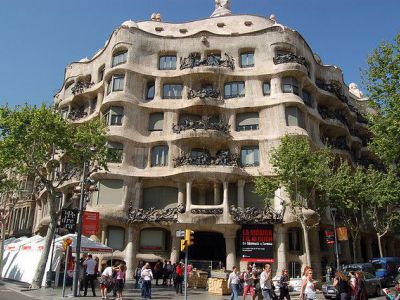
2) Casa Mila (Mila House) (must see)
Milà House, commonly known as La Pedrera ("The Stone Quarry"), is a modernist masterpiece designed by Antoni Gaudí and located on Gràcia Boulevard in Barcelona. Constructed between 1906 and 1912 for Roser Segimón and her husband Pere Milà, its nickname derives from its stony, fortress-like appearance. Gaudí, however, viewed the structure as a living body, with columns as bones and stone as flesh.
The building’s wavy stone façade and wrought iron balconies were highly controversial at the time for their unconventional design. Gaudí introduced several innovative features, such as a self-supporting façade, free-plan floors, and an underground garage. The structure, inspired by natural forms, incorporates curved surfaces and catenary arches in the attic, while its layout around courtyards ensures natural light reaches all nine stories. The distinctive roof terrace, with sculptural chimneys and skylights, offers panoramic views of the city and is known as "the garden of warriors."
Following initial criticism and conflicts with Roser Segimón over the aesthetic details, Milà House has undergone significant changes throughout its history. Originally intended as a private residence, it was later sold, converted into apartments, and eventually fell into disrepair. It was restored in the 1980s, regaining its original colors and features, and was declared a UNESCO World Heritage Site in 1984.
Today, Milà House serves as a cultural center, featuring an exhibition on Gaudí’s life and work, showcasing models, drawings, and photographs of his architectural creations. The fourth floor showcases a recreation of an early 20th-century apartment, giving insight into the lifestyle of affluent families of that period.
Milà House is a testament to Gaudí’s architectural innovation and his challenge to conventional design norms. Over the years, it has inspired many modern buildings worldwide, including the Guggenheim Museum in New York City and Disney Concert Hall in Los Angeles. Today, it stands as one of Barcelona’s most iconic landmarks, attracting visitors from around the world to experience Gaudí’s visionary creativity firsthand.
Tip:
To avoid waiting in line, try and book your ticket online in advance and, if possible, visit around sunset when the lights are on, allowing you to experience the surreal audiovisual show. During the summer months, jazz and flamenco concerts are often held here, which is quite a treat as well.
The building’s wavy stone façade and wrought iron balconies were highly controversial at the time for their unconventional design. Gaudí introduced several innovative features, such as a self-supporting façade, free-plan floors, and an underground garage. The structure, inspired by natural forms, incorporates curved surfaces and catenary arches in the attic, while its layout around courtyards ensures natural light reaches all nine stories. The distinctive roof terrace, with sculptural chimneys and skylights, offers panoramic views of the city and is known as "the garden of warriors."
Following initial criticism and conflicts with Roser Segimón over the aesthetic details, Milà House has undergone significant changes throughout its history. Originally intended as a private residence, it was later sold, converted into apartments, and eventually fell into disrepair. It was restored in the 1980s, regaining its original colors and features, and was declared a UNESCO World Heritage Site in 1984.
Today, Milà House serves as a cultural center, featuring an exhibition on Gaudí’s life and work, showcasing models, drawings, and photographs of his architectural creations. The fourth floor showcases a recreation of an early 20th-century apartment, giving insight into the lifestyle of affluent families of that period.
Milà House is a testament to Gaudí’s architectural innovation and his challenge to conventional design norms. Over the years, it has inspired many modern buildings worldwide, including the Guggenheim Museum in New York City and Disney Concert Hall in Los Angeles. Today, it stands as one of Barcelona’s most iconic landmarks, attracting visitors from around the world to experience Gaudí’s visionary creativity firsthand.
Tip:
To avoid waiting in line, try and book your ticket online in advance and, if possible, visit around sunset when the lights are on, allowing you to experience the surreal audiovisual show. During the summer months, jazz and flamenco concerts are often held here, which is quite a treat as well.
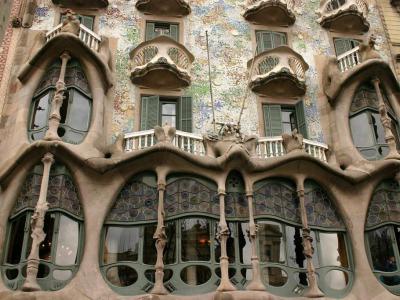
3) Casa Batllo (Batllo House) (must see)
Batlló House, located in the heart of Barcelona's prestigious Gràcia Boulevard, is one of Gaudí’s most celebrated architectural masterpieces. Originally built in 1877 by Lluís Sala Sánchez, the building underwent a radical transformation in 1904 when textile industrialist Josep Batlló hired Antoni Gaudí to renovate it. Gaudí expanded the structure, creating new floors and adding his signature audacious design, which turned this previously unremarkable building into a landmark of Modernist architecture.
Batlló House is often referred to as the "House of Bones" due to its skeletal-like balconies and organic forms. Another local name for it is the "House of the Dragon," as its arched roof, covered in colorful mosaic tiles, is said to resemble the spine of a dragon. This symbolism aligns with the legend of Saint George (Catalonia’s patron saint), whose lance is represented by the turret and cross atop the roof.
The building's façade is divided into three sections and adorned with vibrant broken ceramic tiles in shades transitioning from orange to greenish-blue. Gaudí’s use of curves, irregular windows, and sculpted stonework avoids straight lines, enhancing the structure’s flowing, dynamic feel. Inside, the loft space, with its catenary arches, imitates a ribcage, while the central atrium features blue tiles that create an underwater-like light distribution.
The rooftop is a highlight of Batlló House, with its chimneys resembling twisted, tiled sculptures. The entire structure integrates symbolism and decorative elements that showcase Gaudí’s innovative approach to form and function. After the Batlló family left in the 1950s, the house changed ownership several times and was refurbished before becoming a venue for events in 1995. In 2005, Batlló House was designated a UNESCO World Heritage Site, cementing its status as a masterpiece of modernist architecture.
Tip:
For a fee, you can have your photo taken on the small balcony at the front of the building (as you descend from the rooftop), receiving both a printed copy and an electronic version for a memorable keepsake.
Batlló House is often referred to as the "House of Bones" due to its skeletal-like balconies and organic forms. Another local name for it is the "House of the Dragon," as its arched roof, covered in colorful mosaic tiles, is said to resemble the spine of a dragon. This symbolism aligns with the legend of Saint George (Catalonia’s patron saint), whose lance is represented by the turret and cross atop the roof.
The building's façade is divided into three sections and adorned with vibrant broken ceramic tiles in shades transitioning from orange to greenish-blue. Gaudí’s use of curves, irregular windows, and sculpted stonework avoids straight lines, enhancing the structure’s flowing, dynamic feel. Inside, the loft space, with its catenary arches, imitates a ribcage, while the central atrium features blue tiles that create an underwater-like light distribution.
The rooftop is a highlight of Batlló House, with its chimneys resembling twisted, tiled sculptures. The entire structure integrates symbolism and decorative elements that showcase Gaudí’s innovative approach to form and function. After the Batlló family left in the 1950s, the house changed ownership several times and was refurbished before becoming a venue for events in 1995. In 2005, Batlló House was designated a UNESCO World Heritage Site, cementing its status as a masterpiece of modernist architecture.
Tip:
For a fee, you can have your photo taken on the small balcony at the front of the building (as you descend from the rooftop), receiving both a printed copy and an electronic version for a memorable keepsake.
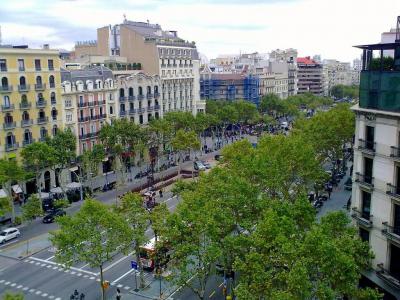
4) Passeig de Gracia (Gracia Avenue) (must see)
Gràcia Boulevard, located in the heart of Barcelona’s Eixample district, is one of the city’s most significant shopping and business areas. Formerly known as "Jesus Road", it was initially a rural lane connecting Barcelona to the then-separate town of Gràcia. The avenue’s development began in 1821 but was delayed by epidemics and eventually resumed in 1827. The 42-meter-wide boulevard soon became a favorite spot for the aristocracy to showcase their horse-riding skills and luxurious carriages.
By the early 1900s, Gràcia Boulevard had transformed into the city’s most fashionable street. The architect Pere Falqués i Urpí designed its renowned wrought-iron benches and street lamps in 1906, largely adding to its unique charm.
During the Spanish Civil War, the Basque government was based here, and the Catalan poet Salvador Espriu lived in Casa Fuster (at Number 132). Today, Gràcia Boulevard is the most expensive street in Barcelona and Spain, comparable to the Champs-Élysées in Paris or 5th Avenue in New York City. The avenue is lined with upscale stores, though more affordable dining options can be found in its side streets.
More notably, the avenue is home to remarkable Modernist architecture by famous architects such as Antoni Gaudí, Josep Puig i Cadafalch, and Lluís Domènech i Montaner, concentrated along the main street and some of the adjacent streets as well. Major highlights include Gaudí's “La Pedrera” building and the so-called “Block of Discord,” a cluster of Modernist masterpieces. With most mansions here belonging to Barcelona's wealthiest citizens of the late 19th and early 20th centuries, there's no shortage of richly and tastefully decorated facades to behold. Buildings, balconies, stained-glass windows, and carved doors are all within sight.
Day or night, Gràcia Avenue offers a fantastic opportunity for architecture buffs to crane their necks. In addition to these, the Gaudí-designed pavement tiles depicting abstract sea creatures make it a top destination for strollers, offering a visual feast of Barcelona’s rich urban heritage.
Tip:
This boulevard is particularly magical in summer when the locals compete between themselves decorating the streets as part of the Gràcia Festival, which, together with the live music played everywhere, makes it a really fun place to be.
By the early 1900s, Gràcia Boulevard had transformed into the city’s most fashionable street. The architect Pere Falqués i Urpí designed its renowned wrought-iron benches and street lamps in 1906, largely adding to its unique charm.
During the Spanish Civil War, the Basque government was based here, and the Catalan poet Salvador Espriu lived in Casa Fuster (at Number 132). Today, Gràcia Boulevard is the most expensive street in Barcelona and Spain, comparable to the Champs-Élysées in Paris or 5th Avenue in New York City. The avenue is lined with upscale stores, though more affordable dining options can be found in its side streets.
More notably, the avenue is home to remarkable Modernist architecture by famous architects such as Antoni Gaudí, Josep Puig i Cadafalch, and Lluís Domènech i Montaner, concentrated along the main street and some of the adjacent streets as well. Major highlights include Gaudí's “La Pedrera” building and the so-called “Block of Discord,” a cluster of Modernist masterpieces. With most mansions here belonging to Barcelona's wealthiest citizens of the late 19th and early 20th centuries, there's no shortage of richly and tastefully decorated facades to behold. Buildings, balconies, stained-glass windows, and carved doors are all within sight.
Day or night, Gràcia Avenue offers a fantastic opportunity for architecture buffs to crane their necks. In addition to these, the Gaudí-designed pavement tiles depicting abstract sea creatures make it a top destination for strollers, offering a visual feast of Barcelona’s rich urban heritage.
Tip:
This boulevard is particularly magical in summer when the locals compete between themselves decorating the streets as part of the Gràcia Festival, which, together with the live music played everywhere, makes it a really fun place to be.
5) Palau de la Musica Catalana (Palace of Catalan Music) (must see)
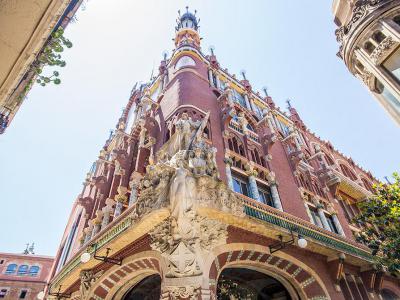
The Palace of Catalan Music in Barcelona, designed by Lluís Domènech i Montaner, is a hallmark of Catalan Art Nouveau architecture. Built between 1905 and 1908 for the Orfeó Català choral society, it was inaugurated in 1908 and awarded the Barcelona City Council’s 1909 prize for best building. The Palace represents a unique blend of curves, floral motifs, and advanced materials like steel framing.
The exterior features a fusion of Spanish and Arabic architectural elements, including exposed red brick, iron, mosaics, and stained glass. Two colonnades with colorful tiles and busts of composers, such as Bach, Beethoven, and Wagner, adorn the façade. Inside, the concert hall-Europe’s only auditorium illuminated entirely by natural light during daytime-seats around 2,200 people. Among other elements, it features a large stained-glass skylight by Antoni Rigalt and sculptures by artists like Eusebi Arnau and Lluís Bru, portraying themes of choral and classical music.
The Palace's main attraction is on the first floor, where modernist artistry is showcased through a spectacular stained glass ceiling and intricately decorated surfaces. The highlights include three-dimensional muses emerging from the walls and a stunning proscenium featuring Valkyries in motion. Despite its visual beauty, the hall’s glass walls present acoustic challenges, as noted by certain critics. Nevertheless, the Palace remains a symbol of Catalan modernism and a must-visit landmark in Barcelona.
Major renovations between 1982 and 1989 restored it to its original grandeur while adding modern amenities like dressing rooms, a library, and an archive in an adjoining six-story building. Further restoration in 2006–2008 included reinstalling the lantern and other ornamental features.
To fully appreciate the craftsmanship, guided tours are recommended and often require advance booking. For a more casual experience, visitors can enjoy coffee or tapas at the foyer bar, while admiring the detailed interior. Presently a UNESCO World Heritage Site since 1997, the Palace hosts over half a million visitors each year, drawn by its architectural splendor and vibrant cultural programs ranging from classical music to jazz, with top-notch lighting making each show a memorable experience.
Tip:
Don't forget to bring opera glasses or binoculars to fully appreciate the details, and be sure to check out the café on the ground floor for a pleasant treat.
Daily Tours:
10 am–3:30 pm (advance booking recommended)
The exterior features a fusion of Spanish and Arabic architectural elements, including exposed red brick, iron, mosaics, and stained glass. Two colonnades with colorful tiles and busts of composers, such as Bach, Beethoven, and Wagner, adorn the façade. Inside, the concert hall-Europe’s only auditorium illuminated entirely by natural light during daytime-seats around 2,200 people. Among other elements, it features a large stained-glass skylight by Antoni Rigalt and sculptures by artists like Eusebi Arnau and Lluís Bru, portraying themes of choral and classical music.
The Palace's main attraction is on the first floor, where modernist artistry is showcased through a spectacular stained glass ceiling and intricately decorated surfaces. The highlights include three-dimensional muses emerging from the walls and a stunning proscenium featuring Valkyries in motion. Despite its visual beauty, the hall’s glass walls present acoustic challenges, as noted by certain critics. Nevertheless, the Palace remains a symbol of Catalan modernism and a must-visit landmark in Barcelona.
Major renovations between 1982 and 1989 restored it to its original grandeur while adding modern amenities like dressing rooms, a library, and an archive in an adjoining six-story building. Further restoration in 2006–2008 included reinstalling the lantern and other ornamental features.
To fully appreciate the craftsmanship, guided tours are recommended and often require advance booking. For a more casual experience, visitors can enjoy coffee or tapas at the foyer bar, while admiring the detailed interior. Presently a UNESCO World Heritage Site since 1997, the Palace hosts over half a million visitors each year, drawn by its architectural splendor and vibrant cultural programs ranging from classical music to jazz, with top-notch lighting making each show a memorable experience.
Tip:
Don't forget to bring opera glasses or binoculars to fully appreciate the details, and be sure to check out the café on the ground floor for a pleasant treat.
Daily Tours:
10 am–3:30 pm (advance booking recommended)
6) Catedral de Barcelona (Barcelona Cathedral) (must see)
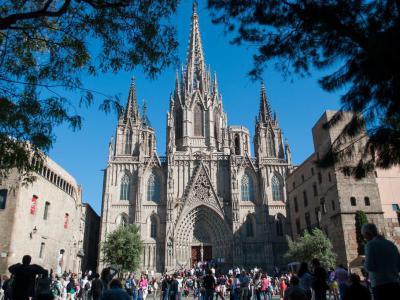
The Cathedral of the Holy Cross and Saint Eulalia, commonly known as Barcelona Cathedral, is a delightful combination of a church, mini-park, and a house of prayer, offering a serene alternative to the renowned La Sagrada Família. As the seat of the Archbishop of Barcelona, it was primarily constructed between the 13th and 15th centuries.
The cathedral has a pseudo-basilica layout with five aisles and a raised high altar. It is dedicated to Saint Eulalia, a young martyr whose relics are housed in the white marble sarcophagus inside the crypt. An intriguing feature is the presence of 13 geese in the cloister, symbolizing Saint Eulàlia's age at the time of her death.
Inside, the cathedral showcases choir stalls adorned with the coats-of-arms of the Order of the Golden Fleece. The Chapel of the Holy Sacrament contains a cross associated with the 1571 Battle of Lepanto and has been reconstructed to hold the tomb of San Olegarius, a former bishop of Barcelona.
The cathedral’s origins trace back to an early Christian and Visigothic complex that was damaged during a Muslim attack on Barcelona in 985. It was replaced with a Romanesque church in 1046 before the current Gothic cathedral began construction in 1298. The cathedral took 150 years to complete yet its neo-Gothic façade, featuring gargoyles and other mythical creatures, was finished only in 1913. Unlike many other churches in Barcelona destroyed during the Civil War, this Gothic temple was spared.
An exemplary piece of Catalan Gothic architecture, emphasizing balanced proportions over verticality, the cathedral measures 93 meters long, 40 meters wide, and 28 meters high at its central nave, with bell towers reaching 54 meters and the central peak at 70 meters.
The Cathedral of Barcelona is also famous for giving rise to the unique Catalan tradition of "dancing egg." Observed during the feast of Corpus Christi (also known as the Solemnity of the Most Holy Body and Blood of Christ), this tradition features an egg balanced on a water fountain’s jet.
The cathedral's cloister contains a gift shop. Cellular phones have been banned from the Chapel of Lepanto and other chapels. While exploring the cathedral's interior, make sure to venture up to the lofty roof terrace. You will be rewarded with views of the cathedral's towers, pinnacles, cimborio, and the Cloister, and a 360-degree view of the city!
Tip:
Cathedral Visit (including Choir entrance + Access to the rooftop, Chapter hall, and Virtual Audio guide) is €9.00.
Cathedral + Museum (including Choir entrance + Access to the rooftop + Chapter hall + Virtual Audio guide + Museum) is €15.00.
The cathedral has a pseudo-basilica layout with five aisles and a raised high altar. It is dedicated to Saint Eulalia, a young martyr whose relics are housed in the white marble sarcophagus inside the crypt. An intriguing feature is the presence of 13 geese in the cloister, symbolizing Saint Eulàlia's age at the time of her death.
Inside, the cathedral showcases choir stalls adorned with the coats-of-arms of the Order of the Golden Fleece. The Chapel of the Holy Sacrament contains a cross associated with the 1571 Battle of Lepanto and has been reconstructed to hold the tomb of San Olegarius, a former bishop of Barcelona.
The cathedral’s origins trace back to an early Christian and Visigothic complex that was damaged during a Muslim attack on Barcelona in 985. It was replaced with a Romanesque church in 1046 before the current Gothic cathedral began construction in 1298. The cathedral took 150 years to complete yet its neo-Gothic façade, featuring gargoyles and other mythical creatures, was finished only in 1913. Unlike many other churches in Barcelona destroyed during the Civil War, this Gothic temple was spared.
An exemplary piece of Catalan Gothic architecture, emphasizing balanced proportions over verticality, the cathedral measures 93 meters long, 40 meters wide, and 28 meters high at its central nave, with bell towers reaching 54 meters and the central peak at 70 meters.
The Cathedral of Barcelona is also famous for giving rise to the unique Catalan tradition of "dancing egg." Observed during the feast of Corpus Christi (also known as the Solemnity of the Most Holy Body and Blood of Christ), this tradition features an egg balanced on a water fountain’s jet.
The cathedral's cloister contains a gift shop. Cellular phones have been banned from the Chapel of Lepanto and other chapels. While exploring the cathedral's interior, make sure to venture up to the lofty roof terrace. You will be rewarded with views of the cathedral's towers, pinnacles, cimborio, and the Cloister, and a 360-degree view of the city!
Tip:
Cathedral Visit (including Choir entrance + Access to the rooftop, Chapter hall, and Virtual Audio guide) is €9.00.
Cathedral + Museum (including Choir entrance + Access to the rooftop + Chapter hall + Virtual Audio guide + Museum) is €15.00.
7) Placa Nova (New Square)
Despite its name, New Square is the oldest square in Barcelona, founded in 1358. Until the 14th century, the area remained undeveloped, serving as a hay market behind the gates of the Roman settlement of Barcino.
New Square was built following a municipal council decision in 1355 to channel water from the Collserola mountains to the Square of Saint James. Throughout its history, the square has mostly kept its original name, except for a brief period, in the early 20th century, when it was renamed after Carlist Juan Vázquez de Mella.
The square has an irregular, triangular shape and, in the past century, was the site of several archaeological excavations. In 1994, the sculptural poem "Barcino" was installed, adding a modern touch to the area.
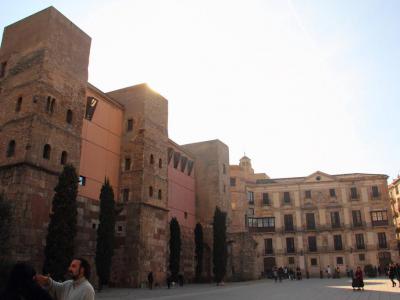
Several historical buildings surrounding the square include the medieval Baroque-style Bishop’s Palace and the Architects' Association of Catalonia building, featuring sand-cast friezes by Pablo Picasso. Other highlights are the remnants of the Roman wall and the gateway that once led to the ancient Forum, dating back to the 1st century BC and 4th century AD respectively. Two circular towers flanking the gate were added in the 12th century. Additionally, near the Archdeacon’s House, one can view fragments of the Roman aqueduct.
Tip:
Each Thursday, from 9 am to 8 pm, New Square hosts an antiques market.
New Square is also a venue for dance festivals – Sardanas, – particularly on the day of Saint Roch, a Majorcan Catholic confessor whose death is commemorated on 16 August.
New Square was built following a municipal council decision in 1355 to channel water from the Collserola mountains to the Square of Saint James. Throughout its history, the square has mostly kept its original name, except for a brief period, in the early 20th century, when it was renamed after Carlist Juan Vázquez de Mella.
The square has an irregular, triangular shape and, in the past century, was the site of several archaeological excavations. In 1994, the sculptural poem "Barcino" was installed, adding a modern touch to the area.
Several historical buildings surrounding the square include the medieval Baroque-style Bishop’s Palace and the Architects' Association of Catalonia building, featuring sand-cast friezes by Pablo Picasso. Other highlights are the remnants of the Roman wall and the gateway that once led to the ancient Forum, dating back to the 1st century BC and 4th century AD respectively. Two circular towers flanking the gate were added in the 12th century. Additionally, near the Archdeacon’s House, one can view fragments of the Roman aqueduct.
Tip:
Each Thursday, from 9 am to 8 pm, New Square hosts an antiques market.
New Square is also a venue for dance festivals – Sardanas, – particularly on the day of Saint Roch, a Majorcan Catholic confessor whose death is commemorated on 16 August.
8) Pont del Bisbe (Bishop's Bridge)
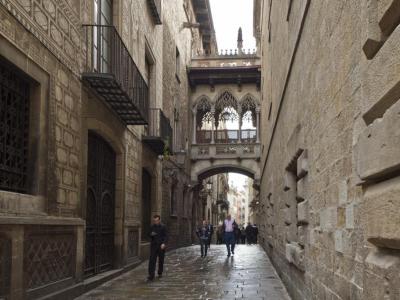
Despite its medieval, centuries-old appearance, Bishop's Bridge is a modern addition to the Gothic Quarter. Constructed in 1928 on the narrow street bearing the same name, the bridge seamlessly blends with the prevalent architectural style of the Gothic Quarter. It was designed by Catalan architect Joan Rubió during his tenure as the official architect of Barcelona in the 1920s.
The neo-Gothic marvel showcases striking architectural elements, such as arched windows, columns, gargoyles, and elaborate stone tracery, making it one of the most photogenic spots in the city. The idea of the bridge connecting the Palace of the Generalitat to the Canons House on the opposite side of the street was inspired by the Bridge of Sighs in Venice.
Joan Rubió, a keen disciple of Antoni Gaudí, had previously worked with the master until 1905. He took part in several iconic projects such as the Sagrada Família, the Batlló House, and Park Güell. Rubió's broader vision to remodel the Gothic Quarter in a neo-Gothic style for the 1929 International Exposition was ultimately rejected by the Barcelona City Council, limiting his influence to this single structure.
A notable feature of the bridge is an eerie skull with a dagger pierced through it, positioned at the bottom of the structure. This grim decoration, added by Rubió in defiance of the council's rejections, has birthed various urban legends. One such myth suggests that Barcelona will fall if the dagger is removed, whereas the other claims that walking backward while looking at the skull grants the viewer a wish. These legends add an element of mystique and allure to the bridge, enhancing its appeal as a curiosity worth visiting in Barcelona.
Tip:
For the best photo opportunities, visit the bridge in the morning or late afternoon when the lighting conditions are favorable.
The neo-Gothic marvel showcases striking architectural elements, such as arched windows, columns, gargoyles, and elaborate stone tracery, making it one of the most photogenic spots in the city. The idea of the bridge connecting the Palace of the Generalitat to the Canons House on the opposite side of the street was inspired by the Bridge of Sighs in Venice.
Joan Rubió, a keen disciple of Antoni Gaudí, had previously worked with the master until 1905. He took part in several iconic projects such as the Sagrada Família, the Batlló House, and Park Güell. Rubió's broader vision to remodel the Gothic Quarter in a neo-Gothic style for the 1929 International Exposition was ultimately rejected by the Barcelona City Council, limiting his influence to this single structure.
A notable feature of the bridge is an eerie skull with a dagger pierced through it, positioned at the bottom of the structure. This grim decoration, added by Rubió in defiance of the council's rejections, has birthed various urban legends. One such myth suggests that Barcelona will fall if the dagger is removed, whereas the other claims that walking backward while looking at the skull grants the viewer a wish. These legends add an element of mystique and allure to the bridge, enhancing its appeal as a curiosity worth visiting in Barcelona.
Tip:
For the best photo opportunities, visit the bridge in the morning or late afternoon when the lighting conditions are favorable.
9) Palau del Lloctinent (Lieutenant’s Palace)
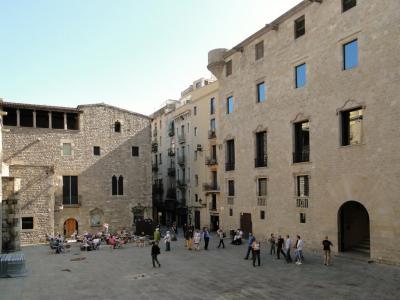
Just past the Frederic Marès Museum, a handsome doorway beckons you into the refined courtyard of the Lieutenant’s Palace, adorned with its three facades. As part of the former royal palace, the Lieutenant’s Palace boasts a typical mix of late Gothic and early Renaissance Catalan design. One of the most elegant buildings in the Gothic Quarter, it was constructed between 1549 and 1557 by master builder Antoni Carbonell, commissioned by the Government of Catalonia (known as the Generalitat).
During the 16th and 17th centuries, the Palace served as the residence of the king's official emissary (or viceroy) in Barcelona. From 1836 until 1994, the graceful structure served as the headquarters for the General Archive of the Crown of Aragon and today offers an excellent exhibition on the life and era of James I the Conqueror, King of Aragon, one of Catalonia's prominent historic figures from the 13th century.
The building features a rectangular plan with four floors and basements, centering around a large courtyard. The ground floor includes four large carpanel arches on pillars, supporting a Tuscan-type gallery with semicircular arches, and an Italian palace-style staircase leading to the upper floors. The weighty stone arches adorning the entrance, the central patio, and the intricately adorned wooden roof above the staircase all exemplify the noble architecture of the 16th century. The door on the stairway, dating to 1975, showcases scenes from the life of Saint George and the history of Catalonia.
The courtyard also occasionally hosts concerts featuring early music. Additionally, during the Corpus Christi celebration, it becomes one of the main venues for the "dancing egg" spectacle, featuring an egg "dancing" on the fountain jet amidst an elaborate floral arrangement.
During the 16th and 17th centuries, the Palace served as the residence of the king's official emissary (or viceroy) in Barcelona. From 1836 until 1994, the graceful structure served as the headquarters for the General Archive of the Crown of Aragon and today offers an excellent exhibition on the life and era of James I the Conqueror, King of Aragon, one of Catalonia's prominent historic figures from the 13th century.
The building features a rectangular plan with four floors and basements, centering around a large courtyard. The ground floor includes four large carpanel arches on pillars, supporting a Tuscan-type gallery with semicircular arches, and an Italian palace-style staircase leading to the upper floors. The weighty stone arches adorning the entrance, the central patio, and the intricately adorned wooden roof above the staircase all exemplify the noble architecture of the 16th century. The door on the stairway, dating to 1975, showcases scenes from the life of Saint George and the history of Catalonia.
The courtyard also occasionally hosts concerts featuring early music. Additionally, during the Corpus Christi celebration, it becomes one of the main venues for the "dancing egg" spectacle, featuring an egg "dancing" on the fountain jet amidst an elaborate floral arrangement.
10) Capella Reial de Santa Agata (Royal Chapel of St. Agatha)
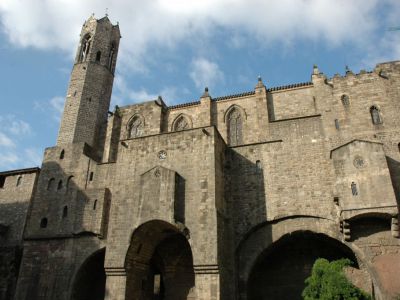
Another beautiful Catalan monument in the Gothic Quarter not to be missed, when visiting the Barcelona History Museum, is the Chapel of Saint Agatha. A remarkable example of Catalan Gothic architecture, it was constructed in 1302 under King James II of Aragon and his wife Queen Blanca of Naples as an extension to the Royal Palace, replacing its older oratory. Today, the chapel forms part of the History Museum along with the Tinell Hall.
Significant contributions to the building, such as the addition of the chapel of the Queens and a baptistery, were made in the 14th century during the reigns of King Peter IV of Aragon, popularly known as Peter the Ceremonious, and King Martín I the Humane. Originally dedicated to Santa Maria, its dedication was changed to Santa Àgata in 1601 after the papacy authorized the custody of the saint's relics.
The chapel underwent various uses following the confiscation of ecclesiastical properties in Spain in 1835. Architecturally, it features a single nave with a polygonal apse and a small cross structure, embellished with the coats of arms of Maria of Navarre and Eleonora of Sicily. The nave boasts polychrome wooden roofs with diaphragm arches, while the apse is topped with cross vaults. Stained glass windows with Gothic traceries brighten the interior, and the sacristy is uniquely integrated into the Roman wall.
Adjacent to the sacristy is a 14th-century octagonal bell tower adorned with eight triangular pediments resembling a royal crown. Prominent historical artworks within the chapel include sixty terracotta tiles decorated with images of angels and the coats of arms of Aragon and Sicily.
In 1990, extensive archaeological excavations were conducted in a temple prior to its restoration, uncovering significant historical layers. The work was divided into five areas, revealing structures from the High Imperial period (between 27 BC and 284 AD) through to the 19th century. Key findings included Roman walls, Gothic vaults, and medieval chapels.
Tip:
Admission to the Chapel is included in the Barcelona History Museum entrance fee.
Visitors are permitted to take non-commercial photos inside the chapel, as long as flash photography is avoided. Don't miss the intricately decorated ceiling timbers, the stunning Epiphany altarpiece from 1465, and the Table of Saint Agatha in the Queen's Chapel, dating back to around 1500. Also, keep an eye out for temporary exhibitions in both the chapel and the Tinell Hall, as they offer access to these remarkable buildings without requiring a full museum tour.
Significant contributions to the building, such as the addition of the chapel of the Queens and a baptistery, were made in the 14th century during the reigns of King Peter IV of Aragon, popularly known as Peter the Ceremonious, and King Martín I the Humane. Originally dedicated to Santa Maria, its dedication was changed to Santa Àgata in 1601 after the papacy authorized the custody of the saint's relics.
The chapel underwent various uses following the confiscation of ecclesiastical properties in Spain in 1835. Architecturally, it features a single nave with a polygonal apse and a small cross structure, embellished with the coats of arms of Maria of Navarre and Eleonora of Sicily. The nave boasts polychrome wooden roofs with diaphragm arches, while the apse is topped with cross vaults. Stained glass windows with Gothic traceries brighten the interior, and the sacristy is uniquely integrated into the Roman wall.
Adjacent to the sacristy is a 14th-century octagonal bell tower adorned with eight triangular pediments resembling a royal crown. Prominent historical artworks within the chapel include sixty terracotta tiles decorated with images of angels and the coats of arms of Aragon and Sicily.
In 1990, extensive archaeological excavations were conducted in a temple prior to its restoration, uncovering significant historical layers. The work was divided into five areas, revealing structures from the High Imperial period (between 27 BC and 284 AD) through to the 19th century. Key findings included Roman walls, Gothic vaults, and medieval chapels.
Tip:
Admission to the Chapel is included in the Barcelona History Museum entrance fee.
Visitors are permitted to take non-commercial photos inside the chapel, as long as flash photography is avoided. Don't miss the intricately decorated ceiling timbers, the stunning Epiphany altarpiece from 1465, and the Table of Saint Agatha in the Queen's Chapel, dating back to around 1500. Also, keep an eye out for temporary exhibitions in both the chapel and the Tinell Hall, as they offer access to these remarkable buildings without requiring a full museum tour.
11) Placa del Rei (King's Square)
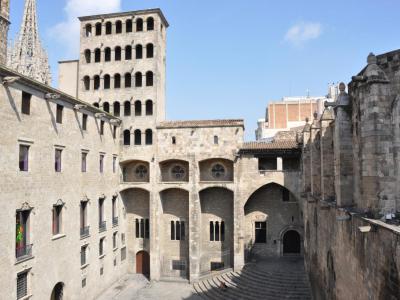
King's Square epitomizes Barcelona's historical essence as the center of county and royal authority. Originating from an urbanization initiative by King Martí I of Aragon, otherwise known as Martí the Human, in the late 14th century, the square was designed to host tournaments, displacing the traditional market. It retains a rectangular shape and is encased by Gothic and Renaissance buildings, creating a closed circuit except for its southwest end.
The square's name comes from the Grand Royal Palace of the Counts of Barcelona whose Gothic facade dominates its north side. The palace complex also encompasses the exquisite 13th-century Royal Chapel of Santa Agata and the romantic Renaissance Tower of King Martí, which offers views over the medieval city. The eastern edge is marked by the 14th-century Tinell Hall, the palace's central hall, accessible via a staircase.
According to historians, it was on these very steps, which spread out from the corner of the square, that in 1493 King Ferdinand and Queen Isabella welcomed Christopher Columbus and his crew upon their return from the first successful voyage to the New World. Once used as a meeting place for the Spanish Inquisition, the hall capitalized on the popular belief that its walls would reveal any lies spoken within. Nowadays, the building hosts temporary exhibitions and occasional concerts.
This square's main royal edifices can be accessed through the Barcelona History Museum, housed in the impressive Gothic Padellàs building. Together with the 16th-century Renaissance Lieutenant’s Palace, they complete the square's layout.
Additionally, King's Square's underground shelters extensive Roman ruins, uncovered in 1935. Ten years later, during renovations on the neighboring Counts Street, another archaeological discovery was made – an early Christian basilica, initially thought to be a primitive cathedral. In 1954, they also unearthed a 1st-century Roman pavement and nymphaeum (a shrine to the nymphs), providing insights into the area's historical development.
Due to its tremendous acoustic and almost enclosed structure, the square often serves as a venue for musical concerts and public events.
Tip:
The Barcelona History Museum, open Tuesday through Saturday from 10 am–7 pm and on Sunday from 10 am–8 pm, offers a fascinating glimpse into Roman and early Christian Barcelona. Visitors can explore ancient Roman ruins on a tour beginning underground and concluding in a lively square, perfect for relaxing with a drink.
The square's name comes from the Grand Royal Palace of the Counts of Barcelona whose Gothic facade dominates its north side. The palace complex also encompasses the exquisite 13th-century Royal Chapel of Santa Agata and the romantic Renaissance Tower of King Martí, which offers views over the medieval city. The eastern edge is marked by the 14th-century Tinell Hall, the palace's central hall, accessible via a staircase.
According to historians, it was on these very steps, which spread out from the corner of the square, that in 1493 King Ferdinand and Queen Isabella welcomed Christopher Columbus and his crew upon their return from the first successful voyage to the New World. Once used as a meeting place for the Spanish Inquisition, the hall capitalized on the popular belief that its walls would reveal any lies spoken within. Nowadays, the building hosts temporary exhibitions and occasional concerts.
This square's main royal edifices can be accessed through the Barcelona History Museum, housed in the impressive Gothic Padellàs building. Together with the 16th-century Renaissance Lieutenant’s Palace, they complete the square's layout.
Additionally, King's Square's underground shelters extensive Roman ruins, uncovered in 1935. Ten years later, during renovations on the neighboring Counts Street, another archaeological discovery was made – an early Christian basilica, initially thought to be a primitive cathedral. In 1954, they also unearthed a 1st-century Roman pavement and nymphaeum (a shrine to the nymphs), providing insights into the area's historical development.
Due to its tremendous acoustic and almost enclosed structure, the square often serves as a venue for musical concerts and public events.
Tip:
The Barcelona History Museum, open Tuesday through Saturday from 10 am–7 pm and on Sunday from 10 am–8 pm, offers a fascinating glimpse into Roman and early Christian Barcelona. Visitors can explore ancient Roman ruins on a tour beginning underground and concluding in a lively square, perfect for relaxing with a drink.
12) Basilica de Santa Maria del Mar (Basilica of St. Mary of the Sea) (must see)
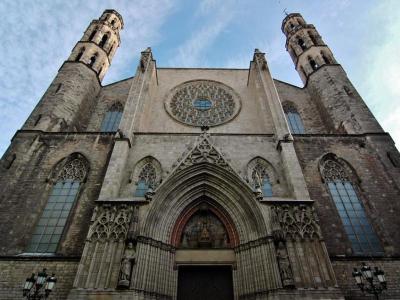
The Basilica of Saint Mary of the Sea is an outstanding example of early Catalan Gothic architecture, known for its uninterrupted lines and grace. Situated at the former water's edge, the edifice was constructed by skilled stonemasons who meticulously selected, fitted, and carved each stone sourced from the Montjuïc quarry, which had also supplied the sandstone for the 4th-century Roman walls. The number eight, symbolizing the Virgin Mary in medieval numerology, permeates every aspect of the basilica's design: the 16 octagonal pillars have a diameter of 2 meters and extend into rib vaulting arches at a height of 16 meters; the painted keystones at the apex of the arches are 32 meters above the floor; and the central nave is twice as wide as the lateral naves, measuring 8 meters each.
Despite enduring the destructive fires set by anarchists in 1936 during the rebellion, when numerous churches in Barcelona were targeted, Saint Mary of the Sea withstood the onslaught. Adorned with ornate side chapels and choir stalls at the time, the basilica burned for eleven days, nearly collapsing. It was later restored by a group of architects trained in the Bauhaus style following the Civil War, transforming it into an architectural marvel.
Why You Should Visit:
Remarkably grand and impeccably preserved; offers a lift to the roof, a small "art gallery", an intriguing crypt, beautiful stone carvings, a choir gallery, and the most astoundingly peaceful courtyard with a large pond. In addition, the surrounding area is dotted with charming local cafes offering outdoor seating, making it a delightful place to explore and wander.
Tips:
You have the option to participate in a guided tour that takes you up to the roof, providing a fascinating experience along with breathtaking views of Barcelona. Additionally, guided tours are available to explore areas that are usually restricted to the public, including the crypt. It's important to note that proper attire is required to enter these areas, as the guards at the entrance may refuse entry if the dress code is not followed.
Despite enduring the destructive fires set by anarchists in 1936 during the rebellion, when numerous churches in Barcelona were targeted, Saint Mary of the Sea withstood the onslaught. Adorned with ornate side chapels and choir stalls at the time, the basilica burned for eleven days, nearly collapsing. It was later restored by a group of architects trained in the Bauhaus style following the Civil War, transforming it into an architectural marvel.
Why You Should Visit:
Remarkably grand and impeccably preserved; offers a lift to the roof, a small "art gallery", an intriguing crypt, beautiful stone carvings, a choir gallery, and the most astoundingly peaceful courtyard with a large pond. In addition, the surrounding area is dotted with charming local cafes offering outdoor seating, making it a delightful place to explore and wander.
Tips:
You have the option to participate in a guided tour that takes you up to the roof, providing a fascinating experience along with breathtaking views of Barcelona. Additionally, guided tours are available to explore areas that are usually restricted to the public, including the crypt. It's important to note that proper attire is required to enter these areas, as the guards at the entrance may refuse entry if the dress code is not followed.
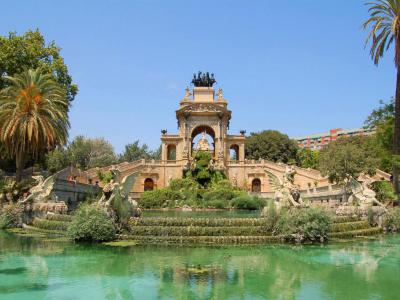
13) Parc de la Ciutadella (Citadel Park) (must see)
Originally built as a fortress to assert Madrid's military control over Barcelona, the Ciutadella is now the city's primary downtown park. It was established shortly after the War of the Spanish Succession in the early 18th century when Felipe V demolished around 1,000 houses to construct a fortress, barracks, and an open space known as the "glacis" between rebellious Barcelona and his artillery positions. The fortress walls were later dismantled in 1868, and the area was transformed into gardens designed by Josep Fontseré. In 1888, the park gained significance as the venue for the Universal Exposition, which propelled Barcelona into the spotlight as a truly European city. Today, the Ciutadella houses notable landmarks such as the Castle of the Three Dragons ("Castell dels Tres Dragons"), originally built as a café and restaurant for the exposition (now a botanical research center), the Catalan parliament, and the city zoo.
Both locals and tourists appreciate spending time in the Ciutadella. The park is well-equipped for picnics and public holidays, and offers various recreational activities such as jogging, cycling, and boating. Boats and bicycles are available for rent at a reasonable price. Entry to the park is free, making it a worthwhile destination to explore regardless of the duration of your stay in Barcelona.
Why You Should Visit:
To escape and relax without leaving the city centre!
Tip:
One of the prominent features within the park is the Cascada, a monumental fountain located in the northeast corner. It was designed by Josep Fontseré, the architect responsible for the park's conversion, with assistance from a young Antoni Gaudí, who was still a student at the time. The extravagant Baroque style of the Cascada foreshadows Gaudí's later flamboyant architectural designs. The ideal spot to admire the fountain is from the nearby open-air café-kiosk. In close proximity, there is also a small lake where visitors can rent rowing boats and enjoy a leisurely paddle amidst the ducks.
Both locals and tourists appreciate spending time in the Ciutadella. The park is well-equipped for picnics and public holidays, and offers various recreational activities such as jogging, cycling, and boating. Boats and bicycles are available for rent at a reasonable price. Entry to the park is free, making it a worthwhile destination to explore regardless of the duration of your stay in Barcelona.
Why You Should Visit:
To escape and relax without leaving the city centre!
Tip:
One of the prominent features within the park is the Cascada, a monumental fountain located in the northeast corner. It was designed by Josep Fontseré, the architect responsible for the park's conversion, with assistance from a young Antoni Gaudí, who was still a student at the time. The extravagant Baroque style of the Cascada foreshadows Gaudí's later flamboyant architectural designs. The ideal spot to admire the fountain is from the nearby open-air café-kiosk. In close proximity, there is also a small lake where visitors can rent rowing boats and enjoy a leisurely paddle amidst the ducks.
