Custom Walk in Tallinn, Estonia by gznlz_44b9e created on 2025-06-22
Guide Location: Estonia » Tallinn
Guide Type: Custom Walk
# of Sights: 5
Tour Duration: 3 Hour(s)
Travel Distance: 7.3 Km or 4.5 Miles
Share Key: ADMV7
Guide Type: Custom Walk
# of Sights: 5
Tour Duration: 3 Hour(s)
Travel Distance: 7.3 Km or 4.5 Miles
Share Key: ADMV7
How It Works
Please retrieve this walk in the GPSmyCity app. Once done, the app will guide you from one tour stop to the next as if you had a personal tour guide. If you created the walk on this website or come to the page via a link, please follow the instructions below to retrieve the walk in the app.
Retrieve This Walk in App
Step 1. Download the app "GPSmyCity: Walks in 1K+ Cities" on Apple App Store or Google Play Store.



Step 2. In the GPSmyCity app, download(or launch) the guide "Tallinn Map and Walking Tours".
Step 3. Tap the menu button located at upper right corner of the "Walks" screen and select "Retrieve custom walk". Enter the share key: ADMV7
1) St. Catherine’s Passage (Katariina Käik) (must see)
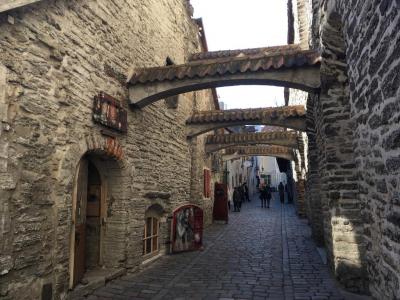
If you want to get a chance to really glimpse what life was like in the Old Town of Tallinn, you will want to visit Saint Catherine’s Passage. It is located just a short distance from the Town Hall.
The old passage connects Vene and Muurivahe Streets in town. On the northern end of the passage you will find the remnants of Saint Catherine’s Dominican Monastery Church, which is one of the oldest church in the city. In fact, the passage derives its name from the church. Many people like checking out the old tombstones that are an integral part of the sanctuary there. Many famous Estonians are buried at Saint Catherine’s cemetery.
The southern end of the passage will take you past some of the best artisan shops in Tallinn. You can watch the artists at work. It’s one of the best places to get a memento of your visit to Tallinn. The whole passage is a nice morning’s hike for the exercise alone. If you want to stop for a moment, you will want to get a cup of coffee at one of the quaint little cafes that are scattered down the passage.
The old passage connects Vene and Muurivahe Streets in town. On the northern end of the passage you will find the remnants of Saint Catherine’s Dominican Monastery Church, which is one of the oldest church in the city. In fact, the passage derives its name from the church. Many people like checking out the old tombstones that are an integral part of the sanctuary there. Many famous Estonians are buried at Saint Catherine’s cemetery.
The southern end of the passage will take you past some of the best artisan shops in Tallinn. You can watch the artists at work. It’s one of the best places to get a memento of your visit to Tallinn. The whole passage is a nice morning’s hike for the exercise alone. If you want to stop for a moment, you will want to get a cup of coffee at one of the quaint little cafes that are scattered down the passage.
2) Raekoja Plats (Town Hall Square) (must see)
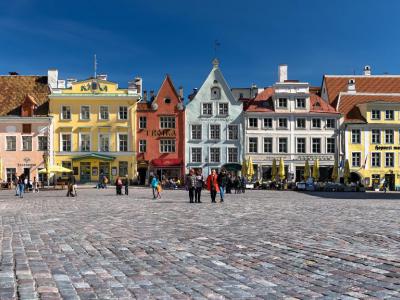
Town Hall Square is a fabulous location to soak up the long and storied history of Tallinn. It's in the center of the Old Town. Markets began opening on this site in the 11th century. Tallinn Town Hall is located in this square. Completed in 1404, it's the oldest Town Hall in Northern Europe.
Other historical buildings surround the square. There is the oldest pharmacy in Europe; it was established in approximately 1415. The pharmacy has a small museum with ancient medical instruments and medicines. The rest of the buildings are painted in attractive pastel colors and were built between the 15th and 17th centuries. Cobblestones throughout the square complete the old-world charm.
In the center of the square, visitors will find a circular stone with a compass rose. The L-shaped stone near the center of the square marks the site where a priest was executed. The priest killed a waitress who had served an overcooked omelet.
During the summer, the square is filled with open-air cafés. Enjoy alfresco dining and people-watching. There are regular outdoor markets held in Town Hall Square. Stalls feature souvenirs and traditional Estonian items.
You will find varied festivals and concerts throughout the year. Tallinn Old Town Days is a week-long festival that takes place at the beginning of summer. During this popular festival, visitors and locals are treated to exhibitions, theater plays, concerts, fairs, and non-stop entertainment.
In winter, the square becomes a winter wonderland with holiday decorations and a massive decorated fir tree. The Brotherhood of the Blackheads first erected a Christmas tree in the square in 1422. This is thought to be the world's first Christmas tree. Visitors can also enjoy a spirited Christmas market.
Why You Should Visit:
Town Hall Square is the oldest town square in Northern Europe and has been the center of Tallinn for eight centuries. Visit historic buildings and enjoy the old-world ambiance. There's no better place to get the feel of the town and nation than Town Hall Square.
Tips:
This square is incredibly festive over the winter holidays. Have a hot toddy, enjoy the holiday lights, shop for gifts, and admire the Christmas tree.
Other historical buildings surround the square. There is the oldest pharmacy in Europe; it was established in approximately 1415. The pharmacy has a small museum with ancient medical instruments and medicines. The rest of the buildings are painted in attractive pastel colors and were built between the 15th and 17th centuries. Cobblestones throughout the square complete the old-world charm.
In the center of the square, visitors will find a circular stone with a compass rose. The L-shaped stone near the center of the square marks the site where a priest was executed. The priest killed a waitress who had served an overcooked omelet.
During the summer, the square is filled with open-air cafés. Enjoy alfresco dining and people-watching. There are regular outdoor markets held in Town Hall Square. Stalls feature souvenirs and traditional Estonian items.
You will find varied festivals and concerts throughout the year. Tallinn Old Town Days is a week-long festival that takes place at the beginning of summer. During this popular festival, visitors and locals are treated to exhibitions, theater plays, concerts, fairs, and non-stop entertainment.
In winter, the square becomes a winter wonderland with holiday decorations and a massive decorated fir tree. The Brotherhood of the Blackheads first erected a Christmas tree in the square in 1422. This is thought to be the world's first Christmas tree. Visitors can also enjoy a spirited Christmas market.
Why You Should Visit:
Town Hall Square is the oldest town square in Northern Europe and has been the center of Tallinn for eight centuries. Visit historic buildings and enjoy the old-world ambiance. There's no better place to get the feel of the town and nation than Town Hall Square.
Tips:
This square is incredibly festive over the winter holidays. Have a hot toddy, enjoy the holiday lights, shop for gifts, and admire the Christmas tree.
3) Nunna, Sauna and Kuldjala Towers (Town Wall) (must see)
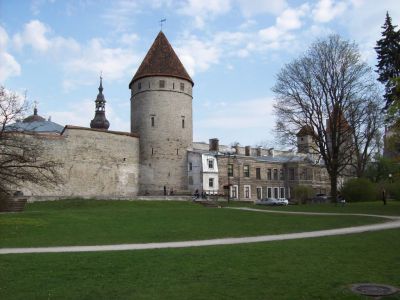
The Nunna, Sauna, and Kuldjala Towers are three of the remaining 26 towers that surround the Old Town of Tallinn. In the late 14th century, a massive project was started to build a fortified wall around the city to protect against invaders. By the 16th Century, the walls were raised to sixteen meters high with a thickness of 3 to 4 meters. This made it possible to defend against canon fire. During the 16th century, Tallinn was one of the most fortified cities in the entire world. The wall stretched 4 kilometers around old Tallinn.
These three towers are among the few that are still open to the general public. Visitors can come and walk through all three. In addition, there are some connection paths that are adjacent to the historic standing walls. It gives you a real sense of what the old town was like. Climbing the towers also gives you a great view of the city. You can imagine what it was like to be a guard on the towers. Admission is free.
These three towers are among the few that are still open to the general public. Visitors can come and walk through all three. In addition, there are some connection paths that are adjacent to the historic standing walls. It gives you a real sense of what the old town was like. Climbing the towers also gives you a great view of the city. You can imagine what it was like to be a guard on the towers. Admission is free.
4) Toompea Hill (must see)
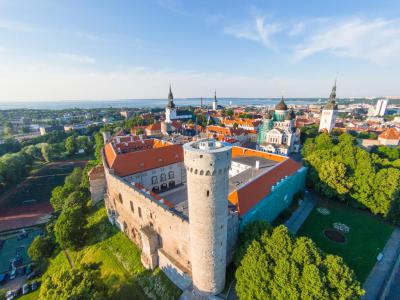
Toompea Hill is a limestone hill that sits about 20-30 meters (65 feet-98 feet) above the rest of the city. In Estonian mythology, Toompea is a grave mound erected by Linda for her husband, King Kalev. Linda sat on the grave mound, shed tears, and formed Ulemiste Lake.
Throughout Tallinn's history, the hill has been the site of various forts built to defend the city. Castle Square is the site where Tallinn was founded by the Knights of the Sword in 1229. Today, the spectacular Russian-style Alexander Nevsky Cathedral stands in Castle Square.
Toompea is the center of Estonia's government. Parliament meets in the Toompea Castle, which is topped by the Tall Hermann Tower. Tall Hermann was completed in 1371. Tradition dictates that whichever country flies its flag over Tall Hermann rules Estonia. Each day, the Estonian flag is raised at sunrise while the national anthem plays and lowered at sunset to the tune of My Fatherland is My Love.
In 1684, Toompea had a terrible fire, and most of its buildings were damaged. Because of the fire, Toompea has newer buildings than Lower Town and has a different look.
Toomkirik (Dome Church) was built in the 13th century and survived the brutal 1684 fire. Don't miss the medieval coats of arms in this beautiful example of an Estonian Lutheran Church. Toompea Castle was built on the ruins of a fortress built here during the 13th and 14th centuries. The current castle was completed in 1773 and features a pink Baroque facade.
Why You Should Visit:
Toompea has long been the seat of power for the area. The hilltop site has a long history, gorgeous views of Old Town, and exciting architecture.
Tips:
Check out one of the viewing platforms for a panorama of Old Town below and the Gulf of Finland. The view is breathtaking at sunset.
Throughout Tallinn's history, the hill has been the site of various forts built to defend the city. Castle Square is the site where Tallinn was founded by the Knights of the Sword in 1229. Today, the spectacular Russian-style Alexander Nevsky Cathedral stands in Castle Square.
Toompea is the center of Estonia's government. Parliament meets in the Toompea Castle, which is topped by the Tall Hermann Tower. Tall Hermann was completed in 1371. Tradition dictates that whichever country flies its flag over Tall Hermann rules Estonia. Each day, the Estonian flag is raised at sunrise while the national anthem plays and lowered at sunset to the tune of My Fatherland is My Love.
In 1684, Toompea had a terrible fire, and most of its buildings were damaged. Because of the fire, Toompea has newer buildings than Lower Town and has a different look.
Toomkirik (Dome Church) was built in the 13th century and survived the brutal 1684 fire. Don't miss the medieval coats of arms in this beautiful example of an Estonian Lutheran Church. Toompea Castle was built on the ruins of a fortress built here during the 13th and 14th centuries. The current castle was completed in 1773 and features a pink Baroque facade.
Why You Should Visit:
Toompea has long been the seat of power for the area. The hilltop site has a long history, gorgeous views of Old Town, and exciting architecture.
Tips:
Check out one of the viewing platforms for a panorama of Old Town below and the Gulf of Finland. The view is breathtaking at sunset.
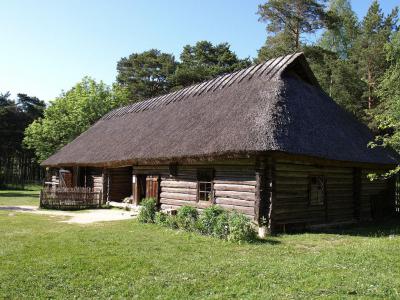
5) Estonian Open Air Museum (must see)
The Estonian Open Air Museum is essentially a full-scale recreation of a rural and fishing village that existed during the 18th and 19th centuries. This reconstruction encompasses various structures like a church, tavern, schoolhouse, several mills, a fire station, twelve farmyards, and net sheds. Additionally, it includes a relatively new apartment building from the 20th century, which was designed in the Soviet kolkhoz style, and a modern prefabricated wooden house built in 2019. The entire site covers an expansive 72 hectares (equivalent to 180 acres) of land. The arrangement of farmyards and historical public buildings on the premises provides visitors with a comprehensive view of Estonian architectural traditions spanning the past two centuries from various regions of Estonia.
You can find this museum approximately 8 kilometers (about 5.0 miles) west of the Tallinn city center in a place called Rocca al Mare. Interestingly, the concept of establishing this museum dates back to 1913 when Estonian intellectuals, inspired by similar open-air museums in Scandinavia, began discussing the idea of creating one in Estonia. However, it took several decades for this vision to become a reality, and the museum was officially founded in 1957, opening its doors to the public in 1964.
Among its diverse exhibits, the Sutlepa Chapel from the Noarootsi Swedish church stands as the oldest, with records dating back to 1670. On the other end of the spectrum, the most contemporary exhibit is a prefabricated wooden house constructed on-site in 2019. Additionally, in 2021, the museum introduced its latest exhibit, a kolkhoz apartment building from the 1960s that was transported from Southern Estonia, originally used by a former collective farm.
You can find this museum approximately 8 kilometers (about 5.0 miles) west of the Tallinn city center in a place called Rocca al Mare. Interestingly, the concept of establishing this museum dates back to 1913 when Estonian intellectuals, inspired by similar open-air museums in Scandinavia, began discussing the idea of creating one in Estonia. However, it took several decades for this vision to become a reality, and the museum was officially founded in 1957, opening its doors to the public in 1964.
Among its diverse exhibits, the Sutlepa Chapel from the Noarootsi Swedish church stands as the oldest, with records dating back to 1670. On the other end of the spectrum, the most contemporary exhibit is a prefabricated wooden house constructed on-site in 2019. Additionally, in 2021, the museum introduced its latest exhibit, a kolkhoz apartment building from the 1960s that was transported from Southern Estonia, originally used by a former collective farm.
