Custom Walk in Milan, Italy by henajamshed12_f62d3 created on 2025-06-26
Guide Location: Italy » Milan
Guide Type: Custom Walk
# of Sights: 13
Tour Duration: 4 Hour(s)
Travel Distance: 8.8 Km or 5.5 Miles
Share Key: CFSC4
Guide Type: Custom Walk
# of Sights: 13
Tour Duration: 4 Hour(s)
Travel Distance: 8.8 Km or 5.5 Miles
Share Key: CFSC4
How It Works
Please retrieve this walk in the GPSmyCity app. Once done, the app will guide you from one tour stop to the next as if you had a personal tour guide. If you created the walk on this website or come to the page via a link, please follow the instructions below to retrieve the walk in the app.
Retrieve This Walk in App
Step 1. Download the app "GPSmyCity: Walks in 1K+ Cities" on Apple App Store or Google Play Store.



Step 2. In the GPSmyCity app, download(or launch) the guide "Milan Map and Walking Tours".
Step 3. Tap the menu button located at upper right corner of the "Walks" screen and select "Retrieve custom walk". Enter the share key: CFSC4
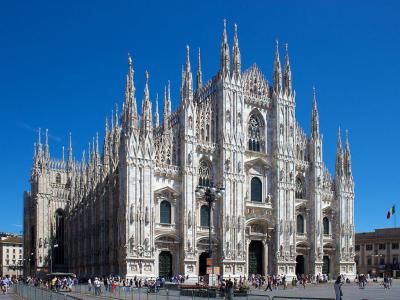
1) Duomo di Milano (Milan Cathedral) (must see)
The Milan Cathedral, otherwise known as the Duomo, is the seat of the Archbishop of Milan and the largest church in Italy (the third largest in Europe and the fourth largest in the world), covering an area of 12,000 sqm and weighing a staggering 325,000 tons!
The cathedral is dedicated to Saint Mary Nascent and has been the epicenter of the city's life since 1386. Its foundation was laid by Gian Galeazzo Visconti, who died in 1402 when only half of the structure had been finished, upon which the construction came to a standstill for almost 80 years because of the lack of funds and ideas. It resumed only in 1500, and by 1510 the octagonal dome was completed – embellished with four series of 15 statues representing different characters from the Bible.
In 1805, Napoleon Bonaparte forced completion of the façade, which overall took another seven years of work. In honor of his efforts, a statue of Napoleon was erected at the top of one of the spires. Later, the Duomo also hosted his crowning ceremony. However, it wasn't until the 20th century, with the completion of the last gate, that the centuries-long construction of the cathedral was finally over, marked by inauguration on January 6, 1965.
A climb to the roof, much as a descend to the Paleo Christian baptistery beneath the west side of the Duomo are the highlights of a visit here. The rooftop offers a closer look at the intricate details of the spires and the gargoyles adorning it, plus a breathtaking view over of the city, some 70 meters above ground, replete with myriads of statues, pinnacles, tracery and flying buttresses. In order to get there, visitors have to traverse 201 stairs up through a winding narrow passageway, which is a bit tiring. Still, those who wish, can spare the effort and use an elevator.
Why You Should Visit:
Milan's one truly must-visit sight – a vast riot of ornate religious sculpture on the exterior, and the interior sublimely huge.
Tip:
Buy an online skip-the-line ticket that covers entry and access to the elevator.
The surrounding piazza comes at its finest at night when the cathedral's façade is lit by white lights.
The cathedral is dedicated to Saint Mary Nascent and has been the epicenter of the city's life since 1386. Its foundation was laid by Gian Galeazzo Visconti, who died in 1402 when only half of the structure had been finished, upon which the construction came to a standstill for almost 80 years because of the lack of funds and ideas. It resumed only in 1500, and by 1510 the octagonal dome was completed – embellished with four series of 15 statues representing different characters from the Bible.
In 1805, Napoleon Bonaparte forced completion of the façade, which overall took another seven years of work. In honor of his efforts, a statue of Napoleon was erected at the top of one of the spires. Later, the Duomo also hosted his crowning ceremony. However, it wasn't until the 20th century, with the completion of the last gate, that the centuries-long construction of the cathedral was finally over, marked by inauguration on January 6, 1965.
A climb to the roof, much as a descend to the Paleo Christian baptistery beneath the west side of the Duomo are the highlights of a visit here. The rooftop offers a closer look at the intricate details of the spires and the gargoyles adorning it, plus a breathtaking view over of the city, some 70 meters above ground, replete with myriads of statues, pinnacles, tracery and flying buttresses. In order to get there, visitors have to traverse 201 stairs up through a winding narrow passageway, which is a bit tiring. Still, those who wish, can spare the effort and use an elevator.
Why You Should Visit:
Milan's one truly must-visit sight – a vast riot of ornate religious sculpture on the exterior, and the interior sublimely huge.
Tip:
Buy an online skip-the-line ticket that covers entry and access to the elevator.
The surrounding piazza comes at its finest at night when the cathedral's façade is lit by white lights.
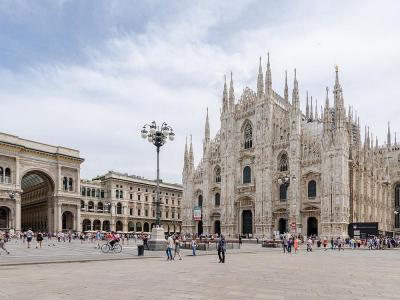
2) Piazza del Duomo (Cathedral Square) (must see)
The gigantic central piazza, milling with people and pigeons, is awe-inspiring, with the Museo del Novecento being a particularly impressive sight. No cafés spill onto it, but the historic Camparino is tucked under the porticoes, created by the founder of the Campari dynasty in 1867. It was here, at the entrance to Galleria Vittorio Emanuele, that Verdi used to enjoy a drink after concerts and where, in 1877, Milanese nobility flocked to see the first experiment in electric lighting. It was also here, in this Art Nouveau interior, that stressed Milanese still relax over a coffee or Campari, served with over-sized olives.
The Palazzo Reale (Royal Palace) on the south side of the Duomo stands on the site of the original Broletto or town hall, destroyed by Frederick Barbarossa in 1162. It was rebuilt in 1171, then later transformed into the Ducal Palace for the Visconti and Sforza dynasties. On the occasion of Galeazzo Visconti’s marriage to Beatrice d’Este in Modena, their entry into Milan was marked by eight days of festivities at the palace. In 1336 the Church of San Gottardo in Corte was built as the Visconti’s private chapel. You can still see the charming colonnaded campanile rising to the rear of the palace, but the church itself was destroyed when the building was incorporated into the neoclassical palace. In 1412 the church steps were the scene of the murder of Giovanni Maria Visconti; as a consequence, the family decided to reside in the safer environs of the fortified castle. Under the Sforza a theatre was established at the palace, and in 1595 Mozart, who was only 14, performed here.
Another unmissable landmark in the piazza is, of course, Ercole Rosa's 1896 equestrian statue of Vittorio Emanuele II, first king of Italy, who triumphantly entered Milan in 1859.
The Palazzo Reale (Royal Palace) on the south side of the Duomo stands on the site of the original Broletto or town hall, destroyed by Frederick Barbarossa in 1162. It was rebuilt in 1171, then later transformed into the Ducal Palace for the Visconti and Sforza dynasties. On the occasion of Galeazzo Visconti’s marriage to Beatrice d’Este in Modena, their entry into Milan was marked by eight days of festivities at the palace. In 1336 the Church of San Gottardo in Corte was built as the Visconti’s private chapel. You can still see the charming colonnaded campanile rising to the rear of the palace, but the church itself was destroyed when the building was incorporated into the neoclassical palace. In 1412 the church steps were the scene of the murder of Giovanni Maria Visconti; as a consequence, the family decided to reside in the safer environs of the fortified castle. Under the Sforza a theatre was established at the palace, and in 1595 Mozart, who was only 14, performed here.
Another unmissable landmark in the piazza is, of course, Ercole Rosa's 1896 equestrian statue of Vittorio Emanuele II, first king of Italy, who triumphantly entered Milan in 1859.
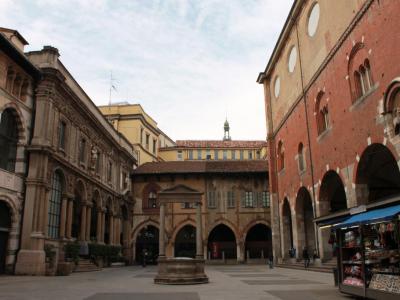
3) Piazza Mercanti (Merchants Square)
Located in the historic center of Milan, Piazza Mercanti has been a hub of commerce and politics since the Middle Ages. In the 13th century, it had six entry points that were associated with specific trades, from sword blacksmiths to hat makers. The most important and traditional fair of Milan, "Oh bej! Oh bej!" was held here until the late 19th century.
The square is still surrounded by beautiful buildings such as the Palazzo della Ragione, built in 1233, which served as the "broletto", i.e., the administrative headquarters of the city, and the Loggia degli Osii, a Renaissance-style arcade. Palazzo delle Scuole Palatine, a baroque palace built in the 17th century, occupies the south-eastern side, while the nearby Casa Panigarola, also known as "Palazzo dei Notai" (Notary's Palace), is a Gothic palace built in the 15th century.
At the center of the square is a 16th-century pit, topped by two 18th-century columns. Previously, a large stone known as the "pietra dei falliti" ("bankrupts stone") was located here, where those declared bankrupt had to sit as a penance with their naked bottoms exposed.
Woth stopping for a brief look!
The square is still surrounded by beautiful buildings such as the Palazzo della Ragione, built in 1233, which served as the "broletto", i.e., the administrative headquarters of the city, and the Loggia degli Osii, a Renaissance-style arcade. Palazzo delle Scuole Palatine, a baroque palace built in the 17th century, occupies the south-eastern side, while the nearby Casa Panigarola, also known as "Palazzo dei Notai" (Notary's Palace), is a Gothic palace built in the 15th century.
At the center of the square is a 16th-century pit, topped by two 18th-century columns. Previously, a large stone known as the "pietra dei falliti" ("bankrupts stone") was located here, where those declared bankrupt had to sit as a penance with their naked bottoms exposed.
Woth stopping for a brief look!
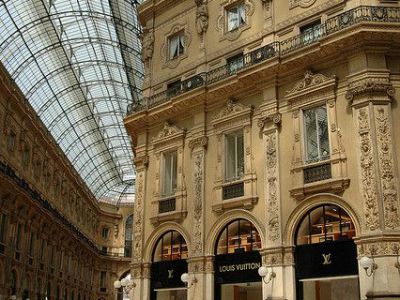
4) La Rinascente
Founded in 1865, La Rinascente is a classical fashion department store in Milan that has been recognized as the most modern shopping place. In this enormous, eight-storey(!) super mall you can find practically everything you can possibly think of, from lingerie to the colorful ceramics to latest cosmetics to accessories and footwear. The top floor is home to a delicatessen, indoor-outdoor café and innumerable gastro bars offering Italian cuisine, sushi, wines, juices, chocolate, coffee and cheeses (there's a branch of Obikà mozzarella bar), etc. In addition to gastronomic pleasures, visitors can also enjoy a panoramic view of the Duomo cathedral.
Following the renovation of 2008, La Rinascente had its mall-like appearance replaced by a boutique feel. All in all, this is a great place to walk around, do shopping and enjoy a drink or a meal in the comfy environment of the many on-site restaurants.
Tip:
They have clean bathrooms on the top floor, and there is no fee. When you're there, just walk over to the big windows and get a bird's eye view of the Duomo, while enjoying the air conditioning.
If you need to get Tax Refund, collect all your receipts from La Rinascente and process them on the same day on the same top floor. The receipts are only valid for tax refund if done the same day, so it is better to do all your shopping at La Rinascente in one day, then proceed to the Tax Refund and complete a single form including all receipts.
Following the renovation of 2008, La Rinascente had its mall-like appearance replaced by a boutique feel. All in all, this is a great place to walk around, do shopping and enjoy a drink or a meal in the comfy environment of the many on-site restaurants.
Tip:
They have clean bathrooms on the top floor, and there is no fee. When you're there, just walk over to the big windows and get a bird's eye view of the Duomo, while enjoying the air conditioning.
If you need to get Tax Refund, collect all your receipts from La Rinascente and process them on the same day on the same top floor. The receipts are only valid for tax refund if done the same day, so it is better to do all your shopping at La Rinascente in one day, then proceed to the Tax Refund and complete a single form including all receipts.
5) Chiesa di San Gottardo in Corte (Church of St. Gotthard of Hildesheim)
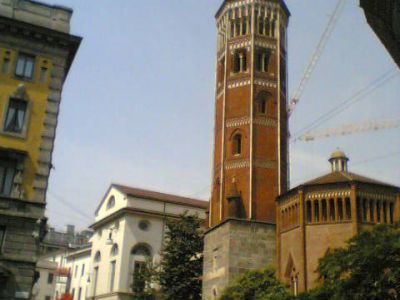
The Church of Saint Gotthard is a hidden gem of undeniable beauty, almost entirely concealed by Milan's Royal Palace ("Palazzo Reale"). Its external appearance was completely transformed during the Neoclassicist era when the entrance was moved to the south side.
The church's construction may have started as a small temple by the Torriani, but was completed by Azzone Visconti, with the help of architect Pecorari and painter Giotto. Visitors entering the church can admire the nave, which is preceded by a vestibule featuring an impressive fresco of the Giotto school.
One should also take a moment to appreciate the slender, octagonal bell tower, which offers a striking contrast between its red brick and marble materials. Home to the first public clock in Milan and likely in Italy as well, it has retained its original structure since its construction in 1330. The clock itself was one of the earliest to strike the hours and was immensely popular. In 1335, Galvano Fiamma described it as "a wonderful clock with a huge clapper that strikes a bell 24 times a day, making it of great use to people of every social class". The clock and its automatic mechanism were so impressive that the surrounding area became known as the "Street of the Hours" ("Contrada delle Ore").
At the top of the bell tower, the Archangel Saint Michael overlooks the area and appears to beckon the many tourists who visit Piazza del Duomo to admire his splendor as well.
The church's construction may have started as a small temple by the Torriani, but was completed by Azzone Visconti, with the help of architect Pecorari and painter Giotto. Visitors entering the church can admire the nave, which is preceded by a vestibule featuring an impressive fresco of the Giotto school.
One should also take a moment to appreciate the slender, octagonal bell tower, which offers a striking contrast between its red brick and marble materials. Home to the first public clock in Milan and likely in Italy as well, it has retained its original structure since its construction in 1330. The clock itself was one of the earliest to strike the hours and was immensely popular. In 1335, Galvano Fiamma described it as "a wonderful clock with a huge clapper that strikes a bell 24 times a day, making it of great use to people of every social class". The clock and its automatic mechanism were so impressive that the surrounding area became known as the "Street of the Hours" ("Contrada delle Ore").
At the top of the bell tower, the Archangel Saint Michael overlooks the area and appears to beckon the many tourists who visit Piazza del Duomo to admire his splendor as well.
6) Corso Venezia (Venice Avenue)
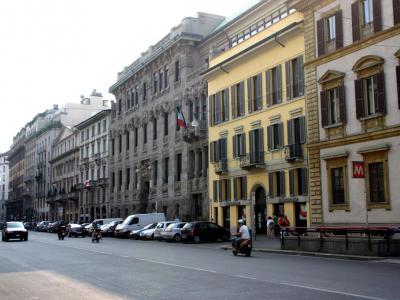
Corso Venezia is one of the most prestigious and elegant avenues in Milan, located in the upscale Quadrilatero della moda fashion district. The street is home to a number of art galleries, luxury fashion boutiques, historical churches, as well as a great collection of palaces – notably Baroque and Neoclassical, but also Medieval and Renaissance – such as the Palazzo Serbelloni and the Villa Reale, found in the landscaped Giardini Pubblici along the path.
The aforementioned park also houses the Museo Civico di Storia Naturale di Milano and features several fountains, a small lake, and a children's playground, making it a perfect place for a leisurely stroll or picnic.
Fashion lovers will also enjoy the luxury boutiques along Corso Venezia, which include top Italian and international brands such as Gucci, Prada, and Versace. The avenue is also home to several high-end restaurants and cafes, perfect for a coffee break or lunch stop.
The aforementioned park also houses the Museo Civico di Storia Naturale di Milano and features several fountains, a small lake, and a children's playground, making it a perfect place for a leisurely stroll or picnic.
Fashion lovers will also enjoy the luxury boutiques along Corso Venezia, which include top Italian and international brands such as Gucci, Prada, and Versace. The avenue is also home to several high-end restaurants and cafes, perfect for a coffee break or lunch stop.
7) Museo Bagatti Valsecchi (Bagatti Valsecchi Museum)
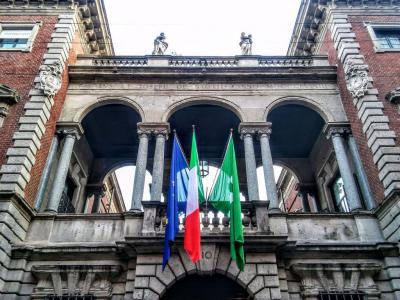
Don't miss a visit to the charming and intimate Bagatti Valsecchi, one of Milan's most splendid 'house museums'. A visit to this Renaissance "palazzo" will transport you back in time, allowing you to experience the grandeur of a bygone era first hand. With the aid of helpful headphone guides, you can explore the exquisitely preserved interiors at your leisure, taking in every magnificent detail.
Marvel at the permanent collection, which boasts an impressive selection of Italian Renaissance decorative arts, including furniture, tapestries, metalwork, leather, glassware, and precious ivory table-top coffers adorned with intricate "stucco and pastiglia". Admire the sculptures, such as the stunning 'Madonna and Child' lunette crafted by a follower of the renowned Donatello, and immerse yourself in the many exquisite paintings that adorn the walls.
The museum also features a fascinating assortment of European Renaissance weapons, armor, clocks, textiles, and scientific and musical instruments, meticulously assembled by the illustrious Barons Bagatti Valsecchi, and displayed within their grand abode, as per their wishes.
Why You Should Visit:
If you want to get an idea of what your trip in Milan would have been like in the 1500s, come here to check out an incredible range of art. This is among the most important and best preserved historic house museums in Europe – a great place to stimulate one's imagination!
Tips:
For an even more enriching experience, be sure to take advantage of the audio guide, which offers insights into the lives of the family who once resided in the home. Additionally, guided tours can be booked through the museum's website under "Activities".
Marvel at the permanent collection, which boasts an impressive selection of Italian Renaissance decorative arts, including furniture, tapestries, metalwork, leather, glassware, and precious ivory table-top coffers adorned with intricate "stucco and pastiglia". Admire the sculptures, such as the stunning 'Madonna and Child' lunette crafted by a follower of the renowned Donatello, and immerse yourself in the many exquisite paintings that adorn the walls.
The museum also features a fascinating assortment of European Renaissance weapons, armor, clocks, textiles, and scientific and musical instruments, meticulously assembled by the illustrious Barons Bagatti Valsecchi, and displayed within their grand abode, as per their wishes.
Why You Should Visit:
If you want to get an idea of what your trip in Milan would have been like in the 1500s, come here to check out an incredible range of art. This is among the most important and best preserved historic house museums in Europe – a great place to stimulate one's imagination!
Tips:
For an even more enriching experience, be sure to take advantage of the audio guide, which offers insights into the lives of the family who once resided in the home. Additionally, guided tours can be booked through the museum's website under "Activities".
8) Chiesa di San Francesco di Paola (Church of St. Francis of Paola)
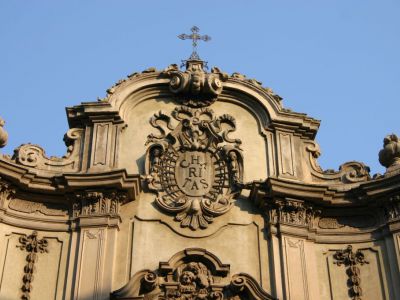
A rare and interesting example of Milanese religious architecture in Rococo style, aligned behind the Quadrilatero della moda, this church is mainly associated with music by locals, as its floor plan bears a striking resemblance to that of a double bass. The interior is richly decorated with frescoes and stucco, and houses two important organs: the main one has two distinct bodies, one in the counter-facade from 1924, and the other inaugurated the same year by Marco Enrico Bossi. Additionally, there is a small positive organ located in the apse, which was constructed at the end of the 20th century.
The church also features a spacious room, known as the "Tiepolesca Room," which can be accessed from via Montenapoleone and is characterized by its distinctive decoration style. A large main altar with a neoclassic fresco depicting "The glory of San Francesco di Paola", stands in the centre.
Definitely worth a visit if you happen to be in the area.
The church also features a spacious room, known as the "Tiepolesca Room," which can be accessed from via Montenapoleone and is characterized by its distinctive decoration style. A large main altar with a neoclassic fresco depicting "The glory of San Francesco di Paola", stands in the centre.
Definitely worth a visit if you happen to be in the area.
9) Pinacoteca Castello Sforzesco (Sforzesco Castle Art Gallery)
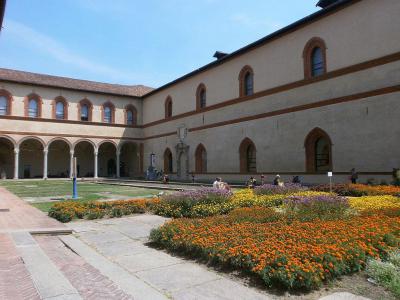
Inaugurated in 1878, this well-known art gallery, part of the Sforza Castle Museums complex in Milan, showcases more than 230 artworks, including masterpieces by Titian, Andrea Mantegna, Canaletto, Antonello da Messina, Pisanello, Vincenzo Foppa, Giovanni Bellini, Correggio, Bernardino Luini, Lorenzo Lotto, and Tintoretto, among others. The museum's complete collection has been enriched over the last two centuries by generous donations from illustrious citizens and collectors and now boasts over 1,500 artworks.
The first section of the Pinacoteca features religious paintings from the 15th and 16th centuries, including works by Lombard and Italian Renaissance painters such as Vincenzo Foppa, Bergognone, Bramantino, Carlo Crivelli, and Bernardino Luini. This part of the museum includes the Trivulzio Madonna, a masterpiece by Andrea Mantegna dating back to 1497, and another Trivulzio Madonna by Filippo Lippi.
The second half of the Pinacoteca displays works from the 16th, 17th, and 18th centuries, including secular and religious pieces by artists such as Canaletto, Giambattista Tiepolo, Bernardo Bellotto, Titian, and Tintoretto.
Visitors can also view portraits of members of the Sforza family from the 15th and 16th centuries.
Tip:
Definitely get the audio guide and be prepared with a proximity card for your payment as for some odd reason they do not have the capability of accepting the usual chip card (fortunately, Google Pay works).
While there are 14 different exhibitions in the Castle itself, please note that some of these are closed in the afternoon. A ticket for all exhibitions in the Castle comes at a very reasonable cost.
The first section of the Pinacoteca features religious paintings from the 15th and 16th centuries, including works by Lombard and Italian Renaissance painters such as Vincenzo Foppa, Bergognone, Bramantino, Carlo Crivelli, and Bernardino Luini. This part of the museum includes the Trivulzio Madonna, a masterpiece by Andrea Mantegna dating back to 1497, and another Trivulzio Madonna by Filippo Lippi.
The second half of the Pinacoteca displays works from the 16th, 17th, and 18th centuries, including secular and religious pieces by artists such as Canaletto, Giambattista Tiepolo, Bernardo Bellotto, Titian, and Tintoretto.
Visitors can also view portraits of members of the Sforza family from the 15th and 16th centuries.
Tip:
Definitely get the audio guide and be prepared with a proximity card for your payment as for some odd reason they do not have the capability of accepting the usual chip card (fortunately, Google Pay works).
While there are 14 different exhibitions in the Castle itself, please note that some of these are closed in the afternoon. A ticket for all exhibitions in the Castle comes at a very reasonable cost.
10) Arco della Pace (Arch of Peace)
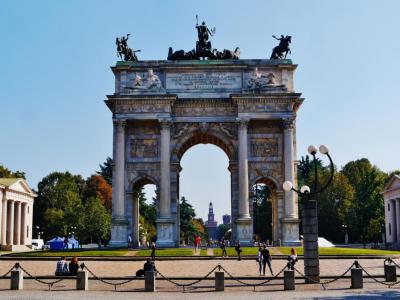
At the northwestern corner of Parco Sempione, lies a Napoleon's triumphal arch, a neoclassical wonder standing tall at a height of 25 meters and spanning an impressive width of 24 meters. Designed by architect Luigi Cagnola in 1807, this imposing structure mirrors Paris' famed Arc de Triomphe and beckons one towards Corso Sempione, the principal avenue that connects Milan to Paris via the Simplon (Sempione) Pass.
The grandeur of this arch is matched only by its intricate details, with numerous bas-reliefs, statues, and Corinthian columns adorning its façade. Made from a plethora of materials, including marble, bronze, wood, and stucco, these embellishments pay tribute to various significant events in the history of Italy and Europe. For instance, some bas-reliefs honor the Battle of Leipzig, the Congress of Vienna, and the founding of the Kingdom of Lombardy–Venetia. Meanwhile, classical mythology also takes center stage, with depictions of Mars, Ceres, Minerva, Apollo, and Victoria-Nike adorning the arch. Even the great rivers of North Italy, such as the Po, the Adige, and the Ticino, find representation through a group of allegorical statues.
A true testament to the beauty of neoclassical architecture and the grandeur of Italy's history and culture, Arco della Pace could only have been possible with the collaboration of notable artists, including Pompeo Marchesi, Luigi Acquisti, Grazioso Rusca, Luigi Buzzi Leone, and more.
The grandeur of this arch is matched only by its intricate details, with numerous bas-reliefs, statues, and Corinthian columns adorning its façade. Made from a plethora of materials, including marble, bronze, wood, and stucco, these embellishments pay tribute to various significant events in the history of Italy and Europe. For instance, some bas-reliefs honor the Battle of Leipzig, the Congress of Vienna, and the founding of the Kingdom of Lombardy–Venetia. Meanwhile, classical mythology also takes center stage, with depictions of Mars, Ceres, Minerva, Apollo, and Victoria-Nike adorning the arch. Even the great rivers of North Italy, such as the Po, the Adige, and the Ticino, find representation through a group of allegorical statues.
A true testament to the beauty of neoclassical architecture and the grandeur of Italy's history and culture, Arco della Pace could only have been possible with the collaboration of notable artists, including Pompeo Marchesi, Luigi Acquisti, Grazioso Rusca, Luigi Buzzi Leone, and more.
11) Museo della Scienza e della Tecnologia Leonardo da Vinci (Museum of Science and Technology) (must see)
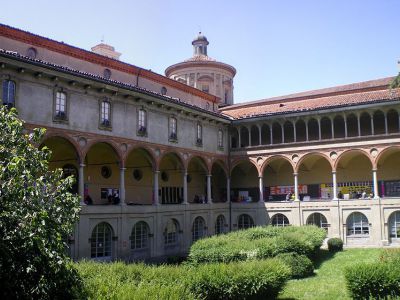
The National Museum of Science and Technology “Leonardo da Vinci” in Milan, inaugurated on February 15, 1953, stands as one of Europe’s foremost institutions dedicated to scientific and technological culture. Initially founded as “Technics,” it now operates as a private law foundation supported by ministries, public bodies, and Milanese universities.
The museum’s permanent exhibitions reveal the breadth of human invention across centuries. The Leonardo da Vinci Galleries, spanning 1,300 square meters, form the world’s largest display devoted to Da Vinci as both engineer and humanist. Through 170 models, artworks, and manuscripts, visitors trace his life from 15th-century Florence to Milan, exploring his ideas on flight, war, architecture, and waterways. The galleries reinterpret Da Vinci’s genius as a dialogue between art and science, celebrating his enduring curiosity and interdisciplinary thinking.
Other sections highlight Italy’s industrial and creative mastery. The Classic Cars exhibition honors Italian craftsmanship through models like the 1903 Bianchi 8HP and the Alfa Romeo 8C series, presented in a reflective red-lit setting that transforms them into “sculptures in motion.” Each car tells a story of innovation, from early automobile pioneers to experimental postwar designs such as the 1955 Bisiluro DaMolNar.
The museum also explores major transport revolutions. The Air Transport section recounts Lombardy’s pioneering role in aviation—from Enrico Forlanini’s 1877 helicopter to World War II aircraft—while Rail Transport showcases early steam and electric locomotives that connected industrial Italy. The Naval Transport collection, one of Italy’s richest, features over 3,300 artifacts including the submarine Enrico Toti and the training ship Ebe.
Further exhibits bridge science and art. The Music and Theatre section displays part of Teatro alla Scala’s historic hydraulic stage, instruments from the nineteenth century, and early sound devices like Edison phonographs. In turn, the Space exhibition invites visitors to engage with cosmic exploration—from ancient astronomy to modern missions—featuring Italy’s only fragment of lunar rock. Together, these galleries embody the museum’s mission: to preserve the past, inspire curiosity, and connect scientific progress with human imagination.
The museum’s permanent exhibitions reveal the breadth of human invention across centuries. The Leonardo da Vinci Galleries, spanning 1,300 square meters, form the world’s largest display devoted to Da Vinci as both engineer and humanist. Through 170 models, artworks, and manuscripts, visitors trace his life from 15th-century Florence to Milan, exploring his ideas on flight, war, architecture, and waterways. The galleries reinterpret Da Vinci’s genius as a dialogue between art and science, celebrating his enduring curiosity and interdisciplinary thinking.
Other sections highlight Italy’s industrial and creative mastery. The Classic Cars exhibition honors Italian craftsmanship through models like the 1903 Bianchi 8HP and the Alfa Romeo 8C series, presented in a reflective red-lit setting that transforms them into “sculptures in motion.” Each car tells a story of innovation, from early automobile pioneers to experimental postwar designs such as the 1955 Bisiluro DaMolNar.
The museum also explores major transport revolutions. The Air Transport section recounts Lombardy’s pioneering role in aviation—from Enrico Forlanini’s 1877 helicopter to World War II aircraft—while Rail Transport showcases early steam and electric locomotives that connected industrial Italy. The Naval Transport collection, one of Italy’s richest, features over 3,300 artifacts including the submarine Enrico Toti and the training ship Ebe.
Further exhibits bridge science and art. The Music and Theatre section displays part of Teatro alla Scala’s historic hydraulic stage, instruments from the nineteenth century, and early sound devices like Edison phonographs. In turn, the Space exhibition invites visitors to engage with cosmic exploration—from ancient astronomy to modern missions—featuring Italy’s only fragment of lunar rock. Together, these galleries embody the museum’s mission: to preserve the past, inspire curiosity, and connect scientific progress with human imagination.
12) Basilica di San Lorenzo (Basilica of St. Lawrence - oldest church in Milan)
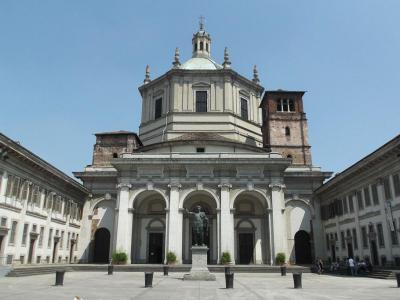
One cannot help but be struck by the seemingly hodgepodge array of towers, lodges, apses and domes that make up this often overlooked architectural landmark. Despite its unconventional appearance, this basilica, established in the 4th century, was actually one of the largest church buildings in all of Europe at the time. The mammoth blocks used for its foundation were taken from other Roman sites, and its interior is uniquely adorned with marble on the lower half and mosaics on the upper.
The chapel, with its octagonal structure, is considered to be one of the most magnificent examples of this style among the remaining Roman octagonal buildings, having played a fundamental role in the history of western art and architecture and having been imitated many times.
A remnant of a Romanesque atrium leads visitors to the heart of the church, where sixteen ancient Roman columns stand guard, now serving as a favorite hangout spot for young couples. The most precious treasures, however, are the fragments of aforementioned mosaics that once adorned the entire structure.
Tip:
Behind the chapel altar you can descend a flight of stairs to view the foundations laid down in Roman times.
The chapel, with its octagonal structure, is considered to be one of the most magnificent examples of this style among the remaining Roman octagonal buildings, having played a fundamental role in the history of western art and architecture and having been imitated many times.
A remnant of a Romanesque atrium leads visitors to the heart of the church, where sixteen ancient Roman columns stand guard, now serving as a favorite hangout spot for young couples. The most precious treasures, however, are the fragments of aforementioned mosaics that once adorned the entire structure.
Tip:
Behind the chapel altar you can descend a flight of stairs to view the foundations laid down in Roman times.
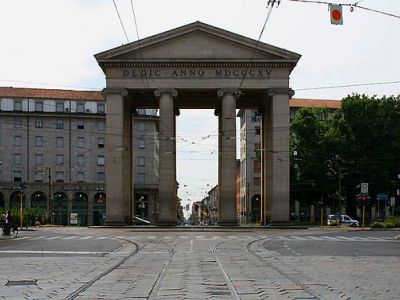
13) Porta Ticinese (Ticinese City Gate)
The Navigli neighborhood is announced by Porta Ticinese (Porta Cicca in Milanese dialect, meaning "small" in Spanish), located on Piazzale XXIV Maggio. This gate was one of the six original main gates of Milan, built as part of the city walls in the 12th century. It was replaced in 1804 by the current monumental arch, designed by Luigi Cagnola in neoclassical style.
Right near the gate stands the Red Oak, classified as one of the Monumental Trees of Lombardy. Dating back to the late 19th century, it was planted on May 24, 1924, to honor the soldiers who died in World War I. An iron stele bears the dedication: "To the fallen for the homeland of the Ticinese-Lodovica district," signed by the Milanese Alpine Society.
Right near the gate stands the Red Oak, classified as one of the Monumental Trees of Lombardy. Dating back to the late 19th century, it was planted on May 24, 1924, to honor the soldiers who died in World War I. An iron stele bears the dedication: "To the fallen for the homeland of the Ticinese-Lodovica district," signed by the Milanese Alpine Society.
