Custom Walk in Glasgow, Scotland by orbonsw_8bae4 created on 2025-06-26
Guide Location: Scotland » Glasgow
Guide Type: Custom Walk
# of Sights: 10
Tour Duration: 6 Hour(s)
Travel Distance: 14.8 Km or 9.2 Miles
Share Key: BQJ76
Guide Type: Custom Walk
# of Sights: 10
Tour Duration: 6 Hour(s)
Travel Distance: 14.8 Km or 9.2 Miles
Share Key: BQJ76
How It Works
Please retrieve this walk in the GPSmyCity app. Once done, the app will guide you from one tour stop to the next as if you had a personal tour guide. If you created the walk on this website or come to the page via a link, please follow the instructions below to retrieve the walk in the app.
Retrieve This Walk in App
Step 1. Download the app "GPSmyCity: Walks in 1K+ Cities" on Apple App Store or Google Play Store.



Step 2. In the GPSmyCity app, download(or launch) the guide "Glasgow Map and Walking Tours".
Step 3. Tap the menu button located at upper right corner of the "Walks" screen and select "Retrieve custom walk". Enter the share key: BQJ76
1) Glasgow City Chambers
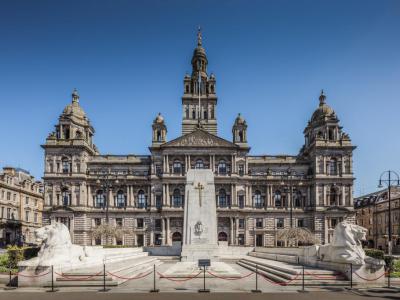
Standing proudly on George Square, the Glasgow City Chambers is one of the city’s most impressive landmarks and a symbol of civic pride. Opened in 1888 by Queen Victoria, the grand building was designed by architect William Young to house the headquarters of Glasgow City Council at the height of the city’s industrial and commercial might. Its imposing façade, blending Victorian and Renaissance Revival styles, reflects the confidence of a city that was then known as the “Second City of the Empire.” Even today, the City Chambers serves as a striking reminder of Glasgow’s past prosperity and civic ambition.
Inside, visitors encounter a series of opulent spaces that rival the interiors of many European palaces. The grand marble staircase, carved from imported Italian stone, rises dramatically through the building and is often considered one of the most beautiful of its kind in the United Kingdom. Ornate mosaics, gilded ceilings, and lavish chandeliers add to the sense of grandeur, while the Council Chambers showcase the city’s long tradition of self-governance. Murals painted by local artists depict scenes from Glasgow’s history, celebrating its transformation from a medieval settlement to a thriving centre of shipbuilding and trade.
For tourists, the City Chambers offers more than just architectural splendor. Guided tours, when available, open up areas not usually accessible to the public, allowing a closer look at the building’s hidden details. Outside, the square itself often bustles with festivals, seasonal markets, and public gatherings, making the Chambers a natural focal point in the city.
Inside, visitors encounter a series of opulent spaces that rival the interiors of many European palaces. The grand marble staircase, carved from imported Italian stone, rises dramatically through the building and is often considered one of the most beautiful of its kind in the United Kingdom. Ornate mosaics, gilded ceilings, and lavish chandeliers add to the sense of grandeur, while the Council Chambers showcase the city’s long tradition of self-governance. Murals painted by local artists depict scenes from Glasgow’s history, celebrating its transformation from a medieval settlement to a thriving centre of shipbuilding and trade.
For tourists, the City Chambers offers more than just architectural splendor. Guided tours, when available, open up areas not usually accessible to the public, allowing a closer look at the building’s hidden details. Outside, the square itself often bustles with festivals, seasonal markets, and public gatherings, making the Chambers a natural focal point in the city.
2) Glasgow School of Art
The Glasgow School of Art, a well-known university in Glasgow, is highly regarded for its extensive programs in architecture, fine art, and design. The school offers a range of educational opportunities, including undergraduate degrees, post-graduate awards, and PhD programs, and has established itself as a significant player in the field of art education.
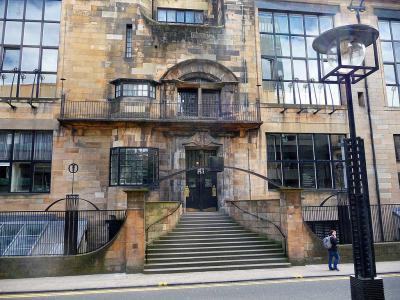
Located strategically in the center of Glasgow, the school occupies multiple buildings in the Garnethill area, particularly around Renfrew Street. This area, initially developed by William Harley of Blythswood Hill in the early 1800s, adds a historical charm to the institution. Among these buildings, the most famous one is the Mackintosh Building, named after its architect, Charles Rennie Mackintosh. Constructed in stages from 1896 to 1909, this building became a well-known landmark in the city and gained international recognition. It embodied the Modern Style, which is a British version of the Art Nouveau movement.
Sadly, the Mackintosh Building suffered significant damage from a fire in May 2014 and was further destroyed by another fire in June 2018, leaving only its burnt remains. Nevertheless, there are plans in progress to rebuild it, staying faithful to Mackintosh's original style and vision.
The school's roots can be traced back to 1845 when it was founded as the Glasgow Government School of Design. It underwent a name change to the Glasgow School of Art in 1853. This rich history and the school's dedication to arts and design education continue to make it a significant institution in Glasgow's cultural scene.
Located strategically in the center of Glasgow, the school occupies multiple buildings in the Garnethill area, particularly around Renfrew Street. This area, initially developed by William Harley of Blythswood Hill in the early 1800s, adds a historical charm to the institution. Among these buildings, the most famous one is the Mackintosh Building, named after its architect, Charles Rennie Mackintosh. Constructed in stages from 1896 to 1909, this building became a well-known landmark in the city and gained international recognition. It embodied the Modern Style, which is a British version of the Art Nouveau movement.
Sadly, the Mackintosh Building suffered significant damage from a fire in May 2014 and was further destroyed by another fire in June 2018, leaving only its burnt remains. Nevertheless, there are plans in progress to rebuild it, staying faithful to Mackintosh's original style and vision.
The school's roots can be traced back to 1845 when it was founded as the Glasgow Government School of Design. It underwent a name change to the Glasgow School of Art in 1853. This rich history and the school's dedication to arts and design education continue to make it a significant institution in Glasgow's cultural scene.
3) Kibble Palace and Glasgow Botanic Gardens (must see)
Glasgow Botanic Gardens, located just off the Great Western Road, was established in 1817 by William Hooker, who later became the director of Kew Gardens in London. This lovely arboretum and public park is managed and maintained by the Royal Botanic Institute of Glasgow.
Within the gardens, you'll find several greenhouses, with the most famous being the Kibble Palace. Inside, visitors can admire rare orchids, various types of begonias, tree ferns, and tropical plants. This expansive greenhouse, covering an area of 2137 square meters, was originally constructed by John Kibble in 1863 as a conservatory on his property near Loch Long. In 1870, it was dismantled and transported up the River Clyde by barge to its current location, where it was reassembled in 1871.
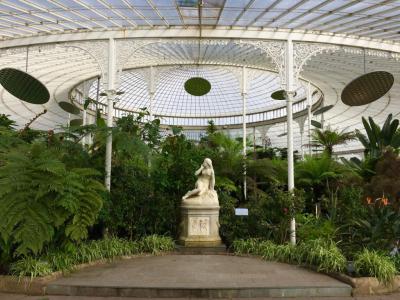
The Kibble Palace is a striking structure made of glass panels set within curved wrought iron frames crafted by Walter MacFarlane. It is supported by ornate columns and sits on cast iron foundations with a stone base. In 2003, the palace underwent extensive and costly restoration work. Since its restoration, it has been open to the public, and during the summer, small concerts are often held in a central area surrounded by an impressive collection of orchids, carnivorous plants, and tree ferns.
In addition to the Kibble Palace, the Hopkirk Building serves as a venue for exhibitions, concerts, and lectures by renowned horticulturists. Workshops and a children's arts and crafts center are also available on the premises. As you explore the grounds, you'll come across a disused railway station that closed down several years ago, which is preserved as an example of such structures.
The gardens themselves are designed with various themes, including a Chronological Garden, a Flower Garden showcasing diverse plant varieties, a Herb Garden, a Rose Garden, and a garden highlighting rare vegetables. Furthermore, the arboretum boasts numerous ancient trees, including a 200-year-old weeping Ash tree.
Within the gardens, you'll find several greenhouses, with the most famous being the Kibble Palace. Inside, visitors can admire rare orchids, various types of begonias, tree ferns, and tropical plants. This expansive greenhouse, covering an area of 2137 square meters, was originally constructed by John Kibble in 1863 as a conservatory on his property near Loch Long. In 1870, it was dismantled and transported up the River Clyde by barge to its current location, where it was reassembled in 1871.
The Kibble Palace is a striking structure made of glass panels set within curved wrought iron frames crafted by Walter MacFarlane. It is supported by ornate columns and sits on cast iron foundations with a stone base. In 2003, the palace underwent extensive and costly restoration work. Since its restoration, it has been open to the public, and during the summer, small concerts are often held in a central area surrounded by an impressive collection of orchids, carnivorous plants, and tree ferns.
In addition to the Kibble Palace, the Hopkirk Building serves as a venue for exhibitions, concerts, and lectures by renowned horticulturists. Workshops and a children's arts and crafts center are also available on the premises. As you explore the grounds, you'll come across a disused railway station that closed down several years ago, which is preserved as an example of such structures.
The gardens themselves are designed with various themes, including a Chronological Garden, a Flower Garden showcasing diverse plant varieties, a Herb Garden, a Rose Garden, and a garden highlighting rare vegetables. Furthermore, the arboretum boasts numerous ancient trees, including a 200-year-old weeping Ash tree.
4) University of Glasgow (must see)
The United Kingdom is home to several prestigious and ancient universities that enjoy global renown. Among these institutions, the University of Glasgow holds a significant position as the fourth oldest in English-speaking countries.
Its establishment can be traced back to 1451 when it received formal recognition through a Papal Bull issued during the papacy of Pope Nicholas V. Subsequently, King James II granted permission to Bishop William Turnbill to integrate the university with the city's cathedral. However, during the Reformation period, both the Mace and the Bull were transported to France. While the Mace eventually found its way back, the fate of the Bull remains uncertain, possibly lost or stolen.
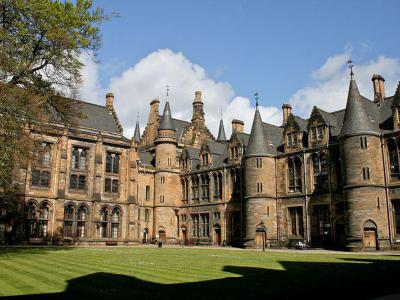
In 1870, Sir George Scott oversaw the construction of the university's main campus on Gilmorehill, adopting a Gothic architectural style and featuring a twin-quadrangle design with an open undercroft. A spire was later added to the bell tower in 1887. The university's various departments are dispersed across different buildings within the city and across the country.
During the 18th century, the University of Glasgow played a central role in the Scottish Enlightenment movement, while in the 19th century, it broadened its admissions, welcoming students beyond the privileged upper classes. Children of merchants enrolled to pursue studies in fields such as law, medicine, education, engineering, science, and theology.
Within the campus, visitors can explore the impressive Hunterian Museum & Gallery, as well as the Mackintosh House, offering enriching cultural experiences.
Its establishment can be traced back to 1451 when it received formal recognition through a Papal Bull issued during the papacy of Pope Nicholas V. Subsequently, King James II granted permission to Bishop William Turnbill to integrate the university with the city's cathedral. However, during the Reformation period, both the Mace and the Bull were transported to France. While the Mace eventually found its way back, the fate of the Bull remains uncertain, possibly lost or stolen.
In 1870, Sir George Scott oversaw the construction of the university's main campus on Gilmorehill, adopting a Gothic architectural style and featuring a twin-quadrangle design with an open undercroft. A spire was later added to the bell tower in 1887. The university's various departments are dispersed across different buildings within the city and across the country.
During the 18th century, the University of Glasgow played a central role in the Scottish Enlightenment movement, while in the 19th century, it broadened its admissions, welcoming students beyond the privileged upper classes. Children of merchants enrolled to pursue studies in fields such as law, medicine, education, engineering, science, and theology.
Within the campus, visitors can explore the impressive Hunterian Museum & Gallery, as well as the Mackintosh House, offering enriching cultural experiences.
5) Kelvingrove Art Gallery & Museum (must see)
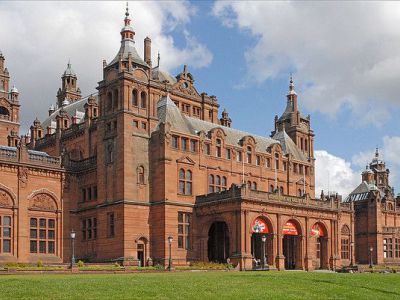
The Kelvingrove Art Gallery & Museum is one of Glasgow’s most beloved landmarks and a highlight for any visitor to Scotland’s largest city. Opened in 1901 and housed in a grand red sandstone building overlooking the River Kelvin, the museum combines architectural splendor with a vast collection that spans centuries of art, history, and natural science. Its distinctive Spanish Baroque style, complete with dramatic spires and ornate detailing, makes the building itself as captivating as the treasures within. Surrounded by the green expanse of Kelvingrove Park, it offers a serene setting that contrasts beautifully with the lively urban energy of the West End.
Inside, the museum’s galleries hold more than 8,000 objects, arranged in a way that is both accessible and engaging. Art enthusiasts can admire works by European masters such as Rembrandt, Van Gogh, and Salvador Dalí-whose haunting Christ of Saint John of the Cross is one of the highlights. The collection also celebrates Scottish talent, featuring pieces by Charles Rennie Mackintosh and the Glasgow Boys, whose innovations helped define the city’s artistic identity at the turn of the 20th century.
The museum goes beyond art to explore natural history and world cultures. Visitors can stand beneath a soaring Spitfire plane suspended from the ceiling, marvel at a life-sized dinosaur skeleton, or come face-to-face with Sir Roger the Elephant, a much-loved exhibit that has delighted generations. Interactive displays ensure that families with children are as engaged as art connoisseurs, making it a museum for everyone.
With free admission, a beautiful riverside setting, and a diverse collection that blends fine art, design, and history, the Kelvingrove Art Gallery & Museum is both an educational and inspiring stop on any Glasgow itinerary.
Inside, the museum’s galleries hold more than 8,000 objects, arranged in a way that is both accessible and engaging. Art enthusiasts can admire works by European masters such as Rembrandt, Van Gogh, and Salvador Dalí-whose haunting Christ of Saint John of the Cross is one of the highlights. The collection also celebrates Scottish talent, featuring pieces by Charles Rennie Mackintosh and the Glasgow Boys, whose innovations helped define the city’s artistic identity at the turn of the 20th century.
The museum goes beyond art to explore natural history and world cultures. Visitors can stand beneath a soaring Spitfire plane suspended from the ceiling, marvel at a life-sized dinosaur skeleton, or come face-to-face with Sir Roger the Elephant, a much-loved exhibit that has delighted generations. Interactive displays ensure that families with children are as engaged as art connoisseurs, making it a museum for everyone.
With free admission, a beautiful riverside setting, and a diverse collection that blends fine art, design, and history, the Kelvingrove Art Gallery & Museum is both an educational and inspiring stop on any Glasgow itinerary.
6) Riverside Museum (The Glasgow Museum of Transport) (must see)
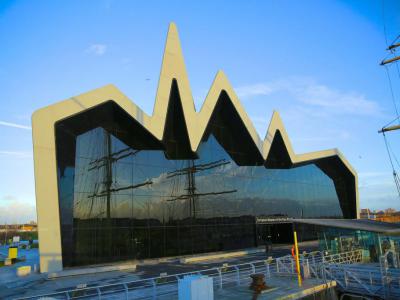
The Riverside Museum is one of Glasgow’s most popular attractions, bringing the city’s industrial and maritime heritage vividly to life. Opened in 2011, the museum is housed in a striking riverside building designed by the late architect Zaha Hadid, whose wave-like structure reflects the fluidity of the River Clyde beside it. The museum replaced the former Transport Museum at Kelvin Hall, creating a modern home for Glasgow’s extensive collection of vehicles, locomotives, and ships that chart the city’s pivotal role in engineering and global trade.
Inside, the museum offers a rich journey through time, with exhibits covering everything from vintage cars and bicycles to massive steam locomotives and trams. One of its most distinctive features is the recreated “Cobbled Street,” where visitors can walk through a life-sized Glasgow street scene from the early 20th century, complete with period shops and signage. Alongside these immersive displays, the collection showcases Glasgow’s history as a hub of shipbuilding, with models and stories highlighting its once-thriving docks and shipyards.
The museum’s interactive displays make it particularly engaging for families, offering touchscreens, hands-on exhibits, and even opportunities to climb aboard certain vehicles. Highlights include the dramatic wall of cars, an impressive vertical display of vintage automobiles, and the inclusion of rare and iconic vehicles such as early fire engines and classic motorcycles. The setting on the Clyde adds to the experience, with the Tall Ship Glenlee permanently moored outside, allowing visitors to step aboard a restored 19th-century sailing vessel.
Together, the Riverside Museum and the Glenlee create a dynamic destination where history, design, and storytelling meet. Interested in engineering, transport history, or simply exploring a visually striking space, visitors will find in the museum a compelling glimpse into Glasgow’s legacy as one of the world’s great industrial cities. It is a place where the past feels tangible, and the city’s innovative spirit continues to shine.
Inside, the museum offers a rich journey through time, with exhibits covering everything from vintage cars and bicycles to massive steam locomotives and trams. One of its most distinctive features is the recreated “Cobbled Street,” where visitors can walk through a life-sized Glasgow street scene from the early 20th century, complete with period shops and signage. Alongside these immersive displays, the collection showcases Glasgow’s history as a hub of shipbuilding, with models and stories highlighting its once-thriving docks and shipyards.
The museum’s interactive displays make it particularly engaging for families, offering touchscreens, hands-on exhibits, and even opportunities to climb aboard certain vehicles. Highlights include the dramatic wall of cars, an impressive vertical display of vintage automobiles, and the inclusion of rare and iconic vehicles such as early fire engines and classic motorcycles. The setting on the Clyde adds to the experience, with the Tall Ship Glenlee permanently moored outside, allowing visitors to step aboard a restored 19th-century sailing vessel.
Together, the Riverside Museum and the Glenlee create a dynamic destination where history, design, and storytelling meet. Interested in engineering, transport history, or simply exploring a visually striking space, visitors will find in the museum a compelling glimpse into Glasgow’s legacy as one of the world’s great industrial cities. It is a place where the past feels tangible, and the city’s innovative spirit continues to shine.
7) Glasgow Science Centre (must see)
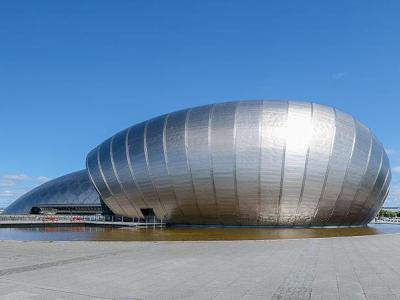
Rising on the banks of the River Clyde, the Glasgow Science Centre is one of the city’s most engaging modern landmarks and a highlight for visitors of all ages. Opened in 2001, the centre occupies a striking titanium-clad building whose futuristic curves reflect Glasgow’s proud tradition of innovation and design. Its mission is to make science accessible, interactive, and fun, drawing families, students, and curious travelers into an environment where learning feels more like play than study.
Inside, the centre is a hands-on playground of discovery. Spread across multiple floors, the interactive galleries invite you to experiment with light, sound, energy, and the human body. The Science Mall is especially popular, with hundreds of exhibits that encourage you to press buttons, pull levers, and dive headfirst into physics and biology. At the heart of the building lies the Glasgow Tower, a 127-metre rotating structure that holds the Guinness World Record as the tallest fully rotating freestanding structure on earth. When the weather permits, visitors can ascend to the observation deck for sweeping views of the city, the River Clyde, and the surrounding hills.
A short walk from the main galleries is the Glasgow Tower and the futuristic Planetarium, where high-definition projections carry audiences across galaxies, plunging them into the mysteries of space. Families especially appreciate the interactive workshops, science shows, and live demonstrations, which bring complex concepts to life with humour and energy. Children can test their reactions, step inside a giant hamster wheel, or explore the “BodyWorks” zone, which reveals the hidden mechanics of the human body.
More than just a museum, the Glasgow Science Centre serves as a cultural hub, with a riverside café, an IMAX cinema screening both documentaries and blockbusters, and special events ranging from late-night science sessions to festivals celebrating technology and innovation. Open most days of the week, it offers an inspiring balance of education and entertainment.
Inside, the centre is a hands-on playground of discovery. Spread across multiple floors, the interactive galleries invite you to experiment with light, sound, energy, and the human body. The Science Mall is especially popular, with hundreds of exhibits that encourage you to press buttons, pull levers, and dive headfirst into physics and biology. At the heart of the building lies the Glasgow Tower, a 127-metre rotating structure that holds the Guinness World Record as the tallest fully rotating freestanding structure on earth. When the weather permits, visitors can ascend to the observation deck for sweeping views of the city, the River Clyde, and the surrounding hills.
A short walk from the main galleries is the Glasgow Tower and the futuristic Planetarium, where high-definition projections carry audiences across galaxies, plunging them into the mysteries of space. Families especially appreciate the interactive workshops, science shows, and live demonstrations, which bring complex concepts to life with humour and energy. Children can test their reactions, step inside a giant hamster wheel, or explore the “BodyWorks” zone, which reveals the hidden mechanics of the human body.
More than just a museum, the Glasgow Science Centre serves as a cultural hub, with a riverside café, an IMAX cinema screening both documentaries and blockbusters, and special events ranging from late-night science sessions to festivals celebrating technology and innovation. Open most days of the week, it offers an inspiring balance of education and entertainment.
8) People's Palace & Winter Gardens (must see)
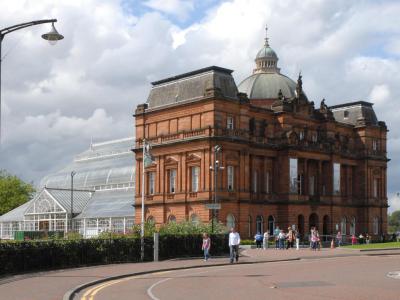
The People’s Palace & Winter Gardens is one of Glasgow’s most distinctive landmarks, combining cultural history with a touch of Victorian elegance. Opened in 1898, the People’s Palace was envisioned as a museum and cultural centre for the city’s working-class citizens, offering them both education and recreation. Set within Glasgow Green-the city’s oldest public park-it has long served as a gathering place where locals could learn about their heritage while enjoying a welcoming civic space. The building’s red sandstone exterior, with its classical lines, reflects the late 19th-century ambition to create a “palace for the people.”
Inside, visitors will find exhibitions that chronicle the story of Glasgow and its people from the 18th century to the present day. Displays cover the social history of the city, with themes ranging from housing and work to leisure and political activism. Personal objects, photographs, and film bring to life the everyday experiences of Glaswegians, painting a vivid portrait of resilience, struggle, and community spirit. Notable exhibits include the recreated tenement interiors, as well as the history of Glasgow’s dance halls, strikes, and campaigns for social reform.
Behind the museum lies the Winter Gardens, a vast glasshouse filled with exotic palms, ferns, and seasonal plants. This light-filled structure provides a peaceful contrast to the busy city, offering a space to stroll among tropical greenery regardless of Scotland’s often unpredictable weather. With its blend of cultural insight and botanical charm, the People’s Palace & Winter Gardens remains a favourite stop for both tourists and locals exploring Glasgow Green.
Inside, visitors will find exhibitions that chronicle the story of Glasgow and its people from the 18th century to the present day. Displays cover the social history of the city, with themes ranging from housing and work to leisure and political activism. Personal objects, photographs, and film bring to life the everyday experiences of Glaswegians, painting a vivid portrait of resilience, struggle, and community spirit. Notable exhibits include the recreated tenement interiors, as well as the history of Glasgow’s dance halls, strikes, and campaigns for social reform.
Behind the museum lies the Winter Gardens, a vast glasshouse filled with exotic palms, ferns, and seasonal plants. This light-filled structure provides a peaceful contrast to the busy city, offering a space to stroll among tropical greenery regardless of Scotland’s often unpredictable weather. With its blend of cultural insight and botanical charm, the People’s Palace & Winter Gardens remains a favourite stop for both tourists and locals exploring Glasgow Green.
9) Glasgow Necropolis (must see)
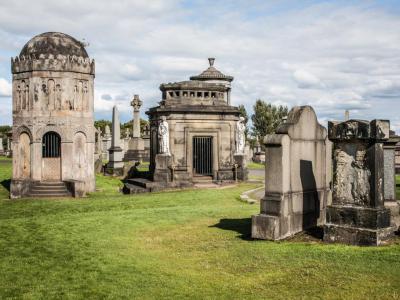
Rising above the city on a low but commanding hill, the Glasgow Necropolis is one of Scotland’s most striking Victorian landmarks. Established in 1833 on the site of a former quarry, this vast garden cemetery was inspired by Paris’s Père Lachaise and soon became a resting place for Glasgow’s elite during the city’s industrial heyday. Over the years, it has grown into a landscape of more than 50,000 memorials, monuments, and tombs, many of them designed by prominent architects and sculptors of the 19th century. For visitors, the Necropolis is both a fascinating historical archive and a serene green space with panoramic views over the city.
The cemetery is often described as a “city of the dead,” with its network of meandering paths, ornate mausoleums, and elaborate Victorian funerary art. Among its most impressive monuments is the towering memorial to John Knox, the fiery Protestant reformer, which dominates the summit of the hill. As you wander through, you’ll encounter intricate Celtic crosses, weeping angels, and finely carved stonework that reflect Glasgow’s artistic and architectural richness. Many of the tombs were designed by leading figures such as Charles Rennie Mackintosh and Alexander “Greek” Thomson, giving the Necropolis the feel of an open-air museum.
Beyond its architecture, the Necropolis tells the story of Glasgow’s rise as a centre of industry and commerce. Shipbuilders, merchants, engineers, and philanthropists are buried here, each memorial carrying a fragment of the city’s social and economic history. Plaques and inscriptions reveal the civic pride and religious fervour that shaped Victorian Glasgow. In this way, a walk among the graves becomes a journey into the city’s past, offering glimpses of the people who built its wealth and culture.
Today, the Necropolis is cherished not only as a historical site but also as a place of reflection and quiet beauty. Its elevated position affords sweeping views across the River Clyde, the spires of Glasgow Cathedral, and the city’s ever-changing skyline.
The cemetery is often described as a “city of the dead,” with its network of meandering paths, ornate mausoleums, and elaborate Victorian funerary art. Among its most impressive monuments is the towering memorial to John Knox, the fiery Protestant reformer, which dominates the summit of the hill. As you wander through, you’ll encounter intricate Celtic crosses, weeping angels, and finely carved stonework that reflect Glasgow’s artistic and architectural richness. Many of the tombs were designed by leading figures such as Charles Rennie Mackintosh and Alexander “Greek” Thomson, giving the Necropolis the feel of an open-air museum.
Beyond its architecture, the Necropolis tells the story of Glasgow’s rise as a centre of industry and commerce. Shipbuilders, merchants, engineers, and philanthropists are buried here, each memorial carrying a fragment of the city’s social and economic history. Plaques and inscriptions reveal the civic pride and religious fervour that shaped Victorian Glasgow. In this way, a walk among the graves becomes a journey into the city’s past, offering glimpses of the people who built its wealth and culture.
Today, the Necropolis is cherished not only as a historical site but also as a place of reflection and quiet beauty. Its elevated position affords sweeping views across the River Clyde, the spires of Glasgow Cathedral, and the city’s ever-changing skyline.
10) Saint Mungo's Cathedral (must see)
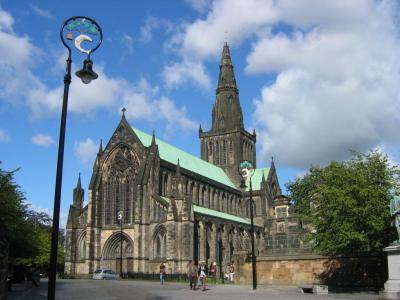
Rising proudly over the city with its striking spire and darkened stone, Saint Mungo’s Cathedral-also known as Glasgow Cathedral or the High Kirk of Glasgow-is one of Scotland’s most remarkable medieval landmarks. Dedicated to the city’s patron saint, Saint Mungo (also called Saint Kentigern), it stands on the very spot where the saint is believed to have built his church in the 6th century. The present structure, begun in the 12th century, is the only mainland Scottish cathedral to have survived the Protestant Reformation intact, making it a rare and atmospheric link to the nation’s medieval past.
Step inside and you’ll find a vast interior filled with soaring stone arches, stained-glass windows that cast jewel-like colors across the nave, and centuries-old carvings that reward close attention. The cathedral’s crowning treasure is the Lower Church, a beautifully preserved medieval crypt that houses the shrine of Saint Mungo himself. This hushed, vaulted space is one of the most evocative sites in Glasgow, where pilgrims and visitors alike pause in quiet reflection.
The upper choir and nave showcase the craftsmanship of medieval masons, with intricately carved stone screens and elaborate vaulted ceilings. Many visitors are struck by the contrast between the building’s austere Gothic exterior and the light filtering through its stained glass, much of which was created in the 19th and 20th centuries, yet harmonizes seamlessly with the ancient fabric.
Surrounded by the atmospheric Glasgow Necropolis and the remains of the medieval hospital of the Bishop’s Castle, Saint Mungo’s Cathedral is more than a church-it is a living monument to Glasgow’s deep historical roots. Drawn by architecture, history, or the desire for quiet contemplation, a visit here reveals a glimpse of the city’s soul and its enduring faith.
Step inside and you’ll find a vast interior filled with soaring stone arches, stained-glass windows that cast jewel-like colors across the nave, and centuries-old carvings that reward close attention. The cathedral’s crowning treasure is the Lower Church, a beautifully preserved medieval crypt that houses the shrine of Saint Mungo himself. This hushed, vaulted space is one of the most evocative sites in Glasgow, where pilgrims and visitors alike pause in quiet reflection.
The upper choir and nave showcase the craftsmanship of medieval masons, with intricately carved stone screens and elaborate vaulted ceilings. Many visitors are struck by the contrast between the building’s austere Gothic exterior and the light filtering through its stained glass, much of which was created in the 19th and 20th centuries, yet harmonizes seamlessly with the ancient fabric.
Surrounded by the atmospheric Glasgow Necropolis and the remains of the medieval hospital of the Bishop’s Castle, Saint Mungo’s Cathedral is more than a church-it is a living monument to Glasgow’s deep historical roots. Drawn by architecture, history, or the desire for quiet contemplation, a visit here reveals a glimpse of the city’s soul and its enduring faith.
