Custom Walk in Hamburg, Germany by luvabletani_22246 created on 2025-07-03
Guide Location: Germany » Hamburg
Guide Type: Custom Walk
# of Sights: 13
Tour Duration: 3 Hour(s)
Travel Distance: 7.1 Km or 4.4 Miles
Share Key: 9F2NW
Guide Type: Custom Walk
# of Sights: 13
Tour Duration: 3 Hour(s)
Travel Distance: 7.1 Km or 4.4 Miles
Share Key: 9F2NW
How It Works
Please retrieve this walk in the GPSmyCity app. Once done, the app will guide you from one tour stop to the next as if you had a personal tour guide. If you created the walk on this website or come to the page via a link, please follow the instructions below to retrieve the walk in the app.
Retrieve This Walk in App
Step 1. Download the app "GPSmyCity: Walks in 1K+ Cities" on Apple App Store or Google Play Store.



Step 2. In the GPSmyCity app, download(or launch) the guide "Hamburg Map and Walking Tours".
Step 3. Tap the menu button located at upper right corner of the "Walks" screen and select "Retrieve custom walk". Enter the share key: 9F2NW
1) The HafenCity
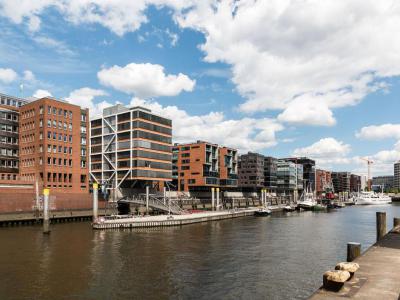
Hamburg’s HafenCity quarter is a redeveloped area of docklands south of the city center. Formerly a part of the Free Port of Hamburg, it was removed from the port’s jurisdiction to allow the area to be redeveloped. The district, in the northern half of the Speicherstadt dockland area, now contains a growing number of new homes, office buildings, and tourist attractions. Covering an area of over 2 square kilometers, it is the largest rebuilding project in Europe. When finished in twenty years, it will house 12,000 people, and host a workforce of 40,000. A new U-Bahn line, the U4, opens this year, providing better transport links with Hamburg city center.
Despite being a relatively new quarter, the HafenCity has plenty to attract the casual tourist. HafenCity has a range of quirky museum attractions, including a model railway and a spice museum on Am Sandtorkai. The jewel of the new area is set to be the Elbe Philharmonic Hall, the flagship concert hall for Hamburg, which is set to open in 2013. Away from the tourist attractions, the city is aiming to develop HafenCity as a sustainable place to live and work. All planning applications are judged on their ecological impact, as well as the quality and originality of the design. The result is a contemporary quarter with a mixture of redeveloped warehouses and eco-friendly, stylish office blocks.
Despite being a relatively new quarter, the HafenCity has plenty to attract the casual tourist. HafenCity has a range of quirky museum attractions, including a model railway and a spice museum on Am Sandtorkai. The jewel of the new area is set to be the Elbe Philharmonic Hall, the flagship concert hall for Hamburg, which is set to open in 2013. Away from the tourist attractions, the city is aiming to develop HafenCity as a sustainable place to live and work. All planning applications are judged on their ecological impact, as well as the quality and originality of the design. The result is a contemporary quarter with a mixture of redeveloped warehouses and eco-friendly, stylish office blocks.
2) Dialog in the Dark
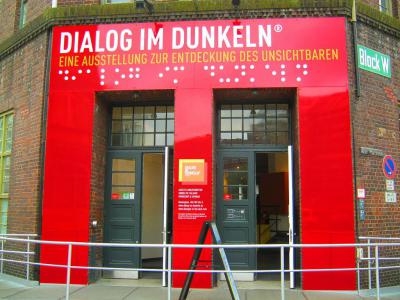
Dialogue in the Dark is an innovative exhibition and social business initiative based in Hamburg. It offers a unique sensory experience led by blind guides, where visitors explore various settings in complete darkness. This concept allows participants to rely on their non-visual senses and gain insight into the world of the visually impaired.
Founded as a social franchising company, Dialogue in the Dark not only provides public exhibitions but also conducts business workshops. These activities serve dual purposes: they help raise awareness about disabilities and promote inclusivity, while also creating employment opportunities for the blind, disabled, and other disadvantaged groups globally. Through these efforts, the exhibition aims to foster a greater understanding and tolerance of "otherness," challenging societal perceptions of disability and diversity.
The initiative has successfully reached over 9 million visitors worldwide and has been instrumental in providing thousands of jobs to blind guides and facilitators. The main objectives of Dialogue in the Dark are twofold: to enhance public awareness and acceptance of diversity, and to transform perceived deficits into potential assets, thereby generating meaningful employment for those who are often marginalized in the workforce.
This groundbreaking exhibition not only alters how visitors perceive disability but also actively contributes to social change by empowering individuals through job creation and professional development in Hamburg and beyond.
Founded as a social franchising company, Dialogue in the Dark not only provides public exhibitions but also conducts business workshops. These activities serve dual purposes: they help raise awareness about disabilities and promote inclusivity, while also creating employment opportunities for the blind, disabled, and other disadvantaged groups globally. Through these efforts, the exhibition aims to foster a greater understanding and tolerance of "otherness," challenging societal perceptions of disability and diversity.
The initiative has successfully reached over 9 million visitors worldwide and has been instrumental in providing thousands of jobs to blind guides and facilitators. The main objectives of Dialogue in the Dark are twofold: to enhance public awareness and acceptance of diversity, and to transform perceived deficits into potential assets, thereby generating meaningful employment for those who are often marginalized in the workforce.
This groundbreaking exhibition not only alters how visitors perceive disability but also actively contributes to social change by empowering individuals through job creation and professional development in Hamburg and beyond.
3) Jungfernstieg (Alster Lake Promenade)
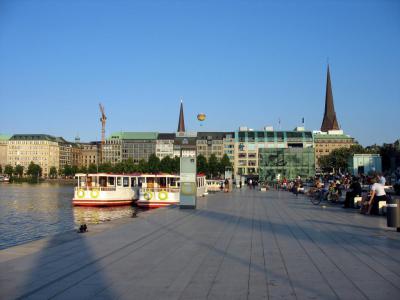
Alster Lake Promenade (Jungfernstieg), located in Hamburg, is a prominent urban promenade renowned for its scenic location and historical significance. Spanning approximately 600 meters, it traces the southern and southwestern shores of the Binnenalster Lake, extending from Ballindamm near the Europa Passage shopping center in the east to Neuer Jungfernstieg in the west. This area transitions smoothly into Gänsemarkt, blending commercial vibrancy with the tranquility of the lakeside.
Originally developed in 1235 when Count Adolph IV of Holstein established a mill dam on the Alster River, the Alster Lake Promenade area evolved from a practical mill site into a refined boulevard by the 17th and 18th centuries. Known for social gatherings and as a meeting place for matchmaking among the Hanseaten, it was historically the heart of social life in Hamburg. The promenade witnessed several significant developments through the centuries, including the laying of Germany's first asphalt street in 1838, and the introduction of horse-drawn and later electric trams.
Today, Alster Lake Promenade is more than just a historic site. The lakeside terrace offers panoramic views of the Binnenalster and its fountain, creating a popular spot for both residents and tourists. It features two pavilions: the Alsterpavillion, which serves as a café, and a smaller pavilion that leads to the rapid transit station. This area is also a central hub for the Alster ferries.
The promenade intersects with various streets leading to major shopping areas like Neuer Wall and Große Bleichen, though it is not primarily known as a shopping street. Nevertheless, Alster Lake Promenade provides access to large shopping malls, art galleries, and high-end shops, making it a significant commercial and cultural node in Hamburg.
Originally developed in 1235 when Count Adolph IV of Holstein established a mill dam on the Alster River, the Alster Lake Promenade area evolved from a practical mill site into a refined boulevard by the 17th and 18th centuries. Known for social gatherings and as a meeting place for matchmaking among the Hanseaten, it was historically the heart of social life in Hamburg. The promenade witnessed several significant developments through the centuries, including the laying of Germany's first asphalt street in 1838, and the introduction of horse-drawn and later electric trams.
Today, Alster Lake Promenade is more than just a historic site. The lakeside terrace offers panoramic views of the Binnenalster and its fountain, creating a popular spot for both residents and tourists. It features two pavilions: the Alsterpavillion, which serves as a café, and a smaller pavilion that leads to the rapid transit station. This area is also a central hub for the Alster ferries.
The promenade intersects with various streets leading to major shopping areas like Neuer Wall and Große Bleichen, though it is not primarily known as a shopping street. Nevertheless, Alster Lake Promenade provides access to large shopping malls, art galleries, and high-end shops, making it a significant commercial and cultural node in Hamburg.
4) Alsterarkaden (Alster Arcade)
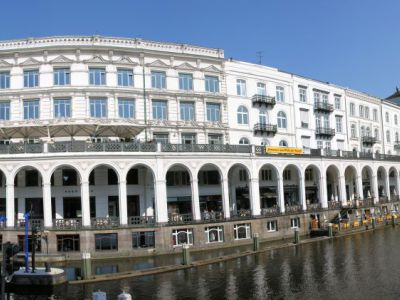
Alster Arcade (Alsterarkaden) in Hamburg is a picturesque shopping destination that combines architectural elegance with the serene ambiance of Hamburg's waterways. Designed by Alexis de Chateauneuf, a pioneering urban planner, the arcade was built in 1846 as part of the city's reconstruction following the Great Fire of 1842. The Alster Arcade, with its bright white arches reminiscent of Venice, offers a stunning reflection in the waters of the Inner Alster Lake, particularly enchanting at dusk when the city lights twinkle on the water.
The arcade's design features curved arches and Mediterranean charm, reflecting Chateauneuf's inspiration from his travels to Italy. This design not only revitalized the Jungfernstieg waterfront but also established an exclusive area for shopping, dining, and socializing amidst grandeur. The covered walkways provide shade and shelter, allowing for year-round enjoyment of the area, whether for a stroll or relaxing at one of the charming cafes along the canal.
Shopping at the Alster Arcade is a luxury experience with designer boutiques, exclusive jewelry stores, and high-end dining options. The Mellin Passage, the oldest shopping arcade in Hamburg connected to the Alster Arcade, offers unique finds such as antiques, rare books, and exquisite porcelain. Notably, a fire in 1989 led to the discovery of hidden Art Nouveau frescoes and stained glass in one of the Mellin Passage shops, adding an element of historical intrigue to the arcade.
The Alster Arcade is also home to cultural symbols like the white and black swans gliding across the Inner Alster Lake, a sight that holds significant cultural importance in Hamburg. The presence of these swans is intertwined with the city's identity, symbolizing Hamburg's enduring freedom and status as a Hanseatic city.
The arcade's design features curved arches and Mediterranean charm, reflecting Chateauneuf's inspiration from his travels to Italy. This design not only revitalized the Jungfernstieg waterfront but also established an exclusive area for shopping, dining, and socializing amidst grandeur. The covered walkways provide shade and shelter, allowing for year-round enjoyment of the area, whether for a stroll or relaxing at one of the charming cafes along the canal.
Shopping at the Alster Arcade is a luxury experience with designer boutiques, exclusive jewelry stores, and high-end dining options. The Mellin Passage, the oldest shopping arcade in Hamburg connected to the Alster Arcade, offers unique finds such as antiques, rare books, and exquisite porcelain. Notably, a fire in 1989 led to the discovery of hidden Art Nouveau frescoes and stained glass in one of the Mellin Passage shops, adding an element of historical intrigue to the arcade.
The Alster Arcade is also home to cultural symbols like the white and black swans gliding across the Inner Alster Lake, a sight that holds significant cultural importance in Hamburg. The presence of these swans is intertwined with the city's identity, symbolizing Hamburg's enduring freedom and status as a Hanseatic city.
5) Heiligengeistbrucke (Holy Spirit Bridge)
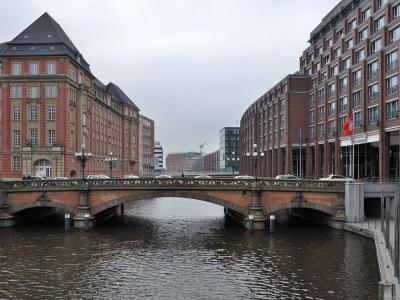
The Holy Spirit Bridge (Heiligengeistbrücke) is a significant bridge located in Hamburg. It spans the Alsterfleet, one of the canals that is part of Hamburg's extensive network of waterways, which links the Inner Alster (Binnenalster) to the Elbe River. This bridge holds both historical and functional importance in the cityscape of Hamburg.
The name "Heiligengeistbrücke" is derived from the nearby Holy Spirit Hospital, which was one of the oldest social institutions in Hamburg, dating back to the Middle Ages. This connection to the hospital, which traditionally cared for the elderly and the sick, adds a layer of historical significance to the bridge.
Structurally, the Holy Spirit Bridge has been reconstructed and modernized over the years to accommodate the growing urban needs of Hamburg. The bridge today not only serves as a vital pedestrian and vehicular route but also as a scenic viewpoint for both locals and tourists. Its location provides picturesque views of the Alsterfleet and is a popular spot for photography, particularly because of the surrounding architectural beauty and the bustling activity of the city.
Furthermore, the Holy Spirit Bridge is strategically important for traffic management and urban connectivity in Hamburg. It helps in managing the flow between central Hamburg and other parts of the city, easing both local and tourist navigation.
Culturally, the bridge and its vicinity are often involved in city events, including festivals and seasonal markets, which utilize the charm and accessibility of the location. Its proximity to major commercial areas and cultural landmarks in Hamburg makes it a frequently visited spot, contributing to the vibrant urban life of the city.
The name "Heiligengeistbrücke" is derived from the nearby Holy Spirit Hospital, which was one of the oldest social institutions in Hamburg, dating back to the Middle Ages. This connection to the hospital, which traditionally cared for the elderly and the sick, adds a layer of historical significance to the bridge.
Structurally, the Holy Spirit Bridge has been reconstructed and modernized over the years to accommodate the growing urban needs of Hamburg. The bridge today not only serves as a vital pedestrian and vehicular route but also as a scenic viewpoint for both locals and tourists. Its location provides picturesque views of the Alsterfleet and is a popular spot for photography, particularly because of the surrounding architectural beauty and the bustling activity of the city.
Furthermore, the Holy Spirit Bridge is strategically important for traffic management and urban connectivity in Hamburg. It helps in managing the flow between central Hamburg and other parts of the city, easing both local and tourist navigation.
Culturally, the bridge and its vicinity are often involved in city events, including festivals and seasonal markets, which utilize the charm and accessibility of the location. Its proximity to major commercial areas and cultural landmarks in Hamburg makes it a frequently visited spot, contributing to the vibrant urban life of the city.
6) Trostbrucke (Trost Bridge)
The Trost Bridge (Trostbrücke) in Hamburg is a historic emblem bridging the city's past with its maritime prominence. Located southwest of Hamburg's city center, this stone bridge spans the Nikolaifleet-a narrow inlet linking the docklands to the River Elbe. Notably, the Trost Bridge historically demarcated the divide between Hamburg’s old town (Altstadt) and the newly established areas (Neustadt).
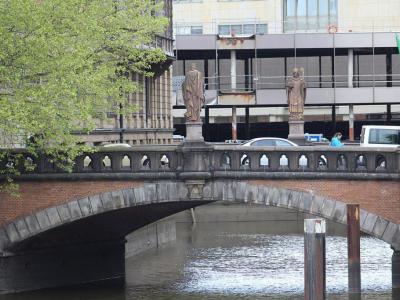
The bridge's construction, completed in 1881, corresponds with a period of economic prosperity driven by Hamburg's bustling maritime trade. Designed with a single arch, the Trost Bridge is adorned with two significant statues, placed centrally and facing each other across the bridge. These figures commemorate the pivotal founders of Hamburg: Bishop Ansgar, who established the cathedral in the Altstadt, and Count Adolf III von Schauenburg, responsible for the development of the Neustadt, catering to the needs of merchants during the city's trading zenith.
The name "Trostbrücke," translating to "comfort bridge," holds a poignant backstory. Although the origin of the name remains speculative, it is believed to reflect the bridge's location on the route criminals took to the courthouse. For many, the serene view of the river from the bridge offered a final moment of solace before facing severe punishments, potentially even execution.
Today, the Trost Bridge stands not only as a functional piece of infrastructure but also as a monument to Hamburg's historical layers and its evolution from a medieval trading center to a modern port city.
The bridge's construction, completed in 1881, corresponds with a period of economic prosperity driven by Hamburg's bustling maritime trade. Designed with a single arch, the Trost Bridge is adorned with two significant statues, placed centrally and facing each other across the bridge. These figures commemorate the pivotal founders of Hamburg: Bishop Ansgar, who established the cathedral in the Altstadt, and Count Adolf III von Schauenburg, responsible for the development of the Neustadt, catering to the needs of merchants during the city's trading zenith.
The name "Trostbrücke," translating to "comfort bridge," holds a poignant backstory. Although the origin of the name remains speculative, it is believed to reflect the bridge's location on the route criminals took to the courthouse. For many, the serene view of the river from the bridge offered a final moment of solace before facing severe punishments, potentially even execution.
Today, the Trost Bridge stands not only as a functional piece of infrastructure but also as a monument to Hamburg's historical layers and its evolution from a medieval trading center to a modern port city.
7) Church of St. Nicholas
The Church of Saint Nicolas was originally built in 1195. A brick building replaced the wooden structure during the 14th century.
The Church of Saint Nicholas was the center of many theological debates during the Reformation. Conservative council members were concerned about the new wave of Lutheran ministers; however, the Reformation in Hamburg was peaceful. Johannes Bugenhagen, a Lutheran minister, became Saint Nicholas's preacher in 1528.
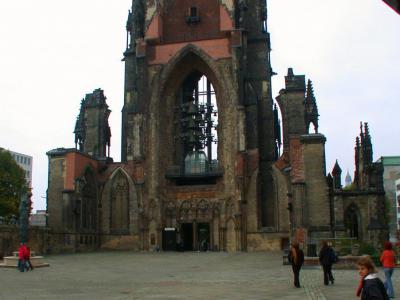
The Church of Saint Nicolas was one of the first public buildings to burn in Hamburg's catastrophic 1842 Great Fire. After the fire, the church was rebuilt in Neo-Gothic style. From 1874 to 1876, the rebuilt church with its 147-meter-high (483-foot) tower was the tallest building in the world.
Unfortunately, World War II bombs weakened the church's structure. Hamburg decided to demolish most of the church instead of attempting reconstruction. Today, the crypt and spired tower remain. An elevator was installed in 2005 and takes visitors to a 75-meter-tall (247-foot) viewing platform. The platform overlooks Hamburg's city center, the Alster lakes, and the port.
Guests can visit the WWII museum in the church's crypt. The museum offers different interactive displays that show the war's destruction and reconstruction.
The Church of Saint Nicholas was the center of many theological debates during the Reformation. Conservative council members were concerned about the new wave of Lutheran ministers; however, the Reformation in Hamburg was peaceful. Johannes Bugenhagen, a Lutheran minister, became Saint Nicholas's preacher in 1528.
The Church of Saint Nicolas was one of the first public buildings to burn in Hamburg's catastrophic 1842 Great Fire. After the fire, the church was rebuilt in Neo-Gothic style. From 1874 to 1876, the rebuilt church with its 147-meter-high (483-foot) tower was the tallest building in the world.
Unfortunately, World War II bombs weakened the church's structure. Hamburg decided to demolish most of the church instead of attempting reconstruction. Today, the crypt and spired tower remain. An elevator was installed in 2005 and takes visitors to a 75-meter-tall (247-foot) viewing platform. The platform overlooks Hamburg's city center, the Alster lakes, and the port.
Guests can visit the WWII museum in the church's crypt. The museum offers different interactive displays that show the war's destruction and reconstruction.
8) Das Schiff (The Ship)
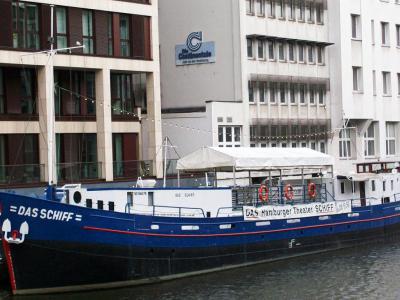
The Ship (Das Schiff) stands as a singular cultural landmark in Hamburg, noted for being the only seaworthy vessel theatre in Europe. Moored amidst the city's historical and modern landmarks near Deichstrasse, Hamburg City Hall, and HafenCity, this unique floating theatre was conceived by Eberhard Moebius and transformed by his wife Christa into a theatrical space in October 1975. Originally an ocean-going ship, it measures 32 meters in length with a draft of 1.2 meters.
This 120-seat theatre offers an intimate setting where no seat is more than seven meters away from the stage, allowing for a close connection between the audience and performers. The programming is diverse, featuring cabaret, literature, music, and theatre performed at the highest level. This array of entertainment makes "The Ship" an appealing alternative to the more mainstream attractions of the nearby Reeperbahn.
Over the years, "The Ship" has hosted an array of notable artists including Gert Frobe, Heinz Reincke, Helmut Qualtinger, and Senta Berger. The venue continues to attract a blend of local talents and international stars like Sir Peter Ustinov and Monika Bleibtreu, enhancing its reputation across Germany and beyond. Its itineraries have included voyages to events like the Kieler Woche, and ports in Bremerhaven, Helgoland, and other locations around Hamburg.
The intimate and familial atmosphere aboard "The Ship" guarantees an unforgettable theatrical experience, maintaining its status as a staple of Hamburg's cultural, comedy, and cabaret scene.
This 120-seat theatre offers an intimate setting where no seat is more than seven meters away from the stage, allowing for a close connection between the audience and performers. The programming is diverse, featuring cabaret, literature, music, and theatre performed at the highest level. This array of entertainment makes "The Ship" an appealing alternative to the more mainstream attractions of the nearby Reeperbahn.
Over the years, "The Ship" has hosted an array of notable artists including Gert Frobe, Heinz Reincke, Helmut Qualtinger, and Senta Berger. The venue continues to attract a blend of local talents and international stars like Sir Peter Ustinov and Monika Bleibtreu, enhancing its reputation across Germany and beyond. Its itineraries have included voyages to events like the Kieler Woche, and ports in Bremerhaven, Helgoland, and other locations around Hamburg.
The intimate and familial atmosphere aboard "The Ship" guarantees an unforgettable theatrical experience, maintaining its status as a staple of Hamburg's cultural, comedy, and cabaret scene.
9) Speicherstadt (Warehouse District) (must see)
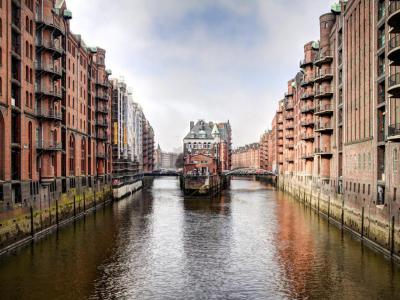
Hamburg's Warehouse District is one of the most impressive warehouse districts in the world where the buildings stand on timber-pile foundations. The warehouses were built between 1883 and 1927 as a customs-free zone. The site is a UNESCO World Heritage Site.
The warehouses were built directly into the Elbe waterway, allowing for waterside access and easy ship unloading and loading. Waterways between the buildings act as canals.
The warehouse's facades are Neo-Gothic and feature red brick with towers, alcoves, and ornaments. The warehouses are each seven or eight stories tall and have landside and waterside entrances. Today, the warehouses are used as warehouses, museums, and home to the Minature Wonderland.
Visitors should check out the water castle on Dutch Bridge for a popular photo spot. Café Fleetschlösschen offers another scenic vista and cafe. The Warehouse District is beautiful at dusk as the lights come on and reflect in the canals.
The warehouses were built directly into the Elbe waterway, allowing for waterside access and easy ship unloading and loading. Waterways between the buildings act as canals.
The warehouse's facades are Neo-Gothic and feature red brick with towers, alcoves, and ornaments. The warehouses are each seven or eight stories tall and have landside and waterside entrances. Today, the warehouses are used as warehouses, museums, and home to the Minature Wonderland.
Visitors should check out the water castle on Dutch Bridge for a popular photo spot. Café Fleetschlösschen offers another scenic vista and cafe. The Warehouse District is beautiful at dusk as the lights come on and reflect in the canals.
10) Überseebrücke (Oversea Bridge)
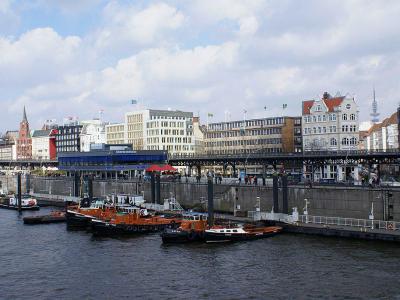
Oversea Bridge (Überseebrücke) stands as a prominent landmark in Hamburg, rich in both history and architectural allure. Originally constructed in 1930 by the Hamburg Süd shipping company, it served as a vital pier for cruise liners and ferries, particularly for routes to England. The bridge's strategic location in the Port of Hamburg, just east of Saint Pauli Landungsbrücke, made it a pivotal point for overseas travel.
The bridge, initially built as a covered pedestrian walkway leading from Vorsetzen to a pontoon in the Elbe River’s Niederhafen, was rebuilt between 1957 and 1968 after its destruction during World War II. Its contemporary use diverges from its original purpose; it now primarily functions as a picturesque pathway leading to the Cap San Diego museum ship. The Cap San Diego, a former cargo ship launched in 1961 and now a museum, adds to the historical depth and touristic appeal of the Überseebrücke.
In addition to its historical significance, Oversea Bridge is appreciated for its architectural beauty, which blends modern and classical elements seamlessly. The bridge, a scenic spot within Hamburg’s harbor area, offers splendid views of the adjacent Inner Alster Lake, flanked by 19th-century high-rise buildings and the modern developments of the Harbor City district in Hafen City.
Today, although the grand era of opulent cruise ships at Oversea Bridge has passed, the bridge continues to attract visitors. It supports smaller cruise ships and serves as a permanent berth for the Cap San Diego, contributing to its status as an integral part of Hamburg’s maritime heritage.
The bridge, initially built as a covered pedestrian walkway leading from Vorsetzen to a pontoon in the Elbe River’s Niederhafen, was rebuilt between 1957 and 1968 after its destruction during World War II. Its contemporary use diverges from its original purpose; it now primarily functions as a picturesque pathway leading to the Cap San Diego museum ship. The Cap San Diego, a former cargo ship launched in 1961 and now a museum, adds to the historical depth and touristic appeal of the Überseebrücke.
In addition to its historical significance, Oversea Bridge is appreciated for its architectural beauty, which blends modern and classical elements seamlessly. The bridge, a scenic spot within Hamburg’s harbor area, offers splendid views of the adjacent Inner Alster Lake, flanked by 19th-century high-rise buildings and the modern developments of the Harbor City district in Hafen City.
Today, although the grand era of opulent cruise ships at Oversea Bridge has passed, the bridge continues to attract visitors. It supports smaller cruise ships and serves as a permanent berth for the Cap San Diego, contributing to its status as an integral part of Hamburg’s maritime heritage.
11) Kersten-Miles Bridge
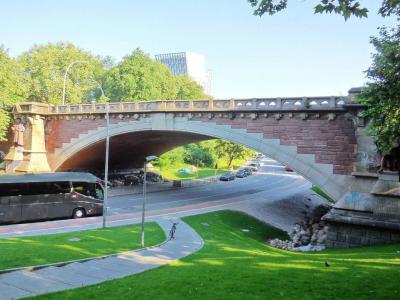
The Kersten-Miles Bridge, situated in Hamburg's Neustadt and Saint Pauli districts, is a historically significant structure with both cultural and military importance. Named after Kersten Miles, a former mayor of Hamburg, the bridge was constructed between 1895 and 1897 and stretches approximately 90 meters in length and 20 meters in width. It serves as a crucial connection across the two-lane Seewarten Street, linking Bernhard-Nocht-Strasse and Helgoländer Avenue to the junction of Neumayer Street and Venusberg.
Architecturally notable, the bridge supports sidewalks on both sides and is adorned with statues of prominent Hamburg historical figures such as Kersten Miles, Simon von Utrecht, Berend Jacob Karpfanger, and Ditmar Koel. These statues were crafted by renowned artists of the era-Carl Boerner, Carl Garbers, Wilhelm Giesecke, and Robert Ockelmann, respectively. In addition to its decorative elements, in 2014, intricate mosaics featuring tendril ornaments were discovered beneath the bridge, adding to its aesthetic and historical value.
Functionally, the Kersten-Miles Bridge has played a vital role beyond mere transportation. It served as a strategic observatory for naval activities, significantly contributing to military training and operations in Germany. This dual role of both a cultural monument and a military strategic point underscores its significance in Hamburg's heritage, making it an essential landmark in the study of German history and urban development.
Architecturally notable, the bridge supports sidewalks on both sides and is adorned with statues of prominent Hamburg historical figures such as Kersten Miles, Simon von Utrecht, Berend Jacob Karpfanger, and Ditmar Koel. These statues were crafted by renowned artists of the era-Carl Boerner, Carl Garbers, Wilhelm Giesecke, and Robert Ockelmann, respectively. In addition to its decorative elements, in 2014, intricate mosaics featuring tendril ornaments were discovered beneath the bridge, adding to its aesthetic and historical value.
Functionally, the Kersten-Miles Bridge has played a vital role beyond mere transportation. It served as a strategic observatory for naval activities, significantly contributing to military training and operations in Germany. This dual role of both a cultural monument and a military strategic point underscores its significance in Hamburg's heritage, making it an essential landmark in the study of German history and urban development.
12) Beatles-Platz (Beatles Square)
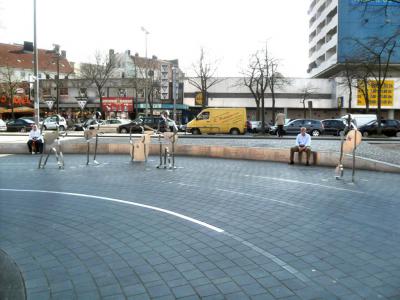
Beatles Square is a plaza that commemorates the Beatle's connection to Hamburg. The plaza is circular and represents a vinyl record. Statues represent John Lennon, Paul McCartney, Stuart Sutcliffe, and George Harrison. In addition, a hybrid statue represents Pete Best and Ringo Starr, who each played with The Beatles in Hamburg.
In the early 1960s, The Beatles spent two years playing in Hamburg's small musical venues. The Beatles had few opportunities to play in their Liverpool hometown but were given an official invitation to play in clubs in Hamburg.
These venues served as a springboard to the Beatle's international stardom. The Beatles played their first show on August 17, 1960, at the Indra club. Pete Best, John Lennon, Paul McCartney, George Harrison, and Stuart Sutcliffe performed using the band name "Silver Beatles."
The Beatles made their first recording, "My Bonnie", in Hamburg. The Beatles often stayed in apartments and rooms above the venues they played in. The band members racked up debt at various Hamburg bars, and police detained them for being a public nuisance.
The Beatles would play for seven hours at a time during the week and eight hours at a time on the weekends. They spent endless hours rehearsing, and band members count the Hamburg years as essential to their development.
In the early 1960s, The Beatles spent two years playing in Hamburg's small musical venues. The Beatles had few opportunities to play in their Liverpool hometown but were given an official invitation to play in clubs in Hamburg.
These venues served as a springboard to the Beatle's international stardom. The Beatles played their first show on August 17, 1960, at the Indra club. Pete Best, John Lennon, Paul McCartney, George Harrison, and Stuart Sutcliffe performed using the band name "Silver Beatles."
The Beatles made their first recording, "My Bonnie", in Hamburg. The Beatles often stayed in apartments and rooms above the venues they played in. The band members racked up debt at various Hamburg bars, and police detained them for being a public nuisance.
The Beatles would play for seven hours at a time during the week and eight hours at a time on the weekends. They spent endless hours rehearsing, and band members count the Hamburg years as essential to their development.
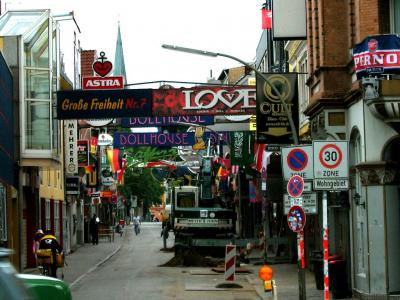
13) Große Freiheit (Great Freedom Street)
On Great Freedom Street, visitors can experience erotic and explicit theater. Bestiality is forbidden. However, any other form of sexual expression is on display in these unique theaters.
In 1612, a special district was formed with two streets named Big Freedom and Small Freedom. Craftsmen could pay an annual fee to ply their trade, whether or not they were members of their guilds. The streets were, therefore, a special economic zone. In addition, freedoms, including religious freedoms, were granted.
The street gained popularity as a street of frivolity in the 1940s. During the 1960s, The Beatles began their career playing at different clubs on the street, such as Indra, Kaiserkeller, and Starclub.
Today, Great Freedom Street remains popular with locals and visitors alike. Many bachelor and bachelorette parties are held on the street. In addition, the Dollhouse striptease bar is very popular. Olivia Jones, Germany's most famous drag queen, is the star of the Olivia Jones Bar. Burlesque bars and male strippers also make their home on Great Freedom Street.
In 1612, a special district was formed with two streets named Big Freedom and Small Freedom. Craftsmen could pay an annual fee to ply their trade, whether or not they were members of their guilds. The streets were, therefore, a special economic zone. In addition, freedoms, including religious freedoms, were granted.
The street gained popularity as a street of frivolity in the 1940s. During the 1960s, The Beatles began their career playing at different clubs on the street, such as Indra, Kaiserkeller, and Starclub.
Today, Great Freedom Street remains popular with locals and visitors alike. Many bachelor and bachelorette parties are held on the street. In addition, the Dollhouse striptease bar is very popular. Olivia Jones, Germany's most famous drag queen, is the star of the Olivia Jones Bar. Burlesque bars and male strippers also make their home on Great Freedom Street.
