Custom Walk in Liverpool, England by pzsls_6f245 created on 2025-07-29
Guide Location: England » Liverpool
Guide Type: Custom Walk
# of Sights: 5
Tour Duration: 1 Hour(s)
Travel Distance: 1.7 Km or 1.1 Miles
Share Key: CTUJQ
Guide Type: Custom Walk
# of Sights: 5
Tour Duration: 1 Hour(s)
Travel Distance: 1.7 Km or 1.1 Miles
Share Key: CTUJQ
How It Works
Please retrieve this walk in the GPSmyCity app. Once done, the app will guide you from one tour stop to the next as if you had a personal tour guide. If you created the walk on this website or come to the page via a link, please follow the instructions below to retrieve the walk in the app.
Retrieve This Walk in App
Step 1. Download the app "GPSmyCity: Walks in 1K+ Cities" on Apple App Store or Google Play Store.



Step 2. In the GPSmyCity app, download(or launch) the guide "Liverpool Map and Walking Tours".
Step 3. Tap the menu button located at upper right corner of the "Walks" screen and select "Retrieve custom walk". Enter the share key: CTUJQ
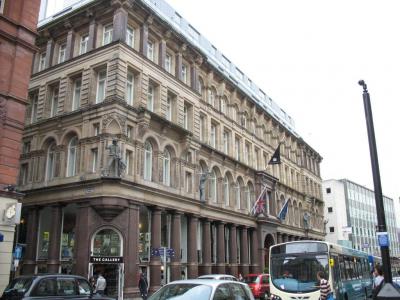
1) Hard Days Night (Beatles-themed Hotel)
The Hard Days Night Hotel on North John Street in Liverpool is a one-of-a-kind, four-star Beatles-themed hotel, offering a luxurious and immersive homage to the Fab Four. Opened in February 2008 during Liverpool’s tenure as the European Capital of Culture, the hotel is housed in the stunning, Grade II listed Central Buildings, originally designed by Thomas C. Clarke in 1884. This meticulously restored property combines historic elegance with a playful celebration of Beatles history.
Boasting 110 individually designed rooms, the hotel integrates Beatles-inspired artwork and memorabilia into every corner. Among its highlights are the exclusive McCartney and Lennon Suites, offering fans a touch of Beatles magic with unparalleled comfort. The walls of the hotel showcase commissioned pieces, exclusive photographs, and even a Yellow Submarine jukebox in the lobby.
The hotel’s facilities include several stylish dining and relaxation venues such as Blakes Restaurant, Bar Four, The Lounge & Bar, and the Live Lounge, where guests can indulge in gourmet meals or cocktails while soaking up the Beatles-inspired ambiance. For an extra touch of nostalgia, don’t miss Hari’s Bar, which features unique Ringo Starr memorabilia and photography.
Situated in the heart of Liverpool’s iconic Beatles Quarter, the hotel is adjacent to the world-famous Cavern Club, the launching pad of the Beatles’ global fame. Guests are also within walking distance of other key landmarks that pay tribute to the band’s legacy. Whether you’re an ardent Beatles enthusiast or simply seeking a luxurious cultural getaway, the Hard Days Night Hotel offers an unforgettable experience steeped in music, history, and charm.
Boasting 110 individually designed rooms, the hotel integrates Beatles-inspired artwork and memorabilia into every corner. Among its highlights are the exclusive McCartney and Lennon Suites, offering fans a touch of Beatles magic with unparalleled comfort. The walls of the hotel showcase commissioned pieces, exclusive photographs, and even a Yellow Submarine jukebox in the lobby.
The hotel’s facilities include several stylish dining and relaxation venues such as Blakes Restaurant, Bar Four, The Lounge & Bar, and the Live Lounge, where guests can indulge in gourmet meals or cocktails while soaking up the Beatles-inspired ambiance. For an extra touch of nostalgia, don’t miss Hari’s Bar, which features unique Ringo Starr memorabilia and photography.
Situated in the heart of Liverpool’s iconic Beatles Quarter, the hotel is adjacent to the world-famous Cavern Club, the launching pad of the Beatles’ global fame. Guests are also within walking distance of other key landmarks that pay tribute to the band’s legacy. Whether you’re an ardent Beatles enthusiast or simply seeking a luxurious cultural getaway, the Hard Days Night Hotel offers an unforgettable experience steeped in music, history, and charm.
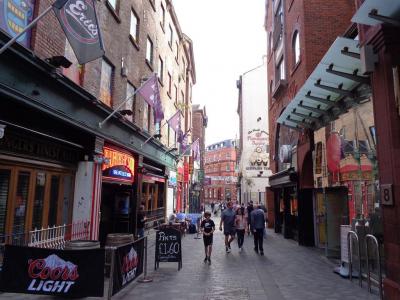
2) Mathew Street (must see)
Mathew Street is an unassuming side road in Liverpool city centre that houses a world famous musical attraction – the Cavern Club, the city’s most famous music venue and a place forever associated with the Beatles. The Liverpudlian four piece, considered by many to be the world’s greatest ever band, played at the venue several times in their early years. As a result, the street is visited by thousands of tourists each year, and is the centre of the Cavern Quarter, a bohemian area of arcades filled with must see attractions for Beatles fans.
In addition to the Cavern Club, which is still a hugely popular night-time venue, the street hosts a music festival each August. The largest free festival in Europe, the Mathew Street Festival plays host to dozens of tribute bands – with a Beatles act usually headlining. The street is also notable for the Grapes pub, often frequented by the Fab Four, and an unusual statue by Arthur Dooley, depicting the four band members in a religious pose. The statue, built into the wall on Mathew Street, bears the inscription ‘Four Lads who Shook the World’. The street was also believed to be visited by renowned philosopher Carl Jung; a plaster statue of the great Swiss thinker also stands on the street.
In addition to the Cavern Club, which is still a hugely popular night-time venue, the street hosts a music festival each August. The largest free festival in Europe, the Mathew Street Festival plays host to dozens of tribute bands – with a Beatles act usually headlining. The street is also notable for the Grapes pub, often frequented by the Fab Four, and an unusual statue by Arthur Dooley, depicting the four band members in a religious pose. The statue, built into the wall on Mathew Street, bears the inscription ‘Four Lads who Shook the World’. The street was also believed to be visited by renowned philosopher Carl Jung; a plaster statue of the great Swiss thinker also stands on the street.
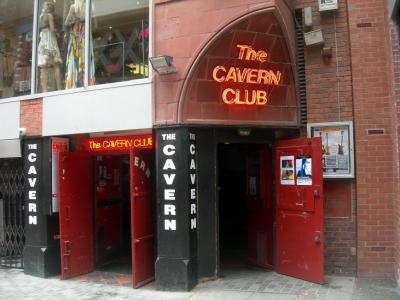
3) The Cavern Club (must see)
Opened on 16 January 1957 as a jazz club and later becoming a center of Liverpool's rock-and-roll scene in the early 1960s, the Cavern Club became closely associated with the Merseybeat music genre and, famously, regularly played host to The Beatles in their early years, initially as part of the weekday "beat sessions" at lunchtime.
The Beatles made their first appearance at the club after returning to Liverpool from Hamburg, Germany where they had been playing at the Indra and the Kaiserkeller clubs. There and then, on Tuesday, February 9, 1961, they were signed up as the club's resident lunchtime group, working in alternation with Gerry and the Pacemakers. Narrow, cobbled, uneventful Mathew Street thus began to lead an unexpected new life in daylight hours. At noon, Mondays to Fridays, a four-abreast line would begin to form at the Cavern's hatchlike entrance, growing by the minute until it stretched back past the warehouses and delivery trucks and piled-up fruit crates, eighty-odd yards to the junction with Whitechapel. Inside, there was no "security" whatsoever, and no alcohol was sold either at lunchtimes or at night, only coffee and soft drinks.
From 1961 to 1963, the Beatles made 292 appearances at The Cavern. By summer of 1963, "Beatlemania" was sprouting across England, and with girls demanding to see the Beatles and screaming just to get a glimpse of them, the group had to hide or sneak into concerts, and the small club could no longer satisfy audience demand. So on 3 August 1963, the Beatles made their final appearance at The Cavern.
In the decade that followed, a wide variety of popular acts appeared at the club, including The Rolling Stones, The Yardbirds, The Hollies, The Kinks, Elton John, Black Sabbath, Queen, The Who, and John Lee Hooker.
Even if you're not that bothered about the Beatles, The Cavern is a must-visit experience when in Liverpool. The live music is still brilliant, and the door charge of £2.50 per person after noon is not much to pay for such a historic place.
Why You Should Visit:
To check out the most legendary cellar club on the planet that has been the beating heart of Liverpool’s iconic music scene for over seven decades, visited by millions of people from all over the world passing down its famous stairway.
The Beatles made their first appearance at the club after returning to Liverpool from Hamburg, Germany where they had been playing at the Indra and the Kaiserkeller clubs. There and then, on Tuesday, February 9, 1961, they were signed up as the club's resident lunchtime group, working in alternation with Gerry and the Pacemakers. Narrow, cobbled, uneventful Mathew Street thus began to lead an unexpected new life in daylight hours. At noon, Mondays to Fridays, a four-abreast line would begin to form at the Cavern's hatchlike entrance, growing by the minute until it stretched back past the warehouses and delivery trucks and piled-up fruit crates, eighty-odd yards to the junction with Whitechapel. Inside, there was no "security" whatsoever, and no alcohol was sold either at lunchtimes or at night, only coffee and soft drinks.
From 1961 to 1963, the Beatles made 292 appearances at The Cavern. By summer of 1963, "Beatlemania" was sprouting across England, and with girls demanding to see the Beatles and screaming just to get a glimpse of them, the group had to hide or sneak into concerts, and the small club could no longer satisfy audience demand. So on 3 August 1963, the Beatles made their final appearance at The Cavern.
In the decade that followed, a wide variety of popular acts appeared at the club, including The Rolling Stones, The Yardbirds, The Hollies, The Kinks, Elton John, Black Sabbath, Queen, The Who, and John Lee Hooker.
Even if you're not that bothered about the Beatles, The Cavern is a must-visit experience when in Liverpool. The live music is still brilliant, and the door charge of £2.50 per person after noon is not much to pay for such a historic place.
Why You Should Visit:
To check out the most legendary cellar club on the planet that has been the beating heart of Liverpool’s iconic music scene for over seven decades, visited by millions of people from all over the world passing down its famous stairway.
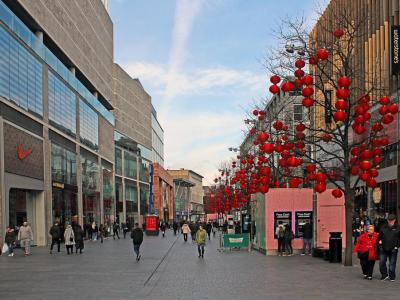
4) Liverpool One
Liverpool ONE is a vibrant shopping, residential, and leisure complex situated in the heart of Liverpool. Covering a sprawling 42 acres (170,000 square meters), it represents one of the most significant urban regeneration projects in the UK. Opened in phases in 2008 during Liverpool’s tenure as the European Capital of Culture, Liverpool ONE has transformed the city center into a premier retail and lifestyle destination, placing Liverpool among the top five most popular retail hubs in the UK.
Liverpool ONE, anchored by John Lewis and Marks & Spencer (since 2023), is the UK’s largest open-air shopping center and the tenth-largest overall. Its distinct architecture, with each building uniquely designed, sets it apart. The complex features a 14-screen Odeon cinema, a 36-hole mini-golf center, a variety of shops, restaurants, cafes, residential units, offices, and the reconstructed Chavasse Park.
Construction began in 2004, following meticulous archaeological investigations at Chavasse Park, which uncovered remnants of buildings destroyed during World War II and the historic Old Dock-the world’s first wet dock. Early completions, such as the multi-story car park and bus station, paved the way for demolitions and subsequent construction along Paradise Street.
Originally developed by Grosvenor Group, Liverpool ONE was acquired by Landsec in December 2024, marking a new chapter in its management. With its blend of retail, leisure, and cultural significance, Liverpool ONE continues to be a cornerstone of Liverpool’s dynamic cityscape, celebrated for its innovation and contribution to the city’s resurgence.
Liverpool ONE, anchored by John Lewis and Marks & Spencer (since 2023), is the UK’s largest open-air shopping center and the tenth-largest overall. Its distinct architecture, with each building uniquely designed, sets it apart. The complex features a 14-screen Odeon cinema, a 36-hole mini-golf center, a variety of shops, restaurants, cafes, residential units, offices, and the reconstructed Chavasse Park.
Construction began in 2004, following meticulous archaeological investigations at Chavasse Park, which uncovered remnants of buildings destroyed during World War II and the historic Old Dock-the world’s first wet dock. Early completions, such as the multi-story car park and bus station, paved the way for demolitions and subsequent construction along Paradise Street.
Originally developed by Grosvenor Group, Liverpool ONE was acquired by Landsec in December 2024, marking a new chapter in its management. With its blend of retail, leisure, and cultural significance, Liverpool ONE continues to be a cornerstone of Liverpool’s dynamic cityscape, celebrated for its innovation and contribution to the city’s resurgence.
5) Liverpool Metropolitan Cathedral (must see)
The Liverpool Metropolitan Cathedral, officially named the Metropolitan Cathedral of Christ the King and affectionately called Paddy's Wigwam by locals, serves as the seat of the Archbishop of Liverpool and is the mother church of the Roman Catholic Archdiocese of Liverpool. A Grade II* listed building, it is a landmark among Liverpool’s architectural treasures.
Designed by Frederick Gibberd, who won a worldwide design competition in 1959, the cathedral was constructed between 1962 and 1967. Earlier designs, proposed in 1933 and 1953, were abandoned due to financial and practical challenges. Gibberd’s innovative design met two key criteria: seating for 2,000 congregants with clear sightlines to the altar and integration of the pre-existing Lutyens crypt.
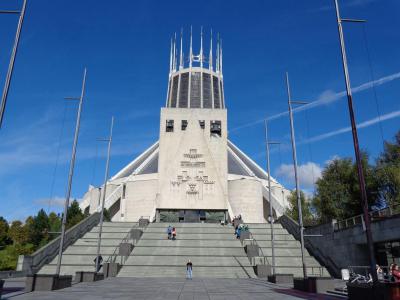
The cathedral’s striking circular design spans a diameter of 195 feet (59 meters). Its conical shape is supported by 16 boomerang-shaped concrete trusses, joined by two ring beams and reinforced by flying buttresses, creating its distinctive tent-like appearance. At the top, the lantern tower, adorned with vibrant stained glass windows, culminates in a crown of pinnacles, forming a dramatic focal point. Clad in Portland stone with an aluminum roof, the structure seamlessly combines modern materials with spiritual symbolism.
A flight of steps from Hope Street leads to the entrance, topped by a wedge-shaped bell tower with four bells. Relief sculptures by William Mitchell depict three crosses and Evangelist symbols. At the heart of the cathedral, the Macedonian white marble altar is crowned by an aluminum baldachino with integrated lights and speakers, designed by Gibberd.
Concentric benches by Frank Knight provide clear views for the congregation. The lantern tower’s vibrant glasswork, by John Piper and Patrick Reyntiens, symbolizes the Trinity. Stained glass by artists like Margaret Traherne and Ceri Richards complements interior highlights, including a bronze crucifix by Elisabeth Frink, Sean Rice's Stations of the Cross, and Georg Mayer-Marton's Pentecost mosaic.
In addition to the main cathedral, a smaller version designed by Gibberd was built in 1965 at the former De La Salle College in Lancashire, now part of Hopwood Hall College.
The Liverpool Metropolitan Cathedral stands as a masterpiece of modern ecclesiastical architecture, reflecting both the bold vision of its designer and the enduring faith of its community.
Tip:
Make sure to visit before the crypt closes for the day (3:30 pm); also, try and go on a sunny day when the sunshine lights up the modern stained glass.
With luck maybe come in times of an art exhibition, or in times of organ concerts and/or classical music!
Designed by Frederick Gibberd, who won a worldwide design competition in 1959, the cathedral was constructed between 1962 and 1967. Earlier designs, proposed in 1933 and 1953, were abandoned due to financial and practical challenges. Gibberd’s innovative design met two key criteria: seating for 2,000 congregants with clear sightlines to the altar and integration of the pre-existing Lutyens crypt.
The cathedral’s striking circular design spans a diameter of 195 feet (59 meters). Its conical shape is supported by 16 boomerang-shaped concrete trusses, joined by two ring beams and reinforced by flying buttresses, creating its distinctive tent-like appearance. At the top, the lantern tower, adorned with vibrant stained glass windows, culminates in a crown of pinnacles, forming a dramatic focal point. Clad in Portland stone with an aluminum roof, the structure seamlessly combines modern materials with spiritual symbolism.
A flight of steps from Hope Street leads to the entrance, topped by a wedge-shaped bell tower with four bells. Relief sculptures by William Mitchell depict three crosses and Evangelist symbols. At the heart of the cathedral, the Macedonian white marble altar is crowned by an aluminum baldachino with integrated lights and speakers, designed by Gibberd.
Concentric benches by Frank Knight provide clear views for the congregation. The lantern tower’s vibrant glasswork, by John Piper and Patrick Reyntiens, symbolizes the Trinity. Stained glass by artists like Margaret Traherne and Ceri Richards complements interior highlights, including a bronze crucifix by Elisabeth Frink, Sean Rice's Stations of the Cross, and Georg Mayer-Marton's Pentecost mosaic.
In addition to the main cathedral, a smaller version designed by Gibberd was built in 1965 at the former De La Salle College in Lancashire, now part of Hopwood Hall College.
The Liverpool Metropolitan Cathedral stands as a masterpiece of modern ecclesiastical architecture, reflecting both the bold vision of its designer and the enduring faith of its community.
Tip:
Make sure to visit before the crypt closes for the day (3:30 pm); also, try and go on a sunny day when the sunshine lights up the modern stained glass.
With luck maybe come in times of an art exhibition, or in times of organ concerts and/or classical music!
