Custom Walk in Charlotte, North Carolina by gcsbc85_8e7f2 created on 2025-07-06
Guide Location: USA » Charlotte
Guide Type: Custom Walk
# of Sights: 13
Tour Duration: 2 Hour(s)
Travel Distance: 3.5 Km or 2.2 Miles
Share Key: 62HY5
Guide Type: Custom Walk
# of Sights: 13
Tour Duration: 2 Hour(s)
Travel Distance: 3.5 Km or 2.2 Miles
Share Key: 62HY5
How It Works
Please retrieve this walk in the GPSmyCity app. Once done, the app will guide you from one tour stop to the next as if you had a personal tour guide. If you created the walk on this website or come to the page via a link, please follow the instructions below to retrieve the walk in the app.
Retrieve This Walk in App
Step 1. Download the app "GPSmyCity: Walks in 1K+ Cities" on Apple App Store or Google Play Store.



Step 2. In the GPSmyCity app, download(or launch) the guide "Charlotte Map and Walking Tours".
Step 3. Tap the menu button located at upper right corner of the "Walks" screen and select "Retrieve custom walk". Enter the share key: 62HY5
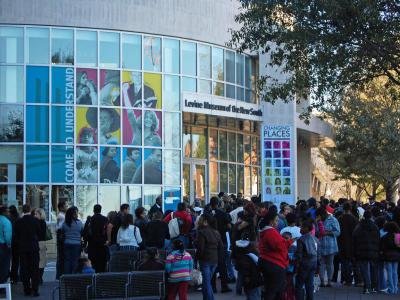
1) Levine Museum of the New South (must see)
Post-Civil War life in Charlotte, North Carolina is on full display at the Levine Museum of the New South. Visitors will find permanent and revolving exhibits that detail the changes in the region from the US Civil War through present day. The museum was founded in 1991 and has been an important attraction since that time.
Exhibits at the Levine Museum are interactive in order to immerse visitors into life of the locals from days gone by. The permanent exhibit is called "Cotton Fields to Skyscrapers." This exhibit includes stories from Reconstruction, industrialization and the Civil Rights Era. This 8,000 square foot exhibit space includes music, video, oral histories and artifacts from throughout the years. It includes a rebuilt, one-room tenant farmer's house, Good Samaritans Hospital Chapel and reconstructions of main street Charlotte and lunch counters where sit-ins were staged.
Temporary exhibits often focus on specific areas in Charlotte. One of these is Brooklyn, the take of a historic black community in the city. This exhibit shows visitors the opportunity gaps created by urban renewal while also celebrating the rich culture of the neighborhood.
The Equal Justice Initiative has worked with the Levine Museum of the New South on an exhibit titles "It Happened Here: Lynching and Remembrance." The exhibit reminds museum patrons of lynchings throughout the country, with a strong focus on two that took place in Mecklenburg County.
The Levine Museum of the New South is located in Charlotte's Second Ward. It is about one block south from Discovery Place and a short distance from the NASCAR Hall of Fame.
Why You Should Visit:
- To learn about the history of Charlotte residents
- To take a walk back through time, from Reconstruction through Civil Rights
Exhibits at the Levine Museum are interactive in order to immerse visitors into life of the locals from days gone by. The permanent exhibit is called "Cotton Fields to Skyscrapers." This exhibit includes stories from Reconstruction, industrialization and the Civil Rights Era. This 8,000 square foot exhibit space includes music, video, oral histories and artifacts from throughout the years. It includes a rebuilt, one-room tenant farmer's house, Good Samaritans Hospital Chapel and reconstructions of main street Charlotte and lunch counters where sit-ins were staged.
Temporary exhibits often focus on specific areas in Charlotte. One of these is Brooklyn, the take of a historic black community in the city. This exhibit shows visitors the opportunity gaps created by urban renewal while also celebrating the rich culture of the neighborhood.
The Equal Justice Initiative has worked with the Levine Museum of the New South on an exhibit titles "It Happened Here: Lynching and Remembrance." The exhibit reminds museum patrons of lynchings throughout the country, with a strong focus on two that took place in Mecklenburg County.
The Levine Museum of the New South is located in Charlotte's Second Ward. It is about one block south from Discovery Place and a short distance from the NASCAR Hall of Fame.
Why You Should Visit:
- To learn about the history of Charlotte residents
- To take a walk back through time, from Reconstruction through Civil Rights
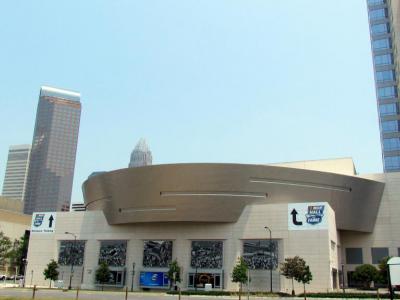
2) NASCAR Hall of Fame (must see)
The NASCAR Hall of Fame is a must-see for all visitors to Charlotte, but especially lovers of the world of motor sports. Construction began on the Hall of Fame in 2007, with the building opening to the general public in 2010.
Charlotte was chosen as the location for the NASCAR Hall of Fame due to the popularity of the sport in the region. There are a number of Charlotte-based teams that compete in three major annual NASCAR events: the NASCAR Cup Series, the NASCAR Xfinity Series and the NASCAR Camping World Truck Series. There were also already a large number of NASCAR offices already in the Charlotte area.
The Hall of Fame building consists of four floors. The first floor is the High Octane Theatre. This is the spot where visitors can watch videos detailing NASCAR events as well as a primer video about the Hall of Fame itself.
The second floor includes the Great Hall, which includes large video screens and rotating exhibits. Also located on the second floor is the television production studio, Studio 43.
The third floor is the focus of the NASCAR Hall of Fame. It includes the Hall of Honor, which has space devoted to each honoree. Visitors can also partake in Inside NASCAR, which is a simulation of a week with a NASCAR team. There are also transporter and race car simulators.
The fourth floor consists entirely of Heritage Speedway. This is where visitors can learn about the history of NASCAR. There is also a gift shop and diner.
The NASCAR Hall of Fame is in Charlotte's Second Ward at the intersection of Stonewell and Caldwell Streets.
Why You Should Visit:
- To see the only NASCAR Hall of Fame
- To view historic items from NASCAR history
- For hands-on fun for the whole family
Tips:
Tickets can be purchased at the door or in advance on the venue's website. Guided tours are available on Mondays and Fridays beginning at 1 PM. Each guided tour lasts approximately two hours.
Charlotte was chosen as the location for the NASCAR Hall of Fame due to the popularity of the sport in the region. There are a number of Charlotte-based teams that compete in three major annual NASCAR events: the NASCAR Cup Series, the NASCAR Xfinity Series and the NASCAR Camping World Truck Series. There were also already a large number of NASCAR offices already in the Charlotte area.
The Hall of Fame building consists of four floors. The first floor is the High Octane Theatre. This is the spot where visitors can watch videos detailing NASCAR events as well as a primer video about the Hall of Fame itself.
The second floor includes the Great Hall, which includes large video screens and rotating exhibits. Also located on the second floor is the television production studio, Studio 43.
The third floor is the focus of the NASCAR Hall of Fame. It includes the Hall of Honor, which has space devoted to each honoree. Visitors can also partake in Inside NASCAR, which is a simulation of a week with a NASCAR team. There are also transporter and race car simulators.
The fourth floor consists entirely of Heritage Speedway. This is where visitors can learn about the history of NASCAR. There is also a gift shop and diner.
The NASCAR Hall of Fame is in Charlotte's Second Ward at the intersection of Stonewell and Caldwell Streets.
Why You Should Visit:
- To see the only NASCAR Hall of Fame
- To view historic items from NASCAR history
- For hands-on fun for the whole family
Tips:
Tickets can be purchased at the door or in advance on the venue's website. Guided tours are available on Mondays and Fridays beginning at 1 PM. Each guided tour lasts approximately two hours.

3) Book Sculptures
In downtown Charlotte, North Carolina, stands a captivating public art installation that enchants both locals and visitors. Created in 2003 by Jim Gallucci, a talented sculptor from Greensboro, the Grand Entry Book Columns pay homage to literature and its timeless stories. The installation comprises two bronze columns adorned with oversized books, meticulously crafted to display their titles, inviting viewers to explore a world of literary classics and beloved tales.
Among the bronze tomes are titles like "Roots" by Alex Haley and "Wuthering Heights" by Emily Bronte, etched into the spines, offering a tangible link to the rich human experiences captured within their pages. The columns vary in height, with the tallest reaching thirty-three feet, creating a visually striking scene. Oversized bronze pages scattered around the columns add to the whimsical charm, resembling pages caught and fluttering in the wind, enhancing the sculpture's dynamic nature and reinforcing the idea of books as living entities with stories that transcend physical boundaries.
Located across College Street from the Charlotte Convention Center, the Grand Entry Book Columns welcome thousands of visitors to The Green, a serene pocket park atop an underground parking facility owned by Wells Fargo. These columns, symbolizing the gateway to knowledge and adventure, serve as a beacon, drawing people into the tranquil oasis amidst the bustling cityscape.
Through this installation, Jim Gallucci not only enhances Charlotte's urban environment with a striking piece of public art but also creates a space where the universal appeal of literature and the joy of reading are celebrated on a monumental scale.
Among the bronze tomes are titles like "Roots" by Alex Haley and "Wuthering Heights" by Emily Bronte, etched into the spines, offering a tangible link to the rich human experiences captured within their pages. The columns vary in height, with the tallest reaching thirty-three feet, creating a visually striking scene. Oversized bronze pages scattered around the columns add to the whimsical charm, resembling pages caught and fluttering in the wind, enhancing the sculpture's dynamic nature and reinforcing the idea of books as living entities with stories that transcend physical boundaries.
Located across College Street from the Charlotte Convention Center, the Grand Entry Book Columns welcome thousands of visitors to The Green, a serene pocket park atop an underground parking facility owned by Wells Fargo. These columns, symbolizing the gateway to knowledge and adventure, serve as a beacon, drawing people into the tranquil oasis amidst the bustling cityscape.
Through this installation, Jim Gallucci not only enhances Charlotte's urban environment with a striking piece of public art but also creates a space where the universal appeal of literature and the joy of reading are celebrated on a monumental scale.
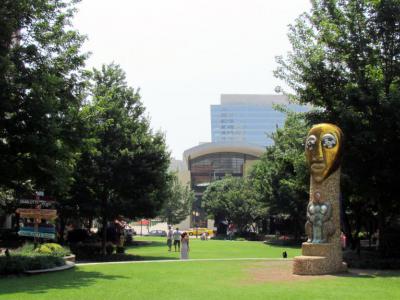
4) The Green
The Green is a pocket park on 1.5 acres near the Charlotte Convention Center. This park is a fun stop on a walking tour of the city's Second Ward.
The Green is notable for its focus on art. Temporary, public art is often on display, particularly in the summer. A number of permanent pieces can be seen throughout the year. With a focus on world literature, The Green offers bronze statues that feature great novels like Roots, Don Quixote and Wuthering Heights.
There are many other public works of art in and near the Green. The Brick Kids - Life is an Open Book features children, made from brick, climbing a brick wall. The Firebird is an 18 foot structure featuring a bird adorned in shards of glass. It is adoringly called "Disco Chicken" by locals. The park also features three fountains shaped like fish that spit water from their mouths during the summer months.
Those visiting Charlotte in the summer may find themselves enjoying performances at the Green during the Charlotte Shakespeare Festival. Other public events, including movie screenings and free outdoor plays, often take place in this park.
The Green is notable for its focus on art. Temporary, public art is often on display, particularly in the summer. A number of permanent pieces can be seen throughout the year. With a focus on world literature, The Green offers bronze statues that feature great novels like Roots, Don Quixote and Wuthering Heights.
There are many other public works of art in and near the Green. The Brick Kids - Life is an Open Book features children, made from brick, climbing a brick wall. The Firebird is an 18 foot structure featuring a bird adorned in shards of glass. It is adoringly called "Disco Chicken" by locals. The park also features three fountains shaped like fish that spit water from their mouths during the summer months.
Those visiting Charlotte in the summer may find themselves enjoying performances at the Green during the Charlotte Shakespeare Festival. Other public events, including movie screenings and free outdoor plays, often take place in this park.
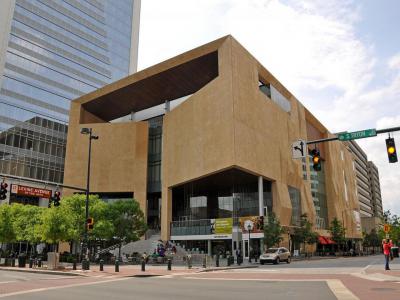
5) Mint Museum Uptown
The Mint Museum Uptown, situated in Charlotte, marks a significant expansion and development in the city's cultural scene. It was made possible through financial backing from grants and the Arts & Science Council, leading to the inauguration of a new 145,000-square-foot facility on October 1, 2010. Designed by the Boston-based architectural firm Machado and Silvetti Associates, this modern building came with a price tag of approximately $57 million. Its completion served as a pivotal moment for the Mint Museum, setting it apart into two distinct locations: the newly established Mint Museum Uptown and the original Mint Museum Randolph on Randolph Road.
The Mint Museum Uptown, spread across five levels, boasts a wide array of collections. It houses the Mint Museum of Craft + Design's collection of glass, ceramics, wood, and other materials. The relocation of collections such as Contemporary Art, American Art, and select European Art from the Randolph Road site to the Uptown location has brought together the Mint's offerings in arts and crafts and fine arts for the first time in one place. This strategic move enhances the museum's ability to present a more cohesive narrative of art and design.
Meanwhile, the historic Mint Museum Randolph remains operational, with plans for renovations and reinstallations focusing on its extensive collections in Ceramics, Historic Costume and Fashionable Dress, Ancient American Art, Asian Art, Coins & Currency, Decorative Arts, and Spanish Colonial Art. This ongoing development highlights the Mint Museum's dedication to preserving and showcasing diverse artistic expressions across both locations, thereby further enriching Charlotte's cultural landscape.
The Mint Museum Uptown, spread across five levels, boasts a wide array of collections. It houses the Mint Museum of Craft + Design's collection of glass, ceramics, wood, and other materials. The relocation of collections such as Contemporary Art, American Art, and select European Art from the Randolph Road site to the Uptown location has brought together the Mint's offerings in arts and crafts and fine arts for the first time in one place. This strategic move enhances the museum's ability to present a more cohesive narrative of art and design.
Meanwhile, the historic Mint Museum Randolph remains operational, with plans for renovations and reinstallations focusing on its extensive collections in Ceramics, Historic Costume and Fashionable Dress, Ancient American Art, Asian Art, Coins & Currency, Decorative Arts, and Spanish Colonial Art. This ongoing development highlights the Mint Museum's dedication to preserving and showcasing diverse artistic expressions across both locations, thereby further enriching Charlotte's cultural landscape.
6) The Firebird
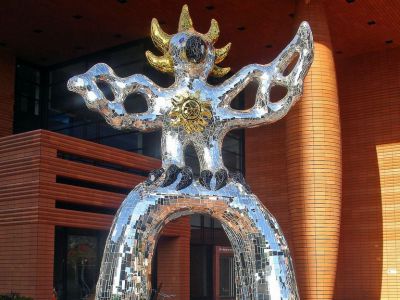
The Firebird, an impressive sculpture located in the center of Charlotte, serves as a symbol of the creative ingenuity of Franco-American artist Niki de Saint Phalle. This 17-foot tall avian-inspired artwork stands proudly in the plaza of the Bechtler Museum of Modern Art on South Tryon Street. Completed in 1991 under the title The Firebird (Le Grand Oiseau de Feu sur l’Arche), the sculpture is a striking blend of mirrored and colored glass, shaped into a bird-like form that reflects the energy of its urban surroundings.
Made from around 7,500 mirror pieces arranged on a steel framework, The Firebird weighs 1,433 pounds, showcasing de Saint Phalle's unique sculpting style. It represents her connection to the New Realism movement, which emerged in 1960 and aimed to fuse art with everyday life. This movement, led by critic Pierre Restany and artist Yves Klein, sought to blur the lines between art and reality, a concept vividly embodied in The Firebird.
In 2006, Andreas Bechtler acquired the sculpture, which found its permanent residence in the museum's plaza in October 2009. Following a brief restoration, it was unveiled to the public on November 3, 2009, becoming an integral part of the Bechtler Museum of Modern Art's collection.
The Firebird's reflective surface not only captivates viewers but also interacts with its environment, mirroring passing traffic, seasonal changes in the trees, surrounding buildings, and the bustling flow of pedestrians. This interaction reflects de Saint Phalle's vision of blending art with the daily experiences of the community, making The Firebird a cherished landmark in Charlotte and a vibrant example of public art that enhances the urban landscape.
Made from around 7,500 mirror pieces arranged on a steel framework, The Firebird weighs 1,433 pounds, showcasing de Saint Phalle's unique sculpting style. It represents her connection to the New Realism movement, which emerged in 1960 and aimed to fuse art with everyday life. This movement, led by critic Pierre Restany and artist Yves Klein, sought to blur the lines between art and reality, a concept vividly embodied in The Firebird.
In 2006, Andreas Bechtler acquired the sculpture, which found its permanent residence in the museum's plaza in October 2009. Following a brief restoration, it was unveiled to the public on November 3, 2009, becoming an integral part of the Bechtler Museum of Modern Art's collection.
The Firebird's reflective surface not only captivates viewers but also interacts with its environment, mirroring passing traffic, seasonal changes in the trees, surrounding buildings, and the bustling flow of pedestrians. This interaction reflects de Saint Phalle's vision of blending art with the daily experiences of the community, making The Firebird a cherished landmark in Charlotte and a vibrant example of public art that enhances the urban landscape.

7) Bechtler Museum of Modern Art
The Bechtler Museum of Modern Art, located in downtown Charlotte, North Carolina, is an important hub for mid-20th-century modern art, housed in a remarkable 36,500 square feet building as part of the newly established Levine Center for the Arts. Named after the Bechtler family, particularly Andreas Bechtler, a Swiss art enthusiast, the museum boasts an impressive collection of over 1,400 artworks from prominent figures of 20th-century modernism.
Opening its doors on January 2, 2010, the museum's inauguration was a significant event for Charlotte, attended by Mayor Anthony Foxx and Andreas Bechtler himself, showcasing the city's growing cultural scene. Notably, the Bechtler Museum is only the second institution in the United States to feature a design by renowned Swiss architect Mario Botta, known for his work on the San Francisco Museum of Modern Art. Botta's architectural brilliance is evident in the museum's four-story structure, highlighted by a striking glass atrium that illuminates the interior and connects different spaces, complemented by a unique terra cotta exterior.
The museum's collection reflects the transformative periods following World War II, with a particular emphasis on the School of Paris. It includes works by influential artists such as Alberto Giacometti, Joan Miró, Max Ernst, Andy Warhol, Jean Tinguely, Barbara Hepworth, and Pablo Picasso. These artists are renowned for their innovation and exploration of various themes, providing insight into the evolution of modern art throughout the 20th century. Through its collection and architectural significance, the Bechtler Museum of Modern Art serves as a cultural and historical landmark in Charlotte, offering visitors a profound journey through the realms of modern artistic expression.
Opening its doors on January 2, 2010, the museum's inauguration was a significant event for Charlotte, attended by Mayor Anthony Foxx and Andreas Bechtler himself, showcasing the city's growing cultural scene. Notably, the Bechtler Museum is only the second institution in the United States to feature a design by renowned Swiss architect Mario Botta, known for his work on the San Francisco Museum of Modern Art. Botta's architectural brilliance is evident in the museum's four-story structure, highlighted by a striking glass atrium that illuminates the interior and connects different spaces, complemented by a unique terra cotta exterior.
The museum's collection reflects the transformative periods following World War II, with a particular emphasis on the School of Paris. It includes works by influential artists such as Alberto Giacometti, Joan Miró, Max Ernst, Andy Warhol, Jean Tinguely, Barbara Hepworth, and Pablo Picasso. These artists are renowned for their innovation and exploration of various themes, providing insight into the evolution of modern art throughout the 20th century. Through its collection and architectural significance, the Bechtler Museum of Modern Art serves as a cultural and historical landmark in Charlotte, offering visitors a profound journey through the realms of modern artistic expression.

8) Latta Arcade
Visitors to Charlotte will almost certainly find themselves at Latta Arcade. This indoor shopping area is two floors of shopping and restaurants with large windows and a massive glass skylight.
Latta Arcade was constructed in 1914 by architect William H. Peeps. It was the brainchild of Edward Dilworth Latta, an area retailer and real estate magnate. His idea was to have a first floor retail area that would be attractive to visitors and shop owners. His offices, Charlotte Consolidated Construction Company, were located on the second floor.
Visitors continue to enjoy Latta Arcade, thanks to the welcoming space, period architecture and easy availability of local shops and dining. They can try everything from pizza to salad to all-day breakfast and authentic Indian cuisine.
It was added to the National Register of Historic Places in 1975. Early risers will appreciate the availability of Latta Arcade.
Latta Arcade was constructed in 1914 by architect William H. Peeps. It was the brainchild of Edward Dilworth Latta, an area retailer and real estate magnate. His idea was to have a first floor retail area that would be attractive to visitors and shop owners. His offices, Charlotte Consolidated Construction Company, were located on the second floor.
Visitors continue to enjoy Latta Arcade, thanks to the welcoming space, period architecture and easy availability of local shops and dining. They can try everything from pizza to salad to all-day breakfast and authentic Indian cuisine.
It was added to the National Register of Historic Places in 1975. Early risers will appreciate the availability of Latta Arcade.
9) Romare Bearden Park
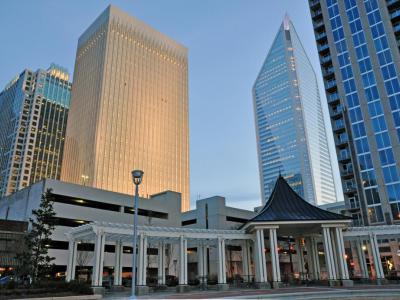
Romare Bearden Park, sprawling over 5.4 acres in downtown Charlotte, North Carolina, pays homage to the artistic legacy of Romare Bearden, a celebrated local artist. Opened to the public in August 2013, the park sits conveniently on South Church Street, across from Truist Field, home to the Charlotte Knights baseball team. It provides a tranquil escape amidst the lively atmosphere of Uptown Charlotte.
Designed to reflect Bearden's renowned collages and paintings, the park was guided by Norie Sato to capture Bearden's essence. Visitors are greeted with a space that echoes Bearden's creativity. The park features two lovely gardens and a courtyard with dining facilities, ideal for relaxation.
In addition to its aesthetics, Romare Bearden Park hosts various fitness and cultural programs year-round, catering to people of all ages. It includes a green field for events, a dynamic play area with interactive digital chimes, and calming water features.
The park's grand opening in August-September 2013 marked the culmination of efforts to honor Bearden's legacy while creating a versatile outdoor space for the community. With its thoughtful design and diverse activities, Romare Bearden Park not only celebrates Bearden's artistic contributions but also serves as a significant cultural and recreational hub in Charlotte, fostering community engagement and appreciation for the arts.
Designed to reflect Bearden's renowned collages and paintings, the park was guided by Norie Sato to capture Bearden's essence. Visitors are greeted with a space that echoes Bearden's creativity. The park features two lovely gardens and a courtyard with dining facilities, ideal for relaxation.
In addition to its aesthetics, Romare Bearden Park hosts various fitness and cultural programs year-round, catering to people of all ages. It includes a green field for events, a dynamic play area with interactive digital chimes, and calming water features.
The park's grand opening in August-September 2013 marked the culmination of efforts to honor Bearden's legacy while creating a versatile outdoor space for the community. With its thoughtful design and diverse activities, Romare Bearden Park not only celebrates Bearden's artistic contributions but also serves as a significant cultural and recreational hub in Charlotte, fostering community engagement and appreciation for the arts.
10) Arts And Science Council
The Arts & Science Council (ASC) in Charlotte plays a crucial role as the main supporter and planner for the arts, science, history, and heritage in the community. It's a cornerstone for cultural growth and enrichment in Charlotte-Mecklenburg, dedicated to preserving and promoting the area's diverse cultural heritage. The ASC achieves this through various methods like advocating, managing resources, investing, and strategic planning in the cultural domain.
Its primary mission is to encourage appreciation, involvement, and backing for a wide array of cultural pursuits, aiming to improve the quality of life for locals and visitors alike, fostering a community where culture is embraced and accessible. Whether it's through the arts, science, history, or heritage, the ASC ensures these cultural elements are fundamental to the community's identity.
Beyond being a crucial advocate and caretaker of public and private resources, the ASC also plays a vital role in the strategic growth of the cultural sector. This involves smart resource allocation to support cultural ventures and institutions, ensuring their continued development and sustainability. Additionally, as the public art representative for Charlotte and Mecklenburg County, the ASC plays a key role in incorporating art into public spaces, enhancing the community's visual and experiential landscape.
The ASC's vision, "Shaping a vibrant cultural life for all," reflects its commitment to creating an inclusive cultural atmosphere. By championing the arts, science, history, and heritage, the ASC not only enriches cultural life but also strengthens the community's collective identity and vitality. Through its comprehensive cultural advocacy and development strategy, the ASC is instrumental in making Charlotte-Mecklenburg a place where culture thrives and is accessible to everyone.
Its primary mission is to encourage appreciation, involvement, and backing for a wide array of cultural pursuits, aiming to improve the quality of life for locals and visitors alike, fostering a community where culture is embraced and accessible. Whether it's through the arts, science, history, or heritage, the ASC ensures these cultural elements are fundamental to the community's identity.
Beyond being a crucial advocate and caretaker of public and private resources, the ASC also plays a vital role in the strategic growth of the cultural sector. This involves smart resource allocation to support cultural ventures and institutions, ensuring their continued development and sustainability. Additionally, as the public art representative for Charlotte and Mecklenburg County, the ASC plays a key role in incorporating art into public spaces, enhancing the community's visual and experiential landscape.
The ASC's vision, "Shaping a vibrant cultural life for all," reflects its commitment to creating an inclusive cultural atmosphere. By championing the arts, science, history, and heritage, the ASC not only enriches cultural life but also strengthens the community's collective identity and vitality. Through its comprehensive cultural advocacy and development strategy, the ASC is instrumental in making Charlotte-Mecklenburg a place where culture thrives and is accessible to everyone.
11) Independence Square and Four Corner Sculptures
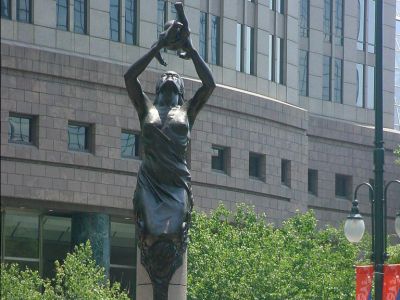
The Four Corner Sculptures were crafted in 1995 by artist Raymond Kaskey. They are said to represent transportation, commerce, industry and the future. The statues are made of bronze and granite. Weighing at about 5,000 pounds each, they occupy a permanent home at Independence Square on the corners of Tryon and Trade Streets.
Visitors to Charlotte will find themselves in the midst of a busy intersection if they try to view all four statues at once. Luckily, this pedestrian friendly city has plenty of sidewalks so that each of the statues can be individually admired.
Independence Square is an excellent place to view the architecture of downtown Charlotte. The historical landmarks of Trade and Tryon Streets are home to skyscrapers like the Bank of America Corporate Center, which is the tallest building in North Carolina. Public works of art are also located on and around the square. Some of these include "Il Grande Disco" and "Harmony," which is located in the Blumenthal Performing Arts Center plaza.
Visitors to Charlotte will find themselves in the midst of a busy intersection if they try to view all four statues at once. Luckily, this pedestrian friendly city has plenty of sidewalks so that each of the statues can be individually admired.
Independence Square is an excellent place to view the architecture of downtown Charlotte. The historical landmarks of Trade and Tryon Streets are home to skyscrapers like the Bank of America Corporate Center, which is the tallest building in North Carolina. Public works of art are also located on and around the square. Some of these include "Il Grande Disco" and "Harmony," which is located in the Blumenthal Performing Arts Center plaza.
12) Il Grande Disco
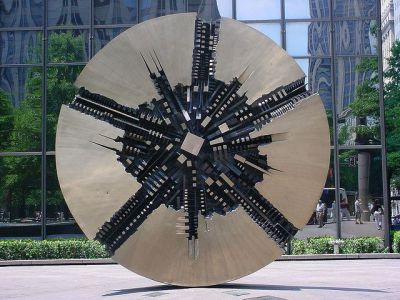
The Big Disk (Il Grande Disco), a prominent circular monument located in Charlotte, is a symbol of public art that captivates the imagination and admiration of both locals and visitors. Positioned behind the Railroad Worker’s Sculpture at Independence Square, this artistic masterpiece showcases the creative talent of Italian sculptor Arnaldo Pomodoro. Erected in 1974, the monument adds to the urban scenery of Uptown Charlotte, particularly renowned for its reflection in the glass walls of the contemporary Omni Hotel.
Fashioned from bronze, the Big Disk is a coin-shaped sculpture adorning the Bank of America Plaza on Tryon Street. Its distinguishing features include a large bronze wheel with dark borders, adorned with intricate etched designs on both sides. Its appearance suggests a futuristic and foreign essence, seemingly in motion with dynamic qualities, attracting attention and curiosity due to its detailed craftsmanship.
The significance of the Big Disk is amplified by its global presence. It is part of a series of five similar sculptures named "Il Grande Disco" situated around the world. These sister sculptures can be found at various locations including the University of Chicago campus, Piazza Filippo Meda and Theatro Strehler in Milan, Italy, Donald Kendall Sculpture Gardens at PepsiCo Headquarters in Purchase, N.Y., and the monument for Georg Büchner in Darmstadt, Germany. Installed around the same period, these sculptures collectively highlight Pomodoro's vision and artistic impact on an international scale.
Originally, the Charlotte Big Disk featured a kinetic component, allowing it to rotate slowly on its axis, offering passersby the opportunity to interact with it by pushing it to rotate. This interactive feature added another dimension to the sculpture, fostering a physical connection between the artwork and its audience. However, in recent years, the sculpture has been anchored in place, eliminating its movable aspect while still retaining its significance as a significant piece of art and a landmark in Charlotte’s cultural scene.
Fashioned from bronze, the Big Disk is a coin-shaped sculpture adorning the Bank of America Plaza on Tryon Street. Its distinguishing features include a large bronze wheel with dark borders, adorned with intricate etched designs on both sides. Its appearance suggests a futuristic and foreign essence, seemingly in motion with dynamic qualities, attracting attention and curiosity due to its detailed craftsmanship.
The significance of the Big Disk is amplified by its global presence. It is part of a series of five similar sculptures named "Il Grande Disco" situated around the world. These sister sculptures can be found at various locations including the University of Chicago campus, Piazza Filippo Meda and Theatro Strehler in Milan, Italy, Donald Kendall Sculpture Gardens at PepsiCo Headquarters in Purchase, N.Y., and the monument for Georg Büchner in Darmstadt, Germany. Installed around the same period, these sculptures collectively highlight Pomodoro's vision and artistic impact on an international scale.
Originally, the Charlotte Big Disk featured a kinetic component, allowing it to rotate slowly on its axis, offering passersby the opportunity to interact with it by pushing it to rotate. This interactive feature added another dimension to the sculpture, fostering a physical connection between the artwork and its audience. However, in recent years, the sculpture has been anchored in place, eliminating its movable aspect while still retaining its significance as a significant piece of art and a landmark in Charlotte’s cultural scene.
13) Trade Center Sculpture (Queen Charlotte Walks in Her Garden)
The sculpture "Queen Charlotte Walks in Her Garden" stands as a prominent landmark in front of the modern Trade Center on North College Street in Charlotte. It honors Queen Charlotte of Mecklenburg, the consort of King George III of Great Britain, who holds a significant place in the history of the region, given that both the city and Mecklenburg County are named after her.
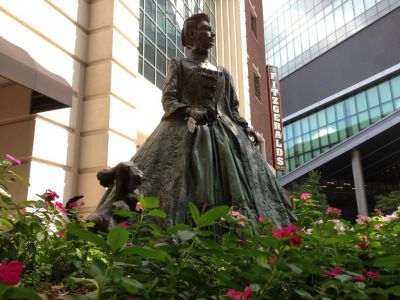
This bronze sculpture, created by artist Bailey Graham Weathers Jr., portrays Queen Charlotte in a garden setting, adding a touch of elegance to uptown Charlotte. Her attire reflects the fashion of her time, and she holds a bouquet, highlighting her interest in botany, while a bracelet bearing her husband's cameo symbolizes her royal connection.
The scene is made more charming by the presence of two sculptures of her dogs, one playing at her dress and the other displaying loyalty beside her. This depiction not only enlivens the sculpture but also underscores Queen Charlotte's fondness for animals.
An inscribed plaque near the sculpture provides background information, enriching the educational aspect of this artistic installation. Overall, "Queen Charlotte Walks in Her Garden" is not just a visual treat; it's a meaningful tribute that seamlessly blends art, history, and nature, inviting both locals and visitors to ponder the legacy of Charlotte and its namesake queen.
This bronze sculpture, created by artist Bailey Graham Weathers Jr., portrays Queen Charlotte in a garden setting, adding a touch of elegance to uptown Charlotte. Her attire reflects the fashion of her time, and she holds a bouquet, highlighting her interest in botany, while a bracelet bearing her husband's cameo symbolizes her royal connection.
The scene is made more charming by the presence of two sculptures of her dogs, one playing at her dress and the other displaying loyalty beside her. This depiction not only enlivens the sculpture but also underscores Queen Charlotte's fondness for animals.
An inscribed plaque near the sculpture provides background information, enriching the educational aspect of this artistic installation. Overall, "Queen Charlotte Walks in Her Garden" is not just a visual treat; it's a meaningful tribute that seamlessly blends art, history, and nature, inviting both locals and visitors to ponder the legacy of Charlotte and its namesake queen.
