Custom Walk in New Haven, Connecticut by saltyagain2007_662c4 created on 2025-07-11
Guide Location: USA » New Haven
Guide Type: Custom Walk
# of Sights: 7
Tour Duration: 3 Hour(s)
Travel Distance: 8.1 Km or 5 Miles
Share Key: SWWKV
Guide Type: Custom Walk
# of Sights: 7
Tour Duration: 3 Hour(s)
Travel Distance: 8.1 Km or 5 Miles
Share Key: SWWKV
How It Works
Please retrieve this walk in the GPSmyCity app. Once done, the app will guide you from one tour stop to the next as if you had a personal tour guide. If you created the walk on this website or come to the page via a link, please follow the instructions below to retrieve the walk in the app.
Retrieve This Walk in App
Step 1. Download the app "GPSmyCity: Walks in 1K+ Cities" on Apple App Store or Google Play Store.



Step 2. In the GPSmyCity app, download(or launch) the guide "New Haven Map and Walking Tours".
Step 3. Tap the menu button located at upper right corner of the "Walks" screen and select "Retrieve custom walk". Enter the share key: SWWKV
1) East Rock Park (must see)
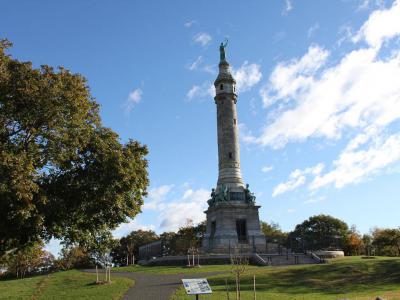
East Rock Park is a 427-acre natural haven that stretches across the city of New Haven and the town of Hamden. Operated as a New Haven city park and listed on the National Register of Historic Places, the park is centered around the East Rock Ridge, a dramatic geological feature known for its stunning panoramic views of the New Haven skyline, Long Island Sound, and even Long Island on a clear day.
A favorite year-round destination for locals and visitors alike, East Rock Park offers a wide range of outdoor activities including hiking, snowshoeing, cross-country skiing, bird watching, dog walking, and picnicking. The park’s extensive trail network includes the iconic Giant Steps Trail, a steep, nearly vertical climb from the south that rewards hikers with views from the summit.
Recreational amenities at the foot of the mountain include fields for football, baseball, and soccer, as well as tennis and basketball courts, playgrounds, and picnic areas. The Trowbridge Environmental Center, open Thursdays and Fridays (and occasionally Saturdays), offers educational displays on East Rock’s geology and ecosystem. Nearby, the Pardee Rose Garden and Greenhouse showcases blooming flowers from spring through fall, making it a favorite spot for wedding photos.
The park's layout was designed by Donald Grant Mitchell and the Olmsted Brothers, blending naturalistic landscaping with recreational use. A covered bridge named after A. Frederick Oberlin-a local World War I hero-adds a touch of historic charm.
The Friends of East Rock Park, founded in 1982, plays a vital role in park upkeep and community engagement through volunteer days and events, ensuring that East Rock remains a beloved green space for generations to come.
A favorite year-round destination for locals and visitors alike, East Rock Park offers a wide range of outdoor activities including hiking, snowshoeing, cross-country skiing, bird watching, dog walking, and picnicking. The park’s extensive trail network includes the iconic Giant Steps Trail, a steep, nearly vertical climb from the south that rewards hikers with views from the summit.
Recreational amenities at the foot of the mountain include fields for football, baseball, and soccer, as well as tennis and basketball courts, playgrounds, and picnic areas. The Trowbridge Environmental Center, open Thursdays and Fridays (and occasionally Saturdays), offers educational displays on East Rock’s geology and ecosystem. Nearby, the Pardee Rose Garden and Greenhouse showcases blooming flowers from spring through fall, making it a favorite spot for wedding photos.
The park's layout was designed by Donald Grant Mitchell and the Olmsted Brothers, blending naturalistic landscaping with recreational use. A covered bridge named after A. Frederick Oberlin-a local World War I hero-adds a touch of historic charm.
The Friends of East Rock Park, founded in 1982, plays a vital role in park upkeep and community engagement through volunteer days and events, ensuring that East Rock remains a beloved green space for generations to come.
2) Beinecke Rare Book and Manuscript Library (must see)
The Beinecke Rare Book and Manuscript Library is located on the Yale University campus in the Hewitt Quadrangle. The library, which was established in 1963, is one of the world's largest institutions devoted entirely to rare books and manuscripts.
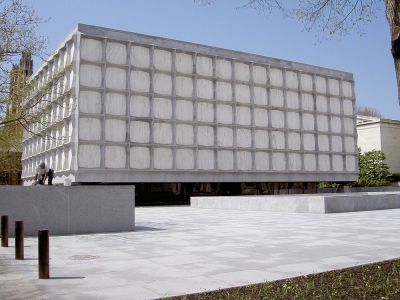
The building has a unique appearance that is indicative of its Modern style. Architect Gordon Bunshaft famously designed the building with thin, marble panels that filter indirect sunlight into the library in order to protect the rare manuscripts and books. The outstanding architecture is enhanced by the surrounding buildings, like the Lillian Goldman Law Library and Woolsey Hall, that have a more typically collegiate Beaux-Arts style.
Tourists may marvel at the design of the building, but if possible should plan to stop inside to see the golden light that spills in from the outside and the modernist sculptures by Isamu Naguchi. Though the bulk of the library is only available to Yale University faculty and students as well as visiting researchers, members of the public are typically permitted in exhibition hall, the ground floor and the mezzanine.
Beinecke holds one of the few copies of the original Gutenberg Bible. This is on display in the exhibition hall. John James Audubon's "Birds of America" is also permanently on display. Visitors can find the 1742 Library of Yale College on the ground floor. They will also see some of the earliest books published in the West with dates that go back to 1472.
Special exhibitions are offered throughout the year as well. Previous exhibitions have included modern photography, a focus on poetry and the display of the Declaration of Independence.
Why You Should Visit:
- To see an original Gutenberg Bible
- To marvel at Modern architecture
Tips:
Anyone wanting to see more than the exhibition hall will have to contact Beinecke in advance. Only approved researchers can enter the reading room, which is open by appointment only.
The building has a unique appearance that is indicative of its Modern style. Architect Gordon Bunshaft famously designed the building with thin, marble panels that filter indirect sunlight into the library in order to protect the rare manuscripts and books. The outstanding architecture is enhanced by the surrounding buildings, like the Lillian Goldman Law Library and Woolsey Hall, that have a more typically collegiate Beaux-Arts style.
Tourists may marvel at the design of the building, but if possible should plan to stop inside to see the golden light that spills in from the outside and the modernist sculptures by Isamu Naguchi. Though the bulk of the library is only available to Yale University faculty and students as well as visiting researchers, members of the public are typically permitted in exhibition hall, the ground floor and the mezzanine.
Beinecke holds one of the few copies of the original Gutenberg Bible. This is on display in the exhibition hall. John James Audubon's "Birds of America" is also permanently on display. Visitors can find the 1742 Library of Yale College on the ground floor. They will also see some of the earliest books published in the West with dates that go back to 1472.
Special exhibitions are offered throughout the year as well. Previous exhibitions have included modern photography, a focus on poetry and the display of the Declaration of Independence.
Why You Should Visit:
- To see an original Gutenberg Bible
- To marvel at Modern architecture
Tips:
Anyone wanting to see more than the exhibition hall will have to contact Beinecke in advance. Only approved researchers can enter the reading room, which is open by appointment only.
3) Sterling Law Building
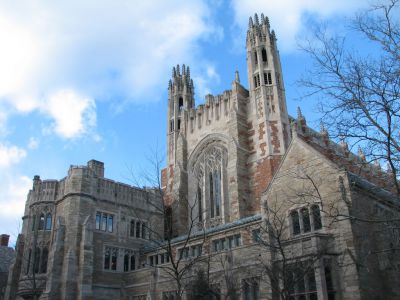
The Sterling Law Building, home to Yale Law School, stands prominently on Wall Street in New Haven, right in the heart of the Yale University campus. Built between 1930 and 1931, the building was designed by architect James Gamble Rogers in the collegiate Gothic style, modeled after the traditional English Inns of Court. It occupies an entire city block, bordered by the Hall of Graduate Studies, Beinecke Library, Sterling Memorial Library, and Grove Street Cemetery.
Named after Yale alumnus and generous benefactor John William Sterling, a founding partner of Shearman & Sterling, the building is clad in brick, granite, and limestone, and surrounds a network of courtyards. It houses classrooms, administrative offices, the Lillian Goldman Law Library, a dining hall, a daycare center, and additional communal spaces.
The Sterling Law Building has been the focus of several restoration projects aimed at preserving its distinctive architectural elements and addressing issues of material deterioration and water leakage. In 2015, DBVW Architects, who had previously worked on adjacent Yale buildings, were brought in to continue ongoing repair efforts. SGH, another key contributor, investigated the condition of the structure's enclosure systems-brick and stone masonry, slate and copper roofs, and leaded-glass steel-framed windows. Their restoration work on the building’s iconic windows later became the standard for Yale's wider efforts to preserve its early 20th-century Gothic architecture.
Today, the Sterling Law Building remains a functional and symbolic centerpiece of Yale Law School, seamlessly blending historical design with the evolving needs of a modern academic institution.
Named after Yale alumnus and generous benefactor John William Sterling, a founding partner of Shearman & Sterling, the building is clad in brick, granite, and limestone, and surrounds a network of courtyards. It houses classrooms, administrative offices, the Lillian Goldman Law Library, a dining hall, a daycare center, and additional communal spaces.
The Sterling Law Building has been the focus of several restoration projects aimed at preserving its distinctive architectural elements and addressing issues of material deterioration and water leakage. In 2015, DBVW Architects, who had previously worked on adjacent Yale buildings, were brought in to continue ongoing repair efforts. SGH, another key contributor, investigated the condition of the structure's enclosure systems-brick and stone masonry, slate and copper roofs, and leaded-glass steel-framed windows. Their restoration work on the building’s iconic windows later became the standard for Yale's wider efforts to preserve its early 20th-century Gothic architecture.
Today, the Sterling Law Building remains a functional and symbolic centerpiece of Yale Law School, seamlessly blending historical design with the evolving needs of a modern academic institution.
4) Sterling Memorial Library
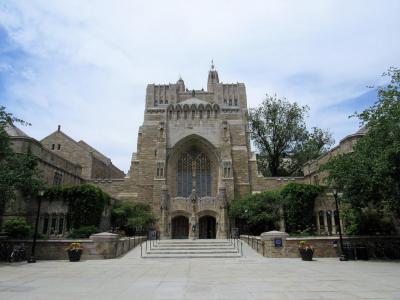
Sterling Memorial Library stands as the architectural and intellectual heart of Yale University in New Haven. Housing over 4 million volumes, it is not only the largest library on campus but also a stunning example of Gothic Revival architecture. Designed by James Gamble Rogers, the building's majestic style includes 3,300 hand-decorated stained glass windows-the work of artist G. Owen Bonawit-which depict everything from literary scenes to insects painted with such precision that they appear lifelike.
The library rises through 15 levels, each home to a distinct category of books. While Bertram Goodhue initially envisioned a structure resembling the Nebraska State Capitol, Rogers took the reins and gave the building its now-iconic Gothic form.
Adding to its grandeur, the main entrance is framed with intricate carvings in ancient languages, a collaboration between Lee Lawrie and Rene Paul Chambellan, the latter of whom also designed and executed the library's many gargoyles, interior panels, and ornamental details. Inside, the Nave features marble reliefs that narrate the founding of Yale and the early history of New Haven and Connecticut.
In 1971, Yale expanded its library system underground with the creation of the Cross Campus Library, which was renovated and renamed the Bass Library in 2007. Connected to Sterling by a tunnel, Bass adds another 150,000 volumes to Yale's literary wealth.
Though it’s easy to get lost in its collection, what truly sets Sterling apart is the artistry embedded in every corner-most notably its thousands of stained glass windows, which were the subject of a dedicated book by a former librarian in 2000. Sterling Memorial Library isn't just a place to study-it's a monument to knowledge and craftsmanship.
The library rises through 15 levels, each home to a distinct category of books. While Bertram Goodhue initially envisioned a structure resembling the Nebraska State Capitol, Rogers took the reins and gave the building its now-iconic Gothic form.
Adding to its grandeur, the main entrance is framed with intricate carvings in ancient languages, a collaboration between Lee Lawrie and Rene Paul Chambellan, the latter of whom also designed and executed the library's many gargoyles, interior panels, and ornamental details. Inside, the Nave features marble reliefs that narrate the founding of Yale and the early history of New Haven and Connecticut.
In 1971, Yale expanded its library system underground with the creation of the Cross Campus Library, which was renovated and renamed the Bass Library in 2007. Connected to Sterling by a tunnel, Bass adds another 150,000 volumes to Yale's literary wealth.
Though it’s easy to get lost in its collection, what truly sets Sterling apart is the artistry embedded in every corner-most notably its thousands of stained glass windows, which were the subject of a dedicated book by a former librarian in 2000. Sterling Memorial Library isn't just a place to study-it's a monument to knowledge and craftsmanship.
5) Harkness Tower (must see)
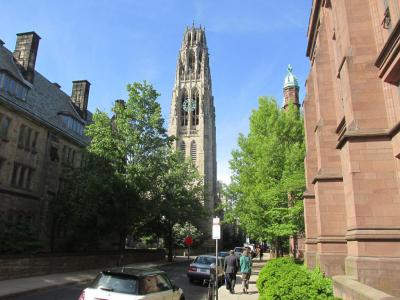
Harkness Tower is a prominent masonry structure located at Yale University in New Haven. Completed in 1922 as part of the Collegiate Gothic Memorial Quadrangle, the tower stands as a tribute to Charles William Harkness, a Yale graduate from the Class of 1883 and the brother of Edward S. Harkness, one of Yale’s most generous benefactors. It was donated by their mother, Anna M. Harkness, in memory of Charles.
Designed by architect James Gamble Rogers, a Yale College classmate of Edward Harkness, the tower was built between 1917 and 1921. It marked the first modern construction of a couronne ("crown") tower in the English Perpendicular Gothic style. Rogers drew inspiration from England’s 15th-century Boston Stump and the tower of Saint Giles' Church in Wrexham, Wales-the latter notably housing the tomb of Elihu Yale, the university's namesake.
Standing at 216 feet (66 meters), the tower was intentionally built with one foot every year since Yale’s founding at the time of construction. Its design includes a square base rising through multiple stages to an octagonal crown adorned with stone finials. It contains 284 steps from the ground to the rooftop.
Harkness Tower became part of Branford College when Yale’s residential college system launched in 1933. A major renovation took place between 2009 and 2010 to restore the tower’s masonry and architectural details.
Midway up Harkness Tower, four copper clockfaces mark the time, with the Yale Memorial Carillon bells ringing behind them. Below, the tower houses the carillon console, practice instruments, office space for the Yale Guild of Carillonneurs, a disused water tank, a historic chimes console, and a memorial chapel. Now an iconic Yale symbol, the tower even features on The Yale Herald masthead and inspired the Cathedral of Christ the King in Hamilton, Ontario.
Designed by architect James Gamble Rogers, a Yale College classmate of Edward Harkness, the tower was built between 1917 and 1921. It marked the first modern construction of a couronne ("crown") tower in the English Perpendicular Gothic style. Rogers drew inspiration from England’s 15th-century Boston Stump and the tower of Saint Giles' Church in Wrexham, Wales-the latter notably housing the tomb of Elihu Yale, the university's namesake.
Standing at 216 feet (66 meters), the tower was intentionally built with one foot every year since Yale’s founding at the time of construction. Its design includes a square base rising through multiple stages to an octagonal crown adorned with stone finials. It contains 284 steps from the ground to the rooftop.
Harkness Tower became part of Branford College when Yale’s residential college system launched in 1933. A major renovation took place between 2009 and 2010 to restore the tower’s masonry and architectural details.
Midway up Harkness Tower, four copper clockfaces mark the time, with the Yale Memorial Carillon bells ringing behind them. Below, the tower houses the carillon console, practice instruments, office space for the Yale Guild of Carillonneurs, a disused water tank, a historic chimes console, and a memorial chapel. Now an iconic Yale symbol, the tower even features on The Yale Herald masthead and inspired the Cathedral of Christ the King in Hamilton, Ontario.
6) Center Church on the Green
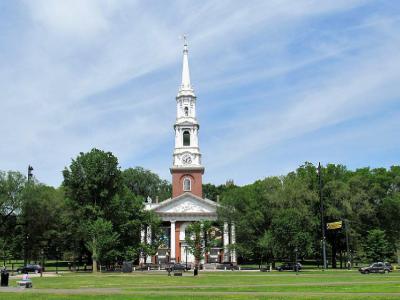
Nestled in the heart of New Haven, Center Church on the Green, officially known as The First Church of Christ, stands as a historic and architectural landmark. It is the center of the three iconic churches bordering the New Haven Green and traces its origins back to 1639 when it was founded by Puritan settlers who had arrived the year before to establish a theocratic colony they envisioned as a “New Jerusalem.”
The current church building, constructed between 1812 and 1814 during the War of 1812, is the fourth meeting house of the congregation. Designed by renowned New Haven architect Ithiel Town, the structure reflects the Post-Georgian or Federal style and was inspired by Saint Martin-in-the-Fields in London’s Trafalgar Square.
Beneath Center Church lies The Crypt, a rare intact colonial burial ground with over 1,000 remains and 137 gravestones dating from 1687 to 1812-the oldest belonging to Sarah Rutherford Trowbridge. The raised church floor hints at this hidden piece of early American history.
Inside, visitors find Waterford crystal chandeliers, Tiffany stained glass windows, and a Fisk Pipe Organ. A highlight is the central window by Joseph Lauber, depicting Reverend John Davenport’s first sermon on April 25, 1638, under an oak tree near today’s College and George Streets.
Center Church was central to early Connecticut life, with Congregationalism as the state religion until 1818. The 18th-century Great Awakening led to a split, forming the United Church to the north, while the Trinity Church was built to the south in 1814-placing the Center Church in the middle. It also shares historic ties with Yale: students worshipped here until 1757, commencements were held on-site until 1895, and seniors still circle the church on graduation day as its bells ring.
Today, Center Church continues to honor its rich past while embracing its role in the present, welcoming all who seek history, reflection, and community in the heart of New Haven.
*** Amistad Freedom Trail ***
Back in the mid-19th century, this church congregation was actively involved in supporting the Mende African captives during the Amistad incident and was particularly instrumental in gaining support for the Africans held in the New Haven Jail.
The current church building, constructed between 1812 and 1814 during the War of 1812, is the fourth meeting house of the congregation. Designed by renowned New Haven architect Ithiel Town, the structure reflects the Post-Georgian or Federal style and was inspired by Saint Martin-in-the-Fields in London’s Trafalgar Square.
Beneath Center Church lies The Crypt, a rare intact colonial burial ground with over 1,000 remains and 137 gravestones dating from 1687 to 1812-the oldest belonging to Sarah Rutherford Trowbridge. The raised church floor hints at this hidden piece of early American history.
Inside, visitors find Waterford crystal chandeliers, Tiffany stained glass windows, and a Fisk Pipe Organ. A highlight is the central window by Joseph Lauber, depicting Reverend John Davenport’s first sermon on April 25, 1638, under an oak tree near today’s College and George Streets.
Center Church was central to early Connecticut life, with Congregationalism as the state religion until 1818. The 18th-century Great Awakening led to a split, forming the United Church to the north, while the Trinity Church was built to the south in 1814-placing the Center Church in the middle. It also shares historic ties with Yale: students worshipped here until 1757, commencements were held on-site until 1895, and seniors still circle the church on graduation day as its bells ring.
Today, Center Church continues to honor its rich past while embracing its role in the present, welcoming all who seek history, reflection, and community in the heart of New Haven.
*** Amistad Freedom Trail ***
Back in the mid-19th century, this church congregation was actively involved in supporting the Mende African captives during the Amistad incident and was particularly instrumental in gaining support for the Africans held in the New Haven Jail.
7) Wooster Square Park
Nestled in the heart of New Haven’s Wooster Square neighborhood, Wooster Square Park is a charming and historically rich green space bordered by Greene Street, Wooster Place, Chapel Street, and Academy Street. Named after Revolutionary War hero General David Wooster, the park and its surroundings are part of the Wooster Square Historic District, proudly listed on the National Register of Historic Places since 1971.
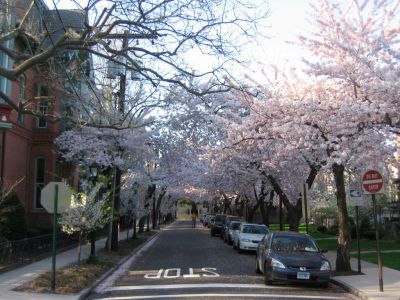
Originally the domain of ship captains who built their homes around the square in the 19th century, today the park is a tranquil urban oasis marked by elegant cherry trees and a bronze statue of Christopher Columbus. The park’s centerpiece, however, comes to life each spring during the annual Cherry Blossom Festival, a beloved tradition that began in 1973 with the planting of 72 Yoshino cherry trees. What started as a small neighborhood event has blossomed into a major city celebration, drawing thousands of visitors to admire the blooms.
Wooster Square itself is affectionately known as Little Italy, home to some of the most iconic apizza destinations in the United States-most notably Frank Pepe Pizzeria Napoletana and Sally’s Apizza. The neighborhood is also famous for its stunning 19th-century row houses and brownstones, reflecting architectural styles from Federal to Victorian, which frame the park with historic elegance.
Whether you're here for a spring stroll under the cherry blossoms, a bite of legendary pizza, or a glimpse into New Haven’s architectural and cultural past, Wooster Square Park offers a unique and vibrant slice of the city’s heritage.
Originally the domain of ship captains who built their homes around the square in the 19th century, today the park is a tranquil urban oasis marked by elegant cherry trees and a bronze statue of Christopher Columbus. The park’s centerpiece, however, comes to life each spring during the annual Cherry Blossom Festival, a beloved tradition that began in 1973 with the planting of 72 Yoshino cherry trees. What started as a small neighborhood event has blossomed into a major city celebration, drawing thousands of visitors to admire the blooms.
Wooster Square itself is affectionately known as Little Italy, home to some of the most iconic apizza destinations in the United States-most notably Frank Pepe Pizzeria Napoletana and Sally’s Apizza. The neighborhood is also famous for its stunning 19th-century row houses and brownstones, reflecting architectural styles from Federal to Victorian, which frame the park with historic elegance.
Whether you're here for a spring stroll under the cherry blossoms, a bite of legendary pizza, or a glimpse into New Haven’s architectural and cultural past, Wooster Square Park offers a unique and vibrant slice of the city’s heritage.
