Custom Walk in Osaka, Japan by cheryl_traveller410 created on 2025-07-19
Guide Location: Japan » Osaka
Guide Type: Custom Walk
# of Sights: 5
Tour Duration: 7 Hour(s)
Travel Distance: 20.1 Km or 12.5 Miles
Share Key: YERDA
Guide Type: Custom Walk
# of Sights: 5
Tour Duration: 7 Hour(s)
Travel Distance: 20.1 Km or 12.5 Miles
Share Key: YERDA
How It Works
Please retrieve this walk in the GPSmyCity app. Once done, the app will guide you from one tour stop to the next as if you had a personal tour guide. If you created the walk on this website or come to the page via a link, please follow the instructions below to retrieve the walk in the app.
Retrieve This Walk in App
Step 1. Download the app "GPSmyCity: Walks in 1K+ Cities" on Apple App Store or Google Play Store.



Step 2. In the GPSmyCity app, download(or launch) the guide "Osaka Map and Walking Tours".
Step 3. Tap the menu button located at upper right corner of the "Walks" screen and select "Retrieve custom walk". Enter the share key: YERDA
1) Osaka Castle (must see)
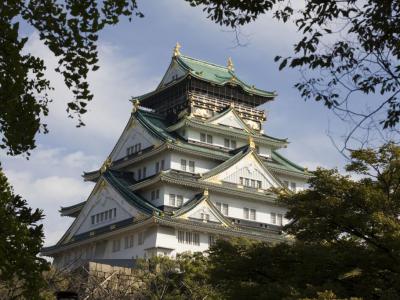
The Osaka Castle is one of the most famous landmarks in Japan. The castle functions as a museum and a popular tourist attraction.
Construction of the original castle began in 1583. It was modeled after the headquarters of feudal lord Oda Nobunaga, Azuchi Castle. Built by samurai Toyotomi Hideyoshi, the castle was designed to have a five-story tower with three additional underground stories. It was completed in 1597.
After his death, the castle passed to Hideyoshi's son, Toyotomi Hideyori. He ruled over the castle until it fell to the Tokugawa clan in 1620. The original building burned to the ground, and Hideyori committed seppuku, a form of ritual suicide.
Reconstruction of the castle included the main tower with five external and eight internal stories. The walls, built in 1620, are still standing, but the remainder of the castle burned when lightning struck the gunpowder warehouse. What remained fell into disrepair and was neglected through the early 19th century.
The castle was fully repaired in 1843 but only lasted 25 years, until it burned again. The Meiji government turned the remainder of the building into an army arsenal where guns and ammunition were manufactured.
Osaka Castle was one of the world's largest military armories during World War II when American bombs destroyed 90 percent of the military equipment.
The castle was restored between 1995 and 1997. It was rebuilt to resemble the original castle from the exterior as much as possible. It is surrounded by inner and outer moats with four water-filled sections that represent the cardinal directions.
The castle grounds contain 13 structures that are culturally significant to Japan. Among these are, the Ote-mon Gate, the Rokuban-yagura Turret, the Kinmeisui Well, Kinzo Storehouse, and the Enshogura Gunpowder Magazine.
Construction of the original castle began in 1583. It was modeled after the headquarters of feudal lord Oda Nobunaga, Azuchi Castle. Built by samurai Toyotomi Hideyoshi, the castle was designed to have a five-story tower with three additional underground stories. It was completed in 1597.
After his death, the castle passed to Hideyoshi's son, Toyotomi Hideyori. He ruled over the castle until it fell to the Tokugawa clan in 1620. The original building burned to the ground, and Hideyori committed seppuku, a form of ritual suicide.
Reconstruction of the castle included the main tower with five external and eight internal stories. The walls, built in 1620, are still standing, but the remainder of the castle burned when lightning struck the gunpowder warehouse. What remained fell into disrepair and was neglected through the early 19th century.
The castle was fully repaired in 1843 but only lasted 25 years, until it burned again. The Meiji government turned the remainder of the building into an army arsenal where guns and ammunition were manufactured.
Osaka Castle was one of the world's largest military armories during World War II when American bombs destroyed 90 percent of the military equipment.
The castle was restored between 1995 and 1997. It was rebuilt to resemble the original castle from the exterior as much as possible. It is surrounded by inner and outer moats with four water-filled sections that represent the cardinal directions.
The castle grounds contain 13 structures that are culturally significant to Japan. Among these are, the Ote-mon Gate, the Rokuban-yagura Turret, the Kinmeisui Well, Kinzo Storehouse, and the Enshogura Gunpowder Magazine.
2) Umeda Sky Building - Floating Garden Observatory (must see)
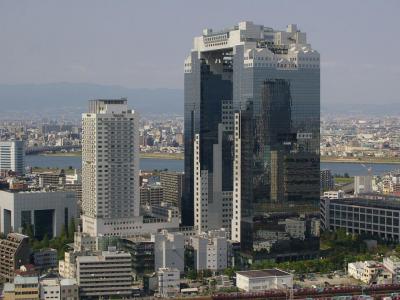
Located in Kita-Ku, the Umeda Sky Building is the twelfth highest structure in Osaka. The rooftop observatory called the Floating Garden Observatory is on the bridge that connects the two towers of the building.
The Umeda Sky Building was designed by Hiroshi Hara and opened its doors in 1993. It is 173 meters high and consists of two forty floor buildings connected by an observation platform at the top. The platform has a doughnut shape giving 360 degree views of Osaka. It mainly houses office space except for the observation deck and a restaurant mall in the basement.
From the Floating Garden Observatory of the Umeda Sky Building, one can see as far as the Awaji Islands and get a clear view of airplanes landing and taking off. Visitors can get a bird’s eye view of many ancient bridges and railway bridges in the city. There is also an exhibition about other observation decks in high rise buildings around the world. The food mall called the Takimi-Koji Gourmet Street in the basement is designed to look like a street in Osaka during the 1920s. The offices of the Toshiba Corporation are in the building. Other tenants include the Mazda Corporation and the German Consulate in Osaka located on the 35th floor of the eastern tower. There is also an urban garden with walking paths and fountains in front of the building.
The Umeda Sky Building was designed by Hiroshi Hara and opened its doors in 1993. It is 173 meters high and consists of two forty floor buildings connected by an observation platform at the top. The platform has a doughnut shape giving 360 degree views of Osaka. It mainly houses office space except for the observation deck and a restaurant mall in the basement.
From the Floating Garden Observatory of the Umeda Sky Building, one can see as far as the Awaji Islands and get a clear view of airplanes landing and taking off. Visitors can get a bird’s eye view of many ancient bridges and railway bridges in the city. There is also an exhibition about other observation decks in high rise buildings around the world. The food mall called the Takimi-Koji Gourmet Street in the basement is designed to look like a street in Osaka during the 1920s. The offices of the Toshiba Corporation are in the building. Other tenants include the Mazda Corporation and the German Consulate in Osaka located on the 35th floor of the eastern tower. There is also an urban garden with walking paths and fountains in front of the building.
3) Ebisu Bridge
Ebisu Bridge is a bridge that spans the Dotonbori River in Chuo Ward, Osaka City. The bridge connects the downtown areas known as Shinsaibashi-suji and Ebisubashi-suji. It is sometimes referred to as Hikkake-bashi (pick-up bridge) by locals.
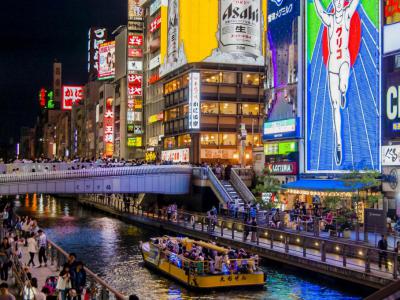
Ebisu Bridge is popular with tourists who want unique and meaningful photos. The southwest side of the bridge is a favorite due to the presence of the large, Glico signboard.
The footbridge has no motorized traffic, which allows tourists to take their time as they cross the Dotonbori. A curved area on each side of the bridge lets visitors step out of the pedestrian traffic to photograph the signboards and large buildings that loom over downtown Osaka.
The current Ebisu Bridge was built in 2007 by CTI Engineering, as part of the Dotonbori River Development project. However, the first steel bridge to span this part of the river was constructed in 1878. It was replaced with a reinforced concrete arched bridge in 1925.
Ebisu Bridge is popular with tourists who want unique and meaningful photos. The southwest side of the bridge is a favorite due to the presence of the large, Glico signboard.
The footbridge has no motorized traffic, which allows tourists to take their time as they cross the Dotonbori. A curved area on each side of the bridge lets visitors step out of the pedestrian traffic to photograph the signboards and large buildings that loom over downtown Osaka.
The current Ebisu Bridge was built in 2007 by CTI Engineering, as part of the Dotonbori River Development project. However, the first steel bridge to span this part of the river was constructed in 1878. It was replaced with a reinforced concrete arched bridge in 1925.
4) Tsutenkaku Tower
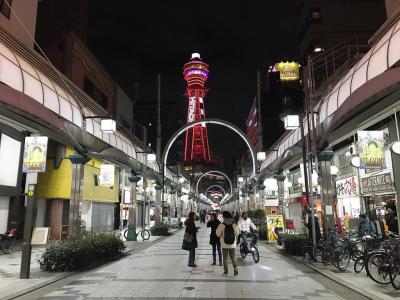
Tsutenkaku Tower is an iconic landmark in Osaka, located in the bustling Shinsekai district of Naniwa-ku. Standing 103 meters tall, with its main observation deck perched at 91 meters, the tower offers panoramic views of Osaka and serves as a beacon of the city's resilience and cultural heritage.
The site's original tower, constructed in 1912, was inspired by both the Eiffel Tower and the Arc de Triomphe, linking to Luna Park via an aerial cable car. It was the second tallest structure in Asia at the time, reaching a height of 64 meters. However, after suffering significant damage from a fire in 1943, it was dismantled to repurpose the steel for wartime needs.
Post-war efforts to resurrect Tsutenkaku led to the establishment of the Tsūtenkaku Kanko Company Ltd. and the commissioning of Tachū Naitō, a renowned architect known as Japan's "Father of Towers." The new tower, completed in 1956, features an octagonal design and has since been a symbol of the city's recovery and renewal.
A unique aspect of Tsutenkaku is its connection to Billiken, the God of Happiness or "things as they ought to be." Originally enshrined within Luna Park, a replica of Billiken was placed in the tower in 1979 to revive its historical significance. The statue is now a popular attraction, with visitors often touching its feet and making donations in hopes of receiving good luck.
Tsutenkaku is also noted for its dazzling display of lights, which have evolved from neon to energy-efficient LED lighting. These lights not only illuminate the tower but also serve as advertisements for Hitachi, the tower's sponsor since 1957, and as public service announcements. The tower's top lights act as a weather beacon, changing colors to forecast the weather for the upcoming day.
Today, Tsutenkaku remains a must-visit for tourists and a cherished monument for locals, symbolizing both Osaka's past glories and its modern-day vibrancy.
The site's original tower, constructed in 1912, was inspired by both the Eiffel Tower and the Arc de Triomphe, linking to Luna Park via an aerial cable car. It was the second tallest structure in Asia at the time, reaching a height of 64 meters. However, after suffering significant damage from a fire in 1943, it was dismantled to repurpose the steel for wartime needs.
Post-war efforts to resurrect Tsutenkaku led to the establishment of the Tsūtenkaku Kanko Company Ltd. and the commissioning of Tachū Naitō, a renowned architect known as Japan's "Father of Towers." The new tower, completed in 1956, features an octagonal design and has since been a symbol of the city's recovery and renewal.
A unique aspect of Tsutenkaku is its connection to Billiken, the God of Happiness or "things as they ought to be." Originally enshrined within Luna Park, a replica of Billiken was placed in the tower in 1979 to revive its historical significance. The statue is now a popular attraction, with visitors often touching its feet and making donations in hopes of receiving good luck.
Tsutenkaku is also noted for its dazzling display of lights, which have evolved from neon to energy-efficient LED lighting. These lights not only illuminate the tower but also serve as advertisements for Hitachi, the tower's sponsor since 1957, and as public service announcements. The tower's top lights act as a weather beacon, changing colors to forecast the weather for the upcoming day.
Today, Tsutenkaku remains a must-visit for tourists and a cherished monument for locals, symbolizing both Osaka's past glories and its modern-day vibrancy.
5) Tempozan Harbor Village Ferris Wheel
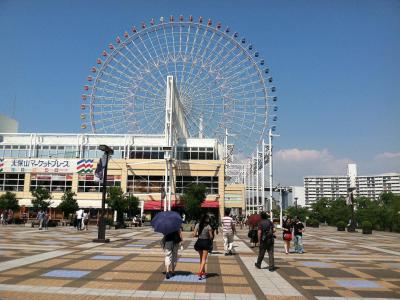
The Tempozan Ferris Wheel in Osaka is a prominent feature of the Tempozan Harbor Village, an entertainment and shopping complex that also includes the Osaka Aquarium Kaiyukan, one of the largest aquariums in the world. Opened on July 12, 1997, the Ferris wheel was the tallest in the world at the time, standing at 112.5 meters (369 feet) in height and 100 meters (330 feet) in diameter.
Located strategically next to the Kaiyukan Aquarium, the Tempozan Ferris Wheel offers a comprehensive entertainment experience. The complex is filled with a variety of shops selling Osaka-themed souvenirs and gifts, restaurants that feature local cuisine and offers both the Ferris wheel and sightseeing cruises that captivate tourists and locals alike. This mixture of attractions ensures a full day of entertainment for all ages.
The ride on the Ferris wheel lasts approximately 17 minutes, during which riders can enjoy expansive views of Osaka Bay and landmarks such as Mount Ikoma to the east, the Akashi Kaikyō Bridge to the west, Kansai International Airport to the south, and the Rokko Mountains to the north.
An interesting feature of the Tempozan Ferris Wheel is its weather forecasting capability; it uses colored lights to indicate the weather forecast for the following day: orange lights suggest a sunny day, green lights a cloudy day, and blue lights predict rain. This unique attribute adds a layer of engagement to the experience.
The Tempozan Ferris Wheel was a record-holder until newer Ferris wheels were introduced, including the Daikanransha in Odaiba, Tokyo, and the now-defunct Sky Dream Fukuoka, which surpassed it in size. Despite newer and taller Ferris wheels, Tempozan remains a landmark attraction, offering unforgettable panoramic views and a unique blend of entertainment and cultural experiences in Osaka.
Located strategically next to the Kaiyukan Aquarium, the Tempozan Ferris Wheel offers a comprehensive entertainment experience. The complex is filled with a variety of shops selling Osaka-themed souvenirs and gifts, restaurants that feature local cuisine and offers both the Ferris wheel and sightseeing cruises that captivate tourists and locals alike. This mixture of attractions ensures a full day of entertainment for all ages.
The ride on the Ferris wheel lasts approximately 17 minutes, during which riders can enjoy expansive views of Osaka Bay and landmarks such as Mount Ikoma to the east, the Akashi Kaikyō Bridge to the west, Kansai International Airport to the south, and the Rokko Mountains to the north.
An interesting feature of the Tempozan Ferris Wheel is its weather forecasting capability; it uses colored lights to indicate the weather forecast for the following day: orange lights suggest a sunny day, green lights a cloudy day, and blue lights predict rain. This unique attribute adds a layer of engagement to the experience.
The Tempozan Ferris Wheel was a record-holder until newer Ferris wheels were introduced, including the Daikanransha in Odaiba, Tokyo, and the now-defunct Sky Dream Fukuoka, which surpassed it in size. Despite newer and taller Ferris wheels, Tempozan remains a landmark attraction, offering unforgettable panoramic views and a unique blend of entertainment and cultural experiences in Osaka.
