Custom Walk in Minneapolis, Minnesota by gpscity_aaa66 created on 2025-07-19
Guide Location: USA » Minneapolis
Guide Type: Custom Walk
# of Sights: 8
Tour Duration: 11 Hour(s)
Travel Distance: 31.1 Km or 19.3 Miles
Share Key: G67CN
Guide Type: Custom Walk
# of Sights: 8
Tour Duration: 11 Hour(s)
Travel Distance: 31.1 Km or 19.3 Miles
Share Key: G67CN
How It Works
Please retrieve this walk in the GPSmyCity app. Once done, the app will guide you from one tour stop to the next as if you had a personal tour guide. If you created the walk on this website or come to the page via a link, please follow the instructions below to retrieve the walk in the app.
Retrieve This Walk in App
Step 1. Download the app "GPSmyCity: Walks in 1K+ Cities" on Apple App Store or Google Play Store.



Step 2. In the GPSmyCity app, download(or launch) the guide "Minneapolis Map and Walking Tours".
Step 3. Tap the menu button located at upper right corner of the "Walks" screen and select "Retrieve custom walk". Enter the share key: G67CN

1) Minnesota State Capitol (must see)
When local architect Cass Gilbert set out to design Minnesota’s third state Capitol, he clearly had more in mind than a building-it was an architectural power move. Construction kicked off in 1896, and by the time the Capitol debuted in January 1905, it was turning heads. Visitors who strolled through its doors were floored by the soaring marble dome (one of the world’s largest self-supporting ones, no less), expansive chambers for state officials, and art-filled walls that looked more like galleries than government décor. Not to mention, over twenty types of stone imported from across the globe were bathed in the warm glow of electric lighting-pure cutting-edge elegance for the time.
Fast forward 113 years, and the Capitol still dazzles-especially after a meticulous four-year restoration. Like a vintage car brought back to its showroom glory, the building now gleams with repaired exterior stonework, refreshed decorative wall panels, and murals that pop with color. Original light fixtures shine brighter than ever, and over a hundred restored pieces of furniture have been reunited with their old haunts, complementing other historic treasures throughout the corridors, chambers, and meeting rooms.
But it’s not just a facelift. New roof and copper panels? Check. Updated electrical and mechanical systems? Check. Modern LED lighting? Absolutely. There’s even more room for meetings, conferences, and exhibits. The once-cluttered basement has been transformed into an inviting public space, complete with exposed foundation stones and easier access to the original German rathskeller-a charming cafeteria during legislative sessions.
With its marriage of art and architecture, the Capitol is a true visual banquet-a feast of grand spaces and vibrant details. And if you want to savor the full experience, guided tours are available Monday through Saturday, every hour from 10 AM to 2 PM. Just check in at the Capitol Information and Tour Center on the first floor, and get ready to marvel at this Minnesota landmark.
Fast forward 113 years, and the Capitol still dazzles-especially after a meticulous four-year restoration. Like a vintage car brought back to its showroom glory, the building now gleams with repaired exterior stonework, refreshed decorative wall panels, and murals that pop with color. Original light fixtures shine brighter than ever, and over a hundred restored pieces of furniture have been reunited with their old haunts, complementing other historic treasures throughout the corridors, chambers, and meeting rooms.
But it’s not just a facelift. New roof and copper panels? Check. Updated electrical and mechanical systems? Check. Modern LED lighting? Absolutely. There’s even more room for meetings, conferences, and exhibits. The once-cluttered basement has been transformed into an inviting public space, complete with exposed foundation stones and easier access to the original German rathskeller-a charming cafeteria during legislative sessions.
With its marriage of art and architecture, the Capitol is a true visual banquet-a feast of grand spaces and vibrant details. And if you want to savor the full experience, guided tours are available Monday through Saturday, every hour from 10 AM to 2 PM. Just check in at the Capitol Information and Tour Center on the first floor, and get ready to marvel at this Minnesota landmark.

2) Cathedral of Saint Paul (must see)
A century in the making-well, sort of. The Cathedral of Saint Paul, completed in 1915, owes its existence to the team of Archbishop John Ireland, architect Emmanuel Masqueray, and countless unsung artists, craftsmen, and laborers who chipped in (sometimes literally). The result is a 306-foot landmark topped by a recently restored copper dome, showcasing the grand Beaux Arts style.
Don’t let the austere Minnesota Rockville granite exterior fool you. Inside, the space soars with breathtaking artistry. Stained glass, intricate metalwork, statues galore, and rare marbles from every corner of the globe fill the space beneath the immense interior dome, which measures 175 feet high and 96 feet in diameter.
A standout feature is the Shrine of Nations-a semicircle of six chapels behind the altar. Each chapel honors an ethnic community that contributed to the cathedral’s construction, pairing statues of patron saints with marble medallions representing their homeland. For instance, Saint Patrick graces the Irish chapel, his likeness complemented by Connemara Green marble.
History buffs will appreciate a mural on the building’s north side that depicts Saint Paul’s first bishop, Joseph Cretin, arriving via canoe to meet Father Lucien Galtier, who gave the city’s its name. In the background, you’ll spot Saint Paul’s original church: a humble log cabin chapel that’s a far cry from the cathedral’s grandeur.
Want to experience it firsthand? Step right in. The cathedral is open daily, with free guided tours at 1 PM, Tuesday through Friday (excluding holy days, holidays, and scheduled liturgical events). Of course, you can also embark on a self-guided tour anytime and marvel at the splendor at your own pace.
Don’t let the austere Minnesota Rockville granite exterior fool you. Inside, the space soars with breathtaking artistry. Stained glass, intricate metalwork, statues galore, and rare marbles from every corner of the globe fill the space beneath the immense interior dome, which measures 175 feet high and 96 feet in diameter.
A standout feature is the Shrine of Nations-a semicircle of six chapels behind the altar. Each chapel honors an ethnic community that contributed to the cathedral’s construction, pairing statues of patron saints with marble medallions representing their homeland. For instance, Saint Patrick graces the Irish chapel, his likeness complemented by Connemara Green marble.
History buffs will appreciate a mural on the building’s north side that depicts Saint Paul’s first bishop, Joseph Cretin, arriving via canoe to meet Father Lucien Galtier, who gave the city’s its name. In the background, you’ll spot Saint Paul’s original church: a humble log cabin chapel that’s a far cry from the cathedral’s grandeur.
Want to experience it firsthand? Step right in. The cathedral is open daily, with free guided tours at 1 PM, Tuesday through Friday (excluding holy days, holidays, and scheduled liturgical events). Of course, you can also embark on a self-guided tour anytime and marvel at the splendor at your own pace.
3) James J. Hill House (must see)
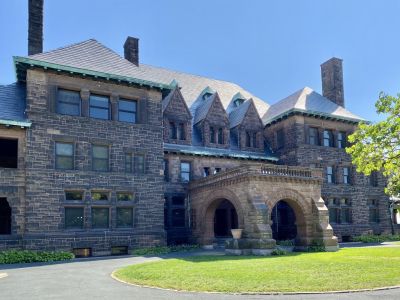
Of all the grand residences that sprang up during Summit Avenue’s first building boom, none can rival the James J. Hill House in fame or sheer audacity. Built in 1891 in the Richardsonian Romanesque style, it replaced the relatively humble home of Edward Duffield Neill with a sprawling 36,000-square-foot showpiece. This five-story behemoth, owned by none other than railroad magnate and “Empire Builder” James J. Hill, claimed three lots and arguably the best view in Saint Paul. Back then, it cost Hill $931,275-about $22 million today-to turn his vision into reality. These days, it’s the Minnesota Historical Society that holds the keys, and they’re happy to let you peek inside on tours from Wednesday through Sunday.
The Hill House isn’t just a mansion; it’s a Gilded Age spectacle, channeling the grandeur of Rhode Islands’s finest estates. Its 42 rooms are filled with mahogany and oak woodwork, hand-carved to the nines. Imagine 16 glittering cut-glass chandeliers, a two-story art gallery with a skylight overhead, and a reception hall so vast it runs 88 feet long. Oh, and don’t forget the three-story pipe organ that was, in its day, a literal showstopper.
But this isn’t just a frozen-in-time museum piece. Local artists regularly showcase their work here, often drawing inspiration from Minnesota’s natural beauty. Special events-like concerts-make the mansion feel as lively as it must have been in Hill’s time. Before you leave, pop into the museum shop to pick up books on the house’s fascinating history or souvenirs to commemorate your visit.
The Hill House isn’t just a mansion; it’s a Gilded Age spectacle, channeling the grandeur of Rhode Islands’s finest estates. Its 42 rooms are filled with mahogany and oak woodwork, hand-carved to the nines. Imagine 16 glittering cut-glass chandeliers, a two-story art gallery with a skylight overhead, and a reception hall so vast it runs 88 feet long. Oh, and don’t forget the three-story pipe organ that was, in its day, a literal showstopper.
But this isn’t just a frozen-in-time museum piece. Local artists regularly showcase their work here, often drawing inspiration from Minnesota’s natural beauty. Special events-like concerts-make the mansion feel as lively as it must have been in Hill’s time. Before you leave, pop into the museum shop to pick up books on the house’s fascinating history or souvenirs to commemorate your visit.
4) Fort Snelling (must see)
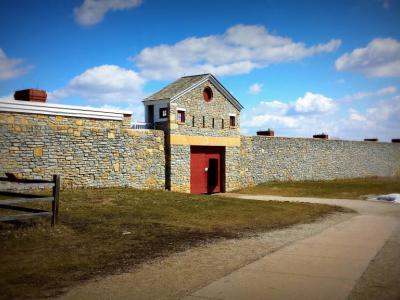
One spot on the bluffs, countless voices echoing through time. At Historic Fort Snelling, perched where the Minnesota and Mississippi rivers meet, you’ll uncover 10,000 years of Minnesota’s tale. Dive into the story of the 1820s military fort-officially a military reservation and lauded as a “National Treasure” by the National Trust for Historic Preservation-and its neighborhood. This ground has seen it all: the lives of Native peoples, the hustle of trade, the courage of soldiers and veterans, the struggles of enslaved people, and waves of immigrants-all set against a landscape in constant flux. The shiny new Plank Museum & Visitor Center is open all year.
Pro tip: Consider visiting the nearby Minnesota Air National Guard Museum. It’s one of the largest collections of military aircraft in five states, boasting fighters, cargo haulers, helicopters, and utility planes used by the U.S. military. Marvel at ejection seats, flight simulators, jet engines, and weaponry spanning WWI to today. But remember: book your tour at least 10 days ahead so you don’t get grounded!
Pro tip: Consider visiting the nearby Minnesota Air National Guard Museum. It’s one of the largest collections of military aircraft in five states, boasting fighters, cargo haulers, helicopters, and utility planes used by the U.S. military. Marvel at ejection seats, flight simulators, jet engines, and weaponry spanning WWI to today. But remember: book your tour at least 10 days ahead so you don’t get grounded!

5) Minneapolis Institute of Arts (must see)
A neoclassical gem in a rapidly changing neighborhood, the MIA (pronounced “Mia” by those in the know) draws half a million visitors annually. Originally founded in 1883, the museum settled into its current grandiose digs in 1915, later sprouting a minimalist wing in 1974 and a Michael Graves-designed addition in 2006-both offering a modern counterpoint to the classical facade. While its vast collection spans centuries and continents, the MIA shines particularly bright in Asian art.
For families, the museum offers a dedicated Family Center-a cozy nook stocked with books, games, and snacks, perfect for recharging before tackling the galleries again. Every month, one Sunday is set aside for kid-friendly activities. Adults, on the other hand, can enjoy their own night out at Third Thursdays, where the museum mixes music, drinks, and art (6–9 PM). Some special exhibitions may require a ticket, but there’s plenty to enjoy without one.
Pro tip: The MIA’s quirkiest treasure isn’t in the main building at all-it’s the Purcell-Cutts House, a charming Prairie School home about a mile away near Lake of the Isles. You can take a guided tour of this architectural beauty every second weekend of the month.
For families, the museum offers a dedicated Family Center-a cozy nook stocked with books, games, and snacks, perfect for recharging before tackling the galleries again. Every month, one Sunday is set aside for kid-friendly activities. Adults, on the other hand, can enjoy their own night out at Third Thursdays, where the museum mixes music, drinks, and art (6–9 PM). Some special exhibitions may require a ticket, but there’s plenty to enjoy without one.
Pro tip: The MIA’s quirkiest treasure isn’t in the main building at all-it’s the Purcell-Cutts House, a charming Prairie School home about a mile away near Lake of the Isles. You can take a guided tour of this architectural beauty every second weekend of the month.

6) Minneapolis Sculpture Garden (must see)
Directly across the street from the Walker Art Center, the Minneapolis Sculpture Garden claims the title of the world’s largest urban sculpture park. Spanning 11 acres (45,000 square meters), this green oasis once served as a military drill ground, but it now showcases an impressive collection of around 40 modern and contemporary artworks. The most photographed-and perhaps most beloved-piece is undoubtedly Claes Oldenburg and Coosje van Bruggen’s “Spoonbridge and Cherry”, a whimsical, oversized spoon delicately balancing a bright red cherry. There’s also “Hahn/Cock”, a strikingly blue rooster that stands proud, nearly daring visitors to snap its photo against the backdrop of the downtown Minneapolis skyline and the magnificent Basilica of Saint Mary.
Even better, admission to the Sculpture Garden is absolutely free. Come rain, shine, or snow, you can wander the grounds every single day of the year. Beyond the outdoor sculptures, the Garden also offers the delights of the Cowles Conservatory-an indoor sanctuary that features tropical flora, a lush escape from the chilly Minnesota winters, and, of course, art. Inside, you’ll find Frank Gehry’s dazzling “Standing Glass Fish”-proof that art and nature aren’t just neighbors here; they’re inextricably entwined.
Pro tip: When you’re ready to keep the art-inspired stroll going, make your way across the brightly-hued Irene Hixon Whitney Bridge over Hennepin Avenue to Loring Park. Once there, meander through the park’s tree-lined paths while taking in more art and nature. Feeling peckish? Head to Café and Bar Lurcat for a dining experience that’s as refined as it is relaxed.
Even better, admission to the Sculpture Garden is absolutely free. Come rain, shine, or snow, you can wander the grounds every single day of the year. Beyond the outdoor sculptures, the Garden also offers the delights of the Cowles Conservatory-an indoor sanctuary that features tropical flora, a lush escape from the chilly Minnesota winters, and, of course, art. Inside, you’ll find Frank Gehry’s dazzling “Standing Glass Fish”-proof that art and nature aren’t just neighbors here; they’re inextricably entwined.
Pro tip: When you’re ready to keep the art-inspired stroll going, make your way across the brightly-hued Irene Hixon Whitney Bridge over Hennepin Avenue to Loring Park. Once there, meander through the park’s tree-lined paths while taking in more art and nature. Feeling peckish? Head to Café and Bar Lurcat for a dining experience that’s as refined as it is relaxed.

7) Stone Arch Bridge (must see)
The Stone Arch Bridge in Minneapolis is a striking symbol of the city’s industrial glory days. Stretching across the Mississippi River at Saint Anthony Falls, it serves as a gateway to some of the city’s most picturesque views. Not only is it the only stone-arched bridge along the entire Mississippi River, but it also claims the title of the second-oldest bridge on the waterway-only losing to Saint Louis’s Eads Bridge in a historical game of “who’s older”.
Built in 1883 by railroad tycoon James J. Hill to shuttle passenger trains to a station a mile west, the bridge was initially nicknamed “Hill’s Folly”. Yet once its value in connecting passengers became clear, those skeptics had to eat their words (and maybe some humble pie). Engineer Charles C. Smith designed its graceful arches to flow with the nearby falls and surrounding terrain, using local granite from Sauk Rapids and magnesium limestone from Mankato and Iowa for the upper sections.
In its long lifetime, the Stone Arch Bridge has worn many hats. It got a wider girth in 1925 to support larger railcars, only to trade the rail life for a pedestrian and cyclist paradise in 1994. By 1971, it made the National Register of Historic Places, and in 1974, it nabbed a National Historic Civil Engineering Landmark title. Fast forward to 2005, and the bridge received a glow-up with indirect lighting.
Today, the bridge moonlights as a festival hotspot, hosting Independence Day fireworks and Minneapolis Aquatennial displays that draw oohs and ahhs from the crowds. It’s also a year-round runway for skyline selfies, views of the historic Pillsbury “A” Mill, the Mill City Museum, and more. And with the lively Main Street restaurants and the Guthrie Theater just steps away, the Stone Arch Bridge is less a relic of the past and more a vibrant link between history and modern city life.
Built in 1883 by railroad tycoon James J. Hill to shuttle passenger trains to a station a mile west, the bridge was initially nicknamed “Hill’s Folly”. Yet once its value in connecting passengers became clear, those skeptics had to eat their words (and maybe some humble pie). Engineer Charles C. Smith designed its graceful arches to flow with the nearby falls and surrounding terrain, using local granite from Sauk Rapids and magnesium limestone from Mankato and Iowa for the upper sections.
In its long lifetime, the Stone Arch Bridge has worn many hats. It got a wider girth in 1925 to support larger railcars, only to trade the rail life for a pedestrian and cyclist paradise in 1994. By 1971, it made the National Register of Historic Places, and in 1974, it nabbed a National Historic Civil Engineering Landmark title. Fast forward to 2005, and the bridge received a glow-up with indirect lighting.
Today, the bridge moonlights as a festival hotspot, hosting Independence Day fireworks and Minneapolis Aquatennial displays that draw oohs and ahhs from the crowds. It’s also a year-round runway for skyline selfies, views of the historic Pillsbury “A” Mill, the Mill City Museum, and more. And with the lively Main Street restaurants and the Guthrie Theater just steps away, the Stone Arch Bridge is less a relic of the past and more a vibrant link between history and modern city life.

8) Mill City Museum (must see)
Opened in 2003, Mill City Museum rose from the ashes of the Washburn “A” Mill-literally. Once the largest and most cutting-edge flour mill on the planet back in 1880, this grand mill sparked a milling revolution that gave Minneapolis bragging rights as the flour milling capital of the world from 1880 to 1930. Talk about rolling in the dough.
By 1965, the mill had run its course and shut down, and a fire in 1991 left it looking like something out of a post-apocalyptic movie. But rather than letting it crumble, Minneapolis decided to turn lemons into lemonade-or, rather, wheat into, well, an award-winning museum.
The Minnesota Historical Society stepped in and called on architect Thomas Meyer to design a building that respected the past while welcoming the future. The result? A blend of preserved flour bins, milling machinery, and a rail corridor-all complemented with sleek modern touches, including a glass curtain wall etched with historic mill diagrams and multiple entry points that effortlessly link downtown with the Mississippi riverfront.
It’s not just a pretty face, either. The museum has racked up major design awards and continues to draw visitors into the city’s milling heritage. Inside, you can witness baking demonstrations, nibble on fresh bread, gawk at a model mill explosion, and enjoy amazing views of Saint Anthony Falls and the Stone Arch Bridge from the observation deck. Among other highlights are the Flour Tower exhibit and the much-recommended short film “Minneapolis in 19 Minutes Flat!”
By 1965, the mill had run its course and shut down, and a fire in 1991 left it looking like something out of a post-apocalyptic movie. But rather than letting it crumble, Minneapolis decided to turn lemons into lemonade-or, rather, wheat into, well, an award-winning museum.
The Minnesota Historical Society stepped in and called on architect Thomas Meyer to design a building that respected the past while welcoming the future. The result? A blend of preserved flour bins, milling machinery, and a rail corridor-all complemented with sleek modern touches, including a glass curtain wall etched with historic mill diagrams and multiple entry points that effortlessly link downtown with the Mississippi riverfront.
It’s not just a pretty face, either. The museum has racked up major design awards and continues to draw visitors into the city’s milling heritage. Inside, you can witness baking demonstrations, nibble on fresh bread, gawk at a model mill explosion, and enjoy amazing views of Saint Anthony Falls and the Stone Arch Bridge from the observation deck. Among other highlights are the Flour Tower exhibit and the much-recommended short film “Minneapolis in 19 Minutes Flat!”
