Custom Walk in Geneva, Switzerland by internashnal75_6564f created on 2025-07-20
Guide Location: Switzerland » Geneva
Guide Type: Custom Walk
# of Sights: 7
Tour Duration: 1 Hour(s)
Travel Distance: 2.5 Km or 1.6 Miles
Share Key: L7Y36
Guide Type: Custom Walk
# of Sights: 7
Tour Duration: 1 Hour(s)
Travel Distance: 2.5 Km or 1.6 Miles
Share Key: L7Y36
How It Works
Please retrieve this walk in the GPSmyCity app. Once done, the app will guide you from one tour stop to the next as if you had a personal tour guide. If you created the walk on this website or come to the page via a link, please follow the instructions below to retrieve the walk in the app.
Retrieve This Walk in App
Step 1. Download the app "GPSmyCity: Walks in 1K+ Cities" on Apple App Store or Google Play Store.



Step 2. In the GPSmyCity app, download(or launch) the guide "Geneva Map and Walking Tours".
Step 3. Tap the menu button located at upper right corner of the "Walks" screen and select "Retrieve custom walk". Enter the share key: L7Y36
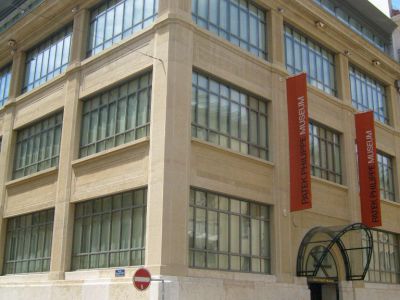
1) Musée Patek Philippe (Patek Philippe Museum) (must see)
Anthony Patek served in the Polish military until 1834. At that time he was fleeing from Russian occupation and oppression in Poland. A decorated military veteran, he was also dedicated to art and business. In 1839 he partnered with fellow immigrant refugee Franciszek Czapek to create their high-end watch making company, Patek, Czapek & Company.
In 1844, Anthony Patek met prize-winning watchmaker Adrien Philippe at the French Industrial Exposition and invited him to Geneva. Adrien became the head watchmaker of the new firm, Patek, Philippe & Company. The firm has been run by the Stern family of Geneva since 1932.
Philippe Stern, named after the famous watch, opened the Patek Philippe Museum in 2001 as a "temple to watchmaking." The museum is in a four-story restored Art Deco building located on Old-Grenadiers Street (Rue Des Vieux-Grenadiers). It is open Tuesday through Saturday and closed Sunday and Monday.
At least 2,500 watches, automata, precious objects and enamled miniatures take the museum-goer on a journey through five centuries of European watchmaking art. The exhibits are in two sections. Antiques section presents watches and enamels from the 16th to the 19 century. The Patek Philippe section showcases firm items from 1839.
In 1844, Anthony Patek met prize-winning watchmaker Adrien Philippe at the French Industrial Exposition and invited him to Geneva. Adrien became the head watchmaker of the new firm, Patek, Philippe & Company. The firm has been run by the Stern family of Geneva since 1932.
Philippe Stern, named after the famous watch, opened the Patek Philippe Museum in 2001 as a "temple to watchmaking." The museum is in a four-story restored Art Deco building located on Old-Grenadiers Street (Rue Des Vieux-Grenadiers). It is open Tuesday through Saturday and closed Sunday and Monday.
At least 2,500 watches, automata, precious objects and enamled miniatures take the museum-goer on a journey through five centuries of European watchmaking art. The exhibits are in two sections. Antiques section presents watches and enamels from the 16th to the 19 century. The Patek Philippe section showcases firm items from 1839.
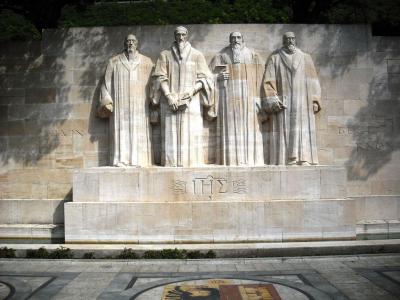
2) Mur des Réformateurs (Reformation Wall) (must see)
Inaugurated in 1909, the Reformation Wall celebrates persons and events of the Protestant Reformation using bas-reliefs. On the grounds of the University of Geneva, the Reformation Wall marks the 400th anniversary of French reformer John Calvin's birth and the 350th anniversary of Calvin's founding of the University.
The wall is built into the Old City walls, emphasizing the role the city and its fortifications played in the drama of the Reformation. The monument was the result of a worldwide competition. Seventy-one designs were submitted. Four Swiss architects were picked: Charles Dubois, Alphonse Laverrier, Eugene Monod, and Jean Taillens.
Due to the close connections to Protestantism, the individuals most prominently depicted on the Wall were Calvinists; however, key figures in other theologies are also included. The sculptures were created by French artists Paul Landowski and Henri Bouchard. At the center of the monument stand four statues, each over 16 feet tall, representing the prominent figures of Calvinism: William Farel, John Calvin, Theodore Beza, and Kohn Knox. They wear scholastic robes and carry small bibles.
On the left of the group are three 10-foot figures of Fredrick Willam of Brandenburg, Willam the Silent, and Gaspard de Coligny. On the right are the figures of Roger Williams, Oliver Cromwell, and Stephen Bocskai. A motto declares in Latin: "After darkness, light."
The wall is built into the Old City walls, emphasizing the role the city and its fortifications played in the drama of the Reformation. The monument was the result of a worldwide competition. Seventy-one designs were submitted. Four Swiss architects were picked: Charles Dubois, Alphonse Laverrier, Eugene Monod, and Jean Taillens.
Due to the close connections to Protestantism, the individuals most prominently depicted on the Wall were Calvinists; however, key figures in other theologies are also included. The sculptures were created by French artists Paul Landowski and Henri Bouchard. At the center of the monument stand four statues, each over 16 feet tall, representing the prominent figures of Calvinism: William Farel, John Calvin, Theodore Beza, and Kohn Knox. They wear scholastic robes and carry small bibles.
On the left of the group are three 10-foot figures of Fredrick Willam of Brandenburg, Willam the Silent, and Gaspard de Coligny. On the right are the figures of Roger Williams, Oliver Cromwell, and Stephen Bocskai. A motto declares in Latin: "After darkness, light."
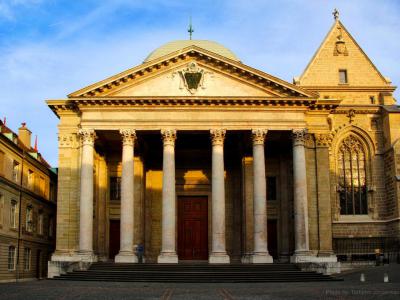
3) Cathédrale de St. Pierre (Saint Peter Cathedral) (must see)
The locale of the Cathedral of Saint Peter in Geneva has been the site of a cathedral and the seat of a bishop since the 4th century. The present cathedral was the work of the Prince-Bishop of the diocese, Arducius de Faucigny, in 1160. It was begun in the Gothic style, and there have been some changes since then.
The Cathedral of Saint Peter combines styles with a Neo-Classical Roman temple portico adjoined to a high-steepled Gothic edifice with a tall mullioned window. In 1535 French theologian John Calvin and the Reformation arrived in Geneva. Calvin adopted the cathedral as his home church, ushering in an age of architectural iconoclasm.
The cathedral was mostly stripped. The altars, all of the statues, and most paintings were destroyed or removed. The pulpit and some paintings were spared. The interior is spacious and plain, illuminated by hanging chandeliers. There are rows of benches and a few chapels. The aisles hold tombstones of 15th and 16th-century church dignitaries.
At the highest point of the Old Town, there is a stunning panorama for visitors hardy enough to brave the 157 steps of the north tower. The cathedral is often a venue for concerts. There is an archeological site in the crypt with artifacts of a 4th-century basilica. The 14th-century Chapel of the Maccabees should not be missed.
An enormous pipe organ is situated above the main entrance. It has the appearance of a red and gold crown. Loudspeakers are installed to magnify the already sonorous sound. If that is not enough, another, smaller organ is in the front on the left side. John Calvin's triangular stool is still next to the pulpit.
On the north side of the cathedral is the International Museum of the Reformation. The museum is open from Tuesday to Sunday from 10 am to 5 pm. A five-minute walk away is the Museum of Art and History. It has historical artifacts from the cathedral and the Saint Peter altarpiece painted by German artist Konrad Witz.
The Tower clock strikes every hour, followed by a tune on the glockenspiel, sometimes it's the Swiss National Anthem.
The Cathedral of Saint Peter combines styles with a Neo-Classical Roman temple portico adjoined to a high-steepled Gothic edifice with a tall mullioned window. In 1535 French theologian John Calvin and the Reformation arrived in Geneva. Calvin adopted the cathedral as his home church, ushering in an age of architectural iconoclasm.
The cathedral was mostly stripped. The altars, all of the statues, and most paintings were destroyed or removed. The pulpit and some paintings were spared. The interior is spacious and plain, illuminated by hanging chandeliers. There are rows of benches and a few chapels. The aisles hold tombstones of 15th and 16th-century church dignitaries.
At the highest point of the Old Town, there is a stunning panorama for visitors hardy enough to brave the 157 steps of the north tower. The cathedral is often a venue for concerts. There is an archeological site in the crypt with artifacts of a 4th-century basilica. The 14th-century Chapel of the Maccabees should not be missed.
An enormous pipe organ is situated above the main entrance. It has the appearance of a red and gold crown. Loudspeakers are installed to magnify the already sonorous sound. If that is not enough, another, smaller organ is in the front on the left side. John Calvin's triangular stool is still next to the pulpit.
On the north side of the cathedral is the International Museum of the Reformation. The museum is open from Tuesday to Sunday from 10 am to 5 pm. A five-minute walk away is the Museum of Art and History. It has historical artifacts from the cathedral and the Saint Peter altarpiece painted by German artist Konrad Witz.
The Tower clock strikes every hour, followed by a tune on the glockenspiel, sometimes it's the Swiss National Anthem.
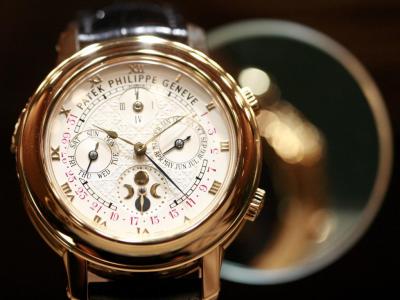
4) Patek Philippe
In 1839, when two Polish immigrants established a small watch shop in Geneva, they could not have foreseen the significant impact it would have on the watchmaking industry in the years to come. Patek Philippe, a Swiss luxury watch and clock manufacturer, has been under the ownership of the Stern family since 1932. In 2010, Thierry Stern, the son of Philippe Stern, assumed control of the company. Patek Philippe is renowned as one of the world's oldest watch manufacturers, boasting an uninterrupted history of watchmaking since its founding.
The exquisite design of Patek Philippe timepieces strikes a harmonious balance between classic aesthetics and modernity. These watches are backed by intricate engineering, exemplified by their complex mechanical solutions. Consequently, Patek Philippe enjoys a well-deserved reputation as one of the most prestigious watch brands globally. Throughout its history, notable figures such as Queen Victoria, Queen Elizabeth II, Pope Pius IX, Marie Curie, Albert Einstein, John F. Kennedy, Nelson Mandela, Pablo Picasso, Pyotr Tchaikovsky, and Leo Tolstoy have been among its esteemed patrons and timepiece owners.
In 2018, the company manufactured 62,000 timepieces, deliberately maintaining a modest yearly production increase of no more than 1-3% to preserve the brand's high quality and exclusivity. Since the early 2000s, Patek Philippe timepieces have consistently commanded high prices at auctions around the world, ranking among the top ten most expensive watches ever sold, with individual pieces fetching tens of millions of US dollars each.
The exquisite design of Patek Philippe timepieces strikes a harmonious balance between classic aesthetics and modernity. These watches are backed by intricate engineering, exemplified by their complex mechanical solutions. Consequently, Patek Philippe enjoys a well-deserved reputation as one of the most prestigious watch brands globally. Throughout its history, notable figures such as Queen Victoria, Queen Elizabeth II, Pope Pius IX, Marie Curie, Albert Einstein, John F. Kennedy, Nelson Mandela, Pablo Picasso, Pyotr Tchaikovsky, and Leo Tolstoy have been among its esteemed patrons and timepiece owners.
In 2018, the company manufactured 62,000 timepieces, deliberately maintaining a modest yearly production increase of no more than 1-3% to preserve the brand's high quality and exclusivity. Since the early 2000s, Patek Philippe timepieces have consistently commanded high prices at auctions around the world, ranking among the top ten most expensive watches ever sold, with individual pieces fetching tens of millions of US dollars each.
5) Horloge Fleurie (Flower Clock) (must see)
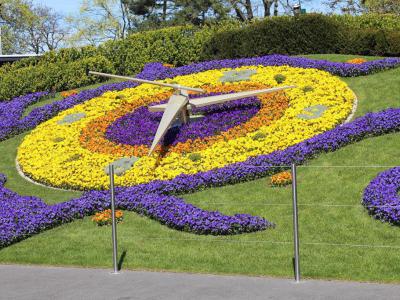
Geneva is renowned worldwide for its rich watchmaking heritage, often referred to as the epicenter of high-end timepieces. In 1955, as a tribute to this time-honored tradition and a dedication to nature, the Flower Clock was introduced on the western side of the English Garden in Geneva.
This remarkable clock boasts a diameter of 5 meters (approximately 16 feet) and features a second hand measuring 2.5 meters (around 8.2 feet) in length. Crafting the clock face required the use of approximately 6,500 flowering plants and shrubs. For several decades, Geneva's Flower Clock held the distinction of being the world's largest outdoor clock composed of flowers. However, in 2005, it ceded this title to a 15-meter (approximately 49-foot) counterpart in Tehran, Iran.
What's truly remarkable about this Swiss masterpiece is that it has faithfully operated for over half a century without ever experiencing a moment of downtime. Even more fascinating is the fact that it undergoes a perpetual transformation, as it is constructed using various types of flowers that bloom at different times throughout the year. With each passing season, the plants are changed, ushering in a fresh palette of colors and making the Flower Clock a truly distinctive sight. It's worth noting that the entire mosaic is created and maintained in an environmentally friendly manner, without the use of harmful chemicals.
This remarkable clock boasts a diameter of 5 meters (approximately 16 feet) and features a second hand measuring 2.5 meters (around 8.2 feet) in length. Crafting the clock face required the use of approximately 6,500 flowering plants and shrubs. For several decades, Geneva's Flower Clock held the distinction of being the world's largest outdoor clock composed of flowers. However, in 2005, it ceded this title to a 15-meter (approximately 49-foot) counterpart in Tehran, Iran.
What's truly remarkable about this Swiss masterpiece is that it has faithfully operated for over half a century without ever experiencing a moment of downtime. Even more fascinating is the fact that it undergoes a perpetual transformation, as it is constructed using various types of flowers that bloom at different times throughout the year. With each passing season, the plants are changed, ushering in a fresh palette of colors and making the Flower Clock a truly distinctive sight. It's worth noting that the entire mosaic is created and maintained in an environmentally friendly manner, without the use of harmful chemicals.
6) Jardin Anglais (English Garden)
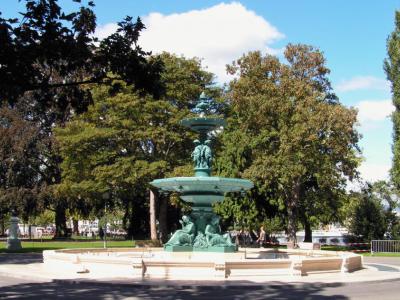
Covering an area of 25,430 square meters, Geneva's English Garden is a large and lush urban park. Established in 1855, it features a design inspired by classic English landscape gardens. The park's shape was significantly altered to a trapezoidal form in 1863 due to the construction of the nearby Mont Blanc bridge.
The English Garden is not only a popular spot for visitors but also houses several significant landmarks. These include the National Monument, the renowned Flower Clock, the Four Seasons Fountain crafted in bronze, various pavilions, and a café named "The Gossips," which is a perfect spot for a casual hangout.
Among the park's attractions is the Geneve Boat, known for a tragic event in 1898 when Austrian Empress Sissi, fatally wounded by an Italian anarchist, sought to apprehend her attacker on this boat but succumbed to her injuries. Today, the boat operates as a charitable organization, providing counseling and free meals to those in need and also serving meals to tourists.
The park also honors Swiss artists through three busts, commemorating painters Alexandre Calame, François Diday, and sculptor Auguste Rodo de Niederhausen. Every year, from mid-July to mid-August, the English Garden is one of the venues for the Geneva Festival.
Remarkably, the park contains several ancient trees, including a ginkgo planted in 1863 and a purple beech from 1895, planted during the National Exhibition. Other notable trees are a giant cedar, a grand sequoia, a magnolia with large flowers, horse chestnuts, a tulip tree, and more. The park's greenery is maintained using eco-friendly practices, avoiding chemical treatments.
The English Garden is not only a popular spot for visitors but also houses several significant landmarks. These include the National Monument, the renowned Flower Clock, the Four Seasons Fountain crafted in bronze, various pavilions, and a café named "The Gossips," which is a perfect spot for a casual hangout.
Among the park's attractions is the Geneve Boat, known for a tragic event in 1898 when Austrian Empress Sissi, fatally wounded by an Italian anarchist, sought to apprehend her attacker on this boat but succumbed to her injuries. Today, the boat operates as a charitable organization, providing counseling and free meals to those in need and also serving meals to tourists.
The park also honors Swiss artists through three busts, commemorating painters Alexandre Calame, François Diday, and sculptor Auguste Rodo de Niederhausen. Every year, from mid-July to mid-August, the English Garden is one of the venues for the Geneva Festival.
Remarkably, the park contains several ancient trees, including a ginkgo planted in 1863 and a purple beech from 1895, planted during the National Exhibition. Other notable trees are a giant cedar, a grand sequoia, a magnolia with large flowers, horse chestnuts, a tulip tree, and more. The park's greenery is maintained using eco-friendly practices, avoiding chemical treatments.
7) Jet d'Eau (Water-Jet) (must see)
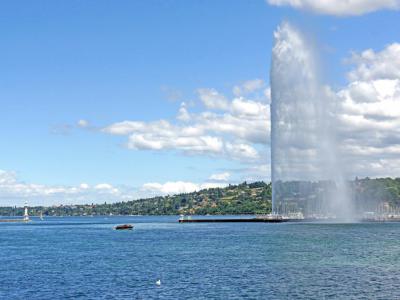
The Water-Jet (Jet d'Eau) is a prominent fountain located in Geneva and stands as one of the city's key attractions. Originally established in 1886, its primary function was to act as a safety release for a hydraulic power network. Positioned initially at a different site, the fountain was later moved in 1891 to its current location as a part of the celebration for the Federal Gymnastics Festival and the Swiss Confederation's 600th anniversary. The current version of the Water-Jet was installed in 1951, housed in a partly submerged pumping station.
Today, it's recognized as one of the world's tallest fountains and is a distinct feature of the Geneva skyline, even visible from up to 10 kilometers (about 33,000 feet) in the air. The fountain propels 500 liters (132 gallons) of water per second to a height of 140 meters (459 feet) at a speed of 200 kilometers per hour (124 miles per hour). At any moment, approximately 7,000 liters (1,849 gallons) of water are in the air.
Visitors can access the fountain via a stone pier on the lake's left bank. However, they should be wary of sudden wind shifts that can lead to an unexpected soaking.
Since 2003, the Water-Jet has been operational during daylight hours throughout the year, weather permitting, and also functions in the evenings from spring to autumn, enhanced by 21 lights.
Today, it's recognized as one of the world's tallest fountains and is a distinct feature of the Geneva skyline, even visible from up to 10 kilometers (about 33,000 feet) in the air. The fountain propels 500 liters (132 gallons) of water per second to a height of 140 meters (459 feet) at a speed of 200 kilometers per hour (124 miles per hour). At any moment, approximately 7,000 liters (1,849 gallons) of water are in the air.
Visitors can access the fountain via a stone pier on the lake's left bank. However, they should be wary of sudden wind shifts that can lead to an unexpected soaking.
Since 2003, the Water-Jet has been operational during daylight hours throughout the year, weather permitting, and also functions in the evenings from spring to autumn, enhanced by 21 lights.
