Custom Walk in Lisbon, Portugal by a_ahay_93d7c created on 2025-07-26
Guide Location: Portugal » Lisbon
Guide Type: Custom Walk
# of Sights: 5
Tour Duration: 3 Hour(s)
Travel Distance: 7.8 Km or 4.8 Miles
Share Key: UF8QJ
Guide Type: Custom Walk
# of Sights: 5
Tour Duration: 3 Hour(s)
Travel Distance: 7.8 Km or 4.8 Miles
Share Key: UF8QJ
How It Works
Please retrieve this walk in the GPSmyCity app. Once done, the app will guide you from one tour stop to the next as if you had a personal tour guide. If you created the walk on this website or come to the page via a link, please follow the instructions below to retrieve the walk in the app.
Retrieve This Walk in App
Step 1. Download the app "GPSmyCity: Walks in 1K+ Cities" on Apple App Store or Google Play Store.



Step 2. In the GPSmyCity app, download(or launch) the guide "Lisbon Map and Walking Tours".
Step 3. Tap the menu button located at upper right corner of the "Walks" screen and select "Retrieve custom walk". Enter the share key: UF8QJ
1) Hot Clube de Portugal (Hot Club of Portugal)
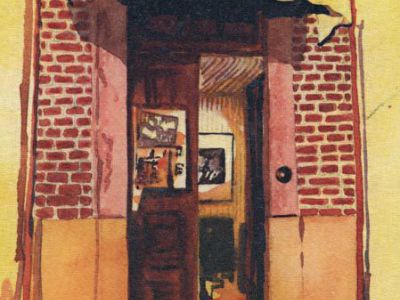
Whilst the majority of sojourners seek to immerse themselves in Lisbon's renowned fado, the illustrious city proffers an abundance of occasions to savor sundry strains of live melody. To indulge in the euphony of jazz, one must direct their steps towards the venerable Hot Clube de Portugal – a bastion of the genre, steeped in history as Europe's oldest jazz club, its inception dating back to a diminutive basement establishment in 1948. Though compelled to relocate to a neighboring edifice due to fire, it swiftly rose to prominence as the veritable sanctuary for jazz enthusiasts during the halcyon years of the 1950s, a distinction it valiantly upholds to the present day.
Hosting an illustrious roster of luminaries in the realm of jazz, alongside a plethora of accomplished local virtuosos, this establishment regales its discerning audience with an opulent auditory feast. With an almost incessant cadence of performances adorning its calendar, Hot Clube de Portugal draws a sophisticated clientele, fostering an ambiance conducive to an exhilarating night of sonorous enchantment.
Hosting an illustrious roster of luminaries in the realm of jazz, alongside a plethora of accomplished local virtuosos, this establishment regales its discerning audience with an opulent auditory feast. With an almost incessant cadence of performances adorning its calendar, Hot Clube de Portugal draws a sophisticated clientele, fostering an ambiance conducive to an exhilarating night of sonorous enchantment.

2) K Urban Beach Club
Operated by the K Group, a well-known club and restaurant management company in Lisbon, Urban Beach is situated close to the Tagus River, offering a fantastic view from its breezy outdoor terrace. During the early evening, this venue transforms into two distinct dining experiences: one serving delectable sushi, and the other specializing in steaks and grilled meats. As the clock strikes midnight, the dance floor comes alive with the vibrant beats of top-notch regional and international DJs, making it a hotspot in the city's nightlife scene. To add to the entertainment, there's a nice reflecting pool and three separate rooms playing different styles of music.
Admission prices are €40 for men and €20 for women, and these prices include four drinks for men and two for women. Urban Beach attracts a diverse crowd, with a mix of young people and those over the age of 25.
Admission prices are €40 for men and €20 for women, and these prices include four drinks for men and two for women. Urban Beach attracts a diverse crowd, with a mix of young people and those over the age of 25.

3) Casa da Tia Helena
The Sun Gates Viewpoint ("Miradouro das Portas do Sol") provides a fantastic opportunity for those seeking refreshment after their strolls, as they can indulge in the delightful Portuguese and Spanish cuisines offered at Casa da Tia Helena, a charming pub and bar that has been serving the renowned Alfama neighborhood for over 40 years.
Numerous visitors flock to this establishment, enticed by the flavors of grilled sardines, succulent grilled octopus, and delectable salads. Furthermore, don't miss the chance to savor the delightful parfait, intriguing beignets, and superb cheesecake.
At Casa da Tia Helena, patrons can relish in the pleasure of homemade wine, refreshing sangria, or quality beer. Additionally, the establishment serves a superb cup of coffee, ensuring a truly enjoyable dining experience.
Numerous visitors flock to this establishment, enticed by the flavors of grilled sardines, succulent grilled octopus, and delectable salads. Furthermore, don't miss the chance to savor the delightful parfait, intriguing beignets, and superb cheesecake.
At Casa da Tia Helena, patrons can relish in the pleasure of homemade wine, refreshing sangria, or quality beer. Additionally, the establishment serves a superb cup of coffee, ensuring a truly enjoyable dining experience.
4) Elevador de Santa Justa (Santa Justa Lift) (must see)
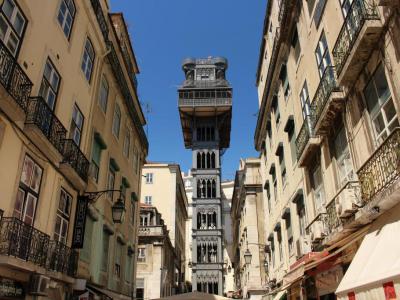
The Santa Justa Lift, also known as the Carmo Lift, is a distinctive attraction in Lisbon. This historic elevator, built in the early 20th century, is the only remaining vertical lift in the capital. Others, such as the Glória and Bica lifts, are funicular railways. This lift was designed to address the city's challenging terrain, linking the lower Baixa district to the elevated Carmo Square. Construction began in 1900, and the lift was inaugurated in 1901, initially operating on steam power before transitioning to electricity in 1907.
The Neo-Gothic iron structure, 45 meters tall, features intricate metalwork, a double-lattice design, and two wood-paneled cabins that transport passengers across seven stories. Originally accommodating 24 people, the cabins were later upgraded to hold 29 passengers. A spiral staircase and walkway connect the lift to nearby attractions, offering panoramic views of landmarks, such as Saint George's Castle, the Tagus River, Rossio Square, and the Baixa district, from its observation deck.
Designated a National Monument in 2002, the Santa Justa Lift underwent renovations to preserve its historical significance and was reopened to the public in 2006. It remains a vital link and a tourist attraction, embodying innovative engineering from its era. Visitors also use the lift to access key sites like Carmo Square, Saint Roch Church, and the Bairro Alto neighborhood.
Tip:
It's important to note that ascending the iron spiral staircase requires a head for heights. However, if you can conquer any nervousness, the views are truly spectacular and well worth the effort. Additionally, keep in mind that the top platform is quite exposed, so it's advisable to check the weather conditions before planning your visit.
If you find the queue too long, consider entering the cork store on Rua do Carmo, ascending the stairs, and then crossing the street via the walkway. Although this option requires physical effort to climb the stairs, it saves time and money while allowing for more opportunities to savor the views along the way.
The Neo-Gothic iron structure, 45 meters tall, features intricate metalwork, a double-lattice design, and two wood-paneled cabins that transport passengers across seven stories. Originally accommodating 24 people, the cabins were later upgraded to hold 29 passengers. A spiral staircase and walkway connect the lift to nearby attractions, offering panoramic views of landmarks, such as Saint George's Castle, the Tagus River, Rossio Square, and the Baixa district, from its observation deck.
Designated a National Monument in 2002, the Santa Justa Lift underwent renovations to preserve its historical significance and was reopened to the public in 2006. It remains a vital link and a tourist attraction, embodying innovative engineering from its era. Visitors also use the lift to access key sites like Carmo Square, Saint Roch Church, and the Bairro Alto neighborhood.
Tip:
It's important to note that ascending the iron spiral staircase requires a head for heights. However, if you can conquer any nervousness, the views are truly spectacular and well worth the effort. Additionally, keep in mind that the top platform is quite exposed, so it's advisable to check the weather conditions before planning your visit.
If you find the queue too long, consider entering the cork store on Rua do Carmo, ascending the stairs, and then crossing the street via the walkway. Although this option requires physical effort to climb the stairs, it saves time and money while allowing for more opportunities to savor the views along the way.
5) Avenida da Liberdade (Liberty Avenue)
Liberty Avenue, a central boulevard in Lisbon, is renowned as one of Europe's most prestigious and expensive streets. Its history dates back to the 18th century, originating as a park for Portuguese nobility. Transformed into a boulevard between 1879 and 1886, the avenue marked Lisbon's northward expansion, modeled after the grand boulevards of Paris. It connects the Marquis of Pombal Square, also known as the Rotunda, in the north to Restorers Square, which is the gateway to Lisbon's Baixa district.
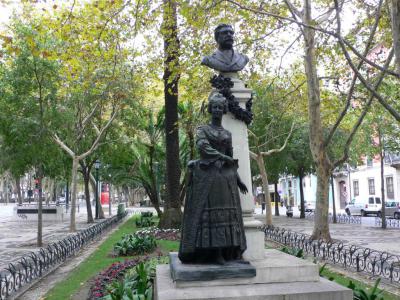
The avenue retains elements of its original park, including statues representing the Tagus and Douro rivers, fountains, and a waterfall from the 1830s. Following this, you'll encounter landscaped garden areas enclosed by four marble statues symbolizing Europe, Africa, Asia, and Oceania.
In recent decades, many historic buildings in the area were replaced by modern offices and hotels. Despite this, the avenue is still adorned with multiple monuments, including tributes to the Portuguese poet and politician Almeida Garrett, novelist and historian Alexandre Herculano, and a 1931 World War I memorial.
Today, Liberty Avenue is a hub of luxury. Towards its upper stretch, housing some of Lisbon's most upscale real estate, you'll find a concentration of international high-end brands such as Louis Vuitton, Prada, Dior, Chanel, and Gucci. Its central location places it near prominent landmarks like Eduardo VII Park, Queen Maria II National Theatre, and the Avenidas Novas district.
The avenue is also a destination for luxury hotels, including those from Sofitel, Tivoli Hotels & Resorts, and Dom Pedro Hotels. Additionally, it is home to several cinemas and numerous cafes and patisseries. During the summer months, some of these establishments extend their services into the well-lit central gardens, creating a lively evening atmosphere enriched with music.
As a prestigious address in Lisbon, Liberty Avenue blends historical significance with modern elegance, serving as a symbol of the city's cultural and economic vitality.
The avenue retains elements of its original park, including statues representing the Tagus and Douro rivers, fountains, and a waterfall from the 1830s. Following this, you'll encounter landscaped garden areas enclosed by four marble statues symbolizing Europe, Africa, Asia, and Oceania.
In recent decades, many historic buildings in the area were replaced by modern offices and hotels. Despite this, the avenue is still adorned with multiple monuments, including tributes to the Portuguese poet and politician Almeida Garrett, novelist and historian Alexandre Herculano, and a 1931 World War I memorial.
Today, Liberty Avenue is a hub of luxury. Towards its upper stretch, housing some of Lisbon's most upscale real estate, you'll find a concentration of international high-end brands such as Louis Vuitton, Prada, Dior, Chanel, and Gucci. Its central location places it near prominent landmarks like Eduardo VII Park, Queen Maria II National Theatre, and the Avenidas Novas district.
The avenue is also a destination for luxury hotels, including those from Sofitel, Tivoli Hotels & Resorts, and Dom Pedro Hotels. Additionally, it is home to several cinemas and numerous cafes and patisseries. During the summer months, some of these establishments extend their services into the well-lit central gardens, creating a lively evening atmosphere enriched with music.
As a prestigious address in Lisbon, Liberty Avenue blends historical significance with modern elegance, serving as a symbol of the city's cultural and economic vitality.
