Custom Walk in Seattle, Washington by heatherallisonkunkle_ae3af created on 2025-07-30
Guide Location: USA » Seattle
Guide Type: Custom Walk
# of Sights: 12
Tour Duration: 5 Hour(s)
Travel Distance: 12.7 Km or 7.9 Miles
Share Key: JXYTS
Guide Type: Custom Walk
# of Sights: 12
Tour Duration: 5 Hour(s)
Travel Distance: 12.7 Km or 7.9 Miles
Share Key: JXYTS
How It Works
Please retrieve this walk in the GPSmyCity app. Once done, the app will guide you from one tour stop to the next as if you had a personal tour guide. If you created the walk on this website or come to the page via a link, please follow the instructions below to retrieve the walk in the app.
Retrieve This Walk in App
Step 1. Download the app "GPSmyCity: Walks in 1K+ Cities" on Apple App Store or Google Play Store.



Step 2. In the GPSmyCity app, download(or launch) the guide "Seattle Map and Walking Tours".
Step 3. Tap the menu button located at upper right corner of the "Walks" screen and select "Retrieve custom walk". Enter the share key: JXYTS
1) Smith Tower (must see)
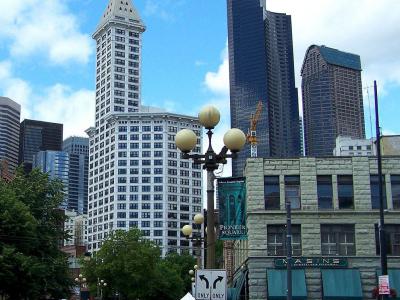
At the end of the 19th century, an inventor named Lyman Cornelius Smith arrived in Seattle. Already wealthy from the sale of his gun company (later Smith & Wesson) and then his revolutionary new typewriter (later to be Smith Corona), Smith promptly bought several blocks around Main Street and 1st Avenue.
In 1901, he built the L.C. Smith Building. Goaded by the plans of a business rival, he then plotted the 42-story Smith Tower. When it was completed in 1914, this was the tallest building outside New York. The distinction was gradually diluted until in 1962, its last remaining title – that of the tallest building in Seattle – was taken by the Space Needle. Smith Tower remains a sentimental favorite, however, and the views from the small Observation Deck is sweeping, taking in all four directions: waterfront, Pioneer Square, the mountains surrounding Seattle, etc.
The tower's 35th floor also has the well known Chinese Room with its carved wood, porcelain ceiling, and elaborate Chinese wooden furniture.
Why You Should Visit:
To enjoy great 360-degree views of Seattle without paying the elaborate Space Needle fees.
There is an outside area around the perimeter, and the inside lounge with bar is definitely old-world; even the elevator is fun!
Prior to going up, a small interactive museum helps give you all the history of the time the building was built (1911-1914).
Tip:
Buy advance tickets online or look out for the "happy hour" visiting times – or if you do the nearby Underground Tour, keep the ticket for discounted entry.
In 1901, he built the L.C. Smith Building. Goaded by the plans of a business rival, he then plotted the 42-story Smith Tower. When it was completed in 1914, this was the tallest building outside New York. The distinction was gradually diluted until in 1962, its last remaining title – that of the tallest building in Seattle – was taken by the Space Needle. Smith Tower remains a sentimental favorite, however, and the views from the small Observation Deck is sweeping, taking in all four directions: waterfront, Pioneer Square, the mountains surrounding Seattle, etc.
The tower's 35th floor also has the well known Chinese Room with its carved wood, porcelain ceiling, and elaborate Chinese wooden furniture.
Why You Should Visit:
To enjoy great 360-degree views of Seattle without paying the elaborate Space Needle fees.
There is an outside area around the perimeter, and the inside lounge with bar is definitely old-world; even the elevator is fun!
Prior to going up, a small interactive museum helps give you all the history of the time the building was built (1911-1914).
Tip:
Buy advance tickets online or look out for the "happy hour" visiting times – or if you do the nearby Underground Tour, keep the ticket for discounted entry.
2) Sky View Observatory at Columbia Center (must see)
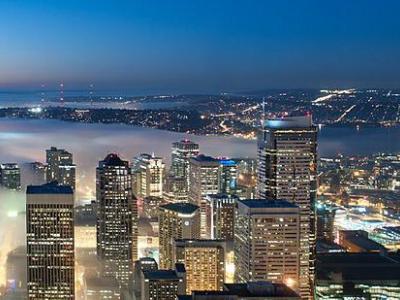
Sky View Observatory at Columbia Center is a premier observation deck in downtown Seattle. Situated on the 73rd floor of the Columbia Center, which is the tallest building in the city and the Pacific Northwest, the observatory offers visitors stunning panoramic views of the surrounding landscape.
The Sky View Observatory provides a unique vantage point to take in the beauty of Seattle and its surroundings. From the observatory's height of 902 feet, visitors can enjoy breathtaking 360-degree views that stretch from the downtown skyline to the Puget Sound, and on clear days, even as far as the Cascade and Olympic mountain ranges.
Upon entering the observatory, visitors are greeted with a spacious and modern interior, designed to enhance the viewing experience. Floor-to-ceiling windows in the North East and North West Corners of the Observatory allow for unobstructed vistas and ample natural light. Interactive exhibits and informational displays are scattered throughout, providing insights into the history, geography, and notable landmarks of the region.
The observatory also features a café where visitors can enjoy refreshments and snacks while marveling at the surrounding scenery. The café provides a comfortable and relaxing setting to complement the overall experience.
The Sky View Observatory is open year-round, allowing visitors to enjoy the view in every season. The changing colors of the fall foliage, the snow-capped mountains in winter, the blossoming cherry trees in spring, and the vibrant summer sunsets all add to the beauty and diversity of the experience.
Why You Should Visit:
The ideal first stop on your visit to the Emerald City. Here you can map out your entire Pacific Northwest experience: riding the Great Wheel, shopping in Pike Place Market, hiking the Cascades, ferrying to Bainbridge Island, cruising Elliott Bay, and exploring the San Juan Islands.
Tip:
Tickets must be purchased beforehand or at the Box Office located in the Atrium, floor 1 of the Columbia Center.
The Sky View Observatory provides a unique vantage point to take in the beauty of Seattle and its surroundings. From the observatory's height of 902 feet, visitors can enjoy breathtaking 360-degree views that stretch from the downtown skyline to the Puget Sound, and on clear days, even as far as the Cascade and Olympic mountain ranges.
Upon entering the observatory, visitors are greeted with a spacious and modern interior, designed to enhance the viewing experience. Floor-to-ceiling windows in the North East and North West Corners of the Observatory allow for unobstructed vistas and ample natural light. Interactive exhibits and informational displays are scattered throughout, providing insights into the history, geography, and notable landmarks of the region.
The observatory also features a café where visitors can enjoy refreshments and snacks while marveling at the surrounding scenery. The café provides a comfortable and relaxing setting to complement the overall experience.
The Sky View Observatory is open year-round, allowing visitors to enjoy the view in every season. The changing colors of the fall foliage, the snow-capped mountains in winter, the blossoming cherry trees in spring, and the vibrant summer sunsets all add to the beauty and diversity of the experience.
Why You Should Visit:
The ideal first stop on your visit to the Emerald City. Here you can map out your entire Pacific Northwest experience: riding the Great Wheel, shopping in Pike Place Market, hiking the Cascades, ferrying to Bainbridge Island, cruising Elliott Bay, and exploring the San Juan Islands.
Tip:
Tickets must be purchased beforehand or at the Box Office located in the Atrium, floor 1 of the Columbia Center.
3) Seattle Great Wheel (must see)
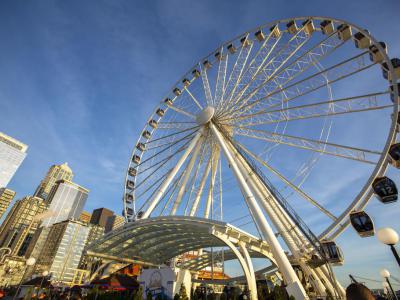
The Seattle Great Wheel is a prominent Ferris wheel located on Pier 57 in downtown Seattle, Washington. Since its opening in 2012, it has become one of the city's most recognizable attractions and a popular destination for both locals and tourists alike.
The Great Wheel stands at an impressive height of 175 feet, making it one of the tallest Ferris wheels on the West Coast of the United States. It features 42 fully enclosed gondolas, each capable of accommodating up to eight passengers. The gondolas are equipped with large windows, providing breathtaking panoramic views of the surrounding cityscape, Elliott Bay, and the majestic Olympic Mountains in the distance.
Riding the Seattle Great Wheel offers visitors a unique and memorable experience. As the wheel ascends, riders are treated to stunning vistas of the Seattle skyline, including landmarks such as the Space Needle, Pike Place Market, and the downtown waterfront. The captivating views extend both during the day and at night when the city lights create a magical ambiance.
The Great Wheel operates year-round, allowing visitors to enjoy the ride in any season. Whether it's basking in the warm summer sun or taking in the crisp winter air, the wheel offers an enchanting perspective on the beauty of Seattle. Additionally, special events such as fireworks displays or holiday-themed lighting add to the excitement and make each visit even more memorable.
Why You Should Visit:
Great activity to enjoy, rain or shine! You can enjoy a beverage while riding, alongside the beautiful views and a moment of calm in the middle of the busy city.
The Great Wheel stands at an impressive height of 175 feet, making it one of the tallest Ferris wheels on the West Coast of the United States. It features 42 fully enclosed gondolas, each capable of accommodating up to eight passengers. The gondolas are equipped with large windows, providing breathtaking panoramic views of the surrounding cityscape, Elliott Bay, and the majestic Olympic Mountains in the distance.
Riding the Seattle Great Wheel offers visitors a unique and memorable experience. As the wheel ascends, riders are treated to stunning vistas of the Seattle skyline, including landmarks such as the Space Needle, Pike Place Market, and the downtown waterfront. The captivating views extend both during the day and at night when the city lights create a magical ambiance.
The Great Wheel operates year-round, allowing visitors to enjoy the ride in any season. Whether it's basking in the warm summer sun or taking in the crisp winter air, the wheel offers an enchanting perspective on the beauty of Seattle. Additionally, special events such as fireworks displays or holiday-themed lighting add to the excitement and make each visit even more memorable.
Why You Should Visit:
Great activity to enjoy, rain or shine! You can enjoy a beverage while riding, alongside the beautiful views and a moment of calm in the middle of the busy city.
4) Seattle Aquarium (must see)
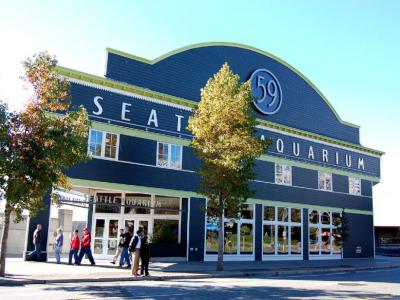
A family-friendly attraction on Pier 59, the Seattle Aquarium features 200 varieties of fish native to Puget Sound. There are also environments simulating the region's rocky reefs, sandy sea floor, eelgrass beds, and tide pools. A working fish ladder illustrates the salmon life cycle, and other exhibits show the paths that water travels on its way to Puget Sound.
Vividly striped lionfish, lethal electric eels, chameleon-like flatfish, octopus, dogfish, and salmon dart side by side with irresistibly entertaining seals and otters. The twice-daily oceanic tides flood Puget Sound and mix with fresh water from rainfall to nurture "an unequaled estuarine haven for plants, animals, and humans," as one of the educational captions says.
Among other things, the Aquarium includes a three-story great hall with educational kiosks and conservation exhibits, a man-made coral reef, and two large exhibit pools that include touch zones. But the main attraction here is, undoubtedly, the enormous 120,000-gallon tank filled with fish, sea anemones, and other marine life. Dive shows take place several times a day, and the divers are able to converse with visitors explaining the types of fish in the exhibit tanks in detail.
The building's location is great – right on the waterfront, with plenty of seafood restaurants and bars located close by.
Why You Should Visit:
Relatively small aquarium compared to others in the US; however, the focus is on local marine life and it is well presented. You can touch sea stars, cucumbers, coral – with luck you can see the staff feeding the stars, anemones, sharks, etc. Definitely welcoming to everyone of all ages, with lots of hands-on activities for kids and informative/friendly staff.
Tip:
Use the map provided because you could miss a section without knowing it and it would be a loss not to see the entire aquarium. Use, also, the elevators in the public parking across the street to get up the hill to Pike Place Market.
Vividly striped lionfish, lethal electric eels, chameleon-like flatfish, octopus, dogfish, and salmon dart side by side with irresistibly entertaining seals and otters. The twice-daily oceanic tides flood Puget Sound and mix with fresh water from rainfall to nurture "an unequaled estuarine haven for plants, animals, and humans," as one of the educational captions says.
Among other things, the Aquarium includes a three-story great hall with educational kiosks and conservation exhibits, a man-made coral reef, and two large exhibit pools that include touch zones. But the main attraction here is, undoubtedly, the enormous 120,000-gallon tank filled with fish, sea anemones, and other marine life. Dive shows take place several times a day, and the divers are able to converse with visitors explaining the types of fish in the exhibit tanks in detail.
The building's location is great – right on the waterfront, with plenty of seafood restaurants and bars located close by.
Why You Should Visit:
Relatively small aquarium compared to others in the US; however, the focus is on local marine life and it is well presented. You can touch sea stars, cucumbers, coral – with luck you can see the staff feeding the stars, anemones, sharks, etc. Definitely welcoming to everyone of all ages, with lots of hands-on activities for kids and informative/friendly staff.
Tip:
Use the map provided because you could miss a section without knowing it and it would be a loss not to see the entire aquarium. Use, also, the elevators in the public parking across the street to get up the hill to Pike Place Market.
5) Pike Place Market (must see)
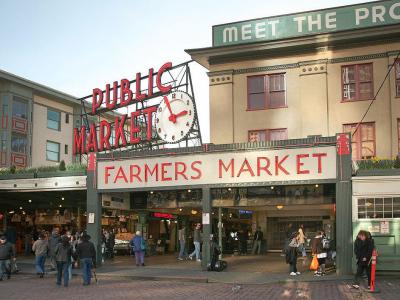
Pike Place Market is a historic public market located in Seattle. Established in 1907, it holds the distinction of being one of the oldest continuously operating public farmers' markets in the United States. The market's rich history is intertwined with the growth and development of the city itself.
The origins of Pike Place Market can be traced back to the early 1900s when Seattle's rapid population growth led to increased demand for fresh produce and agricultural products. At the time, local farmers were struggling to sell their goods due to the presence of middlemen who drove down prices and made it difficult for farmers to make a living. In response to this, a group of determined citizens and advocates for farmers' rights formed the Pike Place Market Association to establish a public market that would connect farmers directly with consumers.
On August 17, 1907, Pike Place Market officially opened its doors to the public on a site near the waterfront, stretching from Pike Street to Virginia Street. The market quickly became a vibrant hub of activity, with farmers setting up stalls to sell their produce, and shoppers flocking to the market to enjoy fresh, high-quality goods. The market's motto, "Meet the Producer," reflected its commitment to fostering a direct connection between farmers and consumers, a concept that remains central to Pike Place Market's ethos to this day.
Over the years, Pike Place Market weathered various challenges, including the Great Depression and the threat of demolition in the 1960s due to urban renewal plans. However, a grassroots campaign led by citizens, activists, and preservationists successfully saved the market from destruction. In 1971, Pike Place Market was added to the National Register of Historic Places, solidifying its status as a cherished cultural and historical landmark.
Today, Pike Place Market is a bustling and diverse marketplace that encompasses several buildings. It features an extensive array of vendors, including farmers, fishermen, butchers, artisans, craftspeople, and specialty food producers. Visitors can explore the market's labyrinthine alleys and corridors, discovering a vibrant tapestry of sights, sounds, and flavors. From the famous fishmongers at Pike Place Fish Market who famously toss fish to entertain customers to the craft stalls selling unique handmade goods, the market offers an immersive and authentic experience.
In addition to its bustling marketplace, Pike Place Market is also home to a variety of eateries, independent shops, and small businesses. The market is renowned for its diverse culinary offerings, including fresh seafood, locally roasted coffee, international cuisines, and artisanal treats. It has become a destination not only for shopping but also for dining, entertainment, and community gatherings.
Tip:
A must-see is the kiosk famous for “fish throwing” to a willing customer. This area can get crowded, but just be patient and you'll get your picture/video. The kiosk is right next to a medium-size statue called Rachel the Pig. Bathrooms are available in different areas, just make sure you follow the sign.
Merchant Hours:
Mon-Thu: 10am–6pm; Fri-Sun: 10am–6:30pm
Restaurants: 6am–1:30am; varies
The origins of Pike Place Market can be traced back to the early 1900s when Seattle's rapid population growth led to increased demand for fresh produce and agricultural products. At the time, local farmers were struggling to sell their goods due to the presence of middlemen who drove down prices and made it difficult for farmers to make a living. In response to this, a group of determined citizens and advocates for farmers' rights formed the Pike Place Market Association to establish a public market that would connect farmers directly with consumers.
On August 17, 1907, Pike Place Market officially opened its doors to the public on a site near the waterfront, stretching from Pike Street to Virginia Street. The market quickly became a vibrant hub of activity, with farmers setting up stalls to sell their produce, and shoppers flocking to the market to enjoy fresh, high-quality goods. The market's motto, "Meet the Producer," reflected its commitment to fostering a direct connection between farmers and consumers, a concept that remains central to Pike Place Market's ethos to this day.
Over the years, Pike Place Market weathered various challenges, including the Great Depression and the threat of demolition in the 1960s due to urban renewal plans. However, a grassroots campaign led by citizens, activists, and preservationists successfully saved the market from destruction. In 1971, Pike Place Market was added to the National Register of Historic Places, solidifying its status as a cherished cultural and historical landmark.
Today, Pike Place Market is a bustling and diverse marketplace that encompasses several buildings. It features an extensive array of vendors, including farmers, fishermen, butchers, artisans, craftspeople, and specialty food producers. Visitors can explore the market's labyrinthine alleys and corridors, discovering a vibrant tapestry of sights, sounds, and flavors. From the famous fishmongers at Pike Place Fish Market who famously toss fish to entertain customers to the craft stalls selling unique handmade goods, the market offers an immersive and authentic experience.
In addition to its bustling marketplace, Pike Place Market is also home to a variety of eateries, independent shops, and small businesses. The market is renowned for its diverse culinary offerings, including fresh seafood, locally roasted coffee, international cuisines, and artisanal treats. It has become a destination not only for shopping but also for dining, entertainment, and community gatherings.
Tip:
A must-see is the kiosk famous for “fish throwing” to a willing customer. This area can get crowded, but just be patient and you'll get your picture/video. The kiosk is right next to a medium-size statue called Rachel the Pig. Bathrooms are available in different areas, just make sure you follow the sign.
Merchant Hours:
Mon-Thu: 10am–6pm; Fri-Sun: 10am–6:30pm
Restaurants: 6am–1:30am; varies
6) Museum of History & Industry (MOHAI) (must see)
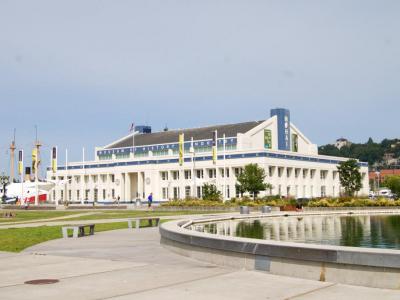
The Museum of History & Industry (MOHAI) is situated in Seattle's South Lake Union neighborhood, serving as a renowned history museum. Established in 1952, MOHAI stands as the largest private heritage organization in Washington State, housing a vast collection of nearly 4 million artifacts, photographs, and archival materials. Its primary focus lies on Seattle and the broader Puget Sound region. A fraction of this extensive collection, approximately 2% at any given time, is exhibited within the museum's galleries located at the historic Naval Reserve Armory in Lake Union Park.
Among the notable highlights are significant items such as Boeing's inaugural commercial aircraft, the 1919 Boeing B-1, the Petticoat Flag sewn by women during the Battle of Seattle in 1856, and the Rainier Brewing Company's iconic 12-foot tall neon "R" sign. In addition to its permanent and temporary exhibits, MOHAI actively organizes youth and adult programs, fostering ongoing engagement with the community. Moreover, MOHAI regularly collaborates with various organizations within the South Lake Union neighborhood to host public events. By preserving and delving into the diverse cultural, social, and economic history of the Northwest, MOHAI strives to fulfill its mission.
Why You Should Visit:
Great place to spend 2-3 hours learning about Pacific NW history and see some quality Seattle memorabilia.
The setting of the museum is beautiful and it is a pleasure to walk around the area.
Tip:
Free for everyone every first Thursday of the month and free for kids always!
Start on the second floor and go right so you follow the timeline.
Don't miss the lake view from the windows on the 4th floor maritime gallery.
Among the notable highlights are significant items such as Boeing's inaugural commercial aircraft, the 1919 Boeing B-1, the Petticoat Flag sewn by women during the Battle of Seattle in 1856, and the Rainier Brewing Company's iconic 12-foot tall neon "R" sign. In addition to its permanent and temporary exhibits, MOHAI actively organizes youth and adult programs, fostering ongoing engagement with the community. Moreover, MOHAI regularly collaborates with various organizations within the South Lake Union neighborhood to host public events. By preserving and delving into the diverse cultural, social, and economic history of the Northwest, MOHAI strives to fulfill its mission.
Why You Should Visit:
Great place to spend 2-3 hours learning about Pacific NW history and see some quality Seattle memorabilia.
The setting of the museum is beautiful and it is a pleasure to walk around the area.
Tip:
Free for everyone every first Thursday of the month and free for kids always!
Start on the second floor and go right so you follow the timeline.
Don't miss the lake view from the windows on the 4th floor maritime gallery.
7) Museum of Pop Culture (must see)
The Museum of Pop Culture (MoPOP), located in Seattle, Washington, is a captivating and dynamic institution dedicated to the exploration and celebration of popular culture.
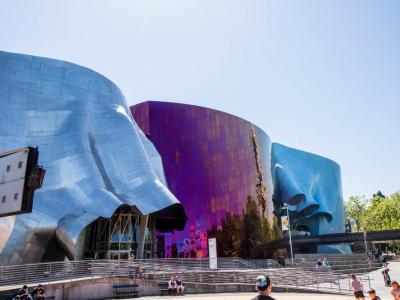
MoPOP stands out for its striking architecture, designed by acclaimed architect Frank Gehry. The building's unconventional design features a mix of curving, colorful metallic panels that resemble flowing sheets of music or distorted guitars. It has become an iconic landmark in Seattle's skyline, drawing visitors with its bold and distinctive aesthetic.
The museum's mission is to engage visitors in a multi-disciplinary exploration of popular culture across various mediums, including music, film, television, video games, science fiction, and more. It offers a vast array of exhibits and interactive displays that immerse visitors in the rich tapestry of pop culture.
One of the museum's notable attractions is the Sound Lab, where visitors can experiment with musical instruments, recording equipment, and technology to create their own music. The interactive nature of the exhibit encourages visitors to engage with music and gain a deeper understanding of its cultural impact.
MoPOP also boasts an extensive collection of artifacts and memorabilia, showcasing the history and influence of popular culture icons. Visitors can explore exhibits dedicated to legendary musicians, such as Jimi Hendrix, Nirvana, and Prince, examining their impact on music and society. The museum also hosts rotating exhibitions that delve into diverse aspects of pop culture, from science fiction and fantasy to horror and comics.
Beyond music, MoPOP pays homage to other forms of popular culture through its exhibitions. Visitors can delve into the world of science fiction and fantasy, exploring iconic franchises like Star Trek, Star Wars, and The Lord of the Rings. The museum also highlights the artistry and cultural significance of video games, featuring exhibits that delve into the evolution of gaming, influential titles, and the creative minds behind them.
The museum is also home to the Science Fiction and Fantasy Hall of Fame, honoring the most influential and groundbreaking contributors to the genre. Inductees include renowned authors, filmmakers, artists, and visionaries who have shaped the landscape of science fiction and fantasy.
Tip:
Either get a CityPass (available inside) or a combo ticket to the Space Needle and Chihuly's Garden and Glass exhibit to bring the price down. If you're short on time, dare to ask when buying ticket/s if there's a way to reenter the following day.
MoPOP stands out for its striking architecture, designed by acclaimed architect Frank Gehry. The building's unconventional design features a mix of curving, colorful metallic panels that resemble flowing sheets of music or distorted guitars. It has become an iconic landmark in Seattle's skyline, drawing visitors with its bold and distinctive aesthetic.
The museum's mission is to engage visitors in a multi-disciplinary exploration of popular culture across various mediums, including music, film, television, video games, science fiction, and more. It offers a vast array of exhibits and interactive displays that immerse visitors in the rich tapestry of pop culture.
One of the museum's notable attractions is the Sound Lab, where visitors can experiment with musical instruments, recording equipment, and technology to create their own music. The interactive nature of the exhibit encourages visitors to engage with music and gain a deeper understanding of its cultural impact.
MoPOP also boasts an extensive collection of artifacts and memorabilia, showcasing the history and influence of popular culture icons. Visitors can explore exhibits dedicated to legendary musicians, such as Jimi Hendrix, Nirvana, and Prince, examining their impact on music and society. The museum also hosts rotating exhibitions that delve into diverse aspects of pop culture, from science fiction and fantasy to horror and comics.
Beyond music, MoPOP pays homage to other forms of popular culture through its exhibitions. Visitors can delve into the world of science fiction and fantasy, exploring iconic franchises like Star Trek, Star Wars, and The Lord of the Rings. The museum also highlights the artistry and cultural significance of video games, featuring exhibits that delve into the evolution of gaming, influential titles, and the creative minds behind them.
The museum is also home to the Science Fiction and Fantasy Hall of Fame, honoring the most influential and groundbreaking contributors to the genre. Inductees include renowned authors, filmmakers, artists, and visionaries who have shaped the landscape of science fiction and fantasy.
Tip:
Either get a CityPass (available inside) or a combo ticket to the Space Needle and Chihuly's Garden and Glass exhibit to bring the price down. If you're short on time, dare to ask when buying ticket/s if there's a way to reenter the following day.
8) Space Needle (must see)
Only one World's Fair was the setting for an Elvis Presley movie ("It Happened at the World's Fair") and that was the one held in Seattle in 1962. However, Seattle residents are proudest of the fair's most tangible legacy: the internationally recognized Space Needle.
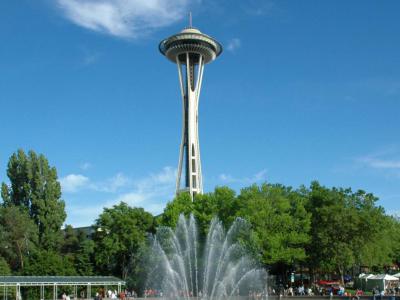
The Space Needle is an iconic observation tower and landmark located in Seattle. Built for the 1962 World's Fair, the Space Needle has become a symbol of the city and a must-visit attraction for visitors from around the world. With its unique design and breathtaking views, it offers an unforgettable experience that showcases the beauty of Seattle and its surrounding landscapes.
Designed by architects John Graham, Victor Steinbrueck, and John Ridley, the Space Needle was inspired by the futuristic vision of the World's Fair. Standing at a height of 605 feet (or 184 meters), the tower features a distinctive saucer-shaped structure with a rotating restaurant and an observation deck at the top. The design is characterized by its slender profile and the iconic 100-foot (or 30-meter) wide observation deck, providing visitors with unparalleled panoramic views.
Riding the elevator to the top, visitors are greeted by the observation deck, which offers 360-degree views of the Seattle skyline, Puget Sound, Mount Rainier, and the Cascade and Olympic mountain ranges. On clear days, the visibility stretches for miles, allowing visitors to fully appreciate the beauty of the region. The deck features floor-to-ceiling windows that provide unobstructed vistas, as well as outdoor viewing platforms for an even closer look at the scenery.
The Space Needle also features the SkyCity restaurant, which revolves 360 degrees as guests dine, completing a full rotation in approximately 47 minutes. This unique dining experience allows visitors to enjoy a delicious meal while taking in ever-changing views of Seattle and the surrounding landscape.
The Space Needle is not only a popular tourist attraction but also an integral part of Seattle's cultural fabric. It has been featured in numerous films, television shows, and photographs, becoming an iconic symbol of the city's skyline.
Tip:
Try to get your tickets and your reservation for the café a few days in advance – especially if visiting on a weekend. Note that if you eat at the restaurant, you can go to the viewing tower free of charge.
The Space Needle is an iconic observation tower and landmark located in Seattle. Built for the 1962 World's Fair, the Space Needle has become a symbol of the city and a must-visit attraction for visitors from around the world. With its unique design and breathtaking views, it offers an unforgettable experience that showcases the beauty of Seattle and its surrounding landscapes.
Designed by architects John Graham, Victor Steinbrueck, and John Ridley, the Space Needle was inspired by the futuristic vision of the World's Fair. Standing at a height of 605 feet (or 184 meters), the tower features a distinctive saucer-shaped structure with a rotating restaurant and an observation deck at the top. The design is characterized by its slender profile and the iconic 100-foot (or 30-meter) wide observation deck, providing visitors with unparalleled panoramic views.
Riding the elevator to the top, visitors are greeted by the observation deck, which offers 360-degree views of the Seattle skyline, Puget Sound, Mount Rainier, and the Cascade and Olympic mountain ranges. On clear days, the visibility stretches for miles, allowing visitors to fully appreciate the beauty of the region. The deck features floor-to-ceiling windows that provide unobstructed vistas, as well as outdoor viewing platforms for an even closer look at the scenery.
The Space Needle also features the SkyCity restaurant, which revolves 360 degrees as guests dine, completing a full rotation in approximately 47 minutes. This unique dining experience allows visitors to enjoy a delicious meal while taking in ever-changing views of Seattle and the surrounding landscape.
The Space Needle is not only a popular tourist attraction but also an integral part of Seattle's cultural fabric. It has been featured in numerous films, television shows, and photographs, becoming an iconic symbol of the city's skyline.
Tip:
Try to get your tickets and your reservation for the café a few days in advance – especially if visiting on a weekend. Note that if you eat at the restaurant, you can go to the viewing tower free of charge.
9) Chihuly Garden and Glass (must see)
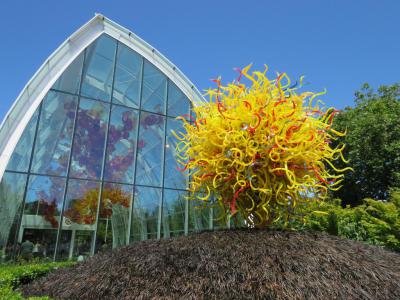
Chihuly Garden and Glass is a captivating museum and art exhibition located in Seattle. Dedicated to the stunning works of renowned glass artist Dale Chihuly, the museum offers visitors an immersive and awe-inspiring experience that celebrates the beauty and versatility of glass as an artistic medium.
Chihuly Garden and Glass is situated at the foot of the iconic Space Needle. The museum's indoor exhibition space presents a mesmerizing display of Chihuly's sculptures, installations, and intricate glass creations. The artwork explores a wide range of forms, colors, and textures, showcasing the artist's mastery of the glassblowing technique and his innovative approach to sculptural design. Visitors can marvel at the intricate details and vibrant hues of Chihuly's signature works, which often evoke natural elements like flowers, sea creatures, and organic shapes.
In addition to the indoor galleries, Chihuly Garden and Glass features an expansive outdoor garden that beautifully integrates art with nature. The garden exhibits Chihuly's sculptures against a backdrop of carefully curated plantings, creating a harmonious blend of color and form. The glass artwork interacts with the surrounding flora, water features, and natural light, creating a dynamic and ever-changing visual experience throughout the seasons.
Visitors can stroll through the garden pathways, discovering hidden nooks and unexpected displays at every turn. The juxtaposition of the delicate glass artistry against the ruggedness of nature creates a sense of wonder and exploration. The garden also features a stunning glasshouse, showcasing one of Chihuly's largest suspended installations-an extraordinary chandelier-like structure that spans the entire ceiling and is illuminated to create a breathtaking spectacle.
Chihuly Garden and Glass offers visitors more than just visual delight. The museum provides educational insights into Chihuly's creative process, the history of glass art, and the evolution of his artistic career. Interactive exhibits, videos, and informative displays shed light on the intricate techniques and craftsmanship behind the glassblowing process, further enriching the visitor experience.
Tip:
Since this exhibit doesn't take too long, try getting tickets at or after 4pm if possible, as they are significantly discounted.
Chihuly Garden and Glass is situated at the foot of the iconic Space Needle. The museum's indoor exhibition space presents a mesmerizing display of Chihuly's sculptures, installations, and intricate glass creations. The artwork explores a wide range of forms, colors, and textures, showcasing the artist's mastery of the glassblowing technique and his innovative approach to sculptural design. Visitors can marvel at the intricate details and vibrant hues of Chihuly's signature works, which often evoke natural elements like flowers, sea creatures, and organic shapes.
In addition to the indoor galleries, Chihuly Garden and Glass features an expansive outdoor garden that beautifully integrates art with nature. The garden exhibits Chihuly's sculptures against a backdrop of carefully curated plantings, creating a harmonious blend of color and form. The glass artwork interacts with the surrounding flora, water features, and natural light, creating a dynamic and ever-changing visual experience throughout the seasons.
Visitors can stroll through the garden pathways, discovering hidden nooks and unexpected displays at every turn. The juxtaposition of the delicate glass artistry against the ruggedness of nature creates a sense of wonder and exploration. The garden also features a stunning glasshouse, showcasing one of Chihuly's largest suspended installations-an extraordinary chandelier-like structure that spans the entire ceiling and is illuminated to create a breathtaking spectacle.
Chihuly Garden and Glass offers visitors more than just visual delight. The museum provides educational insights into Chihuly's creative process, the history of glass art, and the evolution of his artistic career. Interactive exhibits, videos, and informative displays shed light on the intricate techniques and craftsmanship behind the glassblowing process, further enriching the visitor experience.
Tip:
Since this exhibit doesn't take too long, try getting tickets at or after 4pm if possible, as they are significantly discounted.
10) Kerry Park (must see)
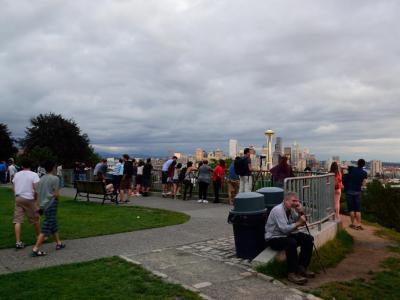
Kerry Park, situated on the southern slope of Queen Anne Hill in Seattle, is a small public park and viewpoint. Its location along West Highland Drive, between 2nd Avenue West and 3rd Avenue West, grants visitors an extraordinary vista of Downtown Seattle. Renowned for its iconic city skyline view, Kerry Park showcases the prominent Space Needle at its center, while Elliott Bay stretches to the west, and Mount Rainier majestically adorns the background.
Designed to enhance the viewing experience, the park features a railing and several benches facing southwards towards the captivating skyline. On the western side, a stairway connects Kerry Park to West Prospect Street and Bayview-Kinnear Park, which boasts a small playground. The park owes its name to Albert S. Kerry, a lumberman and business magnate, and his wife Catherine. Living nearby, the couple generously donated the land to the city in 1927, envisioning it as a place for all to revel in its breathtaking views.
At the heart of Kerry Park stands Changing Form, a remarkable steel sculpture created by artist Doris Totten Chase. Rising 15 feet (4.6 meters) tall, this hollow structure was installed in 1971 with contributions from Kerry's children. The sculpture not only captivates as an artistic masterpiece but also serves as a playful area for children and a picturesque frame for photographers. From Kerry Park, the expansive view encompasses downtown Seattle, Elliott Bay, the West Seattle peninsula, Bainbridge Island, and the magnificent Mount Rainier.
The park's stunning backdrop frequently sets the stage for television news segments on Seattle and serves as a prominent feature in various media representations of the city. Notably, Kerry Park made appearances in the opening credits of the 1999 film "10 Things I Hate About You" and in the television series "Frasier," which it showcased the view from the main character's apartment.
Designed to enhance the viewing experience, the park features a railing and several benches facing southwards towards the captivating skyline. On the western side, a stairway connects Kerry Park to West Prospect Street and Bayview-Kinnear Park, which boasts a small playground. The park owes its name to Albert S. Kerry, a lumberman and business magnate, and his wife Catherine. Living nearby, the couple generously donated the land to the city in 1927, envisioning it as a place for all to revel in its breathtaking views.
At the heart of Kerry Park stands Changing Form, a remarkable steel sculpture created by artist Doris Totten Chase. Rising 15 feet (4.6 meters) tall, this hollow structure was installed in 1971 with contributions from Kerry's children. The sculpture not only captivates as an artistic masterpiece but also serves as a playful area for children and a picturesque frame for photographers. From Kerry Park, the expansive view encompasses downtown Seattle, Elliott Bay, the West Seattle peninsula, Bainbridge Island, and the magnificent Mount Rainier.
The park's stunning backdrop frequently sets the stage for television news segments on Seattle and serves as a prominent feature in various media representations of the city. Notably, Kerry Park made appearances in the opening credits of the 1999 film "10 Things I Hate About You" and in the television series "Frasier," which it showcased the view from the main character's apartment.
11) Fremont Troll (must see)
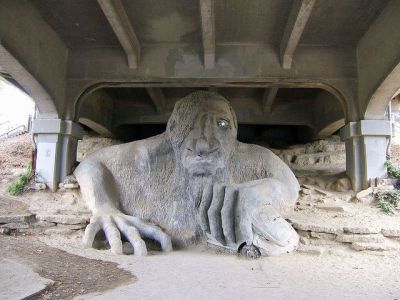
When you reach the dark, shadowy space where the Aurora Bridge meets the ground look to the left. Here lurks the Fremont Troll, an 18-foot-tall steel and concrete figure busily munching on a Volkswagen Beetle with a California license plate, as if it has grabbed the vehicle from the bridge above.
Trolls in Scandinavian folklore are unsightly dwarfs or giants that live in caves, in forests or under bridges while preying on human flesh, and the one here was actually based on the Norwegian folktale, 'Three Billy Goats Gruff'. Reportedly, it does a good job of scaring off passing billy goats, as well as skateboarders and drug dealers.
The troll made his appearance in 1991, commissioned by the Fremont Arts Council. Visitors and nonprofits are encouraged to clamber over the sculpture for free and to attempt to remove the hubcap eye or – why not? - pull on the beard. It's not something you see or do everyday!
Why You Should Visit:
To see a fun and hip sculpture that totally fits Fremont's/Seattle's artsy vibe.
Trolls in Scandinavian folklore are unsightly dwarfs or giants that live in caves, in forests or under bridges while preying on human flesh, and the one here was actually based on the Norwegian folktale, 'Three Billy Goats Gruff'. Reportedly, it does a good job of scaring off passing billy goats, as well as skateboarders and drug dealers.
The troll made his appearance in 1991, commissioned by the Fremont Arts Council. Visitors and nonprofits are encouraged to clamber over the sculpture for free and to attempt to remove the hubcap eye or – why not? - pull on the beard. It's not something you see or do everyday!
Why You Should Visit:
To see a fun and hip sculpture that totally fits Fremont's/Seattle's artsy vibe.
12) Gas Works Park (must see)
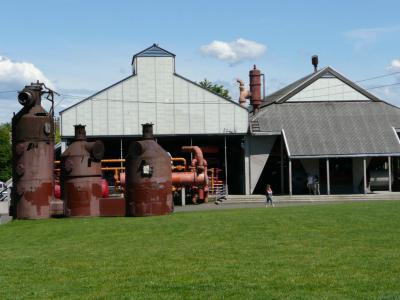
Hulking specters of a bygone age dominate Gas Works Park, situated on a southerly knob of land jutting into Lake Union and the front door to North Seattle. The Seattle Gas Light Company began to produce heating and lighting gas in this refinery on the 20-acre (8-hectare) knoll in 1906, fueling a rapidly growing city while earning a reputation as a filthy, foul-smelling killer of vegetation and wildlife. The plant closed its valves for good in 1956.
When the site was proposed as a park in the early 1960s, the city council hired landscape architect Richard Haag to create a lush, arboretum-type park. Instead, Haag submitted a plan incorporating much of the old gas plant. His design – with the rusting hulks of the gasworks in the middle of an undulating lawn – triumphed after a storm of controversy.
Kites fly high over the park's Grand Mound, a grassy hill built west of the park's core from abandoned industrial waste. Picnickers and joggers share the space along an incline, and at the crown, visitors admire a mosaic astrological sun and moon dial. The crest offers a great panorama of inner Seattle – Downtown, Queen Anne Hill, the Aurora Bridge to the west, and Capitol Hill to the east.
Why You Should Visit:
Good option if you're in Fremont and want to get a photo of Seattle proper – there's a big hill (called Grand Mound) you can stand on and get a decent view. The old gasworks itself is also rather picturesque, in a decaying industrial kind of way.
Tip:
Check for outdoor concerts or bring a kite and/or a picnic and enjoy some seriously phenomenal sunsets!
One thing to note, though: the park's hilly landscape isn't ideal for playing sports.
When the site was proposed as a park in the early 1960s, the city council hired landscape architect Richard Haag to create a lush, arboretum-type park. Instead, Haag submitted a plan incorporating much of the old gas plant. His design – with the rusting hulks of the gasworks in the middle of an undulating lawn – triumphed after a storm of controversy.
Kites fly high over the park's Grand Mound, a grassy hill built west of the park's core from abandoned industrial waste. Picnickers and joggers share the space along an incline, and at the crown, visitors admire a mosaic astrological sun and moon dial. The crest offers a great panorama of inner Seattle – Downtown, Queen Anne Hill, the Aurora Bridge to the west, and Capitol Hill to the east.
Why You Should Visit:
Good option if you're in Fremont and want to get a photo of Seattle proper – there's a big hill (called Grand Mound) you can stand on and get a decent view. The old gasworks itself is also rather picturesque, in a decaying industrial kind of way.
Tip:
Check for outdoor concerts or bring a kite and/or a picnic and enjoy some seriously phenomenal sunsets!
One thing to note, though: the park's hilly landscape isn't ideal for playing sports.
