Custom Walk in Utrecht, Netherlands by tugcenurcoskunn_cd9e8 created on 2025-08-01
Guide Location: Netherlands » Utrecht
Guide Type: Custom Walk
# of Sights: 8
Tour Duration: 2 Hour(s)
Travel Distance: 2.6 Km or 1.6 Miles
Share Key: 44WWL
Guide Type: Custom Walk
# of Sights: 8
Tour Duration: 2 Hour(s)
Travel Distance: 2.6 Km or 1.6 Miles
Share Key: 44WWL
How It Works
Please retrieve this walk in the GPSmyCity app. Once done, the app will guide you from one tour stop to the next as if you had a personal tour guide. If you created the walk on this website or come to the page via a link, please follow the instructions below to retrieve the walk in the app.
Retrieve This Walk in App
Step 1. Download the app "GPSmyCity: Walks in 1K+ Cities" on Apple App Store or Google Play Store.



Step 2. In the GPSmyCity app, download(or launch) the guide "Utrecht Map and Walking Tours".
Step 3. Tap the menu button located at upper right corner of the "Walks" screen and select "Retrieve custom walk". Enter the share key: 44WWL

1) Houtzaagmolen De Ster (Sawmill de Ster)
Sawmill de Ster (Houtzaagmolen De Ster) is the heart of Molenerf de Ster, one of the last fully preserved sawmill yards in the Netherlands. Located in the Lombok neighborhood of Utrecht, on the banks of the Leidsche Rijn, this historic wind-powered sawmill has been a defining landmark since 1739. While much of the original complex disappeared over time, the sawmill itself remained and was carefully rebuilt between 1996 and 1998.
The octagonal windmill reaches 20 meters into the sky, with its blades extending an additional 9 meters, making it visible from afar. Surrounding the sawmill are the miller’s house, two servants' houses, and three wood-drying sheds, maintaining the authentic atmosphere of a working sawmill yard.
De Ster follows a traditional wood-processing technique: tree trunks-elms, plane trees, lindens, and oaks-are left in the water near the mill for up to two years to dissolve salts and acids before being hauled into the mill and cut into planks.
Beyond its industrial heritage, Sawmill de Ster is also a lively cultural hub. Every Saturday afternoon, the mill comes to life, demonstrating its original function to the public. It doubles as a music venue, meeting center, and even an official wedding location. Visitors can enjoy the mill café with a terrace by the water, take guided tours-including programs tailored for primary schools-and explore the site during National Mill Day and Monument Day.
A piece of Utrecht’s living history, Sawmill de Ster is both a working windmill and a unique gathering place where past and present meet.
The octagonal windmill reaches 20 meters into the sky, with its blades extending an additional 9 meters, making it visible from afar. Surrounding the sawmill are the miller’s house, two servants' houses, and three wood-drying sheds, maintaining the authentic atmosphere of a working sawmill yard.
De Ster follows a traditional wood-processing technique: tree trunks-elms, plane trees, lindens, and oaks-are left in the water near the mill for up to two years to dissolve salts and acids before being hauled into the mill and cut into planks.
Beyond its industrial heritage, Sawmill de Ster is also a lively cultural hub. Every Saturday afternoon, the mill comes to life, demonstrating its original function to the public. It doubles as a music venue, meeting center, and even an official wedding location. Visitors can enjoy the mill café with a terrace by the water, take guided tours-including programs tailored for primary schools-and explore the site during National Mill Day and Monument Day.
A piece of Utrecht’s living history, Sawmill de Ster is both a working windmill and a unique gathering place where past and present meet.
2) Museum Speelklok (Musical Clock Museum) (must see)
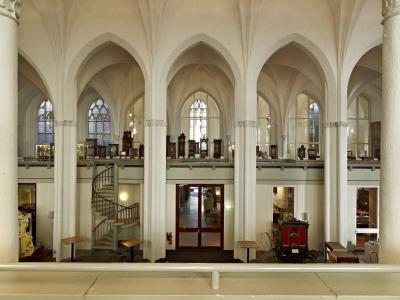
Housed in the medieval Neighborhood Church (Buurkerk) in the heart of Utrecht, the Musical Clock Museum (Museum Speelklok) is a fascinating showcase of self-playing musical instruments. Previously known as Museum from Music Box to Pierement, it has been delighting visitors since 1984, offering a symphony of mechanical wonders ranging from music boxes and musical clocks to pianolas, barrel organs, and even a turret clock with a carillon-the original self-playing instrument.
The museum traces its roots back to a 1956 exhibition in Utrecht, which proved so popular that it led to the establishment of a permanent national museum dedicated to mechanical musical instruments. Over the years, Musical Clock Museum has gained both national and international recognition, with its restoration workshops setting the gold standard in the field.
Among its highlights is the Royal Room, where visitors can admire gold-gilded, self-playing musical instruments once owned by monarchs, including the Clay Clock (1738), which plays compositions by G.F. Handel. The museum also prides itself on keeping its instruments in working order, so visitors can experience their unique sounds in action.
A family-friendly destination, the museum offers interactive experiences for all ages. Kids can embark on a treasure hunt led by Toon the organ monkey, while adults might be captivated by the Violina, an automated violin-playing instrument.
The museum has also made its mark in contemporary music culture. In 2016, Swedish musician Martin Molin (of Wintergatan) visited and drew inspiration from its collection to build his Marble Machine, an intricate music-making device using metal marbles. The retired Marble Machine even became a temporary exhibit in 2017, followed by a YouTube series, Music Machine Mondays, featuring instruments from the museum.
With its unique combination of history, music, and mechanics, the Musical Clock Museum remains a must-visit for anyone intrigued by the magic of self-playing music.
The museum traces its roots back to a 1956 exhibition in Utrecht, which proved so popular that it led to the establishment of a permanent national museum dedicated to mechanical musical instruments. Over the years, Musical Clock Museum has gained both national and international recognition, with its restoration workshops setting the gold standard in the field.
Among its highlights is the Royal Room, where visitors can admire gold-gilded, self-playing musical instruments once owned by monarchs, including the Clay Clock (1738), which plays compositions by G.F. Handel. The museum also prides itself on keeping its instruments in working order, so visitors can experience their unique sounds in action.
A family-friendly destination, the museum offers interactive experiences for all ages. Kids can embark on a treasure hunt led by Toon the organ monkey, while adults might be captivated by the Violina, an automated violin-playing instrument.
The museum has also made its mark in contemporary music culture. In 2016, Swedish musician Martin Molin (of Wintergatan) visited and drew inspiration from its collection to build his Marble Machine, an intricate music-making device using metal marbles. The retired Marble Machine even became a temporary exhibit in 2017, followed by a YouTube series, Music Machine Mondays, featuring instruments from the museum.
With its unique combination of history, music, and mechanics, the Musical Clock Museum remains a must-visit for anyone intrigued by the magic of self-playing music.
3) Oudegracht (Old Canal) (must see)
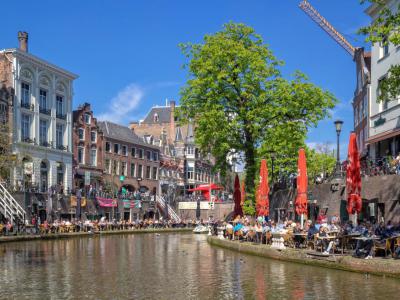
This canal is likely the most famous in the city since it runs the entire length of the town from north to south. It is two kilometers long and connects Kromme Rijn and the Vecht.
When the Romans settled in the area, they chose the spot where the Vecht split from the Rhine. Unfortunately, the Rhine had begun to silt, and a dam built in 1122 threatened to limit navigation to Utrecht drastically. So a series of canals were built to compensate for these issues.
These canals served several purposes. First, they connected the town to the Rhine and the North Sea for trade routes. They also served a defensive purpose--many were used for moats around castles. Plus, the silt dug to make the canals was piled on the sides, which braced the community from flooding.
By creating a waterworks system, water levels in the canal are kept at a constant level. This enabled many homes and buildings along the canal to build quays and storage cellars, which eventually grew into wharves. By the 15th century, the city has a two-kilometer-long harbor of wharves with storage cellars.
An impressive collection of 16 beautiful bridges cross the Oudegracht. Most of these have two arches each, but a few have only one arch.
When the Romans settled in the area, they chose the spot where the Vecht split from the Rhine. Unfortunately, the Rhine had begun to silt, and a dam built in 1122 threatened to limit navigation to Utrecht drastically. So a series of canals were built to compensate for these issues.
These canals served several purposes. First, they connected the town to the Rhine and the North Sea for trade routes. They also served a defensive purpose--many were used for moats around castles. Plus, the silt dug to make the canals was piled on the sides, which braced the community from flooding.
By creating a waterworks system, water levels in the canal are kept at a constant level. This enabled many homes and buildings along the canal to build quays and storage cellars, which eventually grew into wharves. By the 15th century, the city has a two-kilometer-long harbor of wharves with storage cellars.
An impressive collection of 16 beautiful bridges cross the Oudegracht. Most of these have two arches each, but a few have only one arch.
4) DOMUnder Museum (must see)
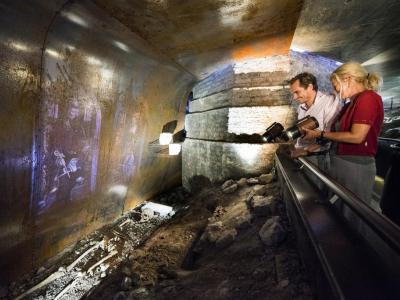
DOMunder opened in 2015. The museum allows visitors to explore an archeological excavation site from 1949 that goes below Dom Square.
The primary attraction is to see what remains of the ancient Roman fortification known as Trajectum--the first structure that settled the area that would later become the city of Utrecht.
Trajectum was a castellum that guarded a crossing point on the Rhine. It was built around 50 AD. At that time, it marked the northern border of the Roman Empire. It was a simple wooden structure built to protect from raids made by northern tribes.
The Romans abandoned Trajectum sometime around 270 AD, but the city continued to build up in the area. In the seventh century, a church was built on the site. Over the years, larger churches were added and rebuilt.
Dom Church, in its present form, was begun in 1254. It was built on the foundations of those prior churches and the castellum. Evidence of these historic layers can be seen while touring the DOMunder exhibits.
Admission to the DOMunder museum also includes Dom Tower and the Dom Church tours.
The primary attraction is to see what remains of the ancient Roman fortification known as Trajectum--the first structure that settled the area that would later become the city of Utrecht.
Trajectum was a castellum that guarded a crossing point on the Rhine. It was built around 50 AD. At that time, it marked the northern border of the Roman Empire. It was a simple wooden structure built to protect from raids made by northern tribes.
The Romans abandoned Trajectum sometime around 270 AD, but the city continued to build up in the area. In the seventh century, a church was built on the site. Over the years, larger churches were added and rebuilt.
Dom Church, in its present form, was begun in 1254. It was built on the foundations of those prior churches and the castellum. Evidence of these historic layers can be seen while touring the DOMunder exhibits.
Admission to the DOMunder museum also includes Dom Tower and the Dom Church tours.
5) Domkerk (Dom Church) (must see)
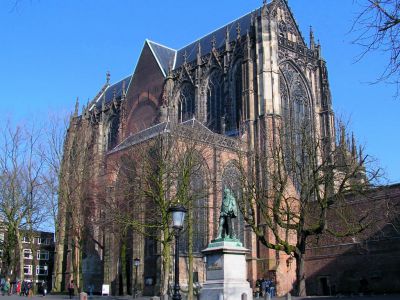
Domkerk, as it presently stands, was begun in 1254. It was initially a cathedral of the Roman Catholic Diocese of Utrecht and dedicated to Saint Martin, but it has been Protestant since the Reformation in 1580.
This wasn't the first church built here, though. Dom Church has been built on centuries of history. Dom Square was the site of a Roman castellum that guarded a crossing of the river Rhine. The castellum likely included a small stone temple.
During the Middle Ages, the Utrecht area was the cradle of Christianity in the Northern Netherlands. Frankish missionaries built a wood church here in 630, long after the Romans had left.
In 695, Willibrord, an Anglo-Saxon monk, was charged with building a stone church dedicated to Saint Martin. At this time, there was also a second church dedicated to Saint Salvator. Unfortunately, Normans destroyed the churches here in 857 and the local bishops fled.
Bishop Adalbold built a Romanesque-style church on this site, consecrated in 1023. Sadly, Adalbold's church was mostly destroyed in a nine-day fire in 1253 that affected much of Utrecht.
The Gothic Saint Martins Cathedral was started in 1254. However, progress on the cathedral was slow as money for the project was scarce. It wasn't until Jan van Nassau put together a series of measures to secure financing that construction started. That was in 1288.
The 14th and 15th centuries saw several additions and expansions to the church. This included the bell tower, transept, and nave. Still, even after all these years, the money dried up for the projects, and work was done in starts and stops. At this time, the nave connected the church to the tower in one grand cathedral.
A severe storm on August 1, 1674, destroyed the church's nave. The result was the separation of the church and the tower, which has remained to this day. The remains of that original nave stood until 1826.
Over the years, there have been several attempts to rebuild the nave, or at least mark its existence. In 2004 a temporary structure was created using scaffolding.
This wasn't the first church built here, though. Dom Church has been built on centuries of history. Dom Square was the site of a Roman castellum that guarded a crossing of the river Rhine. The castellum likely included a small stone temple.
During the Middle Ages, the Utrecht area was the cradle of Christianity in the Northern Netherlands. Frankish missionaries built a wood church here in 630, long after the Romans had left.
In 695, Willibrord, an Anglo-Saxon monk, was charged with building a stone church dedicated to Saint Martin. At this time, there was also a second church dedicated to Saint Salvator. Unfortunately, Normans destroyed the churches here in 857 and the local bishops fled.
Bishop Adalbold built a Romanesque-style church on this site, consecrated in 1023. Sadly, Adalbold's church was mostly destroyed in a nine-day fire in 1253 that affected much of Utrecht.
The Gothic Saint Martins Cathedral was started in 1254. However, progress on the cathedral was slow as money for the project was scarce. It wasn't until Jan van Nassau put together a series of measures to secure financing that construction started. That was in 1288.
The 14th and 15th centuries saw several additions and expansions to the church. This included the bell tower, transept, and nave. Still, even after all these years, the money dried up for the projects, and work was done in starts and stops. At this time, the nave connected the church to the tower in one grand cathedral.
A severe storm on August 1, 1674, destroyed the church's nave. The result was the separation of the church and the tower, which has remained to this day. The remains of that original nave stood until 1826.
Over the years, there have been several attempts to rebuild the nave, or at least mark its existence. In 2004 a temporary structure was created using scaffolding.
6) Dom Tower (must see)
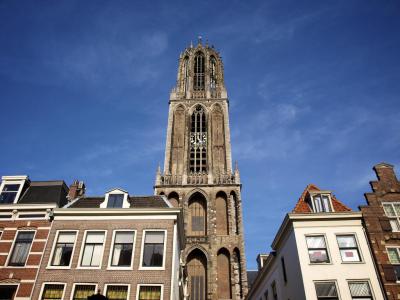
Dom Tower is located right on Dom Square, but you can't miss it. It is the tallest church tower in the Netherlands. You can join a guided tour of the tower and enjoy the incredible vistas from the top observation platform.
During the trip up the tower, you will climb 465 steps. Luckily, the tower is full of stories from its long history. During the hour-long tour, the guide will make lots of stops to discuss the various chapels and galleries along the way.
Dom Tower was built from 1321 to 1382 and designed by John of Hainaut. At the time, it was one of the largest towers in Europe. It was part of Saint Martin's Cathedral, which was never fully completed. The unfinished nave collapsed in 1674 and left Dom Tower as a freestanding building. Overall, the tower is 112.5 meters tall.
The tower has always been a multifunctional structure--it serves as a belfry and contains private chapels. Over the city's history, it has also served as a watchtower, with quarters for the tower guard inside.
The tower features a carillon, the largest bell of which weighs 8,200 kilograms (18,000 pounds) and has a diameter of 227 centimeters (89 inches). Like the tower, the carillon has been restored several times, most recently in 1972. At that time, it was expanded to include 50 bells.
The tower has just undergone another massive renovation project. During the process, a lift was added so that you could skip the workout and just enjoy the view.
Why You Should Visit:
Most people do not consider a trip to Utrecht complete without visiting Dom Tower and seeing the city from above. The tower is known as the symbol of the city.
You can see a 360-degree panoramic view of the city and its surroundings from the viewing galleries. You can see both Amsterdam and Rotterdam from the top on clear days. The upper gallery is 95 meters (311 feet) above street level.
But the tour of Dom Tower is also an extraordinary glimpse into the history of the area. The Romans founded the city on this very site, and guides share the city's lore throughout the ages.
During the trip up the tower, you will climb 465 steps. Luckily, the tower is full of stories from its long history. During the hour-long tour, the guide will make lots of stops to discuss the various chapels and galleries along the way.
Dom Tower was built from 1321 to 1382 and designed by John of Hainaut. At the time, it was one of the largest towers in Europe. It was part of Saint Martin's Cathedral, which was never fully completed. The unfinished nave collapsed in 1674 and left Dom Tower as a freestanding building. Overall, the tower is 112.5 meters tall.
The tower has always been a multifunctional structure--it serves as a belfry and contains private chapels. Over the city's history, it has also served as a watchtower, with quarters for the tower guard inside.
The tower features a carillon, the largest bell of which weighs 8,200 kilograms (18,000 pounds) and has a diameter of 227 centimeters (89 inches). Like the tower, the carillon has been restored several times, most recently in 1972. At that time, it was expanded to include 50 bells.
The tower has just undergone another massive renovation project. During the process, a lift was added so that you could skip the workout and just enjoy the view.
Why You Should Visit:
Most people do not consider a trip to Utrecht complete without visiting Dom Tower and seeing the city from above. The tower is known as the symbol of the city.
You can see a 360-degree panoramic view of the city and its surroundings from the viewing galleries. You can see both Amsterdam and Rotterdam from the top on clear days. The upper gallery is 95 meters (311 feet) above street level.
But the tour of Dom Tower is also an extraordinary glimpse into the history of the area. The Romans founded the city on this very site, and guides share the city's lore throughout the ages.
7) Pandhof Domkerk (Dom Church Garden)
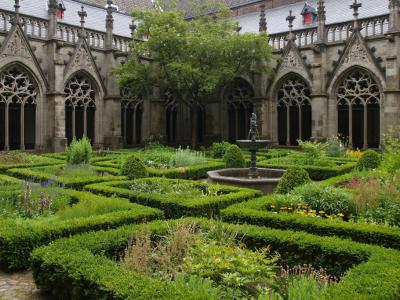
Adjacent to the Dom Church's choir are its lovely gardens. They are accessed through an 1894 neo-Gothic gate on Dom Square.
The gardens are part of the church cloister, which was built in two phases. The eastern and southern arms have different window tracings compared to the western. The vaults are also different, with the older having rib vaults and the newest parts having net vaults.
Above each window and vault, you will find scenes from the life of Saint Martin. Unfortunately, some of these are deteriorating, and they've been replaced and restored several times over the years.
There are more recent additions, as well. In the center of the garden stands a 1913 bronze statue and water feature. The tea house that overlooks the gardens was built during the last reconstruction in 1988.
The gardens are part of the church cloister, which was built in two phases. The eastern and southern arms have different window tracings compared to the western. The vaults are also different, with the older having rib vaults and the newest parts having net vaults.
Above each window and vault, you will find scenes from the life of Saint Martin. Unfortunately, some of these are deteriorating, and they've been replaced and restored several times over the years.
There are more recent additions, as well. In the center of the garden stands a 1913 bronze statue and water feature. The tea house that overlooks the gardens was built during the last reconstruction in 1988.
8) Nijntje Museum (Miffy Museum) (must see)
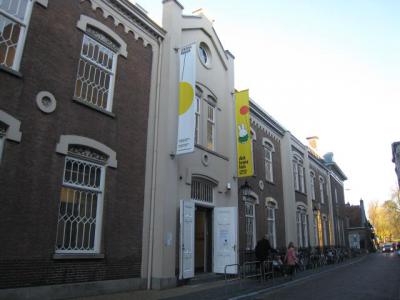
The Miffy Museum (Nijntje Museum) in Utrecht is a whimsical, hands-on experience designed for young children, immersing them in the world of Miffy, the beloved character created by Dutch illustrator Dick Bruna. The museum is located in Utrecht’s museum quarter, directly across from the Centraal Museum, where visitors can learn more about Bruna’s work.
With ten interactive rooms, the Miffy Museum encourages children to explore everyday experiences in themed play spaces inspired by Miffy and her friends. From Miffy’s house-a life-sized dollhouse for toddlers-to a puppet theatre, a zoo, and even a miniature museum, each section is designed to spark creativity and engage children’s imaginations. There are no set rules-kids are free to explore at their own pace, whether it’s riding a bus with Miffy, controlling toy trains and traffic lights, or creating their masterpieces for display.
One of the most delightful sections is the Miffy house, where little visitors can bathe, cook, nap, hang laundry, and tend to the garden-all at a toddler-friendly scale. Parents can watch from outside, as the structure is designed with perspex panels to ensure a safe yet independent experience for kids.
On weekends, the museum hosts art workshops, and every Sunday at 14:00, children can enjoy a storytelling session tied to a seasonal or thematic focus.
With staggered entry times to avoid overcrowding and ample storage space for strollers and baby gear, the museum ensures a stress-free visit for families. After a fun-filled adventure, visitors can cross the street to the Centraal Museum’s café, where Miffy-shaped pancakes provide the perfect sweet ending to a playful day.
With ten interactive rooms, the Miffy Museum encourages children to explore everyday experiences in themed play spaces inspired by Miffy and her friends. From Miffy’s house-a life-sized dollhouse for toddlers-to a puppet theatre, a zoo, and even a miniature museum, each section is designed to spark creativity and engage children’s imaginations. There are no set rules-kids are free to explore at their own pace, whether it’s riding a bus with Miffy, controlling toy trains and traffic lights, or creating their masterpieces for display.
One of the most delightful sections is the Miffy house, where little visitors can bathe, cook, nap, hang laundry, and tend to the garden-all at a toddler-friendly scale. Parents can watch from outside, as the structure is designed with perspex panels to ensure a safe yet independent experience for kids.
On weekends, the museum hosts art workshops, and every Sunday at 14:00, children can enjoy a storytelling session tied to a seasonal or thematic focus.
With staggered entry times to avoid overcrowding and ample storage space for strollers and baby gear, the museum ensures a stress-free visit for families. After a fun-filled adventure, visitors can cross the street to the Centraal Museum’s café, where Miffy-shaped pancakes provide the perfect sweet ending to a playful day.
