Custom Walk in Granada, Spain by elizabeth_smithmd15_97f54 created on 2025-08-01
Guide Location: Spain » Granada
Guide Type: Custom Walk
# of Sights: 6
Tour Duration: 1 Hour(s)
Travel Distance: 2.2 Km or 1.4 Miles
Share Key: BVBKK
Guide Type: Custom Walk
# of Sights: 6
Tour Duration: 1 Hour(s)
Travel Distance: 2.2 Km or 1.4 Miles
Share Key: BVBKK
How It Works
Please retrieve this walk in the GPSmyCity app. Once done, the app will guide you from one tour stop to the next as if you had a personal tour guide. If you created the walk on this website or come to the page via a link, please follow the instructions below to retrieve the walk in the app.
Retrieve This Walk in App
Step 1. Download the app "GPSmyCity: Walks in 1K+ Cities" on Apple App Store or Google Play Store.



Step 2. In the GPSmyCity app, download(or launch) the guide "Granada Map and Walking Tours".
Step 3. Tap the menu button located at upper right corner of the "Walks" screen and select "Retrieve custom walk". Enter the share key: BVBKK
1) Plaza Nueva (The New Square) (must see)
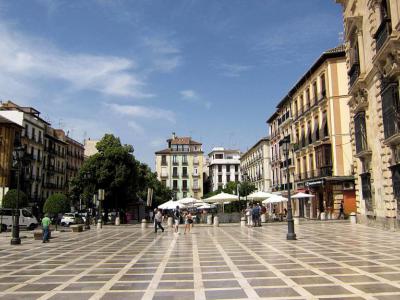
Despite its name, the Plaza Nueva (New Square) is one of the oldest squares in Granada. In former times the plaza was the scene of bull fights, tournaments and an occasional execution, definitely a spectator event. Before it was a square, however, it was a bridge. Called the Bridge of of Loggers, it spanned the River Darro.
The square is centrally located and is an ideal starting point for explorations on foot. Walk from the Puerto Granadas to the Alhambra forest to the Alhambra, a 15 or 20 minute journey. Exit by way of the cobbled street on the left of the Church of Santa Ana to the River Darro. Perhaps go up Elvira Street to the Mirador San Nicolas and the Albaicin.
The main attraction of the square itself is the High Court of Andalusia. The court building was formerly the Chancilleria Real (Royal Chancellery). Construction of the Chancellery began in 1530. In the rear of the building a prison, handy to the court. The square is also home to the Arborea Flamenco. Cafes, flamenco, ole!
The square is centrally located and is an ideal starting point for explorations on foot. Walk from the Puerto Granadas to the Alhambra forest to the Alhambra, a 15 or 20 minute journey. Exit by way of the cobbled street on the left of the Church of Santa Ana to the River Darro. Perhaps go up Elvira Street to the Mirador San Nicolas and the Albaicin.
The main attraction of the square itself is the High Court of Andalusia. The court building was formerly the Chancilleria Real (Royal Chancellery). Construction of the Chancellery began in 1530. In the rear of the building a prison, handy to the court. The square is also home to the Arborea Flamenco. Cafes, flamenco, ole!
2) Casa de Zafra (House of Zafra)
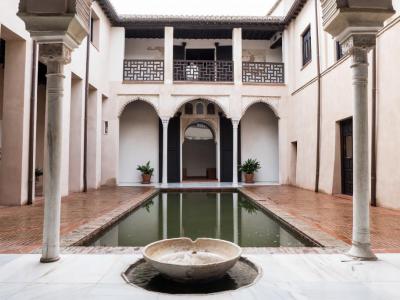
Found at the heart of the historical Albaicin neighborhood, the House of Zafra (Casa de Zafra) is probably the best way to acquaint oneself with the Arab lifestyle in Granada under the Muslim rule. This 14th-century Moorish property, once owned by an aristocratic Andalusian family, has maintained its Arab essence, with many original features still in place. In large part this was possible thanks to the altitude and orography of the Albaicin area, renowned for its winding, narrow and often dead-end streets, which made it easy to withstand contemporary urban reforms.
After the Christian conquest of Granada, Catholic Queen Isabel gave several palatial-type houses, including this one, to her Secretary, Don Hernando de Zafra, as a prebend for his services. After the death of Don Hernando and his wife, the property was donated to the convent of Santa Catalina de Siena, thence popularly known as the Convent of Zafra.
As part of the convent, the Moorish House of Zafra has survived, almost intact, until the early 20th century. In 1931 the entire Convent of Zafra was declared a historic and artistic monument. In 1946 the mayor of Granada acquired the house for the city council, upon which it underwent several restorations, with the latest one being in 2010-2012.
In 1985 the house was declared an Asset of Cultural Interest. Typically of most Arab dwellings, it shows a stark contrast between the relatively simple exterior and the elaborately decorated interior, intended to conceal the comforts of the home, including courtyard with the pool, from strange eyes. The courtyard façades, in turn, reveal unique decorative patterns on arches, columns and polychrome plaster works.
Today, the House of Zafra accommodates Albaycín Visitor Centre, and can be visited for free.
After the Christian conquest of Granada, Catholic Queen Isabel gave several palatial-type houses, including this one, to her Secretary, Don Hernando de Zafra, as a prebend for his services. After the death of Don Hernando and his wife, the property was donated to the convent of Santa Catalina de Siena, thence popularly known as the Convent of Zafra.
As part of the convent, the Moorish House of Zafra has survived, almost intact, until the early 20th century. In 1931 the entire Convent of Zafra was declared a historic and artistic monument. In 1946 the mayor of Granada acquired the house for the city council, upon which it underwent several restorations, with the latest one being in 2010-2012.
In 1985 the house was declared an Asset of Cultural Interest. Typically of most Arab dwellings, it shows a stark contrast between the relatively simple exterior and the elaborately decorated interior, intended to conceal the comforts of the home, including courtyard with the pool, from strange eyes. The courtyard façades, in turn, reveal unique decorative patterns on arches, columns and polychrome plaster works.
Today, the House of Zafra accommodates Albaycín Visitor Centre, and can be visited for free.
3) Carrera del Darro (Darro Street) (must see)
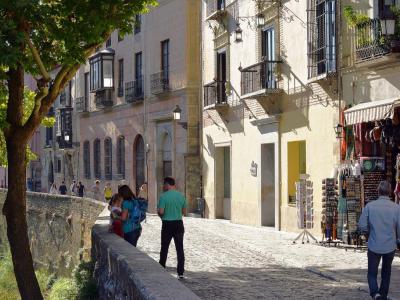
The whole left bank of the River Darro is called the Carrera del Darro. Carrera del Darro is unique in a city full of unique things. The street runs in between the river and the forest of Alhambra. At night the churches are lighted and the Alhambra at the top of its hill glows with light.
Starting in the sixteenth century the nobility of Granada made their homes in this picturesque place. Renaissance buildings, churches, and ruins beside bars and cafes line the street and the banks of the river. The Banuelo is here. Public baths came in the 11th century. Mudejar churches like Santa Ana and San Pedro date from 1567.
Then there is the tragic story of the House of Castril balcony. Today the Castril House is an archeology museum. It is a Renaissance dwelling built in 1539. It belonged to a rich nobleman named Zafra. Zafra was obsessive with keeping his daughter Elvira locked away from the local swains.
He ordered the death of a servant who was caught with a message for Elvira from a likely suitor. He believed the message of love was from the servant and ordered that he be hung from his daughter's balcony. When the servant protested his innocence, Zafra suggested he hang from the balcony and wait. Elvira took poison and killed herself.
There is an mysterious inscription that was found, "Esperando La Del Cielo" ("Waiting for Heaven") above Elvira's balcony. A melodramatic tragedy, the case was never solved.
Starting in the sixteenth century the nobility of Granada made their homes in this picturesque place. Renaissance buildings, churches, and ruins beside bars and cafes line the street and the banks of the river. The Banuelo is here. Public baths came in the 11th century. Mudejar churches like Santa Ana and San Pedro date from 1567.
Then there is the tragic story of the House of Castril balcony. Today the Castril House is an archeology museum. It is a Renaissance dwelling built in 1539. It belonged to a rich nobleman named Zafra. Zafra was obsessive with keeping his daughter Elvira locked away from the local swains.
He ordered the death of a servant who was caught with a message for Elvira from a likely suitor. He believed the message of love was from the servant and ordered that he be hung from his daughter's balcony. When the servant protested his innocence, Zafra suggested he hang from the balcony and wait. Elvira took poison and killed herself.
There is an mysterious inscription that was found, "Esperando La Del Cielo" ("Waiting for Heaven") above Elvira's balcony. A melodramatic tragedy, the case was never solved.

4) Paseo de los Tristes (The Promenade of the Sad) (must see)
Officially, the real name of Paseo de las Tristes is Paseo del Padre Manjon. The paseo was at one time a route for funeral processions. "Tristes" in Spanish can mean "sorrows." The paseo is easy to reach with the city's hop-on hop-off train or try a bus. When the weather is mild and clear the path is often crowded, especially at sunset.
The promenade is a pleasant walk bordered by the River Darro and some finer restaurants. There are stunning views of the Alhambra against the skyline. There is a flamenco venue (of course!) and tourist shops galore. The ancient cobblestone streets recall the medieval era.
The paseo leads to the San Jose cemetery, across the river and above the Alhambra. It was a long trip on foot for mourners. They must have stopped here, in this pleasant place to say their farewells. Today there is a spacious terrace with umbrellas from which to contemplate sunset views and have a drink and let go of the "sorrows".
The promenade is a pleasant walk bordered by the River Darro and some finer restaurants. There are stunning views of the Alhambra against the skyline. There is a flamenco venue (of course!) and tourist shops galore. The ancient cobblestone streets recall the medieval era.
The paseo leads to the San Jose cemetery, across the river and above the Alhambra. It was a long trip on foot for mourners. They must have stopped here, in this pleasant place to say their farewells. Today there is a spacious terrace with umbrellas from which to contemplate sunset views and have a drink and let go of the "sorrows".
5) Mirador de San Nicolas (San Nicolas Lookout) (must see)
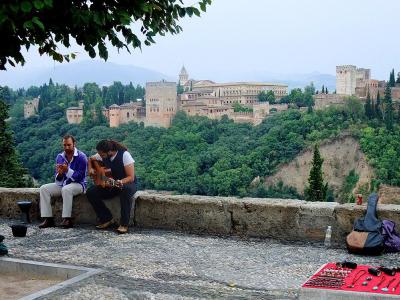
Bill Clinton is supposed to have said "the most beautiful sunset in the world" when speaking of the sunset view from San Nicolas Lookout. San Nicolas does offer the best view of the Alhambra at sunset, but there are a lot of spectacular lookouts in Granada. San Cristobal is reputed to be a fantastic viewpoint of the City.
Each clear day at sunset there is a crowd gathering in the square of San Nicolas. They are there to watch the Alhambra turn red in the setting sun. Alhambra in Arabic means "red castle." Tourists, locals, and travelers come together at the overlook. There are vendors hawking snacks, flamenco dancers, souvenir sellers and other entertainments.
The lookout is named for San Nicolas Church and Square. The church was built on the top of a mosque in 1525. There seems to have been a trend, when the Catholic Monarchs took over in 1491, to drop a church on a mosque. Location, location, the man said. The church has been destroyed several times by fires, but the original bell tower survives.
For only a few euros it is possible to climb the tower San Nicolas and get a better view.
Each clear day at sunset there is a crowd gathering in the square of San Nicolas. They are there to watch the Alhambra turn red in the setting sun. Alhambra in Arabic means "red castle." Tourists, locals, and travelers come together at the overlook. There are vendors hawking snacks, flamenco dancers, souvenir sellers and other entertainments.
The lookout is named for San Nicolas Church and Square. The church was built on the top of a mosque in 1525. There seems to have been a trend, when the Catholic Monarchs took over in 1491, to drop a church on a mosque. Location, location, the man said. The church has been destroyed several times by fires, but the original bell tower survives.
For only a few euros it is possible to climb the tower San Nicolas and get a better view.
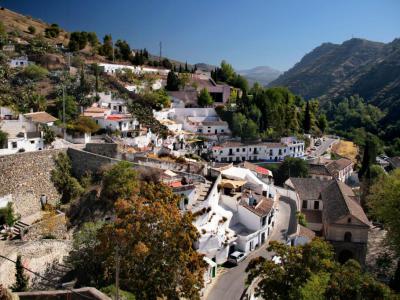
6) Sacromonte. Peso de la Harina Square
Sacromonte is a unique and picturesque neighborhood in Granada, with a fascinating history and rich cultural heritage. Located on the hillside and in the valley of Valparaíso, opposite the iconic Alhambra, the neighborhood is known for its cave houses installed in whitewashed caves. These caves have been home to the Granadian Romani community since they settled in Granada after the Christian conquest of the city in 1492.
The Romani of Sacromonte have their own language known as Caló, which has roots in India, where the Romani originated. The language has seen a decline in use over the past century, but it is still spoken by some members of the community. The Romani of Sacromonte were famously portrayed by the poet Federico García Lorca in his book of poems, Romancero Gitano.
Placeta del Peso de la Harina (Peso de la Harina Square) marks the beginning of the Camino de Sacromonte and the Sacromonte quarter. It is a popular spot for tourists to start their exploration of the neighborhood. In the square, there is a statue of Chorrojumo, the King of The Gypsies, who earned a living by telling stories about the Alhambra and selling postcards with his picture on them to tourists.
Tourists can wander the hillside roads of Sacromonte to discover the artistic Gypsy homes, which are decorated with vibrant handcrafted ceramics. There are many cave venues in Sacromonte where flamenco is performed, including the famous Cueva de la Rocío. This cave has hosted illustrious guests such as the King of Spain, Bill Clinton, and Michelle Obama. The Cueva de la Rocío is renowned for La Zambra, a special type of flamenco dancing and singing that originated in the gypsy caves of Granada.
Sacromonte offers some of the best views in Granada, with panoramas over rugged ravines, the Valparaiso Valley, and the Darro River. The neighborhood is a must-visit for anyone interested in the rich cultural heritage of Spain and the Romani community.
The Romani of Sacromonte have their own language known as Caló, which has roots in India, where the Romani originated. The language has seen a decline in use over the past century, but it is still spoken by some members of the community. The Romani of Sacromonte were famously portrayed by the poet Federico García Lorca in his book of poems, Romancero Gitano.
Placeta del Peso de la Harina (Peso de la Harina Square) marks the beginning of the Camino de Sacromonte and the Sacromonte quarter. It is a popular spot for tourists to start their exploration of the neighborhood. In the square, there is a statue of Chorrojumo, the King of The Gypsies, who earned a living by telling stories about the Alhambra and selling postcards with his picture on them to tourists.
Tourists can wander the hillside roads of Sacromonte to discover the artistic Gypsy homes, which are decorated with vibrant handcrafted ceramics. There are many cave venues in Sacromonte where flamenco is performed, including the famous Cueva de la Rocío. This cave has hosted illustrious guests such as the King of Spain, Bill Clinton, and Michelle Obama. The Cueva de la Rocío is renowned for La Zambra, a special type of flamenco dancing and singing that originated in the gypsy caves of Granada.
Sacromonte offers some of the best views in Granada, with panoramas over rugged ravines, the Valparaiso Valley, and the Darro River. The neighborhood is a must-visit for anyone interested in the rich cultural heritage of Spain and the Romani community.
