Custom Walk in Vancouver, Canada by katherineknoe_43a95 created on 2025-08-06
Guide Location: Canada » Vancouver
Guide Type: Custom Walk
# of Sights: 7
Tour Duration: 1 Hour(s)
Travel Distance: 0.6 Km or 0.4 Miles
Share Key: 4HY6L
Guide Type: Custom Walk
# of Sights: 7
Tour Duration: 1 Hour(s)
Travel Distance: 0.6 Km or 0.4 Miles
Share Key: 4HY6L
How It Works
Please retrieve this walk in the GPSmyCity app. Once done, the app will guide you from one tour stop to the next as if you had a personal tour guide. If you created the walk on this website or come to the page via a link, please follow the instructions below to retrieve the walk in the app.
Retrieve This Walk in App
Step 1. Download the app "GPSmyCity: Walks in 1K+ Cities" on Apple App Store or Google Play Store.



Step 2. In the GPSmyCity app, download(or launch) the guide "Vancouver Map and Walking Tours".
Step 3. Tap the menu button located at upper right corner of the "Walks" screen and select "Retrieve custom walk". Enter the share key: 4HY6L
1) East Pender Street
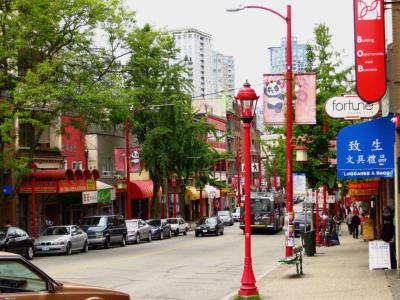
Vancouver’s Chinatown is an exciting place where the old and modern come together. The areas of East Pender Street and the rectangle formed by Pender, Main, Keefer, and Gore streets are a true paradise for shoppers keen on all things Asian. Here, alongside locals perpetually searching for specialty ingredients for dinner, you will find the young and hip crowd checking out independent stores. The variety of things on offer is enormous, spanning from ginseng to green teas, fine embroidered linen, silk robes, exotic fresh produce, plus traditional Chinese tableware and cooking utensils.
The area is also noted for the abundance of natural pharmacies and herbalists, as well as numerous restaurants and smaller eateries serving freshly-made Asian delicacies: from moon cake to roasted duck. When it comes to steam buns, the best place to get them in Chinatown is New Town Bakery. The joint serves a variety of 13 different steam buns, ranging from $1.65 to $3.30 apiece, filled with pork, chicken, beef, sweet custard, sweet lotus paste, and egg yolk.
Speaking of modern, a number of cool new stores lining East Pender Street, west of Main, really break the Chinatown mold, offering skateboard decks, vintage clothing, cocktail sets, and club wear. A special mention deserves the something-for-everyone Bamboo Village, at 135 East Pender Street. The shop is specialized in all things bamboo – from furniture, paper lanterns, and worship supplies to Maoist memorabilia, Chinese folk art, and home decor.
The emerging neighbourhood between Main Street and Carrall Street is also home to many notable businesses, such as Kissa Tanto, Umaluma, Propaganda Coffee, Bao Bei, Aubade Coffee, and others. Paired with a bunch of mixed-use development projects completed in recent years, this creates one of the fastest-growing and most dynamic neighborhoods in Vancouver.
The area is also noted for the abundance of natural pharmacies and herbalists, as well as numerous restaurants and smaller eateries serving freshly-made Asian delicacies: from moon cake to roasted duck. When it comes to steam buns, the best place to get them in Chinatown is New Town Bakery. The joint serves a variety of 13 different steam buns, ranging from $1.65 to $3.30 apiece, filled with pork, chicken, beef, sweet custard, sweet lotus paste, and egg yolk.
Speaking of modern, a number of cool new stores lining East Pender Street, west of Main, really break the Chinatown mold, offering skateboard decks, vintage clothing, cocktail sets, and club wear. A special mention deserves the something-for-everyone Bamboo Village, at 135 East Pender Street. The shop is specialized in all things bamboo – from furniture, paper lanterns, and worship supplies to Maoist memorabilia, Chinese folk art, and home decor.
The emerging neighbourhood between Main Street and Carrall Street is also home to many notable businesses, such as Kissa Tanto, Umaluma, Propaganda Coffee, Bao Bei, Aubade Coffee, and others. Paired with a bunch of mixed-use development projects completed in recent years, this creates one of the fastest-growing and most dynamic neighborhoods in Vancouver.
2) Keefer Street Food and Nightlife
In 2010, Condé Nast Traveler described Vancouver's Chinese food as "the best in the world," better even than in Hong Kong or mainland China! Despite the abundance of incredible Chinese food available on East Pender Street, Keefer Street is just as prominent foodie's destination in Vancouver Chinatown, with a few stand-outs of its own.
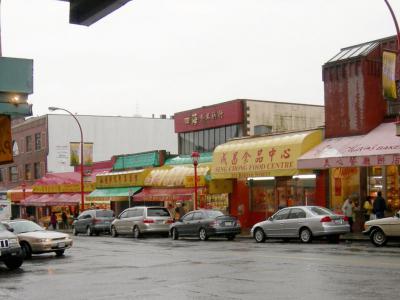
Among them are Gold Stone Bakery & Restaurant (139 Keefer Street), a local favorite renowned for its Hong Kong-style diner food and sweets, including egg tarts and sticky buns; Kent's Kitchen (232 Keefer Street) – serving big portions of Chinese fare with a small price tag; Floata Seafood Restaurant (180 Keefer Street), a classic Chinese restaurant that hosts Chinese New Year celebrations and is most famous for its seafood and dim sum; and Bao Bei (163 Keefer Street) noted for its contemporary twist on Chinese cuisine in a trendy eclectic space. Its seasonal menu harmoniously blends Chinese and French culinary traditions, reinforced with an interesting cocktail list to match. Great date spot, and you can’t go wrong with the menu.
Another point of interest is Gain Wah Restaurant, at 218 Keefer Street, offering a taste of old school Chinatown. This place may not look like much on the outside, but on the inside it will win you over hands down with its cheap, but finger-licking quality Chinese tucker. And if that's not enough, there are also several terrific Chinese markets on Keefer Street worth checking out, just before Gore Avenue, including San Lee Enterprises (267 Keefer Street), a perfect place to shop for seasonal fruits, or Sing Chong Food Centre (253 Keefer Street), a must-stop for all types of BBQ meats.
Keefer Street is also home to Vancouver's major nightspot – Keefer Bar at number 135 – which has put Chinatown firmly on the map of nightlife entertainment alongside prominent destinations, like Gastown and the Granville Street Entertainment District. This is one of the city's Top 10 Cocktail Bars with a strong reputation for fabulous original cocktails containing Chinatown-sourced ingredients. Come have a sip, whenever you get a chance!
Among them are Gold Stone Bakery & Restaurant (139 Keefer Street), a local favorite renowned for its Hong Kong-style diner food and sweets, including egg tarts and sticky buns; Kent's Kitchen (232 Keefer Street) – serving big portions of Chinese fare with a small price tag; Floata Seafood Restaurant (180 Keefer Street), a classic Chinese restaurant that hosts Chinese New Year celebrations and is most famous for its seafood and dim sum; and Bao Bei (163 Keefer Street) noted for its contemporary twist on Chinese cuisine in a trendy eclectic space. Its seasonal menu harmoniously blends Chinese and French culinary traditions, reinforced with an interesting cocktail list to match. Great date spot, and you can’t go wrong with the menu.
Another point of interest is Gain Wah Restaurant, at 218 Keefer Street, offering a taste of old school Chinatown. This place may not look like much on the outside, but on the inside it will win you over hands down with its cheap, but finger-licking quality Chinese tucker. And if that's not enough, there are also several terrific Chinese markets on Keefer Street worth checking out, just before Gore Avenue, including San Lee Enterprises (267 Keefer Street), a perfect place to shop for seasonal fruits, or Sing Chong Food Centre (253 Keefer Street), a must-stop for all types of BBQ meats.
Keefer Street is also home to Vancouver's major nightspot – Keefer Bar at number 135 – which has put Chinatown firmly on the map of nightlife entertainment alongside prominent destinations, like Gastown and the Granville Street Entertainment District. This is one of the city's Top 10 Cocktail Bars with a strong reputation for fabulous original cocktails containing Chinatown-sourced ingredients. Come have a sip, whenever you get a chance!
3) Monument of Canadian Chinese
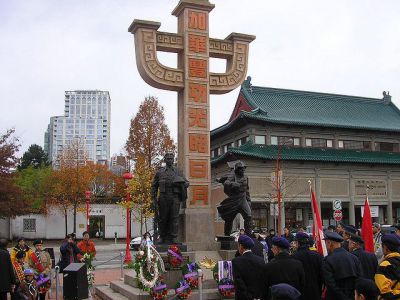
The Monument of Canadian Chinese is a memorial commemorating the Chinese people's contribution to Canada's history, and is located on the edge of Vancouver's Chinatown area.
The monument is constructed of light coloured rock, flanked by two bronze statues. One of the statues is a railway worker, set to commemorate the many thousands of Chinese who worked to help lay track for the transcontinental railroad, and some of whom lost their lives while performing this back breaking labour. The other statue is a World War II soldier, honouring the Chinese-Canadians who enlisted to fight in the war. Their bravery eventually earned them the right to vote in 1945, and furthered their acceptance in the mainstream Vancouver society. This monument also serves as a focal point for the Remembrance Day ceremonies in Chinatown.
Furthermore, it serves as a reminder of Vancouver's multiculturalism, much as a testament to the hundreds of Canadian residents of Chinese descent who have paid the ultimate price helping to make Canada great. Vancouver would not be the city it is today without the sacrifices of thousands of Chinese people, and the Monument of Canadian Chinese is Vancouver's way of acknowledging their place in the country's history.
The monument is constructed of light coloured rock, flanked by two bronze statues. One of the statues is a railway worker, set to commemorate the many thousands of Chinese who worked to help lay track for the transcontinental railroad, and some of whom lost their lives while performing this back breaking labour. The other statue is a World War II soldier, honouring the Chinese-Canadians who enlisted to fight in the war. Their bravery eventually earned them the right to vote in 1945, and furthered their acceptance in the mainstream Vancouver society. This monument also serves as a focal point for the Remembrance Day ceremonies in Chinatown.
Furthermore, it serves as a reminder of Vancouver's multiculturalism, much as a testament to the hundreds of Canadian residents of Chinese descent who have paid the ultimate price helping to make Canada great. Vancouver would not be the city it is today without the sacrifices of thousands of Chinese people, and the Monument of Canadian Chinese is Vancouver's way of acknowledging their place in the country's history.
4) Chinese Cultural Center and Museum
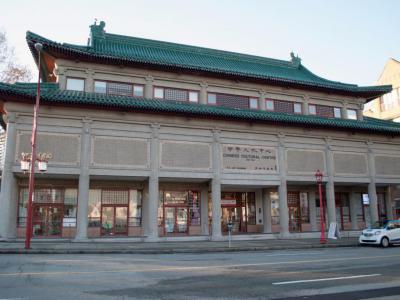
Despite the contributions of Chinese-Canadians to Canada's history, cities like Vancouver were plagued by anti Chinese sentiment for years. It took until 1945 for Chinese-Canadians to be granted the right to vote, despite the fact that many of them slaved to build Canada's transcontinental railroad, and enlisted in World War II. The Chinese Cultural Center and Museum honours their sacrifices, and serves as a means of preserving the historical contributions of Chinese-Canadians. The Museum is home to artifacts and archives dating back to the Gold Rush, when anti Chinese sentiment was at its highest, and many Chinese people sacrificed their lives to make Canada great.
The Chinese Cultural Center and Museum is located in Vancouver's Chinatown, the second largest Chinatown in all of North America. Visitors can call ahead to book a tour of the Museum itself, and can contact the center to ask about workshops, classes, and other programs. The Cultural Center gives visitors the opportunity to learn about traditional Chinese calligraphy, tai chi, and more.
The Chinese Museum and Cultural Center is located near Dr. Sun Yat-Sen Garden. If you are planning a tour of Vancouver's Chinatown area, no visit can be complete without a stop at the Museum to learn about Chinese-Canadian history, and the Garden for a relaxing walk.
The Chinese Cultural Center and Museum is located in Vancouver's Chinatown, the second largest Chinatown in all of North America. Visitors can call ahead to book a tour of the Museum itself, and can contact the center to ask about workshops, classes, and other programs. The Cultural Center gives visitors the opportunity to learn about traditional Chinese calligraphy, tai chi, and more.
The Chinese Museum and Cultural Center is located near Dr. Sun Yat-Sen Garden. If you are planning a tour of Vancouver's Chinatown area, no visit can be complete without a stop at the Museum to learn about Chinese-Canadian history, and the Garden for a relaxing walk.
5) Sam Kee Building
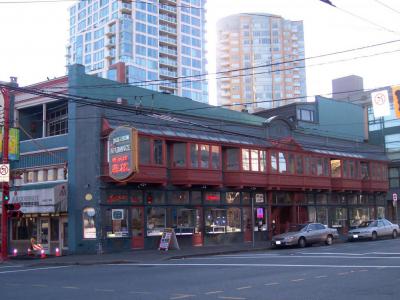
Situated on West Pender Street in Vancouver, the Sam Kee Building claims the title of the "most slender commercial edifice globally," an accolade officially recognized by the Guinness Book of Records.
Originally belonging to the Sam Kee Company, overseen by Chang Toy, a prominent figure in Vancouver Chinatown and renowned businessman, the property was procured in 1903 on a standard-sized plot. However, a turning point occurred in 1912 when the city of Vancouver decided to widen Pender Street, leading to the expropriation of a considerable 24 feet (7.3 meters) of the property's above-ground area. This alteration seemingly rendered traditional commercial utilization of the remaining frontage unfeasible, if not entirely unattainable.
When offered to sell the land next door, Toy refused, unsure of its purpose. In 1913, architects Brown and Gillam were hired to design a unique narrow steel-framed building. The first floor is 4.9 feet (1.50 meters) deep, the second floor extends 6 feet (1.83 meters) from a bay window, and the basement had public baths. The ground floor had shops/offices, and the upper level was residential.
Soren Rasmussen spearheaded the historical restoration of the building, culminating in its completion in 1986. Presently, the structure serves as a tourist attraction and houses an insurance office.
Famous as the world's narrowest commercial building, the Sam Kee Building was once recognized by Ripley's Believe It or Not! But, the title was questioned when Pittsburgh's "Skinny Building" emerged, challenging Sam Kee's record. The debate centers on Sam Kee's varying floor widths, occasionally 6 feet wide, while Pittsburgh's building maintains a consistent 5.2 feet (1.57 meters) width on all floors.
Originally belonging to the Sam Kee Company, overseen by Chang Toy, a prominent figure in Vancouver Chinatown and renowned businessman, the property was procured in 1903 on a standard-sized plot. However, a turning point occurred in 1912 when the city of Vancouver decided to widen Pender Street, leading to the expropriation of a considerable 24 feet (7.3 meters) of the property's above-ground area. This alteration seemingly rendered traditional commercial utilization of the remaining frontage unfeasible, if not entirely unattainable.
When offered to sell the land next door, Toy refused, unsure of its purpose. In 1913, architects Brown and Gillam were hired to design a unique narrow steel-framed building. The first floor is 4.9 feet (1.50 meters) deep, the second floor extends 6 feet (1.83 meters) from a bay window, and the basement had public baths. The ground floor had shops/offices, and the upper level was residential.
Soren Rasmussen spearheaded the historical restoration of the building, culminating in its completion in 1986. Presently, the structure serves as a tourist attraction and houses an insurance office.
Famous as the world's narrowest commercial building, the Sam Kee Building was once recognized by Ripley's Believe It or Not! But, the title was questioned when Pittsburgh's "Skinny Building" emerged, challenging Sam Kee's record. The debate centers on Sam Kee's varying floor widths, occasionally 6 feet wide, while Pittsburgh's building maintains a consistent 5.2 feet (1.57 meters) width on all floors.
6) Millennium Gate
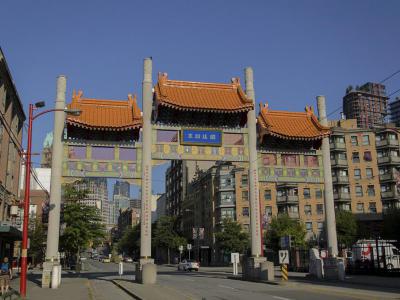
Straddling West Pender Street near the intersection with Taylor Street is an awe-inspiring feat of architecture called the Millennium Gate. This four-pillar-, three-story-tall structure marks the entrance to Vancouver's famed Chinatown and was built in 2002 to celebrate the arrival of the new millennium.
But most importantly, it honours the role of Chinese settlers in the long and eventful history of the city. This includes both the early migrants from China, in the late 19th century, and those ethnic Chinese who came from Latin America later on.
The piece was designed to commentate a journey in time as well as to represent both the past and the future. With tall poles appearing to precariously hold up the orange roof, three large rectangular gray slabs, and ornate carvings on the top edges, the Millennium Gate makes an interesting sight in which new art forms occur within a very traditional setting.
The two stone foo lions, guarding the gate, include one male – on the left – with a ball under his paw, and one female – on the right – holding a cub. The images of people depicted in the upper portion of the gate show different styles of clothing typical for various parts of China. Another interesting feature is the colour scheme, a blend of traditional Eastern and modern Western-inspired motifs.
Many plaques and dedications to those involved in the project adorn the lower portion of the gate.
Vancouver's Chinatown is a living symbol of multiculturalism. It serves as a place where people of every ethnicity gather to partake in the sampling of delicacies from the local restaurants and shops and to interact with the locals that are an integral part of Vancouver society.
But most importantly, it honours the role of Chinese settlers in the long and eventful history of the city. This includes both the early migrants from China, in the late 19th century, and those ethnic Chinese who came from Latin America later on.
The piece was designed to commentate a journey in time as well as to represent both the past and the future. With tall poles appearing to precariously hold up the orange roof, three large rectangular gray slabs, and ornate carvings on the top edges, the Millennium Gate makes an interesting sight in which new art forms occur within a very traditional setting.
The two stone foo lions, guarding the gate, include one male – on the left – with a ball under his paw, and one female – on the right – holding a cub. The images of people depicted in the upper portion of the gate show different styles of clothing typical for various parts of China. Another interesting feature is the colour scheme, a blend of traditional Eastern and modern Western-inspired motifs.
Many plaques and dedications to those involved in the project adorn the lower portion of the gate.
Vancouver's Chinatown is a living symbol of multiculturalism. It serves as a place where people of every ethnicity gather to partake in the sampling of delicacies from the local restaurants and shops and to interact with the locals that are an integral part of Vancouver society.
7) Chinatown
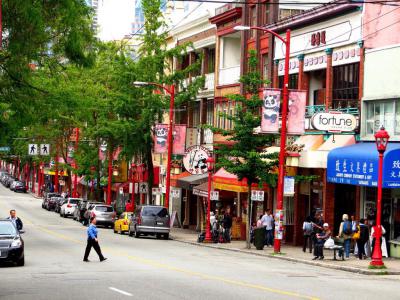
Chinatown, situated in Vancouver, stands as Canada's most expansive Chinatown. It revolves around Pender Street and is encircled by various areas: Gastown to the north, the western Downtown financial and central business districts, the Georgia Viaduct and False Creek inlet to the south, the northeastern Downtown Eastside and remnants of old Japantown, and the southeastern residential enclave of Strathcona.
Vancouver boasts a significant ethnic Chinese presence, predominantly composed of Cantonese-speaking multi-generational Chinese Canadians and first-generation immigrants from Hong Kong. This cultural blend has earned the city the moniker "Hongcouver." However, recent immigration trends have shown a rise in Mandarin-speaking individuals from Mainland China.
In the present day, the neighborhood boasts an array of traditional restaurants, banks, markets, clinics, tea shops, apparel boutiques, and various stores catering to both the local community and visitors. The Vancouver branch of Sing Tao Daily, one of the city's four Chinese-language newspapers, maintains its presence in Chinatown. From 2003 to 2010, OMNI British Columbia (formerly Channel M) operated its television studio in the same vicinity. Additionally, the Chinatown locale hosts a satellite location of the Vancouver Film School. Notably, nestled within the heart of Chinatown (formerly Ming’s Restaurant) is the renowned bar and nightclub recognized as the ‘Fortune Sound Club.’
Chinatown continues to allure a substantial number of tourists and holds the distinction of being one of the most expansive historic Chinatowns in North America. In recognition of its historical and cultural significance, the neighborhood received the designation of a National Historic Site of Canada in 2011.
Tip:
Don't go after 6pm because most of the shops will be closed.
You will be approached by panhandlers at any time of day, but if you just say "no" firmly then they will not trouble you further.
Vancouver boasts a significant ethnic Chinese presence, predominantly composed of Cantonese-speaking multi-generational Chinese Canadians and first-generation immigrants from Hong Kong. This cultural blend has earned the city the moniker "Hongcouver." However, recent immigration trends have shown a rise in Mandarin-speaking individuals from Mainland China.
In the present day, the neighborhood boasts an array of traditional restaurants, banks, markets, clinics, tea shops, apparel boutiques, and various stores catering to both the local community and visitors. The Vancouver branch of Sing Tao Daily, one of the city's four Chinese-language newspapers, maintains its presence in Chinatown. From 2003 to 2010, OMNI British Columbia (formerly Channel M) operated its television studio in the same vicinity. Additionally, the Chinatown locale hosts a satellite location of the Vancouver Film School. Notably, nestled within the heart of Chinatown (formerly Ming’s Restaurant) is the renowned bar and nightclub recognized as the ‘Fortune Sound Club.’
Chinatown continues to allure a substantial number of tourists and holds the distinction of being one of the most expansive historic Chinatowns in North America. In recognition of its historical and cultural significance, the neighborhood received the designation of a National Historic Site of Canada in 2011.
Tip:
Don't go after 6pm because most of the shops will be closed.
You will be approached by panhandlers at any time of day, but if you just say "no" firmly then they will not trouble you further.
