Custom Walk in Glasgow, Scotland by jastokes376_77874 created on 2025-09-01
Guide Location: Scotland » Glasgow
Guide Type: Custom Walk
# of Sights: 9
Tour Duration: 3 Hour(s)
Travel Distance: 7 Km or 4.3 Miles
Share Key: SPW7Z
Guide Type: Custom Walk
# of Sights: 9
Tour Duration: 3 Hour(s)
Travel Distance: 7 Km or 4.3 Miles
Share Key: SPW7Z
How It Works
Please retrieve this walk in the GPSmyCity app. Once done, the app will guide you from one tour stop to the next as if you had a personal tour guide. If you created the walk on this website or come to the page via a link, please follow the instructions below to retrieve the walk in the app.
Retrieve This Walk in App
Step 1. Download the app "GPSmyCity: Walks in 1K+ Cities" on Apple App Store or Google Play Store.



Step 2. In the GPSmyCity app, download(or launch) the guide "Glasgow Map and Walking Tours".
Step 3. Tap the menu button located at upper right corner of the "Walks" screen and select "Retrieve custom walk". Enter the share key: SPW7Z
1) Mackintosh House
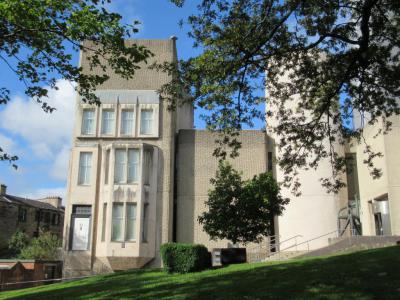
The Mackintosh House is a meticulous re-creation of the former home of renowned architect and designer Charles Rennie Mackintosh and his wife, the artist Margaret Macdonald Mackintosh. Originally located on Southpark Avenue, the couple’s house was demolished in the 1960s due to university expansion. However, the interiors-ranging from the furniture to the wall paneling-were carefully preserved and reconstructed within the Hunterian Art Gallery at the University of Glasgow. Today, visitors can explore this unique space and step directly into the world of one of Scotland’s most influential creative partnerships.
The house reflects Mackintosh’s distinctive style, which blended Scottish tradition with Art Nouveau influences and Japanese aesthetics. The white-walled rooms, custom-designed furniture, and decorative panels by Margaret Macdonald create an atmosphere that is both simple and richly symbolic. From the light-filled drawing room to the more intimate bedroom and dining areas, each space demonstrates how Mackintosh’s architectural vision extended seamlessly into everyday living.
Beyond its role as a house museum, the Mackintosh House is also an intimate portrait of the couple’s artistic collaboration. Margaret’s gesso panels and decorative works complement Mackintosh’s bold geometric designs, making the home a dialogue between two creative minds. Visitors are able to see not just a preserved interior, but a complete work of art where architecture, design, and decoration are inseparable.
For those exploring Glasgow’s strong ties to Mackintosh, the house offers one of the most personal encounters. It allows a glimpse into how the architect lived and worked, making it an essential stop for anyone interested in design, history, or the lasting legacy of the Glasgow Style.
The house reflects Mackintosh’s distinctive style, which blended Scottish tradition with Art Nouveau influences and Japanese aesthetics. The white-walled rooms, custom-designed furniture, and decorative panels by Margaret Macdonald create an atmosphere that is both simple and richly symbolic. From the light-filled drawing room to the more intimate bedroom and dining areas, each space demonstrates how Mackintosh’s architectural vision extended seamlessly into everyday living.
Beyond its role as a house museum, the Mackintosh House is also an intimate portrait of the couple’s artistic collaboration. Margaret’s gesso panels and decorative works complement Mackintosh’s bold geometric designs, making the home a dialogue between two creative minds. Visitors are able to see not just a preserved interior, but a complete work of art where architecture, design, and decoration are inseparable.
For those exploring Glasgow’s strong ties to Mackintosh, the house offers one of the most personal encounters. It allows a glimpse into how the architect lived and worked, making it an essential stop for anyone interested in design, history, or the lasting legacy of the Glasgow Style.
2) University of Glasgow (must see)
The United Kingdom is home to several prestigious and ancient universities that enjoy global renown. Among these institutions, the University of Glasgow holds a significant position as the fourth oldest in English-speaking countries.
Its establishment can be traced back to 1451 when it received formal recognition through a Papal Bull issued during the papacy of Pope Nicholas V. Subsequently, King James II granted permission to Bishop William Turnbill to integrate the university with the city's cathedral. However, during the Reformation period, both the Mace and the Bull were transported to France. While the Mace eventually found its way back, the fate of the Bull remains uncertain, possibly lost or stolen.
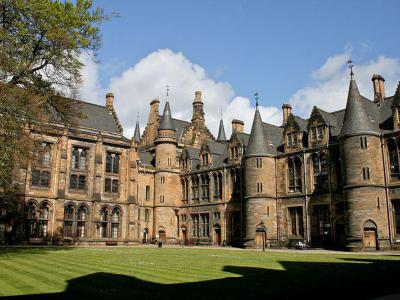
In 1870, Sir George Scott oversaw the construction of the university's main campus on Gilmorehill, adopting a Gothic architectural style and featuring a twin-quadrangle design with an open undercroft. A spire was later added to the bell tower in 1887. The university's various departments are dispersed across different buildings within the city and across the country.
During the 18th century, the University of Glasgow played a central role in the Scottish Enlightenment movement, while in the 19th century, it broadened its admissions, welcoming students beyond the privileged upper classes. Children of merchants enrolled to pursue studies in fields such as law, medicine, education, engineering, science, and theology.
Within the campus, visitors can explore the impressive Hunterian Museum & Gallery, as well as the Mackintosh House, offering enriching cultural experiences.
Its establishment can be traced back to 1451 when it received formal recognition through a Papal Bull issued during the papacy of Pope Nicholas V. Subsequently, King James II granted permission to Bishop William Turnbill to integrate the university with the city's cathedral. However, during the Reformation period, both the Mace and the Bull were transported to France. While the Mace eventually found its way back, the fate of the Bull remains uncertain, possibly lost or stolen.
In 1870, Sir George Scott oversaw the construction of the university's main campus on Gilmorehill, adopting a Gothic architectural style and featuring a twin-quadrangle design with an open undercroft. A spire was later added to the bell tower in 1887. The university's various departments are dispersed across different buildings within the city and across the country.
During the 18th century, the University of Glasgow played a central role in the Scottish Enlightenment movement, while in the 19th century, it broadened its admissions, welcoming students beyond the privileged upper classes. Children of merchants enrolled to pursue studies in fields such as law, medicine, education, engineering, science, and theology.
Within the campus, visitors can explore the impressive Hunterian Museum & Gallery, as well as the Mackintosh House, offering enriching cultural experiences.
3) Buchanan Street (must see)
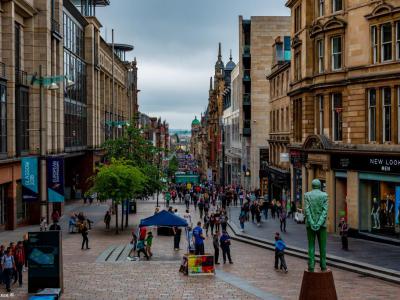
Buchanan Street is the beating heart of Glasgow’s shopping and cultural scene, a broad pedestrian thoroughfare that has been drawing locals and visitors alike since the late 18th century. Named after the wealthy tobacco merchant Andrew Buchanan, the street has transformed from a residential area for the city’s elite into one of Britain’s busiest retail destinations. Stretching from Saint Enoch Square in the south to Sauchiehall Street in the north, it forms the centrepiece of what Glaswegians fondly call the “Style Mile,” a lively hub of shops, cafés, and entertainment venues.
As you stroll along its polished paving stones, your eyes are drawn upward to the dramatic architecture that defines the street. Victorian and Edwardian buildings dominate the landscape, their ornate façades and grand stonework a reminder of the city’s mercantile prosperity. Among the highlights is the 19th-century Argyll Arcade, one of Europe’s oldest covered shopping arcades, where glittering jewellers’ windows line a glass-roofed passageway. The Buchanan Galleries shopping centre, on the street’s northern end, contrasts with sleek modern lines, reflecting Glasgow’s blend of history and contemporary energy.
Beyond shopping, Buchanan Street is a stage for the city’s street culture. Buskers, musicians, and performers add an ever-changing soundtrack, from soulful singers to lively bagpipers. The street is also dotted with inviting cafés and restaurants, offering everything from quick bites to leisurely meals-perfect for resting your feet between explorations. Seasonal decorations, from festive winter lights to summer events, ensure that each visit feels different.
For visitors, Buchanan Street is more than a commercial boulevard-it’s an experience of Glasgow itself. Browsing the latest fashions, stopping to catch a performance, or simply taking in the energy of city life, this iconic promenade offers a striking glimpse into the city’s mix of tradition and modernity. It’s an essential stop for anyone wishing to feel the pulse of Scotland’s largest city.
As you stroll along its polished paving stones, your eyes are drawn upward to the dramatic architecture that defines the street. Victorian and Edwardian buildings dominate the landscape, their ornate façades and grand stonework a reminder of the city’s mercantile prosperity. Among the highlights is the 19th-century Argyll Arcade, one of Europe’s oldest covered shopping arcades, where glittering jewellers’ windows line a glass-roofed passageway. The Buchanan Galleries shopping centre, on the street’s northern end, contrasts with sleek modern lines, reflecting Glasgow’s blend of history and contemporary energy.
Beyond shopping, Buchanan Street is a stage for the city’s street culture. Buskers, musicians, and performers add an ever-changing soundtrack, from soulful singers to lively bagpipers. The street is also dotted with inviting cafés and restaurants, offering everything from quick bites to leisurely meals-perfect for resting your feet between explorations. Seasonal decorations, from festive winter lights to summer events, ensure that each visit feels different.
For visitors, Buchanan Street is more than a commercial boulevard-it’s an experience of Glasgow itself. Browsing the latest fashions, stopping to catch a performance, or simply taking in the energy of city life, this iconic promenade offers a striking glimpse into the city’s mix of tradition and modernity. It’s an essential stop for anyone wishing to feel the pulse of Scotland’s largest city.
4) Argyll Arcade (must see)
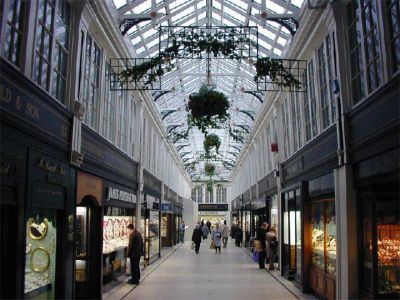
Tucked between Buchanan Street and Argyle Street, the Argyll Arcade is one of Glasgow’s most elegant historic shopping arcades and a must-see for anyone exploring the city centre. Opened in 1827, it holds the distinction of being Scotland’s oldest covered shopping street and one of the very first purpose-built arcades in Europe. With its ornate ironwork and a spectacular glass roof that floods the walkway with natural light, the arcade feels like a slice of Parisian grandeur transplanted into the heart of Glasgow.
The building itself was designed by architect John Baird in a French Renaissance style, a choice that has stood the test of time. Visitors will immediately notice the grand entrance on Argyle Street, with its decorative stonework and cast-iron detailing. The continuous glass canopy overhead creates a bright, airy atmosphere that makes wandering through the passageway a pleasure in any season. The arcade’s architecture is as much a draw as the shops themselves, and it has been a listed building since 1970.
What truly sets the Argyll Arcade apart is its reputation as a centre of fine jewellery. Often referred to as Scotland’s “jewellery quarter under glass,” it is home to more than 30 jewellers and diamond merchants, many of them family-run businesses that have been part of the arcade for generations.
A stroll through the arcade offers more than just shopping; it’s a chance to step back into 19th-century Glasgow while enjoying a thoroughly modern retail experience. The combination of history, architecture, and luxury makes the Argyll Arcade a memorable stop on any visit to the city, perfect for anyone wanting to see how tradition and contemporary style coexist in Glasgow’s vibrant heart.
The building itself was designed by architect John Baird in a French Renaissance style, a choice that has stood the test of time. Visitors will immediately notice the grand entrance on Argyle Street, with its decorative stonework and cast-iron detailing. The continuous glass canopy overhead creates a bright, airy atmosphere that makes wandering through the passageway a pleasure in any season. The arcade’s architecture is as much a draw as the shops themselves, and it has been a listed building since 1970.
What truly sets the Argyll Arcade apart is its reputation as a centre of fine jewellery. Often referred to as Scotland’s “jewellery quarter under glass,” it is home to more than 30 jewellers and diamond merchants, many of them family-run businesses that have been part of the arcade for generations.
A stroll through the arcade offers more than just shopping; it’s a chance to step back into 19th-century Glasgow while enjoying a thoroughly modern retail experience. The combination of history, architecture, and luxury makes the Argyll Arcade a memorable stop on any visit to the city, perfect for anyone wanting to see how tradition and contemporary style coexist in Glasgow’s vibrant heart.
5) George Square (must see)
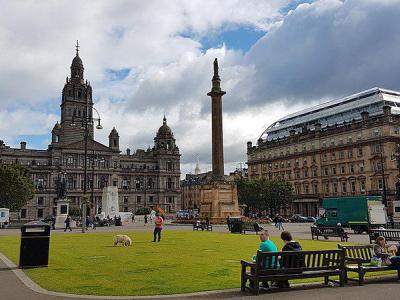
George Square is the beating civic heart of Glasgow, a grand public space that has witnessed more than two centuries of the city’s history. Laid out in 1781 and named after King George III, the square was originally designed as a residential area, but it quickly became the centrepiece of Glasgow’s growing prosperity during the Industrial Revolution. Today, it serves as both a gathering place for locals and a starting point for visitors eager to explore the city’s architecture, history, and culture. With its wide open spaces framed by historic buildings, George Square is as much a stage for public life as it is a monument to Glasgow’s past.
At its centre, you’ll find an impressive collection of statues and monuments that tell the story of Scotland’s heroes, inventors, and poets. Figures such as Robert Burns, Sir Walter Scott, and James Watt stand proudly, while a towering column dedicated to Sir Walter Scott dominates the square. These statues serve as reminders of Glasgow’s role as a hub of Enlightenment thought, engineering innovation, and political activism. The square has also long been a venue for public events-from grand celebrations to political rallies-that continue to shape the city’s identity.
Surrounding George Square are some of Glasgow’s most notable buildings. The City Chambers, completed in 1888, is a striking Victorian civic building with an ornate façade and lavish interiors that reflect the wealth and confidence of Glasgow during its industrial zenith. Hotels, banks, and historic offices ring the square, making it not only a cultural focal point but also a centre of business and public life.
For today’s visitor, George Square is both a place to pause and a hub from which to set out. Admiring its statues, watching the bustle from a café terrace, or using it as a starting point to explore Buchanan Street’s shops and the Merchant City’s restaurants, the square conveys the essence of Glasgow’s civic pride and enduring spirit.
At its centre, you’ll find an impressive collection of statues and monuments that tell the story of Scotland’s heroes, inventors, and poets. Figures such as Robert Burns, Sir Walter Scott, and James Watt stand proudly, while a towering column dedicated to Sir Walter Scott dominates the square. These statues serve as reminders of Glasgow’s role as a hub of Enlightenment thought, engineering innovation, and political activism. The square has also long been a venue for public events-from grand celebrations to political rallies-that continue to shape the city’s identity.
Surrounding George Square are some of Glasgow’s most notable buildings. The City Chambers, completed in 1888, is a striking Victorian civic building with an ornate façade and lavish interiors that reflect the wealth and confidence of Glasgow during its industrial zenith. Hotels, banks, and historic offices ring the square, making it not only a cultural focal point but also a centre of business and public life.
For today’s visitor, George Square is both a place to pause and a hub from which to set out. Admiring its statues, watching the bustle from a café terrace, or using it as a starting point to explore Buchanan Street’s shops and the Merchant City’s restaurants, the square conveys the essence of Glasgow’s civic pride and enduring spirit.
6) Saint Mungo's Cathedral (must see)
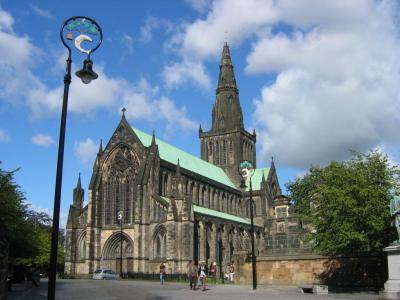
Rising proudly over the city with its striking spire and darkened stone, Saint Mungo’s Cathedral-also known as Glasgow Cathedral or the High Kirk of Glasgow-is one of Scotland’s most remarkable medieval landmarks. Dedicated to the city’s patron saint, Saint Mungo (also called Saint Kentigern), it stands on the very spot where the saint is believed to have built his church in the 6th century. The present structure, begun in the 12th century, is the only mainland Scottish cathedral to have survived the Protestant Reformation intact, making it a rare and atmospheric link to the nation’s medieval past.
Step inside and you’ll find a vast interior filled with soaring stone arches, stained-glass windows that cast jewel-like colors across the nave, and centuries-old carvings that reward close attention. The cathedral’s crowning treasure is the Lower Church, a beautifully preserved medieval crypt that houses the shrine of Saint Mungo himself. This hushed, vaulted space is one of the most evocative sites in Glasgow, where pilgrims and visitors alike pause in quiet reflection.
The upper choir and nave showcase the craftsmanship of medieval masons, with intricately carved stone screens and elaborate vaulted ceilings. Many visitors are struck by the contrast between the building’s austere Gothic exterior and the light filtering through its stained glass, much of which was created in the 19th and 20th centuries, yet harmonizes seamlessly with the ancient fabric.
Surrounded by the atmospheric Glasgow Necropolis and the remains of the medieval hospital of the Bishop’s Castle, Saint Mungo’s Cathedral is more than a church-it is a living monument to Glasgow’s deep historical roots. Drawn by architecture, history, or the desire for quiet contemplation, a visit here reveals a glimpse of the city’s soul and its enduring faith.
Step inside and you’ll find a vast interior filled with soaring stone arches, stained-glass windows that cast jewel-like colors across the nave, and centuries-old carvings that reward close attention. The cathedral’s crowning treasure is the Lower Church, a beautifully preserved medieval crypt that houses the shrine of Saint Mungo himself. This hushed, vaulted space is one of the most evocative sites in Glasgow, where pilgrims and visitors alike pause in quiet reflection.
The upper choir and nave showcase the craftsmanship of medieval masons, with intricately carved stone screens and elaborate vaulted ceilings. Many visitors are struck by the contrast between the building’s austere Gothic exterior and the light filtering through its stained glass, much of which was created in the 19th and 20th centuries, yet harmonizes seamlessly with the ancient fabric.
Surrounded by the atmospheric Glasgow Necropolis and the remains of the medieval hospital of the Bishop’s Castle, Saint Mungo’s Cathedral is more than a church-it is a living monument to Glasgow’s deep historical roots. Drawn by architecture, history, or the desire for quiet contemplation, a visit here reveals a glimpse of the city’s soul and its enduring faith.
7) Glasgow Necropolis (must see)
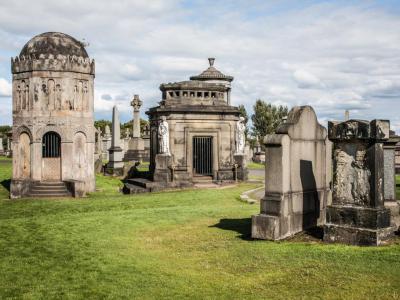
Rising above the city on a low but commanding hill, the Glasgow Necropolis is one of Scotland’s most striking Victorian landmarks. Established in 1833 on the site of a former quarry, this vast garden cemetery was inspired by Paris’s Père Lachaise and soon became a resting place for Glasgow’s elite during the city’s industrial heyday. Over the years, it has grown into a landscape of more than 50,000 memorials, monuments, and tombs, many of them designed by prominent architects and sculptors of the 19th century. For visitors, the Necropolis is both a fascinating historical archive and a serene green space with panoramic views over the city.
The cemetery is often described as a “city of the dead,” with its network of meandering paths, ornate mausoleums, and elaborate Victorian funerary art. Among its most impressive monuments is the towering memorial to John Knox, the fiery Protestant reformer, which dominates the summit of the hill. As you wander through, you’ll encounter intricate Celtic crosses, weeping angels, and finely carved stonework that reflect Glasgow’s artistic and architectural richness. Many of the tombs were designed by leading figures such as Charles Rennie Mackintosh and Alexander “Greek” Thomson, giving the Necropolis the feel of an open-air museum.
Beyond its architecture, the Necropolis tells the story of Glasgow’s rise as a centre of industry and commerce. Shipbuilders, merchants, engineers, and philanthropists are buried here, each memorial carrying a fragment of the city’s social and economic history. Plaques and inscriptions reveal the civic pride and religious fervour that shaped Victorian Glasgow. In this way, a walk among the graves becomes a journey into the city’s past, offering glimpses of the people who built its wealth and culture.
Today, the Necropolis is cherished not only as a historical site but also as a place of reflection and quiet beauty. Its elevated position affords sweeping views across the River Clyde, the spires of Glasgow Cathedral, and the city’s ever-changing skyline.
The cemetery is often described as a “city of the dead,” with its network of meandering paths, ornate mausoleums, and elaborate Victorian funerary art. Among its most impressive monuments is the towering memorial to John Knox, the fiery Protestant reformer, which dominates the summit of the hill. As you wander through, you’ll encounter intricate Celtic crosses, weeping angels, and finely carved stonework that reflect Glasgow’s artistic and architectural richness. Many of the tombs were designed by leading figures such as Charles Rennie Mackintosh and Alexander “Greek” Thomson, giving the Necropolis the feel of an open-air museum.
Beyond its architecture, the Necropolis tells the story of Glasgow’s rise as a centre of industry and commerce. Shipbuilders, merchants, engineers, and philanthropists are buried here, each memorial carrying a fragment of the city’s social and economic history. Plaques and inscriptions reveal the civic pride and religious fervour that shaped Victorian Glasgow. In this way, a walk among the graves becomes a journey into the city’s past, offering glimpses of the people who built its wealth and culture.
Today, the Necropolis is cherished not only as a historical site but also as a place of reflection and quiet beauty. Its elevated position affords sweeping views across the River Clyde, the spires of Glasgow Cathedral, and the city’s ever-changing skyline.
8) Tennents Wellpark Brewery (must see)
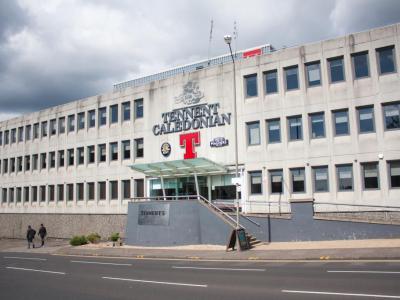
Rising on Glasgow’s historic Duke Street, Tennent’s Wellpark Brewery has been a cornerstone of Scottish brewing for more than 450 years. Founded in 1556, it is the oldest brewery site in Scotland still in operation and the proud birthplace of Tennent’s Lager, one of the nation’s best-loved beers. The brewery was established by Robert Tennent and later expanded under his descendants, eventually growing into a household name synonymous with Scottish social life. Its iconic red "T" logo is instantly recognizable on pub fronts across the country.
A visit to Wellpark is more than a tour of a brewery; it is a walk through centuries of Scottish industry and tradition. The site blends historic red-brick buildings with modern brewing facilities, reflecting the brewery’s evolution from a local operation to an international brand. Along the way, you’ll encounter tales of resilience-like how the brewery endured through wars, economic hardship, and even Prohibition in the United States, one of its key markets.
Today, the Tennent’s Story Heritage Centre invites visitors to explore this rich history through interactive exhibits, vintage advertising, and memorabilia that chart Scotland’s long relationship with beer. The brewery tours offer an insider’s look at the brewing process, from the natural spring water sourced on site to the modern bottling plant that ships Tennent’s across the globe. At the end, guests can enjoy a freshly poured pint in the atmospheric Tennent’s Brewery Taproom, a fitting finale to a journey through one of Glasgow’s living landmarks.
For visitors interested in history, culture, or simply a well-crafted lager, Wellpark offers a uniquely Glaswegian experience that brings together heritage, craftsmanship, and convivial spirit under one roof.
A visit to Wellpark is more than a tour of a brewery; it is a walk through centuries of Scottish industry and tradition. The site blends historic red-brick buildings with modern brewing facilities, reflecting the brewery’s evolution from a local operation to an international brand. Along the way, you’ll encounter tales of resilience-like how the brewery endured through wars, economic hardship, and even Prohibition in the United States, one of its key markets.
Today, the Tennent’s Story Heritage Centre invites visitors to explore this rich history through interactive exhibits, vintage advertising, and memorabilia that chart Scotland’s long relationship with beer. The brewery tours offer an insider’s look at the brewing process, from the natural spring water sourced on site to the modern bottling plant that ships Tennent’s across the globe. At the end, guests can enjoy a freshly poured pint in the atmospheric Tennent’s Brewery Taproom, a fitting finale to a journey through one of Glasgow’s living landmarks.
For visitors interested in history, culture, or simply a well-crafted lager, Wellpark offers a uniquely Glaswegian experience that brings together heritage, craftsmanship, and convivial spirit under one roof.
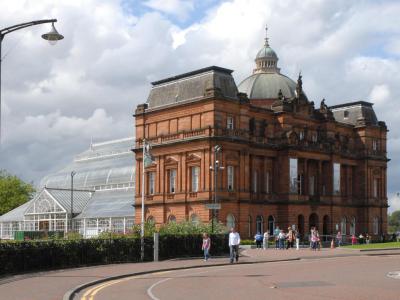
9) People's Palace & Winter Gardens (must see)
The People’s Palace & Winter Gardens is one of Glasgow’s most distinctive landmarks, combining cultural history with a touch of Victorian elegance. Opened in 1898, the People’s Palace was envisioned as a museum and cultural centre for the city’s working-class citizens, offering them both education and recreation. Set within Glasgow Green-the city’s oldest public park-it has long served as a gathering place where locals could learn about their heritage while enjoying a welcoming civic space. The building’s red sandstone exterior, with its classical lines, reflects the late 19th-century ambition to create a “palace for the people.”
Inside, visitors will find exhibitions that chronicle the story of Glasgow and its people from the 18th century to the present day. Displays cover the social history of the city, with themes ranging from housing and work to leisure and political activism. Personal objects, photographs, and film bring to life the everyday experiences of Glaswegians, painting a vivid portrait of resilience, struggle, and community spirit. Notable exhibits include the recreated tenement interiors, as well as the history of Glasgow’s dance halls, strikes, and campaigns for social reform.
Behind the museum lies the Winter Gardens, a vast glasshouse filled with exotic palms, ferns, and seasonal plants. This light-filled structure provides a peaceful contrast to the busy city, offering a space to stroll among tropical greenery regardless of Scotland’s often unpredictable weather. With its blend of cultural insight and botanical charm, the People’s Palace & Winter Gardens remains a favourite stop for both tourists and locals exploring Glasgow Green.
Inside, visitors will find exhibitions that chronicle the story of Glasgow and its people from the 18th century to the present day. Displays cover the social history of the city, with themes ranging from housing and work to leisure and political activism. Personal objects, photographs, and film bring to life the everyday experiences of Glaswegians, painting a vivid portrait of resilience, struggle, and community spirit. Notable exhibits include the recreated tenement interiors, as well as the history of Glasgow’s dance halls, strikes, and campaigns for social reform.
Behind the museum lies the Winter Gardens, a vast glasshouse filled with exotic palms, ferns, and seasonal plants. This light-filled structure provides a peaceful contrast to the busy city, offering a space to stroll among tropical greenery regardless of Scotland’s often unpredictable weather. With its blend of cultural insight and botanical charm, the People’s Palace & Winter Gardens remains a favourite stop for both tourists and locals exploring Glasgow Green.
