Custom Walk in Copenhagen, Denmark by yasminhosseini_9a64e created on 2025-10-02
Guide Location: Denmark » Copenhagen
Guide Type: Custom Walk
# of Sights: 8
Tour Duration: 3 Hour(s)
Travel Distance: 7.1 Km or 4.4 Miles
Share Key: 6VJSY
Guide Type: Custom Walk
# of Sights: 8
Tour Duration: 3 Hour(s)
Travel Distance: 7.1 Km or 4.4 Miles
Share Key: 6VJSY
How It Works
Please retrieve this walk in the GPSmyCity app. Once done, the app will guide you from one tour stop to the next as if you had a personal tour guide. If you created the walk on this website or come to the page via a link, please follow the instructions below to retrieve the walk in the app.
Retrieve This Walk in App
Step 1. Download the app "GPSmyCity: Walks in 1K+ Cities" on Apple App Store or Google Play Store.



Step 2. In the GPSmyCity app, download(or launch) the guide "Copenhagen Map and Walking Tours".
Step 3. Tap the menu button located at upper right corner of the "Walks" screen and select "Retrieve custom walk". Enter the share key: 6VJSY
1) Christiansborg Palace (must see)
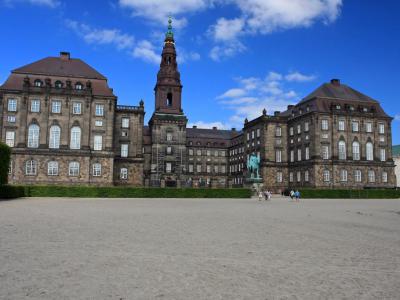
Christiansborg Palace is where Danish democracy, royal pomp, and a bit of architectural resilience come together. This place isn’t just a palace but the unicorn of government buildings. It’s the only structure in the world that houses all three branches of government: the Parliament, the Prime Minister’s Office, and the Supreme Court. Talk about multitasking...
The current palace is the third on this site. The original castle built by the city's founder, Bishop Absalon, stood here since 1167. Its remains, along with those of its successor – Copenhagen Castle – have been excavated and are now visible in the subterranean section at Christiansborg. After suffering two major fires, in 1794 and 1884, the palace was rebuilt in a historicist Neo-baroque style by 1928.
Often called "the Castle of the Realm" or simply "the Castle", Christiansborg is also used by the Danish monarchy, hosting dignitaries in its lavish Royal Reception Rooms, holding ceremonies in the Palace Chapel, and presumably waving regally at horses in the Royal Stables.
Speaking of horses-here’s a bit of drama. King Christian IX's equestrian statue at the Riding Ground Complex, unveiled in 1927, caused controversy. The horse model for it was sourced from Hanover, Germany, thus causing discontent among Danish breeders.
Owned by the Danish Government, parts of Christiansborg are open to the public. If you have a Copenhagen Card for tourists, admission to the royal reception rooms (as well as the stables, kitchen, and underground ruins) is free. Highlights of the experience include the Queen's china collection, her ornate ceremonial library, and the Great Hall, adorned with tapestries chronicling Denmark's history.
But even if you don't have the card, no problem. You can still wander the courtyard and head up the Tower-Copenhagen’s tallest. The views are impeccable. The elevator-tiny but mighty. And the security check is mildly official.
Tip:
Always look out for the free English one-hour tours included in your ticket (they run at 3 pm each day but also at different times during weekends: 12 pm or 2pm). That is of course unless you'd rather wander the rooms on your own, reading the descriptions.
The current palace is the third on this site. The original castle built by the city's founder, Bishop Absalon, stood here since 1167. Its remains, along with those of its successor – Copenhagen Castle – have been excavated and are now visible in the subterranean section at Christiansborg. After suffering two major fires, in 1794 and 1884, the palace was rebuilt in a historicist Neo-baroque style by 1928.
Often called "the Castle of the Realm" or simply "the Castle", Christiansborg is also used by the Danish monarchy, hosting dignitaries in its lavish Royal Reception Rooms, holding ceremonies in the Palace Chapel, and presumably waving regally at horses in the Royal Stables.
Speaking of horses-here’s a bit of drama. King Christian IX's equestrian statue at the Riding Ground Complex, unveiled in 1927, caused controversy. The horse model for it was sourced from Hanover, Germany, thus causing discontent among Danish breeders.
Owned by the Danish Government, parts of Christiansborg are open to the public. If you have a Copenhagen Card for tourists, admission to the royal reception rooms (as well as the stables, kitchen, and underground ruins) is free. Highlights of the experience include the Queen's china collection, her ornate ceremonial library, and the Great Hall, adorned with tapestries chronicling Denmark's history.
But even if you don't have the card, no problem. You can still wander the courtyard and head up the Tower-Copenhagen’s tallest. The views are impeccable. The elevator-tiny but mighty. And the security check is mildly official.
Tip:
Always look out for the free English one-hour tours included in your ticket (they run at 3 pm each day but also at different times during weekends: 12 pm or 2pm). That is of course unless you'd rather wander the rooms on your own, reading the descriptions.

2) Christiania (must see)
Christiania is a popular "anarchist commune" and "partially autonomous intentional community" in Copenhagen. It is spread over 7.7 hectares (19 acres) in the borough of Christianshavn and houses about 850 to 1,000 residents.
Christiania has been a source of controversy since its creation in a squatted military area in 1971. Its cannabis trade was tolerated by authorities until 2004. Since then, relations between Christiania and Danish authorities have been strained. Since the beginning of the 2010s, the situation has been normalized and the common Danish law now applies there.
Christiania is considered to be the fourth largest tourist attraction in Copenhagen (and it has half a million visitors annually), and abroad it is a well-known "brand" for the supposedly progressive and liberated Danish lifestyle. Many Danish businesses and organizations also use Christiania as a showplace for their foreign friends and guests. The purpose is to show something Danish that cannot be found anywhere else in the world.
The people in Christiania have developed their own set of rules, independent of the Danish government. The rules forbid stealing, violence, guns, knives, bulletproof vests, hard drugs and bikers' colors. Additionally, within Christiania itself, no private cars are allowed. However, some 100+ cars are owned by residents and need to be parked on the streets surrounding the Freetown. After negotiating with city authorities, Christiania has agreed to establish parking areas for residents' own cars on its territory. As of 2005, parking space for only 14 cars had been established within the area.
Tip:
Come here to see another part of Copenhagen, but best to not come on your own!
Christiania has been a source of controversy since its creation in a squatted military area in 1971. Its cannabis trade was tolerated by authorities until 2004. Since then, relations between Christiania and Danish authorities have been strained. Since the beginning of the 2010s, the situation has been normalized and the common Danish law now applies there.
Christiania is considered to be the fourth largest tourist attraction in Copenhagen (and it has half a million visitors annually), and abroad it is a well-known "brand" for the supposedly progressive and liberated Danish lifestyle. Many Danish businesses and organizations also use Christiania as a showplace for their foreign friends and guests. The purpose is to show something Danish that cannot be found anywhere else in the world.
The people in Christiania have developed their own set of rules, independent of the Danish government. The rules forbid stealing, violence, guns, knives, bulletproof vests, hard drugs and bikers' colors. Additionally, within Christiania itself, no private cars are allowed. However, some 100+ cars are owned by residents and need to be parked on the streets surrounding the Freetown. After negotiating with city authorities, Christiania has agreed to establish parking areas for residents' own cars on its territory. As of 2005, parking space for only 14 cars had been established within the area.
Tip:
Come here to see another part of Copenhagen, but best to not come on your own!
3) New Harbor (Nyhavn) (must see)
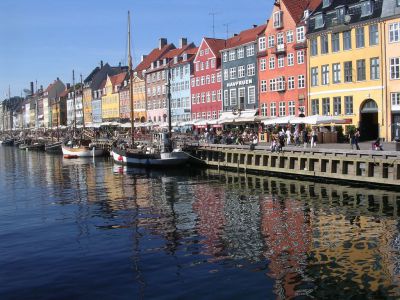
New Harbor-with all its bright colors, wooden ships, and a dash of nautical nostalgia-is by far Copenhagen’s most photogenic waterfront. Here, 17th-century Danish townhouses line up like they’re auditioning for a postcard.
Built between 1670 and 1675 under the direction of King Christian V-using a workforce of Danish soldiers and captured Swedish war prisoners-New Harbor was designed to boost trade with the Dutch. In reality, however, it quickly became Copenhagen’s go-to district for beer, brawls, and brothels. Trade and trouble? Why not both?
In his turn, the famed Danish author Hans Christian Andersen also called New Harbor home for a whopping 18 years. He first moved into Number 20, the red house, in 1834. Then, he shuffled over to Number 18 and eventually spent his longest stretch lounging around Number 67 from 1848 to 1865. Basically, he was living that prime canal-side real estate life before it was cool.
After World War II, the harbor’s hustle slowed to a crawl, and the area nearly faded into obscurity. But the 1960s gave it a second act. In 1977, the Veteran Ship and Museum Harbor dropped anchor, and by 1980, the quay was pedestrianized-aka, turned into the selfie paradise and café haven we know today.
Take a stroll now, and you’ll spot all sorts of restored museum ships moored along the canal-each one with enough maritime drama to fill a Netflix series. At the far end of the harbor sits the Memorial Anchor, quietly honoring Danish sailors lost in World War II.
Wander a bit further south, and things take a modern turn. Jazz clubs, tattoo parlors, trendy cafés, and enough open-faced sandwiches to keep your Instagram busy for hours.
Tip:
If you're on a tight budget or just pretending to be Danish, skip the overpriced bar scene. Grab a beer or coffee from a convenience store, plop yourself down at the quayside, and soak in the view. For something classier, head to the Royal Playhouse at the far end-great drinks, decent prices, and panoramic views that will make your camera weep with joy.
And hey, if your feet are screaming for mercy, you can always hop on a boat tour right at the harbor entrance. One hour of effortless sightseeing and zero walking required.
Built between 1670 and 1675 under the direction of King Christian V-using a workforce of Danish soldiers and captured Swedish war prisoners-New Harbor was designed to boost trade with the Dutch. In reality, however, it quickly became Copenhagen’s go-to district for beer, brawls, and brothels. Trade and trouble? Why not both?
In his turn, the famed Danish author Hans Christian Andersen also called New Harbor home for a whopping 18 years. He first moved into Number 20, the red house, in 1834. Then, he shuffled over to Number 18 and eventually spent his longest stretch lounging around Number 67 from 1848 to 1865. Basically, he was living that prime canal-side real estate life before it was cool.
After World War II, the harbor’s hustle slowed to a crawl, and the area nearly faded into obscurity. But the 1960s gave it a second act. In 1977, the Veteran Ship and Museum Harbor dropped anchor, and by 1980, the quay was pedestrianized-aka, turned into the selfie paradise and café haven we know today.
Take a stroll now, and you’ll spot all sorts of restored museum ships moored along the canal-each one with enough maritime drama to fill a Netflix series. At the far end of the harbor sits the Memorial Anchor, quietly honoring Danish sailors lost in World War II.
Wander a bit further south, and things take a modern turn. Jazz clubs, tattoo parlors, trendy cafés, and enough open-faced sandwiches to keep your Instagram busy for hours.
Tip:
If you're on a tight budget or just pretending to be Danish, skip the overpriced bar scene. Grab a beer or coffee from a convenience store, plop yourself down at the quayside, and soak in the view. For something classier, head to the Royal Playhouse at the far end-great drinks, decent prices, and panoramic views that will make your camera weep with joy.
And hey, if your feet are screaming for mercy, you can always hop on a boat tour right at the harbor entrance. One hour of effortless sightseeing and zero walking required.
4) Round Tower (Rundetarn) (must see)
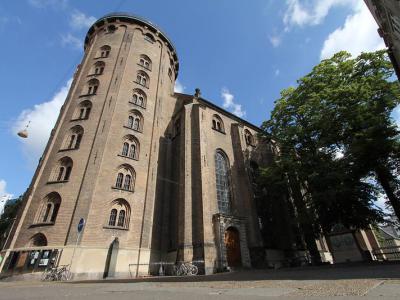
The Round Tower – Copenhagen’s answer to the question: “What if we made a giant architectural cinnamon roll… but for science?” This 17th-century spiral of brick in the heart of the Danish capital was “cooked up” by King Christian IV as part of his grand architectural project, originally intended as an observatory for the astronomer genius Tycho Brahe.
Back in the 1600s, Europe was getting really into astronomy. The Round Tower came with its own academic library, the Trinitatis Church, and a university chapel. The spiral ramp was so strong and wide that one could easily ride a horse or even drive a carriage up and down it. Apparently, some kings did actually, including Russian Tsar Peter the Great. Because stairs are for the common folk...
Now, if you're a fan of Hans Christian Andersen, you're gonna love this. The Round Tower pops up in “The Tinderbox.” That’s the one where a soldier meets a witch, climbs into a hollow tree, and finds three coin-filled vaults guarded by increasingly horrifying dogs. The biggest of which has eyes “the size of the Round Tower.” Subtle product placement, Hans...
Today, tourists from all corners of the Earth climb its 7.5-turn helical corridor just to snap that perfect panoramic selfie of the city. Because it’s not just a tower but a slow-motion ascent into Danish history, science, and surprisingly chic art installations.
As you wind your way up, your first pitstop is a gallery space featuring contemporary art that occasionally makes you question your understanding of gravity. Then it’s on to the bell loft – because what's a tower without a good ol’ bell room? And finally, the key attraction: the observatory itself, complete with a 360-degree view of Copenhagen. There’s even a thick glass platform near the top – for the brave souls who enjoy standing on transparent floors and peering into the abyss.
Back in the 1600s, Europe was getting really into astronomy. The Round Tower came with its own academic library, the Trinitatis Church, and a university chapel. The spiral ramp was so strong and wide that one could easily ride a horse or even drive a carriage up and down it. Apparently, some kings did actually, including Russian Tsar Peter the Great. Because stairs are for the common folk...
Now, if you're a fan of Hans Christian Andersen, you're gonna love this. The Round Tower pops up in “The Tinderbox.” That’s the one where a soldier meets a witch, climbs into a hollow tree, and finds three coin-filled vaults guarded by increasingly horrifying dogs. The biggest of which has eyes “the size of the Round Tower.” Subtle product placement, Hans...
Today, tourists from all corners of the Earth climb its 7.5-turn helical corridor just to snap that perfect panoramic selfie of the city. Because it’s not just a tower but a slow-motion ascent into Danish history, science, and surprisingly chic art installations.
As you wind your way up, your first pitstop is a gallery space featuring contemporary art that occasionally makes you question your understanding of gravity. Then it’s on to the bell loft – because what's a tower without a good ol’ bell room? And finally, the key attraction: the observatory itself, complete with a 360-degree view of Copenhagen. There’s even a thick glass platform near the top – for the brave souls who enjoy standing on transparent floors and peering into the abyss.
5) Rosenborg Castle (must see)
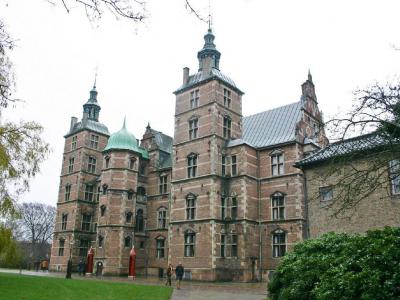
One of the most popular tourist attractions in Copenhagen, Rosenborg Castle reflects the very essence of the Dutch Renaissance style. This caste was constructed in 1606 and served as a summer house. It was a part of many interesting architectural projects initiated by Christian IV.
The castle has since been expanded many times and its present version was built in 1624. Rosenborg Castle was structurally planned by architects Hans van Steenwincke and Bertel Lange.
Until 1710, the castle was a royal residence. On the third floor, you will find the Long Hall. It was built in 1624 to serve as the royal ballroom. In the 1700s, it was used as the banquet hall and the Royal Reception Room. It came to be known as the “Knight’s Hall” from the latter half of the 19th century.
Here you will find a dozen impressive tapestries that depict the victories of the king in the Scanian War. Do not miss out the stucco ceiling that was created in the early 18th century. The main attractions at this castle include the throne of queens and absolutist king’s coronation chair. At the Large Hall, you will find an exquisite collection of 17th-century silver furniture.
Join one of the public tours organized at this castle. The tour will take you through the museum where you can view artifacts from the Royal Collections.
Why You Should Visit:
There's lots of history here and it is well presented. It is not too cluttered so you are not overburdened.
The castle interior is splendid with wonderfully preserved artwork and furnishings – especially the tapestries in the throne room.
Tip:
Make sure you visit all the levels, taking time to walk around and not be too rushed. Plan on at least 2-3 hours here if you can. You need a coin for the locker to leave bags, however.
Tickets are timed entry to ensure the smallish rooms don't get overcrowded. Pre-book online if you can; otherwise, you can walk around the relaxing gardens while you wait for your time slot.
Keep your ticket to go to the basement and see the crown jewels! There's a separate entrance to the basement from outside the castle (you can't get to the basement from inside the castle itself).
The castle has since been expanded many times and its present version was built in 1624. Rosenborg Castle was structurally planned by architects Hans van Steenwincke and Bertel Lange.
Until 1710, the castle was a royal residence. On the third floor, you will find the Long Hall. It was built in 1624 to serve as the royal ballroom. In the 1700s, it was used as the banquet hall and the Royal Reception Room. It came to be known as the “Knight’s Hall” from the latter half of the 19th century.
Here you will find a dozen impressive tapestries that depict the victories of the king in the Scanian War. Do not miss out the stucco ceiling that was created in the early 18th century. The main attractions at this castle include the throne of queens and absolutist king’s coronation chair. At the Large Hall, you will find an exquisite collection of 17th-century silver furniture.
Join one of the public tours organized at this castle. The tour will take you through the museum where you can view artifacts from the Royal Collections.
Why You Should Visit:
There's lots of history here and it is well presented. It is not too cluttered so you are not overburdened.
The castle interior is splendid with wonderfully preserved artwork and furnishings – especially the tapestries in the throne room.
Tip:
Make sure you visit all the levels, taking time to walk around and not be too rushed. Plan on at least 2-3 hours here if you can. You need a coin for the locker to leave bags, however.
Tickets are timed entry to ensure the smallish rooms don't get overcrowded. Pre-book online if you can; otherwise, you can walk around the relaxing gardens while you wait for your time slot.
Keep your ticket to go to the basement and see the crown jewels! There's a separate entrance to the basement from outside the castle (you can't get to the basement from inside the castle itself).
6) Frederick's Church (must see)
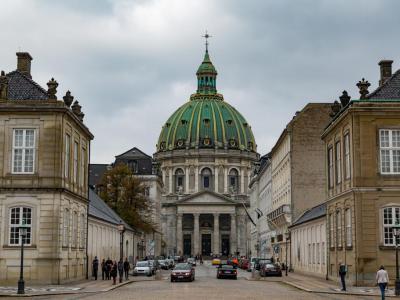
Also known as the Marble Church, Frederick’s Church is one of the most popular tourist attractions in Copenhagen – especially for its dome which is the largest in Scandinavia. This dome spans 31 meters and is supported by 12 columns.
Along with all other structures in Frederiksstaden district, the church was built to commemorate a member of the House of Oldenburg’s 300 years coronation jubilee celebrations. It was designed and erected by architect Nicolai Eigtved in 1740. King Frederick V laid the foundation stone in 1749. Eigtved died in 1754 due to which construction was hit by budget constraints and had to be stalled.
Johann Friedrich Struensee discarded the original plan in 1770 and the church remained incomplete for a while in spite of many efforts. For the next 150 years, the edifice remained in ruins. Carl Frederik Tietgen eventually got prominent architect Ferdinand Meldahl to design the church in its final form and financed its construction. Due to financial restrictions, the original plans for the church to be built almost entirely from marble were discarded, and instead, Meldahl opted for construction to be done with limestone. The church was finally opened to the public on August 19, 1894.
A series of statues of prominent theologians and ecclesiastical figures, including one of the eminent Danish philosopher Kierkegaard (who, incidentally, had become very critical of the established church by the end of his life), encircles the grounds of the building.
Why You Should Visit:
This church really has the wow factor; as beautiful inside as it is out (also, rather unique and unusual as it is circular inside).
Tip:
The dome can be visited – for a small fee – every day at 1pm sharp in summer but only at the weekend (Sat/Sun) in winter. Very impressive view from above!
Along with all other structures in Frederiksstaden district, the church was built to commemorate a member of the House of Oldenburg’s 300 years coronation jubilee celebrations. It was designed and erected by architect Nicolai Eigtved in 1740. King Frederick V laid the foundation stone in 1749. Eigtved died in 1754 due to which construction was hit by budget constraints and had to be stalled.
Johann Friedrich Struensee discarded the original plan in 1770 and the church remained incomplete for a while in spite of many efforts. For the next 150 years, the edifice remained in ruins. Carl Frederik Tietgen eventually got prominent architect Ferdinand Meldahl to design the church in its final form and financed its construction. Due to financial restrictions, the original plans for the church to be built almost entirely from marble were discarded, and instead, Meldahl opted for construction to be done with limestone. The church was finally opened to the public on August 19, 1894.
A series of statues of prominent theologians and ecclesiastical figures, including one of the eminent Danish philosopher Kierkegaard (who, incidentally, had become very critical of the established church by the end of his life), encircles the grounds of the building.
Why You Should Visit:
This church really has the wow factor; as beautiful inside as it is out (also, rather unique and unusual as it is circular inside).
Tip:
The dome can be visited – for a small fee – every day at 1pm sharp in summer but only at the weekend (Sat/Sun) in winter. Very impressive view from above!
7) Kastellet (must see)
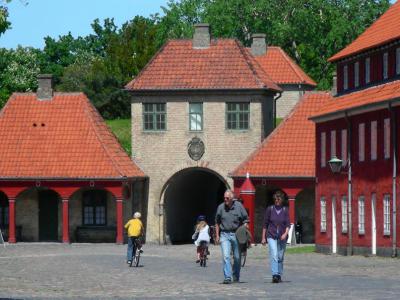
One of the most impressive and well-preserved fortifications in Northern Europe, Kastellet, as it is called, has bastions at the corners and is designed in the form of a pentagram. As you enter its grounds, you will find a number of buildings including a windmill and a church. This historic site which also serves as a public park is frequented by locals and tourists alike.
It was in 1626 that King Christian IV started construction of Kastellet. Economic constraints forced him to drop his grand plans of building a large castle here. King Frederik III, his successor continued with the construction which was later extended by Henrik Ruse, the Dutch engineer after the Swedish siege between 1658 and 1660.
Kastellet was built as an effort by Copenhagen to defend itself against England in the 1807 Battle of Copenhagen. A.P. Moller and Chastine McKinney Mollers General Fund made possible a complete renovation of Kastellet between 1989 and 1999. Currently, it is owned by the Danish Defence Ministry and the area is used by Defence Intelligence, Danish Home Guard, Chief of Staff, Royal Garrison’s Library and the Defence Judge Advocate Corps.
Locals visit Kastellet to enjoy a pleasant walk on a sunny day. Tourists visit this fortification for its rich heritage and children love to play around with the birds and animals here.
Why You Should Visit:
The high walls of the fortress offer a lovely view of the harbor, and the fact that half of it is still a working base means it's kept in tip top shape.
Very pleasant area to take a quiet stroll or run, and with a charming windmill to boot!
Tip:
Can get windy on a cold day so do cover up.
It was in 1626 that King Christian IV started construction of Kastellet. Economic constraints forced him to drop his grand plans of building a large castle here. King Frederik III, his successor continued with the construction which was later extended by Henrik Ruse, the Dutch engineer after the Swedish siege between 1658 and 1660.
Kastellet was built as an effort by Copenhagen to defend itself against England in the 1807 Battle of Copenhagen. A.P. Moller and Chastine McKinney Mollers General Fund made possible a complete renovation of Kastellet between 1989 and 1999. Currently, it is owned by the Danish Defence Ministry and the area is used by Defence Intelligence, Danish Home Guard, Chief of Staff, Royal Garrison’s Library and the Defence Judge Advocate Corps.
Locals visit Kastellet to enjoy a pleasant walk on a sunny day. Tourists visit this fortification for its rich heritage and children love to play around with the birds and animals here.
Why You Should Visit:
The high walls of the fortress offer a lovely view of the harbor, and the fact that half of it is still a working base means it's kept in tip top shape.
Very pleasant area to take a quiet stroll or run, and with a charming windmill to boot!
Tip:
Can get windy on a cold day so do cover up.
8) Little Mermaid (must see)
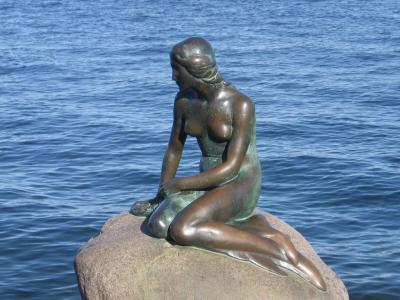
On your trip to Copenhagen, take time off to visit the harbor where you will find the Little Mermaid statue. This statue is the icon of Copenhagen and is visited by tourists from across the world. The unimposing statue is based on one of Hans Christian Anderson’s fairy tales.
After enjoying a ballet on this fairy tale at the Royal Theatre, Carlsberg founder’s son Carl Jacobsen commissioned the statue in 1909. It was modeled after none other than Ellen Price, the prima ballerina (well, partly, at least).
The statue is made of bronze and was painstakingly created by expert sculptor, Edvard Eriksen. Unveiled in 1913, the statue has Ellen Price’s head and Eline Eriksen, the sculptor’s wife’s body.
The Little Mermaid statue surprisingly weighs only around 175 kg and is 1.25 meters tall. Its small size is a surprise for first-time visitors who expect to see something grand and huge.
Why You Should Visit:
To watch people fall into the water as they try to get a photo with the statue (this happens more often than you'd think).
Tip:
The perfect spot for taking a picture is from the promenade overlooking the statue to the left. It's a great photo op, not only of the mermaid but the Copenhagen harbour behind.
After enjoying a ballet on this fairy tale at the Royal Theatre, Carlsberg founder’s son Carl Jacobsen commissioned the statue in 1909. It was modeled after none other than Ellen Price, the prima ballerina (well, partly, at least).
The statue is made of bronze and was painstakingly created by expert sculptor, Edvard Eriksen. Unveiled in 1913, the statue has Ellen Price’s head and Eline Eriksen, the sculptor’s wife’s body.
The Little Mermaid statue surprisingly weighs only around 175 kg and is 1.25 meters tall. Its small size is a surprise for first-time visitors who expect to see something grand and huge.
Why You Should Visit:
To watch people fall into the water as they try to get a photo with the statue (this happens more often than you'd think).
Tip:
The perfect spot for taking a picture is from the promenade overlooking the statue to the left. It's a great photo op, not only of the mermaid but the Copenhagen harbour behind.
