Custom Walk in Genoa, Italy by wleoone6268 created on 2025-10-02
Guide Location: Italy » Genoa
Guide Type: Custom Walk
# of Sights: 7
Tour Duration: 2 Hour(s)
Travel Distance: 4.1 Km or 2.5 Miles
Share Key: GX3C2
Guide Type: Custom Walk
# of Sights: 7
Tour Duration: 2 Hour(s)
Travel Distance: 4.1 Km or 2.5 Miles
Share Key: GX3C2
How It Works
Please retrieve this walk in the GPSmyCity app. Once done, the app will guide you from one tour stop to the next as if you had a personal tour guide. If you created the walk on this website or come to the page via a link, please follow the instructions below to retrieve the walk in the app.
Retrieve This Walk in App
Step 1. Download the app "GPSmyCity: Walks in 1K+ Cities" on Apple App Store or Google Play Store.



Step 2. In the GPSmyCity app, download(or launch) the guide "Genoa Map and Walking Tours".
Step 3. Tap the menu button located at upper right corner of the "Walks" screen and select "Retrieve custom walk". Enter the share key: GX3C2
1) Palazzo San Giorgio (Palace of St. George)
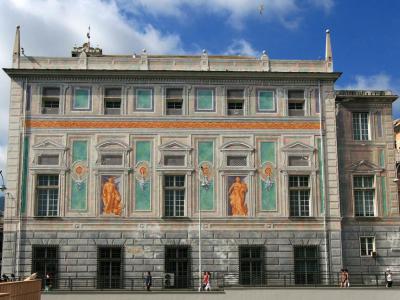
Once upon a time in the 13th century, Byzantine Emperor Michael VIII Palaiologos felt seriously indebted to Genoa. The city backed him in his fight against the Latin Empire, and his gratitude came in a very specific form-recycled enemy property. In 1260, marble and building materials stripped from the Venetian embassy in Constantinople were shipped west and handed to Genoese noble Guglielmo Boccanegra, who promptly turned them into his waterfront dream palace. Indeed, nothing says “thank you” quite like the repurposed Venetian stone...
To underline the point, stone lions-symbols of Venice’s patron saint, Mark-were set into the façade. A bold move (possibly, too bold). Just two years later, Boccanegra was overthrown as Captain of the People and sent into exile, and his shiny palace took a sharp turn in function. It became a prison. History, as usual, has a sense of humor...
The most famous inmate was Marco Polo, who passed the time by dictating his travel stories to Rustichello of Pisa, a writer of chivalric romances. Somewhere behind these walls, tales of faraway Asia were shaped for European ears-a neat illustration that even a Genoese prison could produce a bestseller.
Still, the building had bigger ambitions than incarceration. Designed by Frate Oliverio, a Cistercian monk with architectural skills, it was also meant to serve the port authorities. By 1400, it entered a new phase as the headquarters of the Bank of San Giorgio, one of the earliest banking institutions in Italy and a financial powerhouse of its day. Commerce, it turns out, was always the long game.
Expansion followed. In 1570, an east wing appeared to house customs offices, archives, and vaults. In 1608, the façade received a full makeover with heroic frescoes, dominated by Saint George slaying the dragon. A clock tower was added above, keeping both time and watch over the harbor.
Look closely at the façade today, and you’ll spot statues of Genoese heavyweights: Christopher Columbus, Andrea Doria, Simone Boccanegra, and others who once steered the city’s fortunes. Now known as the Palace of St. George, the building still runs port business-having moved, over the centuries, from imperial favor to prison cells to financial nerve center, without ever leaving the waterfront.
To underline the point, stone lions-symbols of Venice’s patron saint, Mark-were set into the façade. A bold move (possibly, too bold). Just two years later, Boccanegra was overthrown as Captain of the People and sent into exile, and his shiny palace took a sharp turn in function. It became a prison. History, as usual, has a sense of humor...
The most famous inmate was Marco Polo, who passed the time by dictating his travel stories to Rustichello of Pisa, a writer of chivalric romances. Somewhere behind these walls, tales of faraway Asia were shaped for European ears-a neat illustration that even a Genoese prison could produce a bestseller.
Still, the building had bigger ambitions than incarceration. Designed by Frate Oliverio, a Cistercian monk with architectural skills, it was also meant to serve the port authorities. By 1400, it entered a new phase as the headquarters of the Bank of San Giorgio, one of the earliest banking institutions in Italy and a financial powerhouse of its day. Commerce, it turns out, was always the long game.
Expansion followed. In 1570, an east wing appeared to house customs offices, archives, and vaults. In 1608, the façade received a full makeover with heroic frescoes, dominated by Saint George slaying the dragon. A clock tower was added above, keeping both time and watch over the harbor.
Look closely at the façade today, and you’ll spot statues of Genoese heavyweights: Christopher Columbus, Andrea Doria, Simone Boccanegra, and others who once steered the city’s fortunes. Now known as the Palace of St. George, the building still runs port business-having moved, over the centuries, from imperial favor to prison cells to financial nerve center, without ever leaving the waterfront.
2) Cattedrale di San Lorenzo (Cathedral of St. Lawrence) (must see)
The Cathedral of San Lorenzo doesn’t just stand in Genoa-it dominates the conversation. Construction began around 1098, and by 1118, Pope Gelasius II was here to inaugurate it, which already tells you this wasn’t a modest parish project. Once the city walls went up, the area around San Lorenzo became Genoa’s beating heart. In medieval times, this wasn’t only a place to pray; it was where religion, politics, and public life all collided, usually quite loudly.
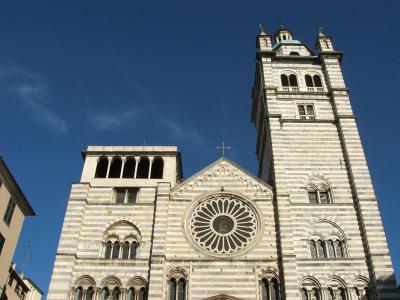
Disaster struck in 1296 when a fire tore through the building, but Genoa responded the way Genoa usually does: by rebuilding bigger and better. The striped façade you see today was finished in 1312, colonnades were restored, matron galleries added, and work continued well into the 17th century. Later still, between 1894 and 1900, restorers stepped in to tidy up the medieval sections and the dome, making sure San Lorenzo looked suitably timeless for the modern age.
Take a moment to face the main façade. Three Gothic portals open beneath recessed arches, with Christ and Saint Lawrence watching calmly from the lunette above the central door. A large rose window sits above, because understatement clearly didn’t make the cut. Two stone lions flank the steps, looking eternally unimpressed, while two towers of different heights rise above them-a reminder that architectural symmetry was never a strict requirement.
Inside, the cathedral follows a basilica plan with a transept and choir. Three naves stretch ahead, divided by marble columns and striped arches in alternating light and dark stone. Above them, smaller Romanesque arches in grey stone add another visual rhythm, creating an interior that feels both ordered and dramatic.
On the left, you’ll find the chapel dedicated to Saint John the Baptist, Genoa’s patron saint. Inside is an urn holding his relics, brought here at the end of the First Crusade-because Genoa never missed an opportunity to bring something significant home.
And then there’s the shell. On February 9, 1941, an English battleship fired an armor-piercing shell straight into the cathedral. It punched through a corner of the nave and… didn’t explode. The shell is still there today, quietly minding its own business. Keep an eye out-it’s one of the most unusual souvenirs of World War II.
Entry to the cathedral is free, though you’ll need a ticket for the treasure museum. Either way, San Lorenzo makes it very clear why it has been running the show in Genoa for centuries.
Disaster struck in 1296 when a fire tore through the building, but Genoa responded the way Genoa usually does: by rebuilding bigger and better. The striped façade you see today was finished in 1312, colonnades were restored, matron galleries added, and work continued well into the 17th century. Later still, between 1894 and 1900, restorers stepped in to tidy up the medieval sections and the dome, making sure San Lorenzo looked suitably timeless for the modern age.
Take a moment to face the main façade. Three Gothic portals open beneath recessed arches, with Christ and Saint Lawrence watching calmly from the lunette above the central door. A large rose window sits above, because understatement clearly didn’t make the cut. Two stone lions flank the steps, looking eternally unimpressed, while two towers of different heights rise above them-a reminder that architectural symmetry was never a strict requirement.
Inside, the cathedral follows a basilica plan with a transept and choir. Three naves stretch ahead, divided by marble columns and striped arches in alternating light and dark stone. Above them, smaller Romanesque arches in grey stone add another visual rhythm, creating an interior that feels both ordered and dramatic.
On the left, you’ll find the chapel dedicated to Saint John the Baptist, Genoa’s patron saint. Inside is an urn holding his relics, brought here at the end of the First Crusade-because Genoa never missed an opportunity to bring something significant home.
And then there’s the shell. On February 9, 1941, an English battleship fired an armor-piercing shell straight into the cathedral. It punched through a corner of the nave and… didn’t explode. The shell is still there today, quietly minding its own business. Keep an eye out-it’s one of the most unusual souvenirs of World War II.
Entry to the cathedral is free, though you’ll need a ticket for the treasure museum. Either way, San Lorenzo makes it very clear why it has been running the show in Genoa for centuries.
3) Chiesa di San Pancrazio (Church of San Pancrazio)
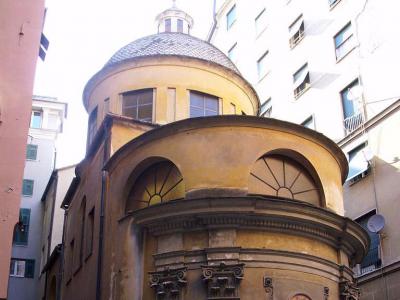
The Church of San Pancras is a small, elegant Baroque church rich in history and artistic detail. Its origins date back to at least 1023, when it was connected to the Benedictine Abbey of San Siro, a historic monastery. By the late 16th century, the church had become the parish for prominent local families, including the Calvi and Pallavicini aristocratic families.
Rebuilt in the early 18th century-after being destroyed by Louis XIV’s bombardment in 1684-the current design is credited to architect Antonio Maria Ricca. Though it suffered damage during World War II, it was carefully restored. Today, the church is administered by the Sovereign Military Order of Malta and is identifiable by its Maltese cross above the portal.
Inside, the church follows a central-plan layout beneath a dome, with side chapels lining the walls. Notable artworks include apse frescoes by Giacomo Antonio Boni, statues of Saint Pancras created by Filippo Parodi, and a Madonna of Mercy sculpted by Francesco Maria Schiaffino. Behind the marble altar, there's a restored Flemish triptych from the early 1500s-attributed to Adriaen Isenbrandt-that illustrates scenes from the life of Saint Pancras.
The church is typically closed to the public, but it can be visited during special events such as Open Churches or Rolli Days.
Rebuilt in the early 18th century-after being destroyed by Louis XIV’s bombardment in 1684-the current design is credited to architect Antonio Maria Ricca. Though it suffered damage during World War II, it was carefully restored. Today, the church is administered by the Sovereign Military Order of Malta and is identifiable by its Maltese cross above the portal.
Inside, the church follows a central-plan layout beneath a dome, with side chapels lining the walls. Notable artworks include apse frescoes by Giacomo Antonio Boni, statues of Saint Pancras created by Filippo Parodi, and a Madonna of Mercy sculpted by Francesco Maria Schiaffino. Behind the marble altar, there's a restored Flemish triptych from the early 1500s-attributed to Adriaen Isenbrandt-that illustrates scenes from the life of Saint Pancras.
The church is typically closed to the public, but it can be visited during special events such as Open Churches or Rolli Days.
4) Museo delle Culture del Mondo (Museum of World Cultures)
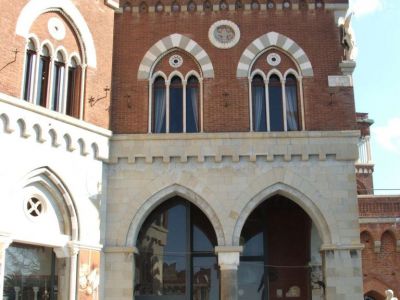
The Museum of World Cultures, housed in the enchanting D’Albertis Castle, sits atop Montegalletto hill, offering breathtaking views over Genoa. Built between 1886 and 1892 by Captain Enrico Alberto d'Albertis-a passionate naval explorer and ethnologist-the castle is a blend of neo-Gothic and Hispano-Moorish styles, built upon medieval and 16th-century fortifications. Upon his death in 1932, the captain donated the castle and his extensive collection to the city. Since 2004, the site has operated as a museum dedicated to exploring and showcasing world cultures.
The museum journey begins in the richly decorated rooms-like the Colombian Room, Turkish Salon, Sundials Room, and the Captain’s own cabin-each inspired by the exotic cultures d’Albertis encountered on his voyages. From there, the visit extends into the restored 16th-century bastion, where ethnographic and archaeological collections from Africa, Oceania, and the Americas are displayed.
Among the museum’s highlights are extensive collections of weapons-such as Sudanese and Zambesi arms, Chinese lances, and European halberds-along with pre-Columbian artifacts from the Maya, ceremonial paraphernalia, and traditional garments from North American Plains tribes. A special section, the Museum of People’s Music, in partnership with Echo Art, presents instruments, sound installations, and multimedia performances from across the globe.
The museum journey begins in the richly decorated rooms-like the Colombian Room, Turkish Salon, Sundials Room, and the Captain’s own cabin-each inspired by the exotic cultures d’Albertis encountered on his voyages. From there, the visit extends into the restored 16th-century bastion, where ethnographic and archaeological collections from Africa, Oceania, and the Americas are displayed.
Among the museum’s highlights are extensive collections of weapons-such as Sudanese and Zambesi arms, Chinese lances, and European halberds-along with pre-Columbian artifacts from the Maya, ceremonial paraphernalia, and traditional garments from North American Plains tribes. A special section, the Museum of People’s Music, in partnership with Echo Art, presents instruments, sound installations, and multimedia performances from across the globe.
5) Genova Piazza Principe railway station
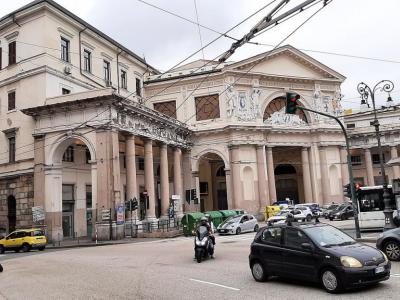
Genova Piazza Principe Railway Station, one of Genoa's busiest transport hubs, opened its doors in 1860, the year prior to Italy's. Although named after Piazza del Principe, the station's main entrance is located on the nearby Piazza Acquaverde. The station's neoclassical facade, adorned on the upper levels with statues and a large clock under an arch, lends it the distinction of an architectural landmark rather than merely a transit hub.
The station serves as a major gateway to both regional and high-speed train connections, facilitating travel to destinations across Italy and beyond, including the French Riviera and Eastern Europe. Inside, the ground level houses modern amenities, including ticket offices, waiting areas, shops, and dining options, while access to platforms is located underground and the upper floors are dedicated to office spaces. Piazza Acquaverde is just a short walk from Genoa's waterfront, perfect for those beginning or ending a cruise in the city.
The station serves as a major gateway to both regional and high-speed train connections, facilitating travel to destinations across Italy and beyond, including the French Riviera and Eastern Europe. Inside, the ground level houses modern amenities, including ticket offices, waiting areas, shops, and dining options, while access to platforms is located underground and the upper floors are dedicated to office spaces. Piazza Acquaverde is just a short walk from Genoa's waterfront, perfect for those beginning or ending a cruise in the city.
6) Villa del Principe
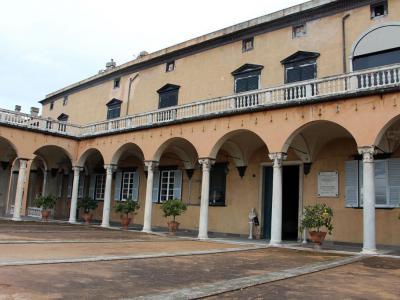
Villa del Principe-also known as Andrea Doria Palace-is a Renaissance suburban villa built in the 16th century for Admiral Andrea Doria, Prince of Melfi. Overlooking what was once the sea, this sprawling residence was created just outside Genoa’s city walls between 1529 and 1533 by Perino del Vaga and extended later by Giovanni Ponzello and others. As Genoa’s only true princely court, the villa welcomed emperors, kings, and diplomats, including Charles V, Philip II of Spain, Napoleon, and Giuseppe Verdi.
A visual feast awaits inside, where richly frescoed halls, stuccoes, Flemish tapestries depicting the Battle of Lepanto, and original wooden furnishings offer a vivid portrait of aristocratic opulence. Highlights include Perino del Vaga’s masterpiece fresco cycle, such as Giants Struck by Jupiter in the grand hall, and the ornate Loggia of the Heroes adorned with mythological scenes and ancestral portraits of the Doria family.
The villa is set amid expansive Italian-style gardens-recently restored based on their 16th-century layouts-with terraces once stretching to the sea. The garden features include the Fountain of Neptune, the Triton Fountain, aromatic beds, and a structured layout reminiscent of its original grandeur. Though urban development changed the landscape, the revived garden preserves much of its former charm.
Today, Villa del Principe remains in the hands of the Doria Pamphilj family and is open as a museum. Visitors can wander through opulent reception rooms, explore lavish gardens, and experience the rich cultural legacy of one of Genoa’s most illustrious families.
A visual feast awaits inside, where richly frescoed halls, stuccoes, Flemish tapestries depicting the Battle of Lepanto, and original wooden furnishings offer a vivid portrait of aristocratic opulence. Highlights include Perino del Vaga’s masterpiece fresco cycle, such as Giants Struck by Jupiter in the grand hall, and the ornate Loggia of the Heroes adorned with mythological scenes and ancestral portraits of the Doria family.
The villa is set amid expansive Italian-style gardens-recently restored based on their 16th-century layouts-with terraces once stretching to the sea. The garden features include the Fountain of Neptune, the Triton Fountain, aromatic beds, and a structured layout reminiscent of its original grandeur. Though urban development changed the landscape, the revived garden preserves much of its former charm.
Today, Villa del Principe remains in the hands of the Doria Pamphilj family and is open as a museum. Visitors can wander through opulent reception rooms, explore lavish gardens, and experience the rich cultural legacy of one of Genoa’s most illustrious families.
7) Via di Pre
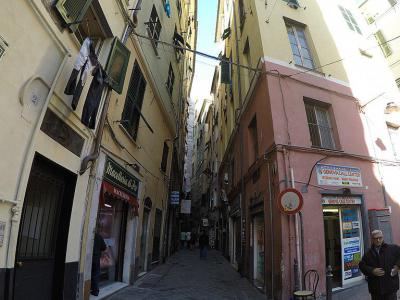
Via di Prè is a narrow, historic alley in Genoa's ancient quarter-one of the city’s best-known medieval streets. Running west from Vacca Gate to Commenda Square, it marked the city’s main medieval route to the countryside before the newer avenues appeared.
Lined with tall buildings draped in ivy and marked by elegant overhead arches, Via di Prè captures the atmosphere of everyday Genoa. Weathered façades with traditional shutters, hanging laundry, and small craft shops reflect generations of lived-in history. Along the route, the medieval Commandery of Saint John of Prè recalls the street’s role as a sanctuary for pilgrims journeying to the Holy Land in the 1100s.
Today, the alley is alive with a multicultural vibe: local markets, ethnic eateries, and small stores line its cobbled path. It offers a real slice of Genoa’s traditional caruggi-unpolished, familiar, and deeply atmospheric.
Lined with tall buildings draped in ivy and marked by elegant overhead arches, Via di Prè captures the atmosphere of everyday Genoa. Weathered façades with traditional shutters, hanging laundry, and small craft shops reflect generations of lived-in history. Along the route, the medieval Commandery of Saint John of Prè recalls the street’s role as a sanctuary for pilgrims journeying to the Holy Land in the 1100s.
Today, the alley is alive with a multicultural vibe: local markets, ethnic eateries, and small stores line its cobbled path. It offers a real slice of Genoa’s traditional caruggi-unpolished, familiar, and deeply atmospheric.
