Custom Walk in Kyoto, Japan by tinka_schreurs_b5474 created on 2025-10-02
Guide Location: Japan » Kyoto
Guide Type: Custom Walk
# of Sights: 7
Tour Duration: 3 Hour(s)
Travel Distance: 5.9 Km or 3.7 Miles
Share Key: AKSX3
Guide Type: Custom Walk
# of Sights: 7
Tour Duration: 3 Hour(s)
Travel Distance: 5.9 Km or 3.7 Miles
Share Key: AKSX3
How It Works
Please retrieve this walk in the GPSmyCity app. Once done, the app will guide you from one tour stop to the next as if you had a personal tour guide. If you created the walk on this website or come to the page via a link, please follow the instructions below to retrieve the walk in the app.
Retrieve This Walk in App
Step 1. Download the app "GPSmyCity: Walks in 1K+ Cities" on Apple App Store or Google Play Store.



Step 2. In the GPSmyCity app, download(or launch) the guide "Kyoto Map and Walking Tours".
Step 3. Tap the menu button located at upper right corner of the "Walks" screen and select "Retrieve custom walk". Enter the share key: AKSX3
1) Kyoto Tower
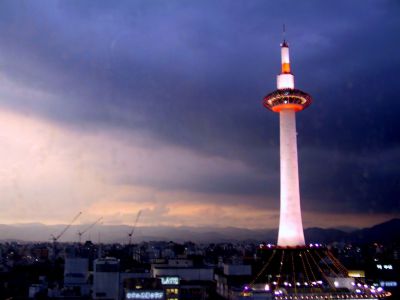
Constructed in 1964 for the Tokyo Olympics, this towering 131-meter (430-foot) structure reigned as Tokyo's tallest edifice at the time. Fashioned after a traditional Japanese candle, it stands as a prime example of Monocoque architecture, featuring a slender outer shell that supports its weight. Crafted from specially engineered lightweight steel plates fused to form a cylinder, the main structure is reinforced by inner walls comprising stacked steel rings.
On clear days, visitors flock to the affordable observation deck to bask in breathtaking 360-degree vistas of the city. With stationary binoculars at hand, one can even spy the distant city of Osaka. Enhancing the experience is top-notch multimedia equipment offering a captivating introduction to the city's allure. And let's not forget Tawawa-chan, the tower's mascot, who adds a touch of charm to the visit.
Tips:
As with many lofty landmarks worldwide, the tower houses a renowned restaurant at its summit, aptly named the Sky Lounge; however, for a less costly gastronomic adventure, venture down to the basement floor of the tower building, where an array of food stalls awaits. From Mexican tacos to steaming bowls of ramen, succulent grilled meats, and conveyor-belt sushi, there's something for every palate. As an added bonus, don't miss the stand-up bar Roots of all Evil, where you can savor a pre- or post-dinner gin cocktail.
On clear days, visitors flock to the affordable observation deck to bask in breathtaking 360-degree vistas of the city. With stationary binoculars at hand, one can even spy the distant city of Osaka. Enhancing the experience is top-notch multimedia equipment offering a captivating introduction to the city's allure. And let's not forget Tawawa-chan, the tower's mascot, who adds a touch of charm to the visit.
Tips:
As with many lofty landmarks worldwide, the tower houses a renowned restaurant at its summit, aptly named the Sky Lounge; however, for a less costly gastronomic adventure, venture down to the basement floor of the tower building, where an array of food stalls awaits. From Mexican tacos to steaming bowls of ramen, succulent grilled meats, and conveyor-belt sushi, there's something for every palate. As an added bonus, don't miss the stand-up bar Roots of all Evil, where you can savor a pre- or post-dinner gin cocktail.
2) Higashi Hongan-ji Temple
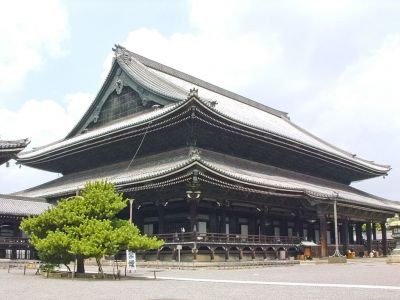
Just a hop, skip, and a jump north from Kyoto Tower, and you stumble upon a sight straight out of Kyoto's playbook: Higashi Hongan-ji. Brace yourself for some architectural magnificence because the main hall of this temple is no joke – it's one of the planet's largest wooden structures, stretching a whopping 2,800 feet long, towering 125 feet high, and propped up by 90 sturdy pillars. And that's not all – right beside it stands the Amida Hall, almost as colossal. Inside, there've even got a glass case showcasing women's hair from the Meiji Period. Yep, you read that right. Some seriously dedicated volunteers donated their locks, which were then woven into ropes to haul those mammoth tree trunks for reconstruction. Talk about hair-raising history!
Now, don't get too excited - you can't waltz inside and ogle at the altars and artwork. Nope, it's off-limits to us mere mortals. But fear not, the sheer scale and dazzling gold-plated details of these buildings still manage to drop jaws and induce awe. This temple complex is like a time machine to Kyoto's golden past, right in the heart of the station's vicinity.
The temple also comes with its own garden – Shoseien, just a stone's throw away. Gifted back in 1641, this garden is the real deal. It's got everything – a picturesque pond, a Chinese Corridor Bridge sporting a snazzy cypress bark roof, and the elegantly arched Snow-capped Bridge, giving off major Monet vibes. It's a beaut all year round, making it the ultimate hidden gem of Kyoto.
Now, don't get too excited - you can't waltz inside and ogle at the altars and artwork. Nope, it's off-limits to us mere mortals. But fear not, the sheer scale and dazzling gold-plated details of these buildings still manage to drop jaws and induce awe. This temple complex is like a time machine to Kyoto's golden past, right in the heart of the station's vicinity.
The temple also comes with its own garden – Shoseien, just a stone's throw away. Gifted back in 1641, this garden is the real deal. It's got everything – a picturesque pond, a Chinese Corridor Bridge sporting a snazzy cypress bark roof, and the elegantly arched Snow-capped Bridge, giving off major Monet vibes. It's a beaut all year round, making it the ultimate hidden gem of Kyoto.
3) Sanjusangen-do Temple (must see)
Sanjūsangen-dō is truly remarkable in every aspect. Stretching a staggering 387 feet (118 meters), it holds the title of the longest wooden building worldwide. Within its walls stand 1,000 life-sized Buddha figures, arranged on each side of an immense sitting statue. Constructed in the 1160s, this hall served as the private sanctuary of Go-Shirakawa, a former emperor, within his vast estate.
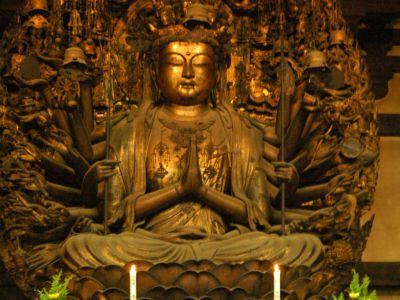
Motivated by his faith in Amida, the ex-emperor sought to honor the deity who vowed to welcome all who invoked his name into his Pure Land paradise. The statues portray Kannon, a messenger of Amida and bodhisattva bridging the gap between worlds. Here, Kannon takes the form of the so-called Senjū Kannon, with eleven faces and a thousand arms!
Walking amidst these rows of statues can evoke a sense of awe akin to standing before a celestial choir. Despite their uniform appearance at first glance, each statue is subtly unique in body shape, eye width, and robe design. Legend has it that with enough contemplation, one may even recognize a familiar face among them.
Unfortunately, the original brightly colored building, representing the Pure Land, fell victim to fire in 1249; as a result, 875 of the statues had to be replaced. Facing west towards Amida's Pure Land, worshippers would have been greeted by the dazzling spectacle of the statues bathed in the morning sun's first rays when the central doors swung open. In a city renowned for its enchanting moments, this sight undoubtedly stood out as the most magical.
Tips:
Photography inside the hall is strictly prohibited, so consider purchasing the inexpensive guidebook with lovely pictures and informative text as a keepsake. And before departing, take a leisurely 10-15 minute stroll through the small garden surrounding the hall, a tranquil oasis deserving of appreciation.
Motivated by his faith in Amida, the ex-emperor sought to honor the deity who vowed to welcome all who invoked his name into his Pure Land paradise. The statues portray Kannon, a messenger of Amida and bodhisattva bridging the gap between worlds. Here, Kannon takes the form of the so-called Senjū Kannon, with eleven faces and a thousand arms!
Walking amidst these rows of statues can evoke a sense of awe akin to standing before a celestial choir. Despite their uniform appearance at first glance, each statue is subtly unique in body shape, eye width, and robe design. Legend has it that with enough contemplation, one may even recognize a familiar face among them.
Unfortunately, the original brightly colored building, representing the Pure Land, fell victim to fire in 1249; as a result, 875 of the statues had to be replaced. Facing west towards Amida's Pure Land, worshippers would have been greeted by the dazzling spectacle of the statues bathed in the morning sun's first rays when the central doors swung open. In a city renowned for its enchanting moments, this sight undoubtedly stood out as the most magical.
Tips:
Photography inside the hall is strictly prohibited, so consider purchasing the inexpensive guidebook with lovely pictures and informative text as a keepsake. And before departing, take a leisurely 10-15 minute stroll through the small garden surrounding the hall, a tranquil oasis deserving of appreciation.
4) Kiyomizu-dera Temple (must see)
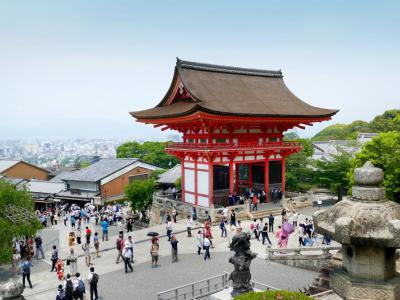
Towering above the treasure-packed sprawl of Southern Higashiyama, Kiyomizu-dera temple is both a place of worship and Kyoto’s dramatic headliner. Equal parts spiritual retreat and bucket-list selfie spot, it offers sweeping views of the city below (if you can peel your eyes away from the throngs of visitors doing the same). And should you be bold enough (or just patient) to visit during cherry blossom season, the nighttime glow of illuminated petals will be your reward for enduring the human traffic jam.
The temple’s story starts with a splash-quite literally. In 778, a monk named Enchin Shonin, nudged by a divine vision, stumbled upon the Otowa Spring. The water was so pure that it gave the temple its name: Kiyomizu, meaning “clear water.” A noble patron, moved by the miracle (or just in the mood for grand gestures), commissioned a hall built not in typical temple fashion but in the style of an aristocrat’s dream home-complete with a swooping shingled roof. At its heart is a rarely-seen 1,000-armed Kannon (a bodhisattva of compassion, widely revered in East Asian Buddhism, especially in Japan), which is unveiled to mere mortals once every 33 years. Blink and you’ll miss it... for another three decades.
Then there’s the famous stage-no nails, just massive wooden pillars holding up a 13-meter (or 43-foot) drop. Originally used for sacred dance performances, it later gained ill fame as a tragic endpoint for desperate folks hoping to leap their way into a better afterlife. Nowadays, you’re more likely to leap into a photo op with Kyoto’s hills in the background.
Wander a bit more and you'll find Jishu Shrine, matchmaking central, and the pagoda where expectant mothers whisper hopes for safe births. And don’t skip the Otowa Spring, of course: its three trickling streams promise health, longevity, or academic success. Just pick one-greedy sipping is frowned upon. After 1,200 years, the lines are still long and the stakes still high. So, choose wisely...
The temple’s story starts with a splash-quite literally. In 778, a monk named Enchin Shonin, nudged by a divine vision, stumbled upon the Otowa Spring. The water was so pure that it gave the temple its name: Kiyomizu, meaning “clear water.” A noble patron, moved by the miracle (or just in the mood for grand gestures), commissioned a hall built not in typical temple fashion but in the style of an aristocrat’s dream home-complete with a swooping shingled roof. At its heart is a rarely-seen 1,000-armed Kannon (a bodhisattva of compassion, widely revered in East Asian Buddhism, especially in Japan), which is unveiled to mere mortals once every 33 years. Blink and you’ll miss it... for another three decades.
Then there’s the famous stage-no nails, just massive wooden pillars holding up a 13-meter (or 43-foot) drop. Originally used for sacred dance performances, it later gained ill fame as a tragic endpoint for desperate folks hoping to leap their way into a better afterlife. Nowadays, you’re more likely to leap into a photo op with Kyoto’s hills in the background.
Wander a bit more and you'll find Jishu Shrine, matchmaking central, and the pagoda where expectant mothers whisper hopes for safe births. And don’t skip the Otowa Spring, of course: its three trickling streams promise health, longevity, or academic success. Just pick one-greedy sipping is frowned upon. After 1,200 years, the lines are still long and the stakes still high. So, choose wisely...
5) Ninen-zaka & Sannen-zakaa Streets (must see)
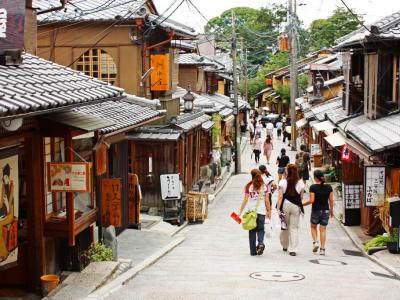
If you ever thought that time-travel on foot is not possible, welcome to Ninen-zaka and Sannen-zaka, Kyoto’s prettiest pair of gently sloping stone-paved streets. Just south of the famous Kiyomizu-dera Temple, these twin time capsules have been charming pilgrims, poets, and now Instagrammers since the Heian period (as far back as the 8th century AD). Their names-translating to “Two-Year Hill” and “Three-Year Hill,” respectively-aren’t just quaint poetry; legend has it that if you trip here, you’ll be cursed with two or three years of bad luck. So watch your step, but do it stylishly...
Lined with wooden machiya townhouses straight out of an Edo-era painting, these streets now brim with modern temptations in historical disguise-such as matcha lattes in teahouses, delicate sweets that look too pretty to eat, and souvenir shops where even the magnets feel refined. Early mornings bring soft golden light and far fewer tourists-ideal for catching that postcard-perfect shot of Yasaka Pagoda or wandering down a lantern-lit alley like a wandering extra in a samurai drama.
No cars, no chaos-just the click-clack of wooden geta sandals on stone and the scent of roasted tea in the air. It’s like Kyoto whispered, “Slow down,” and these hills listened. For a walk that’s part history lesson, part sensory feast, and 100% Kyoto, Ninen-zaka and Sannen-zaka are more than just pathways-they’re an experience with a side of superstition...
Lined with wooden machiya townhouses straight out of an Edo-era painting, these streets now brim with modern temptations in historical disguise-such as matcha lattes in teahouses, delicate sweets that look too pretty to eat, and souvenir shops where even the magnets feel refined. Early mornings bring soft golden light and far fewer tourists-ideal for catching that postcard-perfect shot of Yasaka Pagoda or wandering down a lantern-lit alley like a wandering extra in a samurai drama.
No cars, no chaos-just the click-clack of wooden geta sandals on stone and the scent of roasted tea in the air. It’s like Kyoto whispered, “Slow down,” and these hills listened. For a walk that’s part history lesson, part sensory feast, and 100% Kyoto, Ninen-zaka and Sannen-zaka are more than just pathways-they’re an experience with a side of superstition...
6) Yasaka-jinja Shrine
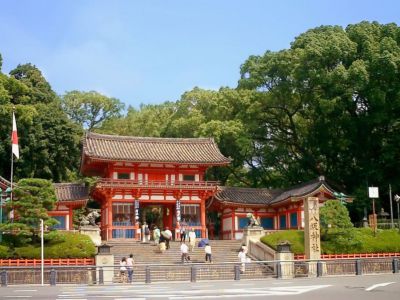
At the eastern edge of Gion's main street looms a towering vermilion gate that practically begs to be photographed. And judging by the steady stream of visitors posing on its steps for countless snapshots, it surely gets its wish.
Passing through, you’re in for a sensory parade: food stalls sizzling away, tempting you with every imaginable treat as they lead you toward the heart of the scene-Yasaka Shrine. A triple row of lanterns, casting a glow, transforms it into a fairy tale come to life.
Each July, Yasaka Shrine takes center stage as the proud host of the renowned Gion Festival, a lively spectacle drawing throngs of revelers with its array of side events and delectable food offerings. At this time, the area bursts to life with floats, fanfare, and enough street snacks to feed a small army of festivalgoers.
The festival's roots trace back to the year 869. Back then, during a particularly rough epidemic, portable shrines were paraded around town in a divine plea for mercy. Centuries since, it has blossomed into an annual event, yet Yasaka Shrine remains a captivating destination year-round, beyond the festival fervor. Still, nowadays, most of the crowds here are for the energy, the lanterns, and yes, the Instagram shots.
Take a moment to admire the Main Hall, elegantly capped with a cypress bark roof that’s been standing strong since 1654. The grounds are dotted with smaller shrines dedicated to gods from across Japan-some famous, some niche, and one especially popular with geishas, thanks to its focus on beauty.
Tip:
Adjacent lies Maruyama Park. Designed during the Meiji era (between 1868 and 1912), its borrowed waters from Lake Biwa feed scenic carp ponds and arching bridges that deliver peak postcard material, imbuing the surroundings with an unmistakably Japanese ambiance. Springtime is wild with cherry blossoms, but for a quieter moment, come at night-when the lantern glow from Yasaka spills into the park like a soft whisper from the past...
Passing through, you’re in for a sensory parade: food stalls sizzling away, tempting you with every imaginable treat as they lead you toward the heart of the scene-Yasaka Shrine. A triple row of lanterns, casting a glow, transforms it into a fairy tale come to life.
Each July, Yasaka Shrine takes center stage as the proud host of the renowned Gion Festival, a lively spectacle drawing throngs of revelers with its array of side events and delectable food offerings. At this time, the area bursts to life with floats, fanfare, and enough street snacks to feed a small army of festivalgoers.
The festival's roots trace back to the year 869. Back then, during a particularly rough epidemic, portable shrines were paraded around town in a divine plea for mercy. Centuries since, it has blossomed into an annual event, yet Yasaka Shrine remains a captivating destination year-round, beyond the festival fervor. Still, nowadays, most of the crowds here are for the energy, the lanterns, and yes, the Instagram shots.
Take a moment to admire the Main Hall, elegantly capped with a cypress bark roof that’s been standing strong since 1654. The grounds are dotted with smaller shrines dedicated to gods from across Japan-some famous, some niche, and one especially popular with geishas, thanks to its focus on beauty.
Tip:
Adjacent lies Maruyama Park. Designed during the Meiji era (between 1868 and 1912), its borrowed waters from Lake Biwa feed scenic carp ponds and arching bridges that deliver peak postcard material, imbuing the surroundings with an unmistakably Japanese ambiance. Springtime is wild with cherry blossoms, but for a quieter moment, come at night-when the lantern glow from Yasaka spills into the park like a soft whisper from the past...
7) Gion Corner
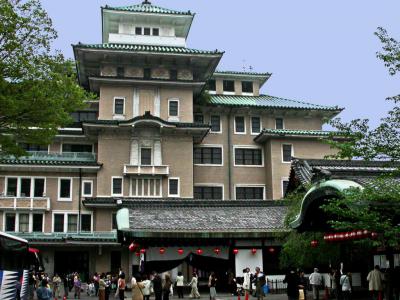
Some say, a visit to Gion Corner might seem as unapologetically touristy as wearing socks with sandals. But let’s be honest: it’s also a wildly entertaining crash course in traditional Japanese arts. Think of it as an hour-long extravaganza featuring a mishmash of performances including classical puppetry ('bunraku'), tea ceremonies ('chado'), court music ('gagaku'), flower arranging ('ikebana'), six-stringed harp playing ('koto'), ancient slapstick comedy ('kyogen'), and graceful Kyoto-style dance ('kyomai'). Ultimately, it's like the cultural buffet-served fast, strange, and oddly satisfying.
Yes, it’s tailor-made for out-of-towners, but where else can you sample this much heritage in under 60 minutes without blowing your budget? If your timing’s right, you might even catch the Miyako Odori, a geisha dance showcase in full bloom every April and October. And for those with a taste for the surreal, there’s always bunraku-the original 17th-century-style puppet theater that's like a bizarre love child of Broadway and a marionette convention. Picture a human-sized marionette worked by three very serious puppeteers dressed in black, performing tales of heartbreak and honor with the gravitas of Shakespeare and the logistics of a synchronized swimming team.
It's weird, it's captivating, and just like kabuki, it's got that UNESCO stamp of cultural approval. And if nothing else, it’ll give you something to talk about besides how good the matcha parfait was. So, go ahead, suspend your disbelief, indulge your inner art snob, and catch a show. Your inner cultural omnivore will thank you later.
Yes, it’s tailor-made for out-of-towners, but where else can you sample this much heritage in under 60 minutes without blowing your budget? If your timing’s right, you might even catch the Miyako Odori, a geisha dance showcase in full bloom every April and October. And for those with a taste for the surreal, there’s always bunraku-the original 17th-century-style puppet theater that's like a bizarre love child of Broadway and a marionette convention. Picture a human-sized marionette worked by three very serious puppeteers dressed in black, performing tales of heartbreak and honor with the gravitas of Shakespeare and the logistics of a synchronized swimming team.
It's weird, it's captivating, and just like kabuki, it's got that UNESCO stamp of cultural approval. And if nothing else, it’ll give you something to talk about besides how good the matcha parfait was. So, go ahead, suspend your disbelief, indulge your inner art snob, and catch a show. Your inner cultural omnivore will thank you later.
